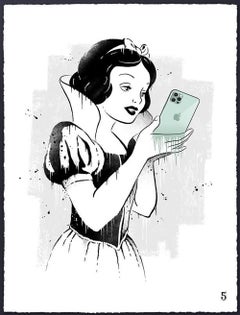
Zedsy - Poison Apple 2 - Midnight Green Edition - Urban Graffiti Street Art
Zedsy - Poison Apple 2 - Midnight Green Edition - Urban Graffiti Street Art
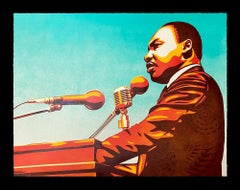
Ernesto Yerena - Martin Luther King (MLK HPM) - Urban Graffiti Street Art
By Ernesto Yerena
Located in Asheville, NC
Martin Luther King Artists: Yerena, Ernesto Year: 2021 Class: Art Print Released: 01/16/21 Technique: Original Mixed Media Paper: 100% Cotton Rag Size: 26 X 20 Markings: Signed & Numbered About: Ernesto Yerena...
Screen, Stencil
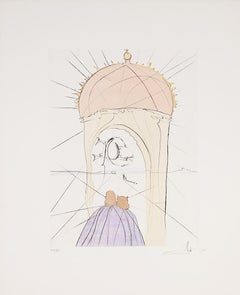
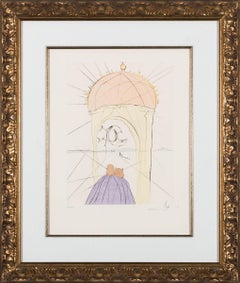
The Museum of Genius and Fancy (Plate L), 1974
Located in Greenwich, CT
The Museum of Genius and Fancy – signed ‘Dalí’ lower right and numbered A 11/195 lower left, from the edition of 462 (there were also 35 'A' Roman, 195 'F' Arabic, and 35 'F' Roman, plus 2 additional suites on japon). Framed in an ornate gold-tone moulding. Cataloging: Micheler-Löpsinger 676; Field 74-8 Plate L Dalí’s series of colored etchings After Fifty Years of Surrealism reflects on the artist’s long...
Etching, Stencil
The Divine Love of Gala (Plate J), 1974
Located in Greenwich, CT
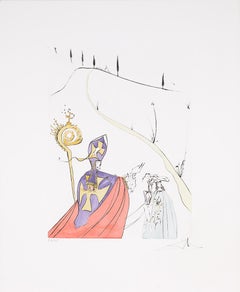
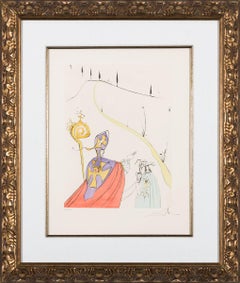
The Divine Love of Gala – signed ‘Dalí’ lower right and numbered A 11/195 lower left, from the edition of 462 (there were also 35 'A' Roman, 195 'F' Arabic, and 35 'F' Roman, plus 2 additional suites on japon). Framed in an ornate gold-tone moulding. Cataloging: Micheler-Löpsinger 674; Field 74-8 Plate J Dalí’s series of colored etchings After Fifty Years of Surrealism reflects on the artist’s long...
Etching, Stencil
(after) Sonia Delaunay - Composition - Pochoir
Located in Collonge Bellerive, Geneve, CH
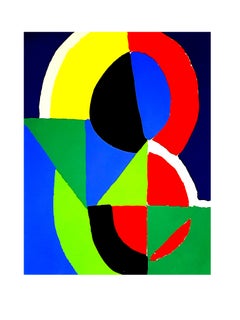
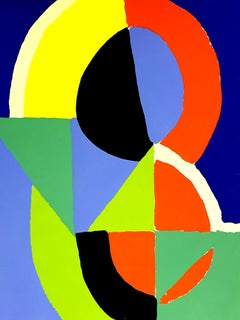
(after) Sonia Delaunay - Composition - Pochoir 1956 Dimensions: 32 x 25 cm Revue XXe Siècle Cahiers d'art published under the direction of G. di San Lazzaro. Unsigned and unumbered ...
Stencil
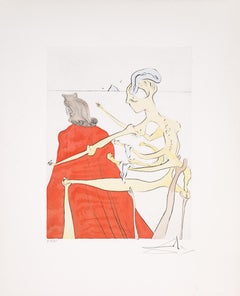
The Divine Back of Gala (Plate B), 1974
Located in Greenwich, CT
The Divine Back of Gala – 15.75 x 12" image size, signed ‘Dalí’ lower right and annotated lower left. Framed in an ornate gold-tone moulding. M...
Etching, Stencil
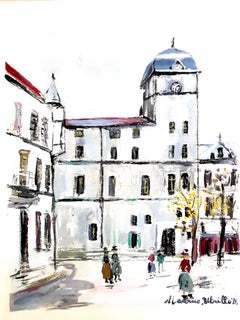
Inspired Village of Montmartre - Pochoir
Located in Collonge Bellerive, Geneve, CH
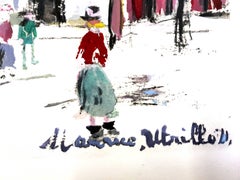
(after) Maurice Utrillo Inspired Village of Montmartre Pochoir with printed signature Edition of 490 Dimensions: 39 x 30 cm Information : This print was created for the portfolio "Le Village inspiré, Chronique de la bohème de Montmartre (1920-1950) " published by Vertex in 1950 Condition : Excellent Maurice Utrillo (1883 - 1955) The French painter Maurice Utrillo was born as the illegitimate son of the painter Suzanne Valladon in Paris on December 26, 1883. He was adopted by the Catalan art critic Miguel Utrillo...
Stencil

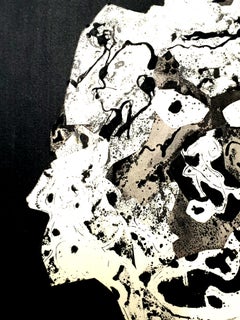
after Jean Dubuffet - Personnage - Pochoir
Located in Collonge Bellerive, Geneve, CH
after Jean Dubuffet Personnage Pochoir on paper 1956 Dimensions: 32 x 25 cm Edition: G. di San Lazzaro. From the art revue XXe siècle Unsigned and unumbered as issued
Stencil
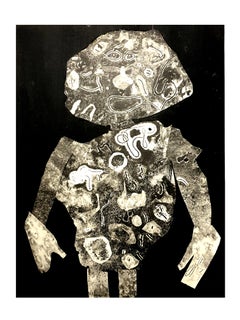
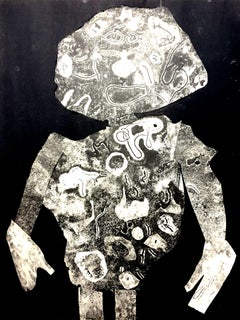
after Jean Dubuffet - Man - Pochoir
Located in Collonge Bellerive, Geneve, CH
after Jean Dubuffet - Man - Pochoir 1956 Dimensions: 32 x 25 cm Edition: G. di San Lazzaro. From the art review XXè siècle Unsigned and unumbered as issued
Stencil
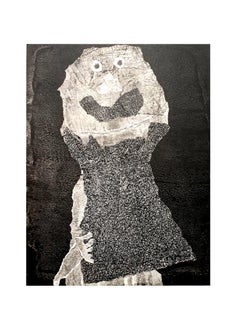
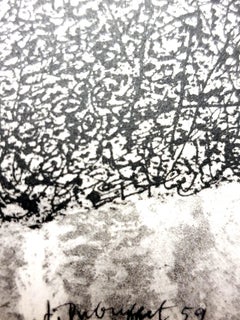
after Jean Dubuffet - Man - Pochoir
Located in Collonge Bellerive, Geneve, CH
after Jean Dubuffet - Man - Pochoir 1960 Dimensions: 32 x 25 cm Edition: G. di San Lazzaro. From the art review XXème siècle Unsigned and unumbered as issued
Stencil
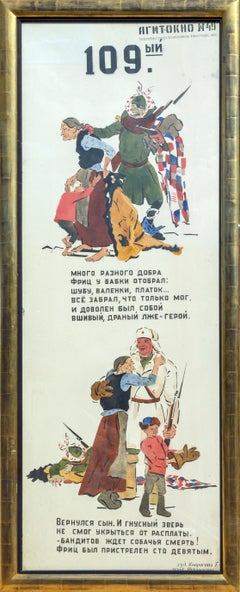
Agit-Okno No. 49, Large Russian Anti-Nazi Poster, Okna-Tass Studio
Located in Long Island City, NY
Soon after the German invasion of the Soviet Union in June of 1941, the Okna TASS studio spontaneously formed in Moscow. Comprised of renowned artists, poets and literary figures, th...
Stencil
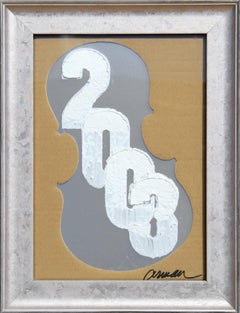
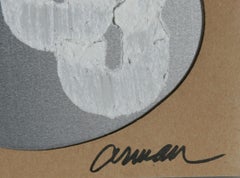
New Year's Card 2003, Print on Aluminum by Arman
By Arman
Located in Long Island City, NY
Artist: Arman, French (1929 - 2005) Title: New Year's Card, 2003 Year: 2003 Medium: Print on Aluminum and Cut out Cardboard, signed in marker Size: 11.25 in. x 8.25 in. (28.58 cm x ...
Metal
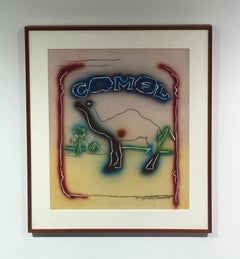
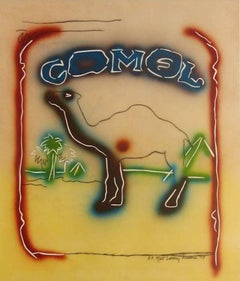
Stencil Camel
By Larry Rivers
Located in Miami, FL
TECHNICAL INFORMATION: Larry Rivers Stencil Camel 1978 Color stencil and pochoir printed on acetate and color lithograph on two sheets 25 x 21 1/2 in. Artist's Proof (A.P.) of 25 Pencil signed and numbered Accompanied with COA by Gregg Shienbaum Fine Art. Condition: This work is in excellent condition. Frame: This work is framed in a wood frame. ABOUT THIS WORK: The logo of Camel cigarettes...
Lithograph, Stencil
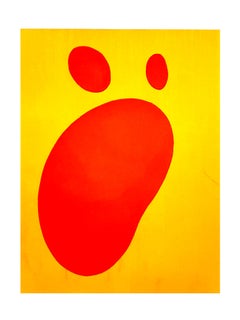
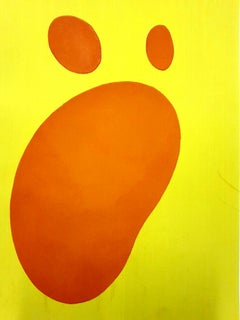
Jean Arp (after) - Composition - Pochoir
By Jean Arp
Located in Collonge Bellerive, Geneve, CH
Jean Arp (after) - Composition - Pochoir 1958 Dimensions: 32 x 24 cm From the art revue XXe siècle Unsigned and unumbered as issued
Stencil
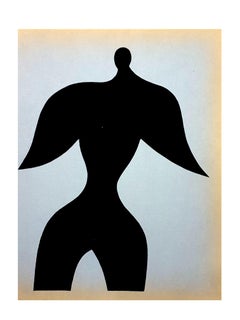
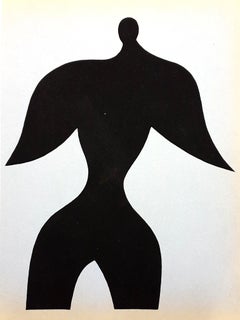
after Jean Arp - Pochoir
By Jean Arp
Located in Collonge Bellerive, Geneve, CH
after Jean Arp - Pochoir 1957 Dimensions: 32 x 24 cm From the art review XXe siècle Unsigned and unumbered as issued
Stencil
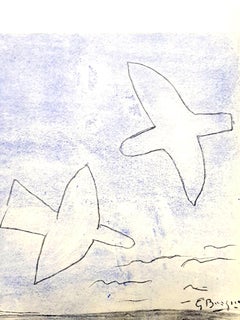
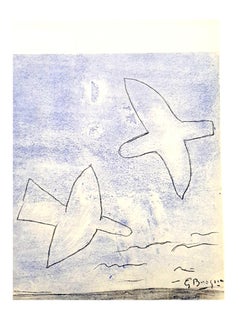
After Georges Braque - Oiseaux - Pochoir
Located in Collonge Bellerive, Geneve, CH
after Georges Braque Oiseaux Color Pochoir on Paper Published in the deluxe art review, XXe Siecle (issue number 11 "Les nouveaux rapports de l'art et de la nature") 1958 Dimensions:...
Stencil
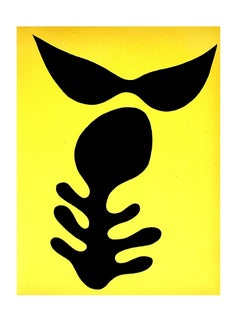
after Jean Arp - Moustaches et Squelette - Pochoir
By Jean Arp
Located in Collonge Bellerive, Geneve, CH
after Jean Arp Moustaches et Squelette Executed in 1957 after the original artwork by the studios from Daniel Jacomet in Paris, France Pochoir Dimensions: 32 x 24 cm From the art re...
Stencil, Paper
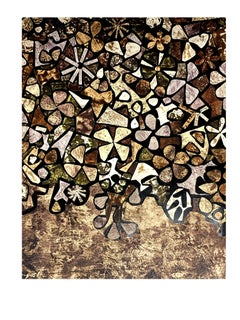
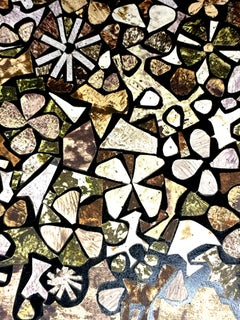
after Jean Dubuffet - Flowers - Pochoir
Located in Collonge Bellerive, Geneve, CH
after Jean Dubuffet - Flowers - Pochoir 1957 Dimensions: 32 x 25 cm Edition: G. di San Lazzaro. From the art review XXe siècle Unsigned and unumbered as issued
Stencil
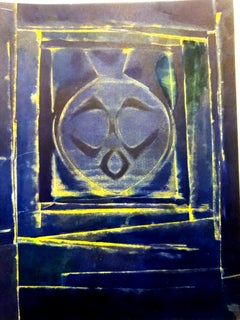
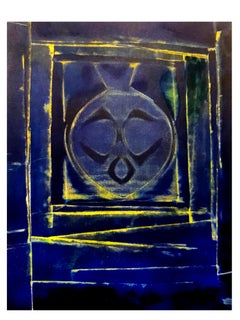
(after) Max Ernst - Blue Bird - Stencil
Located in Collonge Bellerive, Geneve, CH
Max Ernst (after) - Blue Bird - Stencil Published in the deluxe art review, XXe Siecle, 1958 Dimensions: 32 x 25 cm Publisher: G. di San Lazzaro. Max Ernst was born in Bruhl, a place near Cologne, in Germany. He was raised in a strict Catholic family, and both of his parents were disciplinarians who were dedicated to training their children into God-fearing and talented individuals. Although his father was deaf, Ernst learned so much from him, particularly when it comes to painting. In fact, much of his early years were lived under the inspiration of his father who was also a teacher. He was the one who introduced painting to Ernst at an early age. In 1914, Ernst attended the University of Bonn where he studied philosophy. However, he eventually dropped out of school because he was more interested in the arts. He claimed that his primary sources of interest included anything that had something to do with painting. Moreover, he became fascinated with psychology, among other subjects in school. Primarily, Ernst's love for painting was the main reason why he became deeply interested with this craft and decided to pursue it later on in his life. During his early years, he became familiar with the works of some of the greatest artists of all time including Claude Monet, Paul Cezanne and Vincent van Gogh. He was also drawn to themes such as fantasy and dream imagery, which were among the common subjects of the works of Giorgio de Chirico. During World War I, Ernst was forced to join the German Army, and he became a part of the artillery division that exposed him greatly to the drama of warfare. A soldier in the War, Ernst emerged deeply traumatized and highly critical of western culture. These charged sentiments directly fed into his vision of the modern world as irrational, an idea that became the basis of his artwork. Ernst's artistic vision, along with his humor and verve come through strongly in his Dada and Surrealists works; Ernst was a pioneer of both movements. It was Ernst's memories of the war and his childhood that helps him create absurd, yet interesting scenes in his artworks. Soon, he took his passion for the arts seriously when he returned to Germany after the war. With Jean Arp, a poet and artist, Ernst formed a group for artists in Cologne. He also developed a close relationship with fellow artists in Paris who propagated Avant-Garde artworks. In 1919, Ernst started creating some of his first collages, where he made use of various materials including illustrated catalogs and some manuals that produced a somewhat futuristic image. His unique masterpieces allowed Ernst to create his very own world of dreams and fantasy, which eventually helped heal his personal issues and trauma. In addition to painting and creating collages, Ernst also edited some journals. He also made a few sculptures that were rather queer in appearance. In 1920s, influenced by the writings of psychologist Sigmund Freud, the literary, intellectual, and artistic movement called Surrealism sought a revolution against the constraints of the rational mind; and by extension, they saw the rules of a society as oppressive. Surrealism also embraces a Marxist ideology that demands an orthodox approach to history as a product of the material interaction of collective interests, and many renown Surrealism artists later on became 20th century Counterculture symbols such as Marxist Che Guevara. In 1922 Ernst moved to Paris, where the surrealists were gathering around Andre Breton. In 1923 Ernst finished Men Shall Know Nothing of This, known as the first Surrealist painting. Ernst was one of the first artists who apply The Interpretation of Dreams by Freud to investigate his deep psyche in order to explore the source of his own creativity. While turning inwards unto himself, Ernst was also tapping into the universal unconscious with its common dream imagery. Despite his strange styles, Ernst gained quite a reputation that earned him some followers throughout his life. He even helped shape the trend of American art during the mid-century, thanks to his brilliant and extraordinary ideas that were unlike those of other artists during his time. Ernst also became friends with Peggy Guggenheim, which inspired him to develop close ties with the abstract expressionists. When Ernst lived in Sedona, he became deeply fascinated with the Southwest Native American navajo art. In fact, the technique used in this artwork inspired him and paved the way for him to create paintings that depicted this style. Thus, Ernst became a main figure of this art technique, including the rituals and spiritual traditions included in this form of art. Pollock, aside from the other younger generations of abstract expressionists, was also inspired by sand painting of the Southwest...
Stencil