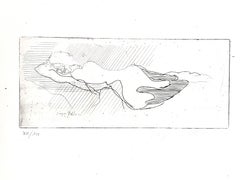
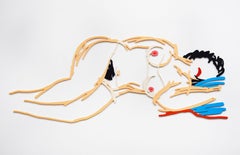
Mid-20th Century Nude Prints

to
26
315
132
76
19
5
Overall Width
to
Overall Height
to
244
107
16
14
13
10
4
4
3
1
53
27
26
24
23
16
49
1,929
432
23
79
116
111
55
113
204
552
246
125
13
429
113
2
439
262
255
177
112
106
101
81
69
12
12
11
11
10
8
8
6
6
6
5
231
215
63
32
25
62
148
337
213
Period: Mid-20th Century
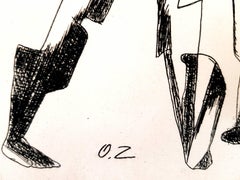
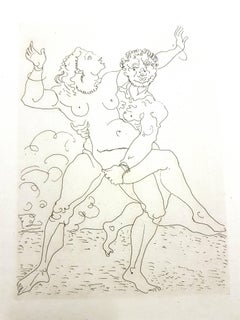
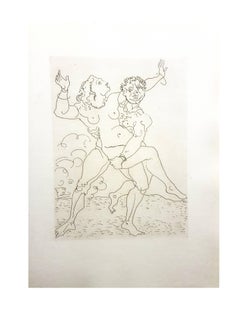
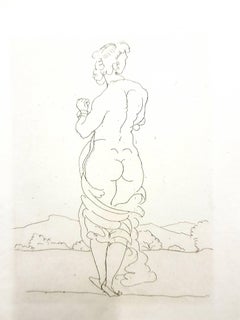
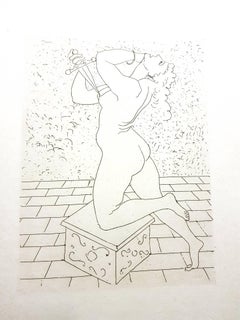
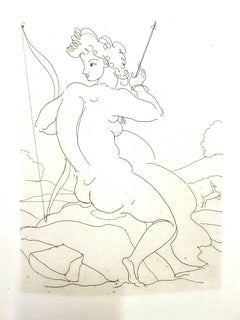
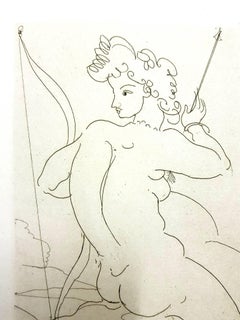
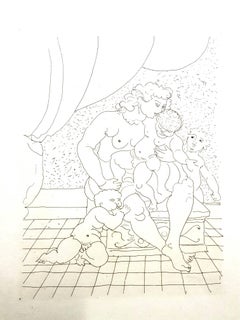
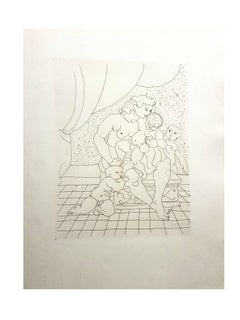
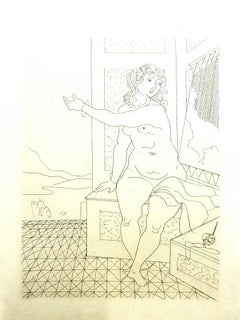
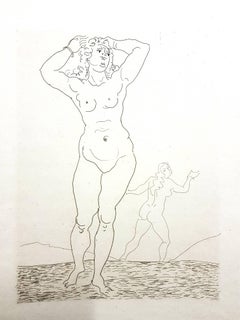
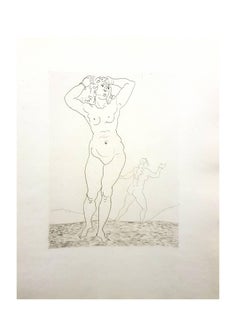
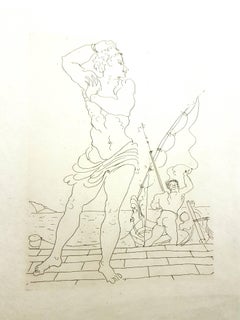
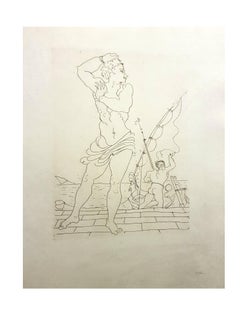
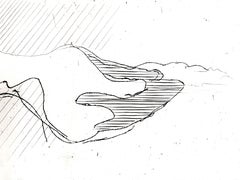
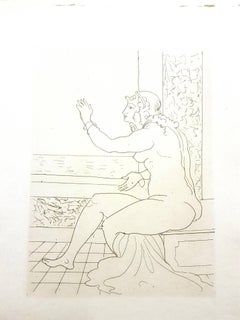
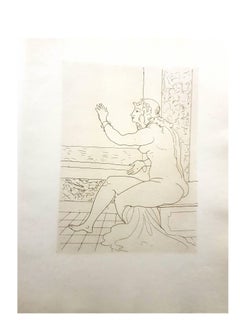
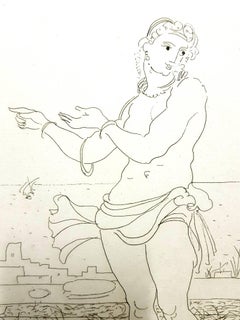
Ossip Zadkine - Ultimate Step - Original Etching

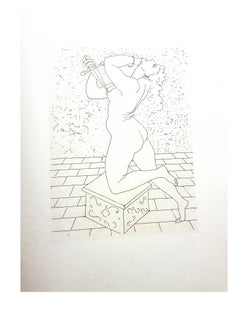
Ossip Zadkine - Ultimate Step - Original Etching

By Ossip Zadkine

Located in Collonge Bellerive, Geneve, CH

Etching monogrammed in the plate. Illustration for a Robert Ganzo's poem "Lespugue" Editions Marcel Sautier, Paris, 1966. Conditions: Good Conditions Dimensions: 25,5 x 16,5 cm. Vellum paper Référence Czwiklitzer n°55. 1890 Zadkine was born on the 14th of July in Vitebsk, a city in Belarussia, on the Dvina. His father Ephime teaches classical languages at the local seminar. His mother Sophie Lester descended from Scots, who emigrated at the time of Peter the Great. 1905 His parents send him to Sunderland, in the North of England, where his mother’s family lives. He studies English and attends modelling courses at the local Art School. 1905-1909 He travels to London without his parents permission where he attends courses at the Regent Street Polytechnicum. In order to earn his living, he plans to work with a stonecutter. He visits the British Museum and studies classical sculpture there. Returns to Smolensk where he produces his first sculpture. Goes back to London. 1909-1910 Zadkine settles in Paris and studies in the ecole Nationale des Beaux-Arts. Finds a workshop in a building called La Ruche, in the XVe arrondissement. 1911 Zadkine presents statues and drawings at the annual Salon d’Automne and at the Salon des Indépendants. It is the ‘cubists’ who draw his attention in Paris. Is essentially close to Russian students who get together in a cafe of the ‘Quartier Latin’. Has himself called Joe Zadkine until 1914. 1912-1913 Finds a room in the neighbourhood of Montparnasse, in the rue de Vaugirard. Studies Roman sculpture. Zadkine is immortalized by his neighbour, photographer Marc Vaux, in his new workshop. Meets Brancusi, Guillaume Apollinaire, Jacques Lipchitz, Pablo Picasso, Antoine Bourdelle, Leopold Survage and Robert Delaunay. Henri Matisse visits Zadkine’s workshop. 1914-1915 Exhibition at the Freie Sezession in Berlin, at De Onafhankelijken in Amsterdam (Holland) and at the Allied Artists Association in London. Thanks to collector Paul Rodocanachi, he can settle in a workshop in the rue Rousselet. Becomes friends with Modigliani. 1916-1917 Works as a stretcher-bearer on the front. Produces drawings and watercolours dealing with war. Zadkine is discharged in 1917. He says he is ‘bodily and spiritually’ ruined by the war. After his stay in the Epernay hospital he recovers in Bruniquel, in the southwest of France. 1918-1919 Makes a series of 20 war etchings...

Category

Modern Mid-20th Century Nude Prints

Materials

Etching

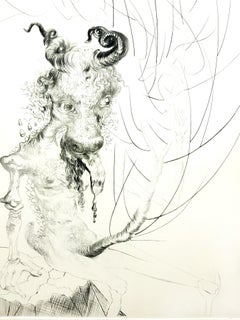
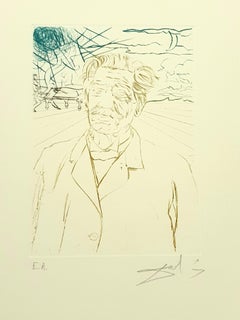
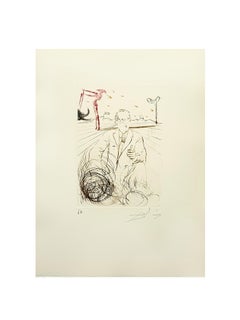
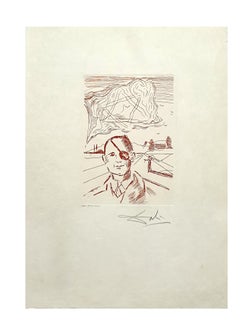
Salvador Dali - Head of Veal - Original Etching

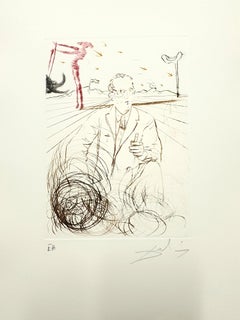
Salvador Dali - Head of Veal - Original Etching

By Salvador Dalí­

Located in Collonge Bellerive, Geneve, CH

Salvador Dali - Head of Veal - Original Etching Embossed signature From the edition of 731 Dimensions: 38,5 x 28,5 cm 1969 References : Field 69-1 / Michler & Lopsinger 305

Category

Surrealist Mid-20th Century Nude Prints

Materials

Etching

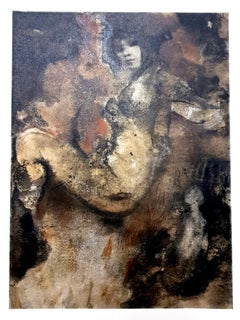
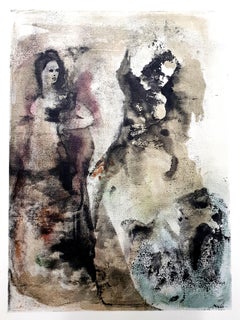
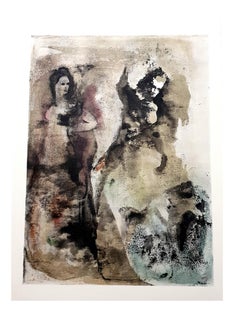
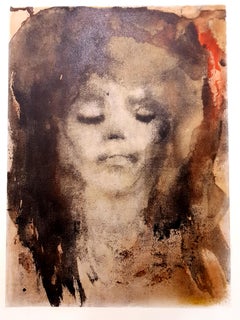
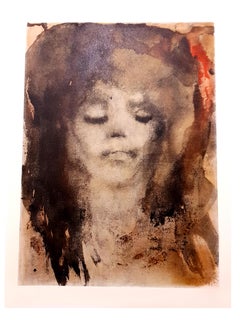
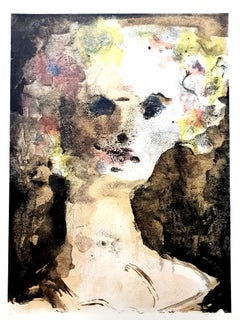
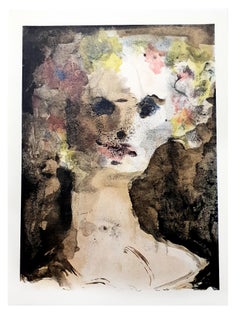
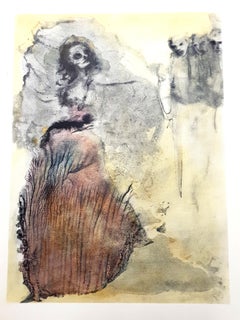
Leonor Fini - Sitting - Original Lithograph

Leonor Fini - Sitting - Original Lithograph

By Leonor Fini

Located in Collonge Bellerive, Geneve, CH

Leonor Fini - Sitting - Original Lithograph The Flowers of Evil 1964 Conditions: excellent Edition: 500 Dimensions: 46 x 34 cm Editions: Le Cercle du Livre Précieux, Paris Unsigned...

Category

Modern Mid-20th Century Nude Prints

Materials

Lithograph

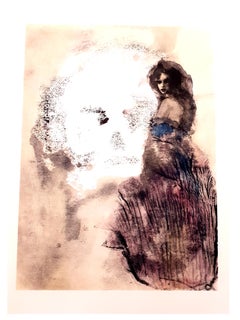
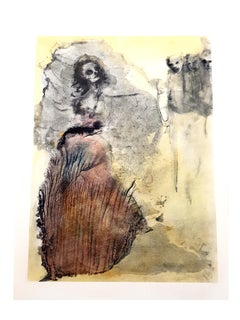
Leonor Fini - Road to Death - Original Lithograph

Leonor Fini - Road to Death - Original Lithograph

By Leonor Fini

Located in Collonge Bellerive, Geneve, CH

Leonor Fini - Road to Death - Original Lithograph The Flowers of Evil 1964 Conditions: excellent Edition: 500 Dimensions: 46 x 34 cm Editions: Le Cercle du Livre Précieux, Paris Un...

Category

Modern Mid-20th Century Nude Prints

Materials

Lithograph

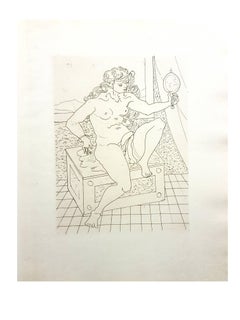
André Derain - Ovid's Heroides - Original Etching

André Derain - Ovid's Heroides - Original Etching

By André Derain

Located in Collonge Bellerive, Geneve, CH

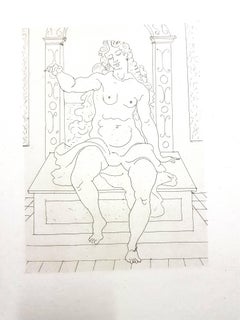
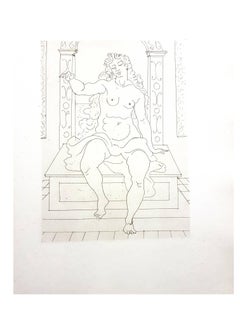
André Derain - Ovid's Heroides Original Etching Edition of 134 Dimensions: 32 x 25 cm Ovide [Marcel Prevost], Héroïdes, Paris, Société des Cent-une, 1938 Andre Derain was born in 1880 in Chatou, an artist colony outside Paris. In 1898, he enrolled in the Academie Carriere in Paris where he met Matisse. He attended art school and in 1900, set up a studio with Maurice deVlaminck. After his military service from 1900-1904, Derain exhibited his work at the Salon des Independants and then at the Salon d'Automne with Matisse, Vlaminck and others, thus creating the movement of Fauvism.He worked with Henri Matisse in 1905 at Collioure, and participated in the 1905 Salon d’Automne with Matisse, Vlaminck, and Braque, the exhibition in which this group was labeled as Fauves, or Wild Beasts. Along with Vlaminck, Derain was one of the first artists to collect the tribal art of Africa which was influential to many of the artists of the early 20th century. In 1906, Derain met Picasso and his dealer, who purchased Derain's entire studio, creating newfound financial success. During this time, he was hired for the illustrations for works by Guillaume Apollinaire and Andre Breton. After World War I, his friend's Cubism movement affected his art, along with influence from Classicism and African Art. Derain stayed in Paris during most of the Occupation, where he was esteemed by the Nazis because of his artistic integrity. Hitler's Foreign Minister commissioned him to paint a family portrait, but he politely refused. His popularity began to decline after the war because of disagreement over new artistic movements. He later lost most of his eyesight due to illness, which may have been the reason he was hit by a truck in 1954, dying from shock at the age of 74. Derain’s Fauve paintings are typically bright with intense color. Influenced by the work of Cézanne as well as the early Cubist paintings of Picasso and Braque’s, Derain’s style changed and by 1912, the paintings became more traditional and structured. For the remainder of his career, he continued to investigate different compositional methods including the perspective of Cézanne and the pointillism of Seurat. He also designed ballet sets and made a number of sculptures. At the turn of the century, Andre Derain exhibited at the radical Fauve Salon d’Automne (1905) and was one of the founding members of the Fauvist movement together with his life-long friends Matisse and Vlaminck. The works he produced in this period, often under the guidance of Matisse, have been counted among the masterpieces of Fauvism. From around 1918, Derain turned his back on the avant-garde and had begun to explore some of the more traditional genres of Western art, including landscapes. His main source of inspiration once the Fauves group had dispersed was found in the Louvre, where he admired the early Renaissance works in particular. Talking of his frequent visits there, he once said, ‘That seemed to me then, the true, pure absolute painting.’ His work evolved through many styles and, most significantly, turned back to the past, particularly after 1922 when Lenin had publicly pronounced his disdain for abstract art. Derain built up an immense and fascinating collection of paintings, sculpture and objets d’art throughout his life which aided his experimentation and was reflected in his work between 1930 and 1945. During these years, his painting technique displayed the most avenues of invention, using a repertoire of primitivist motifs. His eclectic collection was constantly changing. In 1930 he sold his African collection in exchange for bronzes of antiquity and the Renaissance which indicated a real change of interest in the objects, as did his later pursuit of Greek ceramic painting and his enthusiasm for grand cycles of literary and antique themes...

Category

Modern Mid-20th Century Nude Prints

Materials

Etching

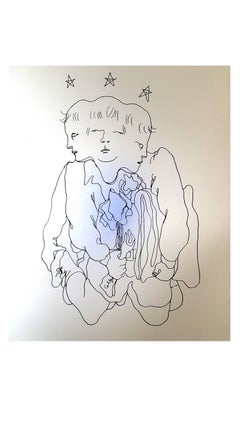
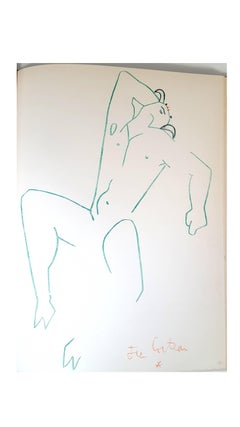
Jean Cocteau - Three in One - Original Handcolored Lithograph

Jean Cocteau - Three in One - Original Handcolored Lithograph

By Jean Cocteau

Located in Collonge Bellerive, Geneve, CH

Jean Cocteau Three in One - Autobiography about Cocteau's discovery of his homosexuality. The book was first published anonymously and created a scandal. Original Handcolored Lithogr...

Category

Modern Mid-20th Century Nude Prints

Materials

Lithograph

André Derain - Ovid's Heroides - Original Etching

André Derain - Ovid's Heroides - Original Etching

By André Derain

Located in Collonge Bellerive, Geneve, CH

André Derain - Ovid's Heroides Original Etching Edition of 134 Dimensions: 32 x 25 cm Ovide [Marcel Prevost], Héroïdes, Paris, Société des Cent-une, 1938 Andre Derain was born in 1...

Category

Modern Mid-20th Century Nude Prints

Materials

Etching

André Derain - Ovid's Heroides - Original Etching

André Derain - Ovid's Heroides - Original Etching

By André Derain

Located in Collonge Bellerive, Geneve, CH

André Derain - Ovid's Heroides Original Etching Edition of 134 Dimensions: 32 x 25 cm Ovide [Marcel Prevost], Héroïdes, Paris, Société des Cent-une, 1938 Andre Derain was born in 1...

Category

Modern Mid-20th Century Nude Prints

Materials

Etching

Jean Cocteau - Marine Mountains - Original Lithograph

Jean Cocteau - Marine Mountains - Original Lithograph

By Jean Cocteau

Located in Collonge Bellerive, Geneve, CH

Jean Cocteau - Marine Mountains - Original Lithograph Dimensions: 38 x 28 cm Edition: 200 In Rives From: COCTEAU. — VERDET (André). Montagnes marines. S. l. (Paris), Les Messagers du...

Category

Modern Mid-20th Century Nude Prints

Materials

Lithograph

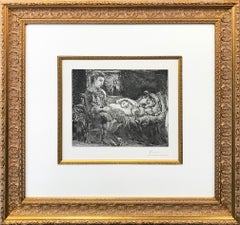
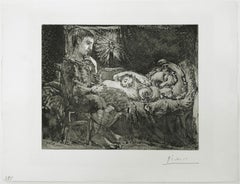
Garcon et Dormeuse a la Chandelle, Signed, From La Suite Vollard, Bloch 226

Garcon et Dormeuse a la Chandelle, Signed, From La Suite Vollard, Bloch 226

By Pablo Picasso

Located in Aventura, FL

Plate 26 from La Suite Vollard. Bloch 226. Baer 440. Etching, engraving and aquatint, on Montval paper. Signed in pencil, from the edition of 260 (there was also an edition of 50 wit...

Category

Cubist Mid-20th Century Nude Prints

Materials

Paper, Etching, Engraving, Aquatint

Leonor Fini - Disagreement - Original Lithograph

Leonor Fini - Disagreement - Original Lithograph

By Leonor Fini

Located in Collonge Bellerive, Geneve, CH

Leonor Fini - Disagreement - Original Lithograph The Flowers of Evil 1964 Conditions: excellent Edition: 500 Dimensions: 46 x 34 cm Editions: Le Cercle du Livre Précieux, Paris Uns...

Category

Modern Mid-20th Century Nude Prints

Materials

Lithograph

Leonor Fini - Red-Haired Girl - Original Lithograph

Leonor Fini - Red-Haired Girl - Original Lithograph

By Leonor Fini

Located in Collonge Bellerive, Geneve, CH

Leonor Fini - Red-Haired Girl - Original Lithograph The Flowers of Evil 1964 Conditions: excellent Edition: 500 Dimensions: 46 x 34 cm Editions: Le Cercle du Livre Précieux, Paris ...

Category

Modern Mid-20th Century Nude Prints

Materials

Lithograph

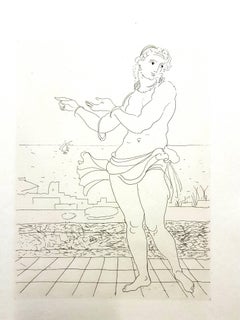
André Derain - Ovid's Heroides - Original Etching

André Derain - Ovid's Heroides - Original Etching

By André Derain

Located in Collonge Bellerive, Geneve, CH

André Derain - Ovid's Heroides Original Etching Edition of 134 Dimensions: 32 x 25 cm Ovide [Marcel Prevost], Héroïdes, Paris, Société des Cent-une, 1938 Andre Derain was born in 1880 in Chatou, an artist colony outside Paris. In 1898, he enrolled in the Academie Carriere in Paris where he met Matisse. He attended art school and in 1900, set up a studio with Maurice deVlaminck. After his military service from 1900-1904, Derain exhibited his work at the Salon des Independants and then at the Salon d'Automne with Matisse, Vlaminck and others, thus creating the movement of Fauvism.He worked with Henri Matisse in 1905 at Collioure, and participated in the 1905 Salon d’Automne with Matisse, Vlaminck, and Braque, the exhibition in which this group was labeled as Fauves, or Wild Beasts. Along with Vlaminck, Derain was one of the first artists to collect the tribal art of Africa which was influential to many of the artists of the early 20th century. In 1906, Derain met Picasso and his dealer, who purchased Derain's entire studio, creating newfound financial success. During this time, he was hired for the illustrations for works by Guillaume Apollinaire and Andre Breton. After World War I, his friend's Cubism movement affected his art, along with influence from Classicism and African Art. Derain stayed in Paris during most of the Occupation, where he was esteemed by the Nazis because of his artistic integrity. Hitler's Foreign Minister commissioned him to paint a family portrait, but he politely refused. His popularity began to decline after the war because of disagreement over new artistic movements. He later lost most of his eyesight due to illness, which may have been the reason he was hit by a truck in 1954, dying from shock at the age of 74. Derain’s Fauve paintings are typically bright with intense color. Influenced by the work of Cézanne as well as the early Cubist paintings of Picasso and Braque’s, Derain’s style changed and by 1912, the paintings became more traditional and structured. For the remainder of his career, he continued to investigate different compositional methods including the perspective of Cézanne and the pointillism of Seurat. He also designed ballet sets and made a number of sculptures. At the turn of the century, Andre Derain exhibited at the radical Fauve Salon d’Automne (1905) and was one of the founding members of the Fauvist movement together with his life-long friends Matisse and Vlaminck. The works he produced in this period, often under the guidance of Matisse, have been counted among the masterpieces of Fauvism. From around 1918, Derain turned his back on the avant-garde and had begun to explore some of the more traditional genres of Western art, including landscapes. His main source of inspiration once the Fauves group had dispersed was found in the Louvre, where he admired the early Renaissance works in particular. Talking of his frequent visits there, he once said, ‘That seemed to me then, the true, pure absolute painting.’ His work evolved through many styles and, most significantly, turned back to the past, particularly after 1922 when Lenin had publicly pronounced his disdain for abstract art. Derain built up an immense and fascinating collection of paintings, sculpture and objets d’art throughout his life which aided his experimentation and was reflected in his work between 1930 and 1945. During these years, his painting technique displayed the most avenues of invention, using a repertoire of primitivist motifs. His eclectic collection was constantly changing. In 1930 he sold his African collection in exchange for bronzes of antiquity and the Renaissance which indicated a real change of interest in the objects, as did his later pursuit of Greek ceramic painting and his enthusiasm for grand cycles of literary and antique themes...

Category

Modern Mid-20th Century Nude Prints

Materials

Etching

1945 Brazilian Master, Art Deco Clown Serigraph Woodcut

1945 Brazilian Master, Art Deco Clown Serigraph Woodcut

By Odetto Guersoni

Located in Surfside, FL

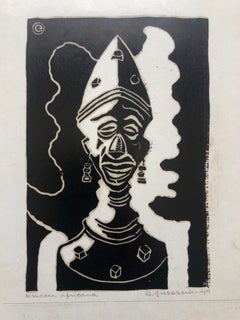
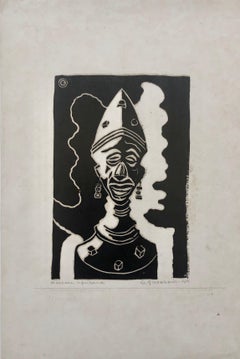
Genre: Brazilian Art Deco, African Diaspora Bahian Carnival Subject: harlequin clown Medium: Print Surface: Paper Country: Brazil Dimensions of overall paper are listed. This is from a series of work he did in the 1940's, we sold one called Ritmo Negro, they are about Afro-Brazilian jazz, dance and music. Odetto Guersoni was born in the city of Jaboticabal, State of São Paulo, in 1924. From 1936 to 1941 he attended the Liceu de Artes de Ofícios in São Paulo, beginning his artistic career in 1945, when he exhibited paintings in the Hall of the Plastic Artists Union . Two years later he was part of the collective group of 19, alongside Aldemir, Charoux, Otavio Araújo, Grassmann, Maria Leontina and several other artists that time would make famous. He then practiced a figurative painting of accentuated Expressionist lauds, characterized by deformation and coloring, raw and Satirical- as, moreover, so many of his fellow exhibitors at the time. As a French government scholar, Odette Guerzoni went to Paris in 1947 and the following year took part in the Peintres et Graveurs Etrangers and Art Libre exhibitions. Student of engraving by Renê Cottet, gradually transformed this expressive medium into his favorite, to the detriment of painting, which he practically abandoned soon after. In 1947, he participated in the 19 Painters exhibition at the Prestes Maia Gallery together with Lothar Charoux, Maria Leontina,Grassmann, Aldemir Martins, Luiz Sacilotto and hiró. Guersoni was awarded a scholarship by the French government, and traveled to Paris, where he began work in engraving. Back in Brazil, in 1951, he founded the Art Workshop, in São Paulo. In 1954, he returned to Europe for a year, financed by the International Labor Organization (ILO). In Geneva, he studied engraving with René Cottet (1902 - 1992) and worked in Stanley william Hayter's studio, Atelier 17, in Paris (1901 - 1988). From 1956 to 1957, he became director of the Union of Plastic Artists of São Paulo. From 1960, he attended, as a trainee, some art schools in the United States and Japan such as The New York School of Printing and Osaka University. In 1971, also in Japan, he attended the workshop of I. Jokuriti. Two years later, he was voted Best Recorder of the Year by the Paulista Association of Art Critics - APCA. He took part in a special room at the Ibero-American Biennial in Montevideo in 1983. The Pinacoteca do Estado de São Paulo - Pesp presents a retrospective of his work in 1994. Odetto Guersoni explores the wide spectrum of possibilities of the engraving. In addition to using techniques such as metal etching, lithograph, serigraph, linocut and, especially, woodcut he developed, in the 1950s, the philigraphy, in which the forms he developed gained points of embroidery made by Bonadei (1906 - 1974) . And, in the 1960s, the plastigraphy, in which he makes engravings on pasty surfaces, obtained from gypsum or other soft material. In the 1970s, technical investigations were associated with pictographic, ideographic, archaic symbol searches, Brazilian cave paintings and plant forms. The drawings are reduced to stylized, geometric shapes and transformed into abstract graphic elements. The artist works with few matrices, which, organized in rectangles, squares or circles, become modules to be combined. Guersoni juxtaposes them, adds, changes colors, and thereby composes colorful mandalas and structural geometries. Based on concise compositions, it produces color vibrations through optical illusions. In many of his woodcut works of the 1980s he uses smooth wood, knives, saws, gouges, punches, avoiding the natural textures of wood. In printing, it leaves the vibrant color and employs dosed inks with colorless masses, obtaining transparencies by superpositions. New journeys of study and specialization in engraving techniques took him in 1954 to Switzerland, 1960 to the United States, and in 1966 to Germany and Austria. Today, after having performed more than 40 individuals including 16 abroad and having participated in more than 50 collectives in several countries, Guersoni is considered one of the most notable Brazilian engravers. Conquered awards in several shows. CHRONOLOGY Individual exhibitions 1946 - Sao Paulo SP - 10th Salon of the Artists' Union, at the Prestes Maia Gallery 1947 - São Paulo SP - 19 Painters, at the Prestes Maia Gallery 1948 - Paris France - Peintres et Graveurs Etrangers at the École des Beaux-Arts 1949 - São Paulo SP - 13th Salon of the Artists' Union, at the Prestes Maia Gallery 1951 - São Paulo SP - 1st Paulista Salon of Modern Art, at Prestes Maia Gallery - silver medal 1953 - São Paulo SP - 2nd International Biennial of São Paulo, at MAM / SP 1954 - São Paulo SP - 3rd Paulista Salon of Modern Art, in the Prestes Maia Gallery 1955 - Rio de Janeiro RJ - 4th National Salon of Modern Art 1955 - Salvador BA - 5th Baiano Salon of Fine Arts, in Belvedere da Sé - honorable mention 1962 - São Paulo SP - Leirner Prize for Contemporary Art at the Folha Art Gallery - 1st printing award 1963 - Curitiba PR - 20th Salão Paranaense de Belas Artes, at the Public Library of Paraná 1963 - Rio de Janeiro RJ - Individual, no MAM / RJ 1968 - Bradford England - First International Print Biennale 1970 - São Paulo SP - Antonio Henrique Amaral, Odetto Guersoni, Tomie Ohtake, Pedro Tort and Gerda Brentani, in the Alberto Bonfiglioli Gallery 1971 - São Paulo SP - 11th International Biennial of São Paulo, at the Biennial Foundation - acquisition award 1973 - Punta del Este Uruguay - 1st Engraving Meeting of the Prata Basin Countries - International Prize 1977 - São Paulo SP - The Groups: the 40's, at the Lasar Segall Museum 1982 - São Paulo SP - Ismenia Coaracy, Odetto Guersoni and Alice Brill...

Category

Art Deco Mid-20th Century Nude Prints

Materials

Woodcut

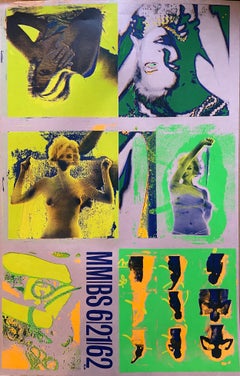
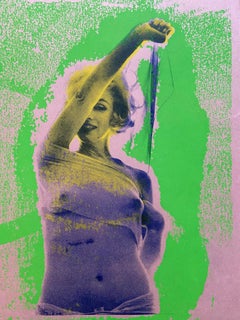
Bert Stern - Silkscreen The last session - Red

Bert Stern - Silkscreen The last session - Red

By Bert Stern

Located in Saint-Didier, Provence-Alpes-Côte d'Azur

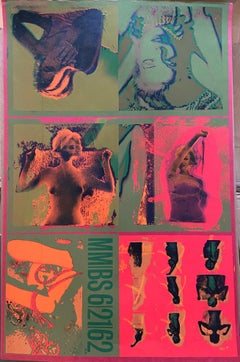
Bert Stern - Silkscreen The last session - RED Large screen print in a single run which was used as a proof for the No2 issue of the US Avant Garde magazine in August 1968. Signed ...

Category

Mid-20th Century Nude Prints

Materials

Paper

Bert Stern - Silkscreen The last session - YELLOW

Bert Stern - Silkscreen The last session - YELLOW

By Bert Stern

Located in Saint-Didier, Provence-Alpes-Côte d'Azur

Bert Stern - Silkscreen The last session - YELLOW Large screen print in a single run which was used as a proof for the No2 issue of the US Avant Garde magazine in August 1968. Sig...

Category

Mid-20th Century Nude Prints

Materials

Paper

Female Torso

Female Torso

By George Segal

Located in Fairlawn, OH

Signed and dated in pencil lower right From: New Jersey Volunteers for McCarthy Portfolio (14 lithographs by various artists) Signed in pencil lower right and dated ‘68 Printed by Pearl Seligman on Rives Heavyweight paper Edition 250 Features a broadside of Lowell's poem "Fall 1961," and 14 lithographs Signed in pencil by the following artists: Richard Anuskiewicz, Carmen Cicero, Leo Dee, Joseph Demarais...

Category

Contemporary Mid-20th Century Nude Prints

Materials

Lithograph

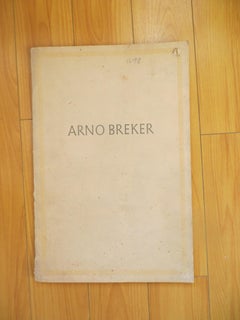
BREKER (Arno). Postdam, publisher of Eduard Stichnote - ZEICHNUNGEN

BREKER (Arno). Postdam, publisher of Eduard Stichnote - ZEICHNUNGEN

By Arno Breker 1

Located in Pasadena, CA

BREKER (Arno). Postdam, publisher of Eduard Stichnote - Berlin, printing stick by Sauer et consort, see folio in sheets in a publishing box with 10 prints of nude sketches, all signe...

Category

Art Deco Mid-20th Century Nude Prints

Materials

Archival Paper

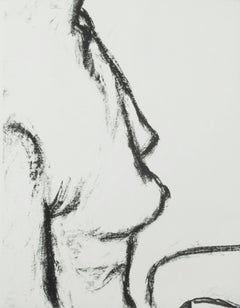
Ian Hornak, Figure, Circa 1963

Ian Hornak, Figure, Circa 1963

By Ian Hornak

Located in Southampton, NY

This exquisite etching by Ian Hornak (1944–2002), titled Figure, was executed circa 1963 during the artist’s undergraduate studies. Created during the formative years of Hornak’s art...

Category

Expressionist Mid-20th Century Nude Prints

Materials

Etching

Ian Hornak, Figure, Circa 1963

Ian Hornak, Figure, Circa 1963

By Ian Hornak

Located in Southampton, NY

This exquisite etching by Ian Hornak (1944–2002), titled Figure, was executed circa 1963 during the artist’s undergraduate studies. Created during the formative years of Hornak’s art...

Category

Expressionist Mid-20th Century Nude Prints

Materials

Etching

Soul Ascending-Serigraph, Regional Art Editions-Detroit

Soul Ascending-Serigraph, Regional Art Editions-Detroit

Located in Chesterfield, MI

Soul Ascending-Serigraph from original watercolor by Gwen Lux. Regional Art Editions-Detroit. Measures 23 x 14.25 inches and is unframed. The piece is in Good...

Category

Mid-20th Century Nude Prints

Materials

Screen

Jean Cocteau - White Book - Original Handcolored Lithograph

Jean Cocteau - White Book - Original Handcolored Lithograph

By Jean Cocteau

Located in Collonge Bellerive, Geneve, CH

Jean Cocteau White Book - Autobiography about Cocteau's discovery of his homosexuality. The book was first published anonymously and created a scandal. Original Handcolored Lithograp...

Category

Modern Mid-20th Century Nude Prints

Materials

Lithograph

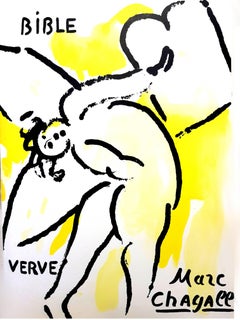
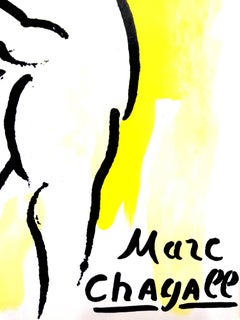
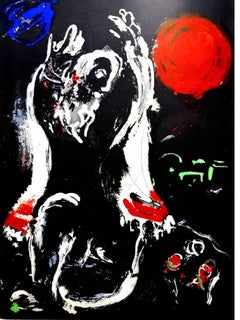
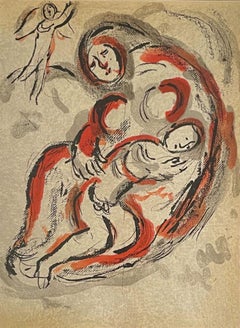
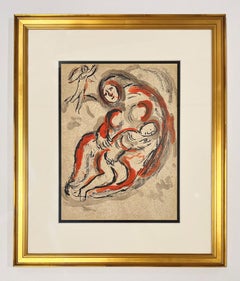
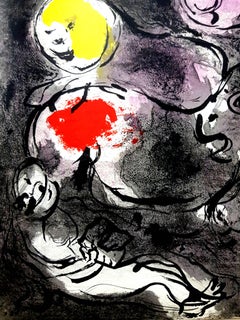
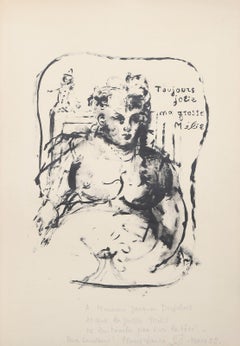
Marc Chagall - The Bible - Original Lithograph

Marc Chagall - The Bible - Original Lithograph

By Marc Chagall

Located in Collonge Bellerive, Geneve, CH

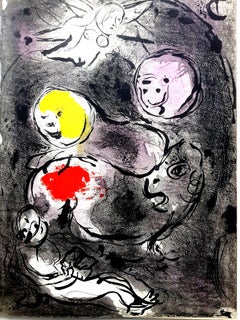
Marc Chagall, Original Lithograph depicting an instant of the Bible. Technique: Original lithograph in colours Year: 1956 Sizes: 35,5 x 26 cm / 14" x 10.2" (sheet) Published by: Éditions de la Revue Verve, Tériade, Paris Printed by: Atelier Mourlot, Paris Documentation / References: Mourlot, F., Chagall Lithograph [II] 1957-1962, A. Sauret, Monte Carlo 1963, nos. 234 and 257 Marc Chagall (born in 1887) Marc Chagall was born in Belarus in 1887 and developed an early interest in art. After studying painting, in 1907 he left Russia for Paris, where he lived in an artist colony on the city’s outskirts. Fusing his own personal, dreamlike imagery with hints of the fauvism and cubism popular in France at the time, Chagall created his most lasting work—including I and the Village (1911)—some of which would be featured in the Salon des Indépendants exhibitions. After returning to Vitebsk for a visit in 1914, the outbreak of WWI trapped Chagall in Russia. He returned to France in 1923 but was forced to flee the country and Nazi persecution during WWII. Finding asylum in the U.S., Chagall became involved in set and costume design before returning to France in 1948. In his later years, he experimented with new art forms and was commissioned to produce numerous large-scale works. Chagall died in St.-Paul-de-Vence in 1985. The Village Marc Chagall was born in a small Hassidic community on the outskirts of Vitebsk, Belarus, on July 7, 1887. His father was a fishmonger, and his mother ran a small sundries shop in the village. As a child, Chagall attended the Jewish elementary school, where he studied Hebrew and the Bible, before later attending the Russian public school. He began to learn the fundamentals of drawing during this time, but perhaps more importantly, he absorbed the world around him, storing away the imagery and themes that would feature largely in most of his later work. At age 19 Chagall enrolled at a private, all-Jewish art school and began his formal education in painting, studying briefly with portrait artist Yehuda Pen. However, he left the school after several months, moving to St. Petersburg in 1907 to study at the Imperial Society for the Protection of Fine Arts. The following year, he enrolled at the Svanseva School, studying with set designer Léon Bakst, whose work had been featured in Sergei Diaghilev's Ballets Russes. This early experience would prove important to Chagall’s later career as well. Despite this formal instruction, and the widespread popularity of realism in Russia at the time, Chagall was already establishing his own personal style, which featured a more dreamlike unreality and the people, places and imagery that were close to his heart. Some examples from this period are his Window Vitebsk (1908) and My Fianceé with Black Gloves (1909), which pictured Bella Rosenfeld, to whom he had recently become engaged. The Beehive Despite his romance with Bella, in 1911 an allowance from Russian parliament member and art patron Maxim Binaver enabled Chagall to move to Paris, France. After settling briefly in the Montparnasse neighborhood, Chagall moved further afield to an artist colony known as La Ruche (“The Beehive”), where he began to work side by side with abstract painters such as Amedeo Modigliani and Fernand Léger as well as the avant-garde poet Guillaume Apollinaire. At their urging, and under the influence of the wildly popular fauvism and cubism, Chagall lightened his palette and pushed his style ever further from reality. I and the Village (1911) and Homage to Apollinaire (1912) are among his early Parisian works, widely considered to be his most successful and representative period. Though his work stood stylistically apart from his cubist contemporaries, from 1912 to 1914 Chagall exhibited several paintings at the annual Salon des Indépendants exhibition, where works by the likes of Juan Gris, Marcel Duchamp and Robert Delaunay were causing a stir in the Paris art world. Chagall’s popularity began to spread beyond La Ruche, and in May 1914 he traveled to Berlin to help organize his first solo exhibition, at Der Sturm Gallery. Chagall remained in the city until the highly acclaimed show opened that June. He then returned to Vitebsk, unaware of the fateful events to come. War, Peace and Revolution In August 1914 the outbreak of World War I precluded Chagall’s plans to return to Paris. The conflict did little to stem the flow of his creative output, however, instead merely giving him direct access to the childhood scenes so essential to his work, as seen in paintings such as Jew in Green (1914) and Over Vitebsk (1914). His paintings from this period also occasionally featured images of the war’s impact on the region, as with Wounded Soldier (1914) and Marching (1915). But despite the hardships of life during wartime, this would also prove to be a joyful period for Chagall. In July 1915 he married Bella, and she gave birth to a daughter, Ida, the following year. Their appearance in works such as Birthday (1915), Bella and Ida by the Window (1917) and several of his “Lovers” paintings give a glimpse of the island of domestic bliss that was Chagall’s amidst the chaos. To avoid military service and stay with his new family, Chagall took a position as a clerk in the Ministry of War Economy in St. Petersburg. While there he began work on his autobiography and also immersed himself in the local art scene, befriending novelist Boris Pasternak, among others. He also exhibited his work in the city and soon gained considerable recognition. That notoriety would prove important in the aftermath of the 1917 Russian Revolution when he was appointed as the Commissar of Fine Arts in Vitebsk. In his new post, Chagall undertook various projects in the region, including the 1919 founding of the Academy of the Arts. Despite these endeavors, differences among his colleagues eventually disillusioned Chagall. In 1920 he relinquished his position and moved his family to Moscow, the post-revolution capital of Russia. In Moscow, Chagall was soon commissioned to create sets and costumes for various productions at the Moscow State Yiddish Theater, where he would paint a series of murals titled Introduction to the Jewish Theater as well. In 1921, Chagall also found work as a teacher at a school for war orphans. By 1922, however, Chagall found that his art had fallen out of favor, and seeking new horizons he left Russia for good. Flight After a brief stay in Berlin, where he unsuccessfully sought to recover the work exhibited at Der Sturm before the war, Chagall moved his family to Paris in September 1923. Shortly after their arrival, he was commissioned by art dealer and publisher Ambroise Vollard to produce a series of etchings for a new edition of Nikolai Gogol's 1842 novel Dead Souls. Two years later Chagall began work on an illustrated edition of Jean de la Fontaine’s Fables, and in 1930 he created etchings for an illustrated edition of the Old Testament, for which he traveled to Palestine to conduct research. Chagall’s work during this period brought him new success as an artist and enabled him to travel throughout Europe in the 1930s. He also published his autobiography, My Life (1931), and in 1933 received a retrospective at the Kunsthalle in Basel, Switzerland. But at the same time that Chagall’s popularity was spreading, so, too, was the threat of Fascism and Nazism. Singled out during the cultural "cleansing" undertaken by the Nazis in Germany, Chagall’s work was ordered removed from museums throughout the country. Several pieces were subsequently burned, and others were featured in a 1937 exhibition of “degenerate art” held in Munich. Chagall’s angst regarding these troubling events and the persecution of Jews in general can be seen in his 1938 painting White Crucifixion. With the eruption of World War II, Chagall and his family moved to the Loire region before moving farther south to Marseilles following the invasion of France. They found a more certain refuge when, in 1941, Chagall’s name was added by the director of the Museum of Modern Art (MOMA) in New York City to a list of artists and intellectuals deemed most at risk from the Nazis’ anti-Jewish campaign. Chagall and his family would be among the more than 2,000 who received visas and escaped this way. Haunted Harbors Arriving in New York City in June 1941, Chagall discovered that he was already a well-known artist there and, despite a language barrier, soon became a part of the exiled European artist community. The following year he was commissioned by choreographer Léonide Massine to design sets and costumes for the ballet Aleko, based on Alexander Pushkin’s “The Gypsies” and set to the music of Pyotr Ilyich Tchaikovsky. But even as he settled into the safety of his temporary home, Chagall’s thoughts were frequently consumed by the fate befalling the Jews of Europe and the destruction of Russia, as paintings such as The Yellow Crucifixion...

Category

Modern Mid-20th Century Nude Prints
Materials

Lithograph

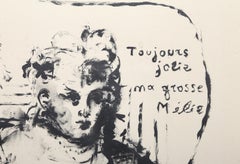
André Derain - Ovid's Heroides - Original Etching

André Derain - Ovid's Heroides - Original Etching

By André Derain

Located in Collonge Bellerive, Geneve, CH

André Derain - Ovid's Heroides Original Etching Edition of 134 Dimensions: 32 x 25 cm Ovide [Marcel Prevost], Héroïdes, Paris, Société des Cent-une, 1938 Andre Derain was born in 1...

Category

Modern Mid-20th Century Nude Prints
Materials

Etching

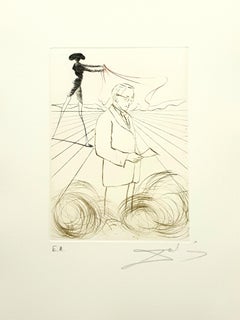
André Derain - Ovid's Heroides - Original Etching

André Derain - Ovid's Heroides - Original Etching

By André Derain

Located in Collonge Bellerive, Geneve, CH

André Derain - Ovid's Heroides Original Etching Edition of 134 Dimensions: 32 x 25 cm Ovide [Marcel Prevost], Héroïdes, Paris, Société des Cent-une, 1938 Andre Derain was born in 1...

Category

Modern Mid-20th Century Nude Prints
Materials

Etching

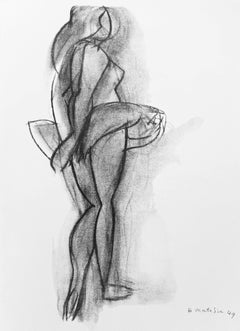
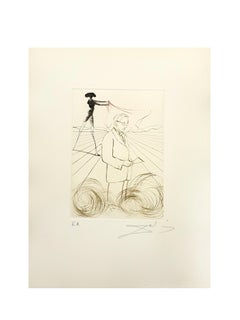
Henri Matisse, Ballerina, from Derriere le Miroir, 1952 (after)

Henri Matisse, Ballerina, from Derriere le Miroir, 1952 (after)

By Henri Matisse

Located in Southampton, NY

This exquisite lithograph after Henri Matisse (1869–1954), titled Ballerine (Ballerina), originates from the 1952 folio Derriere le Miroir, No. 46–47, published by Maeght Editeur, Pa...

Category

Modern Mid-20th Century Nude Prints
Materials

Lithograph

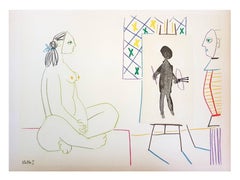
Henri Matisse, Nude Woman, from Derriere le Miroir, 1952 (after)

Henri Matisse, Nude Woman, from Derriere le Miroir, 1952 (after)

By Henri Matisse

Located in Southampton, NY

This exquisite lithograph after Henri Matisse (1869–1954), titled Femme nue (Nude Woman), originates from the 1952 folio Derriere le Miroir, No. 46–47, published by Maeght Editeur, P...

Category

Modern Mid-20th Century Nude Prints
Materials

Lithograph

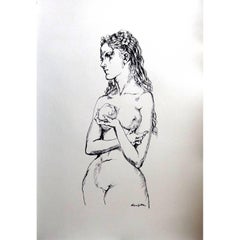
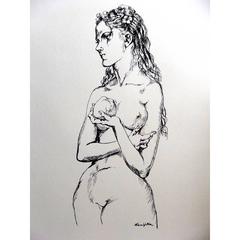
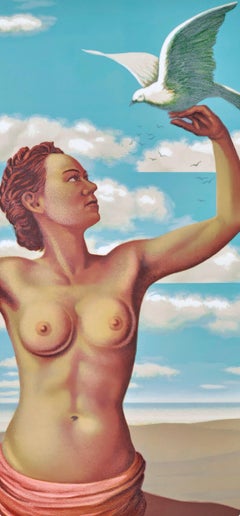
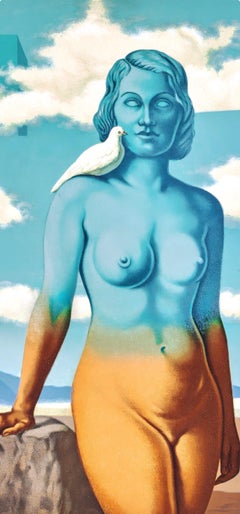
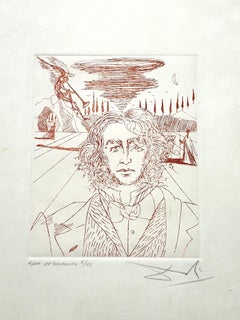
Rene Magritte, A Young Woman Presents with Grace, 1968 (after)

Rene Magritte, A Young Woman Presents with Grace, 1968 (after)

By René Magritte

Located in Southampton, NY

This exquisite lithograph after Rene Magritte (1898–1967), titled Une Jeune Femme Presente avec Grace (A Young Woman Presents with Grace), from the folio Les Enfants Trouves de Magritte (The Found Children of Magritte), 1968, originates from the edition published by A.C. Mazo et Cie, Paris, and printed by Mourlot Freres, Paris, on November 20, 1968. The work embodies Magrittes sustained inquiry into semiotics and visual epistemology, translating his characteristic strategies of displacement, symbolic inversion, and conceptual ambiguity into an image that operates as both a poetic metaphor and a philosophical proposition concerning the instability of meaning. Executed as a lithograph on grand velin dArches paper, this work measures 17.5 x 23.5 inches (44.5 x 59.7 cm). Signed in the plate by the artist; hand signed by Fernand Mourlot, Editeur. The edition exemplifies the technical mastery of the Mourlot atelier. Artwork Details: Artist: After Rene Magritte (1898–1967) Title: Une Jeune Femme Presente avec Grace (A Young Woman Presents with Grace), from the folio Les Enfants Trouves de Magritte (The Found Children of Magritte) Medium: Lithograph on grand velin dArches paper Dimensions: 17.5 x 23.5 inches (44.5 x 59.7 cm) Inscription: Signed in the plate by the artist; hand signed by Fernand Mourlot, Editeur Date: 1968 Publisher: A.C. Mazo et Cie, Paris Printer: Mourlot Freres, Paris Catalogue Raisonne: Magritte, Rene, et al. Rene Magritte: Catalogue Raisonne, Vol. 3. Menil Foundation; Philip Wilson Publishers; Distributed in the USA and Canada by Rizzoli International, 1992, nos. 791–792 and 1056; vol. 5, p. 218, Bibliography entry 68.28. Condition: Well preserved, consistent with age and medium Provenance: From the folio Les Enfants Trouves de Magritte, 1968 Notes: Excerpted from the folio (translated from French), Finished printing in Paris on November 20, 1968, on the presses of Mourlot, for the lithographs. The unpublished text by Louis Scutenaire was composed in Elzevir Casion corps 28 and printed by Fequet et Baudier, typographers. The unpublished compositions numbered from I to IV were specially made by Rene Magritte for this album. The compositions of the Enchanted Domain, are the renderings of the eight paintings of the mural of the Casino de Knokke. They were printed with the benevolent authorization of Mr. Gustave J. Nellens. Justification of the draw, this album was taken from CCCL examples on grand velin dArches numbered from I to CCCL, plus a few examples for collaborators and assistants. About the Publication: Les Enfants Trouves de Magritte (The Found Children of Magritte), published in 1968 by A.C. Mazo et Cie, Paris, represents one of the most significant late life print projects devoted to Rene Magrittes work. Conceived as both a literary and visual tribute, the folio pairs texts by the Belgian writer Louis Scutenaire, Magrittes close friend and fellow Surrealist, with lithographic interpretations produced at the Mourlot atelier, the premier lithographic workshop of twentieth century France. The album includes compositions by Magritte alongside lithographic renderings of the celebrated Enchanted Domain mural from the Casino de Knokke, printed with the authorization of Gustave J. Nellens, who commissioned the original mural. Issued in a single edition of CCCL examples on grand velin dArches, the folio stands as a testament to the collaboration between artist, writer, publisher, and master printer, and remains one of the most culturally important Surrealist print albums of the post war era. About the Artist: Rene Magritte (1898–1967) was a Belgian Surrealist painter whose visionary, intellectual, and poetic imagery redefined twentieth century art and forever changed how the world perceives reality and illusion. Celebrated for his calm precision and thought provoking juxtapositions of ordinary objects in extraordinary contexts, Magritte used painting as a philosophical tool, transforming the everyday into visual paradoxes that challenged the boundaries between what is seen and what is known. Born in Lessines, Belgium, and trained at the Academie Royale des Beaux Arts in Brussels, he absorbed early influences from Cubism, Futurism, and Symbolism before embracing Surrealism, where he found his true voice. In Paris, he became part of the avant garde circle that included Pablo Picasso, Alexander Calder, Alberto Giacometti, Salvador Dali, Joan Miro, Wassily Kandinsky, Marcel Duchamp, and Man Ray—all artists whose radical ideas helped him forge his distinctive synthesis of logic and mystery. Unlike Dalis dream...

Category

Surrealist Mid-20th Century Nude Prints
Materials

Lithograph

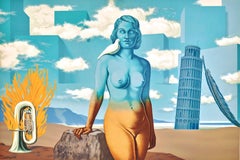
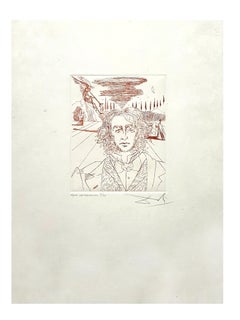
Rene Magritte, A Bombardon Releases its Bouquet of Flames, 1968 (after)

Rene Magritte, A Bombardon Releases its Bouquet of Flames, 1968 (after)

By René Magritte

Located in Southampton, NY

This exquisite lithograph after Rene Magritte (1898–1967), titled Un Bombardon Libere son Bouquet de Flammes (A Bombardon Releases its Bouquet of Flames), from the folio Les Enfants Trouves de Magritte (The Found Children of Magritte), 1968, originates from the edition published by A.C. Mazo et Cie, Paris, and printed by Mourlot Freres, Paris, on November 20, 1968. The work embodies Magrittes sustained inquiry into semiotics and visual epistemology, translating his characteristic strategies of displacement, symbolic inversion, and conceptual ambiguity into an image that operates as both a poetic metaphor and a philosophical proposition concerning the instability of meaning. Executed as a lithograph on grand velin dArches paper, this work measures 17.5 x 23.5 inches (44.5 x 59.7 cm). Signed in the plate by the artist; hand signed by Fernand Mourlot, Editeur. The edition exemplifies the technical mastery of the Mourlot atelier. Artwork Details: Artist: After Rene Magritte (1898–1967) Title: Un Bombardon Libere son Bouquet de Flammes (A Bombardon Releases its Bouquet of Flames), from the folio Les Enfants Trouves de Magritte (The Found Children of Magritte) Medium: Lithograph on grand velin dArches paper Dimensions: 17.5 x 23.5 inches (44.5 x 59.7 cm) Inscription: Signed in the plate by the artist; hand signed by Fernand Mourlot, Editeur Date: 1968 Publisher: A.C. Mazo et Cie, Paris Printer: Mourlot Freres, Paris Catalogue Raisonne: Magritte, Rene, et al. Rene Magritte: Catalogue Raisonne, Vol. 3. Menil Foundation; Philip Wilson Publishers; Distributed in the USA and Canada by Rizzoli International, 1992, nos. 791–792 and 1056; vol. 5, p. 218, Bibliography entry 68.28. Condition: Well preserved, consistent with age and medium Provenance: From the folio Les Enfants Trouves de Magritte, 1968 Notes: Excerpted from the folio (translated from French), Finished printing in Paris on November 20, 1968, on the presses of Mourlot, for the lithographs. The unpublished text by Louis Scutenaire was composed in Elzevir Casion corps 28 and printed by Fequet et Baudier, typographers. The unpublished compositions numbered from I to IV were specially made by Rene Magritte for this album. The compositions of the Enchanted Domain, are the renderings of the eight paintings of the mural of the Casino de Knokke. They were printed with the benevolent authorization of Mr. Gustave J. Nellens. Justification of the draw, this album was taken from CCCL examples on grand velin dArches numbered from I to CCCL, plus a few examples for collaborators and assistants. About the Publication: Les Enfants Trouves de Magritte (The Found Children of Magritte), published in 1968 by A.C. Mazo et Cie, Paris, represents one of the most significant late life print projects devoted to Rene Magrittes work. Conceived as both a literary and visual tribute, the folio pairs texts by the Belgian writer Louis Scutenaire, Magrittes close friend and fellow Surrealist, with lithographic interpretations produced at the Mourlot atelier, the premier lithographic workshop of twentieth century France. The album includes compositions by Magritte alongside lithographic renderings of the celebrated Enchanted Domain mural from the Casino de Knokke, printed with the authorization of Gustave J. Nellens, who commissioned the original mural. Issued in a single edition of CCCL examples on grand velin dArches, the folio stands as a testament to the collaboration between artist, writer, publisher, and master printer, and remains one of the most culturally important Surrealist print albums of the post war era. About the Artist: Rene Magritte (1898–1967) was a Belgian Surrealist painter whose visionary, intellectual, and poetic imagery redefined twentieth century art and forever changed how the world perceives reality and illusion. Celebrated for his calm precision and thought provoking juxtapositions of ordinary objects in extraordinary contexts, Magritte used painting as a philosophical tool, transforming the everyday into visual paradoxes that challenged the boundaries between what is seen and what is known. Born in Lessines, Belgium, and trained at the Academie Royale des Beaux Arts in Brussels, he absorbed early influences from Cubism, Futurism, and Symbolism before embracing Surrealism, where he found his true voice. In Paris, he became part of the avant garde circle that included Pablo Picasso, Alexander Calder, Alberto Giacometti, Salvador Dali, Joan Miro, Wassily Kandinsky, Marcel Duchamp, and Man Ray—all artists whose radical ideas helped him forge his distinctive synthesis of logic and mystery. Unlike Dalis dream...

Category

Surrealist Mid-20th Century Nude Prints
Materials
Lithograph