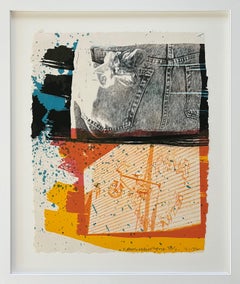
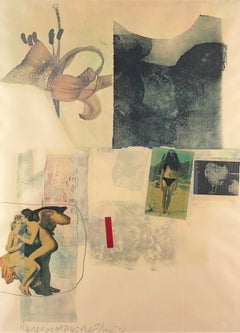
Score
By Robert Rauschenberg
Located in New York, NY
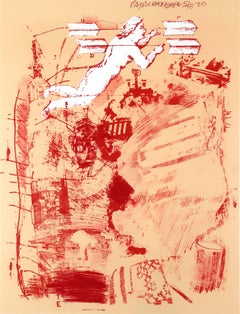
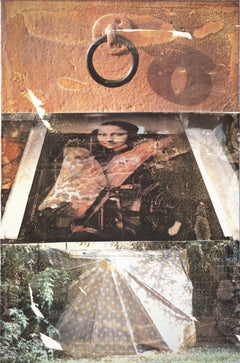
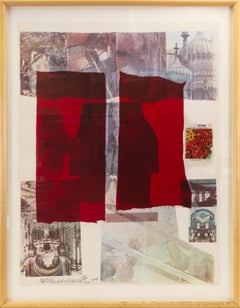
Robert Rauschenberg Score, 1970 Lithograph 26 x 19 1/2 inches Edition 51 of 75 Signed This print belongs to Rauschenberg’s “Stoned Moon” seri...
1970s Pop Art Abstract Prints
Lithograph
1968
Robert Rauschenberg was one of the preeminent American artists of the 20th century, occupying a singular position that straddled the Abstract Expressionist and Pop art movements, drawing on key elements of each. An artistic polymath equally adept at painting, collage and silkscreening, Rauschenberg is best known for for the complex assemblages of found objects he termed “combines.”
Rauschenberg was born in Port Arthur, Texas, in 1925. He first began to seriously consider a career in art in 1947, while serving in the U.S. Marines. After leaving the service, he briefly studied art in Paris with support from the G.I. Bill, then moved to North Carolina to attend Black Mountain College, home to a flourishing cross-disciplinary art community. Among his peers there were choreographer Merce Cunningham and composer John Cage, both of whom became friends and artistic collaborators.
Relocating to New York in the mid-1950s, Rauschenberg was initially put off by what he perceived as the self-seriousness of the adherents of Abstract Expressionism, then the dominant movement in the New York art world. Like Andy Warhol and Roy Lichtenstein, Rauschenberg was drawn to the visual landscape of popular culture and mined its imagery for inspiration. He used unorthodox materials like house paint and tried novel techniques in his studio like running paper over with a car whose wheels he had inked. Shortly after his inaugural solo exhibition at Leo Castelli Gallery, which featured paintings and drawings, he pivoted to a new format, creating his first found-object combines, which became his signature. The most famous of these is the 1959 Monogram in which a taxidermied goat is surrounded by a car tire, recalling the way a person’s initials are interwoven in the design referred to by the title.
Later in the 1960s, Rauschenberg turned his attention to silkscreening, creating prints that feature iconic figures of the day, very much in line with the style and content of Pop art. One such work, 1965's Core, which was created to commemorate the Congress of Racial Equality, combines photographs of President Kennedy, an unidentified Native American man, and a statue of a Civil War soldier with images of highways, amusement parks, street signs, and other features of the built environment. A circular color-test wheel sits at the composition’s formal core, reflecting the work’s commentary on race and ethnicity.
Throughout the 1960s and ‘70s, Rauschenberg experimented with printing on unusual materials, such as Plexiglas, clothing and aluminum. Venturing even further afield, he created performance works, such as his 1963 choreographed piece “Pelican” and the 1966 film Open Score. In 1998, the Guggenheim Museum presented a large and comprehensive retrospective of Rauschenberg’s work, highlighting his influence on American art in the second half of the 20th century.
Find original Robert Rauschenberg art for sale on 1stDibs.
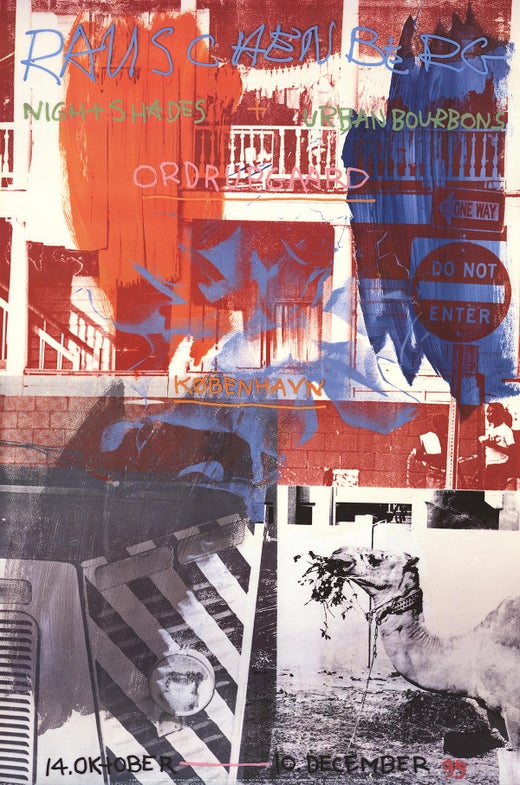
Score
By Robert Rauschenberg
Located in New York, NY
Robert Rauschenberg Score, 1970 Lithograph 26 x 19 1/2 inches Edition 51 of 75 Signed This print belongs to Rauschenberg’s “Stoned Moon” seri...
Lithograph
Source from Speculations
By Robert Rauschenberg
Located in Miami, FL
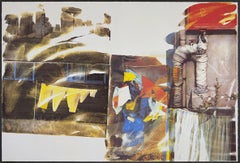
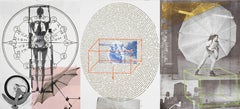
TECHNICAL INFORMATION Robert Rauschenberg Source from Speculations 1996 28 color screenprint 47 3/4 x 70 1/4 in. Edition of 35 Pencil signed & numbered Accompanied with COA ...
Screen
Arcanum IV
By Robert Rauschenberg
Located in New York, NY
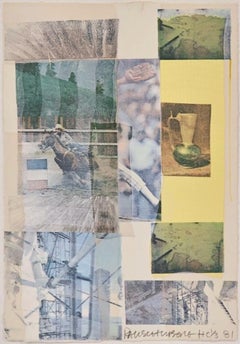
An intriguing artwork with myriad images and collage, Robert Rauschenberg created Arcanum IV in 1981 is a screenprint in colors on wove paper. Hand-signed in pencil, dated, and numbe...
Screen
Earth Tie (Stoned Moon Series)
By Robert Rauschenberg
Located in Houston, TX
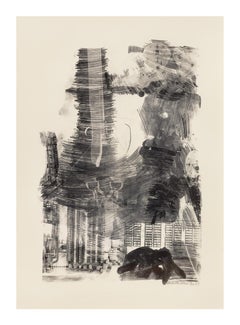
Robert Rauschenberg Earth Tie (Stoned Moon Series), 1969 Color lithograph 48 x 34 inches Edition of 48
Lithograph
Theatre
By Robert Rauschenberg
Located in Calabasas, CA
Artist: Robert Rauschenberg Title: Theatre Year: 1994 Medium: Lithograph with vegetable dye water transfer on Arches Infinity paper Edition: 50; signed, dated and numbered in pencil ...
Lithograph
Autobiography
By Robert Rauschenberg
Located in Houston, TX
Robert Rauschenberg Autobiography, 1968 Three panel offset lithograph on three sheets of paper 66 1/4 x 48 3/4 inches each Ed. 2000, unsigned Unframed Can be displayed horizontally o...
Lithograph
$4,500
H 30 in W 23 in
Robert Rauschenberg Why You Can't Tell #2 Signed 1979 Edition of 100
By Robert Rauschenberg
Located in Minneapolis, MN
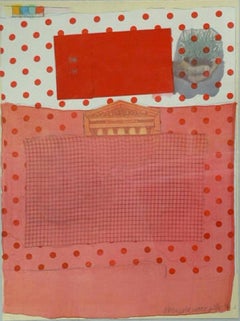
Artist: Robert Rauschenberg Title: Why You Can't Tell #2 (from Suite of Nine Prints) Medium: Screen-Print with Collage Elements on Wove Paper Edition: 73/100 Sheet Size: 30" x 23" Fr...
Screen
Equal Justice Under Law
By Robert Rauschenberg
Located in Miami, FL
TECHNICAL INFORMATION Robert Rauschenberg Equal Justice Under Law 1976 Lithograph and screenprint with collage 30 1/4 x 22 3/4 in. Edition of 125 P...
Screen, Lithograph
Fest
By Robert Rauschenberg
Located in Indianapolis, IN
Robert Rauschenberg (1925-2008) Fest (1991) Four color lithograph Size: 26 x 21 in (66 x 53.3 cm) Frame size: 33.5 x 28.25 (85 x 71.7 cm) Edition of 51, this is 38/51 Hand signed an...
Lithograph
Untitled
By Robert Rauschenberg
Located in Missouri, MO
Robert Rauschenberg "Untitled" 1973 Medium: Screenprint and collage in colors Printed and Published by Styria Studios, New York and with their blindstamp Signed and Numbered 71/100 Images Size: approx. 28 x 20 inches Framed Size: approx. 34 x 26 inches Born with the name Milton Rauschenberg in Port Arthur, Texas, Robert Rauschenberg became one of the major artists of his generation and is credited along with Jasper Johns of breaking the stronghold of Abstract Expressionism*. Rauschenberg was known for assemblage*, conceptualist methods, printmaking, and willingness to experiment with non-artistic materials--all innovations that anticipated later movements such as Pop Art*, Conceptualism*, and Minimalism*. In May, 1999, ARTNews magazine featured him as one of the top twenty-five influential western artists, stating: "His irreverent notions of what an artwork could be gained him the status of an enfant terrible. . .Rauschenberg pushed the viewer to accept the unexpected." He has said that he believes painting should relate to both life and art and that he wants is artwork to be the intermediary between the two. He received much formal art education beginning with the Kansas City Art Institute in 1947 and 1948. He studied briefly in Paris at the Academie Julian*, and from 1948 to 1949 was at Black Mountain College* in North Carolina with Josef and Anni Albers. This period was followed by several years attendance at the Art Students League* in New York City with Morris Kantor and Vaclav Vytlacil. In 1951, he exhibited all white and black paintings incorporating viewer participation through the shadows they cast on the works. At Black Mountain College, he had met composer, John Cage, and dancer- choreographer, Merce Cunningham, for whom he worked in his company as a designer, manager, and performer. Frequently he scoured the area in which they were performing for 'unusual' objects such as tires, old radios...
Lithograph