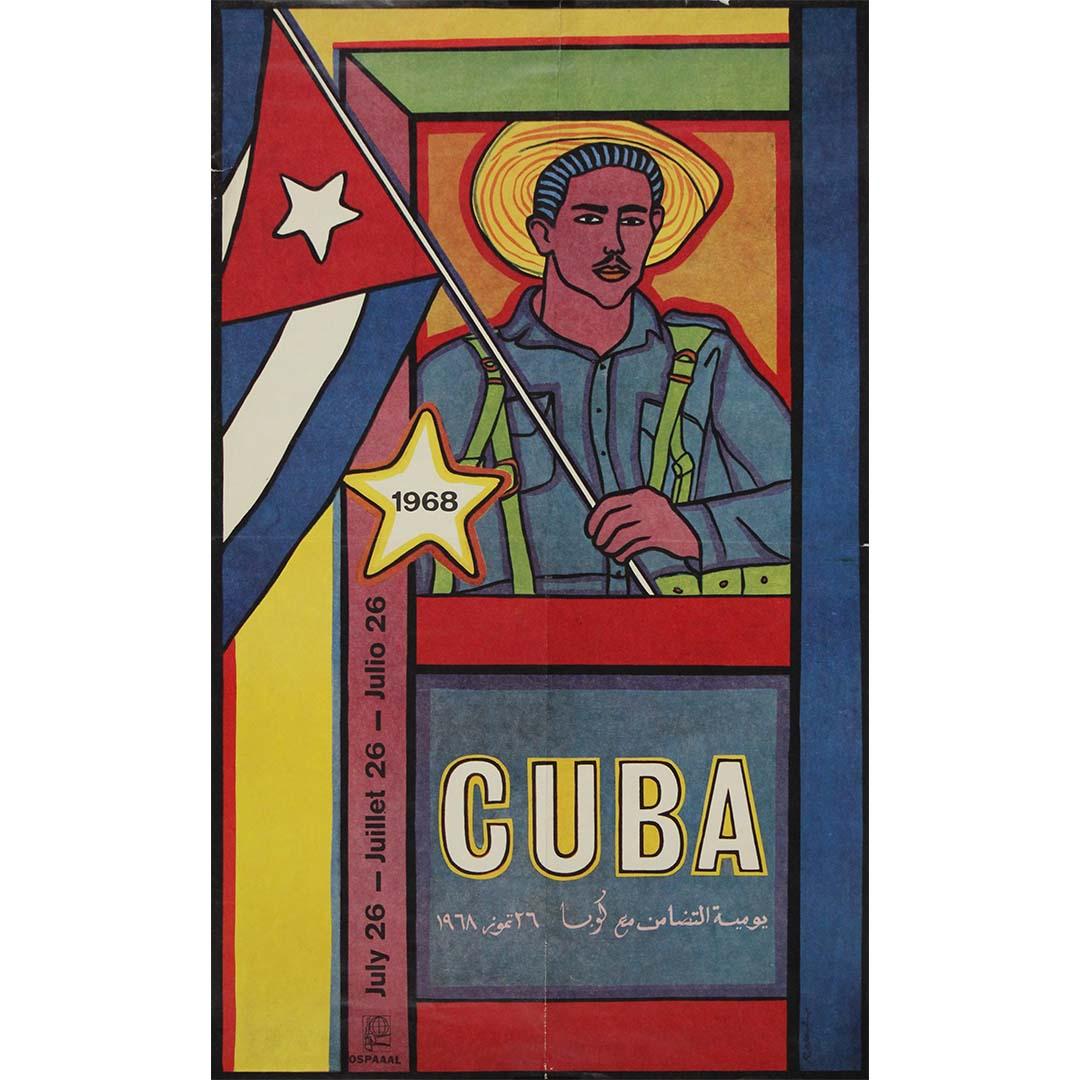
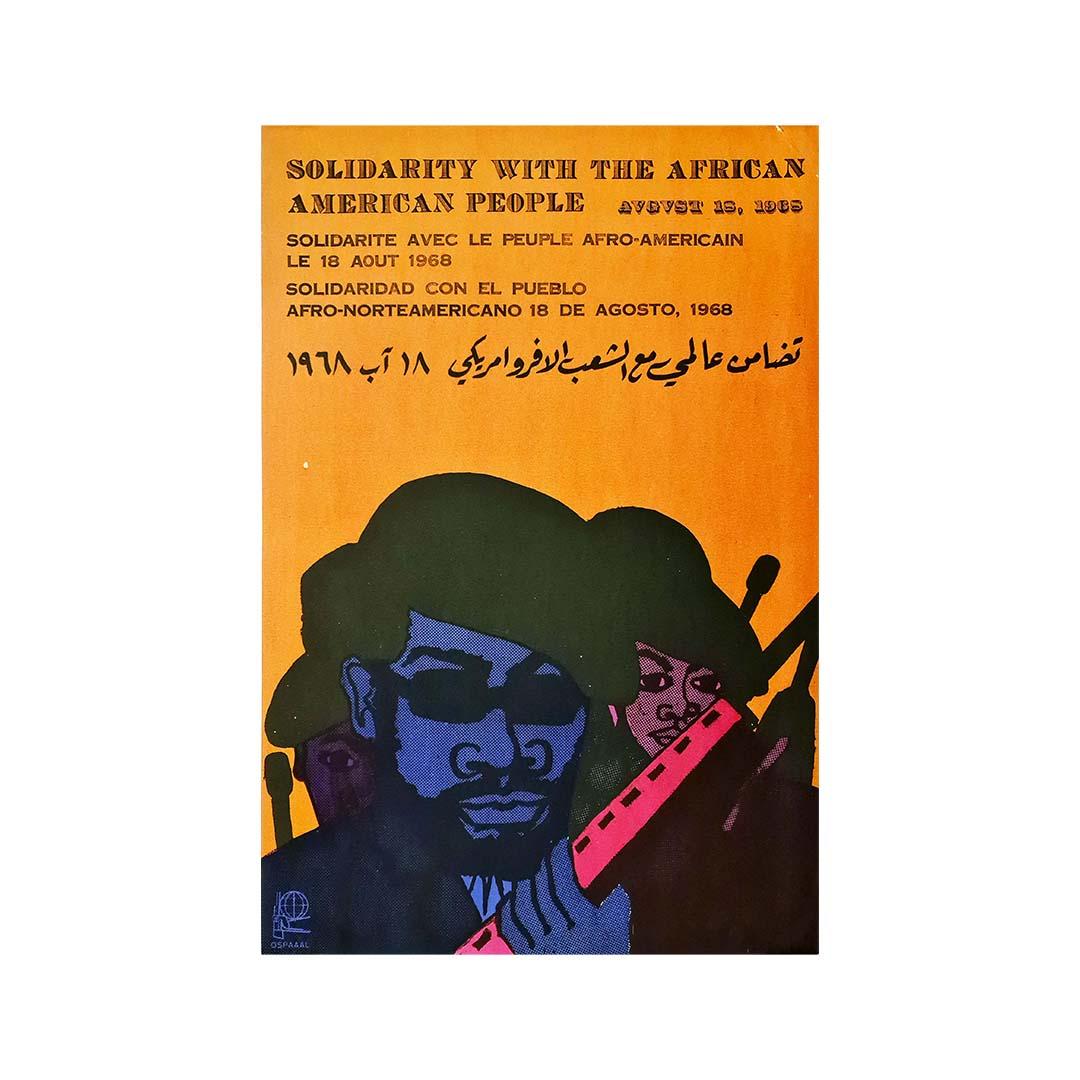
Issued in 1972, this original poster by Olivio Martinez was produced for OSPAAAL (Organization of Solidarity with the People of Asia, Africa and Latin America), one of the most influential international solidarity organizations of the Cold War era. Created during the final years of the Vietnam War, the poster expresses support for the Vietnamese struggle and reflects the global network of political and anti-colonial movements that characterized the period.
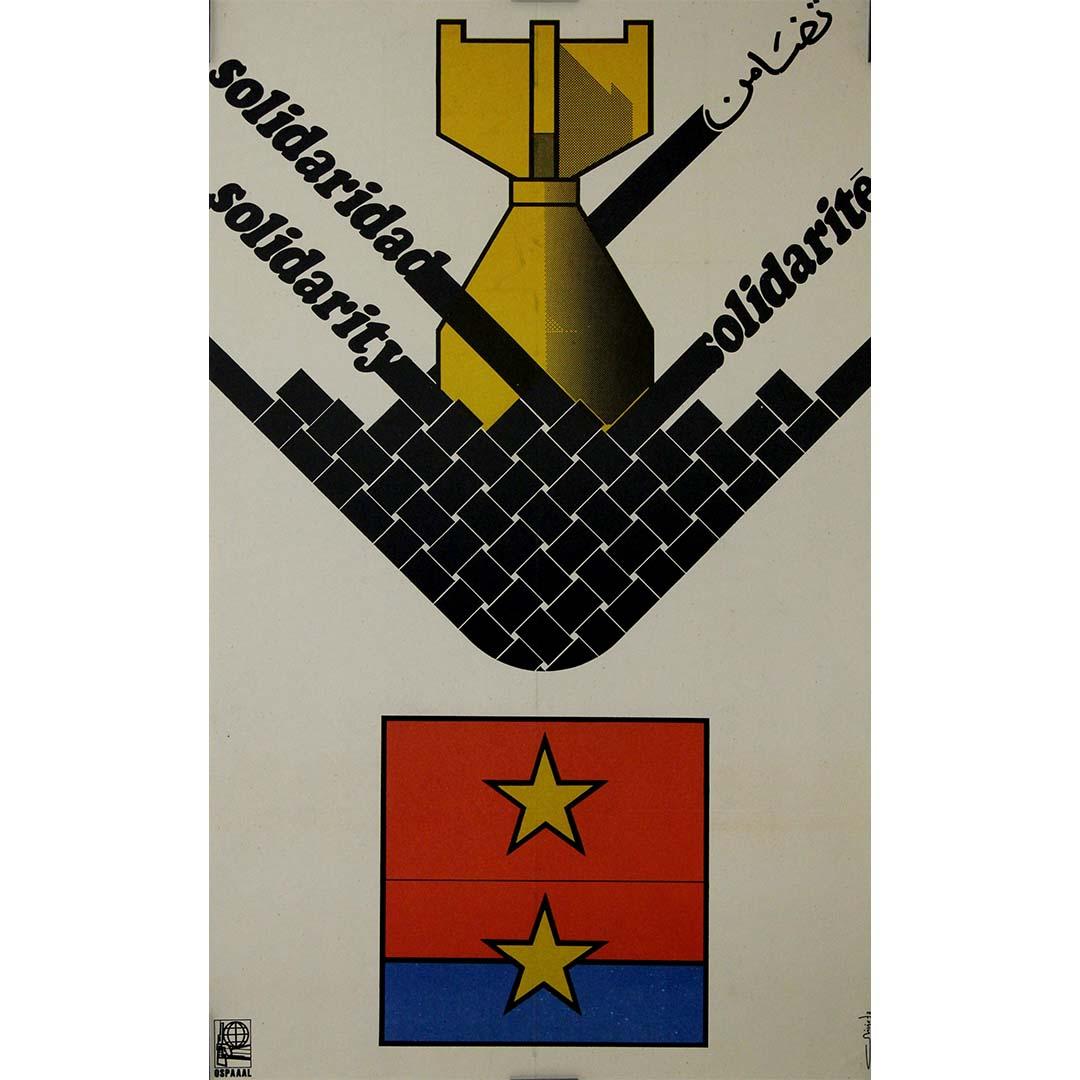
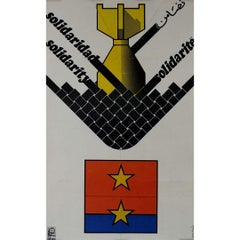
The composition is built around a striking symbolic image. A large bomb shell emerges from a woven barrier while the word “Solidarity” appears in several languages, including French, English, and Arabic, emphasizing the international character of the campaign. Below, two stars unite within a red and blue field representing the revolutionary forces of Vietnam. The design suggests that international solidarity forms a protective barrier against military aggression and reinforces the collective resistance of oppressed peoples.
Founded in Havana in 1966, OSPAAAL became renowned for its visually powerful posters distributed worldwide in support of anti-colonial, anti-imperialist, and liberation movements. Unlike conventional political propaganda, OSPAAAL posters often employed sophisticated graphic design, bold symbolism, and multilingual messages intended for a truly international audience. Many were folded into the organization's magazine Tricontinental and circulated across Europe, Africa, Asia, and the Americas.
The Vietnam War occupied a central place within OSPAAAL’s visual production. Throughout the late 1960s and early 1970s, the Vietnamese struggle was widely viewed by many left-wing movements as a symbol of resistance against foreign intervention and colonial domination. Posters such as this one sought to mobilize international public opinion and encourage support for Vietnam through political activism, cultural exchange, and expressions of solidarity.
Artistically, the poster exemplifies the distinctive visual language associated with Cuban revolutionary graphic design. The composition relies on simplified geometric forms, strong contrasts, and symbolic imagery rather than narrative scenes. The restrained palette of black, yellow, red, and blue creates an immediate visual impact, while the multilingual typography reinforces the universal nature of the message.
Today, original OSPAAAL posters are among the most sought-after examples of twentieth-century political graphic design. Collected by museums, historians, and enthusiasts of Cold War art...
Category
1970s More Prints
MaterialsPaper, Lithograph