Want more images or videos?
Request additional images or videos from the seller
1 of 13

Curt Gitschmann
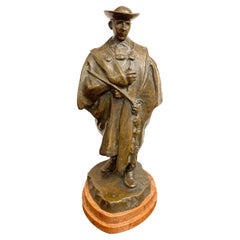
Gerhart Hauptmann, c. 1912 / - - Pensive stride -

$2,935.18
£2,186.12
€2,500VAT Included
CA$4,122.09
A$4,181.73
CHF 2,378.53
MX$50,803.67
NOK 27,973.29
SEK 28,070.26
DKK 19,065.90

About the Item

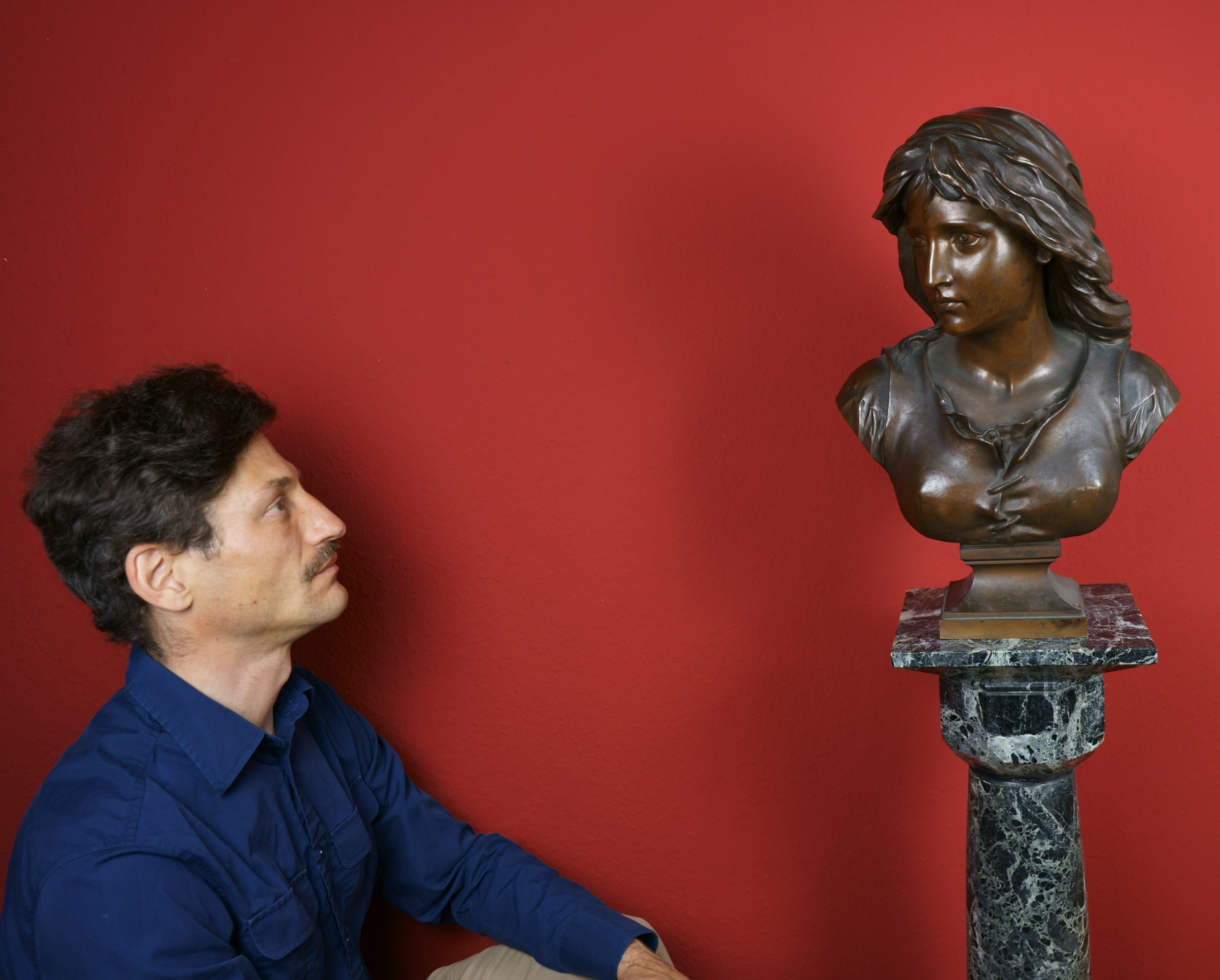
Curt Gitschmann (1876 Breslau - 1933 Berlin), Gerhart Hauptmann, around 1912. Brown patinated bronze mounted on marble plinth, 43 cm (total height), 20 cm (width) x 20 cm (depth) cm, signed “Curt Gitschmann” on the base plate. - In excellent condition - Pensive stride - In keeping with the age depicted, this extremely rare full-length portrait of Gerhart Hauptmann shows the writer in his 50s after he was awarded the Nobel Prize for Literature. With his hat pulled down and his coat draped over his arm, he strides forward at a measured pace, leaning on a walking stick. His upper body is bent forward and his head is bowed. Deep in thought, he makes his way. It is the path of unfolding, in literature, the heaviness and hardship of life and the tragedy of human existence, which has left its mark on him. Through this portrait, the artist Curt Gitschmann succeeds in illustrating the character of Hauptmann's work. Curt Gitschmann studied at the Berlin Art Academy under Paul Thurmann. He then worked as a freelance artist in Berlin, where he exhibited at the Great Berlin Art Exhibitions between 1895 and 1912. He was one of the portrait painters of the royal family. GERMAN VERSION Curt Gitschmann (1876 Breslau - 1933 Berlin), Gerhart Hauptmann, um 1912. Braun patinierte Bronze auf Marmorplinthe montiert, 43 cm (Gesamthöhe), 20 cm (Breite) x 20 cm (Tiefe) cm, auf der Standplatte mit „Curt Gitschmann“ signiert. - in ausgezeichnetem Zustand - Sinnierendes Schreiten - Dem dargestellten Alter entsprechend zeigt das äußerst rare Ganzkörperporträt Gerhart Hauptmanns den Schriftsteller in seinen 50er Jahren nachdem ihm der Literaturnobelpreis verliehen wurde. Mit gezogenem Hut und über den Arm gelegtem Mantel schreitet er – auf einen Spazierstock gestützt – gemessen Schrittes vorwärts. Dabei ist sein Oberkörper nach vorn gebeugt und der Kopf gesenkt. Ganz in sich versunken bahnt er sich seinen Weg. Es ist der Weg, literarisch die Schwere und Mühsal des Lebens und die Tragik der menschlichen Existenz zu entfalten, von der er selbst gezeichnet ist. Dem Künstler Curt Gitschmann gelingt es, durch das Porträt hindurch den Charakter von Hauptmanns Werk zu veranschaulichen. Curt Gitschmann studierte an der Berliner Kunstakademie bei Paul Thurmann. Anschließend war er in Berlin als freischaffender Künstler tätig und beschickte dort zwischen 1895 und 1912 die Großen Berliner Kunstausstellungen. Er gehörte zu den Porträtmalern des Königshauses.
  • Creator:
    Curt Gitschmann (1876 - 1933, German)
  • Dimensions:
    Height: 16.93 in (43 cm)Width: 7.88 in (20 cm)Depth: 7.88 in (20 cm)
  • Medium:
  • Movement & Style:
  • Period:
  • Condition:
  • Gallery Location:
    Berlin, DE
  • Reference Number:
    1stDibs: LU2438217726412

More From This Seller

View All
Javelin thrower / - Roman present -

Javelin thrower / - Roman present -

By Franz Iffland

Located in Berlin, DE

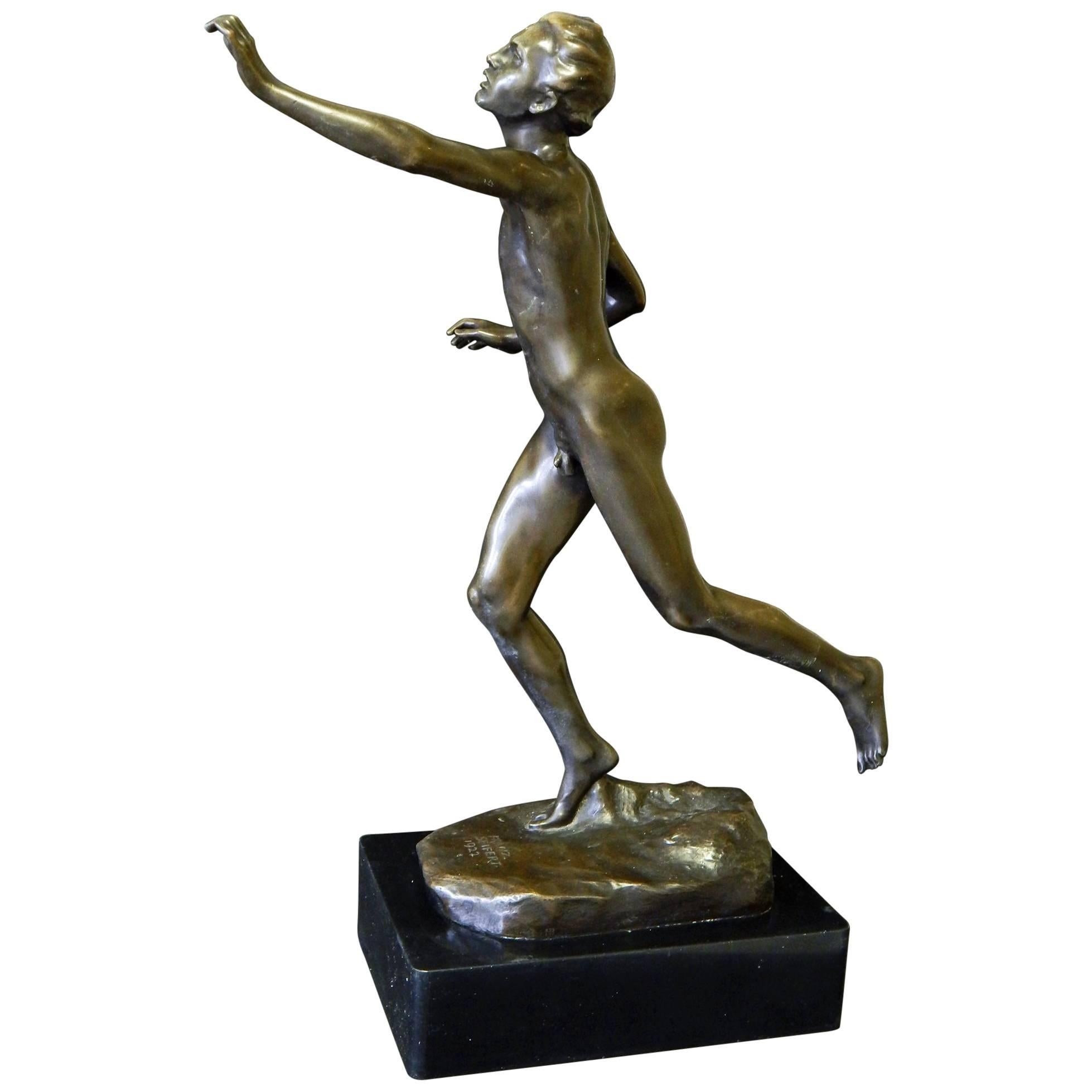
Franz Iffland (1862 Tempelhof - 1935 Berlin), Javelin thrower, after 1910. Olive-black patinated bronze with cast plinth mounted on a white-veined black marble base (7 cm high). Tota...

Category

1910s Art Deco Nude Sculptures

Materials

Bronze

Hunting dog on the prowl / - Following the scent -

Hunting dog on the prowl / - Following the scent -

By Jules Moigniez

Located in Berlin, DE

Jules Moigniez (1835 Senlis - 1894 St-Martin-du-Tertre), Hunting dog on the prowl, around 1880. Dark patinated bronze with naturalistic terrain plinth, 16 cm (height) x 30 cm (length...

Category

1890s Naturalistic Figurative Sculptures

Materials

Bronze

Forest idyll / - Soulmate -

Forest idyll / - Soulmate -

By Rudolf Kaesbach

Located in Berlin, DE

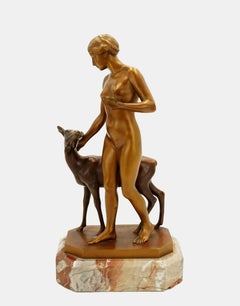
Rudolf Kaesbach (1873 Gladbach - 1955 Berlin), Forest idyll, around 1915. Bronze, gold and golden brown patina, with cast plinth, mounted on a marble base (5 cm high), total height 36 cm, dimensions of the bronze: 31 cm (height) x 17 cm (length) x 12 cm (width). Weight 4,6 kg, signed on the plinth "R.[udolf] KAESBACH". - a few rubbed areas, overall in excellent condition for its age - Soulmate - The bronze sculpture depicts a young woman in an intimate exchange with a deer that accompanies her. The animal pauses to turn toward her, while the nude beauty slows her pace to look into the deer's eyes and tenderly caress it with her hand. The woman and the deer are in inner harmony. Even though her lips remain motionless, she speaks the language of the animal with which she is deeply connected. The golden patina, which contrasts with the more naturalistic coloring of the deer, gives the young woman the appearance of a saint, even if she cannot be identified as such. At the same time, she evokes memories of Diana, the goddess of the hunt, or a nymph. But she lacks the ferocity. In her innocent naivety, she is more like a vestal virgin, who is not at home in the solitude of the forest. And yet, the young beauty, moving unclothed in the heart of nature, looks like a priestess with her hair tied up and a carefully carried bowl on her way to a sacred grove. In order to open up the above-mentioned associations, Kaesbach deliberately designed the female figure in such a way that she cannot be identified as a specific person. He has created an allegory of natural femininity, characteristic of Art Nouveau, in which the deer is far more than a companion animal. It displays the same gracefulness as the young woman, and the inner resemblance between the two makes the deer appear as her other self. In animal terms, it embodies her inner being, which also gives the deer an allegorical character. About the artist Rudolf Kaesbach studied sculpture at the Hanau Academy and worked in a bronze foundry in Paris in 1900. In order to work as an independent artist, he opened a workshop in Düsseldorf, where he cast bronzes from models he designed. In 1902 he made his debut at the German National Art Exhibition in Düsseldorf. The following year Kaesbach went to the academy in Brussels. There he was inspired by contemporary Belgian sculpture, especially the work of Constantin Meunier. He moved to Berlin, where he opened a studio in the villa district of Grunewald and devoted himself to life-size marble sculptures and the design of bronzes. From 1911, he regularly presented his works at the major art exhibitions in Berlin, as well as in Düsseldorf and Malmö. Between 1936 and 1939, he also created models for the Rosenthal porcelain factory. From 1939 to 1944, Kaesbach was represented at the major German art exhibitions in Munich. GERMAN VERSION Rudolf Kaesbach (1873 Gladbach - 1955 Berlin), Waldidyll, um 1915. Gold und goldbraun patinierte Bronze mit gegossener Plinthe, auf einem Marmorsockel montiert (5 cm Höhe), Gesamthöhe 36 cm, Maße der Bronze: 31 cm (Höhe) x 17 cm (Länge) x 12 cm (Breite). Gewicht 4,6 kg, auf der Plinthe mit „R.[udolf] KAESBACH“ signiert. - vereinzele beriebene Stellen, insgesamt in einem altersgemäß ausgezeichneten Zustand - Seelenverwandtschaft - Die Bronzeplastik veranschaulicht eine junge Frau im innigen Austausch mit einem sie begleitenden Reh. Das Tier hält inne, um sich zu ihr hochzuwenden, während die nackte Schönheit ihren Schritt verlangsamt, um dem Reh ebenfalls in die Augen zu schauen und es zärtlich mit der Hand zu liebkosen. Die Frau und das Reh sind in einem inneren Gleichklang. Auch wenn ihre Lippen unbewegt bleiben, spricht sie die Sprache des Tieres, mit dem sie auf eine tief empfundene Weise verbunden ist. Die im Kontrast zur naturalistischeren Einfärbung des Rehs aufstrahlende goldfarbene Patina lässt die junge Frau wie eine Heilige erscheinen, auch wenn sich nicht als Heilige identifizierbar ist. Zugleich ruft sie Erinnerungen an die Jagdgöttin Diana oder eine Nymphe hervor. Dafür fehlt ihr allerdings die Wildheit. In ihrer unschuldigen Naivität gemahnt sie vielmehr an eine Vestalin, die freilich nicht in der Waldeinsamkeit zu Hause ist. Und doch wirkt die sich unbekleidet im Herzen der Natur bewegende junge Schönheit wie eine Priesterin, die sich mit hochgebundenem Haar und der vorsichtig getragenen Schale und dem Wege zu einem Heiligen Hain befindet. Um die gennannten Assoziationen zu eröffnen, hat Kaesbach die Frauenfigur bewusst so gestaltet, dass sie nicht als konkrete Person identifizierbar ist. Damit hat er eine für den Jugendstil charakteristische Allegorie natürlicher Weiblichkeit geschaffen, bei der das Reh weit mehr als ein Begleittier ist. Es weist dieselbe grazile Anmut wie die junge Frau auf und der innere Gleichklag der beiden lässt das Reh als ihr anderen Ich erscheinen. Es verkörpert – ins Animalische übertragen - ihr inneres Wesen, wodurch auch dem Reh ein allegorischer Charakter zukommt. zum Künstler Rudolf Kaesbach studierte an der Akademie Hanau Bildhauerei und war im Jahr 1900 in einer Pariser Bronzegießerei tätig. Um sich als eigenständiger Künstler betätigen zu können, eröffnete er in Düsseldorf eine Werkstatt, in der er Bronzen nach selbstentworfenen Modellen goss. 1902 debütierte er auf der Deutschen Nationalen Kunstaustellung in Düsseldorf. Im Folgejahr ging Kaesbach an die Akademie nach Brüssel. Dort wurde er von der zeitgenössischen belgischen Bildhauerei, insbesondere vom Werk Constantin Meuniers, inspiriert. Zurückgekehrt zog er nach Berlin, wo er im Villenviertel Grunewald ein Atelier eröffnete und sich neben dem Entwurf für Bronzen der lebensgroßen Marmorbildhauerei widmete. Ab 1911 präsentierte er seine Werke regelmäßig auf den Großen Berliner Kunstausstellungen, aber auch in Düsseldorf und Malmö. Zwischen 1936 und 1939 fertigte er zudem Modelle für die Porzellan-Manufaktur Rosenthal an. Von 1939 bis 1944 war...

Category

1910s Jugendstil Nude Sculptures
Materials

Bronze

Juggler / - Artistic naturalness -

Juggler / - Artistic naturalness -

Located in Berlin, DE

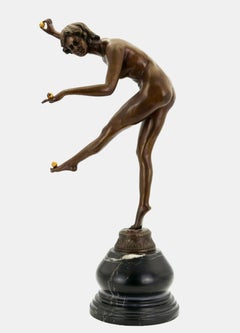
Claire Jeanne Robertine Colinet (1880 Brussels - 1950 Asnières-sur-Seine), Juggler, around 1920. Brownish patinated bronze with gilded balls on a round, multi-profiled stone base (10...

Category

1920s Art Deco Nude Sculptures

Materials

Bronze

You May Also Like

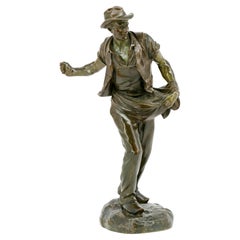
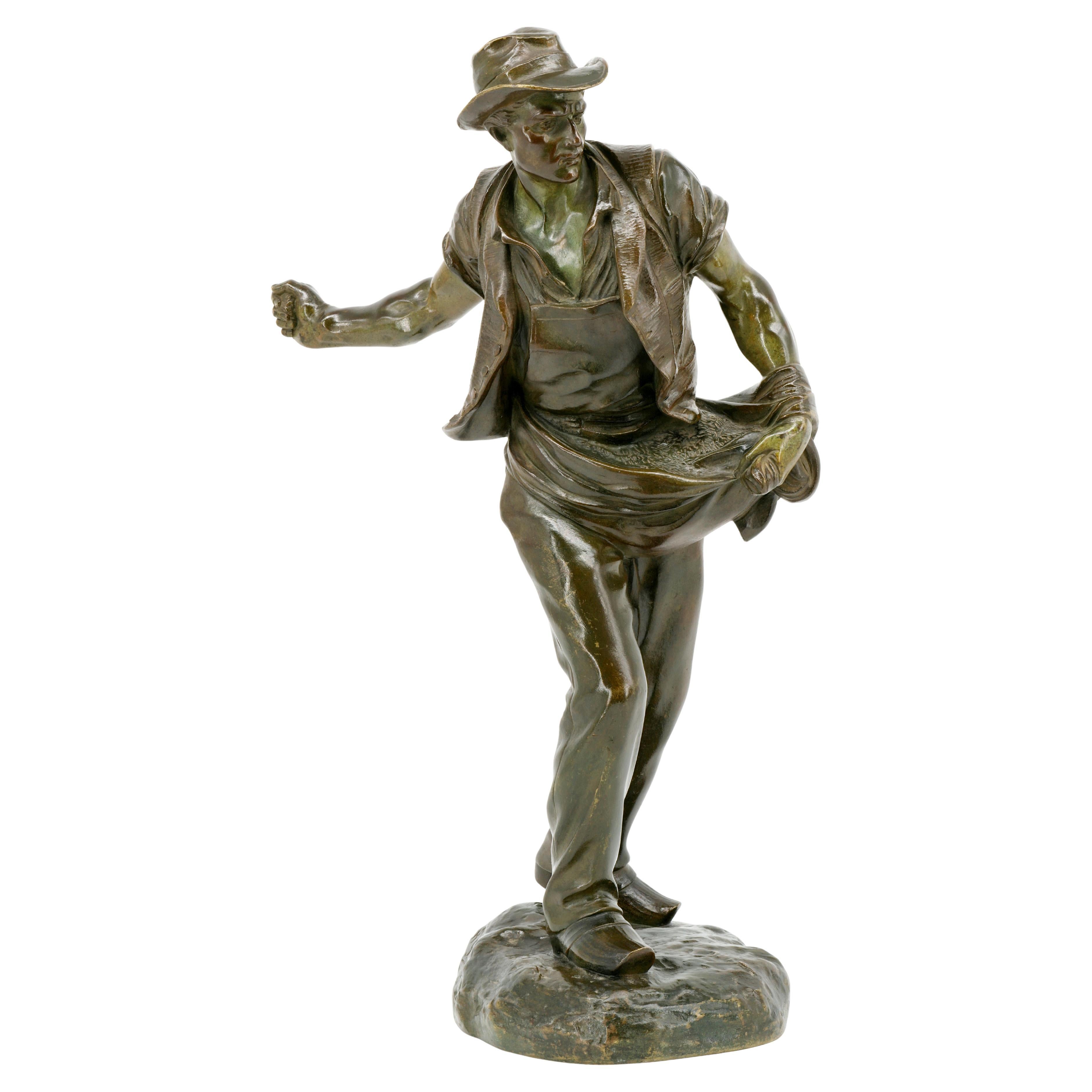
Henri Gauquie The Sower Bronze Sculpture, Art Nouveau, c. 1910

Henri Gauquie The Sower Bronze Sculpture, Art Nouveau, c. 1910

By Henri Desire Gauquie

Located in Saint-Amans-des-Cots, FR

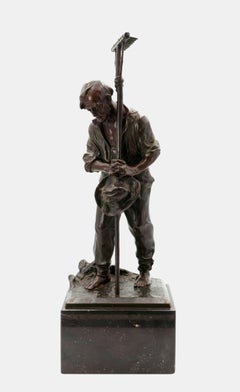
Rare French bronze sculpture by Henri Désiré GAUQUIE (1858-1927), France, ca.1910. The sower. Height : 18.25"(46.4cm), Width : 7.9"(20cm), Depth : 8.1"(20.5cm). A sharp line, an indi...

Category

Vintage 1910s French Art Nouveau Figurative Sculptures

Materials

Bronze

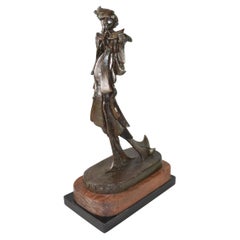
Carole Harrison Bronze Sculpture "Stride"

Carole Harrison Bronze Sculpture "Stride"

Located in Toledo, OH

Bronze sculpture by Carole Harrison titled "Stride", 2014. 16" tall x 9" wide x 5" deep. Signed and dated. Carole Harrison (10/30/33 - 4/4/22) - Born in Illinois, Carole studied at...

Category

21st Century and Contemporary Figurative Sculptures

Materials

Bronze

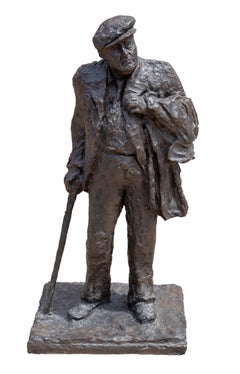
Andre Derain, Bronze Sculpture by Arbit Blatas

Andre Derain, Bronze Sculpture by Arbit Blatas

By Arbit Blatas

Located in Long Island City, NY

Artist: Arbit Blatas, Lithuanian (1908 - 1999) Title: Andre Derain Medium: Bronze Sculpture, signature inscribed on base Arbit Blatas and his works have been part of the art scene f...

Category

Mid-20th Century Impressionist Figurative Sculptures

Materials

Bronze

Locomotive Engineer, Early 20th Century Bronze Laborer, Cleveland School

Locomotive Engineer, Early 20th Century Bronze Laborer, Cleveland School

By Max Kalish

Located in Beachwood, OH

Max Kalish (American, 1891-1945) Locomotive Engineer, 1926 Bronze Signed and dated on base, foundry mark: Meroni Radice Cire Perdue Paris 15.5 x 6 x 5 inches Born in Poland March 1, 1891, figurative sculptor Max Kalish came to the United States in 1894, his family settling in Ohio. A talented youth, Kalish enrolled at the Cleveland Institute of Art as a fifteen-year-old, receiving a first-place award for modeling the figure during studies with Herman Matzen. Kalish went to New York City following graduation, studying with Isidore Konti and Herbert Adams...

Category

1920s Figurative Sculptures

Materials

Bronze

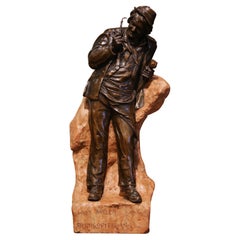
19th Century Austrian Bronze “Steinklopferhans” Sculpture Signed Willy Thaller

19th Century Austrian Bronze “Steinklopferhans” Sculpture Signed Willy Thaller

Located in Dallas, TX

Decorate a study or office with this expressive bronze and marble sculpture titled “Steinklopferhans.” Crafted in Austria circa 1880, the work depicts a jovial stonecutter leaning on...

Category

Antique Late 19th Century Austrian Figurative Sculptures

Materials

Marble, Bronze