Video Loading
Want more images or videos?
Request additional images or videos from the seller
1 of 20

Songye Craftsmen
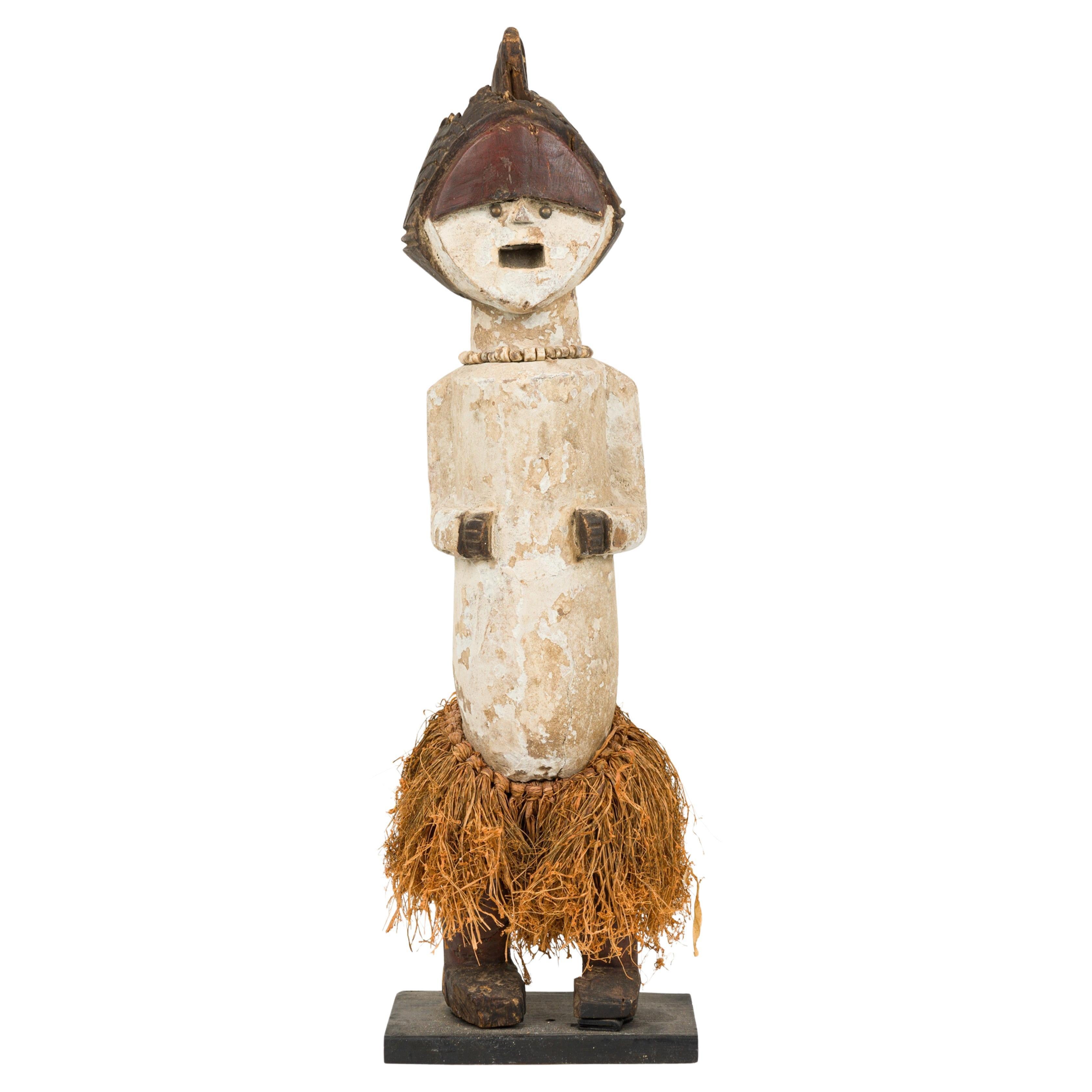
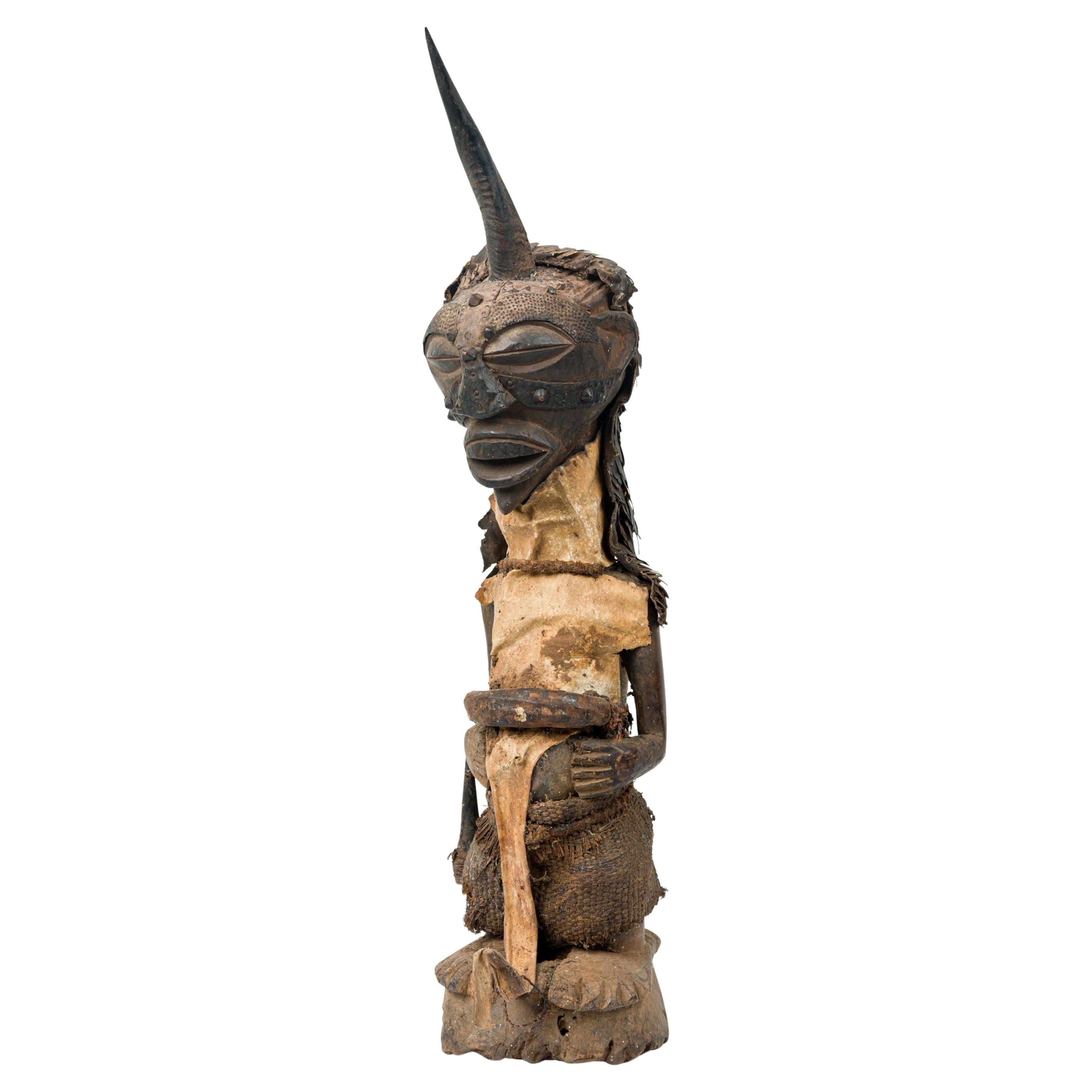
Statue Songye, Republic of Congo, Misangu Glass Beads & Chiefly Raffia Skirt

$11,436.91
$14,295.5220% Off
£8,381.43
£10,500.7620% Off
€9,600
€12,00020% Off
CA$15,773.27
CA$19,726.6720% Off
A$15,963.76
A$20,079.7120% Off
CHF 9,153.18
CHF 11,429.7620% Off
MX$193,620.50
MX$242,377.0420% Off
NOK 106,447.78
NOK 133,277.2220% Off
SEK 108,353.55
SEK 134,884.1820% Off
DKK 73,198.73
DKK 91,500.8820% Off

About the Item

A Songye Male Power Figure, Democratic Republic of the Congo, the male figure with openwork arms and hands resting on the abdomen, typical facial features and a waterbuck (kobus ellipsiprymnus) horn to be filled with magic substances inserted in the head, misangu glass beads and wearing a chiefly raffia skirt. Fine medium and dark brown patina with traces of encrustation. Provenance: the figure has been in the collection of a Danish Cineaste since the 1960s. Similar figures are held in The Metropolitan Museum of Art and the Royal Museum for Central Africa in Tervuren. Acting as a mediator between spirits and men, Songye mankishi statues were made to heal, protect, bring luck and fertility. While small ones, such as ours, were reserved for personal use, large statues were intended to protect the entire community, often for generations. The communal nkishi was placed under the protection of a guard, who was supposed to translate the messages of the nkishi under the influence of mediumistic possession. It is possible to see the talents of the sculptor and soothsayer (nganga) that are expressed in the creation of the statue. The latter makes the magical components (bishimba) placed here, at the top of the head using the horn. The effectiveness of these medicines will determine the value and power of nkishi. Covering the statue with palm oil ointment and filling the head with a wide variety of materials charged the statue and gave it all its magical power. The skin of our sculpture is now drowned under layers of oil, witness of prolonged use over several generations. The perfection of the geometric composition and the sensitivity of the models are translated here by the hand of a very great sculptor. Reserved for the personal use of an individual or a family, this Nkisi statuette was intended to heal, protect, bring luck and / or fertility. The strength of the sculpture characterizing the style of the workshops of Bena-Sapo (Luebo region) is accentuated by the magico-religious additions recalling its role as mediator between men and spirits. What stands out in particular is the rare presence of ancient misangu glass beads around the neck - charms recommended by the nganga (ritual specialist) to "call beneficial spirits and ward off evil spells", wearing a chiefly raffia skirt. THE CHARMS OF GOOD FORTUNE by Bernard Dulon Among the many bwanga or fetishes once used by the nganga (clairvoyants, traditional spiritual healers) of the Songye people, there is a specific type that earned a place of choice for itself among the icons of Central African art: mankishi (singular: nkishi). They are anthropomorphic statues to which bishimba, or magically significant ingredients, were ritually attached: generally inserted into the navel or top of the head. Mankishi can be divided into two categories: personal mankishi and community mankishi. The examples from the second category, including the one from the Périnet collection, are characteristically large. They were not statues of ancestors, strictly speaking, but rather intermediaries between living people and the most venerable among the deceased: honourable chiefs and prestigious notables. They also played an important role in the group’s fertility and the reincarnation of beneficial spirits, protection and healing, resistance to evil witchcraft, and success in combat. Community mankishi were crafted by a sculptor and made sacred by a nganga through a very special ritual observed in different locations throughout Songye country. When the statue was fully sculpted, it would be placed near a fire by night, the Nganga was the only entity authorised to remain in the village during this operation, in order to invite the spirits to come warm themselves and to foster the divination practices for the consecration of the bishimba and the transformation of the sculpture into a nkishi. The nganga believed to have the powers necessary for this activation were uncommon, and their services were very expensive. Certain mankishi, closely related to their nganga, could go into decline following the death of the healer. They would become useless and be abandoned. The community nkishi was kept in a sanctuary guarded by a nkunja, who could be an old man or an old woman. Through trances or dream visions, the nkunja received messages from the forces expressing themselves through the nkishi and passed them along to the village. During new moon ceremonies, the great nkishi was taken out, and could be placed on a chief ’s throne. It was given libations of palm oil and blood, as well as rooster meat, as offerings for the ancestors to recharge its forces. During this ceremony, those who possessed personal mankishi could bring them so that they too could benefit from the replenishment. A number of historical sources indicate that the Songye were particularly renowned for their knowledge in the art of mankishi, and that certain great examples were used by foreign populations outside of the Songye territory. The opulent nkishi of the Périnet collection stylistically belongs to the Songye-Kalebwe region. The features of its harmonious face evoke those of the most extraordinary masks of the bwadi-bwa-kifwebe fraternity. It is true that in this region, during the nocturnal replenishment ceremony of a great nkishi, these masks were also brought out, since they were thought to hold a form of beneficial magic called buci. According to certain theories, the horn or horns that appear at the top of the head or in the abdomen of a nkishi are not so much bishimba as independent bwanga which reinforce the power of the nkishi. A nkishi could be personally named after one of the important people of the past.
  • Creator:
    Songye Craftsmen (African)
  • Dimensions:
    Height: 21.26 in (54 cm)Width: 4.34 in (11 cm)Depth: 1.58 in (4 cm)
  • Medium:
  • Movement & Style:
  • Period:
  • Condition:
    Wear commensurate with age and use.
  • Gallery Location:
    Cotignac, FR
  • Reference Number:
    Seller: LG/Songue1stDibs: LU1430212970882

More From This Seller

View All
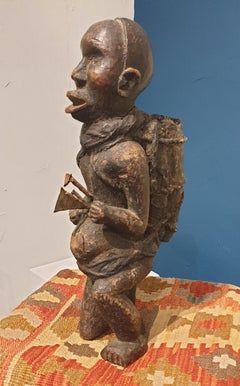
Statue Songye, Kneeling Male Figure, Democratic Republic of Congo

Statue Songye, Kneeling Male Figure, Democratic Republic of Congo

Located in Cotignac, FR

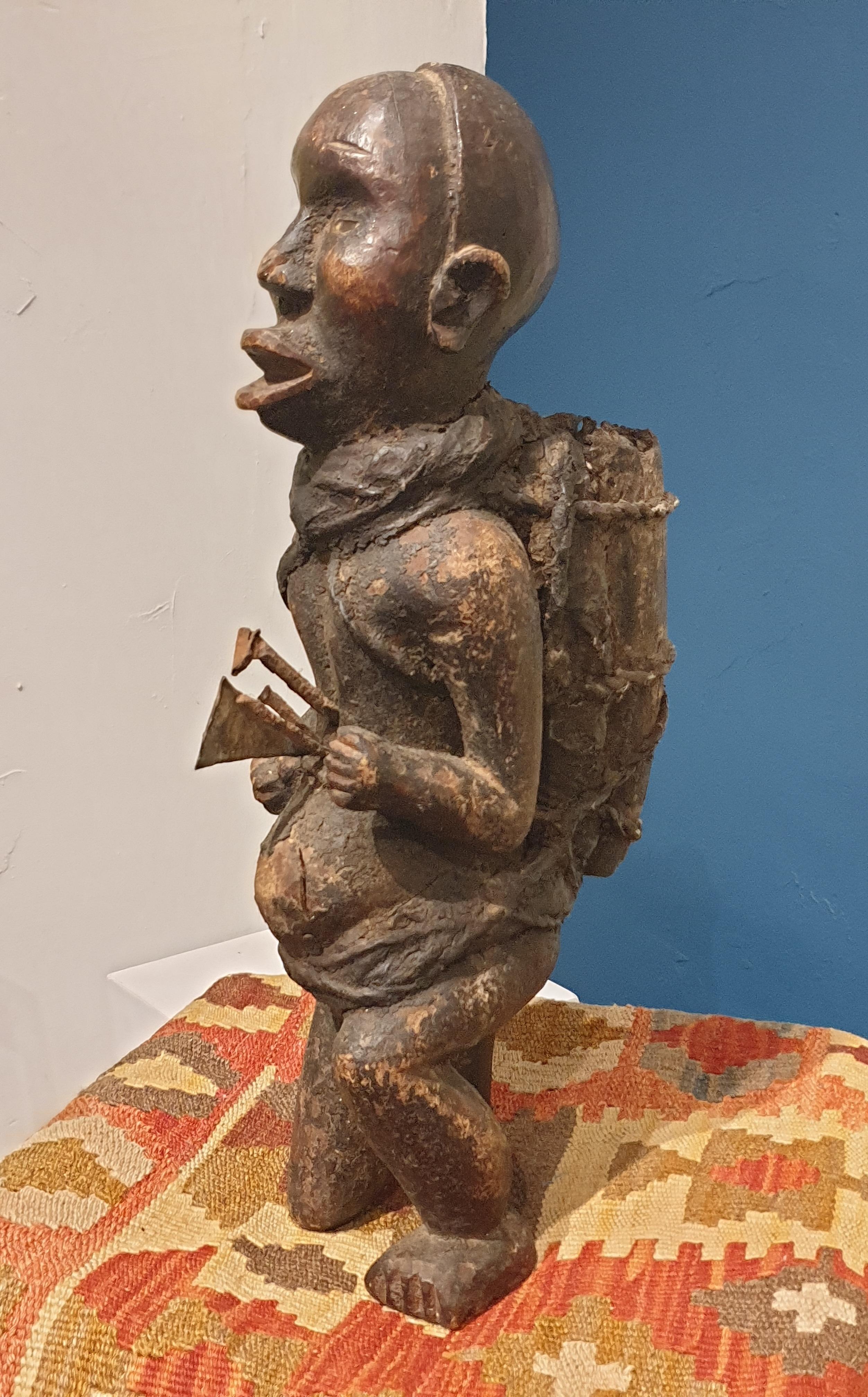
A Songye Male Power Figure, Democratic Republic of the Congo, the male figure resting on one knee, with openwork arms and hands resting by the abdomen which contains various charms a...

Category

Mid-20th Century Figurative Sculptures

Materials

Metal

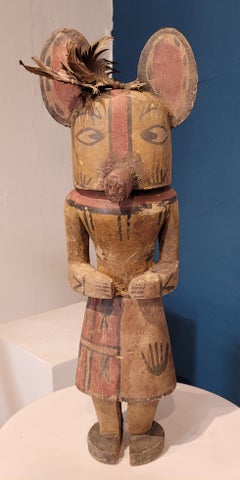
Hopi Katsina Doll Sculpture, Carved Cottonwood, Mid-20th Century

Hopi Katsina Doll Sculpture, Carved Cottonwood, Mid-20th Century

Located in Cotignac, FR

A Native North American carved wood and painted effigy figure, Hopi Katsina or Kachina doll. A wonderfully playful, coloured and highly individual Hopi Katsina doll. Each doll repr...

Category

Mid-20th Century Figurative Sculptures

Materials

Wood

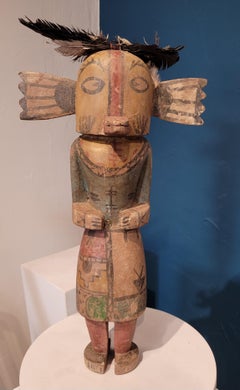
Hopi Katsina Doll.

Hopi Katsina Doll.

Located in Cotignac, FR

A Native North American carved wood and painted effigy figure, Hopi Katsina or Kachina doll. A wonderfully playful, coloured and highly individual Hopi Katsina doll. Each doll repr...

Category

Mid-20th Century Figurative Sculptures

Materials

Wood

Kalao Great Hornbill Ibibio Wood Sculpture, Colorful, Nigeria, 33x48cm

Kalao Great Hornbill Ibibio Wood Sculpture, Colorful, Nigeria, 33x48cm

Located in Cotignac, FR

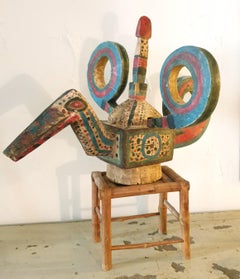
Mid-Century Ibibio wood carving of a Great Hornbill or (Kalao) from Nigeria. (The carving is shown in the first photo on a bamboo stand which is available if required.) The Great Ho...

Category

Mid-20th Century Sculptures

Materials

Wood, Paint

African Zoomorphic Puppet Head Sculpture, Bozo Tribe, 20th Century

African Zoomorphic Puppet Head Sculpture, Bozo Tribe, 20th Century

Located in Cotignac, FR

Early 20th century zoomorphic African puppet head sculpture from the Bozo tribe in Mali. This puppet head would have been used by the Bozo ethnic group during the Sogobo ceremony. This ancestral tradition continues in the region of Segou in Mali along the Niger river. It is an opportunity to regroup the different villages and give rise to musical and theatrical performances whose highlight is the puppet show...

Category

Mid-20th Century Folk Art Figurative Sculptures

Materials

Metal

Cigar Store Indian, Early 20th Century, Carved Wood With Polychrome Decoration

Cigar Store Indian, Early 20th Century, Carved Wood With Polychrome Decoration

Located in Cotignac, FR

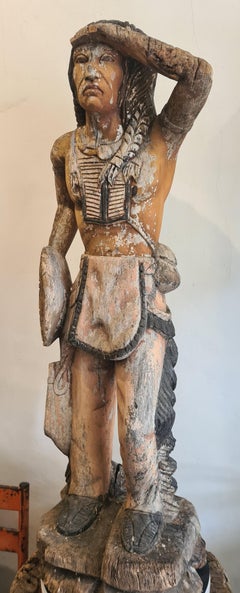
A 20th Century wood carved male figure, a 'Cigar Store Indian' with original polychrome decoration. A now controversial subject, but none the less charming rendition, of a native North American man originally probably used as an advertising figure. Wonderful quality of carving capturing the stance of the man looking out to the distance, hair flowing to his back and plait to the side, all the details of his costume, his native dress and hairpipe breastplate (suggesting he is possibly a Comanche) and chest ornament, apron, trousers, mocassins, shield and arrows. The original Polychrome decoration has weathered beautifully as has the wood itself to present a sculpture that would adorn any collection or interior. Because of the general illiteracy of the populace, early store owners used descriptive emblems or figures to advertise their shops' wares. American Indians and tobacco had always been associated because American Indians introduced tobacco to Europeans. As early as the 17th century, European tobacconists used figures of American Indians to advertise their shops. Because European carvers had never seen a Native American, these early cigar-store "Indians" looked more like Africans with feathered headdresses and other fanciful, exotic features. These carvings were called "Black Boys" or "Virginians" in the trade. Eventually, the European cigar-store figure...

Category

Mid-20th Century American Realist Figurative Sculptures

Materials

Wood, Paint

You May Also Like

Folk African Sculpture Beaded Figure Abstract Art, Yoruba Carved Figure Nigeri

Folk African Sculpture Beaded Figure Abstract Art, Yoruba Carved Figure Nigeri

Located in Wembley, GB

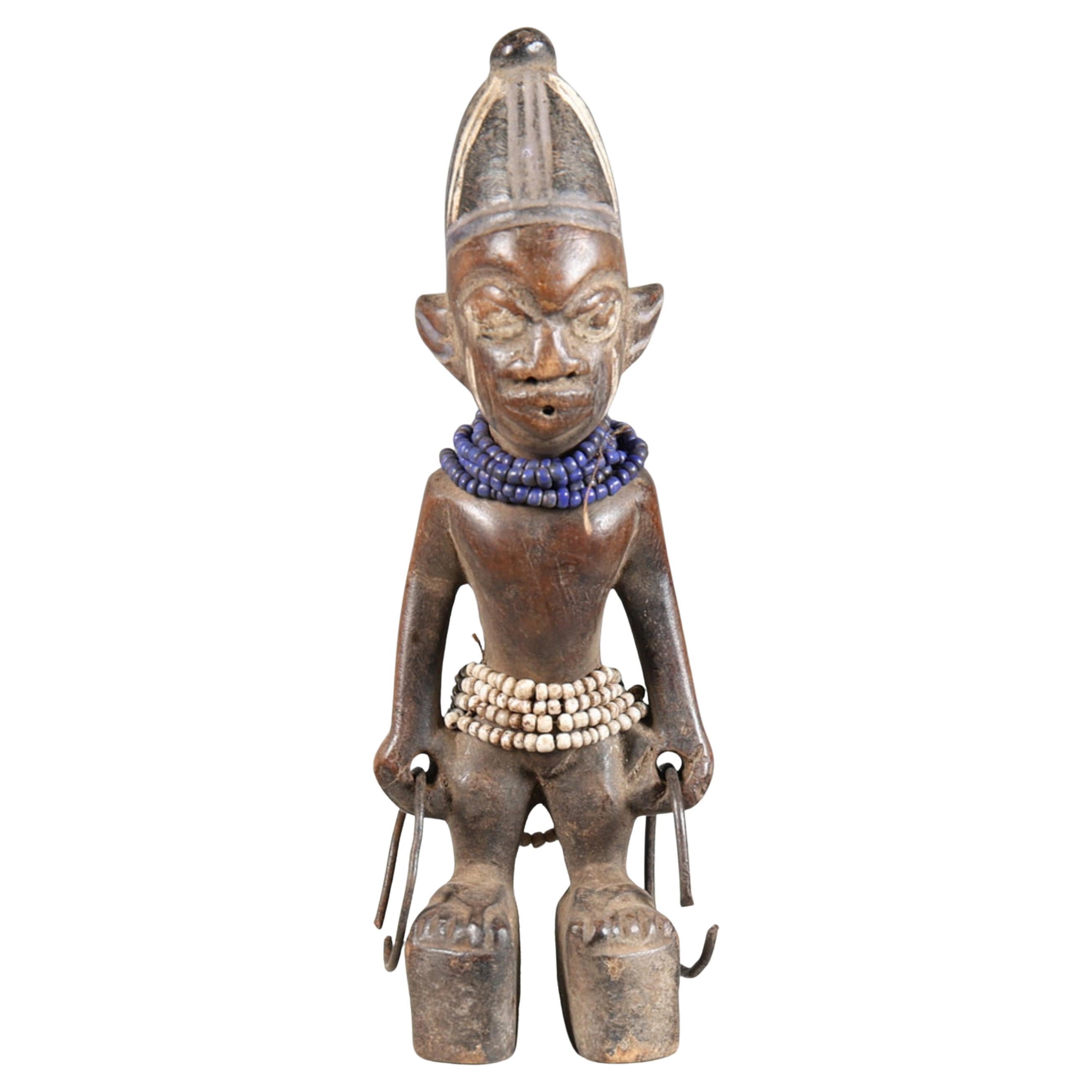
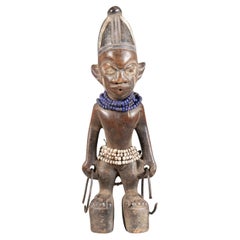
Yoruba Carved Figure Nigeria Tribal African Sculpture Beaded Figure A compelling and finely carved Yoruba wooden figure from Nigeria, representing the rich artistic heritage and spiritual symbolism of West African tribal culture. This striking sculpture depicts a male figure adorned with traditional beaded necklaces and waist ornaments, embodying status, identity, and ceremonial significance within Yoruba society. The figure is carved with a strong, stylised form, featuring an elongated head, expressive facial features, and a poised stance that reflects the distinctive aesthetics of Yoruba artistry. The addition of original beadwork in deep blue and natural tones enhances its visual appeal while reinforcing its cultural authenticity and ritual importance. The surface displays a beautifully aged patina, with subtle wear consistent with time and handling, giving the piece a warm, tactile quality highly valued by collectors of African tribal art and ethnographic sculpture. The metal elements held in the hands further add to its symbolic and decorative complexity. Compact yet powerful in presence, this figure is ideal for luxury interiors, curated collections, gallery displays, or as a statement decorative object, bringing depth, history, and global sophistication to any setting. Provenance: Private UK Collection Dimensions: Height: 25 cm Origin: Nigeria Material: Carved wood with bead adornment and metal elements Period: 20th Century Condition: Excellent vintage condition with age-related wear, patina, and minor surface variations, consistent with authenticity and use. A striking Yoruba sculpture...

Category

Vintage 1920s Zimbabwean Tribal Figurative Sculptures

Materials

Metal, Gold Plate, Sheet Metal, Gold Leaf
African Nigeria Mid 20th Century Hand Carved Eshu Female Figure

African Nigeria Mid 20th Century Hand Carved Eshu Female Figure

Located in Queens, NY

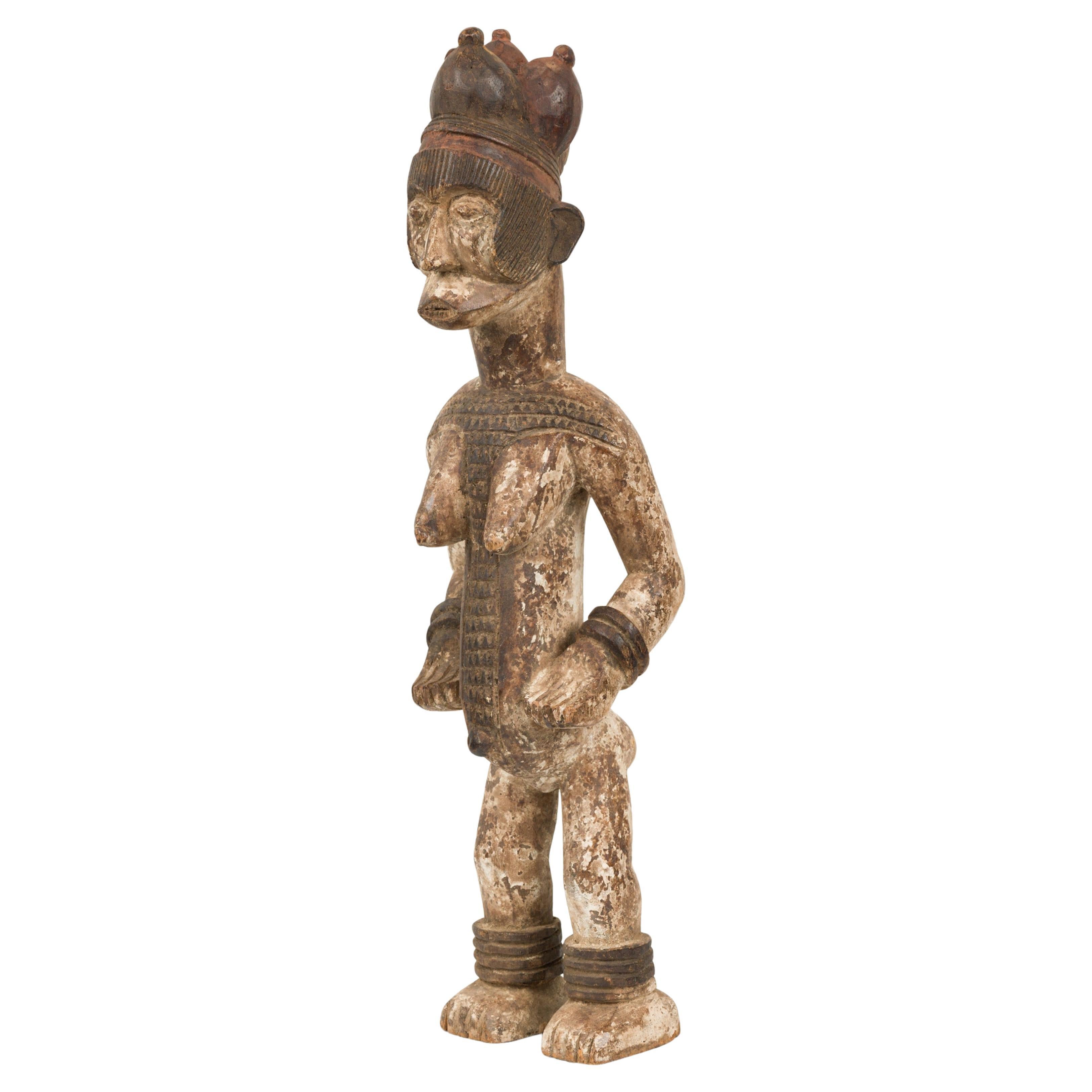
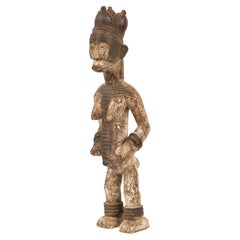
Nigerian mid 20th c. wooden figure hand carved and pigmented by the Eshu people depicting a standing woman wearing a 5-point crown and ringed jewelry around the wrists and ankles, wi...

Category

20th Century African Tribal Figurative Sculptures

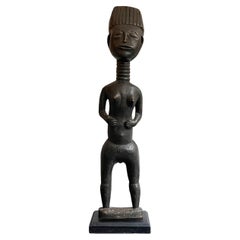
Koulango Female Ancestral Statue, Ivory Coast, Early 20th Century

Koulango Female Ancestral Statue, Ivory Coast, Early 20th Century

Located in CA, CA

The hard wood of this female Koulango statue, from the Ivory Coast in the early 20th century, has developed a beautiful black patina. With hands resting on the abdomen, and the neck ...

Category

Early 20th Century Ivorian Tribal Tribal Art

Materials

Wood

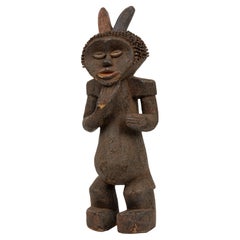
African Cameroon 20th Century Hand Carved Mabila Ancestor Figure

African Cameroon 20th Century Hand Carved Mabila Ancestor Figure

Located in Queens, NY

Cameroonian 20th century hand carved wooden figure by the Mabila people, depicting an ancestral figure with bent knees and hand gesturing below their chin

Category

20th Century African Tribal Figurative Sculptures

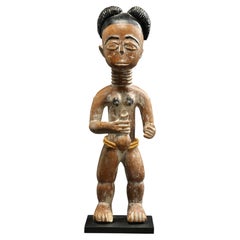
Standing Akan or Ashanti, Ghana Tribal Female Figure Early 20th Century Africa

Standing Akan or Ashanti, Ghana Tribal Female Figure Early 20th Century Africa

Located in Point Richmond, CA

From the Akan or Ashanti peoples, Ghana, shrine figure, a standing female figure with black hair and details, remains of white pigment, with arms out holding a bottle, includes custo...

Category

Early 20th Century Ghanaian Tribal Tribal Art

Materials

Wood

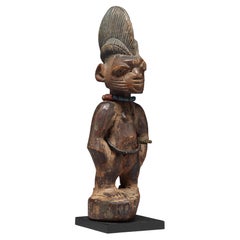
Yoruba Male Figure, an Ibeji or Twin Figure, Nigeria, Africa, Weathered, Beads

Yoruba Male Figure, an Ibeji or Twin Figure, Nigeria, Africa, Weathered, Beads

Located in Point Richmond, CA

Yoruba weathered and eroded old male figure, an Ibeji or twin figure, Nigeria, Africa, well loved heavy patina and use. Strong face with projecting eyes. A finely carved Yoruba male...

Category

Early 20th Century Nigerian Tribal Tribal Art

Materials

Wood