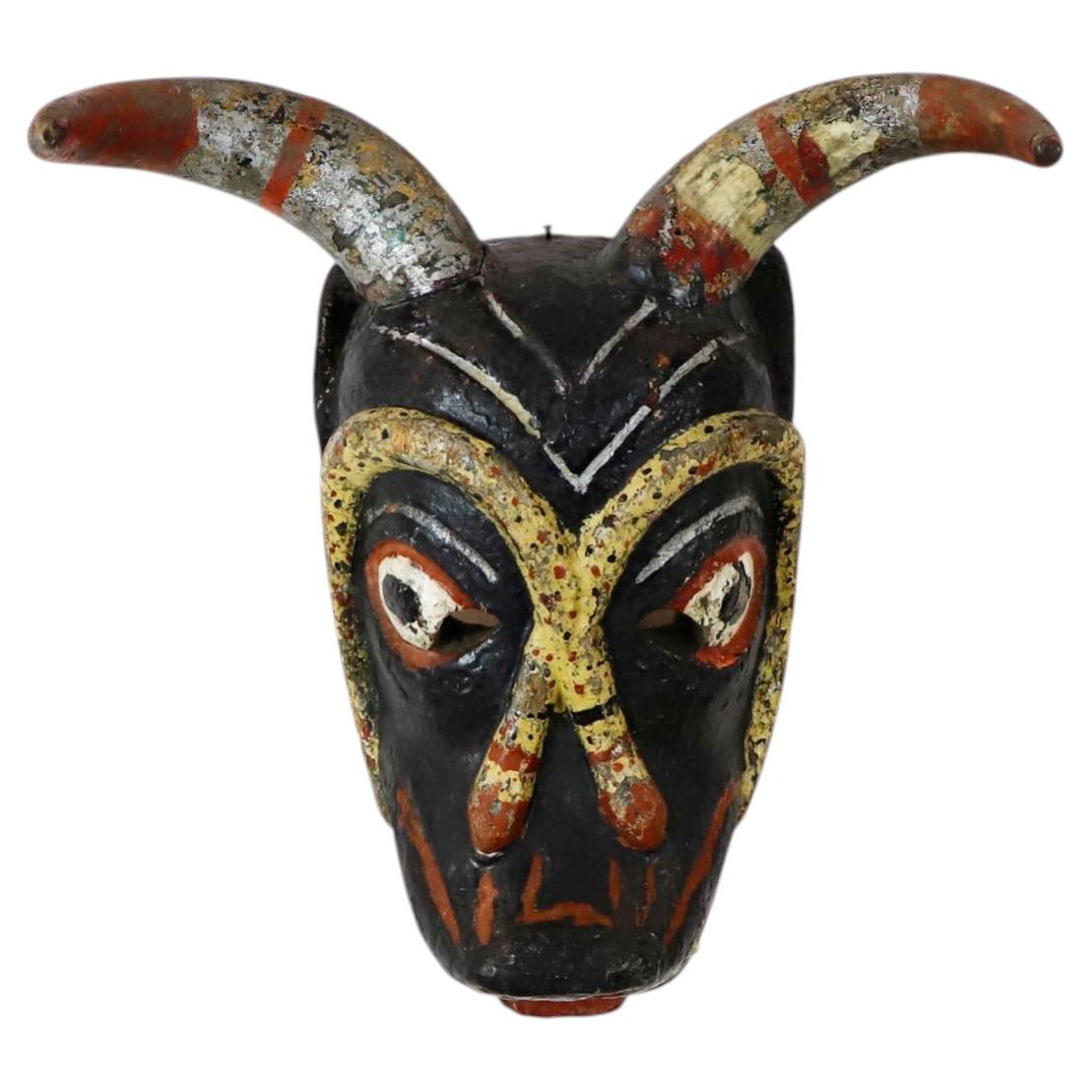
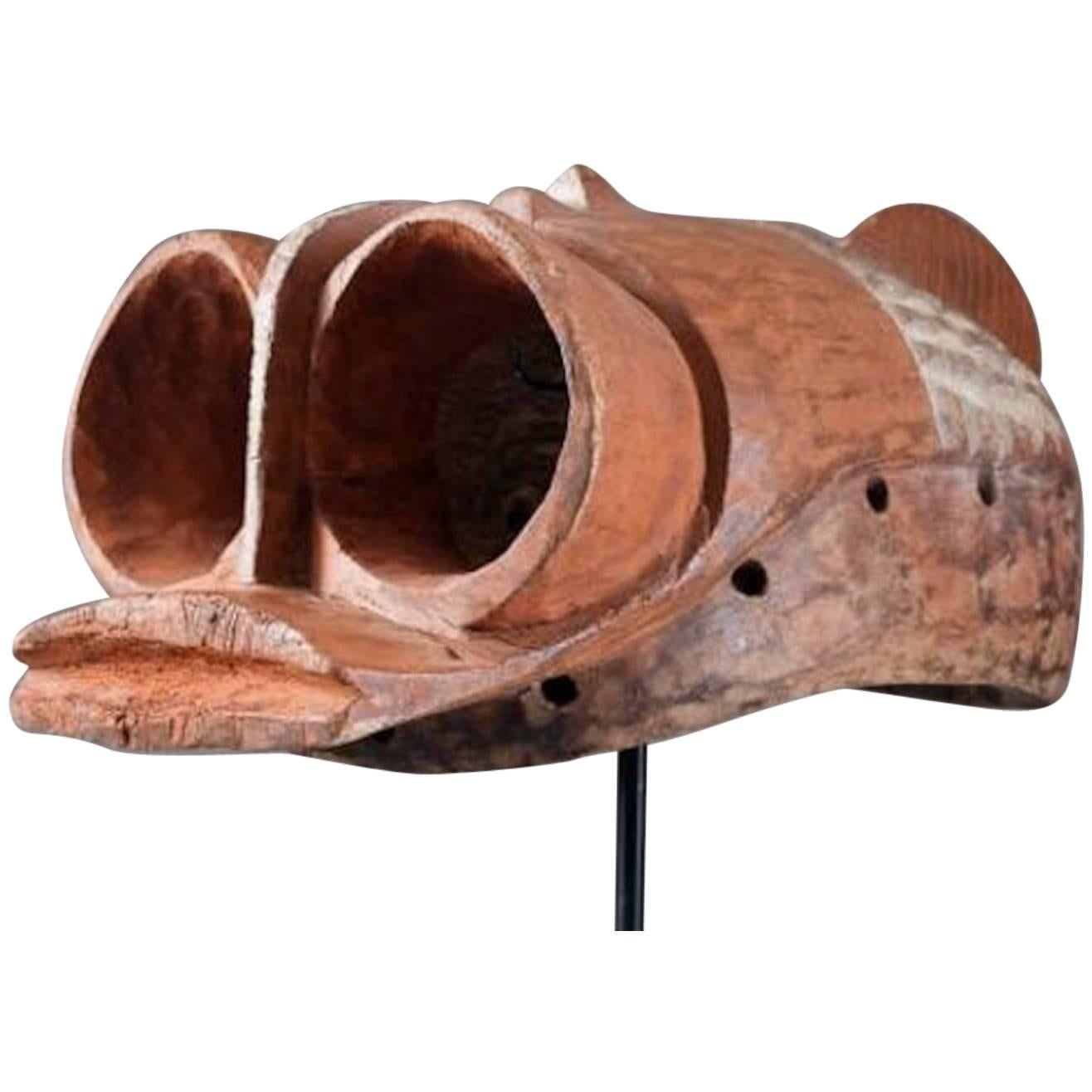
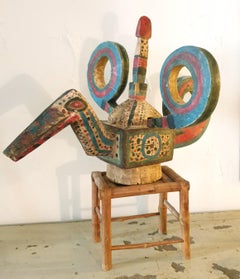
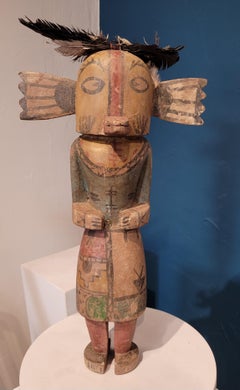
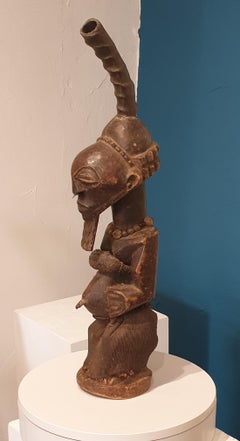
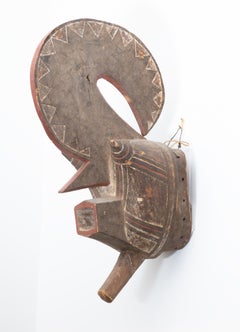
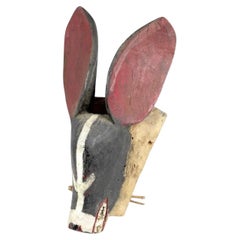
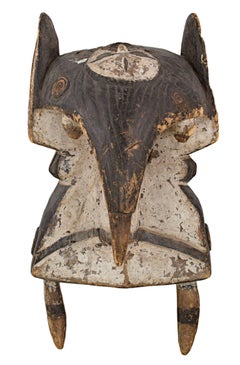
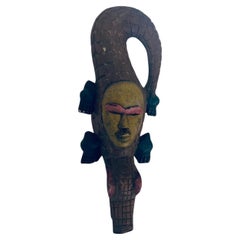
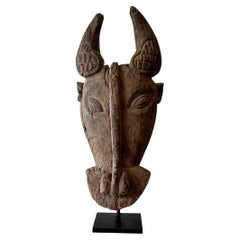
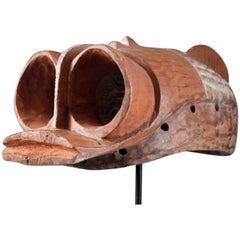
Early 20th century zoomorphic African puppet head sculpture from the Bozo tribe in Mali.
This puppet head would have been used by the Bozo ethnic group during the Sogobo ceremony.
This ancestral tradition continues in the region of Segou in Mali along the Niger river. It is an opportunity to regroup the different villages and give rise to musical and theatrical performances whose highlight is the puppet show.
Far from being profane, each sculpture is intended to honour the spirits of nature so that they protect the people and ensure the abundance of the rains, of fishing and harvesting.
Sogo bó, from sogo: Animal, meaning “the animal comes forth”.
It refers to the mask and puppet theatre that plays a key role in the culture of two peoples closely linked in central Mali: The
Bozos – the fishermen, and the Bamana – the farmers. These plays are a blend of numerous forms of theatrical expression:
Dancing, singing, music, puppets and masquerades (masked dances). In addition to performances governed by the farming season for the Bamanas, and the fishing season for the Bozos, puppet shows are put on to mark important community events: Marriages, circumcision ceremonies which take place every ten years and funeral rituals, etc. All the villagers, regardless of age or gender, can attend the shows, which take place on the village square and sometimes on
the river in the case of the Bozo community.
Once upon a time there were puppets :
The myth surrounding the creation of the puppets is handed down by way of tradition, from one generation to the next:
One day, Toboji Centa, a Bozo fisherman, was abducted by
the genies of the bush. One of them introduced him to the
art of puppetry. On returning to his village located on the
banks of the River Niger, Toboji Centa passed on his newfound
knowledge to his community and taught blacksmiths
and sculptors how to make puppets.
The history of Sogo bó dates back to the 14th c.: Ibn Battûta (1305-1377), a traveller from Tangiers who stayed at the Court of the Mali Empire in 1355, witnessed Sogo bó theatre, which he described as follows:
“... A pleasant approach whereby poets recite their lines
disguised as birds inside a costume of feathers topped by a
wooden head with a red beak” .
Who is hiding behind the puppets?
In some traditional African societies, puppetry is reserved for certain age brackets: In the case of the Bozos and the Bamanas, it is performed specifically by youth groups known as ton, which bring together young men of the same age bracket at puberty. Away from the village, the young people learn from their elders how to identify and manipulate each puppet. They are also taught about the history of puppetry and the symbolic values, songs and
rhythms associated with it. The women do not handle the puppets but play an active role in the performance by singing.
The ton steer the cultural principles of the community as well as rules governing lifestyle at a level where solidarity is of paramount importance.
Man and animals:
Items of the Bozo and Bamana theatres depict a crowd of figures based on both traditional animal-related beliefs and modern society:
The zoomorphic or animal puppets illustrate the symbolic relevance given to animals in the African imagination. Thus in the Bozo fishing communities, the river animals are everpresent: hippopotamus, crocodile, etc.
The anthropomorphous or human puppets represent all the social ranks within the community, from the village chief to the farmer and settler via mythical figures such as Faro, the goddess of water or even Yayoroba, the incarnation of the
feminine spiritual and physical ideal.
The head measures : 63cm tall from the base.
44cm from tip of wooden post to nose tip.
18cm from tip of ear to tip of ear.
Purchased from Pierre Robin ( the renowned Parisian collector of Bozo art ) in the 1970's.