Marble Bust of Roman Leader
Located in Los Angeles, CA
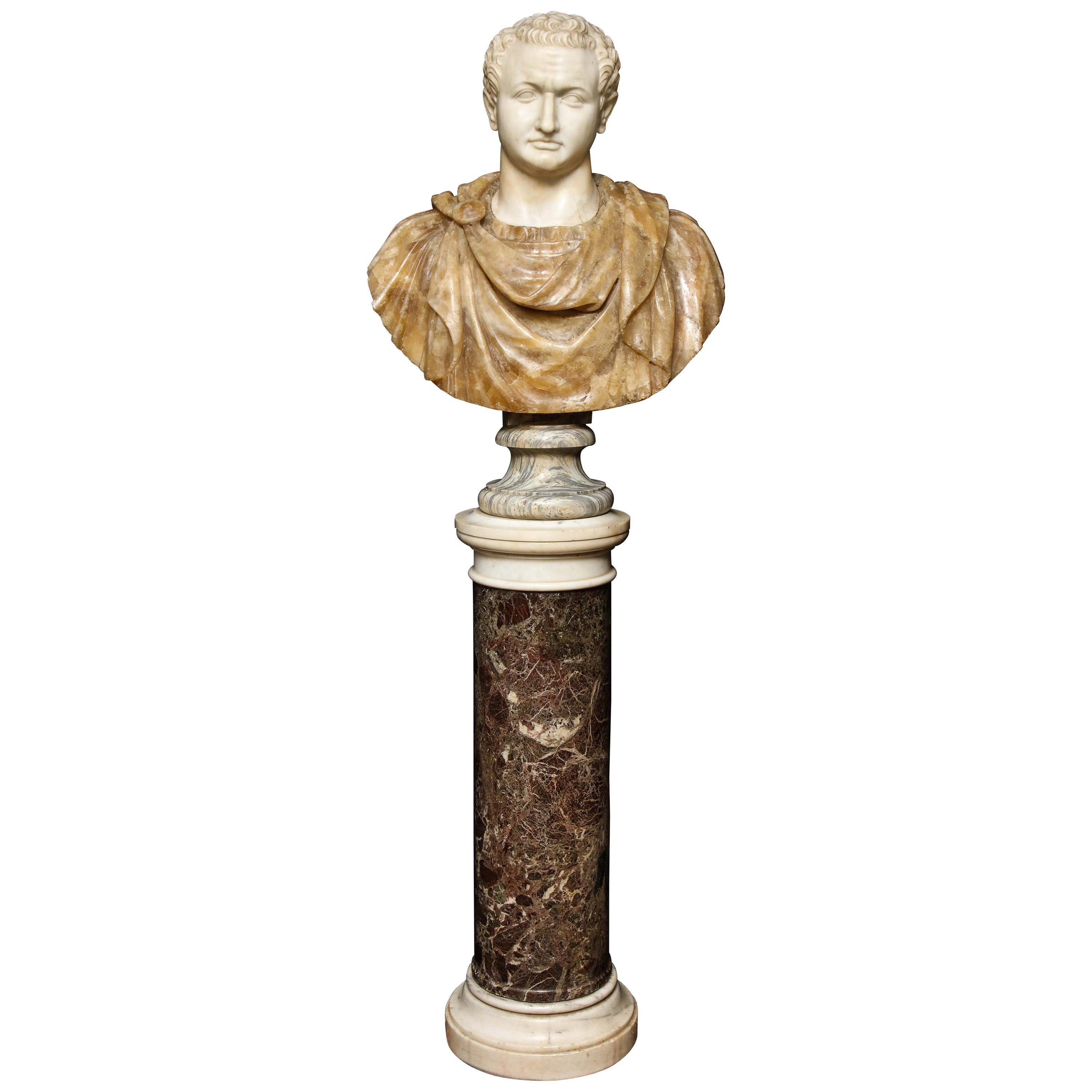
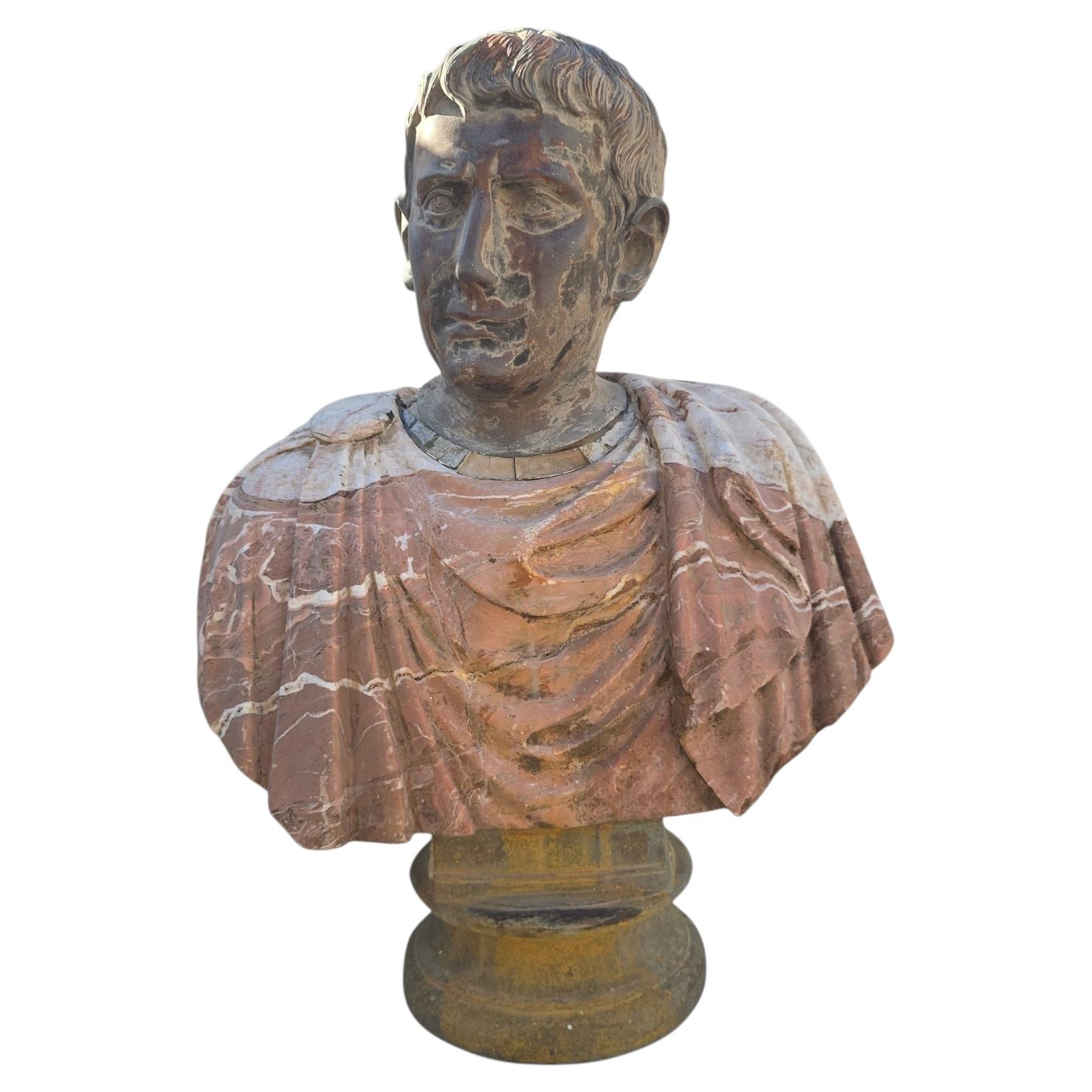
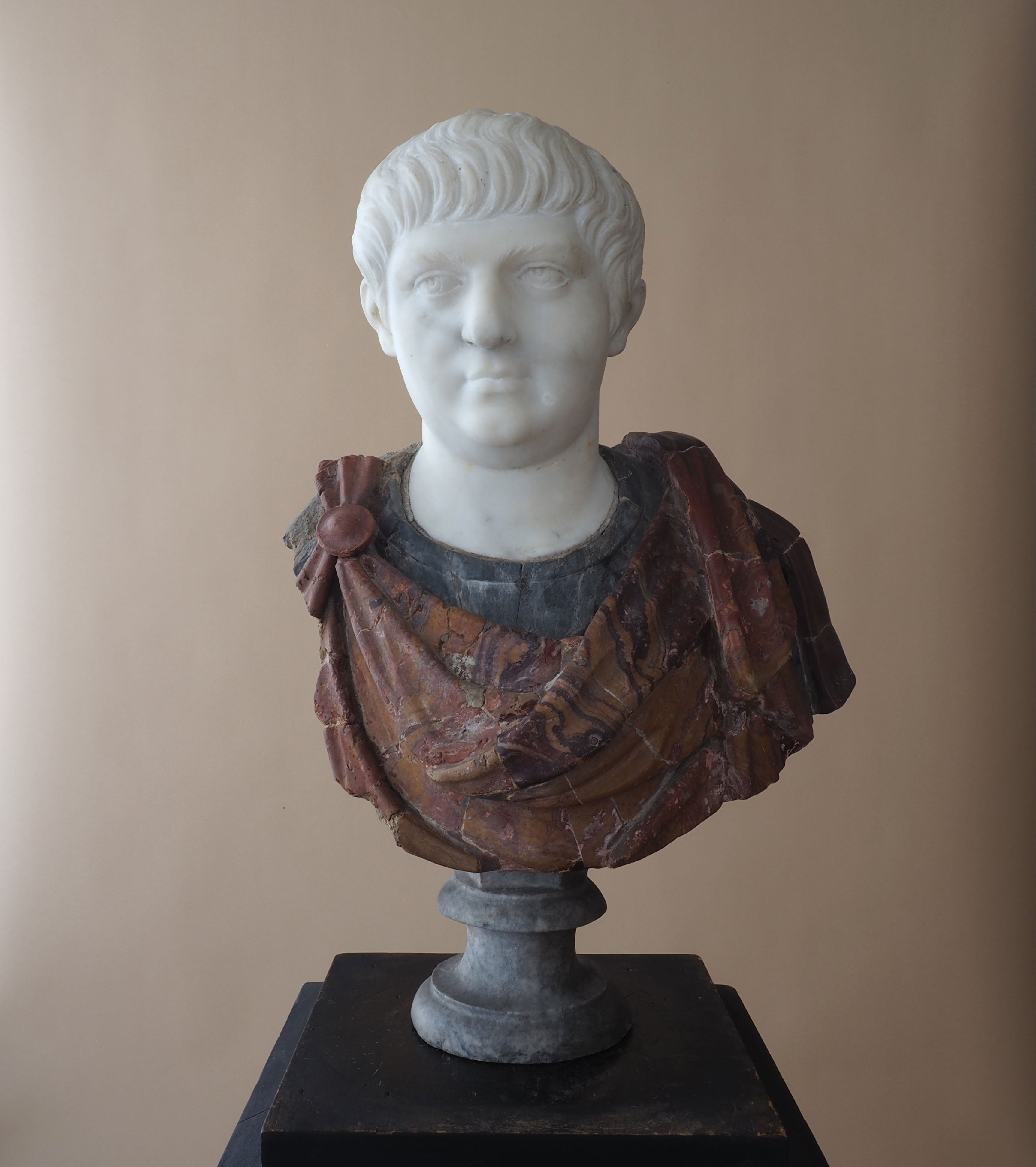
An 18th c. hand-carved, solid Carrara marble bust, likely of a holy Roman Emperor on a specimen marble base of the period. Inscribed "OTTONI".
Category
18th Century Sculptures
Materials
Marble
c. 1550
Marble Bust of Roman Leader
Located in Los Angeles, CA
An 18th c. hand-carved, solid Carrara marble bust, likely of a holy Roman Emperor on a specimen marble base of the period. Inscribed "OTTONI".
Marble
Roman Empire Marble Bust
Located in Los Angeles, CA
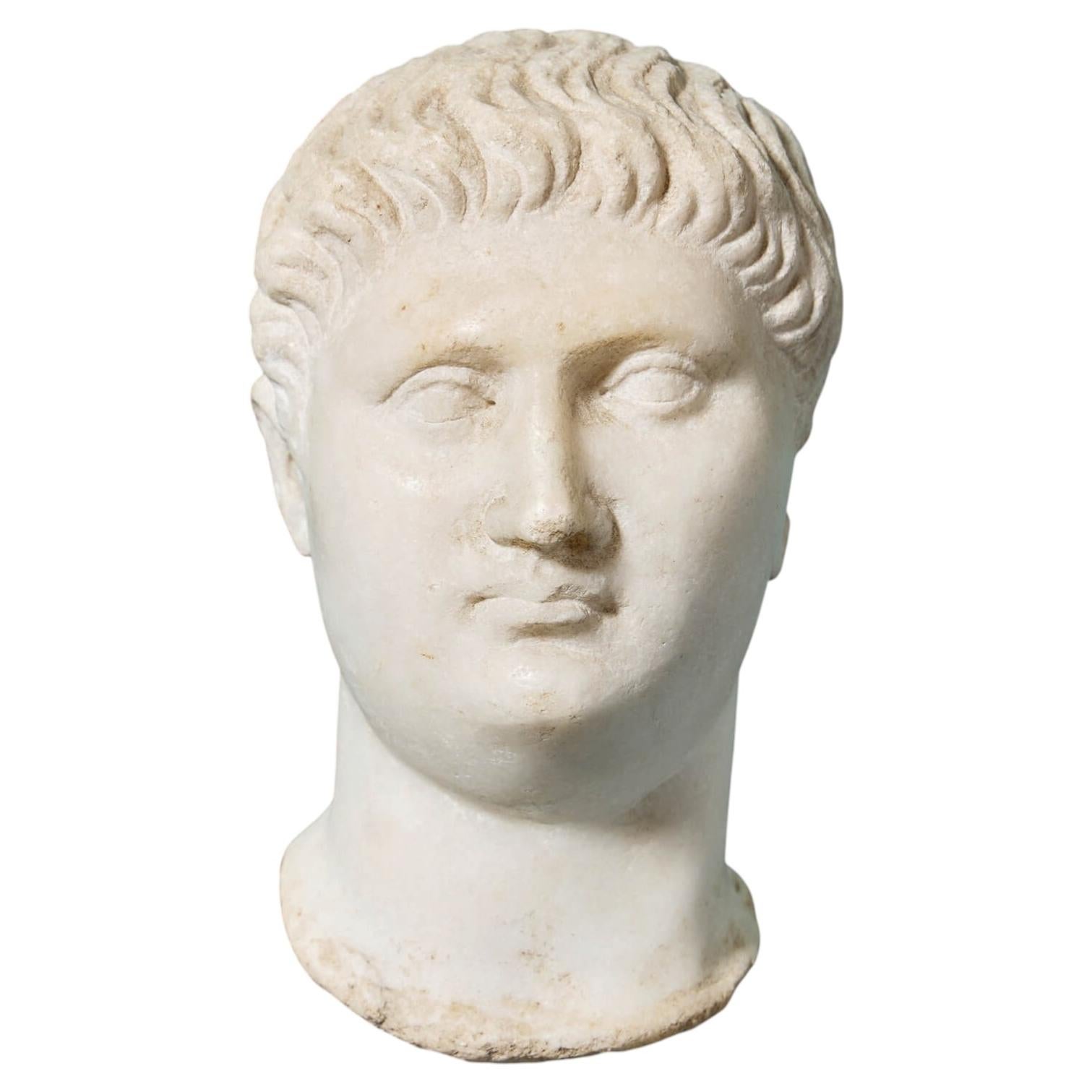
Rare, Late Roman Empire (3rd to 5th centuries, C.E.), solid marble bust of a young man. Beautiful patina. Mounted on a later, Carrara marble base.
Marble
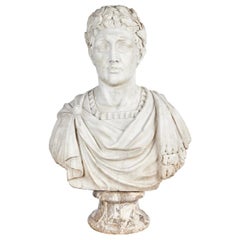
Roman Marble Bust of an Emperor
Located in Los Angeles, CA
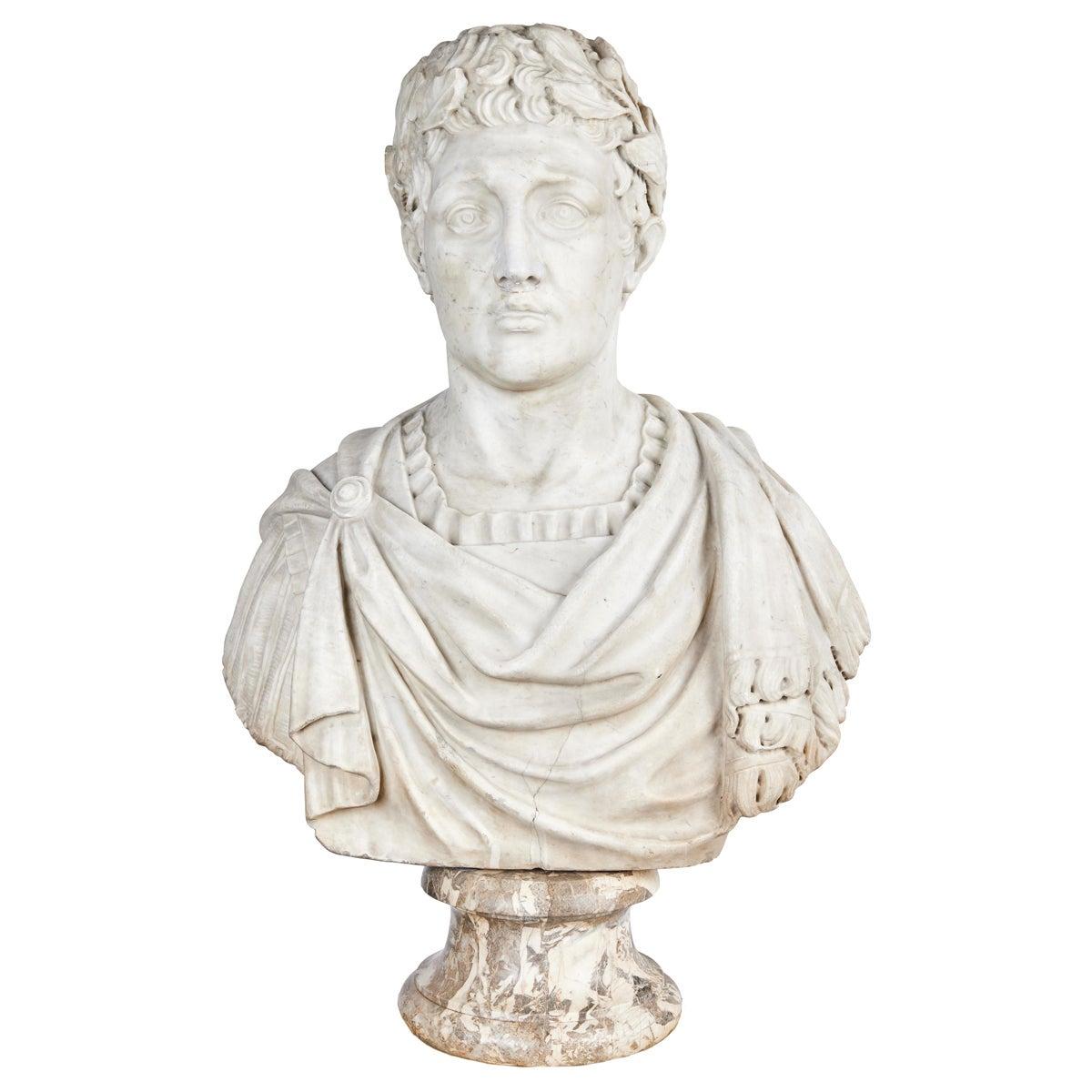
Beautifully hand carved Carrara marble bust of a Roman Emperor on a variegated marble base, elaborately robed with a laurel wreath adorning his head.
Marble
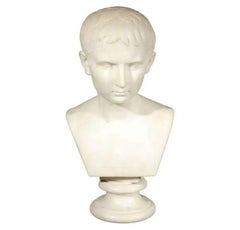
19th Century Bust of Napoleon
Located in Los Angeles, CA
French, marble bust of a young Napoleon done in the style of Caesar. Head sits on the detached base.
Marble
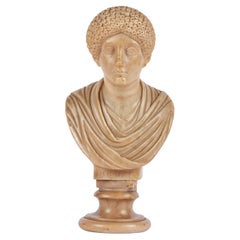
Alabaster Bust of a Roman Empress
Located in Los Angeles, CA
A petite 19th c. hand-carved alabaster bust of Empress Domitia Longina (c. 50-126, CE) in an elaborate hairstyle of the period. Sitting on a raised base of the same alabaster. Inscri...
Alabaster
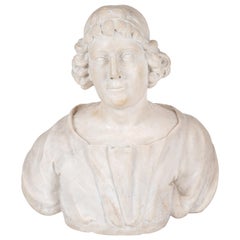
18th Century, Carrara Marble Bust
Located in Los Angeles, CA
Hand carved, marble bust in three quarters, of a young man in a sensitively rendered, open-neck robe, with flowing hair held in a delicate circlet.
Marble
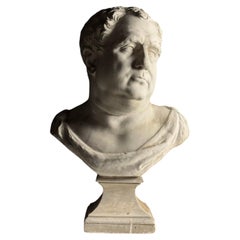
Plaster bust of Roman Emperor Vitelius
Located in MILL, NL
Plaster bust of Vitellius (Aulus Vitellius), Roman emperor in the year 69 AD, during the turbulent ‘Year of the Four Emperors’. Vitellius was known for being obese and a bon vivant,...
Plaster
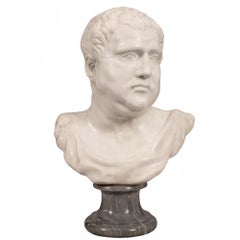
Italian Early 19th Century White Carrara Marble Bust of a Roman Emperor
Located in West Palm Beach, FL
A handsome and high quality Italian early 19th century white Carrara marble bust of a Roman Emperor. The bust is raised by a circular Bleu Turquin marble base with a decorative mottl...
Carrara Marble
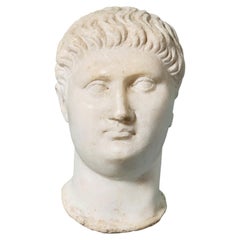
19th Century Marble Bust of Roman Emperor
Located in Wormelow, Herefordshire
A 19th Century Marble Bust of Roman Emperor. Hand carved from white statutory marble, this charming grand tour relic resembles an unearthed treasure. Possibly based on Nero, the un...
Marble, Statuary Marble
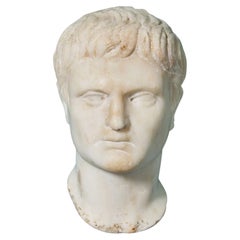
19th Century Grand Tour Marble Bust of Roman Emperor
Located in Wormelow, Herefordshire
A 19th Century Grand Tour Marble Bust of Roman Emperor. Hand carved from white statutory marble, this charming grand tour relic resembles an unearthed treasure. Possibly based on E...
Marble, Statuary Marble
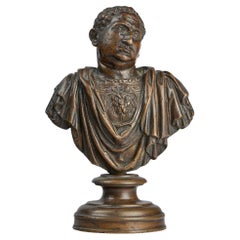
A Rare Bronze Bust of Emperor Vitellius, North Italian, 16th century
Located in London, GB
North Italian, 16th century Bust of the emperor Vitellius Bronze, on later bronze socle, lead support to reverse 18 cm. / 7 ins (the bust), 23 cm. / 9 ins overall This fine and apparently unique all’antica Renaissance bronze is inspired by a bust in Venice thought to depict the Roman emperor Vitellius (15-69 AD), who ruled for only eight months in 69 AD before he was overthrown by Vespasian. The Vitellio Grimani, also known as the pseudo-Vitellius, was discovered in Rome in 1505 during excavations on the Quirinale on land owned by the Venetian cardinal Domenico Grimani (1461-1523). On the death of Grimani the Vitellius was sent to Venice and bequeathed to the Republic of Venice, where it was displayed at the Palazzo Ducale from 1525 to 1593. It is now in the Museo arceologico nazionale di Venezia (inv. 20) and regarded as a portrait of an unknown Roman from the first half of the second century AD. The present small bust, with its rough, waxy surface and imaginative adaptation of the antique model on which it is based, bears all the hallmarks of Renaissance bronze modelling in the north of Italy. Indeed, the vigorous modelling is reminiscent of the works by Andrea Briosco, called Il Riccio (1470-1532), who worked in Padua in the Veneto and specialised in small bronzes based on antique subjects. See, for example, his head of Bacchus (private collection, offered at Sotheby’s London in 2021), which has a similarly waxy treatment of the hair. The fantastical lion-mask on the breastplate, with its stylised face and unusual braids of hair, is also typical of the imaginative re-working of antique motifs by Renaissance artists. This indicates that the present bust is probably by a follower of Riccio working in Padua or another centre of classicism in the Veneto. RELATED LITERATURE: L. Planiscig, 'Andrea Riccio...
Bronze
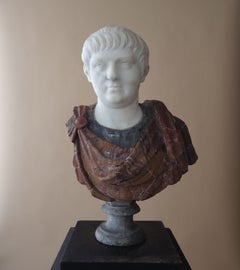
Early 18th century roman carved marble bust of the Young Emperor Nero
Located in York, GB
Bust of the young emperor Nero (37 – 68 A.D.) Rome, first half of the 18th century Carved from white carrara, sicilian jasper and bigio morato marble 50 cm high 33 cm wide Provenanc...
Carrara Marble