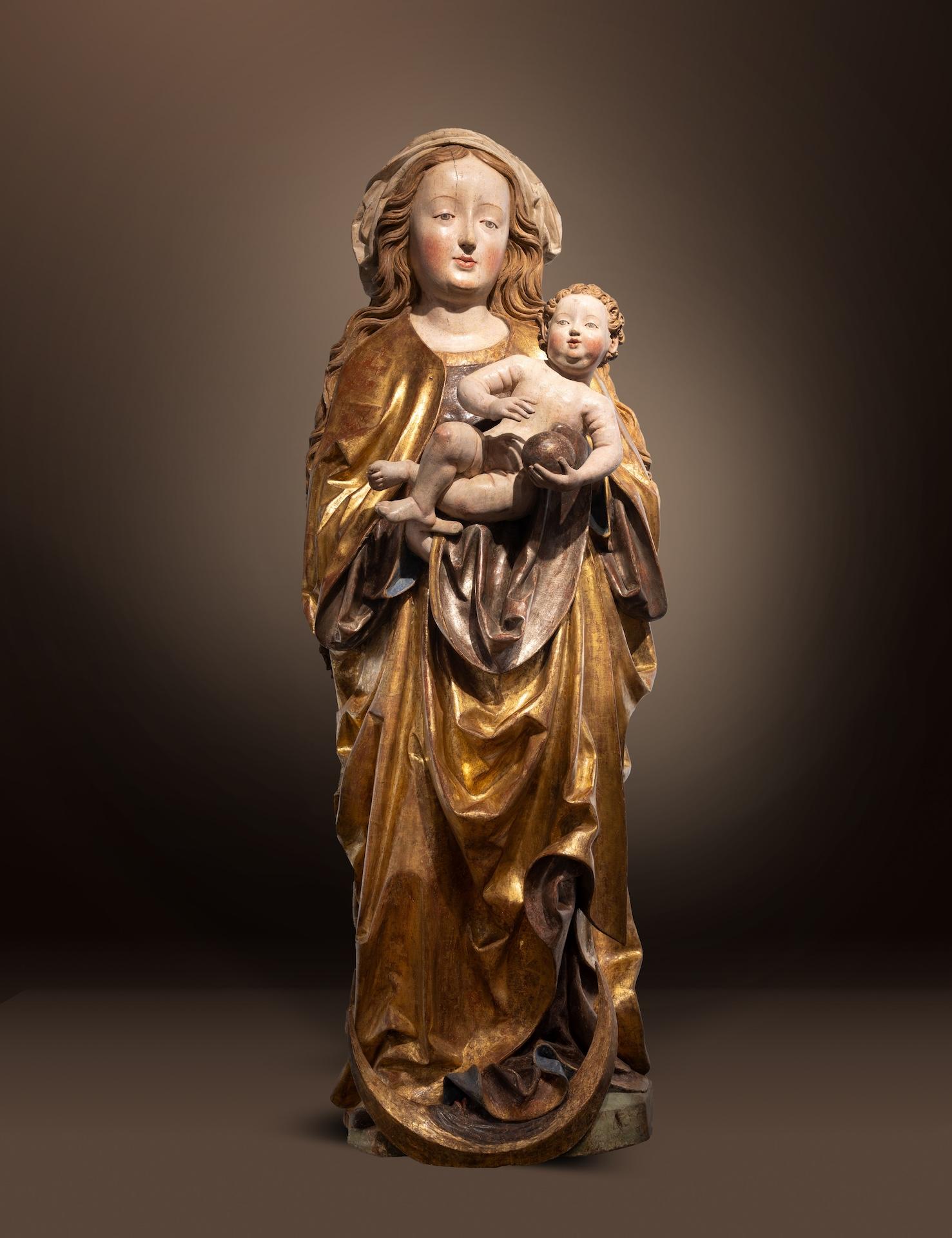
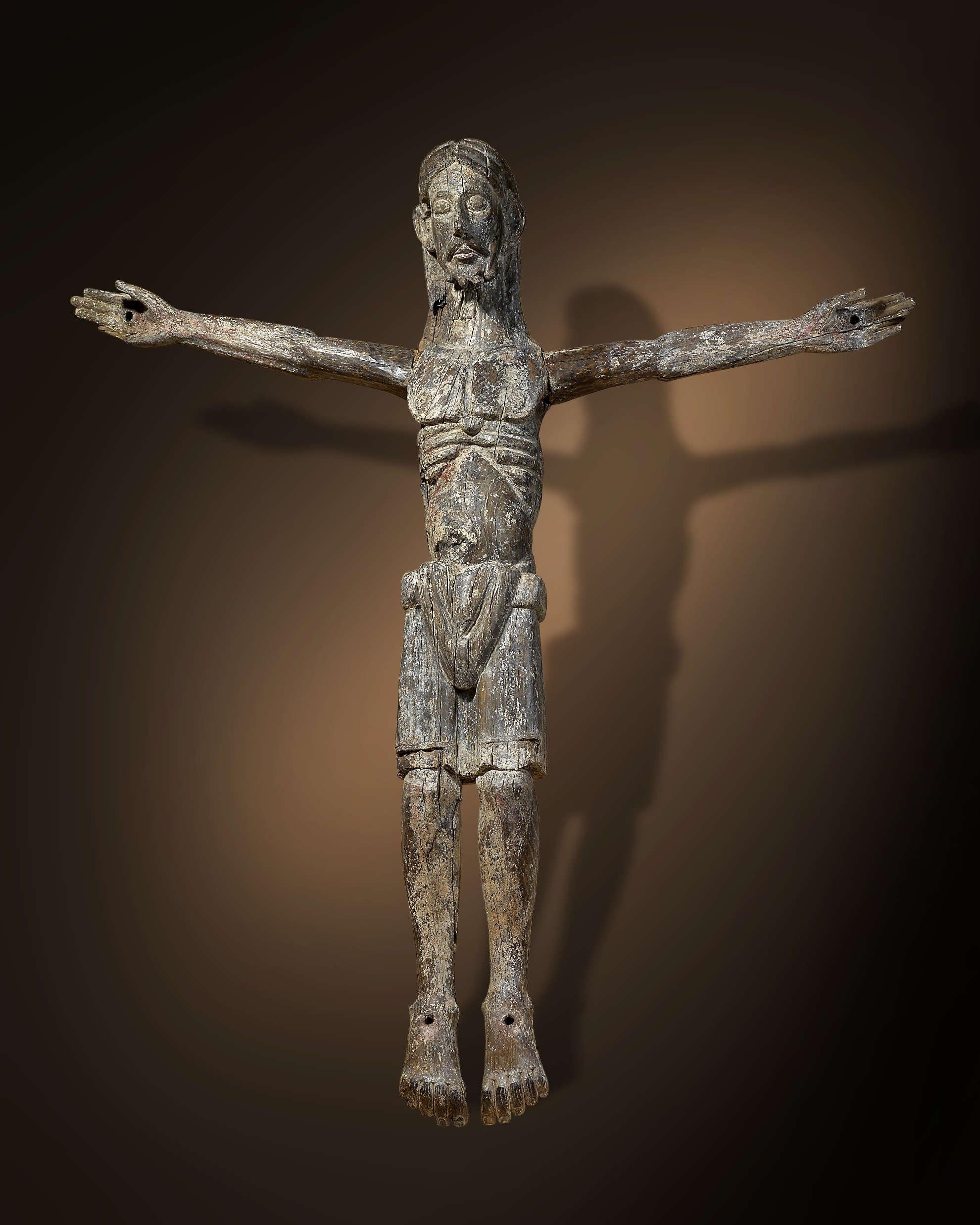
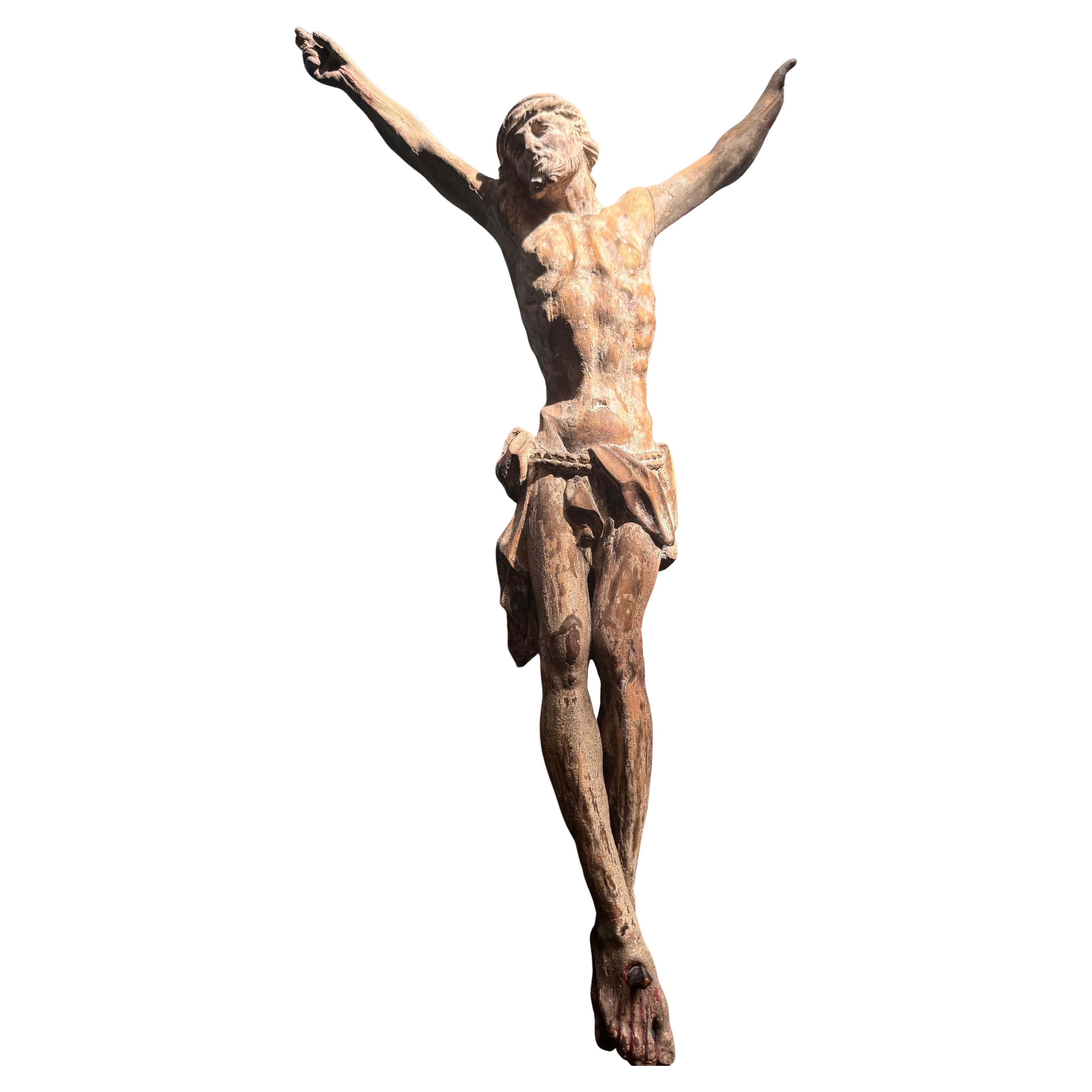
Corpus Christi 1150/70
Located in Wien, Wien
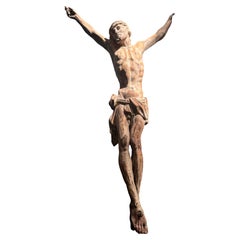
Corpus Christi around 1150/70 Southern France or Catalonia carved oak wood height 109 cm, width 96 cm Remains of polychromy
Category
15th Century and Earlier Gothic Figurative Sculptures
Materials
Wood
1250
Corpus Christi 1150/70
Located in Wien, Wien
Corpus Christi around 1150/70 Southern France or Catalonia carved oak wood height 109 cm, width 96 cm Remains of polychromy
Wood
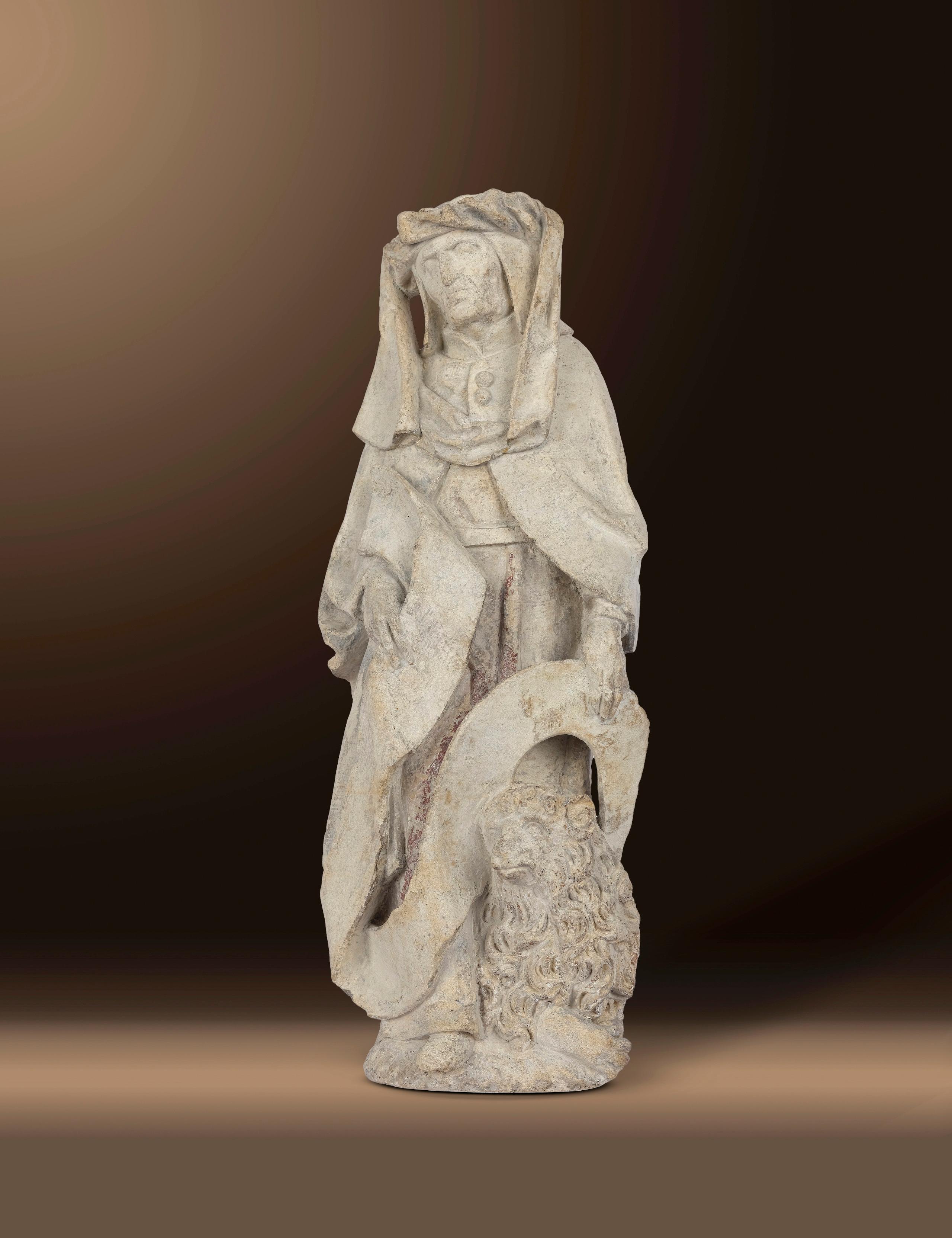
Hl. Hieronymus
Located in Wien, Wien
St. Jerome 347 Stridon, Croatia - 420 Bethlehem Around 1500/20 Limestone Remains of the original polychromy Height 45 cm The man with the holy name! 347 Stridon, Croation – 420 Be...
Limestone
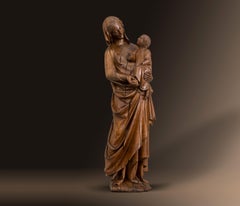
Madonna
Located in Wien, Wien
MADONNA Il DE FRANCE/PARIS Around 1270 Oak wood carved Height 79cm
Oak
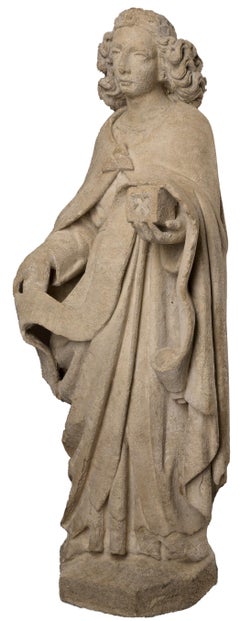
Standing Engel
Located in Wien, Wien
Standing angel with banner Flemish Around 1450/60 Sandstone 60 x 21 x 15 cm This museum figurine shows a standing angel with a banner in his right hand and a small box in his left. The youthful, ageless figure wears a coat held together with a triangular, floral brooch in front of the chest over a long robe. The angel’s gaze is directed forward, his head tilted slightly to the left. The elongated face is sculpted: the large almond-shaped eyes with accentuated upper and lower eyelids are alertly open and sharp eyebrows lead directly into the root of the nose. The straight nose above the pronounced mouth completes the idealized oval face of the angel and his calm, internalized facial expression. What is particularly remarkable, however, is the magnificent curls, which are only partially tamed by a simple headband. As if puffed up by the wind, the hair, which is sometimes streaked in parallel, sometimes wildly twisted and richly curled, stands out dynamically from the ears. The tilted head with these sideways protruding waves of hair thus conveys an immediate impression of movement. The physicality of the sculpture is expressed particularly through this organic, lifelike movement of the loosened hair. The lively overall impression of the figure is further enhanced by the multiple rolled banners that the angel presents to the viewer. The outstretched palm of the right hand appears both intimate and confidential as well as mystically revealing. This banderole winds in gentle curves in front of the figure’s body, throws a fold over the second attribute in the angel’s left hand and falls downwards in a loose manner. The volute-shaped rolled up end of the banner clearly shows the fine texture of the banner and at the same time draws the viewer’s attention to the small cube-shaped box that the angel is holding in its slender, long-limbed fingers. The cube is decorated with a Gothic quatrefoil motif, which is often seen in the architectural tracery of windows, but was also often used to decorate caskets and other small treasures. The sweeping gestures in the presentation of the attributes suggest three-dimensionality, in contrast to the tubular folds at the base of the neck and the intricate draperies in flat and multiple overlapping garment sections. The soft curves of the folds give the impression that the clothing is made of a heavy fabric that falls diagonally down the front and is laid in several bowl folds under the right hand. Overall, the sculptural work testifies to the highest artistic skill, which emphasizes the virtuosity of sculpture in its precious and representative overall impression. The memorable characteristics recognizable here can be seen in comparable pictorial works from Utrecht around the middle of the 15th century, when sculptural art – especially stone sculpture – was characterized by a remarkably high quality. Particularly noteworthy is the accentuated Utrecht head type with an elongated oval face, almond-shaped eyes with heavy lids and dense, vividly protruding tufts of hair framing the head. For example, the figure is comparable to a capital of an angel on the east side of the rood screen of the Joriskerk in Amersfoort (province of Utrecht) from the second quarter of the 15th century. Not only the physiognomy and hair, which in the comparative example stand somewhat more horizontally to one side, but also the garment puff above the girdle are similar. Even more related motifs, such as the cleverly placed bowl folds, can be found on the limestone figure...
Sandstone
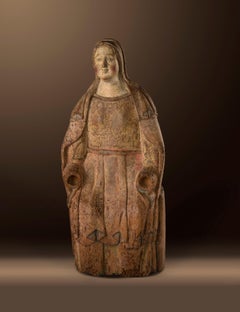
Sedes Sapientiae
Located in Wien, Wien
Sedes Sapientiae Pustertal um 1220/30 Weichholz/Lindenholz(?)geschnitzt Reste von originaler Polychromie Höhe 57 cm
Wood
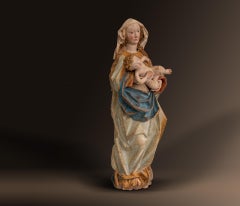
Madonna
Located in Wien, Wien
MUSEUM SCULPTURE Master workshop Hans Klocker before 1474, possibly in Gais - After 1500 "CRESCENT MOON" Around 1480/90 Stone pine wood carved Original version Height 77 cm This ext...
Wood

Italian Corpus Christi
Located in 'S-HERTOGENBOSCH, NL
Hand-carved Italian Corpus Christi with traces of polychromy. This sculpture reflects the transition from Gothic to Renaissance style.
Wood
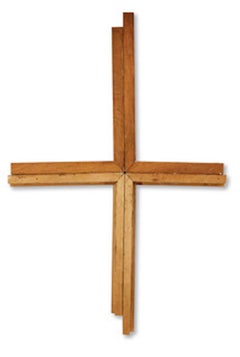
Cross
Located in London, GB
Erik Lindman Cross, 2010 Signed and dated on the reverse 'Lindman 2010' Found wooden stretcher 112 x 75.5 x 4 cm 44 1/8 x 29 3/4 x 1 5/8 inches Erik Lindman is a conceptual artist c...
Stretcher Bars
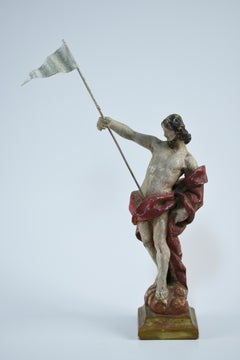
Carved wooden sculpture representing the Resurrected Christ
Located in New York, NY
This antique wood carving depicts the Resurrected Christ in a triumphant, Baroque-style pose. Crafted in polychrome wood with remnants of original paint and gilding, the figure holds...
Wood
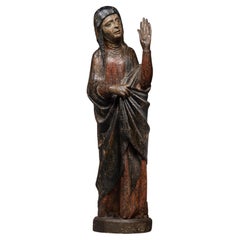
Virgin of Calvary
Located in Saint-Ouen, FR
VIRGIN OF CALVARY ORIGIN : ITALY PERIOD : SECOND HALF 13th CENTURY Height : 75 cm Length : 19 cm Depth : 13 cm Polychrome wood carved in the round This rare sculpture of a Virgin of Calvary originally belonged to an ensemble depicting the Crucifixion. The Virgin would be accompanied by a sculpture of the apostle John, both flanking the Christ. Depictions of Joseph of Arimathea and Nicodemus could complete the ensemble. The portrayal of the Descent from the Cross had to be a touching and moving scene for the viewer. Quite rare during the 10th and 11th centuries this particular scene of the Passion was very much in favour during the 12th century before other scenes took over in turn. Mary is standing with her head slightly tilted to her right shoulder. In a gesture of intercession she raises her left hand – note the long and delicate fingers – towards the missing Christ while with her right hand she holds her cloak around her elbow. Those calm and restrained movements break with the hieratism of Romanesque sculpture...
Wood
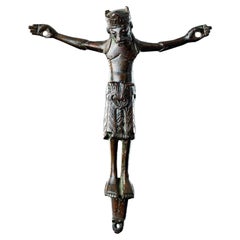
A Finely Cast Corpus from an Altar or Processional Cross
Located in London, GB
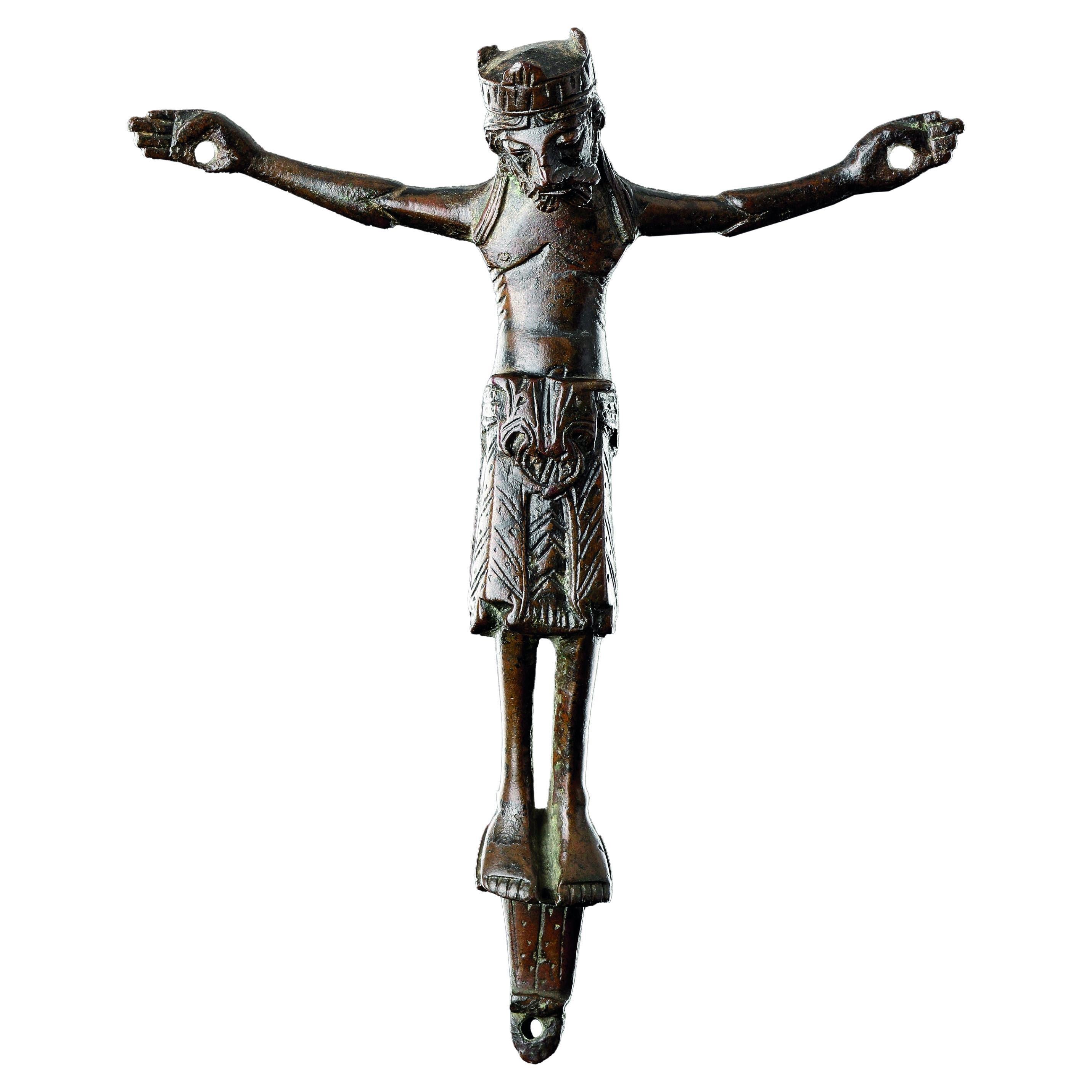
A Finely Cast Corpus from an Altar or Processional Cross The crowned head slightly downcast with long flowing hair to Christ’s back and over his shoulders Pierced for attaching and...
Bronze
18th Century Bohemian Corpus of Christ
Located in Wien, AT
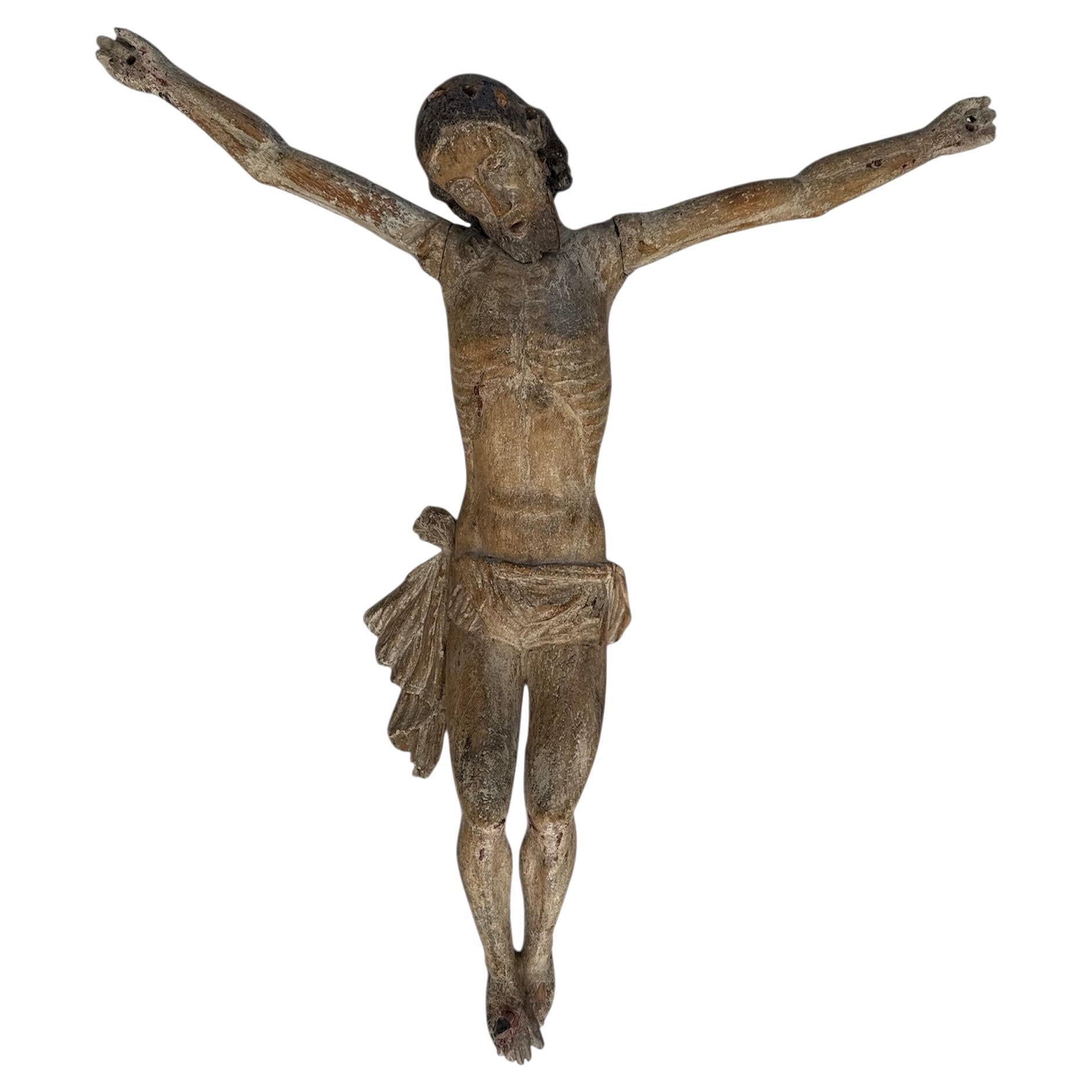
An expressive hand-carved wooden corpus of Christ from 18th century Bohemia, originally mounted on a wooden cross for devotional use. Executed in the late Baroque style, the figure s...
Wood