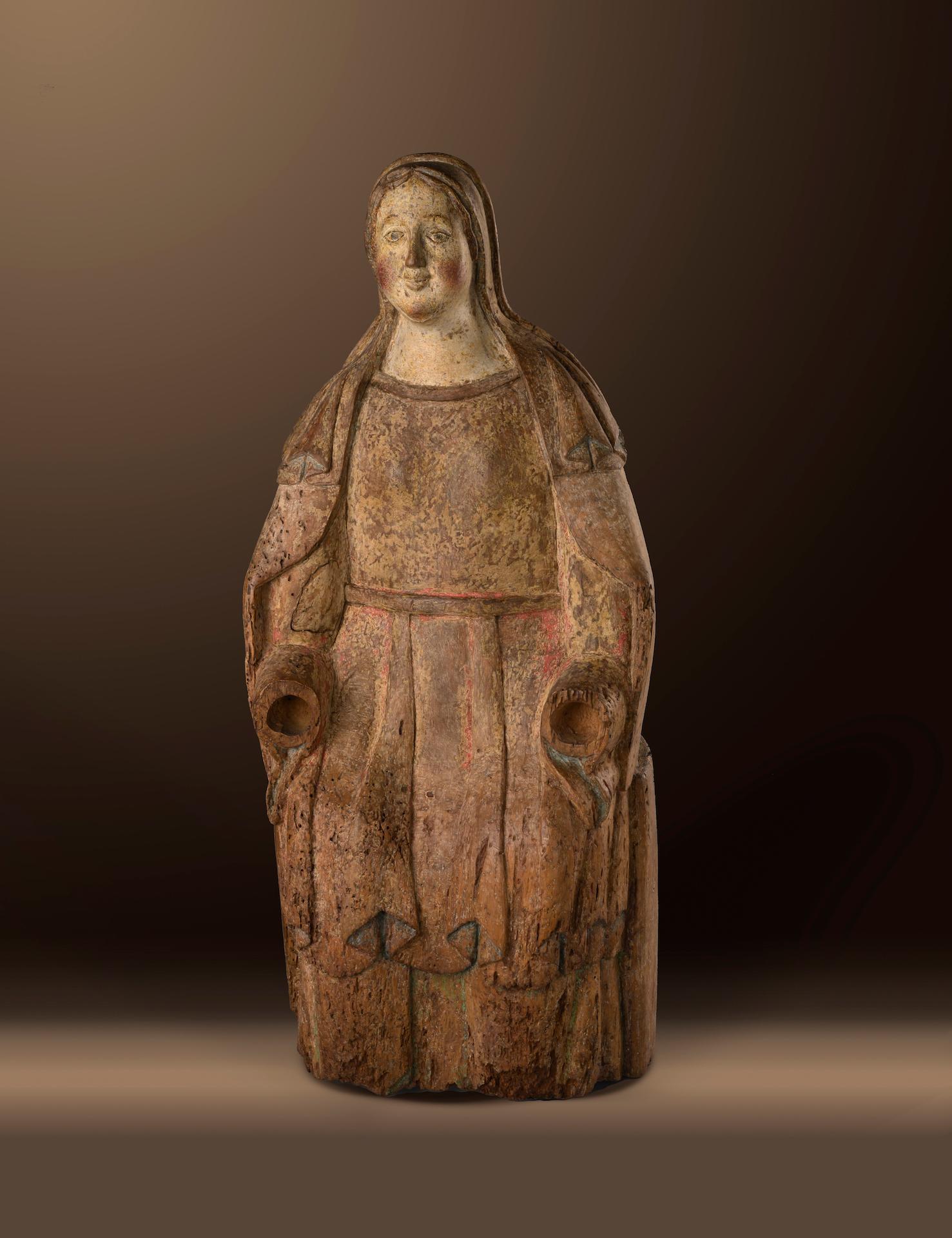
Sedes Sapientiae
Located in Wien, Wien
Sedes Sapientiae Pustertal um 1220/30 Weichholz/Lindenholz(?)geschnitzt Reste von originaler Polychromie Höhe 57 cm
Category
15th Century and Earlier Figurative Sculptures
Materials
Wood
1500/20
Sedes Sapientiae
Located in Wien, Wien
Sedes Sapientiae Pustertal um 1220/30 Weichholz/Lindenholz(?)geschnitzt Reste von originaler Polychromie Höhe 57 cm
Wood
Standing Engel
Located in Wien, Wien
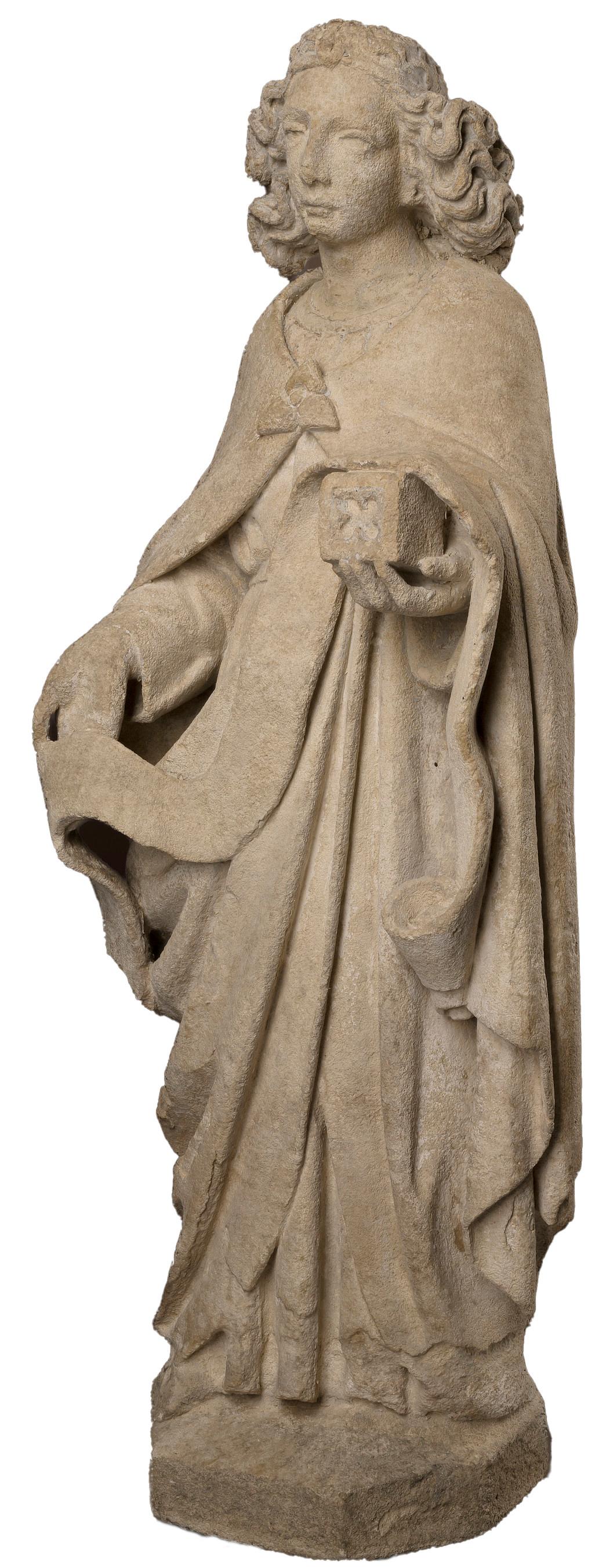
Standing angel with banner Flemish Around 1450/60 Sandstone 60 x 21 x 15 cm This museum figurine shows a standing angel with a banner in his right hand and a small box in his left. The youthful, ageless figure wears a coat held together with a triangular, floral brooch in front of the chest over a long robe. The angel’s gaze is directed forward, his head tilted slightly to the left. The elongated face is sculpted: the large almond-shaped eyes with accentuated upper and lower eyelids are alertly open and sharp eyebrows lead directly into the root of the nose. The straight nose above the pronounced mouth completes the idealized oval face of the angel and his calm, internalized facial expression. What is particularly remarkable, however, is the magnificent curls, which are only partially tamed by a simple headband. As if puffed up by the wind, the hair, which is sometimes streaked in parallel, sometimes wildly twisted and richly curled, stands out dynamically from the ears. The tilted head with these sideways protruding waves of hair thus conveys an immediate impression of movement. The physicality of the sculpture is expressed particularly through this organic, lifelike movement of the loosened hair. The lively overall impression of the figure is further enhanced by the multiple rolled banners that the angel presents to the viewer. The outstretched palm of the right hand appears both intimate and confidential as well as mystically revealing. This banderole winds in gentle curves in front of the figure’s body, throws a fold over the second attribute in the angel’s left hand and falls downwards in a loose manner. The volute-shaped rolled up end of the banner clearly shows the fine texture of the banner and at the same time draws the viewer’s attention to the small cube-shaped box that the angel is holding in its slender, long-limbed fingers. The cube is decorated with a Gothic quatrefoil motif, which is often seen in the architectural tracery of windows, but was also often used to decorate caskets and other small treasures. The sweeping gestures in the presentation of the attributes suggest three-dimensionality, in contrast to the tubular folds at the base of the neck and the intricate draperies in flat and multiple overlapping garment sections. The soft curves of the folds give the impression that the clothing is made of a heavy fabric that falls diagonally down the front and is laid in several bowl folds under the right hand. Overall, the sculptural work testifies to the highest artistic skill, which emphasizes the virtuosity of sculpture in its precious and representative overall impression. The memorable characteristics recognizable here can be seen in comparable pictorial works from Utrecht around the middle of the 15th century, when sculptural art – especially stone sculpture – was characterized by a remarkably high quality. Particularly noteworthy is the accentuated Utrecht head type with an elongated oval face, almond-shaped eyes with heavy lids and dense, vividly protruding tufts of hair framing the head. For example, the figure is comparable to a capital of an angel on the east side of the rood screen of the Joriskerk in Amersfoort (province of Utrecht) from the second quarter of the 15th century. Not only the physiognomy and hair, which in the comparative example stand somewhat more horizontally to one side, but also the garment puff above the girdle are similar. Even more related motifs, such as the cleverly placed bowl folds, can be found on the limestone figure...
Sandstone
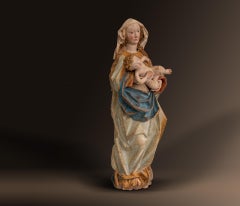
Madonna
Located in Wien, Wien
MUSEUM SCULPTURE Master workshop Hans Klocker before 1474, possibly in Gais - After 1500 "CRESCENT MOON" Around 1480/90 Stone pine wood carved Original version Height 77 cm This ext...
Wood
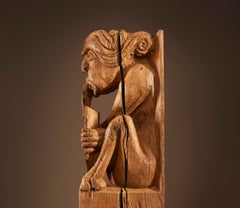
Apotropäische Teufelsfigur
Located in Wien, Wien
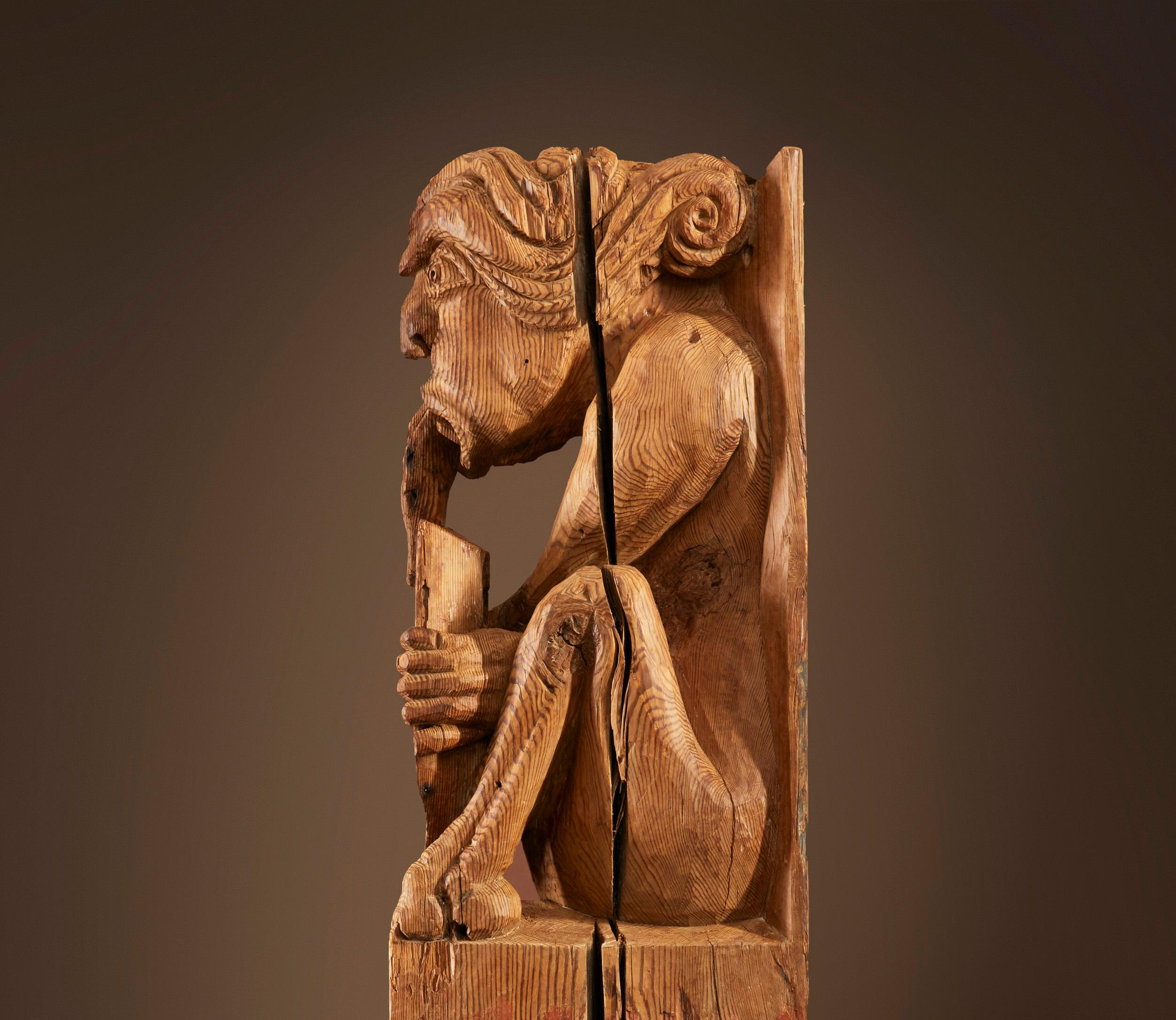
APOTROPAIC DEVIL FIGURE Romansh South Tyrol or Grisons Around 1120/50 Carved pine wood Original version Height 151 cm This singular figure is a demonic, devil-like figure carved fro...
Wood
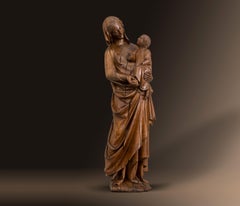
Madonna
Located in Wien, Wien
MADONNA Il DE FRANCE/PARIS Around 1270 Oak wood carved Height 79cm
Oak
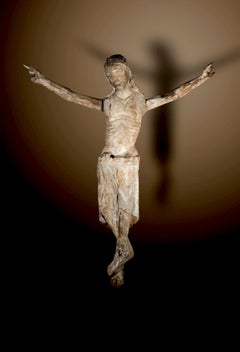
Corpus Christi
Located in Wien, Wien
MUSEUM CORPUS CHRISTI Spain/Catalonia or Asturias Around 1250 Corpus hardwood, arms softwood Remains of the original polychrome setting Height 109.5...
Wood
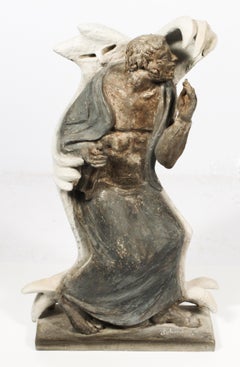
Haunted
By Robert Lohman
Located in Indianapolis, IN
Signed and dated on base. Lohman studied at John Herron Art Institute, and Cranbrook and Yale for graduate work. Assisted Carl Milles at Cranbrook Academy before becoming Director o...
Plaster, Pigment
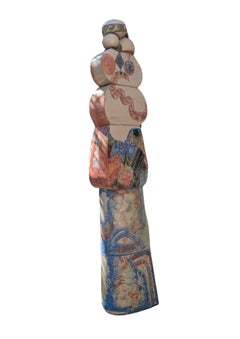
Sculpture monumentale
By gilbert Portanier 1
Located in PARIS, FR
Sublime monumental sculpture by French ceramic artist Gilbert Portanier. The different pieces can be disassembled and packed separately for transport.
Ceramic
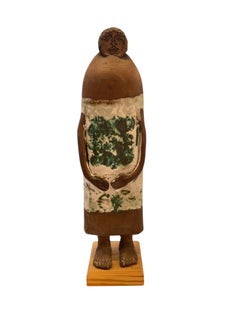
Sculpture
By Albert Thiry 1
Located in PARIS, FR
A vertical ceramic figure, rendered in a refined and monolithic style.
Ceramic

unknown
Located in Los Angeles, CA
A classic terra cotta sculpture of Mercury signed Jean-Baptiste Pigalle (1714-1785).
Terracotta
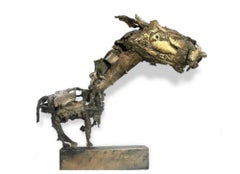
Untitled
Located in PARIS, FR
Alaa Abou Shaheen, a renowned artist born in the vibrant city of Damascus in 1982, stands out as a master of utilizing satire, irony, and caricature to bring his unique artistic visi...
Bronze
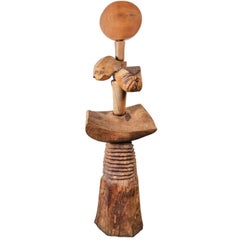
Life-Sized, Abstract Figurative Sculpture
Located in Los Angeles, CA
Remarkable, large, hand-carved, tribal-type, teak sculpture of an abstract, female form featuring a mix of refined and rough finishes.
Wood