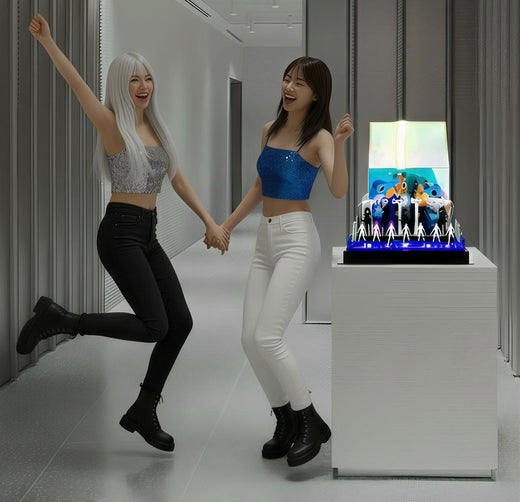
Sunlit Pikachu: Kawaii Glow by Saori Nakamishi captures the radiant optimism at the heart of contemporary Japanese neo-pop, transforming Pokémon iconography into a luminous sculptural narrative. A leading member of Studio CrazyNoodles founded by Hiro Ando, one of the emblematic figures of the Nippon Neo Pop movement, Nakamishi continues in the series Whimsical Plexiworlds and Pokémon Houses: Kawaii Haven her exploration of emotional architecture through playful cultural symbols.
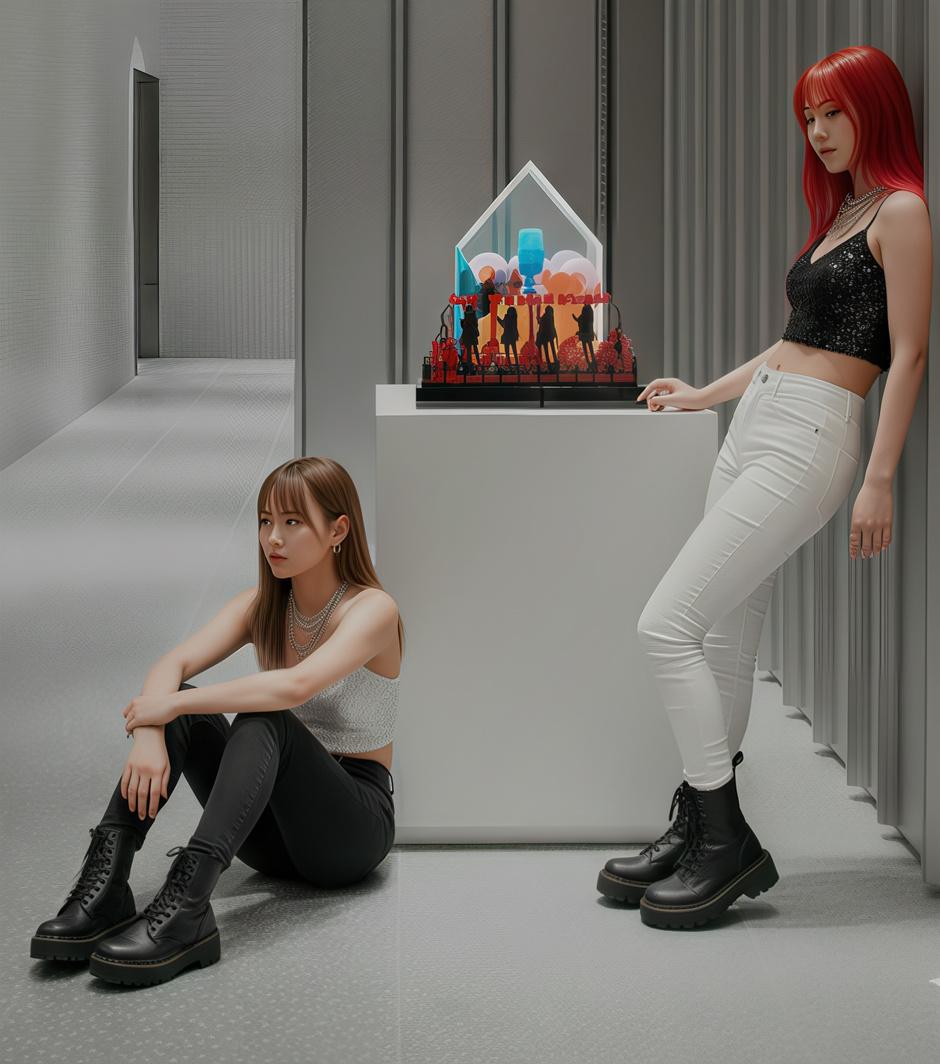
Inside a house-shaped iridescent plexiglass structure, a joyful gathering of Pikachu plush figures fills the space, multiplying the character’s presence as if joy itself were overflowing beyond containment. The reflective surfaces diffuse turquoise, yellow, and warm daylight tones, creating an atmosphere reminiscent of a sunlit morning where energy and innocence seem endlessly renewed. Around the base, sculpted plexiglass silhouettes, playful hearts, and the handwritten “kawaii” inscription form a lively perimeter, evoking a community celebrating cuteness as a shared emotional language.
Pikachu, universally associated with friendship, curiosity, and playful vitality, becomes here a symbol of collective optimism, suggesting that positivity itself can become a protective environment. Nakamishi transforms the domestic house form into a sanctuary of pop memory, where viewers reconnect with the comforting simplicity of childhood enthusiasm while confronting the overstimulated pace of contemporary life. The playful accumulation of characters reflects how joy multiplies when shared, making the artwork both intimate and communal.
For collectors, Sunlit Pikachu: Kawaii Glow represents an opportunity to acquire a work emblematic of the global evolution of neo-pop art, uniting Japanese pop culture, innovative materials, and emotional storytelling. Bringing this piece into a collection means welcoming an artwork that radiates warmth, optimism, and visual vibrancy—an investment in a joyful contemporary icon destined to resonate across generations of collectors and audiences alike.
LITERATURE ABOUT THE SERIE “Whimsical Plexiworlds and Pokémon Houses : Kawaii Haven”
In the series “Whimsical Plexiworlds and Pokémon Houses: Kawaii Haven,” Saori Nakamishi transforms global pop culture icons into intimate emotional micro-architectures. Each artwork takes the form of a translucent, iridescent plexiglass house containing carefully arranged Pokémon plush figures, surrounded by phrases and symbols sculpted into the material, creating a hybrid space between display case, personal refuge, and conceptual sculpture.
These houses become contemporary metaphors for emotional shelter. The Pokémon, universally associated with childhood and playfulness, are no longer mere characters but protective presences enclosed within transparent architecture that simultaneously evokes safety and vulnerability. Viewers observe these familiar creatures as they would their own memories—protected, yet exposed to the outside gaze.
The iridescent plexiglass plays a central symbolic role. Colors shift with the viewer’s movement, reflecting emotional instability and the fluid identities of contemporary life. The kawaii phrases and silhouettes carved around the structures function like visual whispers—fragments of thoughts or memories encircling these preserved spaces of innocence. Nakamishi thus transforms popular consumer icons into emotional relics suspended between nostalgia and hypermodern reality.
The series also deeply resonates with contemporary society, shaped by urban solitude, digital overload, and a growing nostalgia for simpler emotional landscapes. Within this context, these Pokémon-filled houses appear as miniature sanctuaries where tenderness survives adulthood’s pressures. The repetition of figures visible through transparent layers further echoes the visual saturation of our media environment, while maintaining a playful and comforting atmosphere.
Psychologically, Nakamishi’s work reveals a tension between fragility and humor, self-awareness and emotional self-protection. Her installations create a space where both artist and viewer can preserve a fragment of innocence within an increasingly demanding world. This ability to merge kawaii lightness with deeper emotional reflection positions her work among the most sensitive expressions of contemporary Nippon Neo Pop art.
Ultimately, “Whimsical Plexiworlds and Pokémon Houses: Kawaii Haven” moves beyond pop culture celebration to become a meditation on intimate refuge, emotional memory, and the search for softness within an increasingly complex visual and psychological environment.