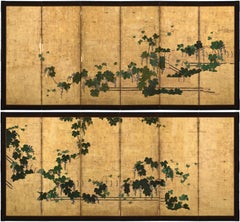
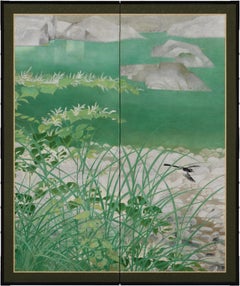
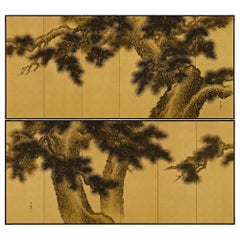
Japanese Screen. 19th Century. Reflections of the Moon.
Yokoyama Seiki (1792–1864)
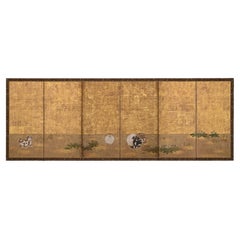
Reflections of the Moon
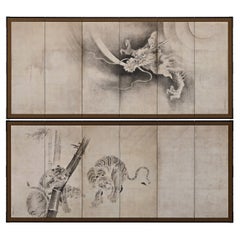
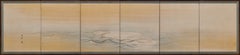
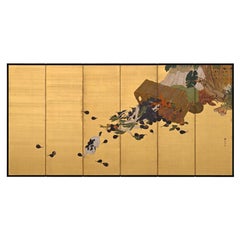
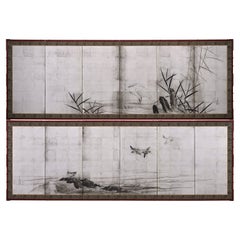
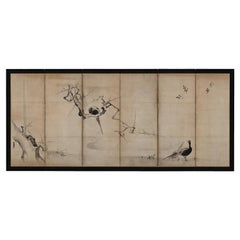
Six-panel Japanese Screen. Ink, color and gold on paper.
Dimensions: H. 63.5 cm x W. 274 cm (25” x 108”)
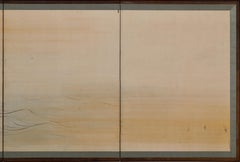
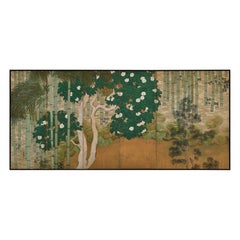
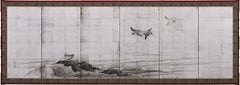
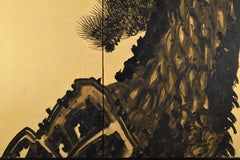
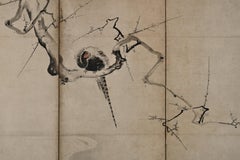
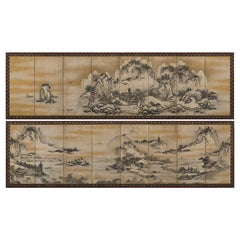
Executed as a six-panel folding screen, this atmospheric composition presents an evocative nocturnal study of moonlight reflected upon a tranquil expanse of water. The moon itself remains unseen, its presence revealed only through elongated bands of pale light that drift across the softly rippling surface, their forms broken and reformed by gently undulating currents rendered in delicate ink line. Subtle washes and fluid brushwork create a refined interplay between luminosity and shadow, conveying the quiet movement of water beneath the night sky. The screen's broad horizontal format emphasizes the vastness of the scene, surrounding the reflected light with expansive areas of open space that evoke the stillness and silence of the night.
Particularly notable is Seiki's use of translucent gold washes, which permeate the composition with a soft, radiant glow. Rather than serving a purely decorative function, the gold creates an enveloping atmosphere suggestive of moonlight diffused through mist, while the reflective surface of the screen itself causes the image to shift subtly as ambient light changes. Reduced almost to abstraction and distilled to the essential elements of light, water, and space, the work exemplifies the Shijō school's sensitivity to observed natural phenomena while expressing a distinctly Japanese appreciation for atmosphere, transience, and contemplative space.
Yokoyama Seiki (1792–1864) was a leading painter of the Kyoto-based Shijō school during the late Edo period. Born in Kyoto, he studied under Matsumura Keibun (1779–1843), the younger half-brother of Matsumura Goshun, founder of the Shijō school. Following Keibun's death, Seiki emerged as one of the school's most distinguished artists and was ranked among the foremost painters of Kyoto. Together with Nakajima Raishō, Kishi Renzan...
Category
Mid-19th Century Japanese Edo Antique Kyoto