Ann Nooney Prints and Multiples

to
4
Overall Width
to
Overall Height
to
4
1,319
1,037
943
899
4
4
3
1
2
2
1
1
1
4
4
Artist: Ann Nooney
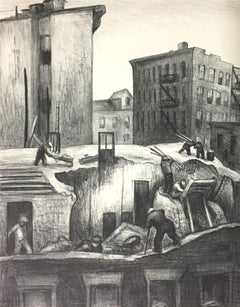
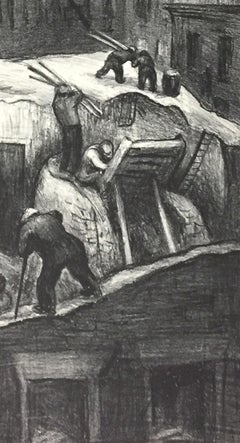
Ann Nooney, (Demolition with Windows, NYC)

Ann Nooney, (Demolition with Windows, NYC)

By Ann Nooney

Located in New York, NY

The dimensions are for the image; there are large margins. This lithograph is signed in pencil. A native New Yorker, Ann Nooney (1900-1970) recorded the urban scene while on the Wo...

Category

1930s American Realist Ann Nooney Prints and Multiples

Materials

Lithograph

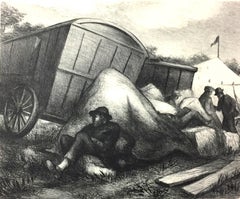
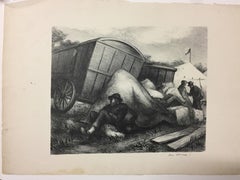
Ann Nooney, (Carnival Workers Resting, NYC)

Ann Nooney, (Carnival Workers Resting, NYC)

By Ann Nooney

Located in New York, NY

The dimensions are for the image; there are large margins. This lithograph is signed in pencil. A native New Yorker, Ann Nooney (1900-1970) recorded the urban scene while on the Wo...

Category

1930s Ashcan School Ann Nooney Prints and Multiples

Materials

Lithograph

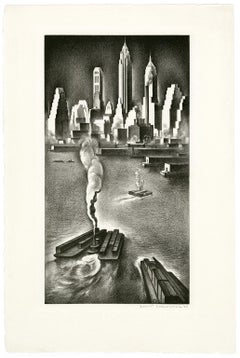
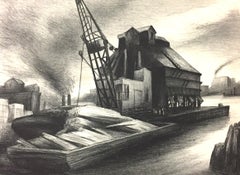
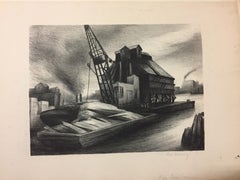
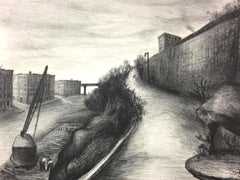
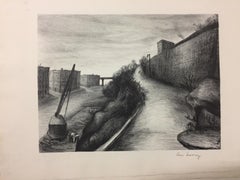
Ann Nooney, (Loading the Lumber Barge, NYC)

Ann Nooney, (Loading the Lumber Barge, NYC)

By Ann Nooney

Located in New York, NY

The dimensions are for the image. There are large margins. Signed in pencil. A native New Yorker, Ann Nooney (1900-1970), recorded the urban scene while on the Works Progress Admini...

Category

1930s American Realist Ann Nooney Prints and Multiples

Materials

Lithograph

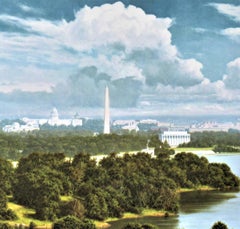
Ann Nooney, (New York City Scene)

Ann Nooney, (New York City Scene)

By Ann Nooney

Located in New York, NY

The dimensions are for the image; there are large margins. This lithograph is signed in pencil. A native New Yorker, Ann Nooney (1900-1970) recorded the urban scene while on the Works Progress...

Category

1930s Ashcan School Ann Nooney Prints and Multiples

Materials

Lithograph

Related Items
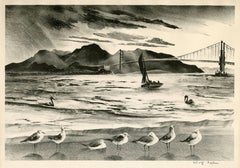
The Golden Gate
The Golden Gate

The Golden Gate

By Adolf Arthur Dehn

Located in Fairlawn, OH

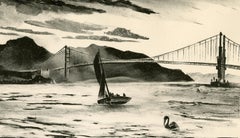
The Golden Gate Lithograph on wove paper watermarked GC, 1940 Signed in pencil by the artist (see photo) Publisher: Associated American Artists Edition: 189, unnumbered The image depicts The Golden Gate Bridge which connects San Francisco and Marin County, California References And Exhibitions: Illustrated: Adams, The Sensuous Life of Adolf Dehn, Fig. 13.17, page 324 Reference: L & O 325 AAA Index 391 Adolf Dehn, American Watercolorist and Printmaker, 1895-1968 Adolf Dehn was an artist who achieved extraordinary artistic heights, but in a very particular artistic sphere—not so much in oil painting as in watercolor and lithography. Long recognized as a master by serious print collectors, he is gradually gaining recognition as a notable and influential figure in the overall history of American art. In the 19th century, with the invention of the rotary press, which made possible enormous print runs, and the development of the popular, mass-market magazines, newspaper and magazine illustration developed into an artistic realm of its own, often surprisingly divorced from the world of museums and art exhibitions, and today remains surprisingly overlooked by most art historians. Dehn in many regards was an outgrowth of this world, although in an unusual way, since as a young man he produced most of his illustrative work not for popular magazines, such as The Saturday Evening Post, but rather for radical journals, such as The Masses or The Liberator, or artistic “little magazines” such as The Dial. This background established the foundation of his outlook, and led later to his unique and distinctive contribution to American graphic art. If there’s a distinctive quality to his work, it was his skill in introducing unusual tonal and textural effects into his work, particularly in printmaking but also in watercolor. Jackson Pollock seems to have been one of many notable artists who were influenced by his techniques. Early Years, 1895-1922 For an artist largely remembered for scenes of Vienna and Paris, Adolf Dehn’s background was a surprising one. Born in Waterville, Minnesota, on November 22, 1895, Dehn was the descendent of farmers who had emigrated from Germany and homesteaded in the region, initially in a one-room log cabin with a dirt floor. Adolf’s father, Arthur Clark Dehn, was a hunter and trapper who took pride that he had no boss but himself, and who had little use for art. Indeed, during Adolf’s boyhood the walls of his bedroom and the space under his bed were filled with the pelts of mink, muskrats and skunks that his father had killed, skinned and stretched on drying boards. It was Adolf’s mother, Emilie Haas Dehn, a faithful member of the German Lutheran Evangelical Church, who encouraged his interest in art, which became apparent early in childhood. Both parents were ardent socialists, and supporters of Eugene Debs. In many ways Dehn’s later artistic achievement was clearly a reaction against the grinding rural poverty of his childhood. After graduating from high school in 1914 at the age of 19—an age not unusual in farming communities at the time, where school attendance was often irregular—Dehn attended the Minneapolis School of Art from 1914 to 1917, whose character followed strongly reflected that of its director, Munich-trained Robert Kohler, an artistic conservative but a social radical. There Dehn joined a group of students who went on to nationally significant careers, including Wanda Gag (later author of best-selling children’s books); John Flanagan (a sculptor notable for his use of direct carving) Harry Gottlieb (a notable social realist and member of the Woodstock Art Colony), Elizabeth Olds (a printmaker and administrator for the WPA), Arnold Blanch (landscape, still-life and figure painter, and member of the Woodstock group), Lucille Lunquist, later Lucille Blanch (also a gifted painter and founder of the Woodstock art colony), and Johan Egilrud (who stayed in Minneapolis and became a journalist and poet). Adolf became particularly close to Wanda Gag (1893-1946), with whom he established an intense but platonic relationship. Two years older than he, Gag was the daughter of a Bohemian artist and decorator, Anton Gag, who had died in 1908. After her husband died, Wanda’s mother, Lizzi Gag, became a helpless invalid, so Wanda was entrusted with the task of raising and financially supporting her six younger siblings. This endowed her with toughness and an independent streak, but nonetheless, when she met Dehn, Wanda was Victorian and conventional in her artistic taste and social values. Dehn was more socially radical, and introduced her to radical ideas about politics and free love, as well as to socialist publications such as The Masses and The Appeal to Reason. Never very interested in oil painting, in Minneapolis Dehn focused on caricature and illustration--often of a humorous or politically radical character. In 1917 both Dehn and Wanda won scholarships to attend the Art Students League, and consequently, in the fall of that year both moved to New York. Dehn’s art education, however, ended in the summer of 1918, shortly after the United States entered World War I, when he was drafted to serve in the U. S. Army. Unwilling to fight, he applied for status as a conscientious objector, but was first imprisoned, then segregated in semi-imprisonment with other Pacifists, until the war ended. The abuse he suffered at this time may well explain his later withdrawal from taking political stands or making art of an overtly political nature. After his release from the army, Dehn returned to New York where he fell under the spell of the radical cartoonist Boardman Robinson and produced his first lithographs. He also finally consummated his sexual relationship with Wanda Gag. The Years in Europe: 1922-1929 In September of 1921, however, he abruptly departed for Europe, arriving in Paris and then moving on to Vienna. There in the winter of 1922 he fell in love with a Russian dancer, Mura Zipperovitch, ending his seven-year relationship with Wanda Gag. He and Mura were married in 1926. It was also in Vienna that he produced his first notable artistic work. Influenced by European artists such as Jules Pascin and Georg Grosz, Dehn began producing drawings of people in cafes, streets, and parks, which while mostly executed in his studio, were based on spontaneous life studies and have an expressive, sometimes almost childishly wandering quality of line. The mixture of sophistication and naiveté in these drawings was new to American audiences, as was the raciness of their subject matter, which often featured pleasure-seekers, prostitutes or scenes of sexual dalliance, presented with a strong element of caricature. Some of these drawings contain an element of social criticism, reminiscent of that found in the work of George Grosz, although Dehn’s work tended to focus on humorous commentary rather than savagely attacking his subjects or making a partisan political statement. Many Americans, including some who had originally been supporters of Dehn such as Boardman Robinson, were shocked by these European drawings, although George Grocz (who became a friend of the artist in this period) admired them, and recognized that Dehn could also bring a new vision to America subject matter. As he told Dehn: “You will do things in America which haven’t been done, which need to be done, which only you can do—as far at least as I know America.” A key factor in Dehn’s artistic evolution at this time was his association with Scofield Thayer...

Category

1940s American Realist Ann Nooney Prints and Multiples
Materials

Lithograph

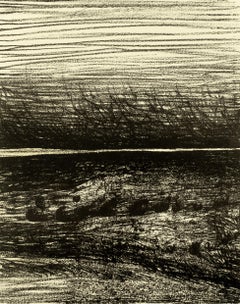
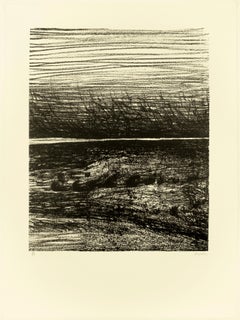
Windswept Landscape Henry Moore drawing of Scottish landscape for W.H. Auden

Windswept Landscape Henry Moore drawing of Scottish landscape for W.H. Auden

By Henry Moore

Located in New York, NY

One of a series of 18 lithographs drawn by the artist fo¬r the Auden Poems/Moore Lithographs 1974 book and portfolio. This work is from an edition of 25 printed on vellum aside from the portfolio (edition of 75) and the book. Signed by the artist lower right in pencil; numbered lower left in pencil. Printed in inky black, this print features a shadowy landscape. Brush sweeps to the left, and the sky is drawn with long horizontal lines. In the bottom half of the composition, the ground looks rocky, perhaps dotted with shrubs. Windswept Landscape displays Moore’s fascination with light and dark – what he called a “…bias towards the blackness and mysterious depths.” Moore was inspired by the prints of Rembrandt and the drawings of Seurat, and even drew on his memories of viewing the Altamira cave paintings, recalling how some of the images used the shadow of candlelight on the rough surface of the rock to model light. Shortly before starting work on this series of lithographs, Moore had fallen ill, leaving him aware of his own mortality. His mood pervaded these prints with a sense of danger and foreboding. The Auden/Moore limited edition book and portfolio were exhibited on publication at the British Museum, London, with an accompanying catalogue. Windswept Landscape is one of a group of lithographs...

Category

Late 20th Century Modern Ann Nooney Prints and Multiples

Materials

Lithograph

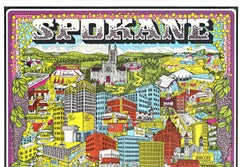
Original Spokane (WA.) Colorful Capital Fun Map vintage poster

Original Spokane (WA.) Colorful Capital Fun Map vintage poster

Located in Spokane, WA

Original Spokane (Washington), The Colorful Capital of the Inland Empire vintage travel fun map. Printed in 1971, this seldom if ever found original map is archival linen backed an...

Category

1970s American Modern Ann Nooney Prints and Multiples

Materials

Lithograph

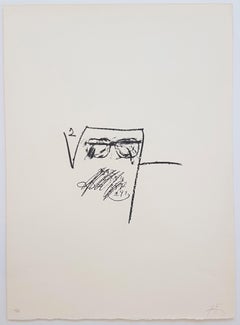
Llambrec-6
Llambrec-6

Antoni TàpiesLlambrec-6, 1975

$1,500

H 29.4 in W 21.5 in

Llambrec-6

By Antoni Tàpies

Located in Kansas City, MO

Antoni Tapies (* 12/13/1923 Barcelona † 02/06/2012 Barcelona) Title: Llambrec-6 Lithograph Year: 1975 Signed and numbered by hand Edition: 75 (for sale is H.C) Size: 9.2 × 11.7 on 29...

Category

1970s Modern Ann Nooney Prints and Multiples

Materials

Lithograph

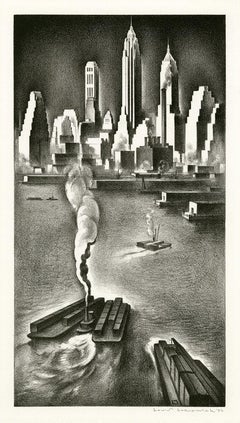
'Mural Study: Lower Manhattan' — WPA Era Precisionism

'Mural Study: Lower Manhattan' — WPA Era Precisionism

By Louis Lozowick

Located in Myrtle Beach, SC

Louis Lozowick, 'Mural Study: Lower Manhattan', lithograph, edition 10 or fewer, 1936. Flint 135. Signed and dated in pencil. Signed in the stone, lower right. A fine, richly-inked...

Category

1930s American Modern Ann Nooney Prints and Multiples

Materials

Lithograph

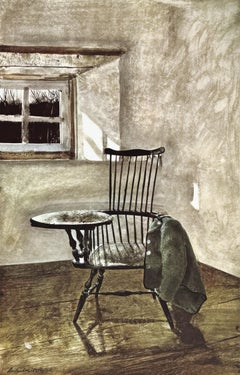
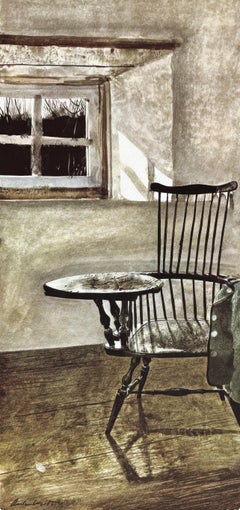
Andrew Wyeth, Early October, from The Four Seasons (after)

Andrew Wyeth, Early October, from The Four Seasons (after)

By Andrew Wyeth

Located in Southampton, NY

This exquisite lithograph after Andrew Wyeth (1917–2009), titled Early October, originates from the distinguished 1962 folio The Four Seasons: Paintings and Drawings by Andrew Wyeth....

Category

1960s American Realist Ann Nooney Prints and Multiples
Materials

Lithograph

Andrew Wyeth, May Day, from The Four Seasons (after)

Andrew Wyeth, May Day, from The Four Seasons (after)

By Andrew Wyeth

Located in Southampton, NY

This exquisite lithograph after Andrew Wyeth (1917–2009), titled May Day, originates from the distinguished 1962 folio The Four Seasons: Paintings and Drawings by Andrew Wyeth. Published and printed by Art in America Company, Inc., New York, the edition embodies Wyeth’s lyrical study of springtime renewal and human connection to the land. May Day captures a tender seasonal moment—nature reawakening beneath soft light—rendered with Wyeth’s quiet precision and emotional restraint that elevate the ordinary into the timeless. Executed on velin paper, this lithograph measures 17 x 13 inches (43.2 x 33 cm). As issued, it is unsigned and unnumbered, representing the folio’s authentic format. The Four Seasons series was conceived by the editors of Art in America in collaboration with Andrew and Betsy Wyeth, who selected drawings from the artist’s studio and private collection to express the cyclical harmony between nature and spirit. Each image reflects Wyeth’s devotion to atmosphere and the fragile poetry of the passing year. Artwork Details: Artist: After Andrew Wyeth (1917–2009) Title: May Day, from The Four Seasons, Paintings and Drawings by Andrew Wyeth, 1962 Medium: Lithograph on velin paper Dimensions: 17 x 13 inches (43.2 x 33 cm) Inscription: Unsigned and unnumbered, as issued Date: 1962 Publisher: Art in America Company, Inc., New York Printer: Art in America Company, Inc., New York Condition: Well preserved, consistent with age and medium Provenance: From the 1962 folio The Four Seasons, Paintings and Drawings by Andrew Wyeth, published and printed by Art in America Company, Inc., New York Notes: Excerpted from the 1962 folio: "In 1962 the editors of Art in America proposed to Wyeth a portfolio of images of his recent dry-brush drawings. The artist and his wife suggested the theme, 'The Four Seasons,' because of the essential role played in his work by the cycle of the seasons. The drawings were selected by Andrew and Betsy Wyeth from works in the house and studio at Chadds Ford, supplemented by some owned by friends. With a few exceptions they had never been exhibited or reproduced. The plates were made directly from the originals. In these drawings Wyeth's loving concentration on the object is fully revealed. But as always in his work, this concern with the tangible is balanced by sensibility to mood, to the emotion arising from the actual. They are pervaded with a sense of the season—the exact time of year, the hour of the day, the quality of the light. To the truth and subtlety with which he captures these intangible factors, these drawings owe their poignant poetry." About the Artist: Andrew Wyeth (1917–2009) was an American visual artist and one of the best-known painters of the mid-20th century. Although he considered himself an abstractionist, Wyeth’s work is characterized by a meticulous realism imbued with psychological depth and atmosphere. He often painted the landscapes and people surrounding his homes in Chadds Ford, Pennsylvania, and Cushing, Maine, creating an intimate record of American rural life. The son of the celebrated illustrator N. C. Wyeth, Andrew trained under his father before developing his own deeply personal visual language inspired by Winslow Homer, Henry David Thoreau, and King Vidor. His wife, Betsy Wyeth, was both his muse and career manager, while his son Jamie Wyeth continued the family’s artistic legacy. Among Wyeth’s best-known works is Christina’s World (1948), housed in the Museum of Modern Art, New York—a quintessential image of 20th-century American art. His other notable series include The Helga Pictures and his window studies, each reflecting a profound meditation on solitude, memory, and perception. Wyeth was the first painter to receive both the Presidential Medal of Freedom and the Congressional Gold Medal, and was elected to the French Académie des Beaux-Arts in 1980. In 2022, Andrew Wyeth's painting Day Dream sold for USD 23.29 million at Christie’s New York, setting a world record for the artist. Andrew Wyeth lithograph...

Category

1960s American Realist Ann Nooney Prints and Multiples
Materials

Lithograph

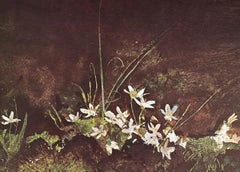
Andrew Wyeth, New Leaves, from The Four Seasons (after)

Andrew Wyeth, New Leaves, from The Four Seasons (after)

By Andrew Wyeth

Located in Southampton, NY

This exquisite lithograph after Andrew Wyeth (1917–2009), titled New Leaves, originates from the distinguished 1962 folio The Four Seasons: Paintings and Drawings by Andrew Wyeth. Pu...

Category

1960s American Realist Ann Nooney Prints and Multiples
Materials

Lithograph

America! America!
America! America!

James FetherolfAmerica! America!, 1973

$400

H 22 in W 29.8 in D 0.01 in

America! America!

Located in San Francisco, CA

This artwork titled "America! America" is a color lithograph after noted American artist James Fetherolf, 1925-1994. It is hand signed at the lower rig...

Category

Late 20th Century American Realist Ann Nooney Prints and Multiples
Materials

Lithograph

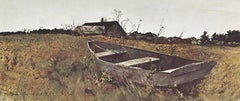
Andrew Wyeth, Teel’s Island, from The Four Seasons (after)

Andrew Wyeth, Teel’s Island, from The Four Seasons (after)

By Andrew Wyeth

Located in Southampton, NY

This exquisite lithograph after Andrew Wyeth (1917–2009), titled Teel’s Island, originates from the distinguished 1962 folio The Four Seasons: Paintings and Drawings by Andrew Wyeth....

Category

1960s American Realist Ann Nooney Prints and Multiples
Materials

Lithograph

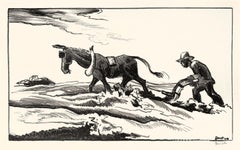
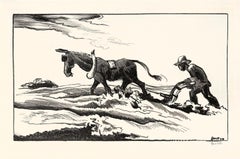
'Plowing It Under' — WPA Era American Regionalism

'Plowing It Under' — WPA Era American Regionalism

By Thomas Hart Benton

Located in Myrtle Beach, SC

Thomas Hart Benton, 'Goin' Home', lithograph, 1937, edition 250, Fath 14. Signed in pencil. Signed in the stone, lower right. A fine, richly-inked impression, on off-white, wove pape...

Category

1930s American Realist Ann Nooney Prints and Multiples
Materials

Lithograph

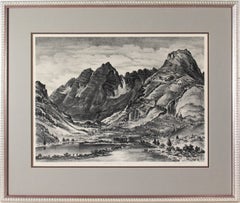
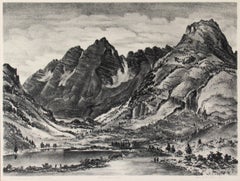
Maroon Lake, Colorado

Adolf Arthur DehnMaroon Lake, Colorado, 1945

$1,190

H 20.15 in W 24.15 in D 0.75 in

Maroon Lake, Colorado

By Adolf Arthur Dehn

Located in San Francisco, CA

This artwork titled "Maroon Lake, Colorado" 1945 is an original lithograph on paper by noted American artist Adolf Arthur Dehn, 1895-1968. It is hand signed, dated, titled, numbered ...

Category

Mid-20th Century American Realist Ann Nooney Prints and Multiples
Materials

Lithograph

Ann Nooney prints and multiples for sale on 1stDibs.
Find a wide variety of authentic Ann Nooney prints and multiples available for sale on 1stDibs. You can also browse by medium to find art by Ann Nooney in lithograph and more. Not every interior allows for large Ann Nooney prints and multiples, so small editions measuring 11 inches across are available. Customers who are interested in this artist might also find the work of Fred Nagler, John Edward Costigan, and James Penney. Ann Nooney prints and multiples prices can differ depending upon medium, time period and other attributes. On 1stDibs, the price for these items starts at $1,200 and tops out at $1,200, while the average work can sell for $1,200.