Anthony Velonis Art

to
1
1
Overall Width
to
Overall Height
to
2
1
2
2
2
2
11,084
2,852
2,494
1,431
2
Artist: Anthony Velonis
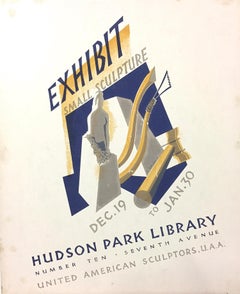
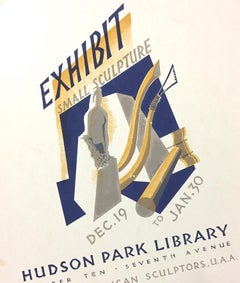
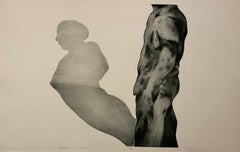
Anthony Velonis, Exhibit, Small Sculpture

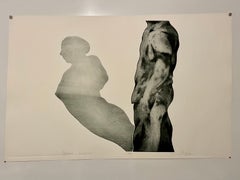
Anthony Velonis, Exhibit, Small Sculpture

By Anthony Velonis

Located in New York, NY

Anthony Velonis (1911-1997) was an extremely innovative artist. He learned the technique of screen printing, also known as silkscreen, (for which he also coined the term serigraphy) while working with a wall paper manufacturer. Unusual for fine prints, the image is made by the artist in the same direction as it will print, as the colored inks are forced through fabric (silk) directly onto a paper surface. (He also invented a machine that could print onto column-shaped items such as cocktail glasses or make-up bottles and a rack system for drying sheets of paper with wet ink in which the sheets are just inches apart.) The technique allows extreme versatility on the part of the artist and the ink tends to sit on top of the paper rather than soak into the fibers. In 1934 Velonis used this new technique on Mayor LaGuardia's NYC Poster...

Category

Mid-20th Century American Modern Anthony Velonis Art

Materials

Screen

Related Items
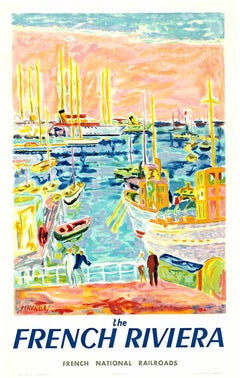
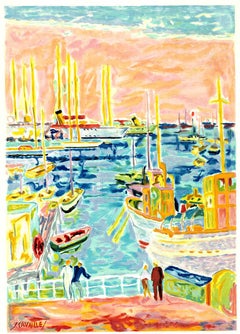
Original The French Riviera (Cote d'Azur) French Railways vintage travel poster

Original The French Riviera (Cote d'Azur) French Railways vintage travel poster

By Jules Cavailles

Located in Spokane, WA

Original vintage travel advertising poster for the FRENCH RIVIERA FRENCH NATIONAL RAILROADS SNCF (French National Railways) - the French Riviera. (Cote D'Azur, known as the French Riviera) The image features people looking out towards a marina full of sailing boats. Colorful artwork by the French painter Jules Cavailles (1901-1977). Printed by Perceval, Paris in 1953. Mid-Century Modern. Grade A- This is the English version of the poster compared to the design created for Cote d'Azur. The English version is much rarer (both are rare today). The poster gives the impression of a naive painting at this Mediterranean beach and seaport. Step into a world of timeless elegance and sunlit dreams with this exquisite French Riviera Vintage...

Category

1950s American Modern Anthony Velonis Art

Materials

Lithograph

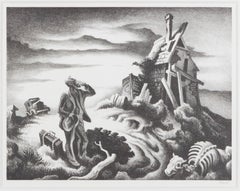
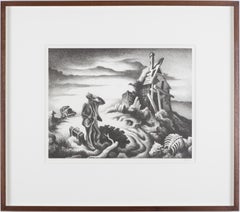
Lithograph of American rural life timeless with architecture monochrome

Lithograph of American rural life timeless with architecture monochrome

By Thomas Hart Benton

Located in London, GB

A man raises his hand to his chin, his neck tilted and face turned to look at a dilapidated farmhouse, barely held together by planks of wood and exposed to the elements. Behind him ...

Category

1930s American Modern Anthony Velonis Art

Materials

Lithograph

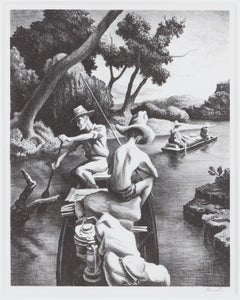
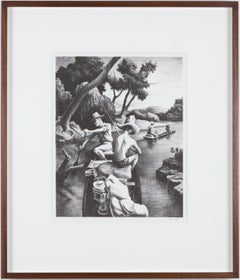
Lithograph of American rural life timeless and romantic monochrome

Lithograph of American rural life timeless and romantic monochrome

By Thomas Hart Benton

Located in London, GB

In this sentimental work from 1939, Benton expresses his admiration for the rural lifestyle of the Midwest. He highlights the connection between man and the land by depicting two fig...

Category

1930s American Modern Anthony Velonis Art

Materials

Lithograph

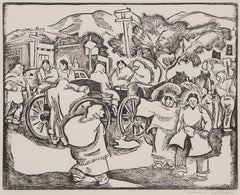
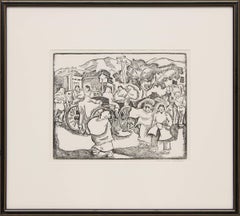
Barbara Latham 1950s Modernist Linocut “Saturday Morning, Taos Plaza”

Barbara Latham 1950s Modernist Linocut “Saturday Morning, Taos Plaza”

By Barbara Latham

Located in Denver, CO

A vibrant celebration of Taos life and culture, Saturday Morning (Market, Taos Plaza, New Mexico) is a striking 1950s modernist linocut print by acclaimed New Mexico artist Barbara L...

Category

Mid-20th Century American Modern Anthony Velonis Art

Materials

Linocut

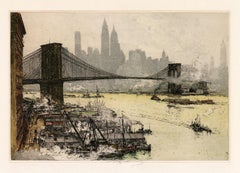
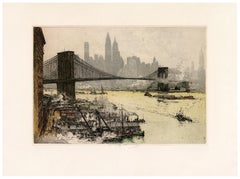
'Brooklyn Bridge' — Iconic New York City Landmark

'Brooklyn Bridge' — Iconic New York City Landmark

By Luigi Kasimir

Located in Myrtle Beach, SC

Luigi Kasimir, 'Brooklyn Bridge', color etching with aquatint, 1927, edition 100. Signed in pencil. A superb impression, with fresh colors, on heavy, cream wove paper; with margins...

Category

1920s American Modern Anthony Velonis Art

Materials

Etching, Aquatint

Harry Shokler, Island Harbor

Harry Shokler, Island Harbor

By Harry Shokler

Located in New York, NY

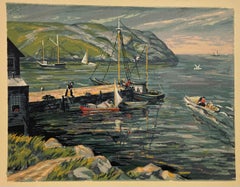
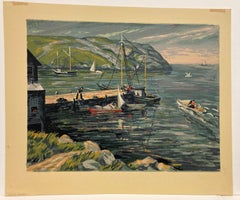
Harry Shokler used serigraphy to great advantage in this landscape. It's colorful and detailed. It is signed in the image at the lower left. When printmakers began making serigraphs...

Category

1940s American Modern Anthony Velonis Art

Materials

Screen

'The Orange Point' — Mid-Century Modernism

'The Orange Point' — Mid-Century Modernism

By Thomas A. Robertson

Located in Myrtle Beach, SC

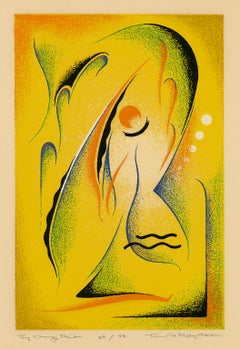
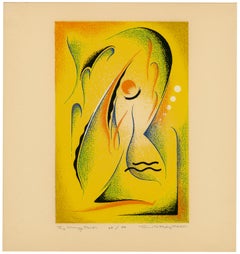
Thomas A. Robertson, 'The Orange Point', color serigraph, edition 54, 1941. Signed, titled, and annotated 'Ed/54' in pencil. A fine impression, with fresh colors, on buff wove paper;...

Category

1940s American Modern Anthony Velonis Art

Materials

Screen

Modernist Figurative Pop Art Etching and Aquatint "the Artist" Michael Mazur

Modernist Figurative Pop Art Etching and Aquatint "the Artist" Michael Mazur

By Michael Mazur

Located in Surfside, FL

Michael Mazur "The Artist" Hand signed and editioned from the edition of 50 1967 Michael Burton Mazur (1935-August 18, 2009) was an American artist who was described by William Grim...

Category

Early 2000s American Modern Anthony Velonis Art

Materials

Lithograph, Screen

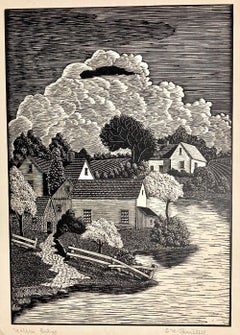
Elwood W. Bartlett, Water's Edge (Wisconsin), about 1945, mid-century wood eng.

Elwood W. Bartlett, Water's Edge (Wisconsin), about 1945, mid-century wood eng.

By Elwood Warren Bartlett

Located in New York, NY

Elwood Warren Bartlett is a Wisconsin native who also worked in Indiana. Largely self taught as a printmaker, Bartlett worked in a style that once identified as his, immediately t...

Category

1940s American Modern Anthony Velonis Art

Materials

Woodcut

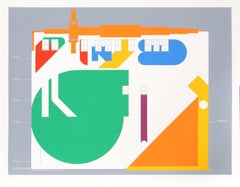
Urban Walls: Cincinnati, Abstract Geometric Screenprint by Bill Sontag

Urban Walls: Cincinnati, Abstract Geometric Screenprint by Bill Sontag

By Bill Sontag

Located in Long Island City, NY

Artist: Bill Sontag, American (b. 1932) Title: Urban Walls: Cincinnati Year: 1971 Edition: 85/150 Medium: Screenprint, signed and numbered in pencil Image Size: 24 x 32 inches Size: ...

Category

1970s American Modern Anthony Velonis Art

Materials

Screen

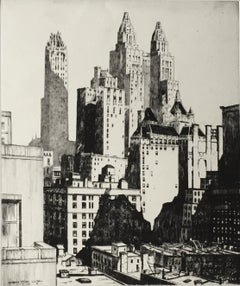
Manhattan Mountains
Manhattan Mountains

Lawrence WilburManhattan Mountains, 1938

$1,250

H 14.75 in W 12.38 in D 0.5 in

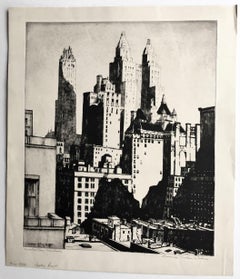
Manhattan Mountains

By Lawrence Wilbur

Located in Plano, TX

Manhattan Mountains. 1938. Etching and drypoint. 14 3/4 x 12 3/8 (sheet 17 1/4 x 14 3/4). Artist proof, previous to the edition of 40. An atmospheric impression printed on buff-colored laid paper. Signed and dated in the plate. Signed, titled, and annotated 'Final state' and 'Jones Proof'in pencil. Housed in an archival sleeve. Painter and printmaker Lawrence Nelson...

Category

20th Century American Modern Anthony Velonis Art

Materials

Drypoint, Etching

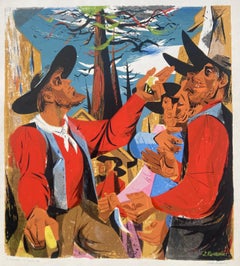
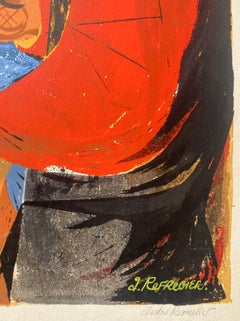
DISCOVERY OF GOLD - Very Large Serigraph - WPA Artist - California Murals

DISCOVERY OF GOLD - Very Large Serigraph - WPA Artist - California Murals

By Anton Refregier

Located in Santa Monica, CA

ANTON REFREGIER (1905 – 1979) DISCOVERY OF GOLD, 1949. Color serigraph. Signed and numbered in pencil, edition of 90. Image 23 ¼ x 21 ¾" Large sheet, 29 3/4 x 25 ¼”. Printed title...

Category

1940s American Modern Anthony Velonis Art

Materials

Screen

Previously Available Items
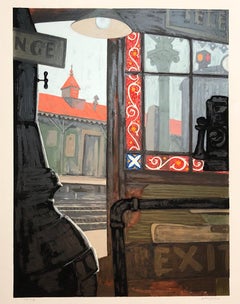
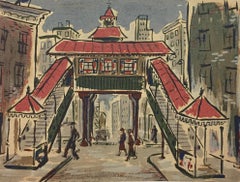
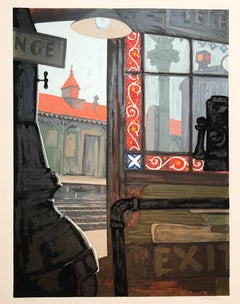
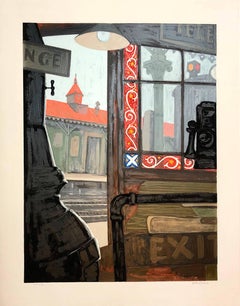
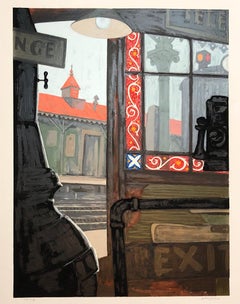
Modernist Silkscreen Screenprint 'El Station, Interior' NYC Subway, WPA Artist

Modernist Silkscreen Screenprint 'El Station, Interior' NYC Subway, WPA Artist

By Anthony Velonis

Located in Surfside, FL

screenprint printed in color ink on wove paper. New York City subway station interior. Anthony Velonis (1911 – 1997) was an American painter and designer born in New York City who helped introduce the public to silkscreen printing in the early 20th century. While employed under the federal Works Progress Administration, WPA during the Great Depression, Velonis brought the use of silkscreen printing as a fine art form, referred to as the "serigraph," into the mainstream. By his own request, he was not publicly credited for coining the term. He experimented and mastered techniques to print on a wide variety of materials, such as glass, plastics, and metal, thereby expanding the field. In the mid to late 20th century, the silkscreen technique became popular among other artists such as Robert Rauschenberg and Andy Warhol. Velonis was born into a relatively poor background of a Greek immigrant family and grew up in the tenements of New York City. Early on, he took creative inspiration from figures in his life such as his grandfather, an immigrant from the mountains in Greece, who was "an ecclesiastical painter, on Byzantine style." Velonis attended James Monroe High School in The Bronx, where he took on minor artistic roles such as the illustration of his high school yearbook. He eventually received a scholarship to the NYU College of Fine Arts, into which he was both surprised and ecstatic to have been admitted. Around this time he took to painting, watercolor, and sculpture, as well as various other art forms, hoping to find a niche that fit. He attended NYU until 1929, when the Great Depression started in the United States after the stock market crash. Around the year 1932, Velonis became interested in silk screen, together with fellow artist Fritz Brosius, and decided to investigate the practice. Working in his brother's sign shop, Velonis was able to master the silkscreen process. He reminisced in an interview three decades later that doing so was "plenty of fun," and that a lot of technology can be discovered through hard work, more so if it is worked on "little by little." Velonis was hired by Mayor LaGuardia in 1934 to promote the work of New York's city government via posters publicizing city projects. One such project required him to go on a commercial fishing trip to locations including New Bedford and Nantucket for a fortnight, where he primarily took photographs and notes, and made sketches. Afterward, for a period of roughly six months, he was occupied with creating paintings from these records. During this trip, Velonis developed true respect and affinity for the fishermen with whom he traveled, "the relatively uneducated person," in his words. Following this, Velonis began work with the Public Works of Art Project (PWAP), an offshoot of the Civil Works Administration (CWA), where he was assigned to serve the different city departments of New York. After the formation of the federal Works Progress Administration, which hired artists and sponsored projects in the arts, he also worked in theater. Velonis began working for the federal WPA in 1935. He kept this position until 1936 or 1938, at which point he began working in the graphic art division of the Federal Art Project, which he ultimately led. Under various elements of the WPA program, many young artists, writers and actors gained employment that helped them survive during the Depression, as well as contributing works that created an artistic legacy for the country. When interviewed in December 1994 by the Library of Congress about his time in the WPA, Velonis reflected that he had greatly enjoyed that period, saying that he liked the "excitement" and "meeting all the other artists with different points of view." He also said in a later interview that "the contact and the dialogue with all those artists and the work that took place was just invaluable." Among the young artists he hired was Edmond Casarella, who later developed an innovative technique using layered cardboard for woodcuts. Velonis introduced silkscreen printing to the Poster Division of the WPA. As he recalled in a 1965 interview: "I suggested that the Poster division would be a lot more productive and useful if they had an auxiliary screen printing project that worked along with them. And apparently this was very favorably received..." As a member of the Federal Art Project, a subdivision of the WPA, Velonis later approached the Public Use of Arts Committee (PUAC) for help in "propagandizing for art in the parks, in the subways, et cetera." Since the Federal Art Project could not be "self-promoting," an outside organization was required to advertise their art more extensively. During his employment with the Federal Art Project, Velonis created nine silkscreen posters for the federal government. Around 1937-1939 Velonis wrote a pamphlet titled "Technical Problems of the Artist: Technique of the Silkscreen Process," which was distributed to art centers run by the WPA around the country. It was considered very influential in encouraging artists to try this relatively inexpensive technique and stimulated printmaking across the country. In 1939, Velonis founded the Creative Printmakers Group, along with three others, including Hyman Warsager. They printed both their own works and those of other artists in their facility. This was considered the most important silkscreen shop of the period. The next year, Velonis founded the National Serigraph Society. It started out with relatively small commercial projects, such as "rather fancy" Christmas cards that were sold to many of the upscale Fifth Avenue shops...

Category

1980s American Modern Anthony Velonis Art

Materials

Screen

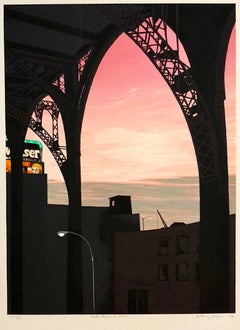
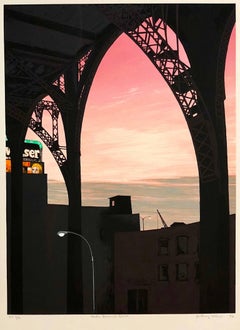
Large Modernist Silkscreen Screenprint 'Under Riverside Drive' NYC WPA Artist

Large Modernist Silkscreen Screenprint 'Under Riverside Drive' NYC WPA Artist

By Anthony Velonis

Located in Surfside, FL

screenprint printed in color ink on wove Arches paper Anthony Velonis (1911 – 1997) was an American painter and designer born in New York City who helped introduce the public to silkscreen printing in the early 20th century. While employed under the federal Works Progress Administration, WPA during the Great Depression, Velonis brought the use of silkscreen printing as a fine art form, referred to as the "serigraph," into the mainstream. By his own request, he was not publicly credited for coining the term. He experimented and mastered techniques to print on a wide variety of materials, such as glass, plastics, and metal, thereby expanding the field. In the mid to late 20th century, the silkscreen technique became popular among other artists such as Robert Rauschenberg and Andy Warhol. Velonis was born into a relatively poor background of a Greek immigrant family and grew up in the tenements of New York City. Early on, he took creative inspiration from figures in his life such as his grandfather, an immigrant from the mountains in Greece, who was "an ecclesiastical painter, on Byzantine style." Velonis attended James Monroe High School in The Bronx, where he took on minor artistic roles such as the illustration of his high school yearbook. He eventually received a scholarship to the NYU College of Fine Arts, into which he was both surprised and ecstatic to have been admitted. Around this time he took to painting, watercolor, and sculpture, as well as various other art forms, hoping to find a niche that fit. He attended NYU until 1929, when the Great Depression started in the United States after the stock market crash. Around the year 1932, Velonis became interested in silk screen, together with fellow artist Fritz Brosius, and decided to investigate the practice. Working in his brother's sign shop, Velonis was able to master the silkscreen process. He reminisced in an interview three decades later that doing so was "plenty of fun," and that a lot of technology can be discovered through hard work, more so if it is worked on "little by little." Velonis was hired by Mayor LaGuardia in 1934 to promote the work of New York's city government via posters publicizing city projects. One such project required him to go on a commercial fishing trip to locations including New Bedford and Nantucket for a fortnight, where he primarily took photographs and notes, and made sketches. Afterward, for a period of roughly six months, he was occupied with creating paintings from these records. During this trip, Velonis developed true respect and affinity for the fishermen with whom he traveled, "the relatively uneducated person," in his words. Following this, Velonis began work with the Public Works of Art Project (PWAP), an offshoot of the Civil Works Administration (CWA), where he was assigned to serve the different city departments of New York. After the formation of the federal Works Progress Administration, which hired artists and sponsored projects in the arts, he also worked in theater. Velonis began working for the federal WPA in 1935. He kept this position until 1936 or 1938, at which point he began working in the graphic art division of the Federal Art Project, which he ultimately led. Under various elements of the WPA program, many young artists, writers and actors gained employment that helped them survive during the Depression, as well as contributing works that created an artistic legacy for the country. When interviewed in December 1994 by the Library of Congress about his time in the WPA, Velonis reflected that he had greatly enjoyed that period, saying that he liked the "excitement" and "meeting all the other artists with different points of view." He also said in a later interview that "the contact and the dialogue with all those artists and the work that took place was just invaluable." Among the young artists he hired was Edmond Casarella, who later developed an innovative technique using layered cardboard for woodcuts. Velonis introduced silkscreen printing to the Poster Division of the WPA. As he recalled in a 1965 interview: "I suggested that the Poster division would be a lot more productive and useful if they had an auxiliary screen printing project that worked along with them. And apparently this was very favorably received..." As a member of the Federal Art Project, a subdivision of the WPA, Velonis later approached the Public Use of Arts Committee (PUAC) for help in "propagandizing for art in the parks, in the subways, et cetera." Since the Federal Art Project could not be "self-promoting," an outside organization was required to advertise their art more extensively. During his employment with the Federal Art Project, Velonis created nine silkscreen posters for the federal government. Around 1937-1939 Velonis wrote a pamphlet titled "Technical Problems of the Artist: Technique of the Silkscreen Process," which was distributed to art centers run by the WPA around the country. It was considered very influential in encouraging artists to try this relatively inexpensive technique and stimulated printmaking across the country. In 1939, Velonis founded the Creative Printmakers Group, along with three others, including Hyman Warsager. They printed both their own works and those of other artists in their facility. This was considered the most important silkscreen shop of the period. The next year, Velonis founded the National Serigraph Society. It started out with relatively small commercial projects, such as "rather fancy" Christmas cards that were sold to many of the upscale Fifth Avenue shops for a dollar apiece. In 1940 Velonis also founded the Ceraglass Company, a silkscreening firm intended to experiment with silkscreen prints on glass and plastic. Over time, the company grew and completed larger-scale works for organizations such as the Metropolitan Museum of Art...

Category

1980s American Modern Anthony Velonis Art
Materials

Screen

Anthony Velonis, Local Stop (New York City)

Anthony Velonis, Local Stop (New York City)

By Anthony Velonis

Located in New York, NY

Anthony Velonis (1911-1997) was an extremely innovative artist. He learned the technique of screen printing, also known as silkscreen, (for which he also coined the term serigraphy) while working with a wall paper manufacturer. Unusual for fine prints, the image is made by the artist in the same direction as it will print, as the colored inks are forced through fabric (silk) directly onto a paper surface. (He also invented a machine that could print onto column-shaped items such as cocktail glasses or make-up bottles and a rack system for drying sheets of paper with wet ink in which the sheets are just inches apart.) The technique allows extreme versatility on the part of the artist and the ink tends to sit on top of the paper rather than soak into the fibers. In 1934 Velonis used this new technique on Mayor LaGuardia's NYC Poster...

Category

1930s American Modern Anthony Velonis Art

Materials

Screen

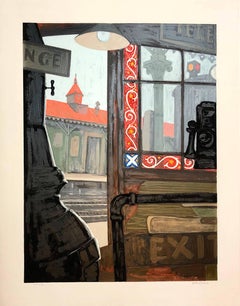
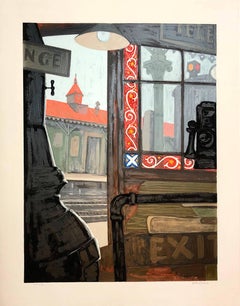
Modernist Silkscreen Screenprint 'El Station, Interior' NYC Subway, WPA Artist

Modernist Silkscreen Screenprint 'El Station, Interior' NYC Subway, WPA Artist

By Anthony Velonis

Located in Surfside, FL

screenprint printed in color ink on wove paper. New York City subway station interior. Anthony Velonis (1911 – 1997) was an American painter and designer born in New York City who helped introduce the public to silkscreen printing in the early 20th century. While employed under the federal Works Progress Administration, WPA during the Great Depression, Velonis brought the use of silkscreen printing as a fine art form, referred to as the "serigraph," into the mainstream. By his own request, he was not publicly credited for coining the term. He experimented and mastered techniques to print on a wide variety of materials, such as glass, plastics, and metal, thereby expanding the field. In the mid to late 20th century, the silkscreen technique became popular among other artists such as Robert Rauschenberg and Andy Warhol. Velonis was born into a relatively poor background of a Greek immigrant family and grew up in the tenements of New York City. Early on, he took creative inspiration from figures in his life such as his grandfather, an immigrant from the mountains in Greece, who was "an ecclesiastical painter, on Byzantine style." Velonis attended James Monroe High School in The Bronx, where he took on minor artistic roles such as the illustration of his high school yearbook. He eventually received a scholarship to the NYU College of Fine Arts, into which he was both surprised and ecstatic to have been admitted. Around this time he took to painting, watercolor, and sculpture, as well as various other art forms, hoping to find a niche that fit. He attended NYU until 1929, when the Great Depression started in the United States after the stock market crash. Around the year 1932, Velonis became interested in silk screen, together with fellow artist Fritz Brosius, and decided to investigate the practice. Working in his brother's sign shop, Velonis was able to master the silkscreen process. He reminisced in an interview three decades later that doing so was "plenty of fun," and that a lot of technology can be discovered through hard work, more so if it is worked on "little by little." Velonis was hired by Mayor LaGuardia in 1934 to promote the work of New York's city government via posters publicizing city projects. One such project required him to go on a commercial fishing trip to locations including New Bedford and Nantucket for a fortnight, where he primarily took photographs and notes, and made sketches. Afterward, for a period of roughly six months, he was occupied with creating paintings from these records. During this trip, Velonis developed true respect and affinity for the fishermen with whom he traveled, "the relatively uneducated person," in his words. Following this, Velonis began work with the Public Works of Art Project (PWAP), an offshoot of the Civil Works Administration (CWA), where he was assigned to serve the different city departments of New York. After the formation of the federal Works Progress Administration, which hired artists and sponsored projects in the arts, he also worked in theater. Velonis began working for the federal WPA in 1935. He kept this position until 1936 or 1938, at which point he began working in the graphic art division of the Federal Art Project, which he ultimately led. Under various elements of the WPA program, many young artists, writers and actors gained employment that helped them survive during the Depression, as well as contributing works that created an artistic legacy for the country. When interviewed in December 1994 by the Library of Congress about his time in the WPA, Velonis reflected that he had greatly enjoyed that period, saying that he liked the "excitement" and "meeting all the other artists with different points of view." He also said in a later interview that "the contact and the dialogue with all those artists and the work that took place was just invaluable." Among the young artists he hired was Edmond Casarella, who later developed an innovative technique using layered cardboard for woodcuts. Velonis introduced silkscreen printing to the Poster Division of the WPA. As he recalled in a 1965 interview: "I suggested that the Poster division would be a lot more productive and useful if they had an auxiliary screen printing project that worked along with them. And apparently this was very favorably received..." As a member of the Federal Art Project, a subdivision of the WPA, Velonis later approached the Public Use of Arts Committee (PUAC) for help in "propagandizing for art in the parks, in the subways, et cetera." Since the Federal Art Project could not be "self-promoting," an outside organization was required to advertise their art more extensively. During his employment with the Federal Art Project, Velonis created nine silkscreen posters for the federal government. Around 1937-1939 Velonis wrote a pamphlet titled "Technical Problems of the Artist: Technique of the Silkscreen Process," which was distributed to art centers run by the WPA around the country. It was considered very influential in encouraging artists to try this relatively inexpensive technique and stimulated printmaking across the country. In 1939, Velonis founded the Creative Printmakers Group, along with three others, including Hyman Warsager. They printed both their own works and those of other artists in their facility. This was considered the most important silkscreen shop of the period. The next year, Velonis founded the National Serigraph Society. It started out with relatively small commercial projects, such as "rather fancy" Christmas cards that were sold to many of the upscale Fifth Avenue shops...

Category

1980s American Modern Anthony Velonis Art

Materials

Screen

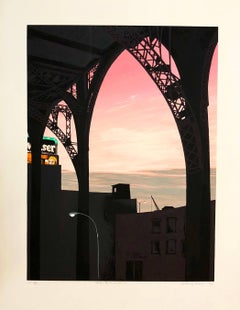
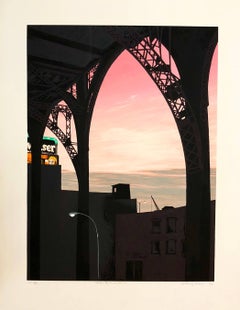
Large Modernist Silkscreen Screenprint 'Under Riverside Drive' NYC WPA Artist

Large Modernist Silkscreen Screenprint 'Under Riverside Drive' NYC WPA Artist

By Anthony Velonis

Located in Surfside, FL

screenprint printed in color ink on wove Arches paper Anthony Velonis (1911 – 1997) was an American painter and designer born in New York City who helped introduce the public to silkscreen printing in the early 20th century. While employed under the federal Works Progress Administration, WPA during the Great Depression, Velonis brought the use of silkscreen printing as a fine art form, referred to as the "serigraph," into the mainstream. By his own request, he was not publicly credited for coining the term. He experimented and mastered techniques to print on a wide variety of materials, such as glass, plastics, and metal, thereby expanding the field. In the mid to late 20th century, the silkscreen technique became popular among other artists such as Robert Rauschenberg and Andy Warhol. Velonis was born into a relatively poor background of a Greek immigrant family and grew up in the tenements of New York City. Early on, he took creative inspiration from figures in his life such as his grandfather, an immigrant from the mountains in Greece, who was "an ecclesiastical painter, on Byzantine style." Velonis attended James Monroe High School in The Bronx, where he took on minor artistic roles such as the illustration of his high school yearbook. He eventually received a scholarship to the NYU College of Fine Arts, into which he was both surprised and ecstatic to have been admitted. Around this time he took to painting, watercolor, and sculpture, as well as various other art forms, hoping to find a niche that fit. He attended NYU until 1929, when the Great Depression started in the United States after the stock market crash. Around the year 1932, Velonis became interested in silk screen, together with fellow artist Fritz Brosius, and decided to investigate the practice. Working in his brother's sign shop, Velonis was able to master the silkscreen process. He reminisced in an interview three decades later that doing so was "plenty of fun," and that a lot of technology can be discovered through hard work, more so if it is worked on "little by little." Velonis was hired by Mayor LaGuardia in 1934 to promote the work of New York's city government via posters publicizing city projects. One such project required him to go on a commercial fishing trip to locations including New Bedford and Nantucket for a fortnight, where he primarily took photographs and notes, and made sketches. Afterward, for a period of roughly six months, he was occupied with creating paintings from these records. During this trip, Velonis developed true respect and affinity for the fishermen with whom he traveled, "the relatively uneducated person," in his words. Following this, Velonis began work with the Public Works of Art Project (PWAP), an offshoot of the Civil Works Administration (CWA), where he was assigned to serve the different city departments of New York. After the formation of the federal Works Progress Administration, which hired artists and sponsored projects in the arts, he also worked in theater. Velonis began working for the federal WPA in 1935. He kept this position until 1936 or 1938, at which point he began working in the graphic art division of the Federal Art Project, which he ultimately led. Under various elements of the WPA program, many young artists, writers and actors gained employment that helped them survive during the Depression, as well as contributing works that created an artistic legacy for the country. When interviewed in December 1994 by the Library of Congress about his time in the WPA, Velonis reflected that he had greatly enjoyed that period, saying that he liked the "excitement" and "meeting all the other artists with different points of view." He also said in a later interview that "the contact and the dialogue with all those artists and the work that took place was just invaluable." Among the young artists he hired was Edmond Casarella, who later developed an innovative technique using layered cardboard for woodcuts. Velonis introduced silkscreen printing to the Poster Division of the WPA. As he recalled in a 1965 interview: "I suggested that the Poster division would be a lot more productive and useful if they had an auxiliary screen printing project that worked along with them. And apparently this was very favorably received..." As a member of the Federal Art Project, a subdivision of the WPA, Velonis later approached the Public Use of Arts Committee (PUAC) for help in "propagandizing for art in the parks, in the subways, et cetera." Since the Federal Art Project could not be "self-promoting," an outside organization was required to advertise their art more extensively. During his employment with the Federal Art Project, Velonis created nine silkscreen posters for the federal government. Around 1937-1939 Velonis wrote a pamphlet titled "Technical Problems of the Artist: Technique of the Silkscreen Process," which was distributed to art centers run by the WPA around the country. It was considered very influential in encouraging artists to try this relatively inexpensive technique and stimulated printmaking across the country. In 1939, Velonis founded the Creative Printmakers Group, along with three others, including Hyman Warsager. They printed both their own works and those of other artists in their facility. This was considered the most important silkscreen shop of the period. The next year, Velonis founded the National Serigraph Society. It started out with relatively small commercial projects, such as "rather fancy" Christmas cards that were sold to many of the upscale Fifth Avenue shops for a dollar apiece. In 1940 Velonis also founded the Ceraglass Company, a silkscreening firm intended to experiment with silkscreen prints on glass and plastic. Over time, the company grew and completed larger-scale works for organizations such as the Metropolitan Museum of Art...

Category

1980s American Modern Anthony Velonis Art
Materials

Screen

Anthony Velonis art for sale on 1stDibs.
Find a wide variety of authentic Anthony Velonis art available for sale on 1stDibs. You can also browse by medium to find art by Anthony Velonis in screen print and more. Much of the original work by this artist or collective was created during the 20th century and is mostly associated with the modern style. Not every interior allows for large Anthony Velonis art, so small editions measuring 9 inches across are available. Customers who are interested in this artist might also find the work of Frank Kleinholz, Luigi Lucioni, and August Mosca. Anthony Velonis art prices can differ depending upon medium, time period and other attributes. On 1stDibs, the price for these items starts at $750 and tops out at $1,200, while the average work can sell for $900.

Artists Similar to Anthony Velonis