By Henry Bayley Snell
Located in Wiscasett, ME
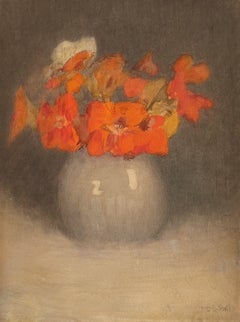
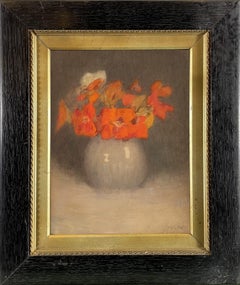
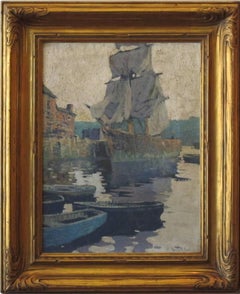
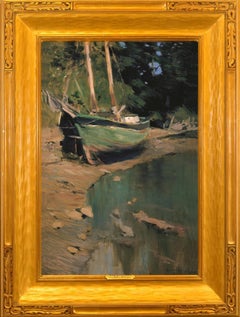
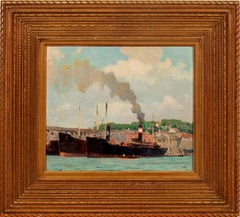
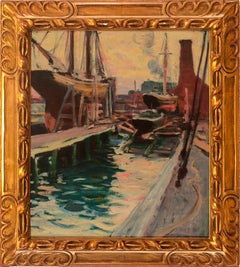
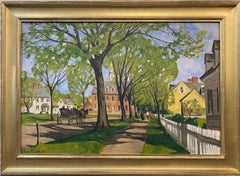
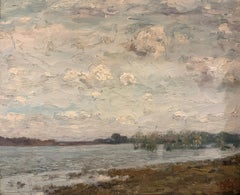
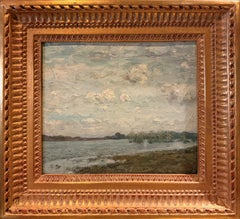
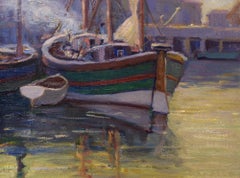
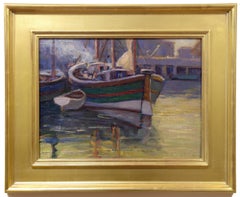
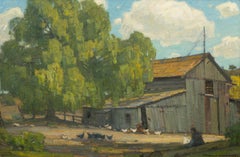
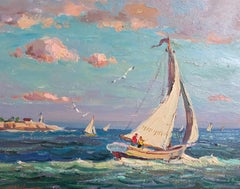
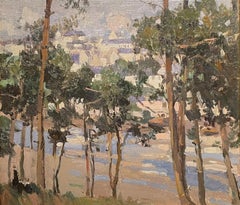
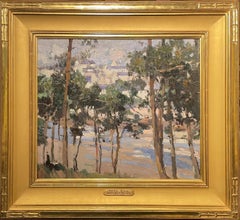
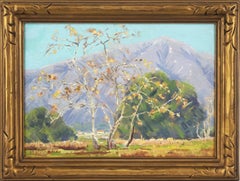
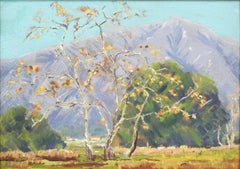
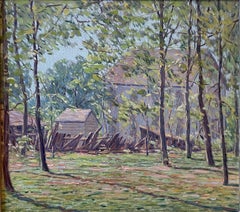
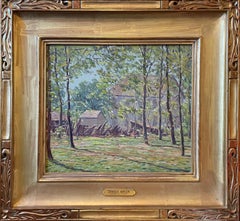
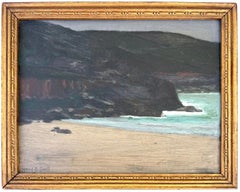
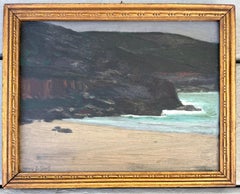
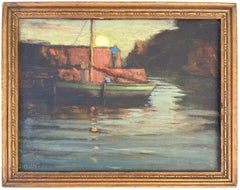
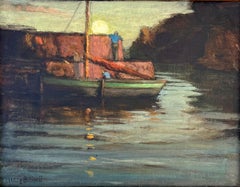
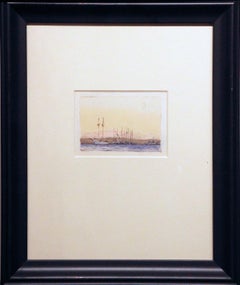
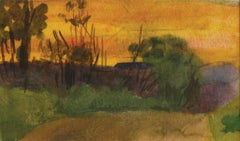
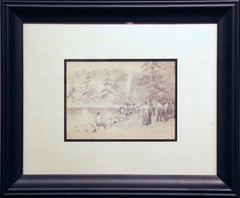
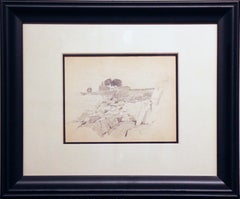
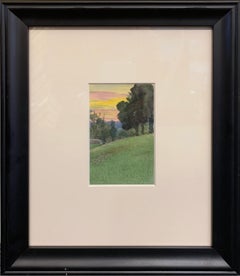
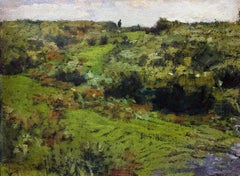
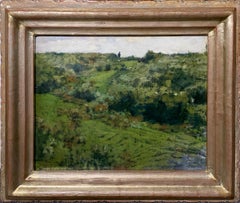
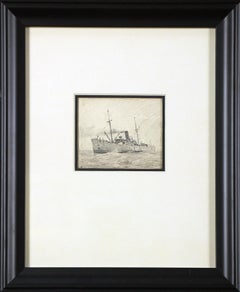
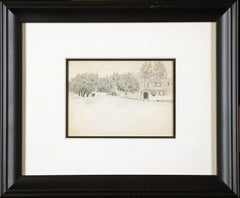
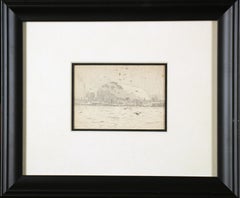
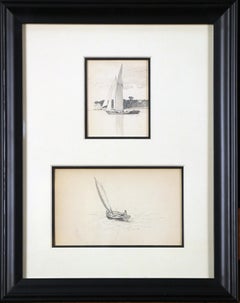
Oil on artist board, signed lower left. Label on reverse for Worcester Art Museum. Beautiful brush strokes in this petite beach scene by a well listed artist.
Henry Bayley Snell (1858 - 1943) Henry Bayley Snell was born in Richmond, England, on September 29, 1858 and immigrated to the United States at the age of seventeen. He studied at the Art Students League in New York while working for an etching and engraving company where he began a lifelong friendship with fellow artists, William Langson Lathrop. While in New York Snell met another artist, named Florence Francis, also of English descent, whom he would eventually marry in 1888. It is believed that they first came to Bucks County in 1898 to visit the Lathrops at Phillips Mill. Snell was a beloved teacher at the Philadelphia School of Design for Women from 1899 to 1943, and often took his art classes abroad during the summer. He would frequently visit his native England, spending time at the art colony of St. Ives on the coast of Cornwall. Snell would summer in Gloucester, Massachusetts, and Boothbay Harbor, Maine, where he also held painting classes. Almost all the women who exhibited with “The Philadelphia Ten” had studied with Snell either in Philadelphia or New England. Snell also taught on Saturdays at the Grand Central Galleries in New York City. The Snells made many trips to New Hope before settling there permanently in 1925. They lived on the top floor of the Solebury National Bank Building where Henry also maintained a studio. This was located at the foot of the New Hope-Lambertville Bridge and many of Snell’s New Hope scenes were painted from this location. In 1943, Snell passed away in New Hope at the age of eighty-four. Henry Snell earned an international reputation as an artist for his paintings of Cornwall, Gloucester, Boothbay Harbor, and New Hope. Snell had served as director of Fine Arts for U.S. Commission in the Paris Exposition of 1900, was an elected a member of the National Academy of Design in 1906, and became president of the New York Watercolor Club. His work is in major museum collections, including the Metropolitan Museum of Art, the Pennsylvania Academy of the Fine Arts, the James A. Michener Art Museum, the Worcester Art Museum, and the Allentown Art Museum. He exhibited at the Boston Art Club (15897-909), the Pennsylvania Academy of the Fine Arts (1890-1938), the Art Institute of Chicago (1894-1926), the Philadelphia Art Club (1896 Gold Medal and 1916 prize), the National Academy of Design, the Nashville Exposition (1897 First Prize), the Paris Exposition (1900 prize), the Pan-American Exposition in Buffalo (1901 Silver Medal), the St. Louis Exposition (1904 Silver Medal), the Worcester Art Museum (1905 prize), the New York Watercolor Club (1905 prize), the Corcoran Gallery Biennials, the Panama-Pacific Exposition in San Francisco (1915 Silver Medal, Gold Medal), and the Salmagundi Club (1918 prize). Sources: - “New Hope for American Art” by James Alterman - Henry Bayley Snell by Arrah Lee Gaul...
Category
Early 20th Century Post-Impressionist Henry Bayley Snell Art