Kawase Hasui Art

Japanese, 1883-1957
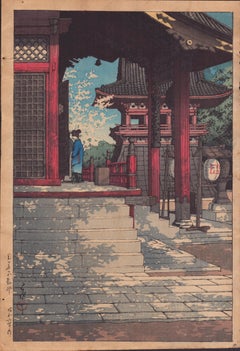
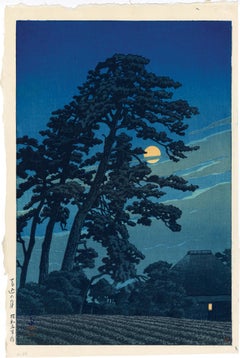
Hasui Kawase (Japanese, 1883 -1957) was an artist, one of modern Japan's most important and prolific printmakers. He was a prominent designer of the shin-hanga ("new prints") movement, whose artists depicted traditional subjects with a style influenced by Western art. Like many earlier ukiyo-e prints, Hasui's works were commonly landscapes, but displayed atmospheric effects and natural lighting. Hasui designed approximately 620 prints over a career that spanned nearly forty years. Towards the end of his life the government recognized him as a Living National Treasure for his contribution to Japanese culture. From youth Hasui dreamed of an art career. His maternal uncle was Kanagaki Robun (1829–94), a Japanese author and journalist, who produced the first manga magazine. Hasui went to the school of the painter Aoyagi Bokusen as a young man. He sketched from nature, copied the masters' woodblock prints, and studied brush painting with Araki Kanyu. His parents had him take on the family rope and thread wholesaling business, but its bankruptcy when he was 26 freed him to pursue art. He approached Kiyokata Kaburagi to teach him, but Kaburagi instead encouraged him to study Western-style painting, which he did with Okada Saburōsuke for two years. Two years later he again applied as a student to Kaburagi, who this time accepted him. Kiyokata bestowed the name Hasui upon him, which can be translated as "water gushing from a spring", and derives from his elementary school combined with an ideogram of his family name. Kawase studied ukiyo-e and Japanese style painting at the studio of Kiyokata Kaburagi. He mainly concentrated on making watercolors of actors, everyday life and landscapes, many of them published as illustrations in books and magazines in the last few years of the Meiji period and early Taishō period. Kawase worked almost exclusively on landscape and townscape prints based on sketches and watercolors he made in Tokyo and during travels around Japan. However, his prints are not merely meishō (famous places) prints that are typical of earlier ukiyo-e masters such as Hiroshige and Katsushika Hokusai (1760-1849). Kawase's prints feature locales that are tranquil and obscure in urbanizing Japan. Hasui Kawase's works are currently kept in several museums worldwide, including the British Museum, the Toledo Museum of Art, the Brooklyn Museum, the Indianapolis Museum of Art, the Museum of Fine Arts, Boston, the Metropolitan Museum of Art, the Portland Art Museum, the Los Angeles County Museum of Art, the University of Michigan Museum of Art, the Minneapolis Institute of Art, the Stanley Museum of Art, the Walters Art Museum, the Clark Art Institute, the Smart Museum of Art, the Nelson-Atkins Museum of Art, and the Virginia Museum of Fine Arts.
to
3
7
Overall Width
to
Overall Height
to
7
5
2
4
3
4
4
3
2
2
2
1
1
1
1
1
1
1
1
1
1
1
1
1
1
7
7
11,047
2,852
2,494
1,431
2
1
2
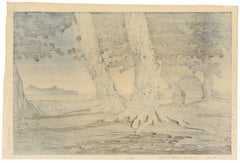
Artist: Kawase Hasui
'The Beach at Kaiganji in Sanuki Province'  — Lifetime Impression

'The Beach at Kaiganji in Sanuki Province' — Lifetime Impression

By Kawase Hasui

Located in Myrtle Beach, SC

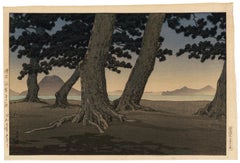
Kawase Hasui, 'The Beach at Kaiganji in Sanuki Province (Sanuki Kaiganji no hama),' from the series Collected Views of Japan II, Kansai Edition (Nihon fûkei shû II Kansai hen), woodblock print, 1934. A very fine, atmospheric impression, with fresh colors; the full sheet, in excellent condition. Signed 'Hasui' with the artist’s seal 'Kawase', lower left. Published by Watanabe Shozaburo with the Watanabe ‘D’ seal indicating an early impression printed between 1931 - 1941. Stamped faintly 'Made in Japan' in the bottom center margin, verso. Horizontal ôban; image size 9 3/8 x 14 1/4 inches (238 x 362 mm); sheet size approximately 10 5/16 x 15 1/2 inches ( 262 x 394 mm). Collections: Art Institute of Chicago; Austrian Museum of Applied Arts (Vienna); Honolulu Museum of Art; Museum of Fine Arts, Boston; National Museum in Warsaw; University of Wisconsin-Madison. ABOUT THE ARTIST “I do not paint subjective impressions. My work is based on reality...I can not falsify...(but) I can simplify…I make mental impressions of the light and color at the time of sketching. While coloring the sketch, I am already imagining the effects in a woodblock print.” — Kawase Hasui Hasui Kawase...

Category

1930s Showa Kawase Hasui Art

Materials

Woodcut

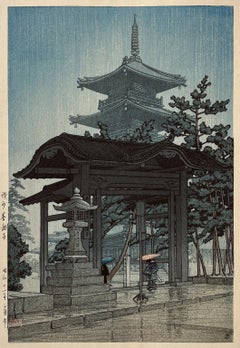
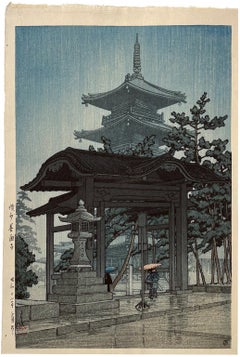
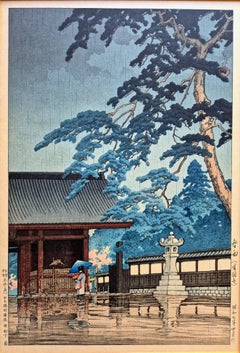
Zentsuji Temple in the Rain —  from the series Collected Views of Japan II

Zentsuji Temple in the Rain — from the series Collected Views of Japan II

By Kawase Hasui

Located in Myrtle Beach, SC

Kawase Hasui, 'Zentsuji Temple in the Rain' from the seres 'Collected Views of Japan II', color woodblock print, 1937. Signed Hasui in black ink, with the artist’s red seal Kawase, ...

Category

1930s Showa Kawase Hasui Art

Materials

Woodcut

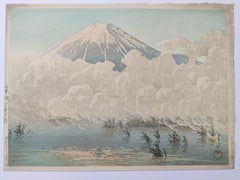
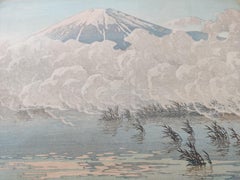
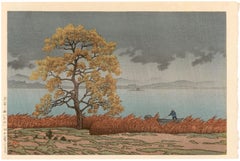
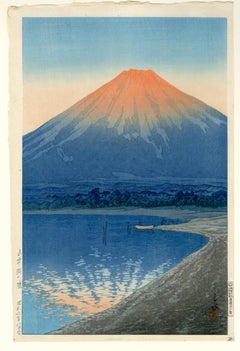
Kawase Hasui -- Morning in Hirano, Lake Yamanaka (山中湖平野の朝)

Kawase Hasui -- Morning in Hirano, Lake Yamanaka (山中湖平野の朝)

By Kawase Hasui

Located in BRUCE, ACT

Kawase Hasui Morning in Hirano, Lake Yamanaka (山中湖平野の朝), 1936 Color woodblock print Oban Sheet: 31 × 42 cm Image: 28.7 × 40 cm First edition seal: 'D' seal Published by Watanabe Shoz...

Category

1930s Kawase Hasui Art

Materials

Woodcut

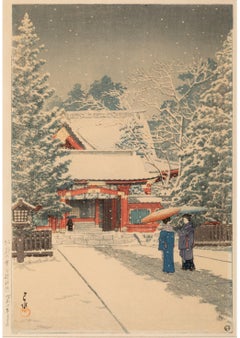
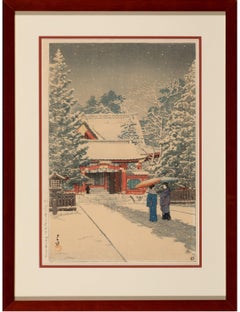
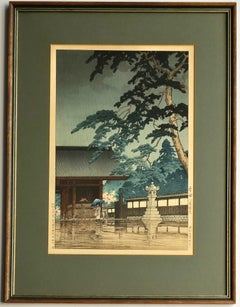
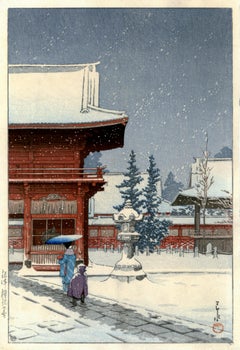
Kawase Hasui -- Snow at Hie Shrine, circa 1946 - 1957

Kawase Hasui -- Snow at Hie Shrine, circa 1946 - 1957

By Kawase Hasui

Located in BRUCE, ACT

Kawase Hasui (Japanese, 1883-1957) Snow at Hie Shrine, circa 1946 -1957 (dated in the publisher's seal) Woodblock Sheet size 37.5 x 26.0 cm (vertical oban) Frame size 51.3 x 38.5 x 2...

Category

1940s Kawase Hasui Art

Materials

Woodcut

Kawase Hasui -- Spring Rain at Gokoku Temple

Kawase Hasui -- Spring Rain at Gokoku Temple

By Kawase Hasui

Located in BRUCE, ACT

Kawase Hasui Spring Rain at Gokoku-ji Temple, 1932 Woodblock Print 1st Publication: 1932 Sheet size: 39 × 26 cm Date of this edition: 1932, 1st edition Publisher: Doi Teiichi Note...

Category

1930s Kawase Hasui Art

Materials

Woodcut

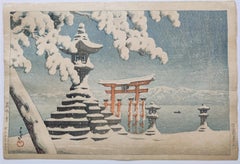
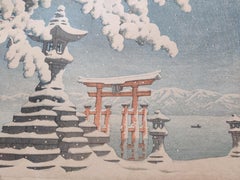
Kawase Hasui -- Torii Gate at Miyajima in the Inland Sea of Japan

Kawase Hasui -- Torii Gate at Miyajima in the Inland Sea of Japan

By Kawase Hasui

Located in BRUCE, ACT

Kawase Hasui Torii Gate at Miyajima in the Inland Sea of Japan, 1930s First Edition Color woodcut on Japanese paper, with the artist's red seal Sui, with margin Sheet size 9 1/4 x 14...

Category

1930s Kawase Hasui Art

Materials

Woodcut

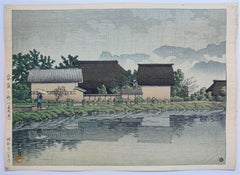
Kawase Hasui -- Rain at Yasuniwa (Nagano)

Kawase Hasui -- Rain at Yasuniwa (Nagano)

By Kawase Hasui

Located in BRUCE, ACT

Kawase Hasui Rain at Yasuniwa (Nagano), 1946 woodcut in colours Signed on the block, sealed, titled and dated in ink Publisher: Shozaburo Watanabe, with his 6mm seal The first state ...

Category

1940s Kawase Hasui Art

Materials

Woodcut

Related Items
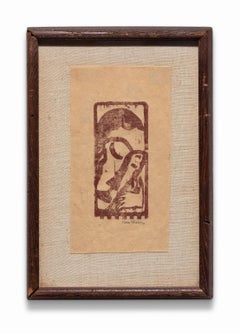
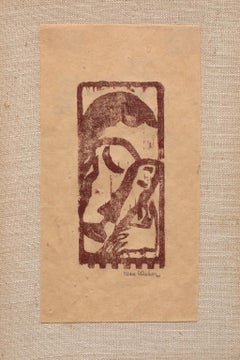
Max Weber Woodcut Print from "Primitives" Poetry Book Signed

Max Weber Woodcut Print from "Primitives" Poetry Book Signed

By Max Weber

Located in Detroit, MI

ONE WEEK ONLY SALE This woodcut print is an expressionist print on one of the poems from Max Weber's poetry collection "Primitives: Poems and Woodcuts". This work is signed in penci...

Category

1920s Expressionist Kawase Hasui Art

Materials

Woodcut

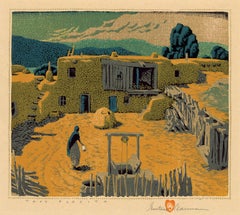
'Taos Placita' — American Southwest Regionalist Masterwork

'Taos Placita' — American Southwest Regionalist Masterwork

By Gustave Baumann

Located in Myrtle Beach, SC

Gustave Baumann, 'Taos Placita', color woodcut, 1947, edition 125. Baumann 132. Signed, titled, and numbered '20-125' in pencil; with the artist’s Hand-in-Heart chop. A superb, richly-inked impression, with fresh colors, on fibrous oatmeal wove paper; the full sheet with margins (2 to 3 1/8 inches); slight rippling at the left sheet edge, in excellent condition. Matted to museum standards, unframed. Image size 9 5/8 x 11 1/4 inches (244 x 286 mm); sheet size 13 1/4 x 17 inches (337 x 432 mm). Collections: Harwood Museum of Art, New Mexico Museum of Art, Phoenix Art Museum, Scottsdale Art Museum, Wichita Art Museum. ABOUT THE ARTIST Gustave Baumann (1881-1971) was a renowned printmaker and a leading figure of the American color woodcut revival whose exquisite craftsmanship and vibrant imagery captured the essence of the Southwest. "A brilliant printmaker, Baumann brought to the medium a full mastery of the craft of woodworking that he acquired from his father, a German cabinetmaker. This craftsmanship was coupled with a strong artistic training that resulted in the handsome objects we see in the exhibition today. After discovering New Mexico in 1918, Baumann began to explore in his woodblock prints of this period the light. color, and architectural forms of that landscape. His prints of this period are among the most beautiful and poetic images of the American West." —Lewis I. Sharp, Director, Denver Art Museum Baumann, the son of a craftsman, immigrated to the United States from Germany with his family when he was ten, settling in Chicago. From 1897 to 1904, he studied in the evenings at the Art Institute of Chicago, working in a commercial printmaking shop during the day. In 1905, he returned to Germany to attend the Kunstwerbe Schule in Munich, where he decided on a career in printmaking. He returned to Chicago in 1906 and worked for a few years as a graphic designer of labels. Baumann made his first prints in 1909 and exhibited them at the Art Institute of Chicago the following year. In 1910, he moved to the artists’ colony in Nashville, Indiana, where he explored the creative and commercial possibilities of a career as a printmaker. In 1915, he exhibited his color woodcuts at the Panama-Pacific International Exposition in San Francisco, winning the gold medal. Among Baumann’s ongoing commercial activities was his work for the Packard Motor Car Company from 1914 to 1920 where he produced designs, illustrations, and color woodcuts until 1923. In 1919, Baumann’s printmaking work dominated the important exhibition of American color woodcuts at the Detroit Institute of Arts. Twenty-six of his prints were included, far more than the works of any other artist. A set of his blocks, a preparatory drawing, and seven progressive proofs complemented the exhibition. That same year, Baumann worked in New York and, over the summer, in Provincetown, Massachusetts. His airy images of Cape Cod employed soft, pastel colors and occasionally showed the influence of the white-line woodcut technique. Many of his Chicago artist friends had traveled to the southwest, and Baumann became intrigued by their paintings, souvenirs, and stories of an exotic place named Taos, New Mexico. In the summer of 1918, he spent the summer in Taos sketching and painting before visiting Santa Fe. Paul Walter, the director of the Museum of New Mexico, offered him a studio in the museum's basement. Inspired by the rugged beauty of the Southwest—the vibrant colors and dramatic landscapes of the region became a central theme in his work, influencing his artistic style and subject matter for the remainder of his career. Later in the decade, he traveled to the West Coast and made prints of California landscape. Baumann's prints became synonymous with the Southwest, capturing the spirit of its place in America's identity with a unique sense of authenticity and reverence. His iconic images of desert vistas, pueblo villages, and indigenous cultures served as visual tributes to the region's rich cultural heritage, earning him a dedicated following among collectors and curators alike. A true craftsman and artist, Baumann completed every step of the printmaking process himself, cutting each block, mixing the inks, and printing every impression on the handmade paper he selected. His dedication to true craftsmanship and his commitment to preserving the integrity of his artistic vision earned him widespread acclaim and recognition within the art world. About the vibrant colors he produced, Baumann stated, “A knowledge of color needs to be acquired since they don’t all behave the same way when ground or mixed...careful chemistry goes into the making of colors, with meticulous testing for permanence. While complicated formulae evolve new colors, those derived from Earth and metal bases are still the most reliable.” In the 1930s, Baumann became interested in puppet theater. He designed and carved his own marionettes and established a little traveling company. From 1943 to 1945, the artist carved an altarpiece for the Episcopal Church of the Holy Faith in Santa Fe. In 1952, a retrospective exhibition of his prints was mounted at the New Mexico Museum of Fine Arts. Throughout his prolific career, Baumann executed nearly four hundred color woodcuts. Baumann’s woodcuts...

Category

1940s American Modern Kawase Hasui Art
Materials

Woodcut

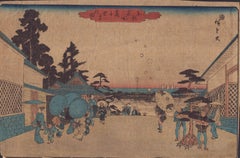
Hiroshige (1797-1858) - View of Kasumigaseki (Kasumigaseki no zu) 東都名所

Hiroshige (1797-1858) - View of Kasumigaseki (Kasumigaseki no zu) 東都名所

By Utagawa Hiroshige (Ando Hiroshige)

Located in BRUCE, ACT

Artist: 広重 Hiroshige (1797-1858) Series: Famous Places in the Eastern Capital (Tôto meisho) (東都名所) Title: View of Kasumigaseki (Kasumigaseki no zu) 霞がせきの図 Size: O-ban 大判 24.2 x 36...

Category

1840s Kawase Hasui Art

Materials

Woodcut

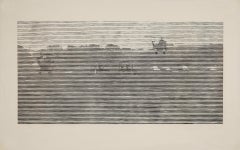
Belfast I from "Belfast I + II" - Contemporary, Woodcut, Black and White

Belfast I from "Belfast I + II" - Contemporary, Woodcut, Black and White

By Christiane Baumgartner

Located in Köln, DE

Baumgartner deals with contrasts in her work. This is already evident in her choice of technique. Christiane Baumgartner uses one of the oldest techniques in the art of printing, the...

Category

Early 2000s Contemporary Kawase Hasui Art

Materials

Woodcut

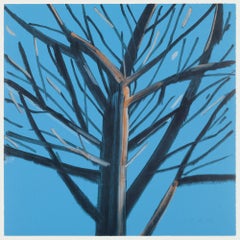
Tree 8

Alex KatzTree 8, 2022

$28,000

H 39.75 in W 39.25 in

Tree 8

By Alex Katz

Located in Miami, FL

Technical Information: Alex Katz Tree 8 2022 Woodcut and Lithograph 39 3/4 x 39 1/4 in. Edition of 60 Pencil signed and numbered

Category

21st Century and Contemporary Contemporary Kawase Hasui Art

Materials

Lithograph, Woodcut

First Snow at Kitano Shrine — Sosaku Hanga Japanese Woodblock, Kyoto

First Snow at Kitano Shrine — Sosaku Hanga Japanese Woodblock, Kyoto

Located in Myrtle Beach, SC

Kamei Tobei, 'First Snow of the Year at Kitano (Kitano Hatsu Yuki)', color woodblock print, c. 1930s. Signed Kamei Tobei in black ink, with the artist red seal Eiichi (the artist’s g...

Category

1930s Showa Kawase Hasui Art

Materials

Woodcut

SNOWBOUND

Frances H. GearhartSNOWBOUND, 1928

$3,500

H 11.5 in W 6.5 in D 1 in

SNOWBOUND

By Frances H. Gearhart

Located in Santa Monica, CA

FRANCES H. GEARHART (1869-1958) SNOWBOUND c.1928 Color block print, Signed and titled in pencil. 11 x 6 ½” sheet c. 14 x 9” Laid down on backing board. The usual slight browning a...

Category

1920s American Impressionist Kawase Hasui Art

Materials

Color, Linocut, Woodcut

Kabuki Actors in the Play "Mimasu Mimasu Karigane Soga" Antique Japanese Print

Kabuki Actors in the Play "Mimasu Mimasu Karigane Soga" Antique Japanese Print

By Utagawa Kunisada (Toyokuni III)

Located in Austin, TX

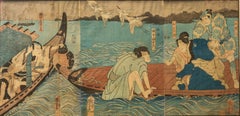
Page Size: 13.5 x 27 in. Frame size: 21.5 x 33 in. This woodblock print depicts Kabuki Actors performing the play "Mimasu Mimasu Karigane Soga", from the Theater Nakamura. A dramat...

Category

19th Century Edo Kawase Hasui Art

Materials

Woodcut

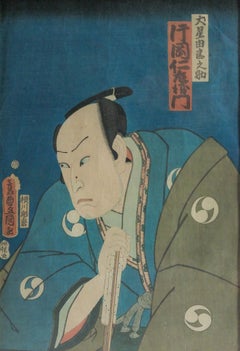
"Actor Kataoka Nazaemon as Oboshi Yaranosuke Leader of the 47 Ronin" Portrait

"Actor Kataoka Nazaemon as Oboshi Yaranosuke Leader of the 47 Ronin" Portrait

By Utagawa Kunisada (Toyokuni III)

Located in Austin, TX

Artist: Utagawa Kunisada "Toyokuni the Third" (Japanese 1786 - 1864) Page Size: 14 x 9.5 in. Frame Size: 21 x 16.25 Translation of Calligraphic Japanese Text: 大星由良之助 Ōboshi Yuranosu...

Category

Mid-19th Century Kawase Hasui Art

Materials

Paper, Woodcut

Japanese Woodblock - Street Scene

Japanese Woodblock - Street Scene, 1860

$160

H 10 in W 8 in D 0.1 in

Japanese Woodblock - Street Scene

Located in Houston, TX

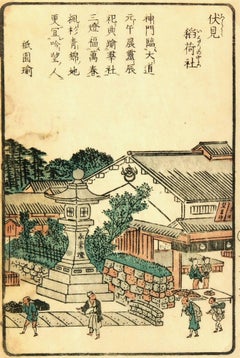
Lively Japanese woodblock print featuring street life. Ink on paper, circa 1860. Original artwork on paper displayed on a white mat with a gold ...

Category

1860s Kawase Hasui Art

Materials

Paper, Woodcut

Winslow Homer 19th Century Woodcut Engraving "Making Hay"

Winslow Homer 19th Century Woodcut Engraving "Making Hay"

By Winslow Homer

Located in Alamo, CA

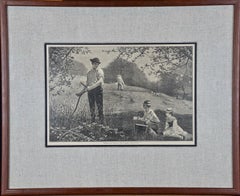
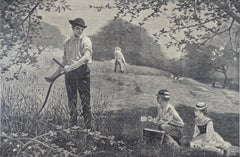
This Winslow Homer woodcut engraving entitled "Making Hay", was published in Harper's Weekly in the July 6, 1872 edition. It depicts a two men hand cutting high grass on a hill. The man in the foreground is looking at a young boy and a girl (presumably his children), who are sitting on the ground with a picnic basket. This beautiful Homer woodcut engraving is presented in a brown wood frame and a light beige fabric mat with a black inner mat. The print is in excellent condition. There are two other Homer woodcut engravings in identical frames and mats that are listed on 1stdibs. See LU117326148332 and LU117326148272. These would make a wonderful display grouping. A discount is available for the purchase of two or all three of these prints. This Winslow Homer engraving...

Category

1870s American Impressionist Kawase Hasui Art

Materials

Engraving, Woodcut

Okarakuri Woodcut Print, Edo Style, Early 19th Century, 14.5x10

Okarakuri Woodcut Print, Edo Style, Early 19th Century, 14.5x10

By Kitagawa Utamaro 1

Located in Austin, TX

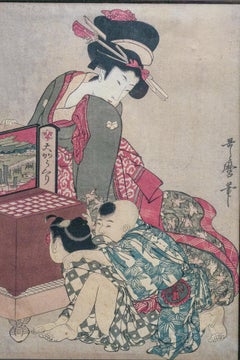
Page Size: 14.5 x 10 in. Frame Size: 22.5 x 15.5 in. The Large Peepshow (Ô-karakuri), from the series Fashionable Comparisons of Precious Children (Fûryû kodakara awase) 哥麿 筆 painte...

Category

Early 19th Century Edo Kawase Hasui Art

Materials

Woodcut

Previously Available Items
Kamezaki Bishu (First Edition)

Kamezaki Bishu (First Edition)

By Kawase Hasui

Located in Burbank, CA

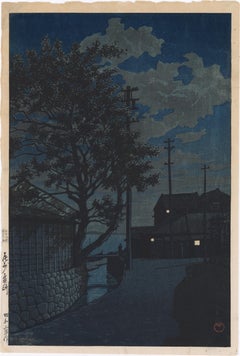
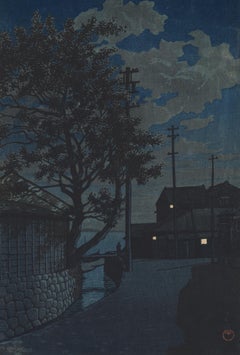
Three soft yellow lights shine from windows, beacons from the homes at the end of our path, middle right. At left a canal flows into the sea, and textured clouds float in an early ev...

Category

Early 20th Century Showa Kawase Hasui Art

Materials

Handmade Paper, Woodcut

'Rain at Shinagawa, Ryoshimachi' — Showa-era Woodblock Print

'Rain at Shinagawa, Ryoshimachi' — Showa-era Woodblock Print

By Kawase Hasui

Located in Myrtle Beach, SC

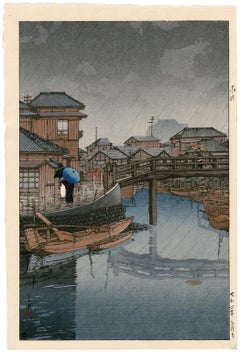
Kawase Hasui, 'Rain at Shinagawa, Ryoshimachi' from the series 'Selection of Views of the Tokaido', woodblock print, 1931. A very fine, atmospheric impression, with fresh colors; the...

Category

1930s Showa Kawase Hasui Art

Materials

Woodcut

'Lakeside Shower, Matsue' — Showa-era Woodblock Print

'Lakeside Shower, Matsue' — Showa-era Woodblock Print

By Kawase Hasui

Located in Myrtle Beach, SC

Kawase Hasui, 'Chihan no Ame, Matsue' (Lakeside Shower, Matsue), color woodblock print, 1932. A fine, atmospheric impression, with fresh colors; the full sheet, from a postwar editio...

Category

1930s Showa Kawase Hasui Art

Materials

Woodcut

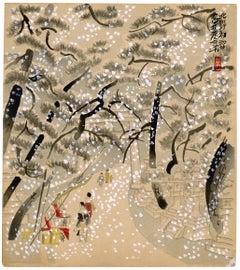
Snow at Nezu-Gongen Shrine  (Nezu-Gongen no yuki)

Snow at Nezu-Gongen Shrine (Nezu-Gongen no yuki)

By Kawase Hasui

Located in Fairlawn, OH

Snow at Nezu-Gongen Shrine (Nezu-Gongen no yuki) Color woodcut, 1933 Signed in the block Hasui with the red Kawase seal (see photo) Publisher: Watanabe, with the "J" seal, de...

Category

1930s Modern Kawase Hasui Art
Materials

Woodcut

Daybreak over Lake Yamanaka

Daybreak over Lake Yamanaka

By Kawase Hasui

Located in Fairlawn, OH

Daybreak over Lake Yamanaka Color woodcut, 1931 Published by the Watanabe Color Print Co. Watanabe seal "D" (1931-1941) See photo Pre-war design and pre-war printing Lake Yamanaka i...

Category

1930s Kawase Hasui Art
Materials

Woodcut

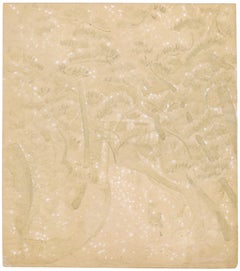
Kawase Hasui -- Taisho Pond Kamikochi 土高橋大正池

Kawase Hasui -- Taisho Pond Kamikochi 土高橋大正池

By Kawase Hasui

Located in BRUCE, ACT

Kawase Hasui 川瀬 巴水 (1883-1957) Title: Taisho Pond Kamikochi 土高橋大正池 Date: Ca. 1927 First state Oban frame size: 49.8 x 37.5 x 2 cm The red “Rumi” seal of the publisher in the lower r...

Category

1920s Kawase Hasui Art
Materials

Woodcut

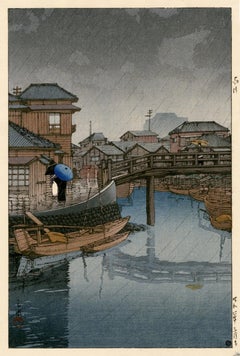
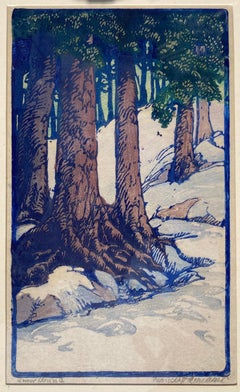
'Rain at Shinagawa, Ryoshimachi' — lifetime impression

'Rain at Shinagawa, Ryoshimachi' — lifetime impression

By Kawase Hasui

Located in Myrtle Beach, SC

A fine, atmospheric impression, with fresh colors; the full sheet, in excellent condition. Signed 'Hasui' with the artist’s seal 'Kawase', lower left. Published by Watanabe Shozaburo with the Watanabe 6mm round seal indicating a lifetime impression printed between 1945 - 1957. Archivally sleeved, unmatted. Image size 14 1/4 x 9 3/8 inches (362 x 238 mm); sheet size 15 1/2 x 10 3/8 inches (391 x 264 mm). An impression of this work is in the permanent collection of the Fine Arts Museum of San Francisco, Achenbach Foundation. ABOUT THE ARTIST “I do not paint subjective impressions. My work is based on reality...I can not falsify...(but) I can simplify…I make mental impressions of the light and color at the time of sketching. While coloring the sketch, I am already imagining the effects in a woodblock print.” — Kawase Hasui Hasui Kawase (1883–1957) is the most celebrated Japanese print designer of the shin-hanga ('new prints') movement. His prints, produced under the guidance and discerning eye of his publisher, Watanabe Shozaburo, represent the modern legacy of the renowned 19th-century Ukiyo-e masters Hiroshige and Hokusai. Hasui was able to evoke the fleeting beauty of Japan during the interwar period as no other printmaker of his time could. Hasui's work enjoyed huge popularity upon producing his first print in 1918. Watanabe recognized and developed the enormous potential of the American market, resulting in Hasui's prints achieving high prices at auctions in New York as early as the 1920s. After the Second World War, his prints became highly sought-after collectible works among the American occupying forces in Japan. Hasui designed more than 600 prints during the 40-year span of his artistic career, and in 1956, he was named a 'Living National Treasure' of Japan. Hasui’s woodblock...

Category

1930s Showa Kawase Hasui Art
Materials

Woodcut

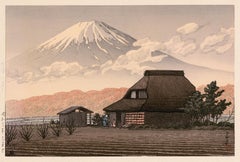
Mount Fuji, Narusawa (Late Autumn) — Lifetime Impression

Mount Fuji, Narusawa (Late Autumn) — Lifetime Impression

By Kawase Hasui

Located in Myrtle Beach, SC

Kawase Hasui, 'Mount Fuji, Narusawa (Late Autumn)', color woodblock print, 1936. A fine impression, with fresh colors; on cream wove Japan paper, the full sheet with margins, in excellent condition. Signed 'Hasui' in black ink with the artist’s red seal 'Kawase', lower right. The 6mm circular seal of publisher Watanabe (used 1946-1957), lower left, indicating a lifetime impression. Archivally sleeved, unmatted. Impressions of this work are held in the collections of the Art Institute of Chicago; The National Museum of Modern Art, Tokyo; and the Museum of Fine Arts Boston. ABOUT THE IMAGE The village of Narusawa is located in Japan’s Fuji-Hakone-Izu National Park, which was established in the same year Kawase Hasui’s “Mt. Fuji, Narusawa” image was printed. The park partially encompasses the foothills of Mt Fuji, seen here as the backdrop to a family farm as a mother and daughter perform their daily chores. A drift of late autumn clouds passes...

Category

1930s Showa Kawase Hasui Art
Materials

Woodcut

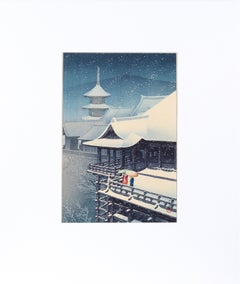
Kiyomizu Temple in the Snow - Woodblock Print

Kiyomizu Temple in the Snow - Woodblock Print

By Kawase Hasui

Located in Soquel, CA

Kiyomizu Temple in the Snow - Woodblock Print A spectacular woodblock print by Hasui Kawase (Japanese, 1883-1957), depicting a serene wintery balcony with two women under umbrellas in the falling snow at the Kiyomizu Temple (Temple of Pure Waters). One of the most celebrated temples in Japan, the temple was founded in 780 on the site of the Otowa Waterfall among the wooded hills to the east of Kyoto - the temple's name based on the fall's crystalline waters. Publisher: Doi Hangaten Artist's seal and signature in lower right corner. Presented in a new white mat. Paper size: 15.63"H x 10.25"W (ôban size with raw top edge) Mat size: 24"H x 20"W Hasui Kawase (Japanese, 1883 -1957) was an artist, one of modern Japan's most important and prolific printmakers. He was a prominent designer of the shin-hanga ("new prints") movement, whose artists depicted traditional subjects with a style influenced by Western art. Like many earlier ukiyo-e prints, Hasui's works were commonly landscapes, but displayed atmospheric effects and natural lighting. Hasui designed approximately 620 prints over a career that spanned nearly forty years. Towards the end of his life the government recognized him as a Living National Treasure for his contribution to Japanese culture. From youth Hasui dreamed of an art career. His maternal uncle was Kanagaki Robun (1829–94), a Japanese author and journalist, who produced the first manga magazine. Hasui went to the school of the painter Aoyagi Bokusen as a young man. He sketched from nature, copied the masters' woodblock prints, and studied brush painting with Araki Kanyu. His parents had him take on the family rope and thread wholesaling business, but its bankruptcy when he was 26 freed him to pursue art. He approached Kiyokata Kaburagi to teach him, but Kaburagi instead encouraged him to study Western-style painting, which he did with Okada Saburōsuke...

Category

1940s Edo Kawase Hasui Art
Materials

Ink, Laid Paper

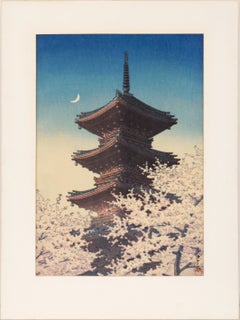
Spring Evening, Ueno Toshogu Shrine - Woodblock Print with First Edition Seal

Spring Evening, Ueno Toshogu Shrine - Woodblock Print with First Edition Seal

By Kawase Hasui

Located in Soquel, CA

Spring Evening, Ueno Toshogu Shrine - Woodblock Print with First Edition Seal Woodblock print by Hasui Kawase (Japanese, 1883-1957). A crescent moon hangs above the five-story red pagoda of Kan’ei Temple on a clear spring evening in Ueno. Flowering cherry trees create a profusion of pink that adds to the beauty of the view. This 17th century temple is now part of Ueno Park in Tokyo and is an National Important Cultural Property, and one of the few original buildings that survived the Battle of Ueno in 1868. Publisher: Watanabe Shôzaburô First edition, with the round Watanabe seal that was in use in the late 1940s, lower left. Edge notations can be faintly seen through the paper from verso. Artist's seal and signature in lower right corner. Presented in an off-white mat. Paper size: 15.25"H x 10.5"W (ôban size with raw top edge) Mat size: 18.5"H x 13.25"W Hasui Kawase (Japanese, 1883 -1957) was an artist, one of modern Japan's most important and prolific printmakers. He was a prominent designer of the shin-hanga ("new prints") movement, whose artists depicted traditional subjects with a style influenced by Western art. Like many earlier ukiyo-e prints, Hasui's works were commonly landscapes, but displayed atmospheric effects and natural lighting. Hasui designed approximately 620 prints over a career that spanned nearly forty years. Towards the end of his life the government recognized him as a Living National Treasure for his contribution to Japanese culture. From youth Hasui dreamed of an art career. His maternal uncle was Kanagaki Robun (1829–94), a Japanese author and journalist, who produced the first manga magazine. Hasui went to the school of the painter Aoyagi Bokusen as a young man. He sketched from nature, copied the masters' woodblock prints, and studied brush painting with Araki Kanyu. His parents had him take on the family rope and thread wholesaling business, but its bankruptcy when he was 26 freed him to pursue art. He approached Kiyokata Kaburagi to teach him, but Kaburagi instead encouraged him to study Western-style painting, which he did with Okada Saburōsuke...

Category

1940s Edo Kawase Hasui Art
Materials

Ink, Laid Paper

Kawase Hasui  -- Meguro Fudo Temple 目黑不动堂

Kawase Hasui -- Meguro Fudo Temple 目黑不动堂

By Kawase Hasui

Located in BRUCE, ACT

Title "Meguro Fudo Temple" 目黑不动堂 Date 1931; (c1940's/50's) Publisher Watanabe Shozaburo Seal, Carver/Printer red 6mm (lifetime edition) Image Size 9.5 x 14.4 Impressio...

Category

Early 20th Century Kawase Hasui Art
Materials

Woodcut

Moon at Magome
Moon at Magome

Kawase HasuiMoon at Magome, 1930

Sold

H 15.48 in W 10.24 in

Moon at Magome

By Kawase Hasui

Located in Burbank, CA

"Moon at Magome," from "Twenty Views of Tokyo". In this masterful evening view, the yellow glow from a small window echoes the haunting presence of the full, yellow moon. This field ...

Category

Early 20th Century Showa Kawase Hasui Art
Materials

Handmade Paper, Woodcut

Kawase Hasui art for sale on 1stDibs.

Find a wide variety of authentic Kawase Hasui art available for sale on 1stDibs. If you’re browsing the collection of art to introduce a pop of color in a neutral corner of your living room or bedroom, you can find work that includes elements of blue and other colors. You can also browse by medium to find art by Kawase Hasui in woodcut print and more. Not every interior allows for large Kawase Hasui art, so small editions measuring 9 inches across are available. Customers who are interested in this artist might also find the work of and Ohara Koson. Kawase Hasui art prices can differ depending upon medium, time period and other attributes. On 1stDibs, the price for these items starts at $1,280 and tops out at $6,000, while the average work can sell for $1,900.
Questions About Kawase Hasui Art
  • 1stDibs ExpertJune 30, 2023
    Hasui Kawase made woodblock prints and was one of the most important modern Japanese artists. The woodblock printmaking genre, unique to Japan, grew out of 17th-century developments in printing and book publishing. Kawase was a prominent practitioner of the shin-hanga (“new prints”) movement, whose artists depicted traditional subjects with a style influenced by Western art. Like many earlier artists working in woodblock printmaking, Hasui primarily created richly atmospheric landscapes. They’re characterized by an emphasis on natural lighting and the artist’s effort to draw attention to the beauty of nature. Hasui created hundreds of prints over a career that spanned nearly forty years. On 1stDibs, find a range of original Japanese woodblock prints.
  • 1stDibs ExpertFebruary 17, 2023
    Kawase Hasui was born in Tokyo, Japan, in 1883. He was one of modern Japan's most important and prolific printmakers and a prominent designer of the shin-hanga ("new prints") movement, whose artists depicted traditional subjects with a style influenced by Western art. Shop a range of Kawase Hasui art from some of the world's top galleries on 1stDibs.