By Lawrence Kupferman
Located in Myrtle Beach, SC
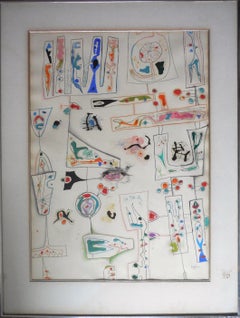
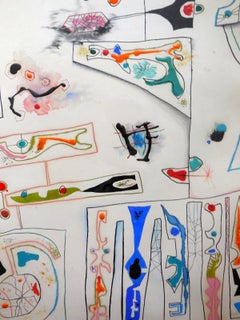
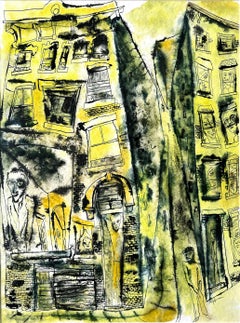
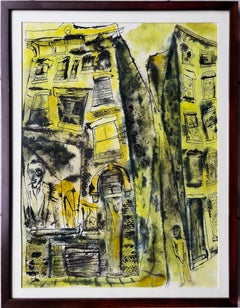
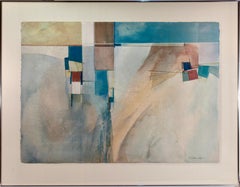
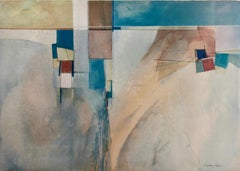
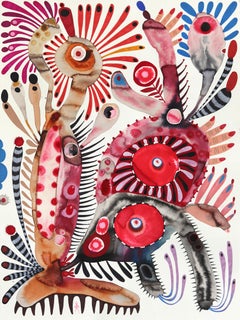
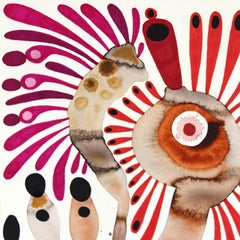
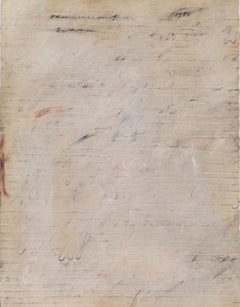
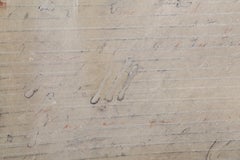
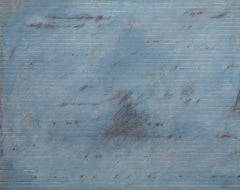
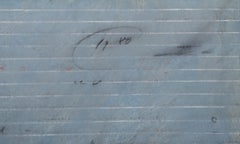
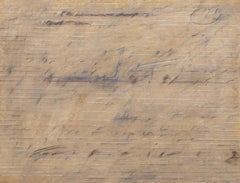
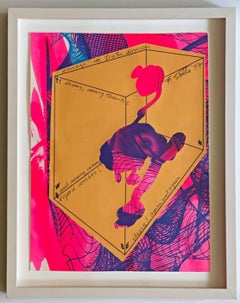
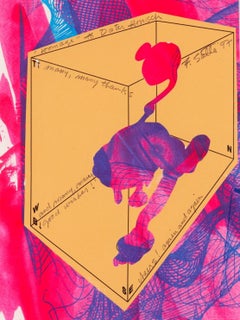
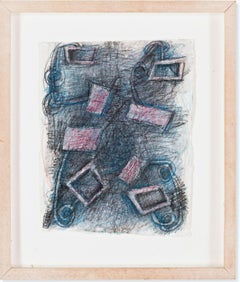
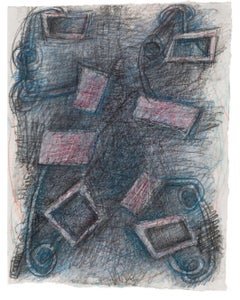
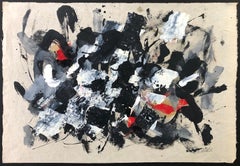
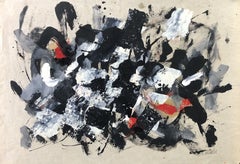
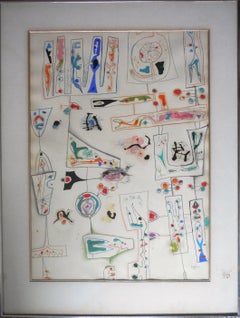
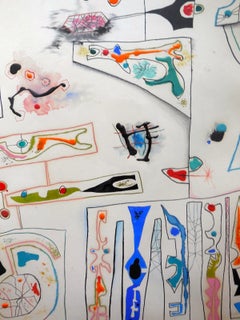
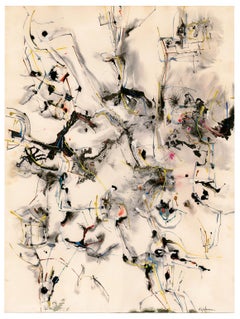
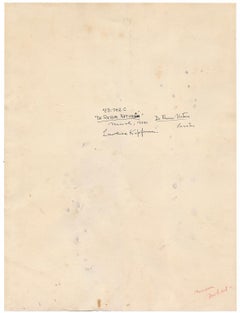
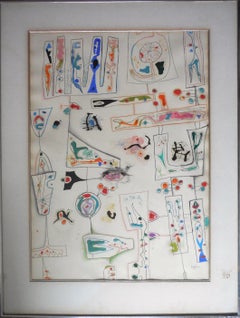
Lawrence Kupferman, 'De Rerum Natura', ink and encaustic, 1954. Signed 'Kupferman' in ink, lower right sheet edge. Signed and titled (twice) in ink, verso, and annotated '#ED:742.C' (the artist’s inventory number) 'March 1954' and 'Lucretius', in the artist’s hand. Ink and encaustic on heavy cream wove watercolor paper, with fresh colors, the image extending to the sheet edge. Slight toning to the sheet verso, otherwise in very good condition.
Image size/sheet size 25 3/8 x 19 1/4 inches (645 x 489 mm). Archivally matted to museum standards, unframed.
ABOUT THIS WORK
Encaustic painting, also known as hot wax painting, dates back to ancient Greece. Traditionally colored pigments were added to heated beeswax, the oldest known pigment binder, to create the paint medium. The encaustic medium, similar in appearance to oil painting, can be applied to any number of surfaces from paper to stone. It allows for a great variety of texture and has the advantage of not yellowing, of weathering well, and of being unaffected by moisture.
De Rerum Natura (usually translated as On the Nature of Things) is a philosophical epic poem written by the Roman poet Lucretius in Latin around 55 BCE. The poem was lost during the Middle Ages, rediscovered in 1417, and first printed in 1473. Its earliest published translation into any language (French) did not occur until 1650; in English — although earlier partial or unpublished translations exist — the first complete translation to be published was that of Thomas Creech, in heroic couplets, in 1682.
A pioneering figure in the history of philosophical poetry, Lucretius has come to be our primary source of information on Epicurean physics, the official topic of his poem. Among numerous other Epicurean doctrines, the atomic ‘swerve’ is known to us mainly from Lucretius’ account of it. His defense of the Epicurean system is deftly and passionately argued and is particularly admired for its eloquent critique of the fear of death in book 3.
Lucretius' work would have had a special resonance with Kupferman, who in his expressionist explorations was concerned with the mystery and essence of life itself.
ABOUT THE ARTIST
Lawrence Kupferman (1909 - 1982) was born in the Dorchester neighborhood of Boston and grew up in a working-class family. He attended the Boston Latin School and took part in the high school art program at the Museum of Fine Arts, Boston. In the late 1920s, he studied drawing under Philip Leslie Hale at the Museum School—an experience he called 'stultifying and repressive'. In 1932 he transferred to the Massachusetts College of Art, where he first met his wife, the artist Ruth Cobb...
Category
1950s Abstract Expressionist Lawrence Kupferman Drawings and Watercolor Paintings