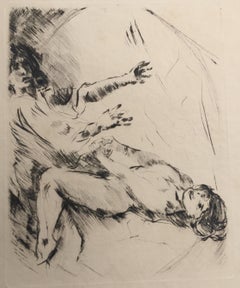
Lovis Corinth Figurative Prints

German, 1858-1925

Lovis Corinth was a German artist and writer whose mature work as a painter and printmaker realized a synthesis of impressionism and expressionism, known for his dramatic figurative and landscape paintings also for his landscapes of the Walchensee area of Bavaria and his portraits, Corinth also painted religious scenes, often violent . He also made etchings and lithographs in which he revealed his capacity for Expressionist power.

to
1
4
1
Overall Width
to
Overall Height
to
2
2
1
15
744
419
384
370
5
4
3
2
3
2
2
2
1
1
2
2
1
2
3
2
Artist: Lovis Corinth
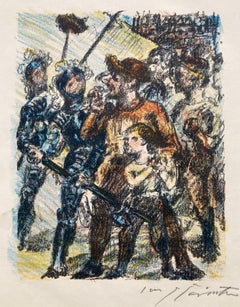
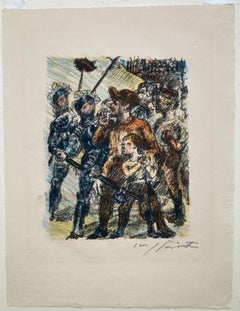
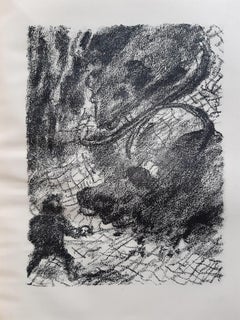
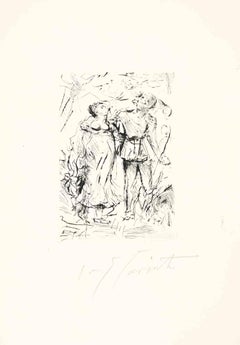
William Tell And His Son In Front Of The Hat

William Tell And His Son In Front Of The Hat

By Lovis Corinth

Located in Santa Monica, CA

LOVIS CORINTH (German 1858 -1925) TELL AND HIS SON IN FRONT OF THE HAT "(Wilhelm) Tell Und Sein Sohn Vor Dem Hut" 1923 -5, (Muller 781) Lithograph with coloring, signed in pencil. This is one of 25, signed, on Japan paper Total edition 200. Image 9 1/8 x 7 1/4 inches. Full Sheet 15 x 11 1/2 inches with deckle edge. In good condition. From the portfolio "William Tell". A portfolio of 13 signed lithographs including the title page. Published in 1925. Publisher Karl Nierendorf, Berlin, Printer:A. Rogall, Berlin. (Müller 775-787 - this is the 7th one. There are 25, signed, on Japan paper as offered, Total edition 200, including 75, signed, on "Bütten" paper and 100, signed, on copperplate printing paper) Below is from the Museum of Modern Art: Heather Hess, German Expressionist Digital Archive Project, German Expressionism: Works from the Collection. 2011. Lovis Corinth often cloaked allusions to contemporary politics in historical dress. In these thirteen lithographs for an illustrated edition of Friedrich Schiller...

Category

1920s Modern Lovis Corinth Figurative Prints

Materials

Lithograph

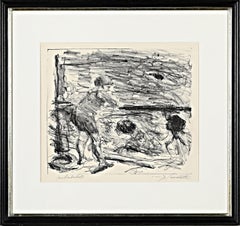
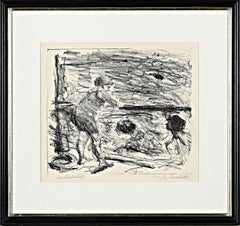
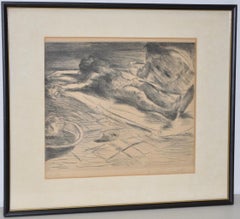
Lovis Corinth, Badeanstalt 1920, Lithograph, Hand-Signed , German Impressionist

Lovis Corinth, Badeanstalt 1920, Lithograph, Hand-Signed , German Impressionist

By Lovis Corinth

Located in Eltville am Rhein, DE

Lovis Corinth Tapiau 1858 - 1925 Zandvoort Bathing Establishment, 1920 Lithograph on handmade paper Signed in pencil lower right Marked "Probedruck" (proof print) lower left Image size: 32 x 36.8 cm Frame: 57 x 60 cm Good original condition, under passe-partout (additional photos available upon request) Rare proof print prior to the original edition of 115 copies Published by Fritz Gurlitt, Berlin Catalogue raisonné Schwarz 442 Handcrafted model frame, museum glass Viewing and pickup possible by appointment Authenticity confirmed in writing. Lovis Corinth was born on July 21, 1858, in the town of Tapiau in East Prussia (now Gwardejsk, Russia). While attending high school in Königsberg, he developed an interest in Greek and Roman mythology as well as the Christian stories of the Bible. From 1876, Lovis Corinth attended the art academy in Königsberg, where he studied under Otto Günther, who introduced him to Weimar plein air painting. In 1880, he transferred to the Munich Academy. Works from his Munich period demonstrate his orientation towards the naturalistic painting style of Wilhelm Leibl's circle. In 1883, Lovis Corinth traveled to Italy with his father, and in 1884 he spent three months in Antwerp, where he took painting lessons from Paul Eugène Gorge. From 1884 to 1887, Corinth studied at the Académie Julian in Paris. The artist then traveled to Berlin, where he probably painted his first self-portrait in 1887/88, which was followed by numerous others over the years. From 1891 to 1899, Corinth lived as a freelance painter in Munich, where he belonged to the Secession. After meeting Max Liebermann and Walter Leistikow in the winter of 1898/99, he decided to move to Berlin, where he settled in 1901. Prior to this, his work "Salomé with the Head of John the Baptist...

Category

1920s Impressionist Lovis Corinth Figurative Prints

Materials

Lithograph

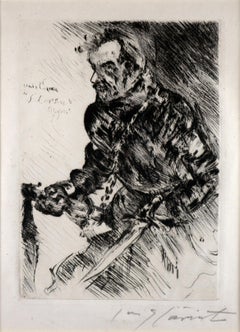
Rudolf v. Rittner as Florian Geyer - Last man standing -

Rudolf v. Rittner as Florian Geyer - Last man standing -

By Lovis Corinth

Located in Berlin, DE

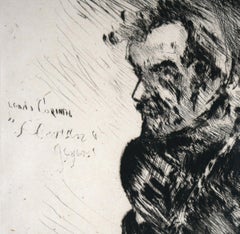
Lovis Corinth (1858 Tapiau - 1925 Zandvoort), Rudolf von Rittner as Florian Geyer, 1924 (Müller 854), drypoint signed in pencil. 20.4 × 14.2 (plate size), 37.7 × 30.6 cm (sheet size). Published by Karl Nierendorf, Berlin. Framed in a passepartout. - Strong, precise impression. Frame a little bit rubbed and with two small damages. About the artwork The knight is a leitmotif in Lovis Corinth's work, culminating in his Self-Portrait in Armour of 1914. Of all the paintings on this theme, Corinth most often depicted Florian Geyer. Descended from a Franconian noble family, he fought for the freedom of the peasants during the peasant wars of the Reformation, first diplomatically and then militarily, leading the legendary Schwarzen Haufen (Black Troops). The name derives from the black uniforms with which Geyer dressed the peasants willing to fight. During the Napoleonic occupation, the freedom fighter Florian Geyer was sung about by the Romantics, and the free corps Die Schwarze Schaar, founded in 1813 by Major von Lützow, succeeded the Schwarzer Haufen. It was against this historical background that Gerhard Hauptmann wrote the revolutionary drama Florian Geyer, which premiered at the Deutsches Theater in Berlin in 1896. While the actor Rudolf Rittner, who would later appear in Fritz Lang's films, initially played the role of Schäferhans, he took over the leading role in the new production at Berlin's Lessing Theatre in 1904, again directed by Emil Lessing, which established his fame as an actor. Hauptmann himself praised the acting. He wrote to Hugo von Hofmannsthal: "It went quite well with Florian Geyer. In any case, I had the great pleasure of seeing the play again in an admirable performance". And Lovis Corinth was so taken with Rittner's performance that he painted an oil portrait of him in the role of Florian Geyer in 1906. After two further graphic versions in 1915 and 1920/21, Corinth returned to the painting a year before his death and almost twenty years after the oil painting to create this graphic version in 1924. Even the inscription in the picture was taken over. This proves all the more the importance of the knight and freedom fighter for Corinth's self-image. The oil painting, in particular, proclaims the single-minded determination to fight to the last for the values defended, manifested in the oil painting by the tattered flag held out to the enemy. There is a parallel with Rainer Maria Rilke's 1899 story The Cornet, in which the protagonist goes down with the flag that he first saved at the risk of his life. Consequently, the portrait is also a self-portrait, and the knight's armour is not an academic costume or an ironic refraction, but an expression of Corinth's self-image, which also includes his self-representation as an artist. The Secession poster...

Category

1920s Expressionist Lovis Corinth Figurative Prints

Materials

Etching

Related Items
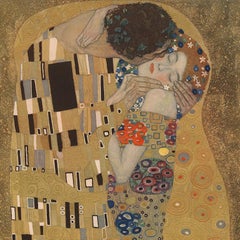
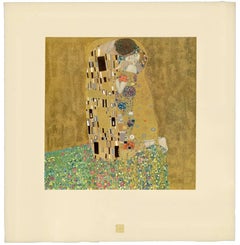
H.O. Miethke Das Werk folio "The Kiss" collotype print

H.O. Miethke Das Werk folio "The Kiss" collotype print

By Gustav Klimt & K.K. Hof-und Staatsdruckerei

Located in Palm Beach, FL

The Kiss, no. 1 from the fifth installment of Das Werk Gustav Klimts Undoubtedly Klimt’s best known and most reproduced images, this printed version of The Kiss is the only one with which Klimt was directly involved. Unveiled at Vienna’s Kunstschau 1908, and saved for the fifth and final delivery of Das Werk, The Kiss marks a triumph in Klimt’s career and represents a culmination of many themes in his oeuvre up to that point. After all of the controversy surrounding the State’s prior rejection of the University murals commissioned from Klimt, the Ministry of Education reversed their policy toward the artist with a show of wholehearted support by purchasing for the Osterreichische Galerie BelvedereThe Kiss while it still hung in the Kunstschau exhibit. Considered in relation to the eight multicolored collotypes which preceded its print debut in the Das Werk portfolio, The Kiss literally embraces all which came before it. The golden seaweed dangling in tresses from the lovers’ feet harkens back to Water Snakes I and II. The bed of flowers evokes the settings Klimt created in both The Golden Knight and The Sunflower. In fact, this image sprung out of a particularly happy summer spent in the company of Klimt’s lover, Emilie Floge...

Category

Early 1900s Vienna Secession Lovis Corinth Figurative Prints

Materials

Handmade Paper

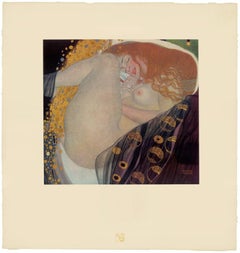
H.O. Miethke Das Werk folio "Danaë" collotype print

H.O. Miethke Das Werk folio "Danaë" collotype print

By Gustav Klimt & K.K. Hof-und Staatsdruckerei

Located in Palm Beach, FL

Danaë, no. 2 from the fourth installment of Das Werk Gustav Klimts Danae originates from Greek mythology. She is the daughter of the King of Argos. Because a...

Category

Early 1900s Vienna Secession Lovis Corinth Figurative Prints

Materials

Paper

H.O. Miethke Das Werk folio "Water Snakes II" collotype print

H.O. Miethke Das Werk folio "Water Snakes II" collotype print

By Gustav Klimt & K.K. Hof-und Staatsdruckerei

Located in Palm Beach, FL

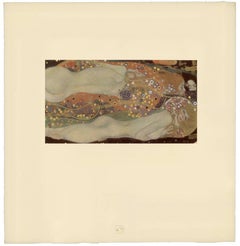
Water Snakes II, no. 9 from the fourth installment of Das Werk Gustav Klimts The last painting Klimt exhibited with the Secession before resigning, Water ...

Category

Early 1900s Vienna Secession Lovis Corinth Figurative Prints

Materials

Paper

Auction

Bernhard KretzschmarAuction, 1921

$4,000

H 13.5 in W 15.5 in D 0.1 in

Auction

By Bernhard Kretzschmar

Located in New York, NY

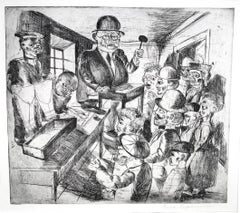
Bernard Kretzschmar (1889-1972), Auction, etching, drypoint, and burnished aquatint, 1921, signed and dated (’20) in pencil lower right [also initialed in the plate lower left] Refe...

Category

1920s Expressionist Lovis Corinth Figurative Prints

Materials

Drypoint, Etching, Aquatint

Le Chapeau Epinglé - Etching by Pierre Auguste Renoir - 1921

Le Chapeau Epinglé - Etching by Pierre Auguste Renoir - 1921

By Pierre Auguste Renoir

Located in Roma, IT

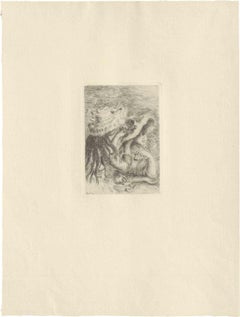
Le chapeau épinglé (La fille de Berthe Morisot et sa cousine) 3e planche. Etching realized by Renoir in 1894. Image dimension 11.5x8 cm. / sheet dimension 33.2x15.1 cm. The final s...

Category

1920s Impressionist Lovis Corinth Figurative Prints

Materials

Etching

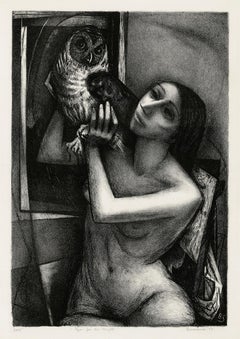
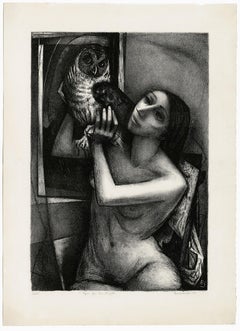
'Eyes for the Night' — Mid-century American Surrealism

'Eyes for the Night' — Mid-century American Surrealism

By Benton Murdoch Spruance

Located in Myrtle Beach, SC

Benton Spruance, 'Eyes for the Night', lithograph, 1947, edition 35, Fine and Looney 260. Signed, dated, titled, and annotated 'Ed 35' in pencil. A fine impression, on heavy, cream ...

Category

1940s American Modern Lovis Corinth Figurative Prints

Materials

Lithograph

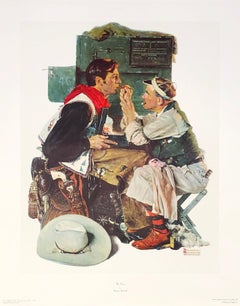
The Texan Collotype Print, American Impressionist, Unsigned, 1970s

The Texan Collotype Print, American Impressionist, Unsigned, 1970s

By Norman Rockwell

Located in Aventura, FL

Collotype in colors on paper. Unsigned. Title and copyright info in typeset lower margin. Artwork is in excellent condition. All reasonable offers will be considered.

Category

1970s American Impressionist Lovis Corinth Figurative Prints

Materials

Paper

'Financial District', New York City — American Modernism

'Financial District', New York City — American Modernism

By Howard Norton Cook

Located in Myrtle Beach, SC

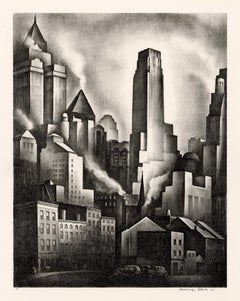
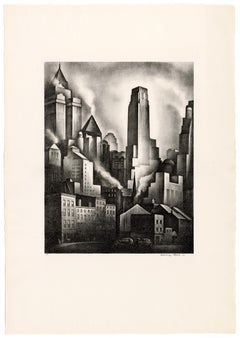
Howard Cook, 'Financial District', lithograph, 1931, edition 75, Duffy 155. A fine, richly-inked impression, on cream wove paper, the full sheet with wide margins (2 3/4 to 5 5/8 inches), in excellent condition. Image size 13 5/16 x 10 3/8 inches (338 x 264 mm); sheet size 23 x 16 inches (584 x 406 mm). Matted to museum standards, unframed. Literature: 'American Master Prints from the Betty and Douglas Duffy Collection', the Trust for Museum Exhibitions, Washington, D.C., 1987. Collections: Crystal Bridges Museum of American Art, Library of Congress, Metropolitan Museum of Art, Philadelphia Museum of Art, Smithsonian American Art Museum. ABOUT THE ARTIST Howard Norton Cook (1901-1980) was one of the best-known of the second generation of artists who moved to Taos. A native of Massachusetts, he studied at the Art Students League in New York City and at the Woodstock Art Colony. Beginning his association with Taos in 1926, he became a resident of the community in the 1930s. During his career, he received two Guggenheim Fellowships and was elected an Academician in the National Academy of Design. He earned a national reputation as a painter, muralist, and printmaker. Cook’s work in the print mediums received acclaim early in his career with one-person exhibitions at the Denver Art Museum (1927) and the Museum of New Mexico (1928). He received numerous honors and awards over the years, including selection in best-of-the-year exhibitions sponsored by the American Institute of Graphics Arts, the Brooklyn Museum, the Society of American Etchers, and the Philadelphia Print Club. His first Guggenheim Fellowship took him to Taxco, Mexico in 1932 and 1933; his second in the following year enabled him to travel through the American South and Southwest. Cook painted murals for the Public Works of Art Project in 1933 and the Treasury Departments Art Program in 1935. The latter project, completed in Pittsburgh, received a Gold Medal from the Architectural League of New York. One of his most acclaimed commissions was a mural in the San Antonio Post Office in 1937. He and Barbara Latham settled in Talpa, south of Taos, in 1938 and remained there for over three decades. Cook volunteered in World War II as an Artist War Correspondent for the US Navy, where he was deployed in the Pacific. In 1943 he was appointed Leader of a War Art Unit...

Category

1930s American Modern Lovis Corinth Figurative Prints
Materials

Lithograph

Max Eisler Eine Nachlese folio “The Bride” collotype print

Max Eisler Eine Nachlese folio “The Bride” collotype print

By (after) Gustav Klimt

Located in Palm Beach, FL

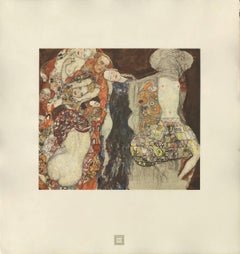
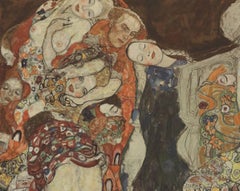
After Gustav Klimt, Max Eisler #30, Brautzug; multi-color collotype after unfinished 1917/18 painting in oil on canvas. Painted in the last months of Klimt’s life, The Bride was one...

Category

1930s Vienna Secession Lovis Corinth Figurative Prints

Materials

Paper

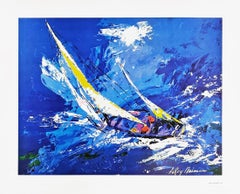
Sailing Offset Lithograph Print, Impressionist Style, 1978, Unframed

Sailing Offset Lithograph Print, Impressionist Style, 1978, Unframed

By LeRoy Neiman

Located in Aventura, FL

Original off set lithograph (poster) in colors on paper. Image size approx 19 x 25 inches. Sheet size 24 x 30 inches. Artist signature printed in the plate. Not hand signed. Printe...

Category

1970s Impressionist Lovis Corinth Figurative Prints

Materials

Paper, Offset

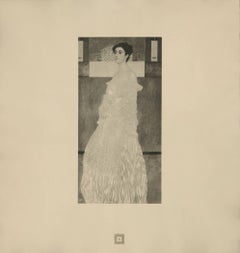
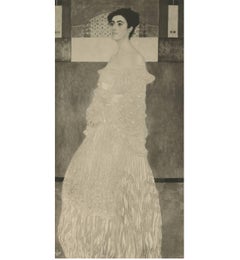
Max Eisler Eine Nachlese folio "Portrait of Baroness Wittgenstein" collotype

Max Eisler Eine Nachlese folio "Portrait of Baroness Wittgenstein" collotype

By (after) Gustav Klimt

Located in Palm Beach, FL

After Gustav Klimt, Max Eisler Plate #4, Bildnis Baronin Wittgenstein; dark grey monochrome collotype after the 1905 painting in oil on canvas. GUSTAV KLIMT EINE NACHLESE (GUSTAV KLIMT AN AFTERMATH), a portfolio of 30 collotypes prints, 15 are multi-color and 15 are monochrome, on chine colle paper laid down on heavy cream-wove paper with deckled edges; Max Eisler, Editor-Publisher; Osterreichischer Staatsdruckerei (Austrian State Printing Office), Printer; in a limited edition of 500 numbered examples of which: 200 were printed in German, 150 were printed in French and 150 were printed in English; Vienna, 1931. 2018 marks the 100th anniversary of Gustav Klimt’s death. It is a fitting time to reflect upon the enduring legacy and deep impact of his art. Recognizing this need for posterity with uncanny foresight, the publication of Gustav Klimt: An Aftermath (Eine Nachlese) provides a rare collection of work after Klimt which has proven to be an indispensable tool for Klimt scholarship as well as a source for pure visual delight. Approximately 25 percent of the original works featured in the Aftermath portfolio have since been lost. Of those 30, six were destroyed by fire on 8 May 1945. On that fateful final day of WWII, the retreating Feldherrnhalle, a tank division of the German Army, set fire to the Schloss Immendorf which was a 16th century castle in Lower Austria used between 1942-1945 to store objects of art. All three of Klimt’s Faculty Paintings: Philosophy, Medicine and Jurisprudence (1900-1907), originally created for the University of Vienna, were on premises at that time. Also among the inventory of Klimt paintings in storage there was art which had been confiscated by the Nazis. One of the most significant confiscated collections was the Lederer collection which featured many works by Gustav Klimt such as Girlfriends II and Garden Path with Chickens...

Category

1930s Vienna Secession Lovis Corinth Figurative Prints

Materials

Paper

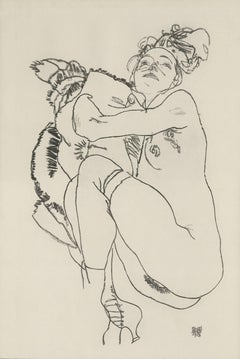
E. Strache, Handzeichnungen folio, "Reclining Female Nude Glancing Up" Collotype

E. Strache, Handzeichnungen folio, "Reclining Female Nude Glancing Up" Collotype

By (after) Egon Schiele

Located in Palm Beach, FL

after Egon Schiele (1890 – 1918), AUSTRIA “ART CANNOT BE MODERN, ART IS PRIMORDIALLY ETERNAL.” -SCHIELE Defiantly iconoclastic in life and art, Egon Schiele is esteemed for his mas...

Category

1920s Vienna Secession Lovis Corinth Figurative Prints

Materials

Paper

Previously Available Items
Ages of Man - Etching by Lovis Corinth - 1925

Ages of Man - Etching by Lovis Corinth - 1925

By Lovis Corinth

Located in Roma, IT

Etching on paper realized in 1925 as illustration for "Ages of Man". Hand signed in pencil. Very good condition.

Category

1920s Modern Lovis Corinth Figurative Prints
Materials

Etching

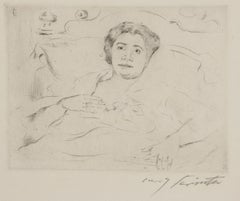
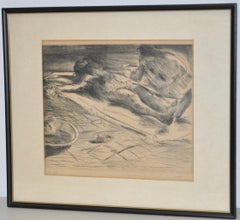
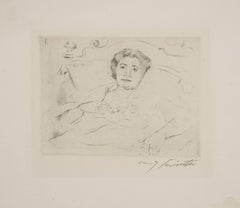
In bed / - Reverie -

Lovis CorinthIn bed / - Reverie -

Sold

H 11.42 in W 15.36 in D 0.4 in

In bed / - Reverie -

By Lovis Corinth

Located in Berlin, DE

Lovis Corinth (1858 Tapiau - 1925 Zandvoort), In bed, 1909. Drypoint on laid paper with watermark, 14.3 cm x 19 cm (image), 29 cm x 39.3 cm (sheet size), signed “Lovis Corinth” in pe...

Category

Early 1900s Impressionist Lovis Corinth Figurative Prints
Materials

Paper

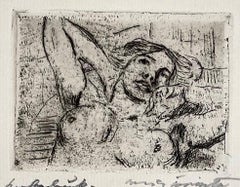
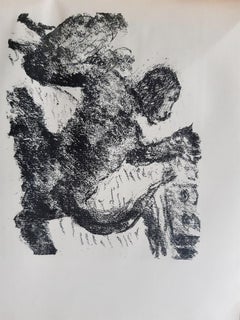
untitled (Female Nude) by Lovis Corinth

untitled (Female Nude) by Lovis Corinth

By Lovis Corinth

Located in Palm Springs, CA

Nude Woman, lithograph by LOVIS CORNTH (German 1858 - 1925). Signed and titled in pencil, platemark 2.75 X 3.75 " on good laid paper. Full margins, deckle edges all around. Sheet 13...

Category

1920s Expressionist Lovis Corinth Figurative Prints
Materials

Lithograph

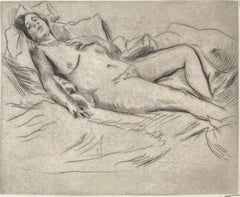
Schlafende (Sleeping Nude Woman)

Schlafende (Sleeping Nude Woman)

By Lovis Corinth

Located in Palm Springs, CA

Schlafende (Sleeping Nude Woman), drypoint by LOVIS CORNTH (German 1858 - 1925). Signed, platemark 7.94 X 9.75 " on good laid paper. Full margins, deckle...

Category

1910s Expressionist Lovis Corinth Figurative Prints
Materials

Drypoint

Joseph and Potiphar's Wife 1

Joseph and Potiphar's Wife 1

By Lovis Corinth

Located in Santa Monica, CA

LOVIS CORNTH (German 1858 - 1925) JOSEPH und POTIPHARS WEIB 1, 1914 (S. 168) Drypoint, Unsigned, platemark 7 3//8" X 9 5/8 " on good watermarked laid paper. Full margins, deckl...

Category

1910s Expressionist Lovis Corinth Figurative Prints
Materials

Drypoint

Lovis Corinth figurative prints for sale on 1stDibs.
Find a wide variety of authentic Lovis Corinth figurative prints available for sale on 1stDibs. You can also browse by medium to find art by Lovis Corinth in lithograph, etching, paper and more. Much of the original work by this artist or collective was created during the 20th century and is mostly associated with the Expressionist style. Not every interior allows for large Lovis Corinth figurative prints, so small editions measuring 6 inches across are available. Customers who are interested in this artist might also find the work of Karl Schmidt-Rottluff, Emil Nolde, and Karl Michel. Lovis Corinth figurative prints prices can differ depending upon medium, time period and other attributes. On 1stDibs, the price for these items starts at $275 and tops out at $2,129, while the average work can sell for $869.