Max Blondat Art

to
3
3
2
1
1
2
2

Use search to find more

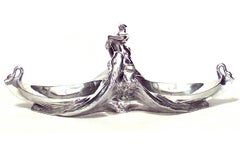
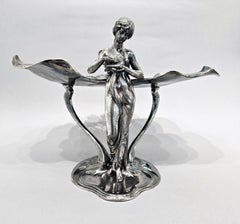
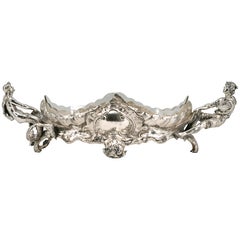
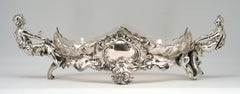
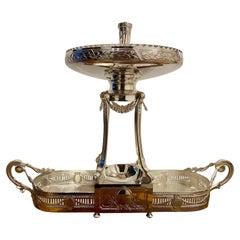
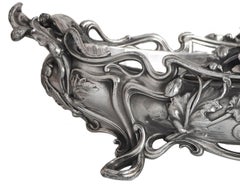
Max Blondat Art Nouveau Silver Plate Centerpiece with Embracing Ladies

Max Blondat Art Nouveau Silver Plate Centerpiece with Embracing Ladies

By Max Blondat

Located in Queens, NY

Art Nouveau silver plate centerpiece with 2 bowls separated by a center handle of 2 embracing ladies (signed MAX BLONDAT)

Category

Late 19th Century Art Nouveau Antique Max Blondat Art

Materials

Silver Plate

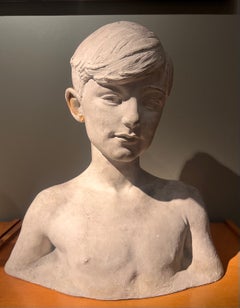
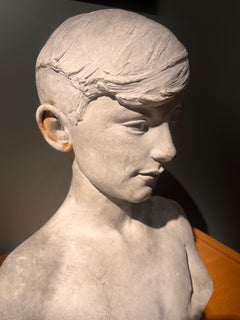
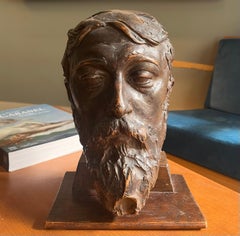
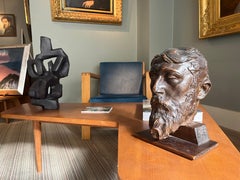
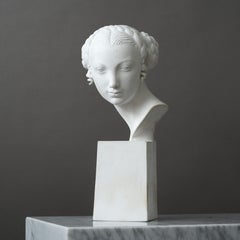
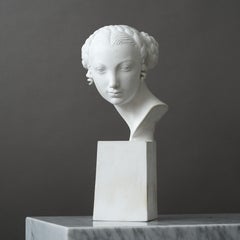
Plaster Sculpture - Bust of a Young Man by Max Blondat France 19/20th century

Plaster Sculpture - Bust of a Young Man by Max Blondat France 19/20th century

By Max Blondat

Located in PARIS, FR

Maxiliam Blondat or Max Blondat (1872 - 1925) Sculpture - Bust of a Young Man Plaster H 47 cm L 40,5 cm P 18 cm Relative work : M Blondat, Portrait of Kurtis Reed as a Child, Bur...

Category

Early 20th Century Max Blondat Art

Materials

Plaster

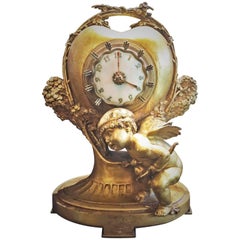
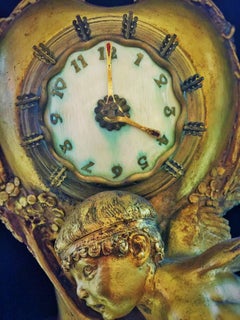
Max Blondat, French Art Nouveau Gilt Bronze Timepiece, 1914

Max Blondat, French Art Nouveau Gilt Bronze Timepiece, 1914

By Max Blondat

Located in New York, NY

"L'amour Non Partagé" or "Unrequited Love", an allegorical timepiece by Max Blondat. The base of the clock is stamped with the artist name "Max Blondat", and carries a Valsuani found...

Category

1910s French Art Nouveau Vintage Max Blondat Art

Materials

Bronze

Related Items
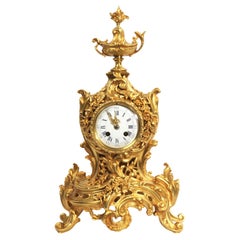
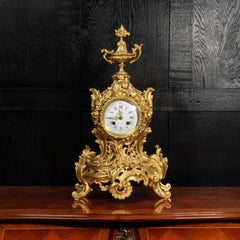
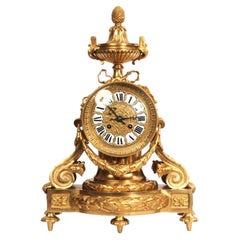
Antique French Gilt Bronze Rococo Clock

Antique French Gilt Bronze Rococo Clock

$3,139

H 19.25 in W 11 in D 6.75 in

Antique French Gilt Bronze Rococo Clock

By A.D. Mougin

Located in Belper, Derbyshire

A large, superb and very decorative original antique French clock by the famous maker A.D. Mougin. It is boldly modelled in the Rococo style in finely gilded bronze. Asymmetric waisted case, decorated profusely with sweeping acanthus leaves, 'C' scrolls and floral swags. To the top is a large elaborate final of a stylised flaming lamp...

Category

19th Century French Rococo Antique Max Blondat Art

Materials

Bronze

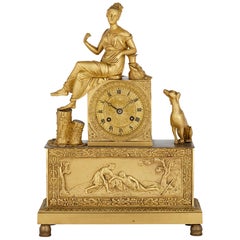
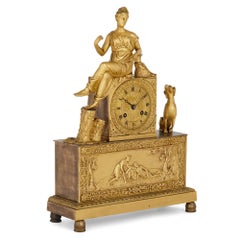
French Empire Gilt Bronze Clock

French Empire Gilt Bronze Clock

$6,012

H 14.97 in W 10.63 in D 3.94 in

French Empire Gilt Bronze Clock

Located in London, GB

French Empire gilt bronze clock French, early 19th century Measures: Height 38cm, width 27cm, depth 10cm This fine gilt bronze man...

Category

Early 19th Century French Empire Antique Max Blondat Art

Materials

Ormolu, Bronze

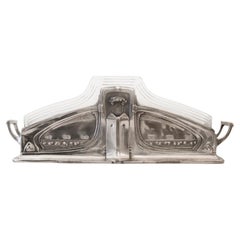
Centerpiece, Jugendstil, Art Nouveau, Liberty, German, 1910

Centerpiece, Jugendstil, Art Nouveau, Liberty, German, 1910

By WMF Württembergische Metallwarenfabrik

Located in Ciudad Autónoma Buenos Aires, C

WMF (Wurttembergische Metallwarenfabrik) Electro- Wurtemberg Plate Company in Geislingen, Germany, internationally known today as 'WMF' initials of the company Württembergische Meta...

Category

1910s German Art Nouveau Vintage Max Blondat Art

Materials

Crystal, Silver Plate

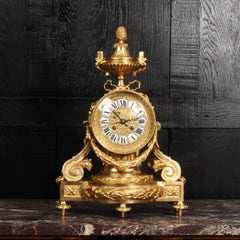
Antique French Gilt Bronze Drum Head Clock

Antique French Gilt Bronze Drum Head Clock

$3,273

H 13.5 in W 11.25 in D 6.75 in

Antique French Gilt Bronze Drum Head Clock

Located in Belper, Derbyshire

A large and elegant Louis XVI neoclassical style drum head clock, beautifully made in gilt bronze. The dial is within a drum case supported upon a reeded column flanked with scroll s...

Category

19th Century Neoclassical Antique Max Blondat Art

Materials

Bronze

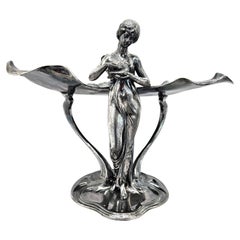
WMF Art Nouveau Jugendstil Silver Plate Centerpiece Card Tray, Germany, c. 1910

WMF Art Nouveau Jugendstil Silver Plate Centerpiece Card Tray, Germany, c. 1910

By WMF Württembergische Metallwarenfabrik, Albert Mayer

Located in London, GB

A beautiful art nouveau Jugendstil silver plate centerpiece card tray or tazza of a nymph holding a dove, made by WMF in Germany c. 1910. This is one of the most iconic pieces of ...

Category

1910s German Art Nouveau Vintage Max Blondat Art

Materials

Silver Plate

'Crokus', Plaster Sculpture, Bust of a Woman, Neoclassicism, Sweden, 1925.

'Crokus', Plaster Sculpture, Bust of a Woman, Neoclassicism, Sweden, 1925.

Located in Malmö, SE

Tore Strindberg (Swedish, 1882-1968) 'Crokus', 1925. Medium: Plaster Dimensions: 37 × 16 x 18,5 cm Hand-signed by the artist, 'Tore Strindberg, Sculp.'. Condition: scratches and scu...

Category

1920s Academic Max Blondat Art

Materials

Plaster

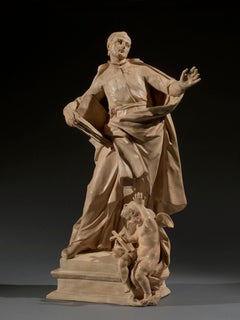
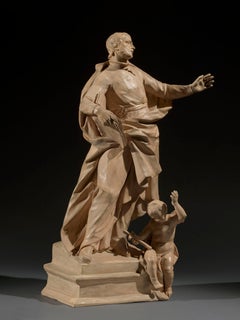
Roman 18th century terracotta model for the sculpture of San Camillo de Lellis

Roman 18th century terracotta model for the sculpture of San Camillo de Lellis

Located in London, GB

This remarkably fluid terracotta bozetto was made in preparation for Pietro Pacilli’s most important public commission, a large-scale marble statue of San Camillo de Lellis for the nave of St Peter’s Basilica in Rome. Expressively modelled, this terracotta sculpture is a rare and significant work made by a major Roman sculptor at a transformative moment of European sculpture. Pacilli began his working life on the great Baroque decorative projects initiated in the seventeenth century, but he found success as a restorer of ancient sculpture working to finish antiquities for a tourist market, becoming an important figure in the emergence of an archaeologically minded Neoclassicism. Pacilli trained Vincenzo Pacetti and provided important decorative work for the Museo Pio-Clementino, at the same time he is recorded restoring some of the most celebrated antiquities excavated and exported during the period. Pacilli was born into a family of Roman craftsmen, his father Carlo was a wood carver, and Pacilli is recorded working with him on the Corsini Chapel in San Giovanni Laternao as early as 1735. In 1738 his terracotta model of Joseph and Potiphar’s Wife won the first prize in the second class of the sculpture concorso at the Accademia di San Luca, this is particularly notable as Bartolomeo Cavaceppi came third. He worked as a carver and stuccoist completing works for the churches of San Marco and SS. Trinita dei Domeniciani Spagnoli. Pacilli operated as a sculptor and restorer of antiquities from his studio at the top of the Spanish Steps, close to Santa Trinita dei Monti, where he is listed as a potential vendor to the Museo Pio-Clementino in 1770. In 1763 Pacilli completed a silver figure of San Venanzio for the treasury of San Venanzio. He is recorded as Pacetti’s first master and it was evidently through Pacilli that he began to acquire his facility as a restorer of ancient sculpture. Pacilli, at his studio ‘poco prima dell’Arco della Regina alla Trinita dei Monti,’ exercised, what the nineteenth-century scholar, Adolf Michaelis called ‘rejuvenating arts’ on several important pieces of classical sculpture, including in 1760 the group of a Satyr with a Flute for the natural brother of George III, General Wallmoden, Hanovarian minister at Vienna. In 1765, Dallaway and Michaelis record that Pacilli was responsible for the restorations, including the addition of a new head, to the Barberini Venus which he had acquired from Gavin Hamilton. The Venus was then sold to Thomas Jenkins, who in turn passed it on to William Weddell at Newby Hall. In 1767 Pacilli exported a series of ancient busts ‘al naturale’ including portraits of Antinous, Julius Ceaser and Marus Aurelius, also a statue of a Muse and a Venus. As early as 1756 Pacilli seems to have been operating as an antiquarian, helping to disperse the collection of the Villa Borrioni. Pacilli supplied sculpture to notable British collectors, including Charles Townley, who on his first trip to Italy purchased the Palazzo Giustiniani statue of Hecate from Pacilli. Pacilli was involved with the Museo Pio Clementino from its conception, supplying busts of Julius Ceaser and a Roman Woman as well as completing stucco putti surmounting the arms of Pope Bendedict XIV to signal the entrance to the new Museo Critiano. In 1750 Il Diario Ordinario del Chracas announced that Pacilli had begun work on a sculpture of San Camillo de Lellis for St Peter’s. Camillo de Lellis founded his congregation, the Camillians, with their distinctive red felt crosses stitched on black habits in 1591. Having served as a soldier in the Venetian army, Camillo de Lellis became a novitiate of the Capuchin friars, he moved to Rome and established a religious community for the purpose of caring for the sick. In 1586 Pope Sixtus V formerly recognised the Camillians and assigned them to the Church of Santa Maria Maddalena in Rome. Camillo de Lellis died in 1614 and was entombed at Santa Maria Maddalena, he was canonised by Benedict XIV on June 26, 1746. It was an occasion that prompted the Camillians to make a number of significant artistic commissions, including two canvases by Pierre Subleyras showing episodes from San Camillo’s life which they presented to Benedict XIV. In 1750 Pacilli was commissioned to fill one of the large niches on the north wall of the nave with a sculpture of San Camillo. The present terracotta bozetto presumably had two important functions, to enable Pacilli to work out his ideas for the finished sculpture and at the same time to show his design to the various commissioning bodies. In this case it would have been Cardinal Alessandro Albani and Monsignor Giovan Francesco Olivieri, the ‘economo’ or treasurer of the fabric of St Peter’s. Previously unrecorded, this terracotta relates to a smaller, less finished model which has recently been identified as being Pacilli’s first idea for his statue of San Camillo. Preserved in Palazzo Venezia, in Rome, the terracotta shows San Camillo with his left hand clutching his vestments to his breast; the pose and action more deliberate and contained than the finished sculpture. In producing the present terracotta Pacilli has expanded and energised the figure. San Camillo is shown with his left hand extended, his head turned to the right, apparently in an attempt to look east down the nave of St Peter’s. The model shows Pacilli experimenting with San Camillo’s costume; prominently on his breast is the red cross of his order, whilst a sense of animation is injected into the figure through the billowing cloak which is pulled across the saint’s projecting right leg. The power of the restrained, axial contrapposto of bent right leg and outstretched left arm, is diminished in the final sculpture where a baroque fussiness is introduced to the drapery. What Pacilli’s terracotta demonstrates, is that he conceived the figure of San Camillo very much in line with the immediate tradition of depicting single figures in St Peter’s; the rhetorical gesture of dynamic saint, arm outstretched, book in hand, head pointed upwards was perhaps borrowed from Camillo Rusconi’s 1733 sculpture of St. Ignatius...

Category

18th Century Baroque Max Blondat Art

Materials

Terracotta

Art Nouveau Silver Centerpiece

Art Nouveau Silver Centerpiece

$8,016

H 11.03 in Dm 9.26 in

Art Nouveau Silver Centerpiece

Located in London, GB

This stylish and beautiful centrepiece was made in Germany, circa 1900. It is a wonderful example of Art Nouveau, and the organic form ensures that, like an interesting sculpture, it...

Category

Early 20th Century German Art Nouveau Max Blondat Art

Materials

Silver

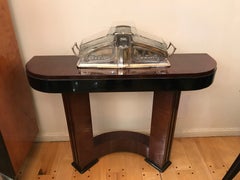
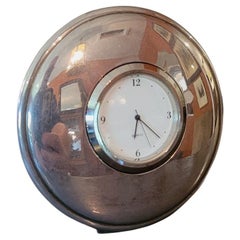
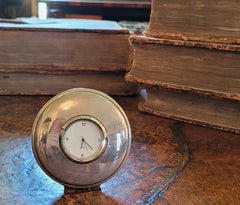
Art Deco Style Chrome or Silveroid Desk Timepiece

Art Deco Style Chrome or Silveroid Desk Timepiece

Located in Dallas, TX

Presenting a lovely Art Deco style chrome or silveroid desk timepiece. Probably made circa 1980. The case is a solid circular shaped chrome or sil...

Category

20th Century American Art Deco Max Blondat Art

Materials

Silver Plate, Chrome

Centerpiece, Jugendstil, Art Nouveau, Liberty, France, 1900

Centerpiece, Jugendstil, Art Nouveau, Liberty, France, 1900

Located in Ciudad Autónoma Buenos Aires, C

Logistics and International Shipping We provide a comprehensive export service so that your only concern is enjoying your acquisition. • Door-to-Door Service: Pieces located in our A...

Category

Early 1900s French Art Nouveau Antique Max Blondat Art
Materials

Silver Plate

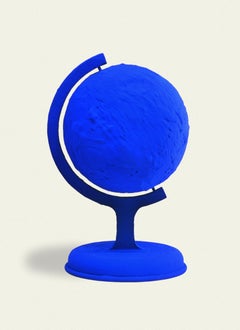
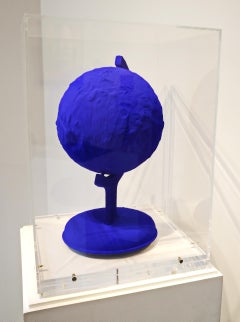
Yves Klein Blue Earth Sculpture IKB Pigment Plaster Cast in Plexiglas Box

Yves Klein Blue Earth Sculpture IKB Pigment Plaster Cast in Plexiglas Box

By Yves Klein

Located in Paris, FR

Concieved in 1957, this edition started to be executed in 1988 IKB pigment and synthetic resin on plaster cast, in plexiglas, signed Rotraut Klein Moquay and numbered HC XXX/L on the base on a label affixed under the base. 300 editions numbered from “1/300” to “300/300″ 50 editions numbered from”HCI/L” à “HC L/L” H. 36 cm With the Plexiglas box: 41.5 x 29.5 x 29.5 cm Yves Klein is an influential French conceptual artist who works in a wide variety of fields. Arguably best known for his use of a very vibrant shade of blue, he began to create his monochrome series in the 1950s by developing and patenting his own signature shade known as IKB or International Klein Blue. Born April 28, 1928 in Nice, the artist founded the New Realism movement with the art critic Pierre Restany...

Category

1980s Post-War Max Blondat Art

Materials

Plaster, Synthetic Resin, Pigment

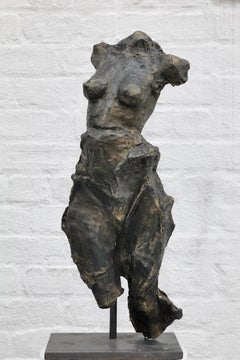
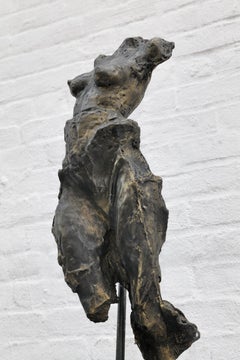
Female Torso in Bronze Finish - Contemporary Figurative Sculpture by Zura

Female Torso in Bronze Finish - Contemporary Figurative Sculpture by Zura

By Zura

Located in Brooklyn, NY

This work encapsulates Zura's deep exploration of the human form, rendered with raw immediacy and emotional resonance. The sculpture’s sensuous curves and rough, tactile surface invi...

Category

21st Century and Contemporary Contemporary Max Blondat Art

Materials

Bronze

WMF Art Nouveau Silver-Plated Mermaid & Fisherman Centerpiece, Germany, c. 1905

WMF Art Nouveau Silver-Plated Mermaid & Fisherman Centerpiece, Germany, c. 1905

By WMF Württembergische Metallwarenfabrik

Located in Saint-Amans-des-Cots, FR

Dimensions: Centerpiece: length 21.65 in. × depth 7.68 in. × height 6.69 in. (55 × 19.5 × 17 cm). Removable glass insert: length 13.27 in. × width 7.40 in. (33.7 × 18.8 cm). Spectac...

Category

Early 1900s German Art Nouveau Antique Max Blondat Art
Materials

Silver Plate, Spelter

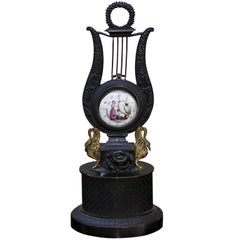
French Regency Gilt Bronze Watch Holder

French Regency Gilt Bronze Watch Holder

$5,800

H 11 in W 4.5 in D 3.5 in

French Regency Gilt Bronze Watch Holder

Located in Charleston, SC

French Regency gilt bronze watch holder with Laurel wreath lyre, gilt swans, and intricate hand chase work on circular base. Watch consist of porce...

Category

19th Century French Antique Max Blondat Art

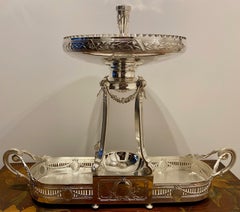
French Art Nouveau Silverplated Centerpiece "Epergne", Ca. 1900

French Art Nouveau Silverplated Centerpiece "Epergne", Ca. 1900

Located in CH

French Art Nouveau Silver-Plated Centerpiece “Epergne” Circa 1900 An elegant French Art Nouveau silver-plated centerpiece, or epergne, dating to around 1900. Designed to hold flower...

Category

Early 1900s French Art Nouveau Antique Max Blondat Art

Materials

Silver Plate

Previously Available Items
Max Blondat (1872-1926) for Sèvres National Manufacture ,  « L'Équilibre » 1925

Max Blondat (1872-1926) for Sèvres National Manufacture , « L'Équilibre » 1925

By Max Blondat, Manufacture Nationale de Sèvres

Located in Saint-Ouen, FR

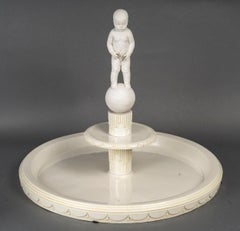
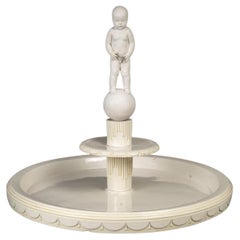
Max Blondat (1872-1926) for Sèvres National Manufacture , « L'Équilibre » ou «Bébé Boule», 1925 A porcelain and biscuit table center-piece composed o...

Category

1920s French Art Deco Vintage Max Blondat Art
Materials

Porcelain

Important French Art Nouveau Cast Bronze Sculpture "First Kiss" by, Max Blondat

Important French Art Nouveau Cast Bronze Sculpture "First Kiss" by, Max Blondat

By Max Blondat, Siot-Decauville

Located in Englewood, NJ

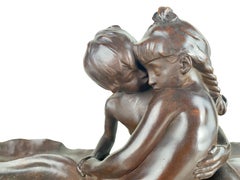
An important and rare French Art Nouveau cast bronze centerpiece titled "First Kiss" by, Max Blondat and cast by Siott Decauville depicting two young children engaging in their first...

Category

Early 20th Century French Art Nouveau Max Blondat Art
Materials

Bronze

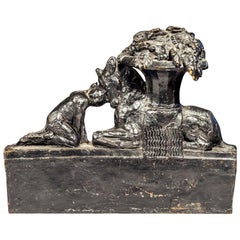
Max Blondat, Donkey and Flowered Fascinator, Bronze, circa 2000, France

Max Blondat, Donkey and Flowered Fascinator, Bronze, circa 2000, France

By Max Blondat

Located in Nice, Cote d' Azur

Max Blondat (1872-1926), Donkey and flowered fascinator, from the original located in the park of the Château de La Versine belonging to the Rothschilds, Bronze with brown patina, ...

Category

Early 2000s French Mid-Century Modern Max Blondat Art

Materials

Bronze

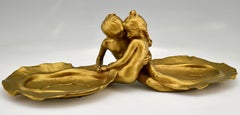
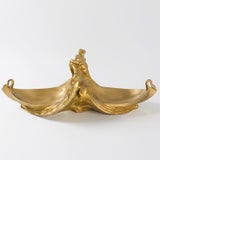
Max Blondat French Art Nouveau Gilt Bronze Vide-Poche

Max Blondat French Art Nouveau Gilt Bronze Vide-Poche

By Max Blondat

Located in New York, NY

A French Art Nouveau gilt bronze vide poche by Max Blondat. Titled "An Embrace". The vide poche features the heads and torsos of a man and a woman, sweeping up from the sides of the dish. Each of the lovers has an arm around the other. Circa 1900. Pictured in: Dynamic Beauty: Sculpture of Art Nouveau Paris, by Macklowe Gallery, The Studley Press, 2011, p. 57. Signed, "MAX-BLONDAT" Founder mark "Siot...

Category

Early 20th Century French Art Nouveau Max Blondat Art
Materials

Bronze

Max Blondat French Art Nouveau Sculpture, "La Perle"

Max Blondat French Art Nouveau Sculpture, "La Perle"

By Max Blondat

Located in New York, NY

A French Art Nouveau patinated bronze figural sculpture, entitled “La Perle,” of a female nude nestled within an oyster shell by Max Blondat, circa 1899. ...

Category

1890s French Art Nouveau Antique Max Blondat Art
Materials

Bronze

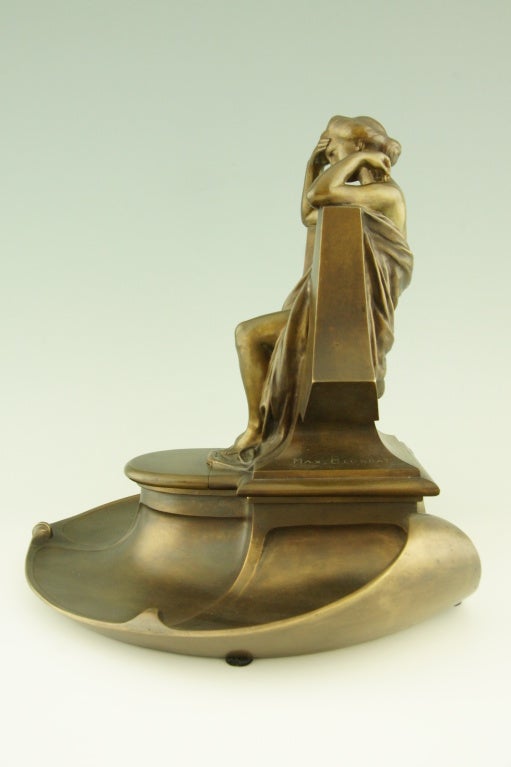
Art Nouveau bronze inkwell by Max Blondat.

Art Nouveau bronze inkwell by Max Blondat.

Sold

H 10.4 in W 10.6 in D 9.8 in

Art Nouveau bronze inkwell by Max Blondat.

By Max Blondat

Located in Antwerp, BE

A bronze inkwell with lady sitting on a throne by Max Blondat (1879-1926) This bronze is illustrated in “Bronzes, sculptors and founders” by H. Berman, Abage. nr. 1765 and on pa...

Category

Early 20th Century French Art Nouveau Max Blondat Art
Materials

Bronze

Max Blondat art for sale on 1stDibs.
Find a wide variety of authentic Max Blondat art available for sale on 1stDibs.
Artists Similar to Max Blondat