Want more images or videos?
Request additional images or videos from the seller
1 of 13

Japanese Collection of Boxwood Carved Netsuke Group of Three

$655.50
£475
€563.97
CA$904.10
A$909.39
CHF 529.88
MX$11,079.65
NOK 6,093.96
SEK 6,251.18
DKK 4,215.31

About the Item

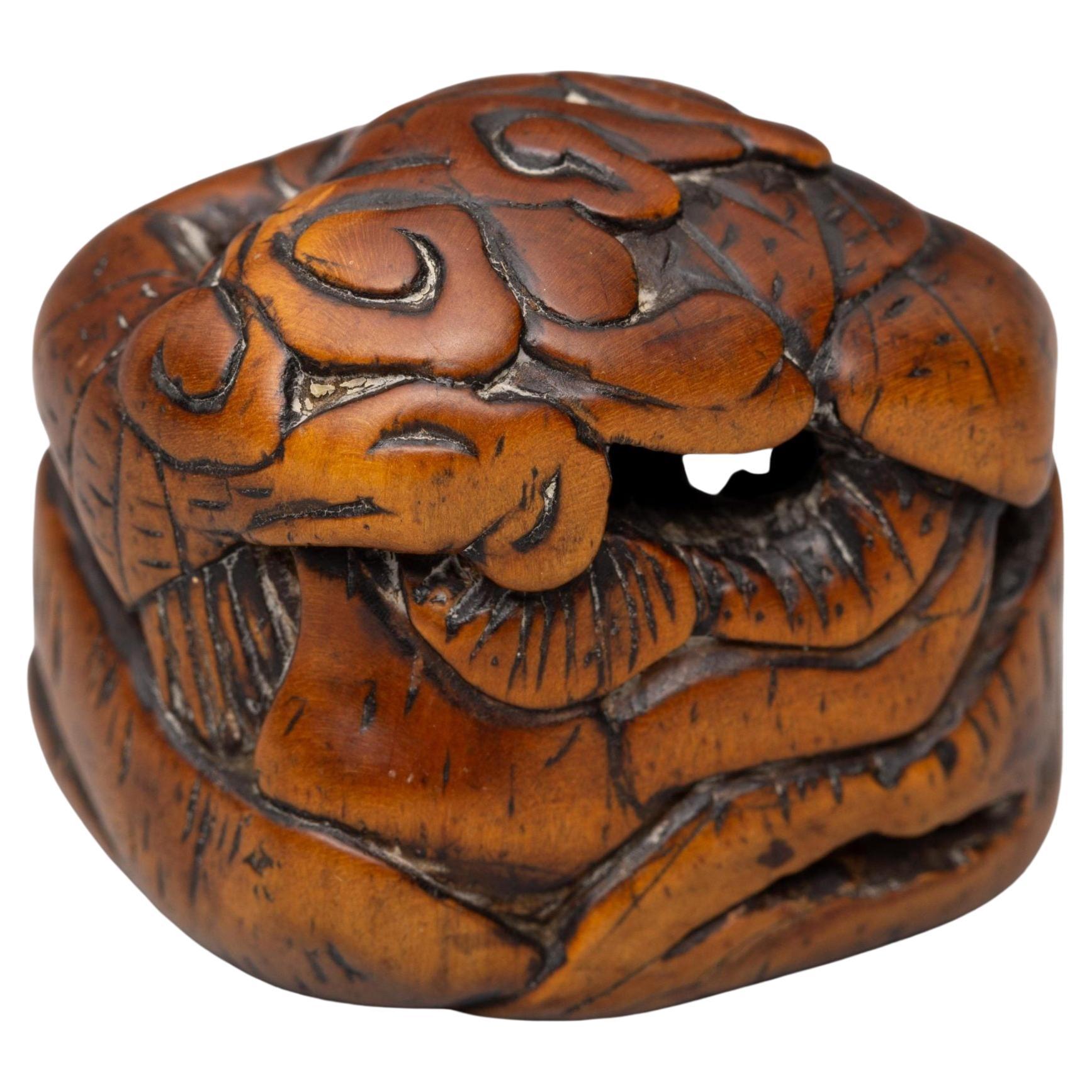
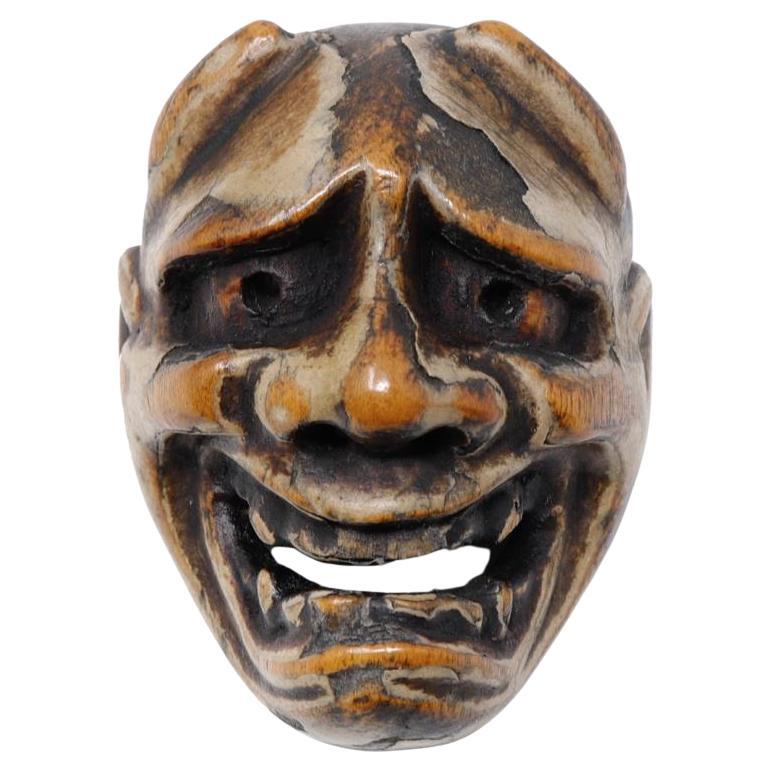
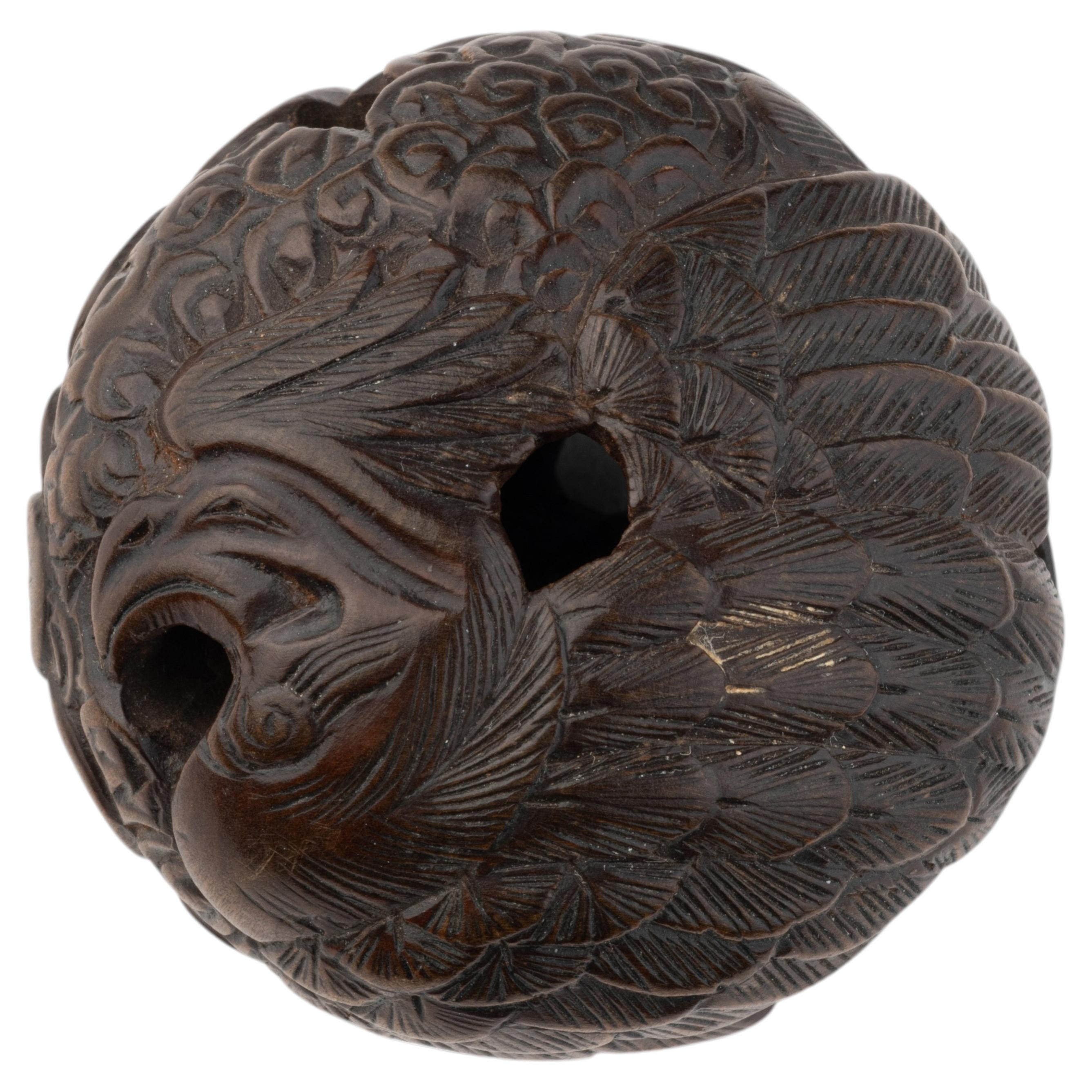
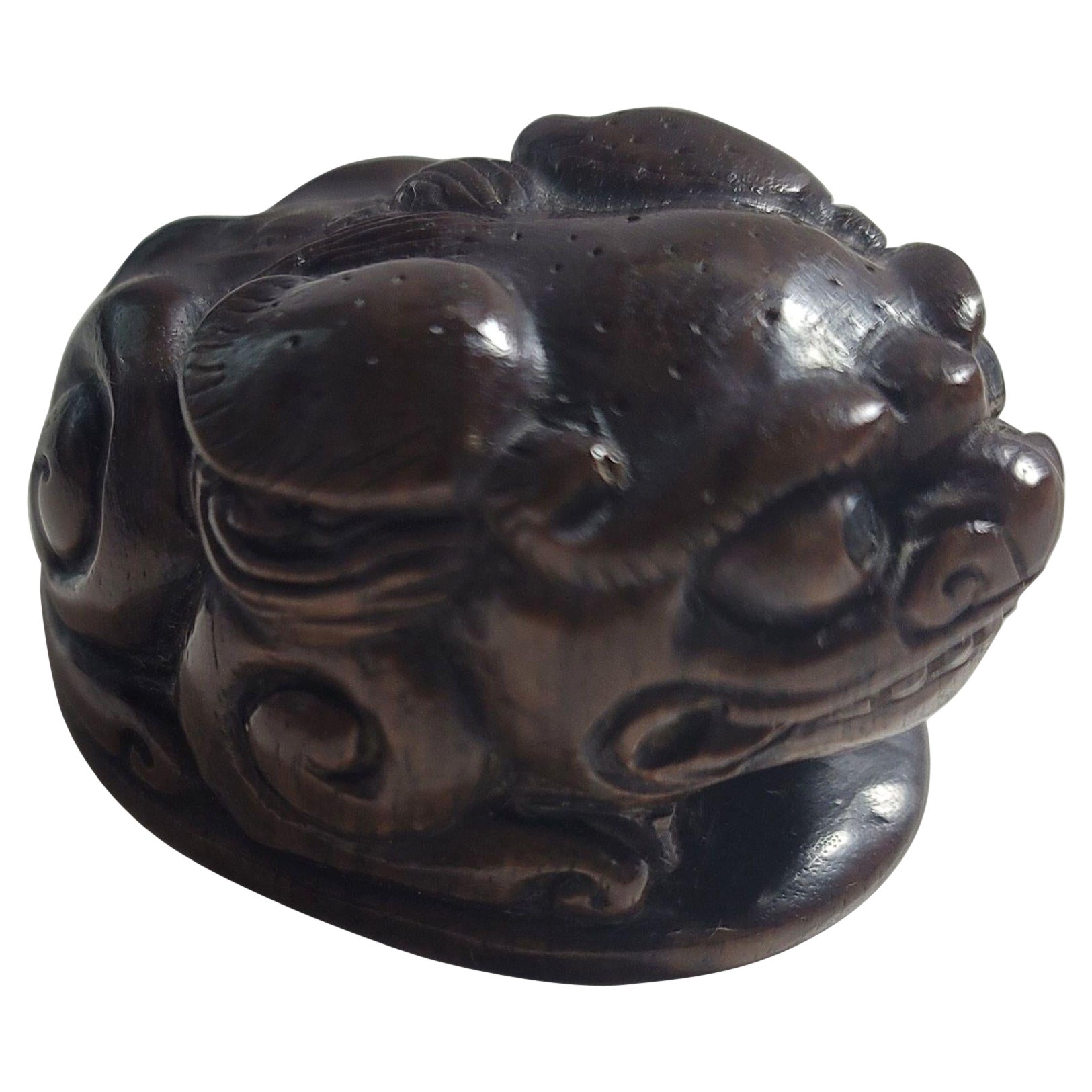
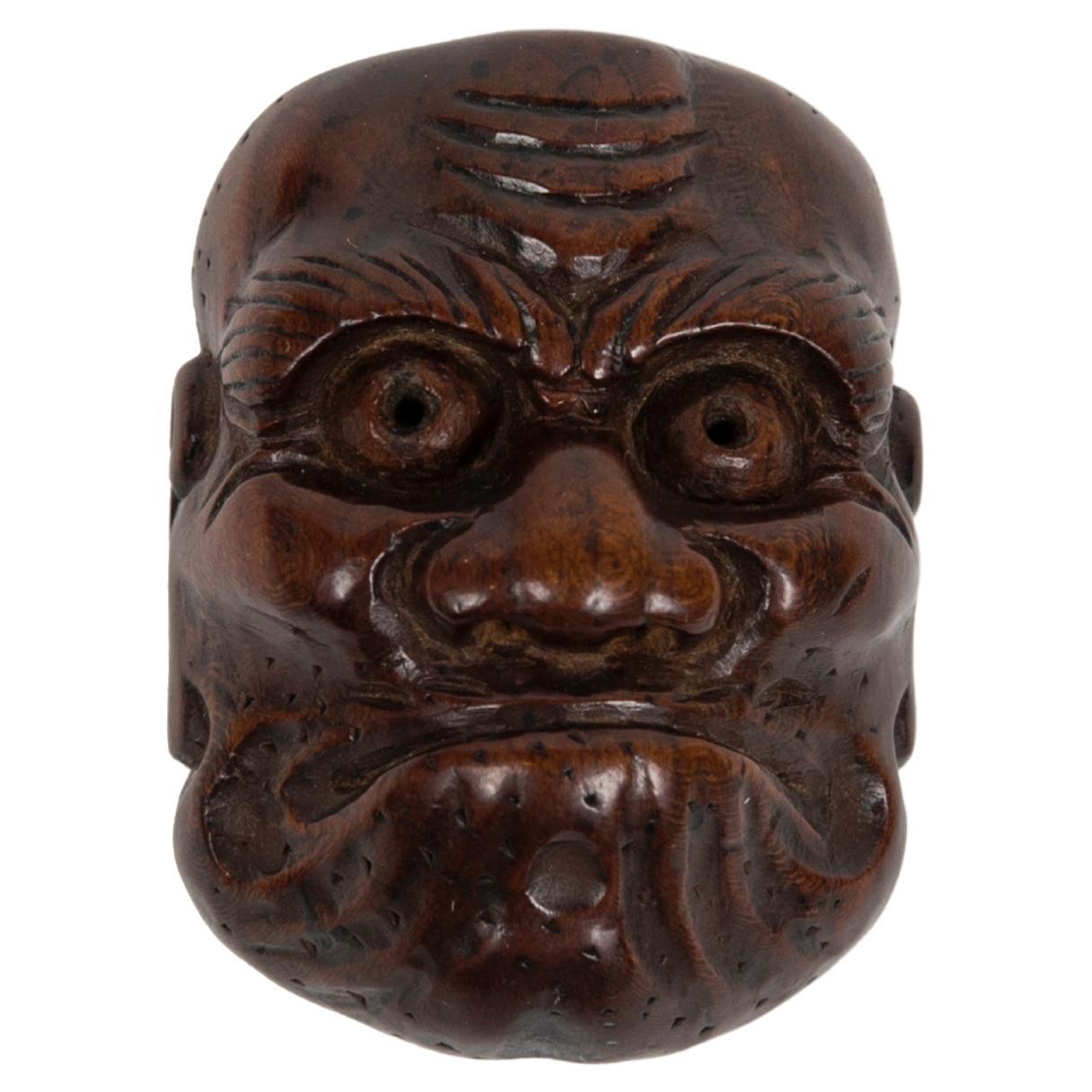
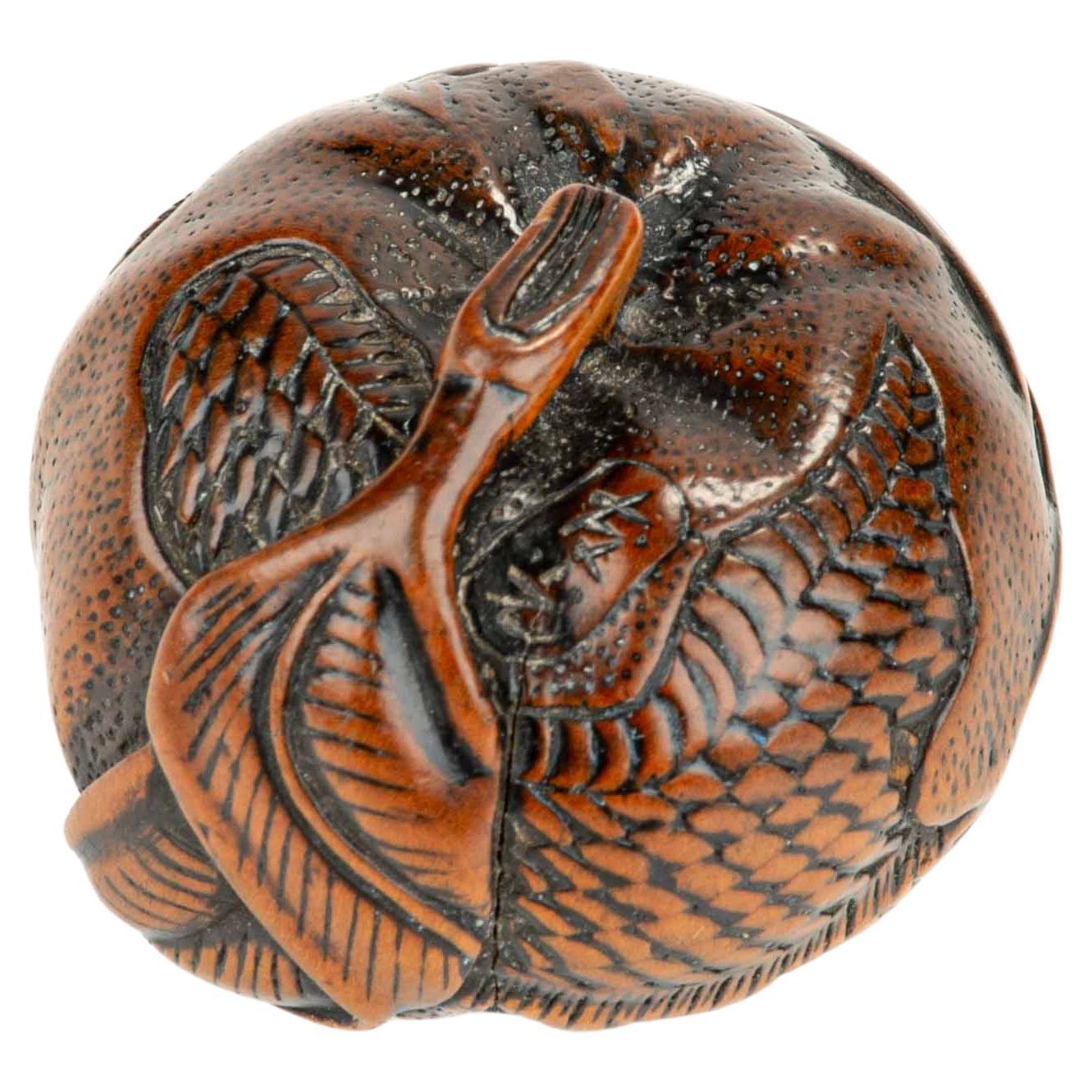
Originating as practical toggles worn at the sash of the kimono, netsuke developed into one of Japan's most distinctive miniature art forms. By the Edo period, master carvers were transforming these utilitarian objects into intricate sculptures inspired by mythology, folklore and everyday life. The post-war revival of netsuke carving continued this tradition, producing finely crafted works that honoured the techniques and aesthetics of earlier generations while appealing to an international audience of collectors. This engaging group of three carvings reflects the imaginative diversity that has long characterised Japanese netsuke. The first depicts a tightly coiled dragon, its sinuous body wrapped in rhythmic bands of finely carved scales. A symbol of strength, wisdom and protection, the creature is animated by alert, dark inlaid eyes and a powerful sense of movement contained within its compact form. Equally unusual is the carving of a twin-headed mermaid, a fantastical subject rarely encountered in traditional netsuke. Executed in richly stained boxwood, the entwined figures combine elements of the mythical and the playful, demonstrating the carver's creativity and technical confidence. Their expressive features and carefully modelled forms reward close examination from every angle. Providing a striking contrast is a cheerful Okame mask carved from tagua nut. Celebrated in Japanese theatre and folklore, Okame embodies joy, good fortune and gentle humour. The smooth, pale surface of the tagua evokes the appearance of ivory, while the reverse reveals the natural dark rind of the material. Rounded cheeks, delicately incised eyes and a warm smile capture the character's enduring charm. The dragon and mermaid both retain small himotoshi cord holes and tribute signatures to the respected master Masatoshi (正利), acknowledging the influence of the traditional Nagoya school of carving. Together, the contrasting materials, subjects and textures create a captivating collection that celebrates the wit, symbolism and artistry at the heart of Japanese miniature sculpture. Condition Presented in good vintage condition overall, with minor wear consistent with age and use. The carvings retain crisp detail and attractive patination, and display beautifully together on the accompanying hardwood stand. We ship internationally, tracked and insured.
  • Dimensions:
    Height: 1.19 in (3 cm)Diameter: 1.97 in (5 cm)
  • Materials and Techniques:
  • Period:
  • Date of Manufacture:
    20thc
  • Condition:
  • Seller Location:
    Nottingham, GB
  • Reference Number:
    1stDibs: LU9003250486672

More From This Seller

View All
Japanese Collection of Boxwood Carved Netsuke Group of Four

Japanese Collection of Boxwood Carved Netsuke Group of Four

Located in Nottingham, GB

Netsuke originated as practical toggles used to suspend personal belongings from the sash of a kimono, evolving during the Edo period into one of Japan's most celebrated miniature ar...

Category

20th Century Sculptures and Carvings

Materials

Boxwood

Japanese Collection of Boxwood Carved Netsuke Group of Three

Japanese Collection of Boxwood Carved Netsuke Group of Three

Located in Nottingham, GB

Netsuke originated in Japan during the Edo period as practical toggles used to secure personal belongings to the sash of a kimono. Over time, these miniature carvings evolved into hi...

Category

20th Century Sculptures and Carvings

Materials

Boxwood

Japanese Collection of Boxwood Carved Netsuke Group of Six

Japanese Collection of Boxwood Carved Netsuke Group of Six

Located in Nottingham, GB

Netsuke emerged during the Edo period as practical toggles used to suspend personal belongings from the sash of a kimono. Over time, these functional objects evolved into highly soph...

Category

20th Century Sculptures and Carvings

Materials

Boxwood

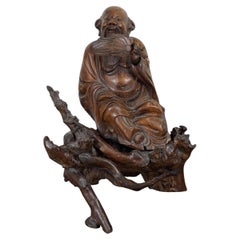
Chinese Carved Hardwood Sculpture of Zhongli Quan on Naturalistic Rootwood Stand

Chinese Carved Hardwood Sculpture of Zhongli Quan on Naturalistic Rootwood Stand

Located in Nottingham, GB

Among the most beloved figures of Daoist tradition are the Eight Immortals, each distinguished by their unique attributes and symbolic virtues. Their images were widely incorporated ...

Category

Antique Late 19th Century Sculptures and Carvings

Materials

Wood

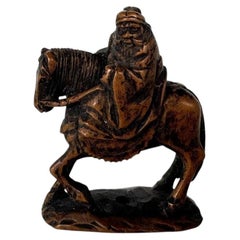
Japanese Meiji Boxwood Netsuke of a Wise Man on Horseback by Masayuki, 19th C

Japanese Meiji Boxwood Netsuke of a Wise Man on Horseback by Masayuki, 19th C

Located in Nottingham, GB

A fine Japanese boxwood netsuke dating to the late 19th century, depicting a wise man seated upon a horse. Attributed to Masayuki, the compact composition is beautifully observed and...

Category

Antique Late 19th Century Sculptures and Carvings

Materials

Boxwood

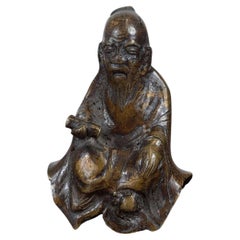
Rare Chinese Parcel-Gilt Bronze Figure of Lu Dongbin, Ming ca. 1600

Rare Chinese Parcel-Gilt Bronze Figure of Lu Dongbin, Ming ca. 1600

Located in Nottingham, GB

From the Ming dynasty onwards, bronze figures of Daoist deities and immortals occupied an important place within the domestic interior. They appeared on household altars, scholar's desks, incense burners and ritual stands, serving both devotional and decorative purposes. Parcel gilding was frequently applied to emphasise significant details, creating a striking interplay between brilliant gold highlights and the darker bronze beneath. Among the most revered subjects were the Eight Immortals, whose distinctive attributes made them immediately recognisable and whose presence conveyed blessings of longevity, protection and prosperity. This finely cast figure represents Lu Dongbin, the scholar-swordsman and perhaps the most celebrated of the Eight Immortals. Associated with wisdom, self-cultivation and the triumph of virtue over temptation, Lu Dongbin remains one of the most enduring figures in Daoist tradition. He is depicted seated in a contemplative pose, his ample robes gathered around him in deeply modelled folds that pool gracefully at the front of the composition. The torso leans slightly forward, lending the figure an engaging sense of immediacy and introspection. His hair is arranged in a high topknot, while a long flowing beard, articulated with finely incised striations, frames a dignified and authoritative expression. Held delicately in his left hand is a rolled scroll, an attribute that reflects his scholarly nature and distinguishes him within the Daoist pantheon. His right hand is concealed within the sleeve of his robe in a gesture of restraint and quiet composure. Despite its compact scale, the figure possesses a remarkable sense of weight and presence, with refined modelling evident in the facial features, hands and drapery. Traces of the original parcel gilding survive across the chest, sleeves and folds of the garment, providing flashes of luminosity against the rich brown patina acquired over centuries. To the reverse, an oval aperture and unfinished attachment points indicate that the figure was originally mounted to a larger object, most likely an incense burner, altar fitting or ritual stand. The open underside and visible casting pits are entirely consistent with workshop practices of the late Ming and early Qing periods, offering an appealing insight into the methods of manufacture. Combining devotional significance, sculptural refinement and the atmospheric beauty of age, this early bronze is a compelling example of Chinese Daoist art...

Category

Antique Early 1600s Sculptures and Carvings
Materials

Bronze

You May Also Like

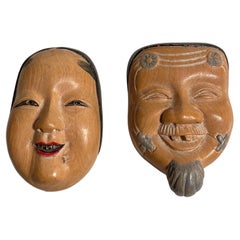
Japanese Antique 2 Wooden Netsuke Charms Okinamen and Onnamen

Japanese Antique 2 Wooden Netsuke Charms Okinamen and Onnamen

Located in Paris, FR

These are wooden netsukes made in Japan around showa period 1980s. One is called 'Onnamen' and there one is called 'Okinamen'. These are masks that we use during Noh theater. Netsu...

Category

Late 20th Century Japanese Showa Animal Sculptures

Materials

Wood

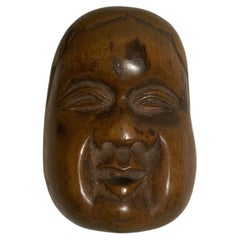
Netsuke in the form of a No mask representing the character of Hyottoko

Netsuke in the form of a No mask representing the character of Hyottoko

Located in PARIS, FR

Boxwood netsuke representing the mask of Hyottoko in Noh theatre. Hyottoko is a legendary comic character, considered to be a fire god in certain regions of north-east Japan. The sha...

Category

Antique Late 19th Century Japanese Edo Sculptures and Carvings
Materials

Boxwood

Japanese Professional sneezer Boxwood Netsuke

Japanese Professional sneezer Boxwood Netsuke

Located in PARIS, FR

Boxwood netsuke of a seated professional sneezer depicted as an old man with his right hand raised, holding an stick to tickle himself. His head is slightly raised, his eyes practica...

Category

Antique Late 18th Century Japanese Edo Sculptures and Carvings
Materials

Boxwood

Old Wooden Netsuke Japanese Figural Figure Meiji Period 19/20th Century

Old Wooden Netsuke Japanese Figural Figure Meiji Period 19/20th Century

Located in Amsterdam, Noord Holland

Lovely and very detailed piece. Unsigned. Japan 19th or 20th century. Weight: 12 grams Provenance: Collected in the 1980’s. From the collection of Clemens Merkelbach van Enkhuize...

Category

20th Century Japanese Meiji Figurative Sculptures

Materials

Wood

Japanese Antique Wooden Netsuke 'Onnamen' 1950s

Japanese Antique Wooden Netsuke 'Onnamen' 1950s

Located in Paris, FR

This is an antique netsuke made in Japan around Showa period 1950s. Dimensions: 4.5 x 3.5 x H2.2 cm Sculpture: Onnamen Era: 1950s (Showa) Netsuke is a miniature sculpture, origin...

Category

Late 20th Century Japanese Showa Sculptures and Carvings
Materials

Wood

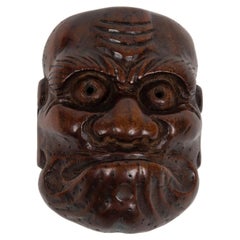
Netsuke in the form of a No mask representing the character of Obeshimi

Netsuke in the form of a No mask representing the character of Obeshimi

Located in PARIS, FR

Wooden netsuke depicting the Obeshimi mask in Noh theater. Obeshimi is a demon characterized by thick eyebrows, eyes that seem to protrude from the face and a closed mouth. Signed ...

Category

Antique Late 19th Century Japanese Meiji Sculptures and Carvings

Materials

Boxwood