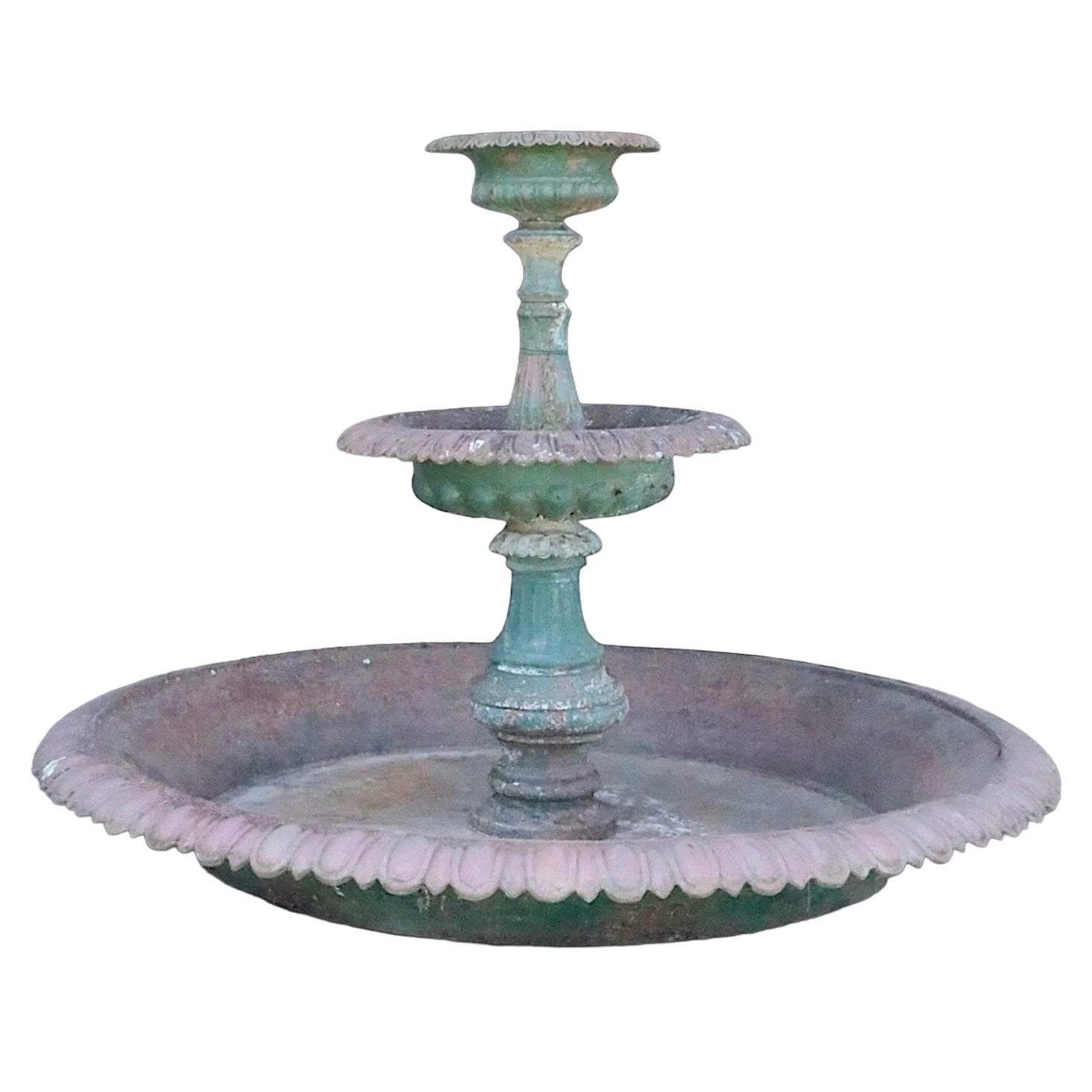
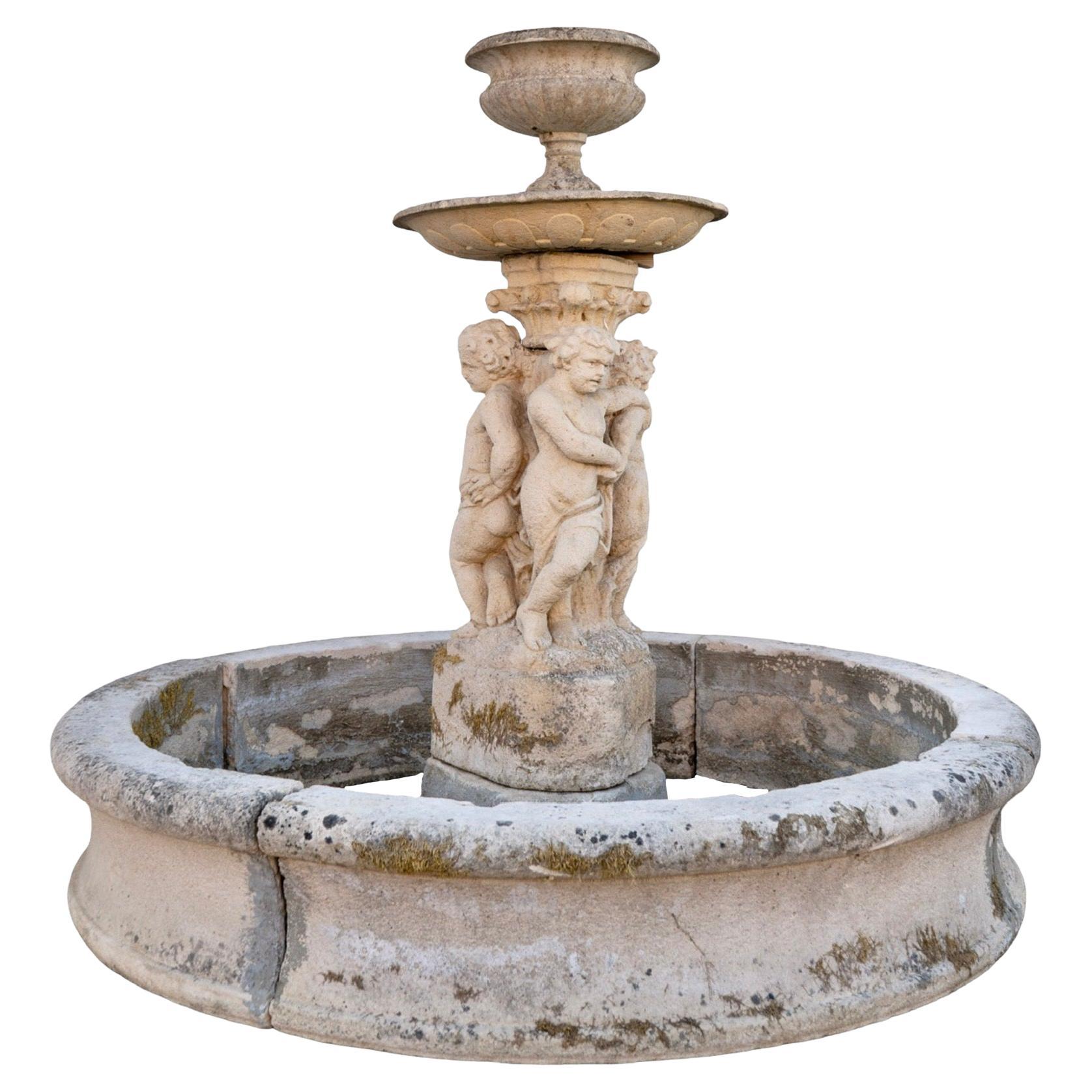
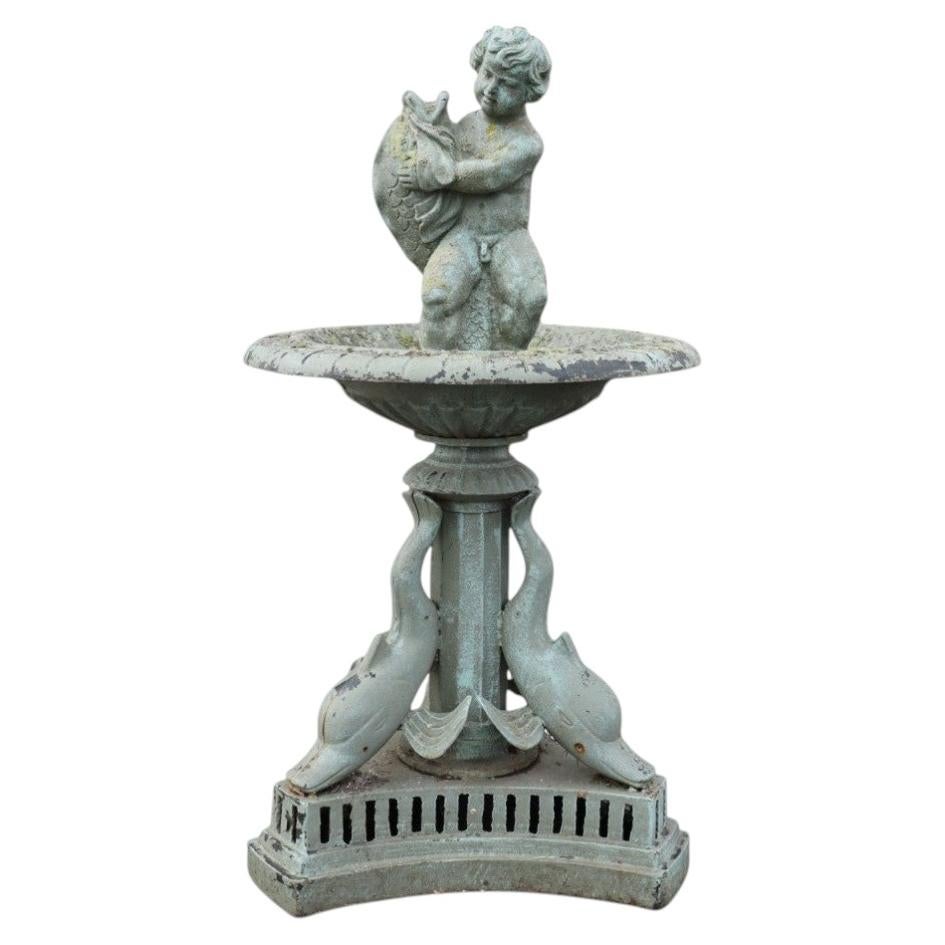
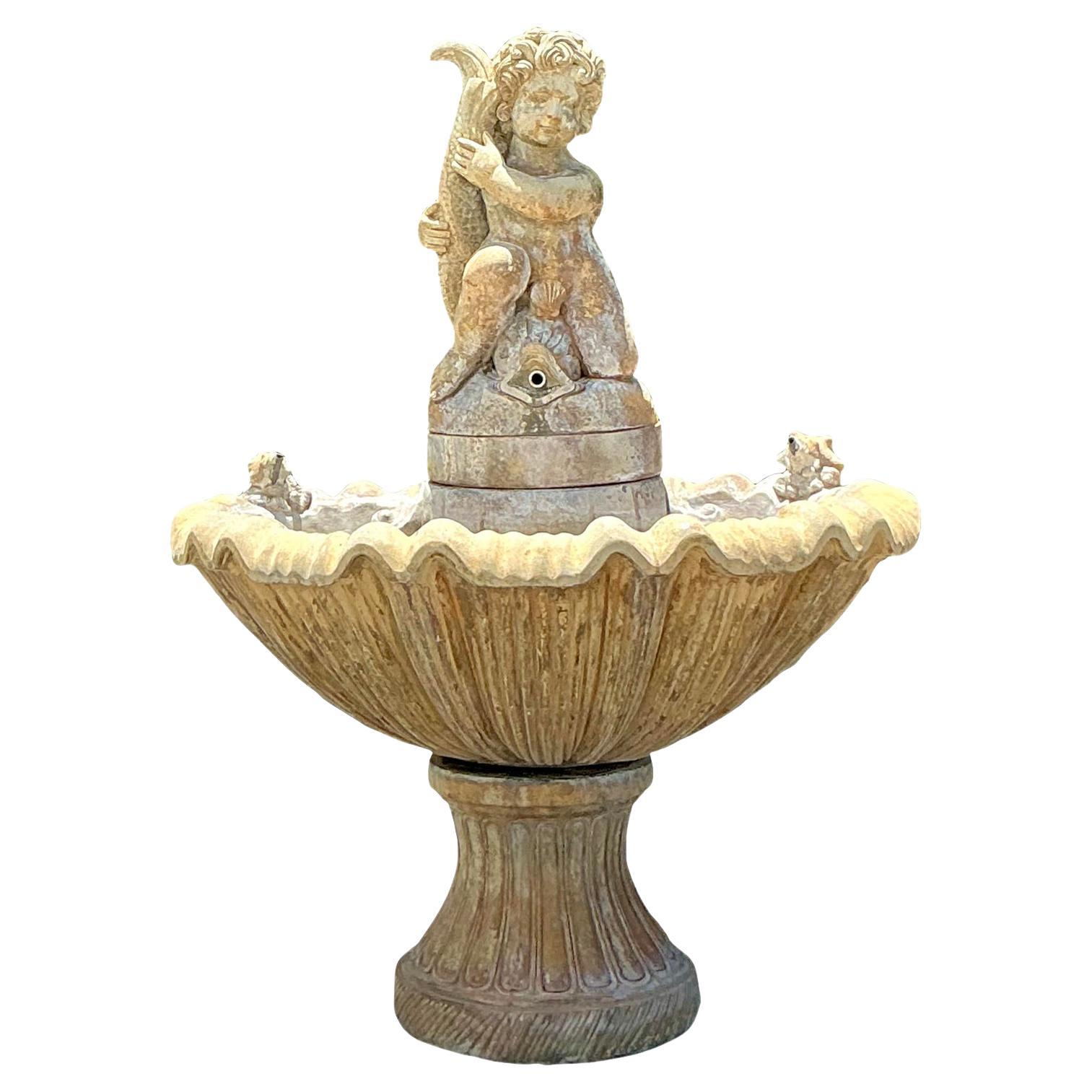
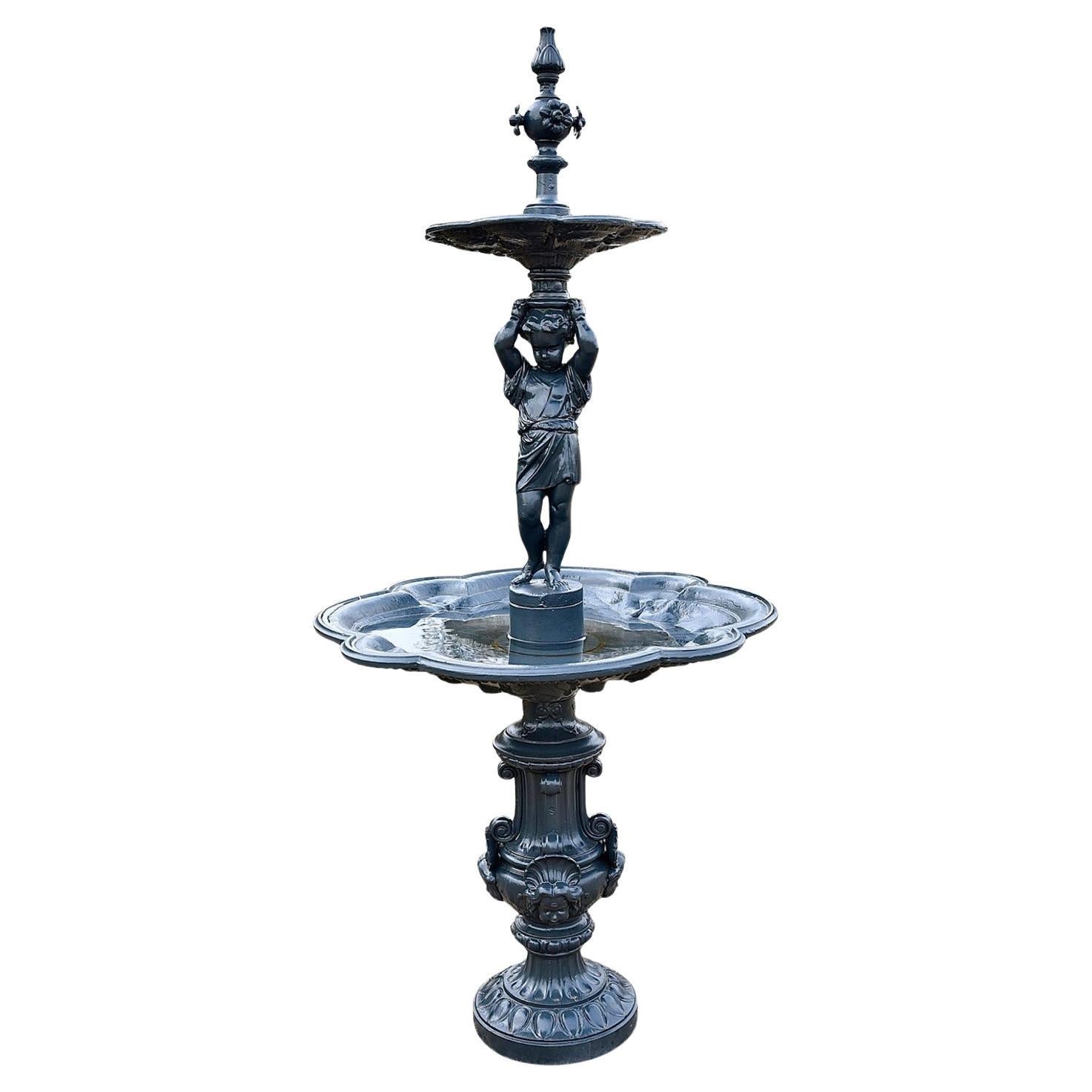
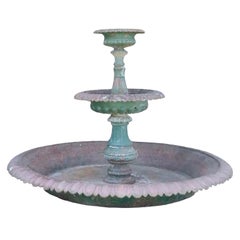
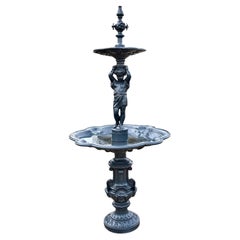
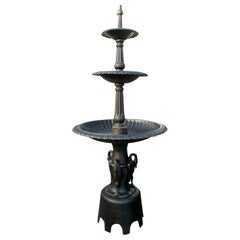
Mid-19th Century monumental Neoclassical triple-basin iron fountain with sculptural motif of children by Val d'Osne Foundry, France
By: Val d'Osne Foundry
Material: iron, metal
Technique: cast, molded, metalwork, forged, hammered
Dimensions: 59 in x 126 in
Date: Mid-19th Century
Style: Neoclassical, Empire
Place of origin: France
An elegant three-tier fountain that serves as a remarkable example of 19th-century cast iron craftsmanship, intended for a formal garden or estate. Cast in iron with a weathered patina, the fountain merges ornamental richness with sculptural presence. The composition is vertically structured around a central column supporting three circular basins. The lower section is the visual and thematic core of the piece, featuring a wide bowl supported by a cylindrical base adorned with figural reliefs.
At the pedestal’s base, three full-round putti stand out in high relief, each engaged in agricultural tasks. Some elements suggest they are seasonal or pastoral allegories, like the use of a sickle and a sheaf of wheat. Their rounded forms, softly modeled features, and flowing drapery recall Neoclassical influences, while the textural aging of the surface adds historical depth. Above, the second tier features smaller putti nestled beneath the middle bowl, their posture more restrained, complementing the dynamism below. The upper basins are delicately fluted, their rim detailed with botanical ornamentation that echoes the natural surroundings.
Balanced and harmonious, it embodies the romantic ideal of nature tamed through art, offering timeless elegance for classical garden settings or curated heritage collections. Note that the lower circular basin, the water reservoir, is not included as part of this lot.
The piece was commissioned as part of the garden ornamentation of a private estate located in El Arrayán, an enclave within the exclusive and expansive residential district of Lo Barnechea in Santiago de Chile. The residence was designed by architect Cristian Groette and originally owned by Flavián Levine (1917–2006), a prominent Chilean economist and writer.
Levine was closely linked to the founding of CORFO (Corporación de Fomento de la Producción) and CAP (Compañía de Acero del Pacífico), two cornerstone institutions in Chile’s industrial development. He also served as president of the National Commission for the Automotive Industry and was known for his intellectual contributions to economic thought. A figure of cultural significance, Levine maintained close friendships with important figures, including the politician and literary author Pablo Neruda.
Founded in 1835 by Jean-Pierre-André Victor, the Val d'Osne foundry quickly became one of France’s most renowned producers of ornamental cast iron. Pioneering this technique, the company elevated the medium from industrial use to a refined artistic expression, producing everything from fountains, memorials, and equestrian monuments to busts, statues, and architectural reliefs—secular and religious alike. Though interest waned after WWII, the 1986 opening of the Musée d’Orsay marked the revival of art cast iron’s cultural value. Today, Val d’Osne’s legacy lives on through preserved works in urban landscapes and museum collections worldwide.
As previously mentioned, the piece was acquired in Chile, where it was originally located. It was later transported to Buenos Aires, Argentina, where it underwent professional conditioning and is currently in storage.