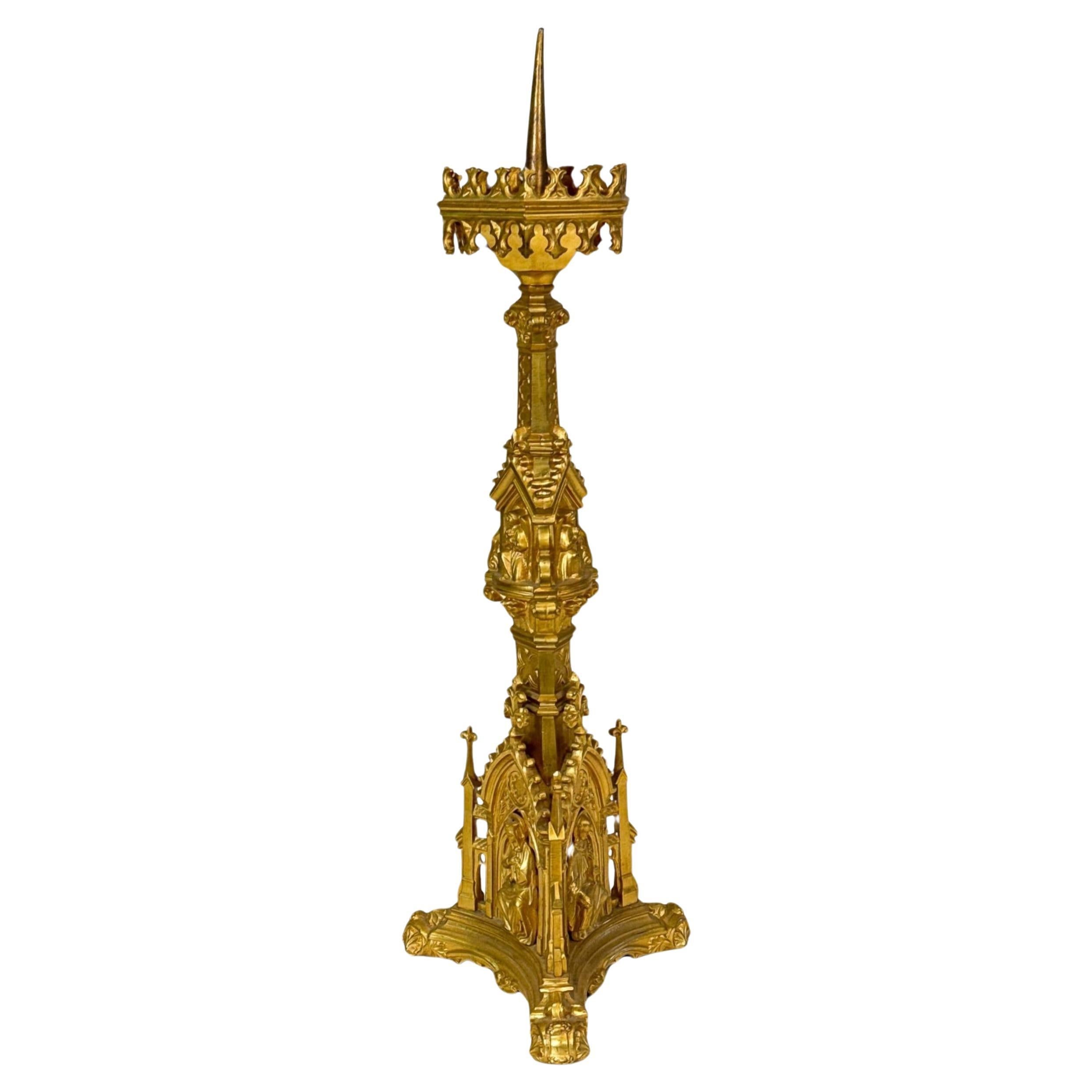
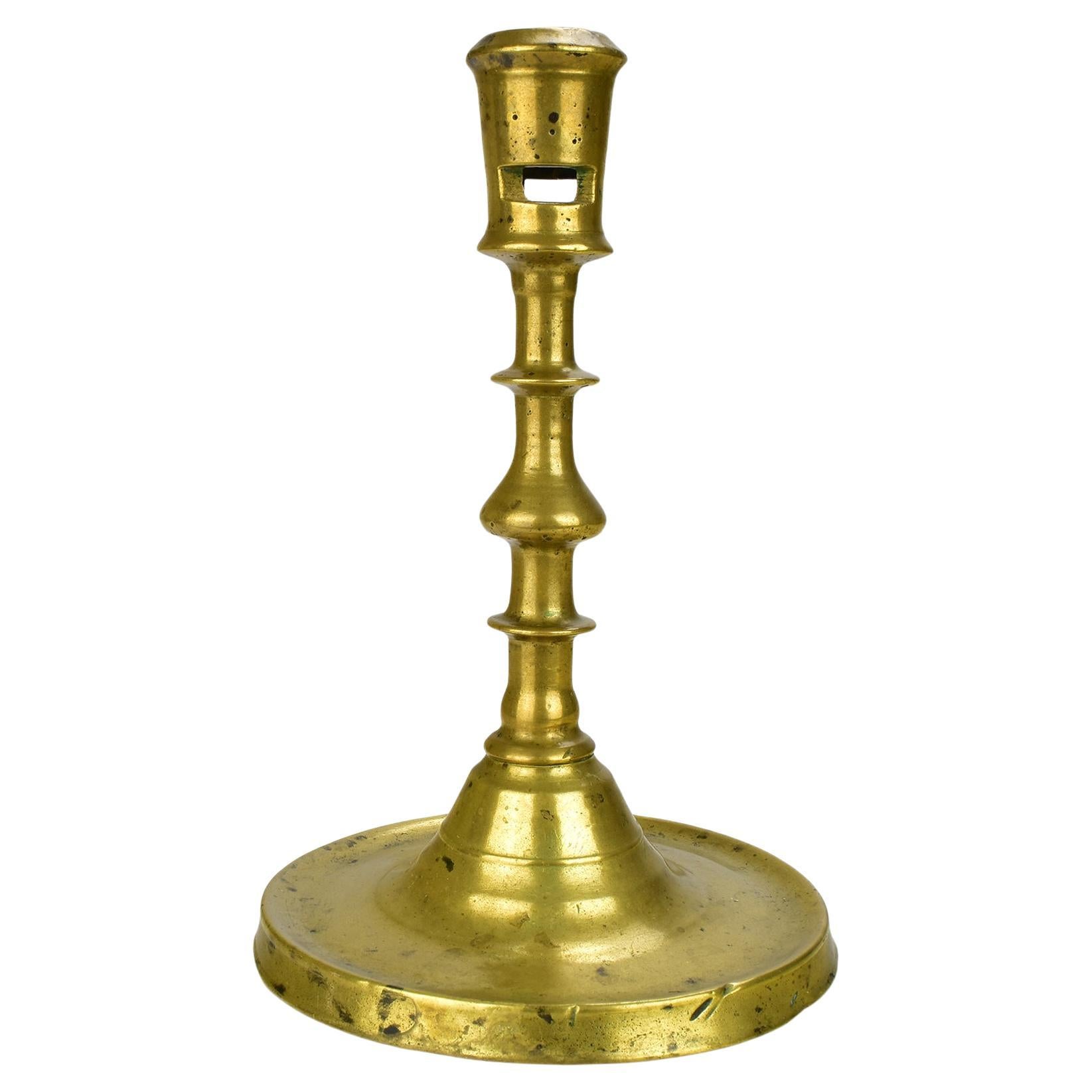
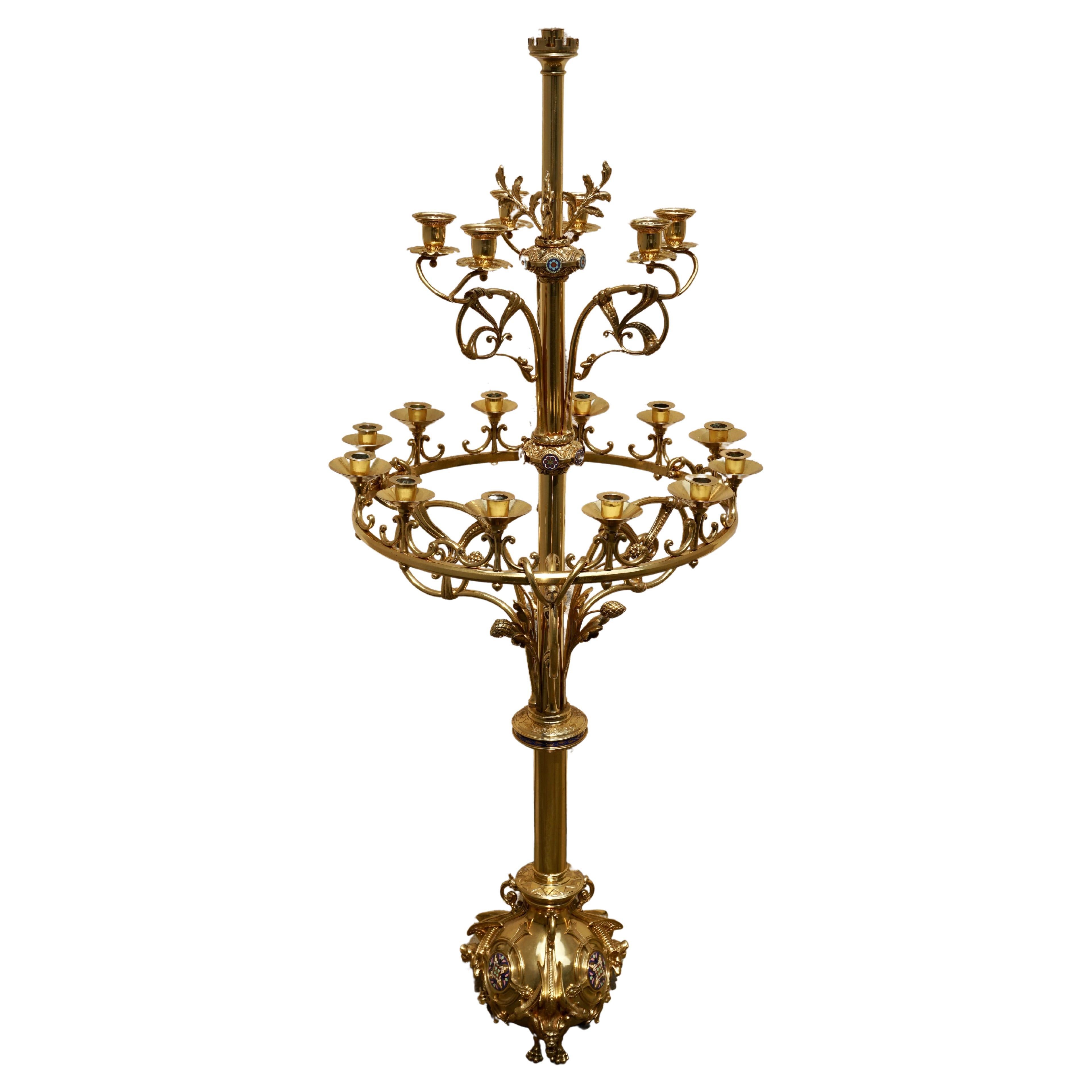
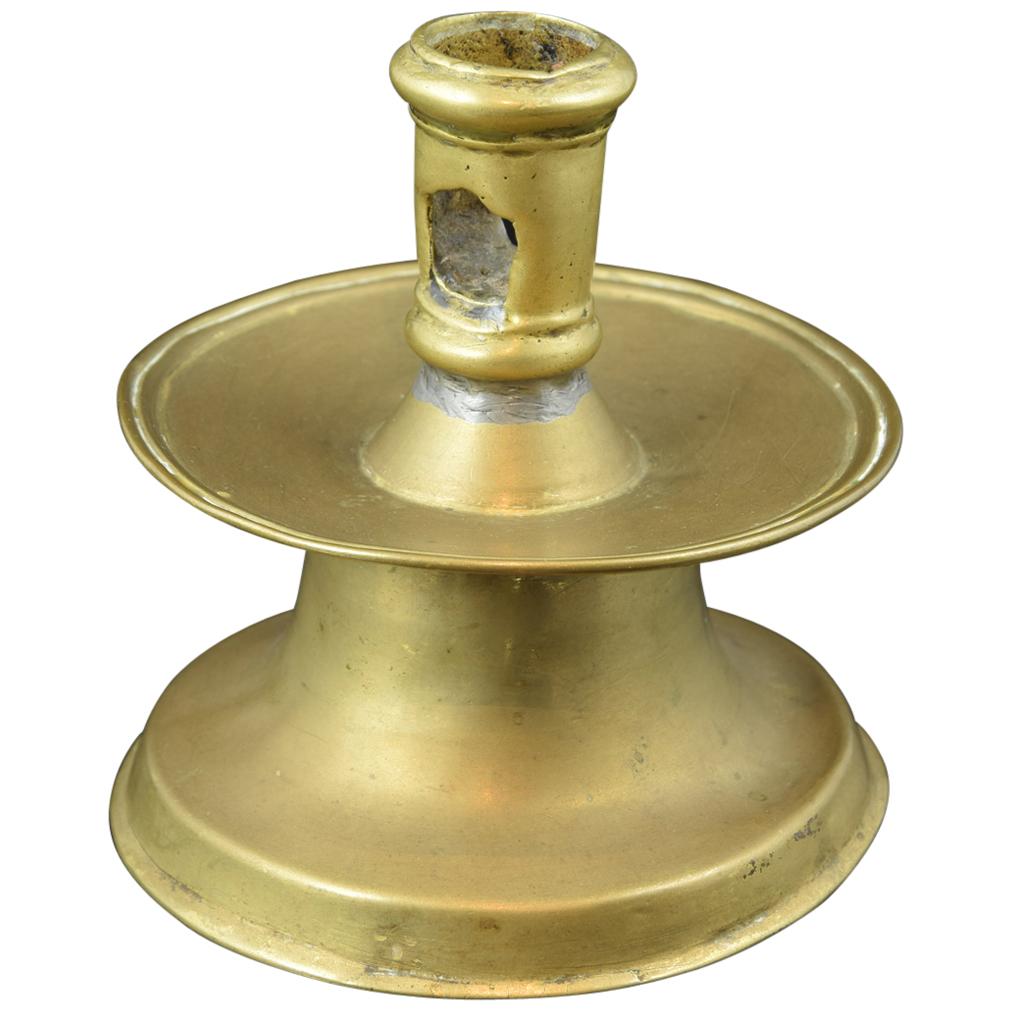
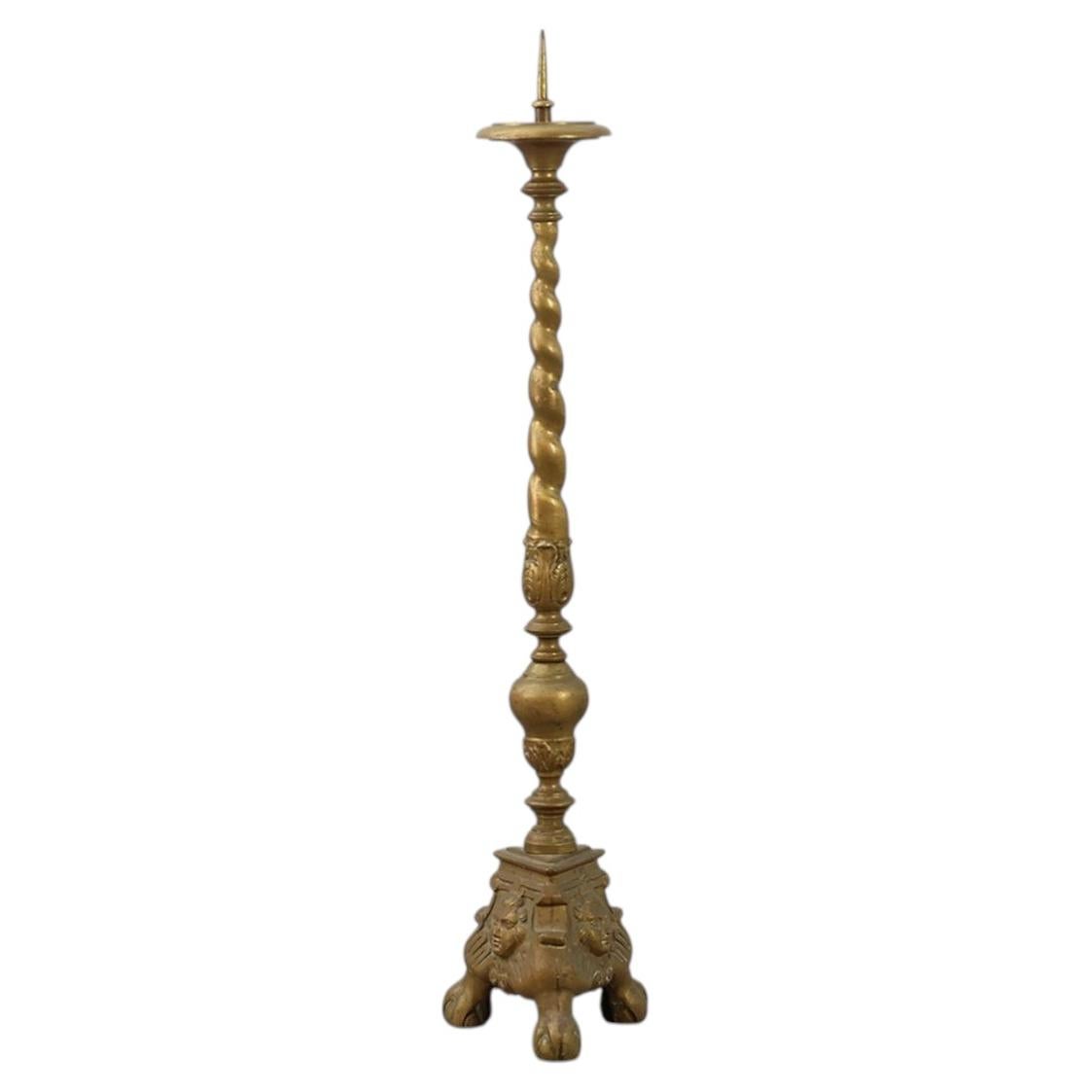
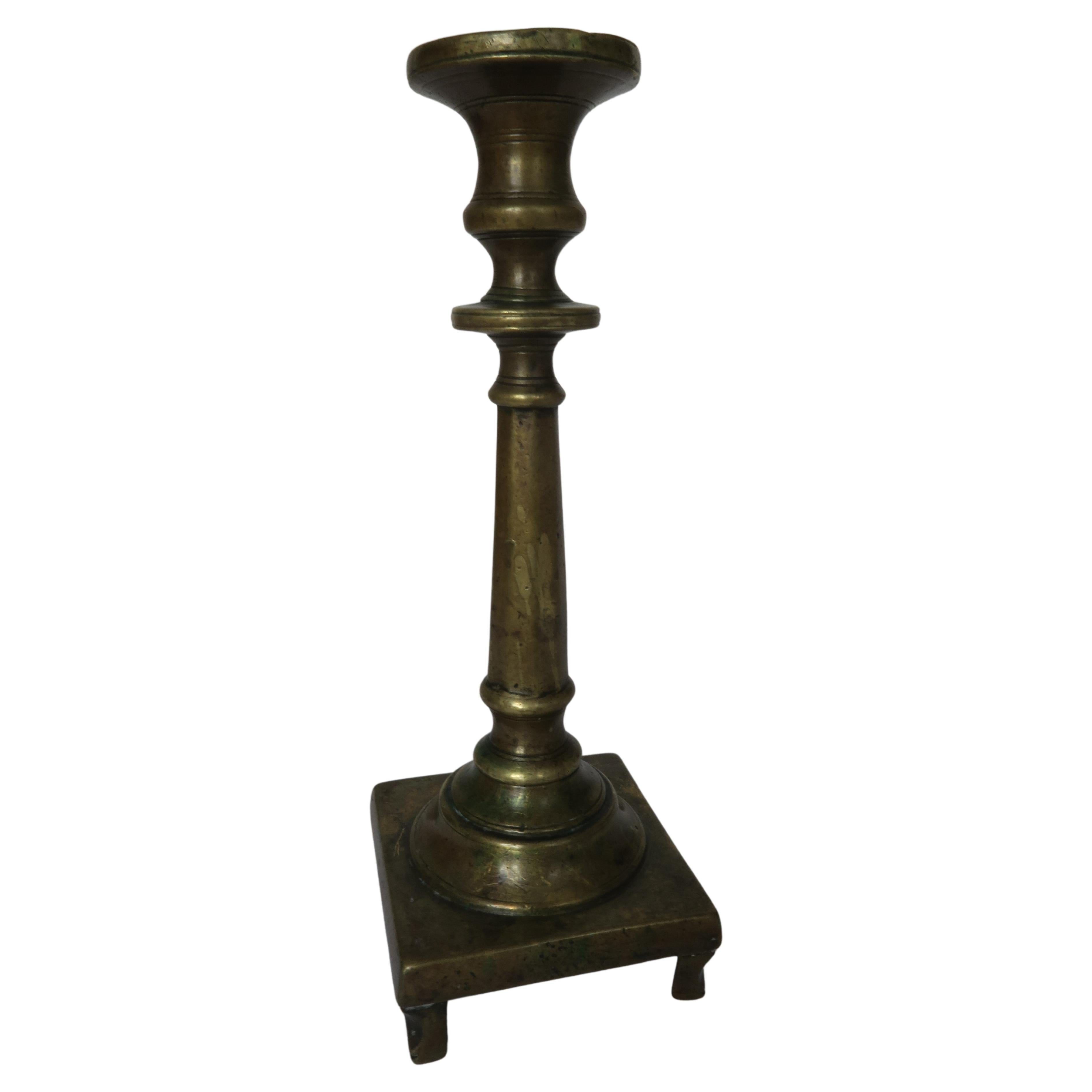
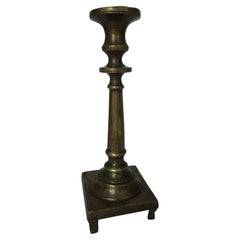
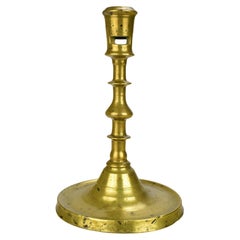
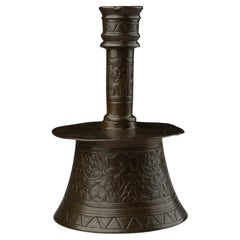
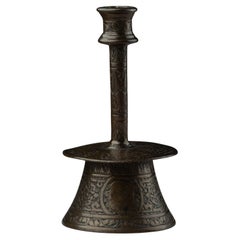
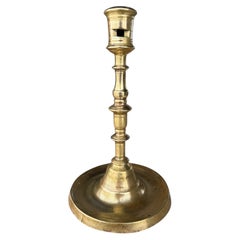
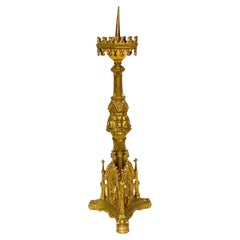
A rare and exceptionally atmospheric Late Gothic ecclesiastical pricket candlestick, hand-crafted during the closing decades of the medieval period. Standing an impressive 65 cm in height, this remarkable survivor embodies the architectural elegance and devotional craftsmanship associated with the great churches, monasteries, and castles of late 15th and early 16th century Europe.
The candlestick is masterfully turned from hardwood, displaying a beautifully balanced architectural profile of compressed baluster and bulbous forms inspired by the vertical rhythm of Gothic columns. It retains a highly desirable centuries-old painted polychrome surface, with layers of deep green, warm ochre, cream, and natural wood emerging through honest wear accumulated over more than five centuries. This untouched surface preserves the authentic character and devotional use of the object, creating a rich patina impossible to reproduce.
Crowning the shaft is its original hand-forged wrought iron pricket assembly, featuring a finely pierced circular gallery decorated with repeating Gothic trefoil motifs. Rising from its center is the original forged iron spike, designed to secure the large beeswax candles traditionally used in medieval churches and chapels. The pierced iron gallery served both as a decorative element and as a practical guard for molten wax, while reflecting the same Gothic vocabulary found in contemporary cathedral screens, choir stalls, and architectural ironwork.
Unlike later Baroque altar furnishings, Gothic pricket candlesticks were conceived with a restrained vertical elegance, emphasizing proportion and craftsmanship rather than excessive ornamentation. The harmonious relationship between the turned wooden shaft and the forged iron crown illustrates the collaboration between medieval woodturners and blacksmiths, whose work combined functionality with refined artistic expression.
Throughout Europe, many medieval church furnishings were replaced, repainted, or destroyed during the religious reforms and stylistic changes of the 16th through 18th centuries. As a result, authentic Gothic candlesticks retaining both their original forged ironwork and early painted decoration have become increasingly scarce. The survival of this example with its untouched historic surface makes it especially desirable to collectors of medieval art and ecclesiastical furnishings.
Such candlesticks would originally have illuminated:
-Gothic churches and cathedrals
- Benedictine and Cistercian monasteries
-Castle chapels of noble families
-Private devotional chapels within aristocratic residences
The restrained Gothic ornament, forged iron craftsmanship, and surviving medieval paint combine to create an object of remarkable historical presence. Today it stands not merely as a liturgical furnishing but as an authentic witness to the craftsmanship and devotional culture of late medieval Europe.
A distinguished and highly decorative museum-quality example, equally suited to a major collection of medieval art, an ecclesiastical collection, or an exceptional historic interior.
Height: 65 cm
Date: Circa 1475–1525
Origin: France or Central Europe (possibly France, Southern Germany, Austria, or Northern Italy)
Materials: Hardwood with original polychrome decoration, hand-forged wrought iron
Condition: Excellent antique condition with original centuries-old surface, expected wear, old inactive woodworm, and an outstanding authentic patina consistent with its age and historic use.