Video Loading
Want more images or videos?
Request additional images or videos from the seller
1 of 19

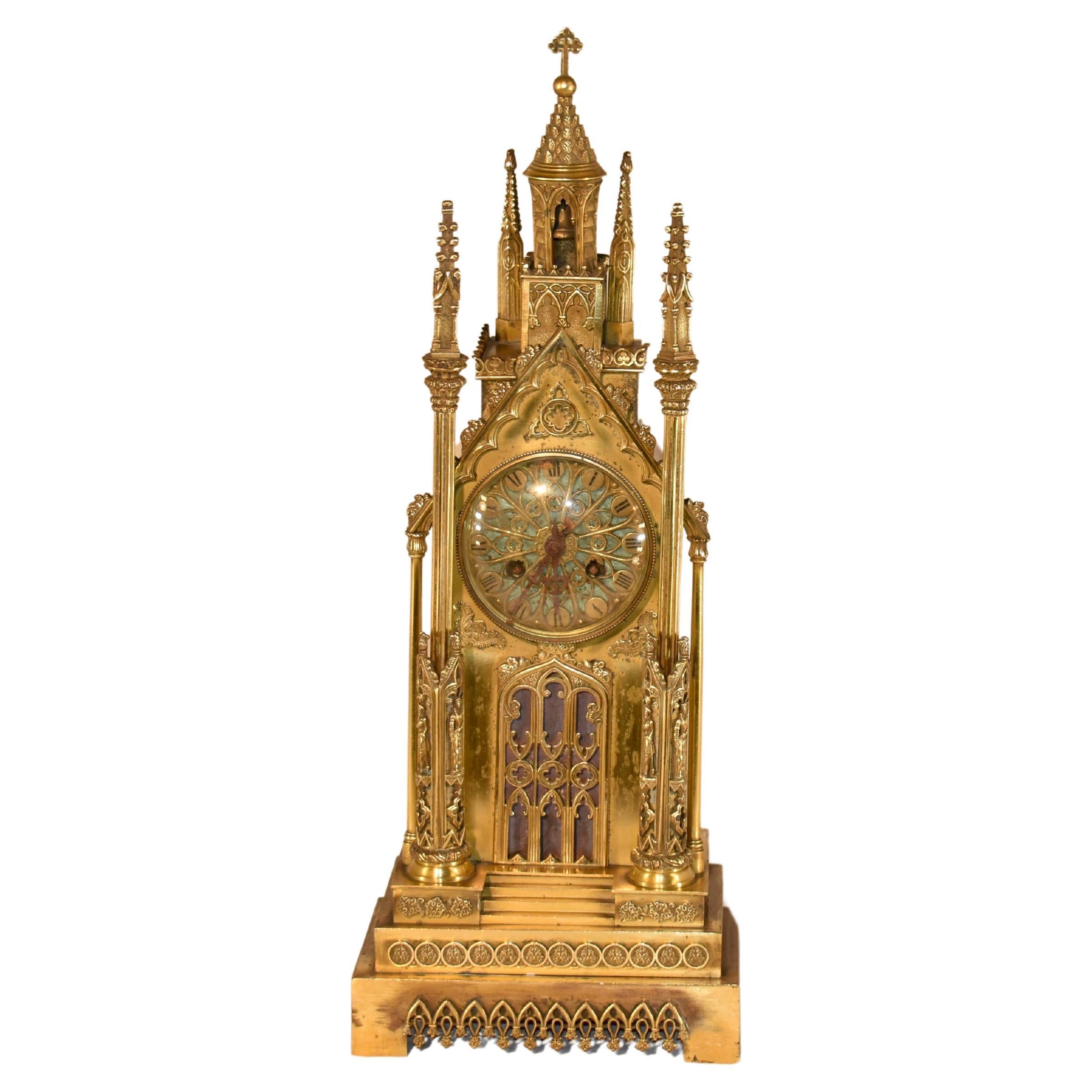
Second Empire Gothic Cathedral Clock and Garniture

$8,000per set
£6,052.29per set
€7,073.20per set
CA$11,449.70per set
A$11,633.88per set
CHF 6,590.95per set
MX$141,555.60per set
NOK 77,284.18per set
SEK 77,705.23per set
DKK 52,911.64per set

About the Item

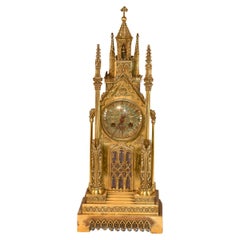
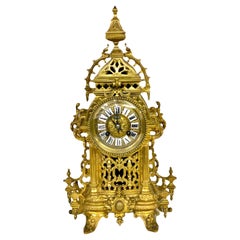
A mid 19 century French Gilt Bronze Gothic style mantel clock and garniture which the French call " A la Cathedrale". The three pieces are of finely chased and gilded bronze; the clock is cathedral shaped with its reticulated columns, tracery, mouldings and side windows’ The clock has a silvered dial and and has its original silk string suspension movement ringing the hours and halves on a bell. The striking mechanism also activates a decorative bell on top of the steeple.
  • Similar to:
    Pierre-François Feuchère (Metalworker)
  • Dimensions:
    Height: 21 in (53.34 cm)Width: 9 in (22.86 cm)Depth: 5 in (12.7 cm)
  • Sold As:
    Set of 3
  • Style:
    Gothic Revival (Of the Period)
  • Materials and Techniques:
  • Place of Origin:
  • Period:
  • Date of Manufacture:
    circa 1845
  • Condition:
    Wear consistent with age and use. Measurements below are for the clock; candlesticks are 20" H.
  • Seller Location:
    Vancouver, CA
  • Reference Number:
    1stDibs: LU4631214675602

More From This Seller

View All
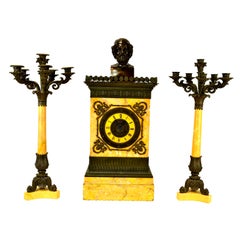
Charles X Clock and Garniture

Charles X Clock and Garniture

By Claude Galle

Located in Vancouver, British Columbia

A large Charles X Sienna marble and patinated bronze clock and matching candelabra. The architectural style case made of Sienna marble has a patinated bronze gallery and lower bronze...

Category

Antique 1830s French Charles X Mantel Clocks

Materials

Siena Marble, Bronze

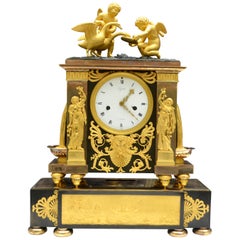
Rare French Empire Clock in Gilt and Patinated Bronze Signed Lepaute

Rare French Empire Clock in Gilt and Patinated Bronze Signed Lepaute

By Jean-André Lepaute 1

Located in Vancouver, British Columbia

An extremely rare and important French Empire mantle clock signed by the master clock making dynasty of Jean-Andre Lepaute and his brother Jean-Baptiste Lepaute. The case, in the form of an antique portal...

Category

Antique Early 19th Century French Empire Mantel Clocks

Materials

Bronze

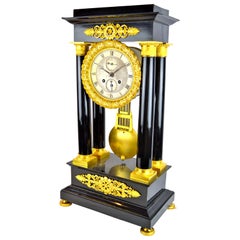
19th Century French Louis Philippe Ebonized Wood and Gilt Bronze Portico Clock

19th Century French Louis Philippe Ebonized Wood and Gilt Bronze Portico Clock

Located in Vancouver, British Columbia

A large and impressive French Louis Philippe portico clock with complications. The ebonized wood case richly embellished with gilded bronze mounts; the 5? silvered dial with roman nu...

Category

Antique Late 19th Century French Louis Philippe Mantel Clocks

Materials

Wood

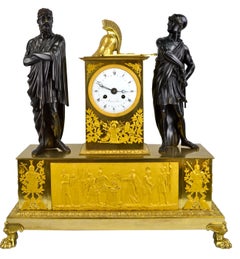
Allegorical French Empire clock Titled " Le Sacrifice d’Iphigénie "

Allegorical French Empire clock Titled " Le Sacrifice d’Iphigénie "

By Claude Galle, Claude Galle

Located in Vancouver, British Columbia

A fine example of a period French Empire mantle clock which depicts the argument between Achilles and Agamemnon in Homer’s Iliad. The case is of matte and burnished gilded bronze, th...

Category

Antique Early 19th Century French Empire Mantel Clocks

Materials

Bronze

French Empire Allegorical Clock of Love Nourishing Life

French Empire Allegorical Clock of Love Nourishing Life

Located in Vancouver, British Columbia

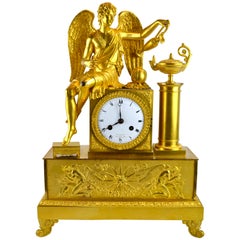
A figural French Empire clock in gilded bronze representing an allegory on how love nourishes life or “L’Amour alimentant la vie” in French. The clock shows a seated winged Amor refi...

Category

Antique Early 19th Century French Empire Mantel Clocks

Materials

Bronze

You May Also Like

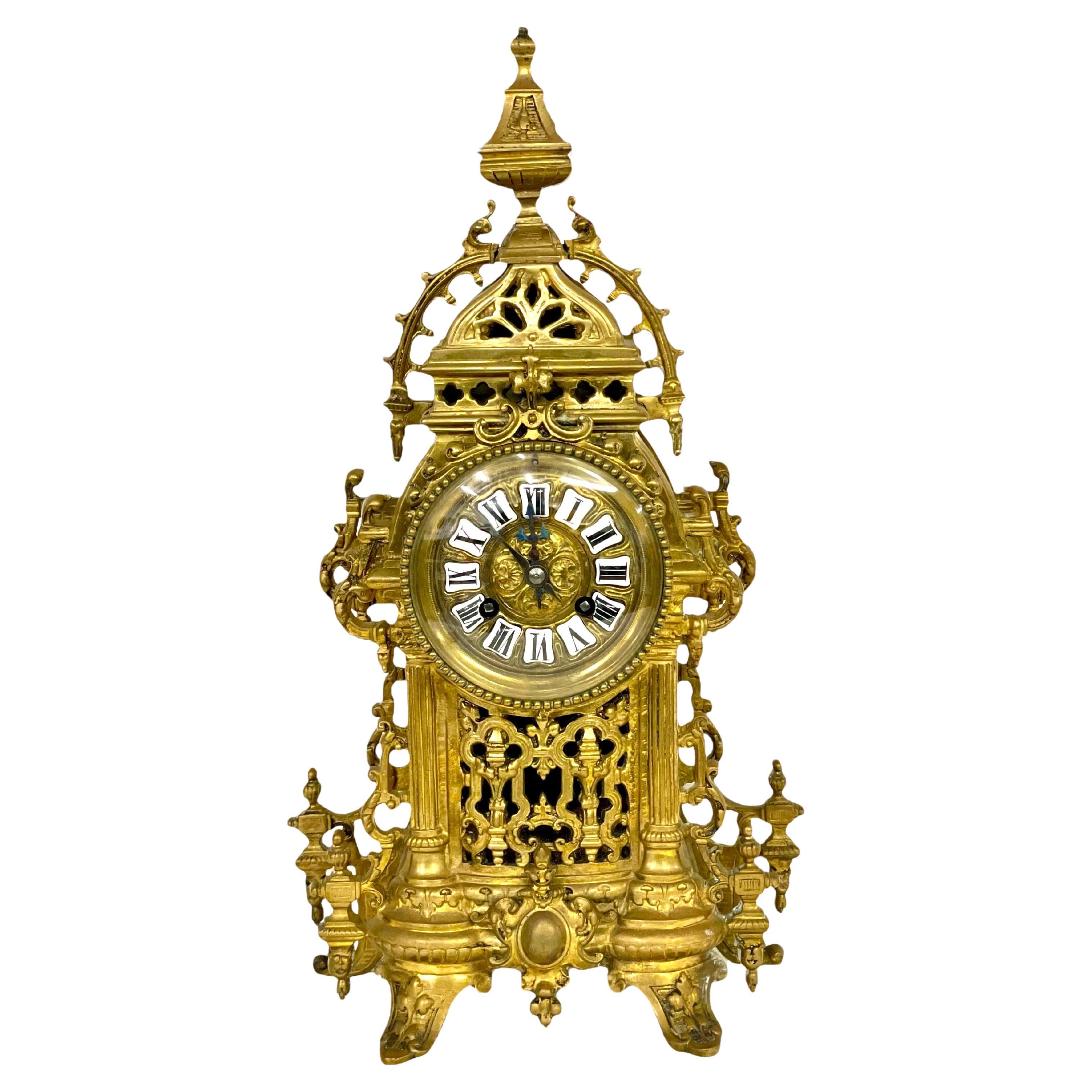
19th Century French Cathedral Clock

19th Century French Cathedral Clock

Located in High Point, NC

19th century beautifully hand crafter cathedral clock in gilt bronze. This is a magnificent example of 19th century French craftsmanship. There are many beautiful details to this p...

Category

Antique 19th Century French Louis Philippe Mantel Clocks

Materials

Bronze

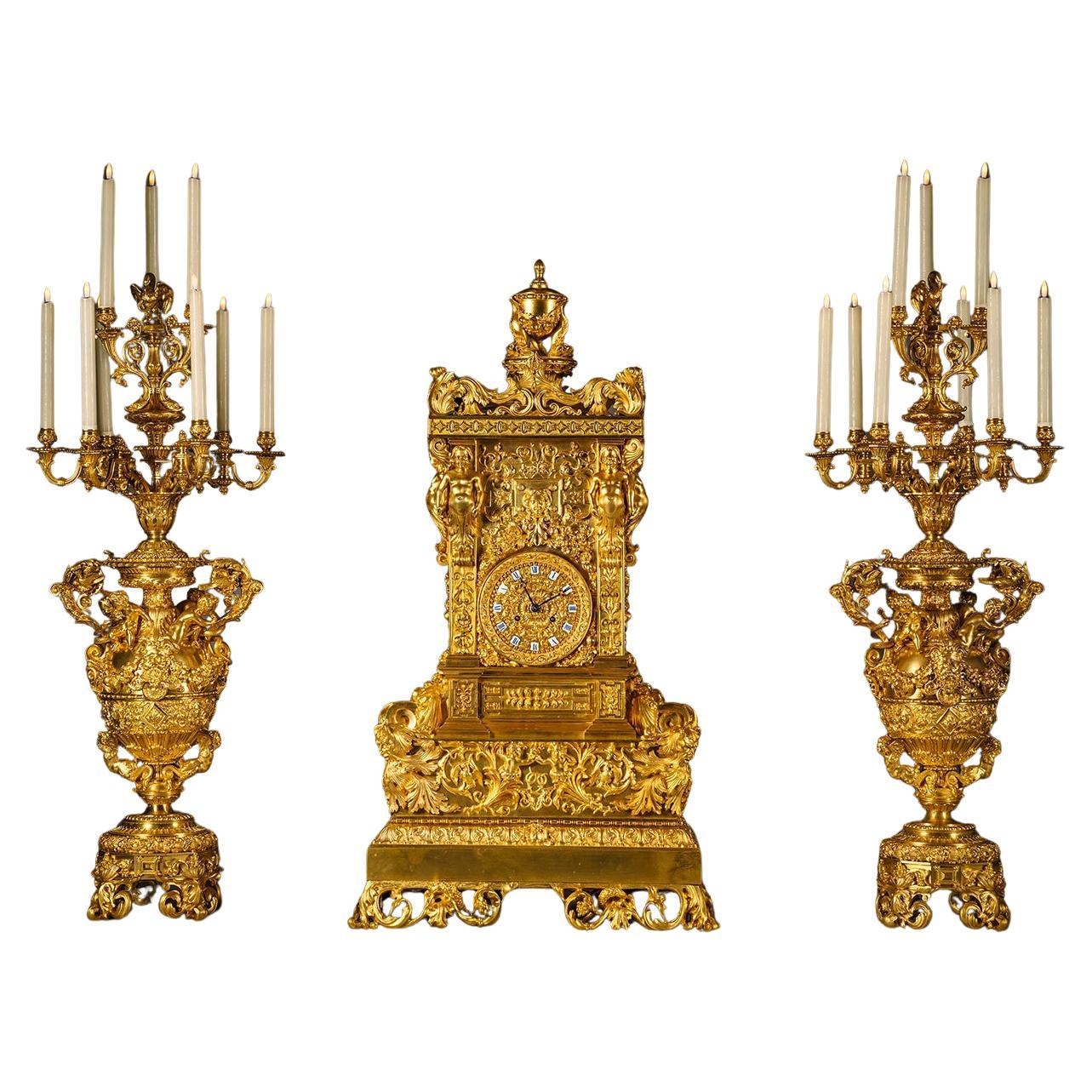
A Monumental Renaissance Revival Clock Garniture, Attributed to Feuchère

A Monumental Renaissance Revival Clock Garniture, Attributed to Feuchère

Located in Brighton, West Sussex

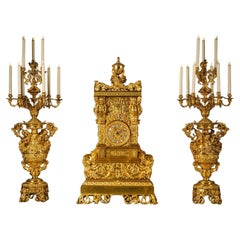
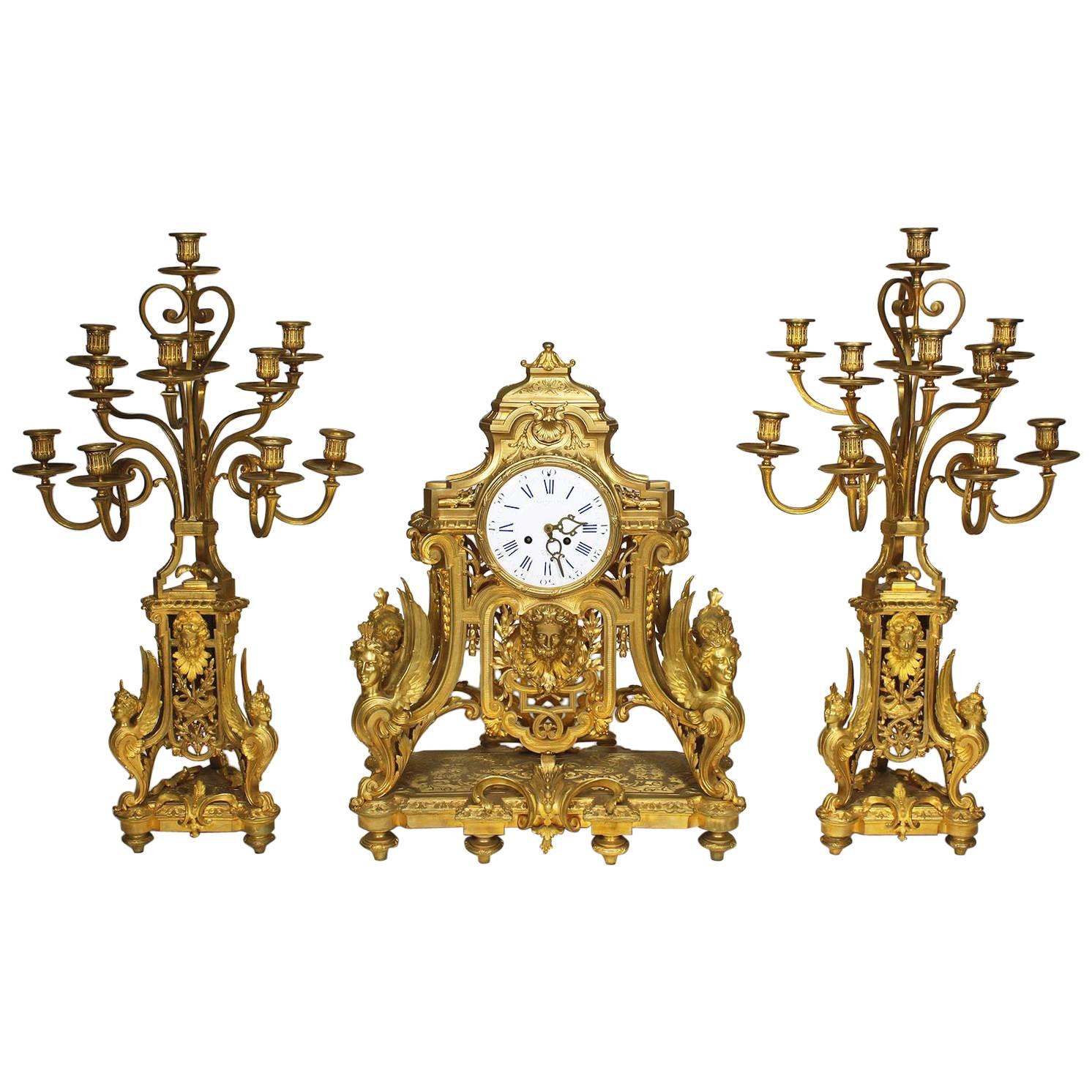
A Large and Important Louis Philippe Period Gilt-Bronze Three-Piece Clock Garniture. Attributed to the Feuchère family. The clock movement by Hémon. In the Renaissance revival style. Comprising a clock and a pair of nine-light candelabra. The clock case of architectural out-shape with cherubic term figures supporting a rectangular pediment centred by an urn. The sides of the clock tower cast in relief with strapwork and foliage. The dial inset with enamel Roman numeral chapters. The twin-barrel clock movement with tic-tac escapement, silk suspension and countwheel strike to bell. Pendulum and winding key. The candelabra as twin-handled vases supporting tiered branches with candle nozzles. Modelled en suite with naturalistic scrolls and foliage. Surmounted by finials modelled as an eagle toying with a serpent. The scrolled handles flanked by cherubic figures and serpents. The bodies fronted by bacchic masks and supported on socles bearing angels. France, Circa 1835. The clock movement signed ‘HEMON A PARIS’. The clockmaker Claude Hémon was established at rue de St. Martin circa 1810-1820. Dimensions, the clock: Height : 106 cm 42 inches Width : 58 cm 23 inches Depth : 38 cm 15 inches Weight : 72 kg Dimensions, the candelabra: Height : 104 cm 41 inches Width : 36 cm 14 inches Depth : 36 cm 14 inches Weight : 28 kg (each) This magnificent clock garniture of palatial size is designed in the Renaissance revival style and dates to the Louis Philippe period. Executed in sculptural gilt-bronze with leaves, scrolls, masks and exotic birds, the naturalistic ornament represents an elaborate system of allegories and mythological iconography which recall the influence of Italian Mannerist art in France. The distinctive design reflects a new style which replaced the neoclassism of the French Empire period. With the fall of Napoleon Bonaparte, artists and designers sought a new decorative vocabulary with which to aggrandise the Bourbon restoration. With the French revolution and Louis XVI’s execution still within living memory, it seemed too soon for a revival of the style of the Grand Siècle. Instead they looked further back to the time of François I, whose patronage of Italian artists had brought the Renaissance to France. The idea of a renaissance revival appealed to the new Bourbon monarchs and their patronage ignited great creativity in the arts. The reigns of Louis XVIII and Charles X, who were brothers of the late King, Louis XVI, and later of Louis Philippe I, nicknamed the Citizen King, coincided with the enlightenment and the dawn of the industrial age. Great technical progress was made in metallurgy and casting which raised the art of bronze making to new heights in the hands of great masters such as Pierre-Philippe Thomire (1751-1843) and Pierre- Jean-François Denière (1774-1866). The renaissance provided a rich and varied source book in architecture, furniture and other decorative arts for designers such as Claude Aimé Chenavard (1798-1838) whose Album de l’ornemaniste (1835) became a reference work. Léon Feuchère (1804-1857) also produced drawings of interiors, silver, bronzes and furniture and was a scion of the prominent family of bronze castors established by his grandfather Pierre-François Feuchère (1737-1823) who had worked as a gilder for the bronze caster Pierre Gouthière before setting up a bronze foundry that would become one of the largest in Paris under the management of his son Lucien-François (d. 1841) and grand-son Armand (1797-1866). A number of drawings by Léon Feuchère have recently been discovered by the Rijksmuseum and probably belonged to the collection of Louis-Philippe-Albert, duc d’Orléans, comte de Paris (1838-1894). Louis-Philippe-Albert was the grandson of the French king, Louis-Philippe I (1773-1850), who granted him the title of comte de Paris, and the son of Ferdinand-Philippe, duc d’Orléans (1810-1842). Ferdinand-Philippe was an important collector and sponsored many young artists to create metalwork objets d’art, notably a celebrated surtout de table made by Claude-Aimé Chenavard and Jean-Jacques Feuchère (1807-1852), a cousin of Armand and Léon. Principally remembered as a sculptor, Jean-Jacques Feuchère trained in the family foundry and designed small objects, cigar boxes...

Category

Antique Early 19th Century French Renaissance Revival Mantel Clocks
Materials

Bronze

19th Century French Gilt Bronze Cathedral Mantel Clock, Gothic Design

19th Century French Gilt Bronze Cathedral Mantel Clock, Gothic Design

Located in LA CIOTAT, FR

This stunning 19th-century French gilt bronze mantel clock is a true testament to craftsmanship and timeless design. Featuring intricate Gothic cathedral-inspired detailing, this clo...

Category

Antique 19th Century French Mantel Clocks

Materials

Bronze

Renaissance Revival Clock Set by Paul Soyer, France, Circa 1875

Renaissance Revival Clock Set by Paul Soyer, France, Circa 1875

By Paul Soyer

Located in SAINT-OUEN-SUR-SEINE, FR

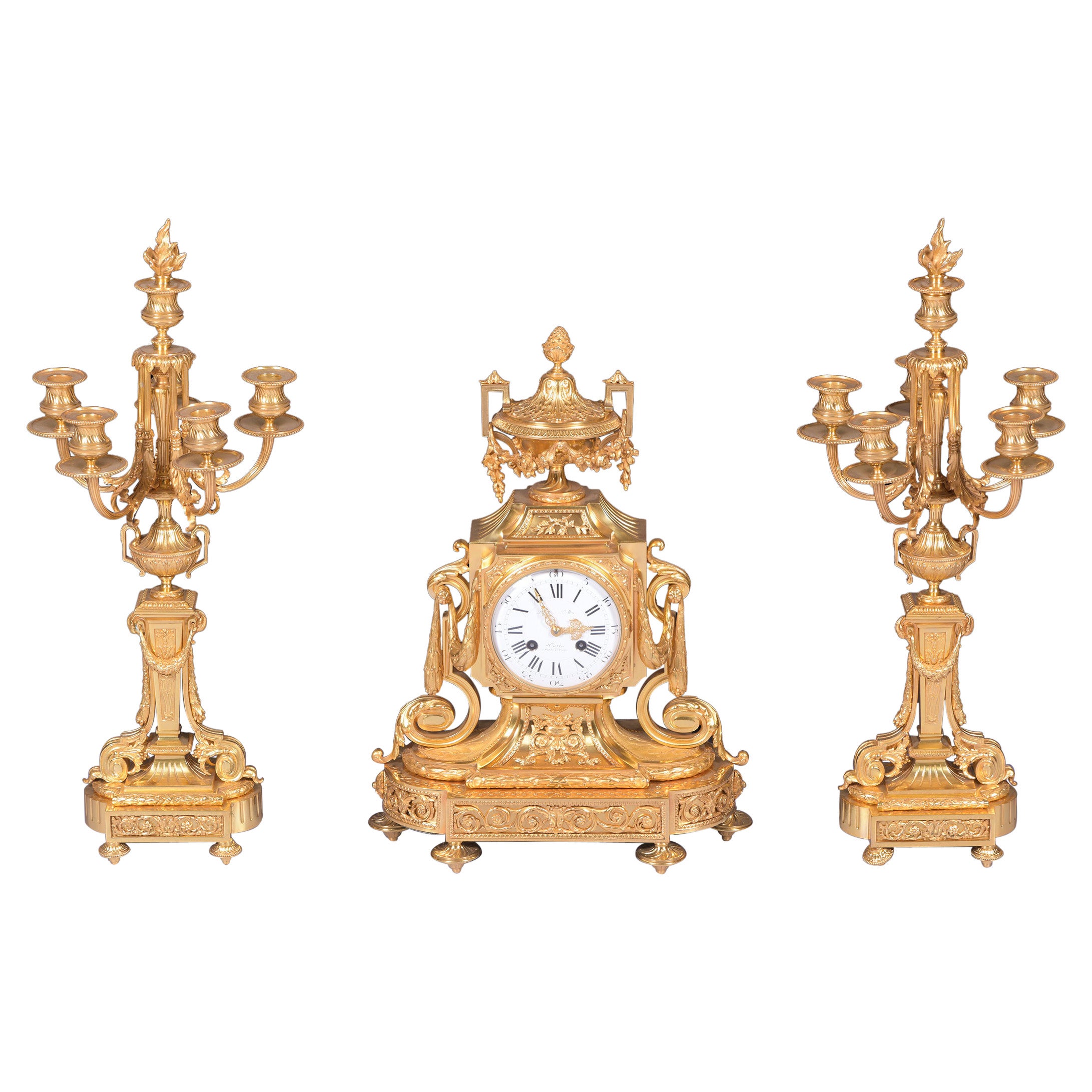
This clock set with a clock and two cassolettes was made by Paul Soyer around 1875. Paul Soyer (1832-1903) worked as a chaser in Paris from the 1850s. Gradually, he learned the technique of enamel to replace ornamental bronzes in furniture decoration. He opened a workshop as an engraver-enameller in 1861 and then collaborated with renowned enamelers and goldsmiths, such as Claudius Popelin, Charles Duron...

Category

Antique Late 19th Century French Renaissance Revival Mantel Clocks
Materials

Bronze, Enamel

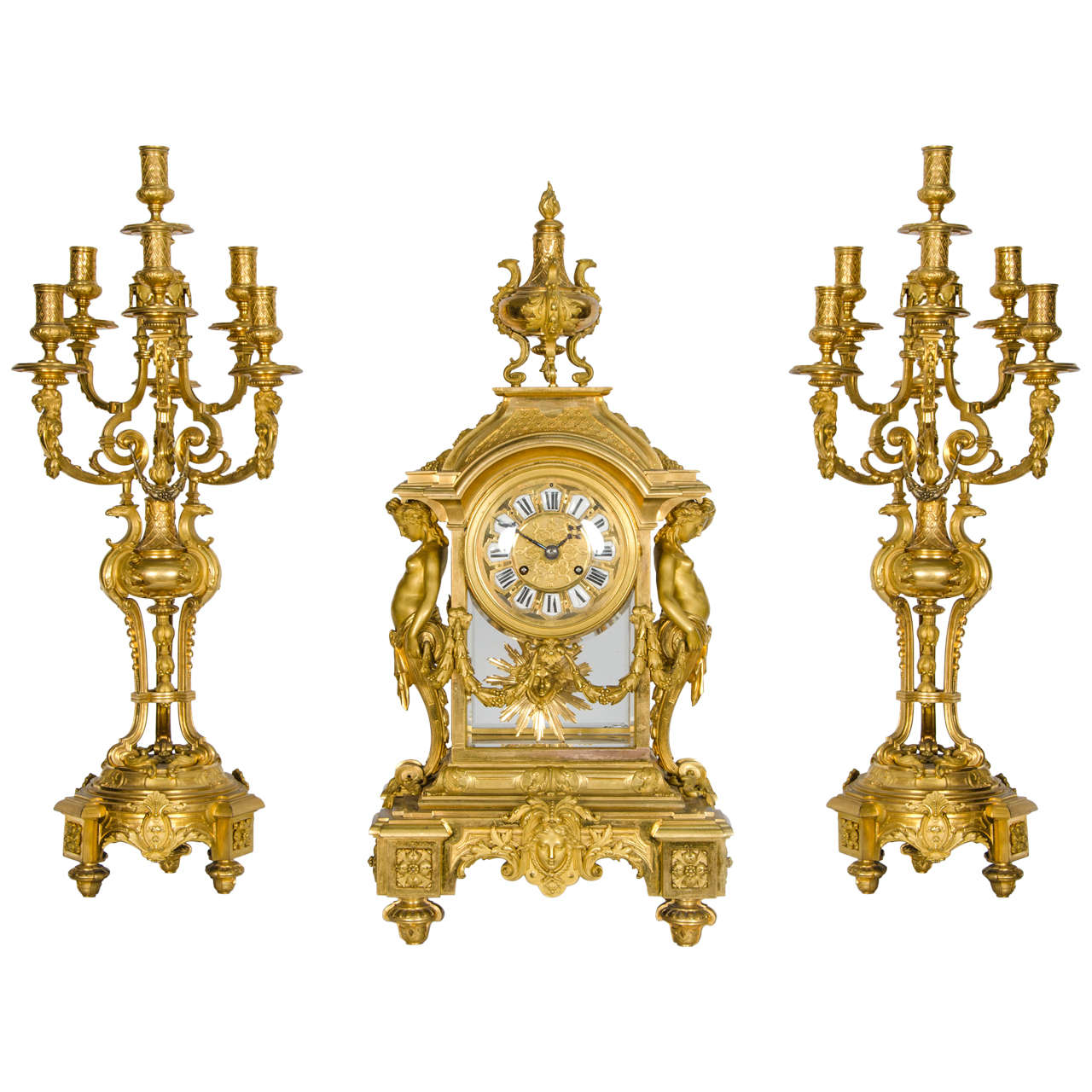
Imposing 19th Century French Ormolu Clock Garniture 29"(73cm) high

Imposing 19th Century French Ormolu Clock Garniture 29"(73cm) high

Located in Brighton, Sussex

A large and impressive, very good quality French gilded ormolu clock garniture. The clock supported by a pair of Caryatids, decorated with swags and classical motifs, four bevelled g...

Category

Antique 1860s French Mantel Clocks

Materials

Ormolu

French 19th Century Louis XIV Style Empire Ormolu Clock Garniture, Raingo Frers

French 19th Century Louis XIV Style Empire Ormolu Clock Garniture, Raingo Frers

By Raingo Frères

Located in Los Angeles, CA

A very fine and palatial French 19th century Louis XIV style Empire figural ormolu three-piece clock and candelabra garniture suite, comprising of a gilt-bronze clock and a pair of t...

Category

Antique 19th Century French Louis XIV Mantel Clocks

Materials

Bronze