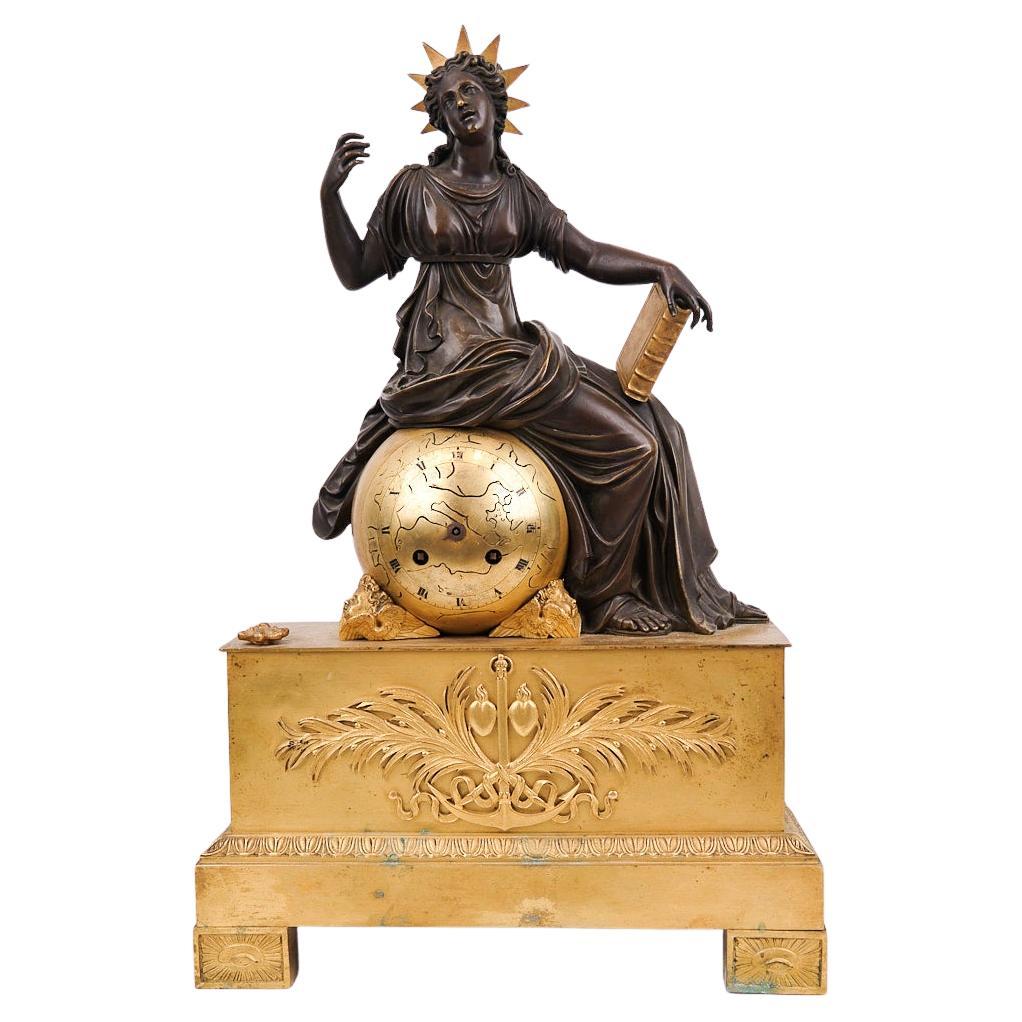
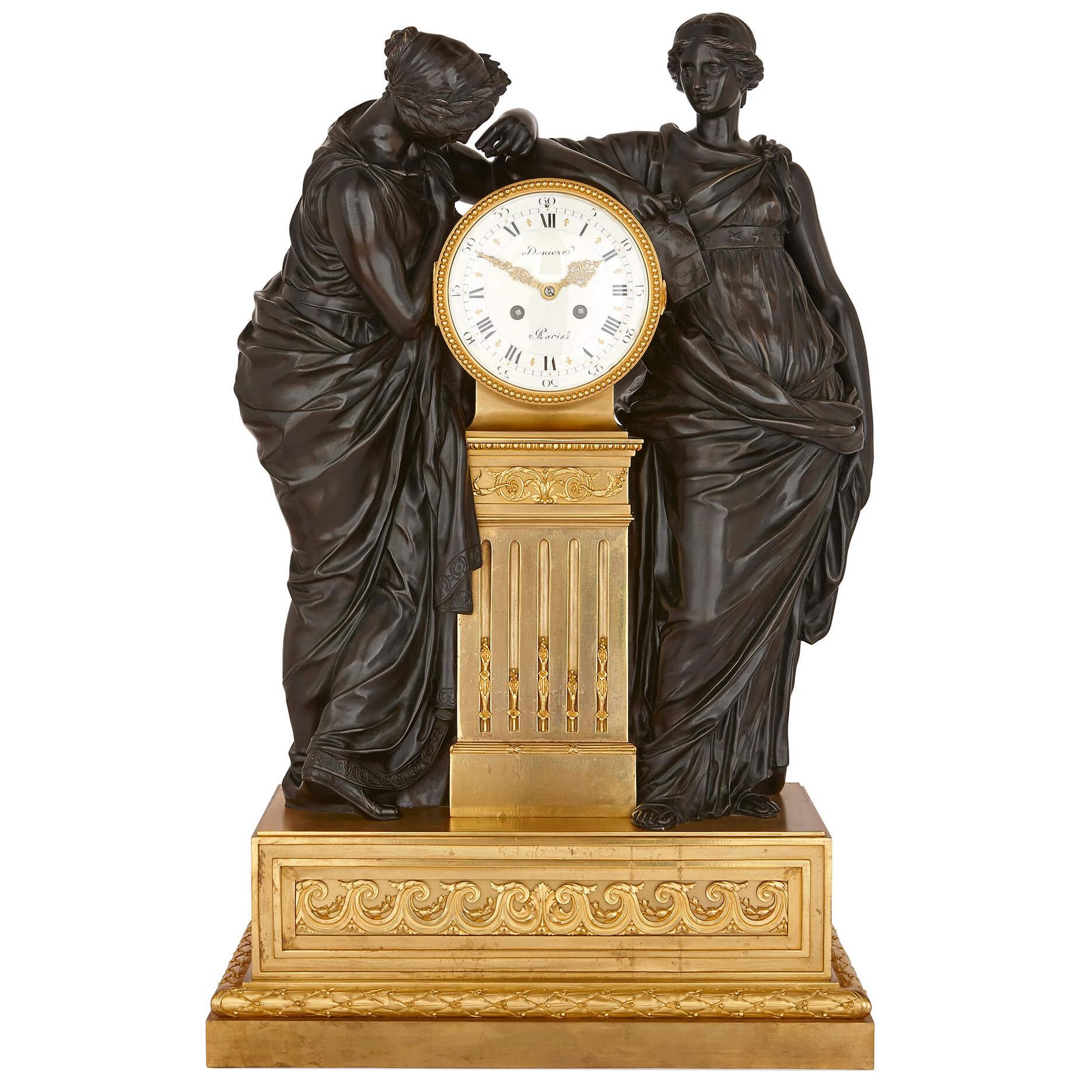
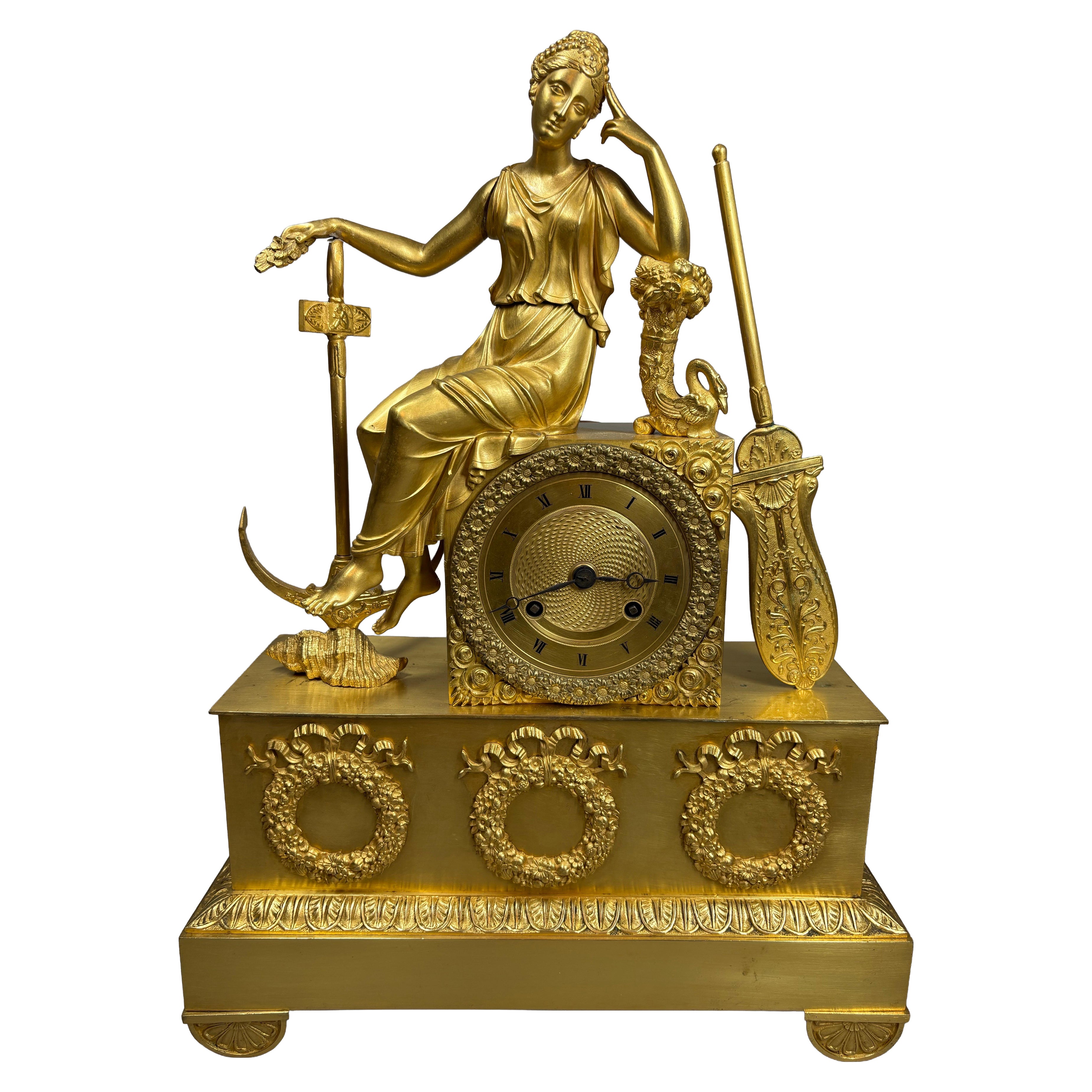
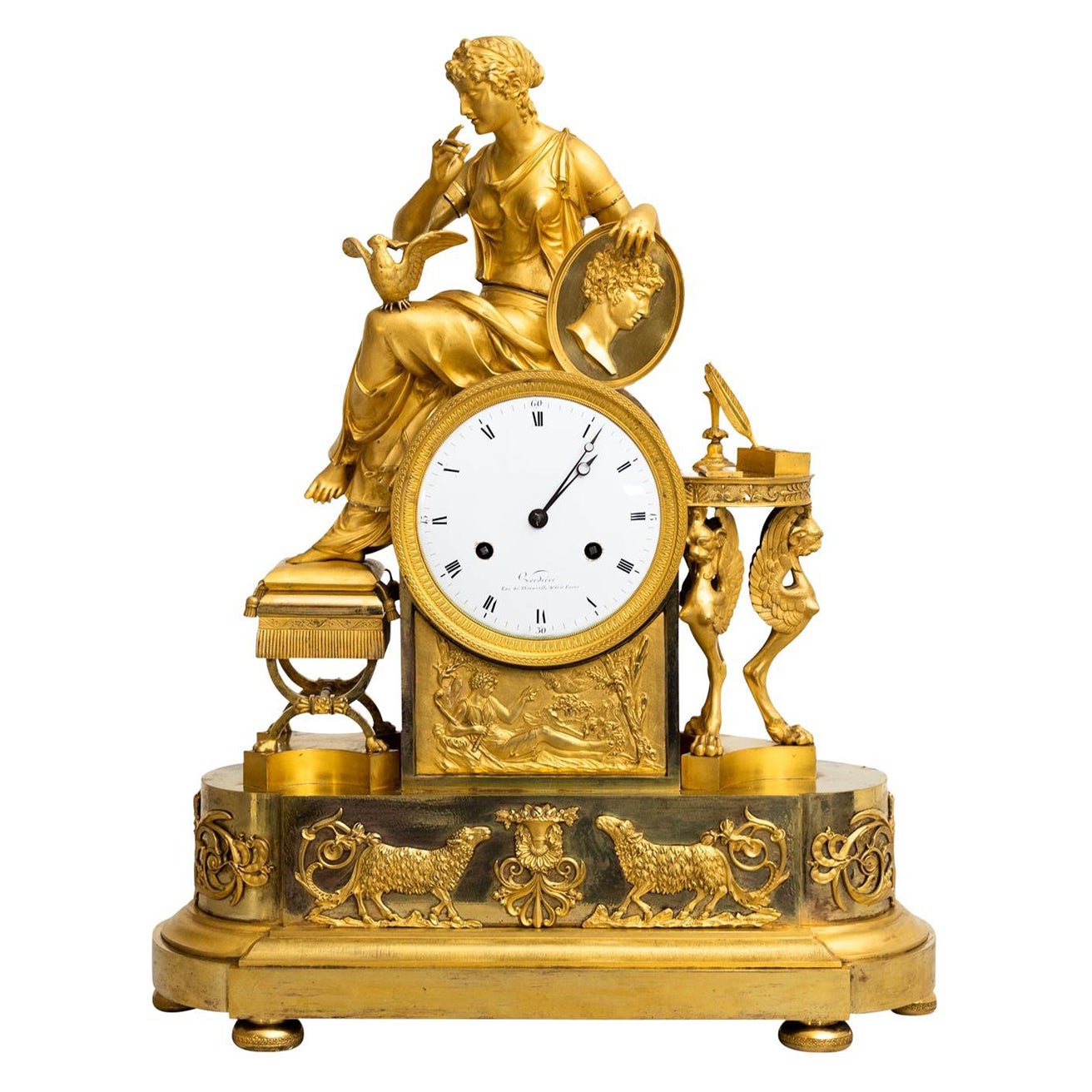
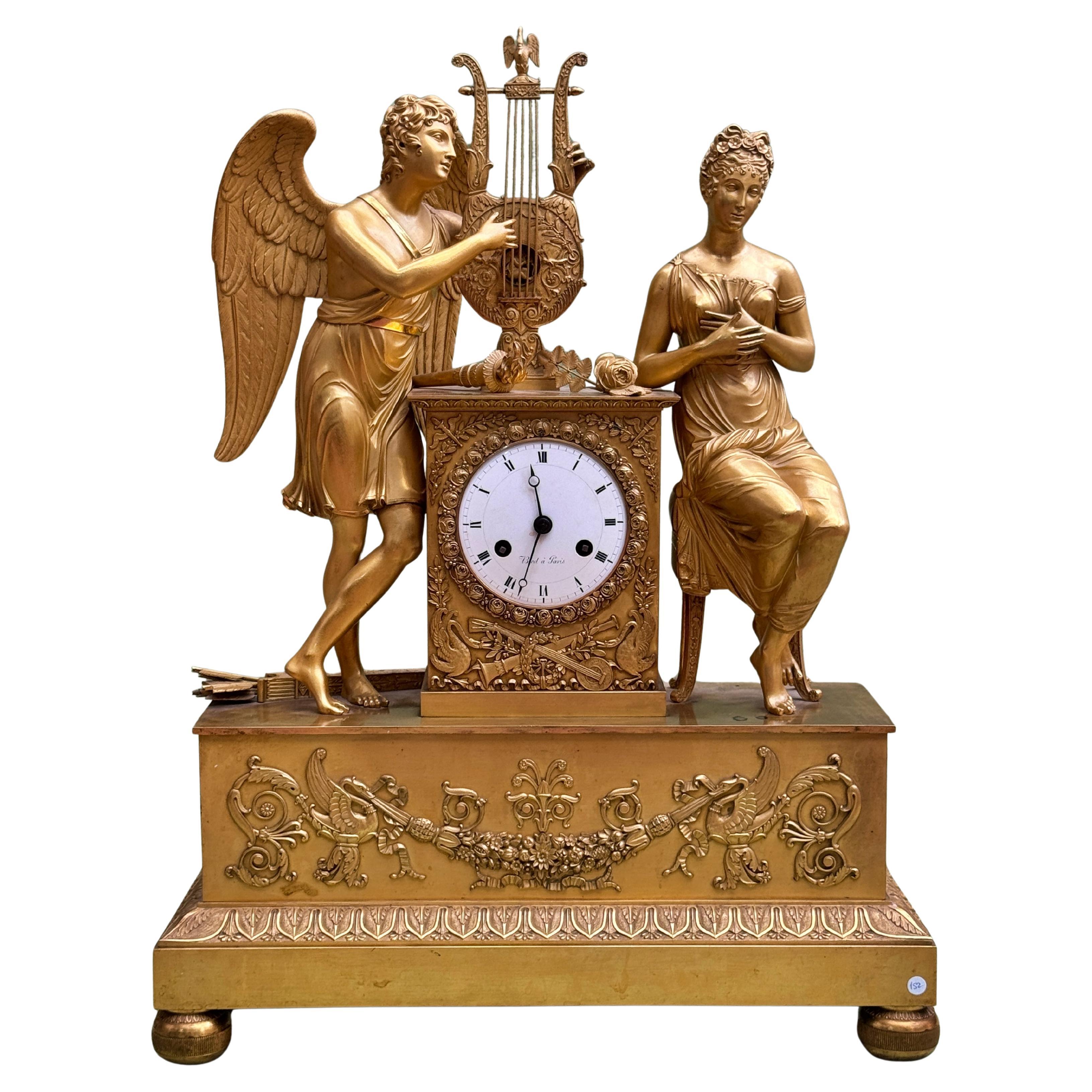
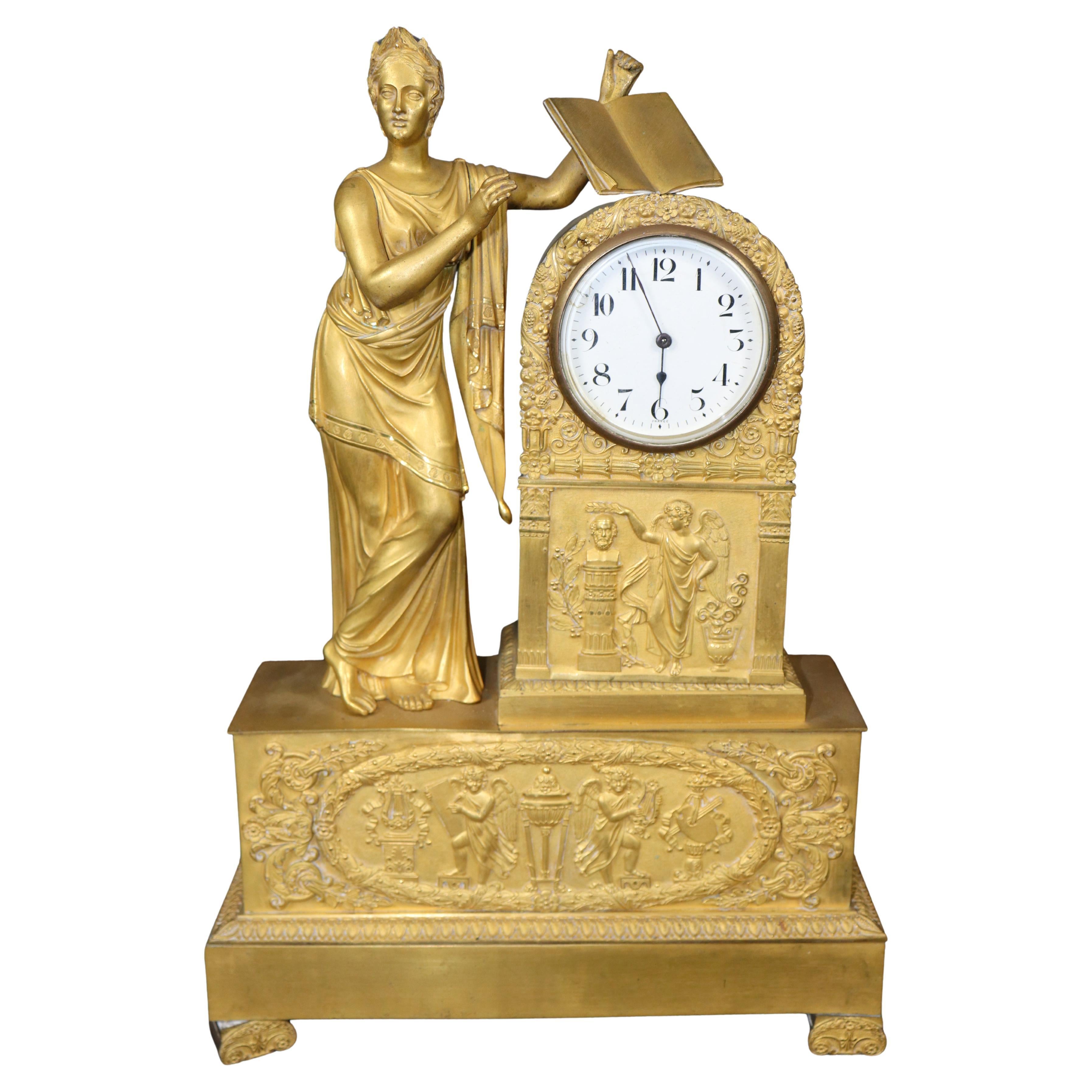
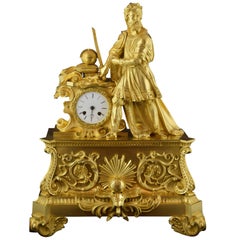
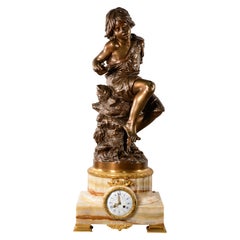
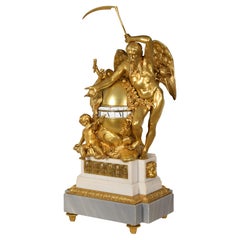
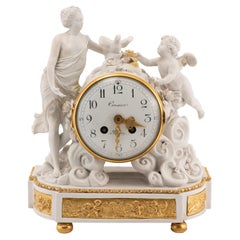
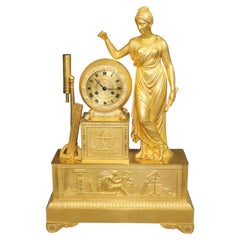
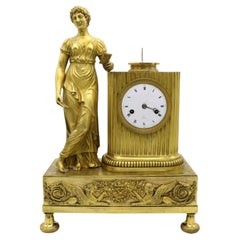
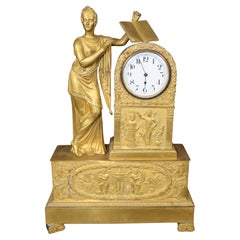
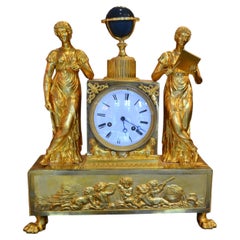
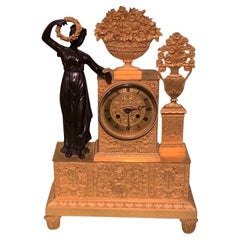
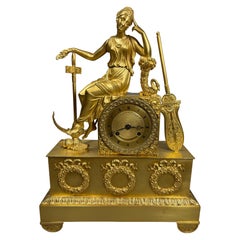
Table clock with Muse and writers. Blued and gilded bronze, Paris movement. France, 19th century.
Perfectly working mechanism.
Table clock in blued and gilt bronze with Paris machinery, and white dial with gilt bronze centre (Roman numerals for the hours, lines for the minutes and Breguet-type hands). The rectangular pedestal stands on supports and has architectural decoration; the base of the clock, also rectangular, has vegetal crowns with scrolls enhancing cartouches (with names: Virgile, Tasse, Homere, Racine, Voltaire); the dial and machinery are housed in a gilt-bronze piece that resembles a bookcase, on which books, a crown of laurels and a musical instrument are displayed. A female figure in blued bronze, dressed in a tunic, holds this kithara, a plucked stringed instrument from ancient Greece, similar to the lyre (the difference being the sound box, so it could be a lyre of the present day).
The female figure would be a Muse: these classical divinities of Greek mythology inspired the arts; daughters of Zeus and Mnemosyne, companions of the god Apollo in his retinue, each is related to a branch of art and knowledge. They are linked to the lyre Calliope (muse of eloquence, beauty and epic poetry) and to the zither Erato (muse of lyrical-amorous poetry). As for the names mentioned, the first refers to Publius Virgil Maron (70 BC-19 BC), a Roman poet and author of the Aeneid, the Georgics, etc., who was also known for his role as a guide in Dante Alighieri's Divine Comedy. Torquato Tasso (1544-1595), Italian poet and author of The Liberated Jerusalem, Rinaldo, etc., is known as "Le Tasse" in French. Homer is the name given to the author of the Iliad and the Odyssey, the basis of Greco-Latin epic literature. Racine is the surname of, among others, the French playwright Jean Racine (1639-1699) and his son and poet Louis Racine (1692-1763). François-Marie Arouet (Paris, 1694-1778), better known as Voltaire, was a French writer, historian, philosopher and lawyer, with numerous literary and philosophical writings.
Curiously, we know of an Empire clock (in a private French collection) in the shape of a library with books, very similar to the present piece. It should be remembered that the high level of specialisation of French bronze craftsmen, which gave rise to high-quality works of art, meant that several pieces of the same model were created if the aristocracy and the upper classes liked it. For this reason, there is evidence of several clocks, with slight differences from the present one (particularly in the dial and the absence of blued bronze), preserved in private collections and dating from the early 19th century.
Weight: 12.7 kg. - Measurements: 40x15x57 cms
International Buyers – Please Note: for those articles that need Export Permits (those older than 100 years), the obtaining of the Permit will be processed without additional expenses (if you choose the seller sends it to you), but the period for the obtention of it may vary from 10 to 35 days.