Video Loading
Want more images or videos?
Request additional images or videos from the seller
1 of 10

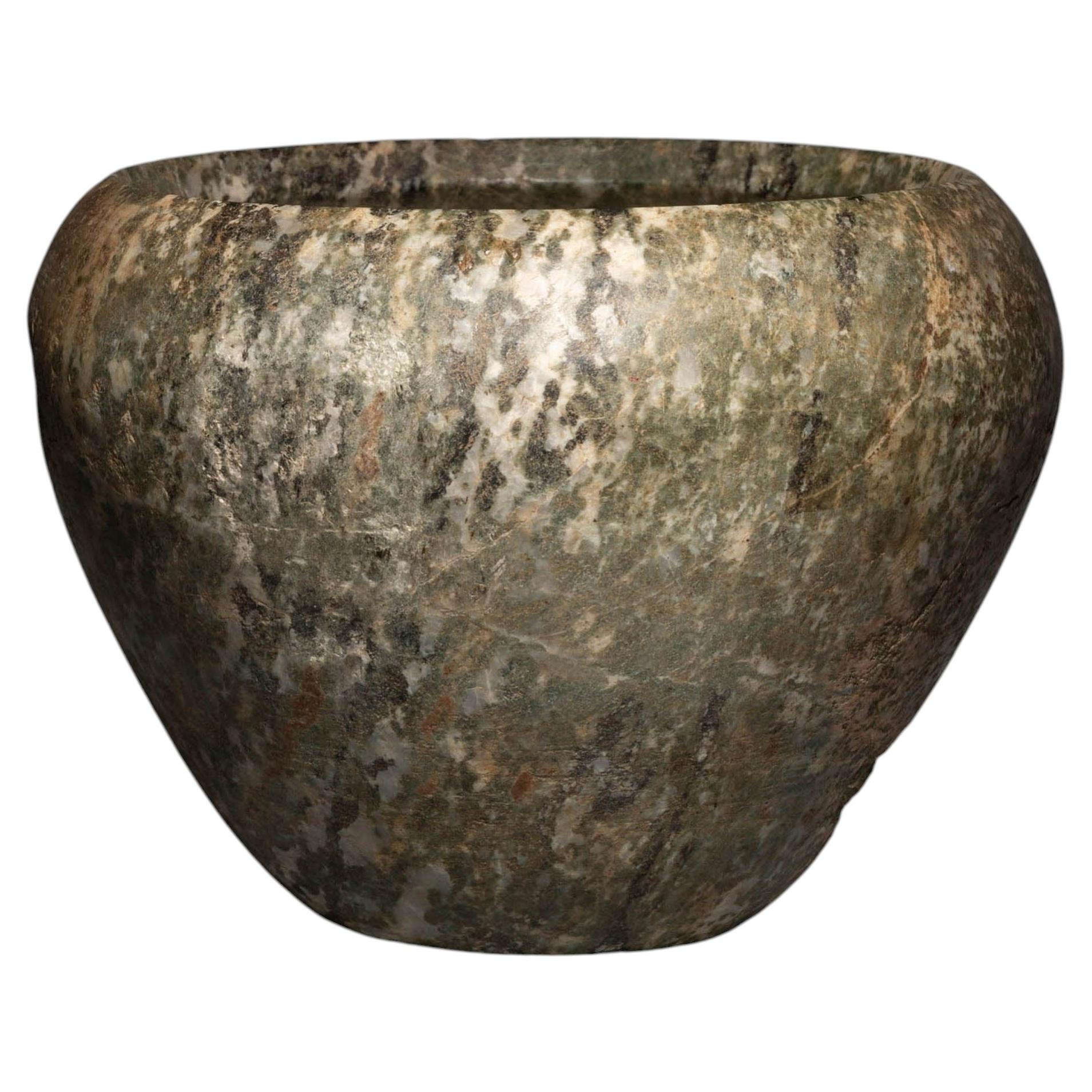
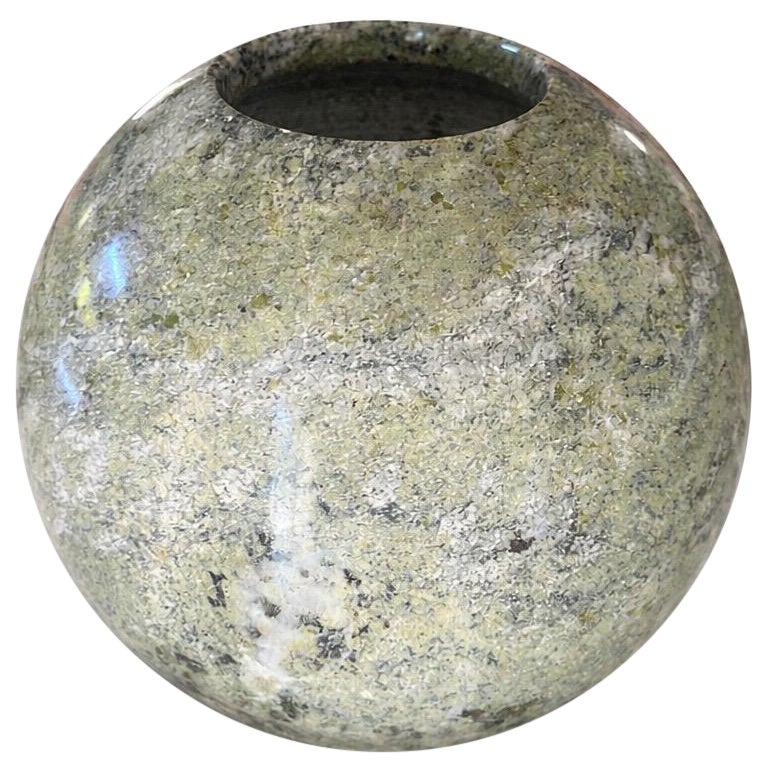
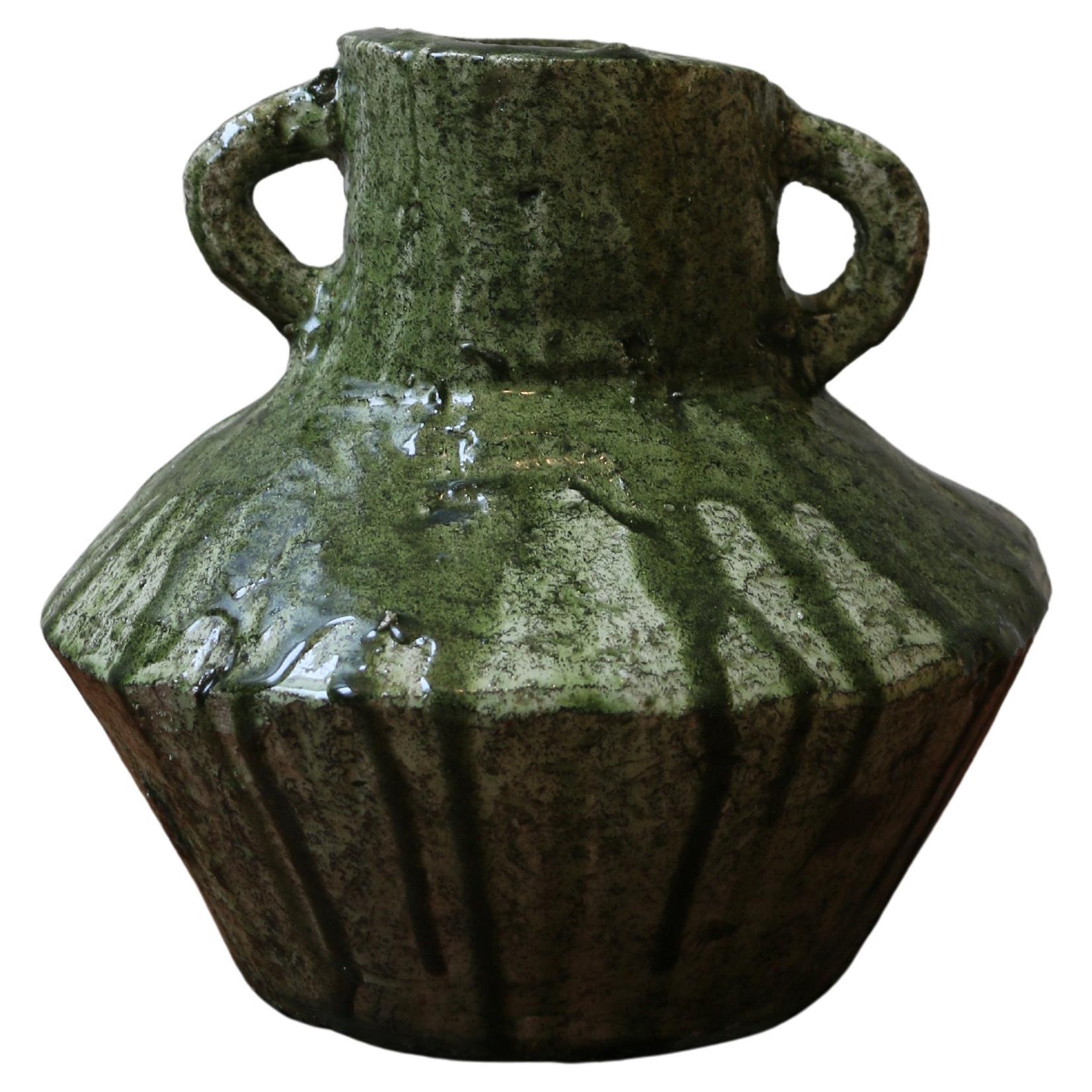
Ancient Egypt Vessel in veined green diorite

$9,412.88
£6,969.77
€8,000VAT Included
CA$13,110.81
A$13,338.55
CHF 7,644.32
MX$160,604.46
NOK 89,348.03
SEK 89,740.15
DKK 61,003.33

About the Item

Provenance - Galerie Harmakhis, Brussels, Belgium. - R. C. Collection (1924 - 2023), Brussels, Belgium. Documents - Attached is a study on the antiquity of the piece issued by an Egyptologist. A vessel carved entirely from a single block of green diorite, richly veined in shades of white, gray, black, and orange. Flattened, globular in shape, it features a flat circular base, from which the walls fan out diagonally, forming a gentle curve that is accentuated at the shoulders, closing to form a wide, open mouth with a flat, mitered profile. The vessel's walls are relatively thin for a hard stone vessel: the interior shape follows the exterior profile, narrowing noticeably at the mouth. Dating to the early Thynite period, between the 1st and 2nd Dynasties, around 3000 BC, this is a luxury object, made of a precious material both for its beauty and scarcity, and for its hardness, which makes it particularly difficult to work. During the Predynastic Period (circa 5400–3000 BC), before the establishment of the first dynasties, several independent kingdoms—with different deities and symbols, but sharing basic hieroglyphics and a belief in the afterlife—developed in southern and northern Egypt. Through their burials—circular deposits placed directly in the sand with the body in direct contact, thus allowing preservation by desiccation—their most characteristic creations have survived, accompanying the deceased as funerary trousseau. The most numerous are burnished red pottery vessels in various cylindrical and globular shapes, geometric palettes or palettes with animal profiles for mixing cosmetics, stone mace heads and ritual knives, as well as items of jewelry. And, on rare occasions, these ceramic vessels were also found carved in stone. Stone vessels were considered luxury items, and as such, they have been found almost exclusively in royal tombs. Chronologically, they appear at the beginning of the third millennium BC, and are most common at the end of the Second Dynasty; the art of stone vessel carving reached its peak as far back as the Early Dynastic Period and the Old Kingdom. Some examples are engraved with the names of early pharaohs, such as Narmer. Others are unique, having been carved in animal forms, such as frogs or birds. In any case, they are excellent pieces due to their artistic refinement and virtuosity of execution. On a visual level, they are extraordinary for their formal perfection, which combines balanced, subtly curved, and exquisitely proportioned lines with the expressive veining of the stones used, such as breccia or porphyritic diorite. It is interesting to note that the ancient Egyptians were making stone vessels long before they created stone statues. This observation is reinforced by the fact that the ancient Egyptian hieroglyphic word for "stone carver" uses the image of the tool used by these early artisans to create stone vessels. Such vessels are generally found in tombs, given their purpose of ensuring the eternal permanence of the deceased's ka (spirit) in the afterlife; this concept of the spirit's immortality would be linked to stone precisely because it was the most durable material used by the ancient Egyptians. Excavations of Pharaoh Djoser's Step Pyramid at Saqqara yielded nearly 40,000 stone objects, most of which were vessels. In addition to ensuring the soul's permanence in the afterlife, stone vessels were primarily used to contain food, ointments, and cosmetic oils. Their thick, impermeable walls allowed for good preservation of the products. They had many uses in everyday life, but they also played a prominent role in religious activities: offerings in temples, daily anointing of statues and cult objects, and, in the funerary world, for the preparation of mummies, as well as in the belief in the rejuvenating and regenerative effects of these substances. Therefore, it is not surprising that a large number of stone vessels were regularly deposited in tombs and funerary complexes.
  • Dimensions:
    Height: 3.94 in (10 cm)Diameter: 6.15 in (15.6 cm)
  • Style:
    Egyptian (Of the Period)
  • Materials and Techniques:
  • Period:
  • Date of Manufacture:
    Beginnings Tinite Period, 3050 - 2900 B.C.
  • Condition:
    Wear consistent with age and use. Good state of preservation.
  • Seller Location:
    BARCELONA, ES
  • Reference Number:
    Seller: 220036661stDibs: LU10999250354912

More From This Seller

View All
Ancient Egypt Vessel in veined green diorite

Ancient Egypt Vessel in veined green diorite

Located in BARCELONA, ES

Provenance - Galerie Harmakhis, Brussels, Belgium. - R. C. Collection (1924 - 2023), Brussels, Belgium. Documents - Attached is a study on the antiquity of the piece issued by an Eg...

Category

Antique 15th Century and Earlier Egyptian Vases

Materials

Stone

Ancient Egypt Squat shouldered jar in stone

Ancient Egypt Squat shouldered jar in stone

Located in BARCELONA, ES

Provenance - Private collection, Cannes, France, 1970. Documents - Attached is a study on the antiquity of the piece issued by an Egyptologist. The vase under study can be describe...

Category

Antique 15th Century and Earlier Egyptian Decorative Bowls

Materials

Stone

Ancient Egypt Globular Vessel of the "ear" type in Breccia Marble

Ancient Egypt Globular Vessel of the "ear" type in Breccia Marble

Located in BARCELONA, ES

Provenance - Private collection, Gaia Cecilia Metella Servadio (1938 – 2021), Italian writer-in-residence. A vessel entirely composed of a single block of orange-hued breccia, resto...

Category

Antique 15th Century and Earlier Egyptian Egyptian Vases

Materials

Breccia Marble

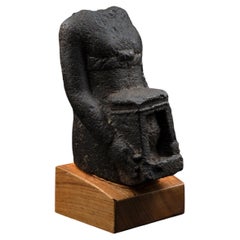
Ancient Egypt Torso of a statue of a Naophorus in basalt

Ancient Egypt Torso of a statue of a Naophorus in basalt

Located in BARCELONA, ES

25 cm with the stand. Provenance - Private collection, Ole Wanscher (1903–1985), Denmark. Acquired around 1960. - Art Ancient, London. - Art Market, United Kingdom, 2024. Torso of...

Category

Antique 15th Century and Earlier Egyptian Egyptian Figurative Sculptures

Materials

Stone

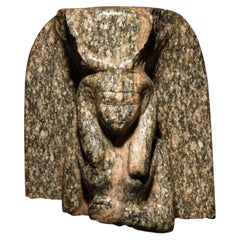
Ancient Egypt Sculpture of the Goddess Isis-Hathor in Diorite

Ancient Egypt Sculpture of the Goddess Isis-Hathor in Diorite

Located in BARCELONA, ES

27 cm with the stand. Provenance - Private collection, Paris, France. Sculpture in an almost round shape of the goddess Isis-Hathor attached to a stela carved from a single block o...

Category

Antique 15th Century and Earlier Egyptian Figurative Sculptures

Materials

Stone

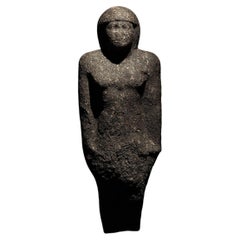
Ancient Egyptian Sculpture of a Noble in Granodiorite

Ancient Egyptian Sculpture of a Noble in Granodiorite

Located in BARCELONA, ES

Sculpture of a Noble. Ancient Egypt · Old Kingdom, 4th – 6th Dynasty, 2625 – 2450 BC. Material: Granodiorite. Size: Height 126 cm; width 42 cm and weight 170 kg; 190 cm with the ...

Category

Antique 15th Century and Earlier Egyptian Egyptian Busts

Materials

Stone

You May Also Like

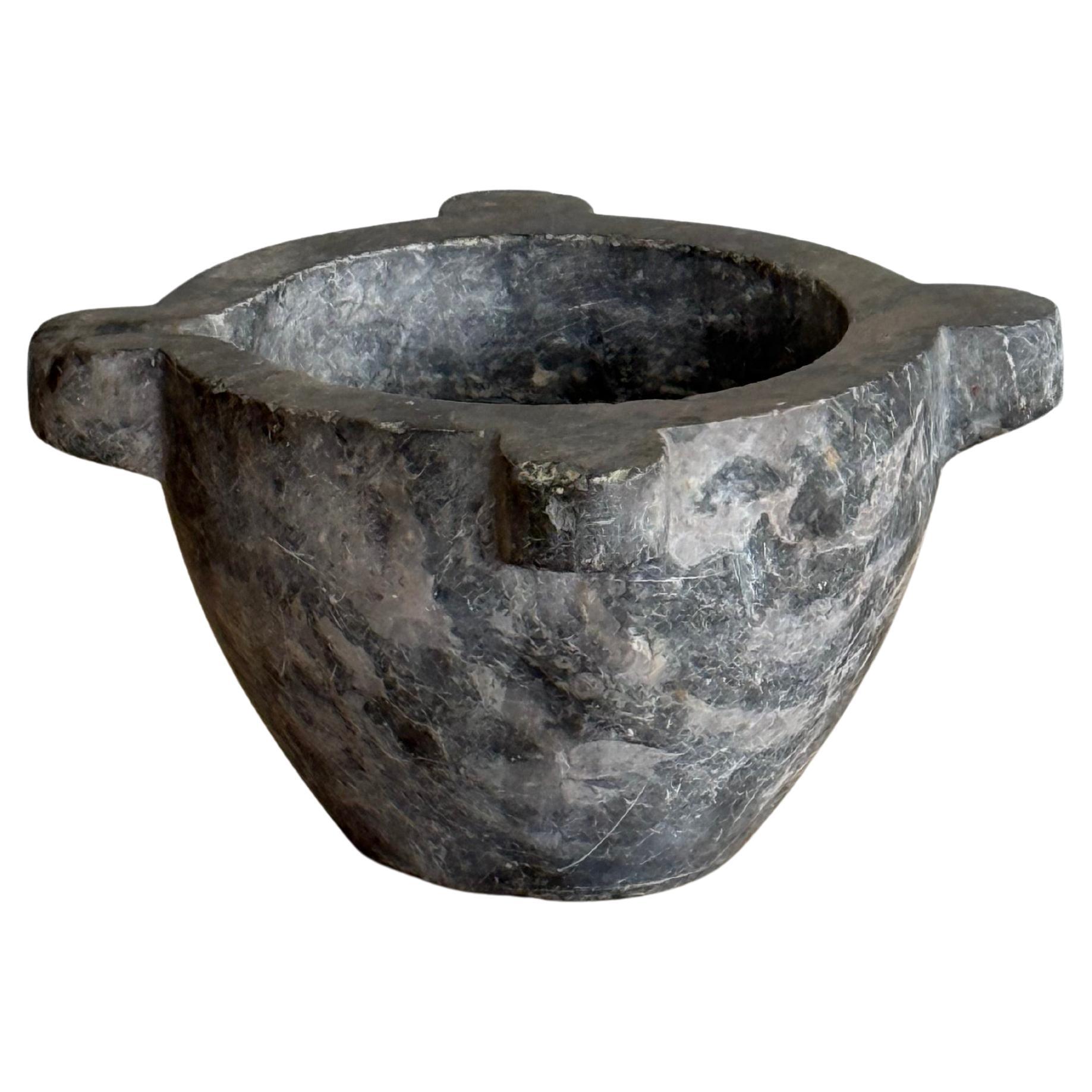
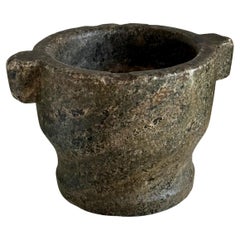
18th Century Italian Green Marble Mortar, Rare Patina, Country Style

18th Century Italian Green Marble Mortar, Rare Patina, Country Style

Located in Nijlen, BE

Unique Italian marble mortar from the 18th century. The green marble is very rare and produces a unique color hue between green and gray tones. This piece spent its life in Italian ...

Category

Antique 18th Century Italian Country Vases

Materials

Marble

Hand-Sculpted Stone Vase with Textured Green Glaze, Colombia

Hand-Sculpted Stone Vase with Textured Green Glaze, Colombia

Located in Barranquilla, Atlántico

Crafted in solid stone and finished with a textured, hand-applied glaze, the Vase Collection evokes the quiet strength of ancient vessels with a distinctly contemporary spirit. Each ...

Category

2010s Colombian Vases

Materials

Cement

Hand-Sculpted Stone Vase with Textured Green Glaze, Colombia

Hand-Sculpted Stone Vase with Textured Green Glaze, Colombia

Located in Barranquilla, Atlántico

Crafted in solid stone and finished with a textured, hand-applied glaze, the Vase Collection evokes the quiet strength of ancient vessels with a distinctly contemporary spirit. Each ...

Category

2010s Colombian Vases

Materials

Cement

Hand-Sculpted Stone Vase with Textured Green Glaze, Colombia

Hand-Sculpted Stone Vase with Textured Green Glaze, Colombia

Located in Barranquilla, Atlántico

Crafted in solid stone and finished with a textured, hand-applied glaze, the Vase Collection evokes the quiet strength of ancient vessels with a distinctly contemporary spirit. Each ...

Category

2010s Colombian Vases

Materials

Cement

Hand-Sculpted Stone Vase with Textured Green Glaze, Colombia

Hand-Sculpted Stone Vase with Textured Green Glaze, Colombia

Located in Barranquilla, Atlántico

Crafted in solid stone and finished with a textured, hand-applied glaze, the Vase Collection evokes the quiet strength of ancient vessels with a distinctly contemporary spirit. Each ...

Category

2010s Colombian Vases

Materials

Cement

19th Century Belgian Marble Mortar

19th Century Belgian Marble Mortar

Located in Nijlen, BE

Belgian mortar from the 19th century in an exceptionally beautiful marble type that has the undertone of a Belgian blue stone with more gray color shades. In very good condition, ha...

Category

Antique 19th Century Belgian Rustic Vases

Materials

Marble