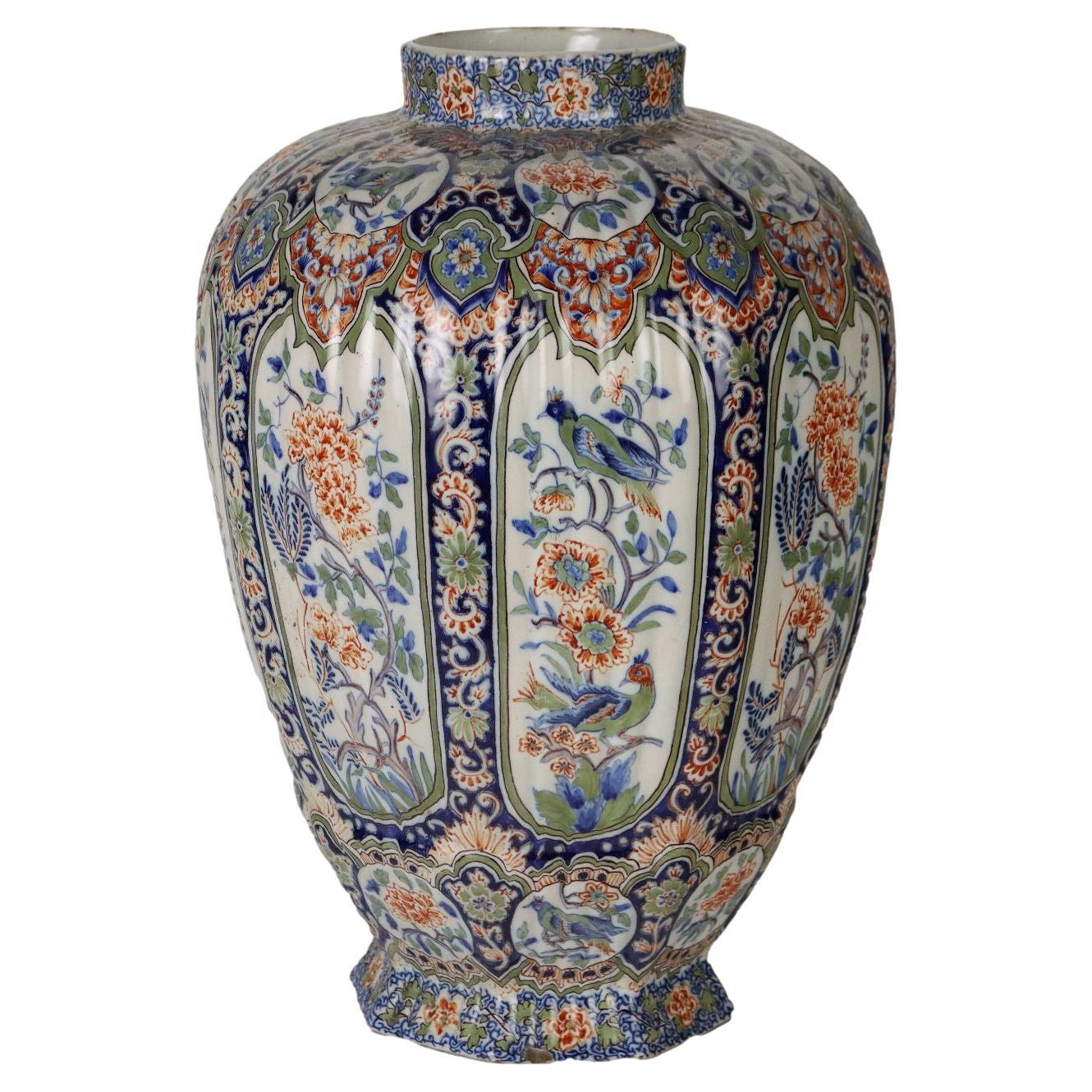
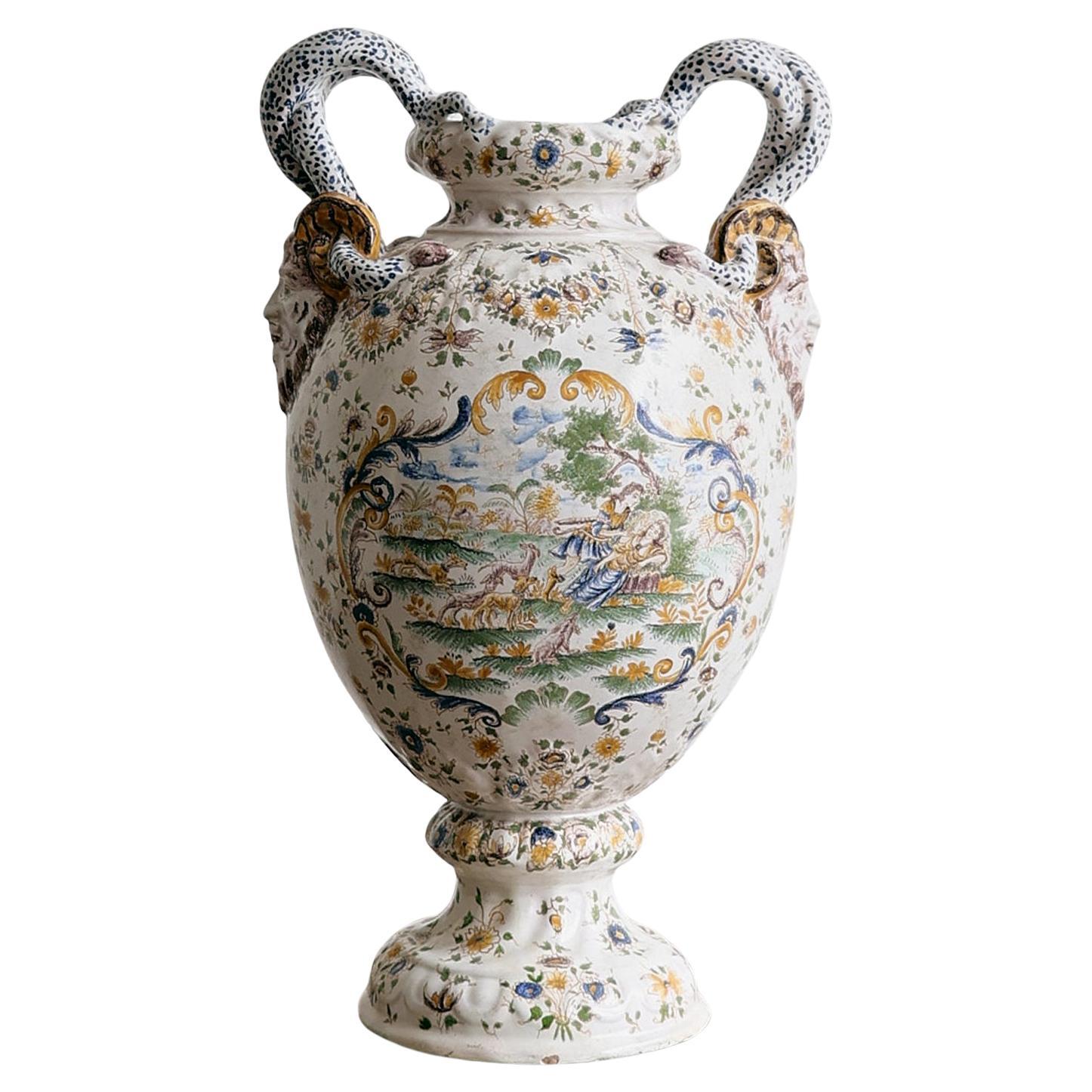
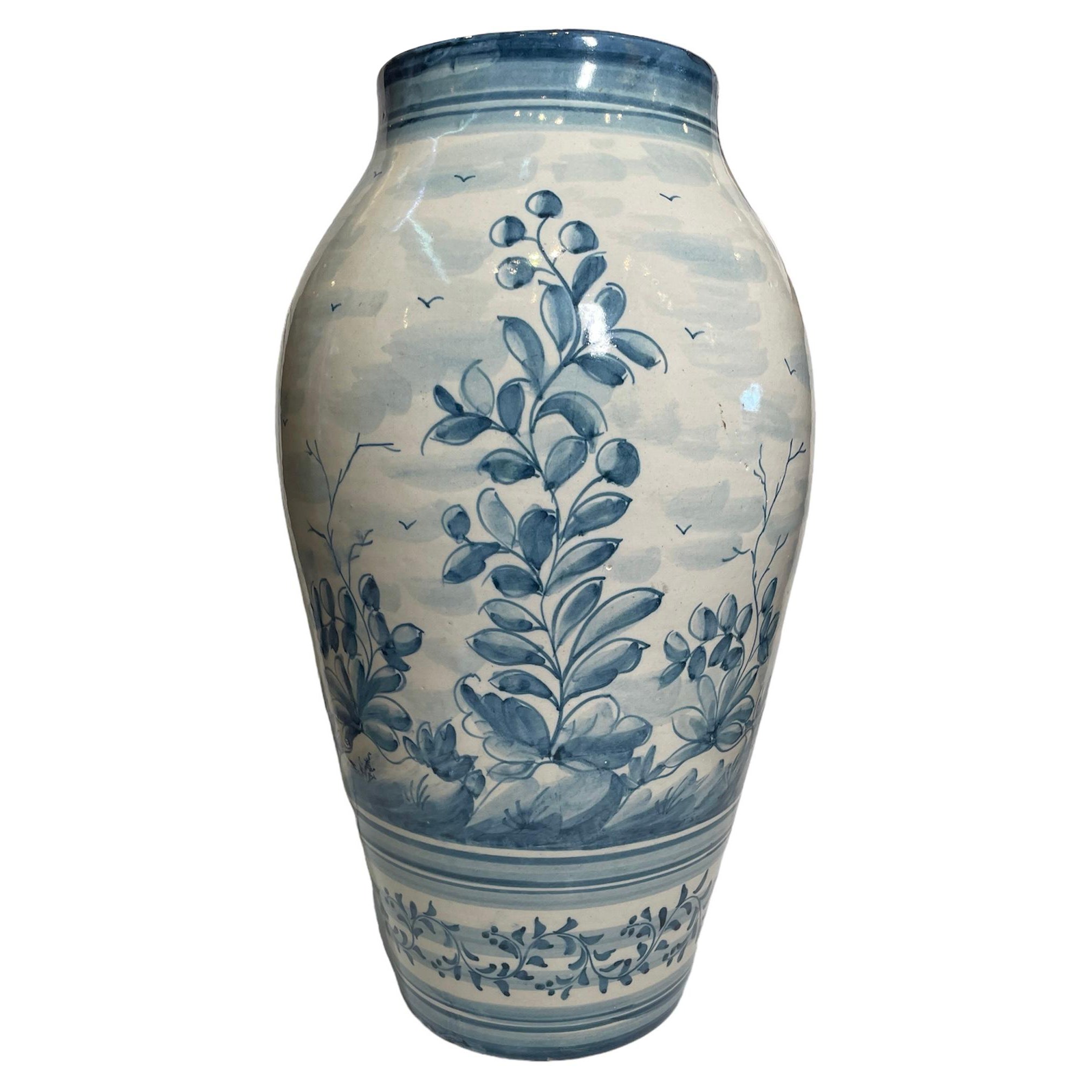
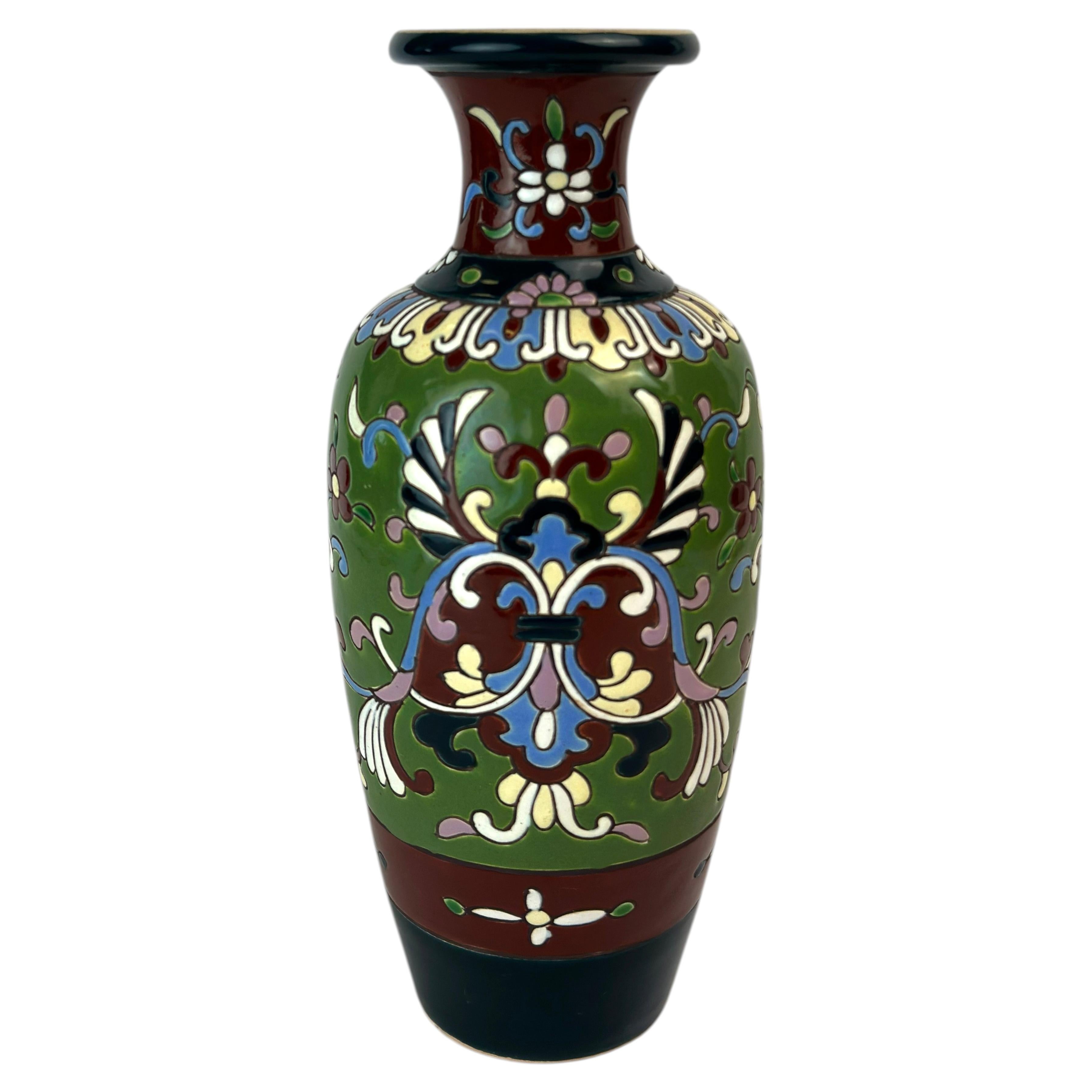
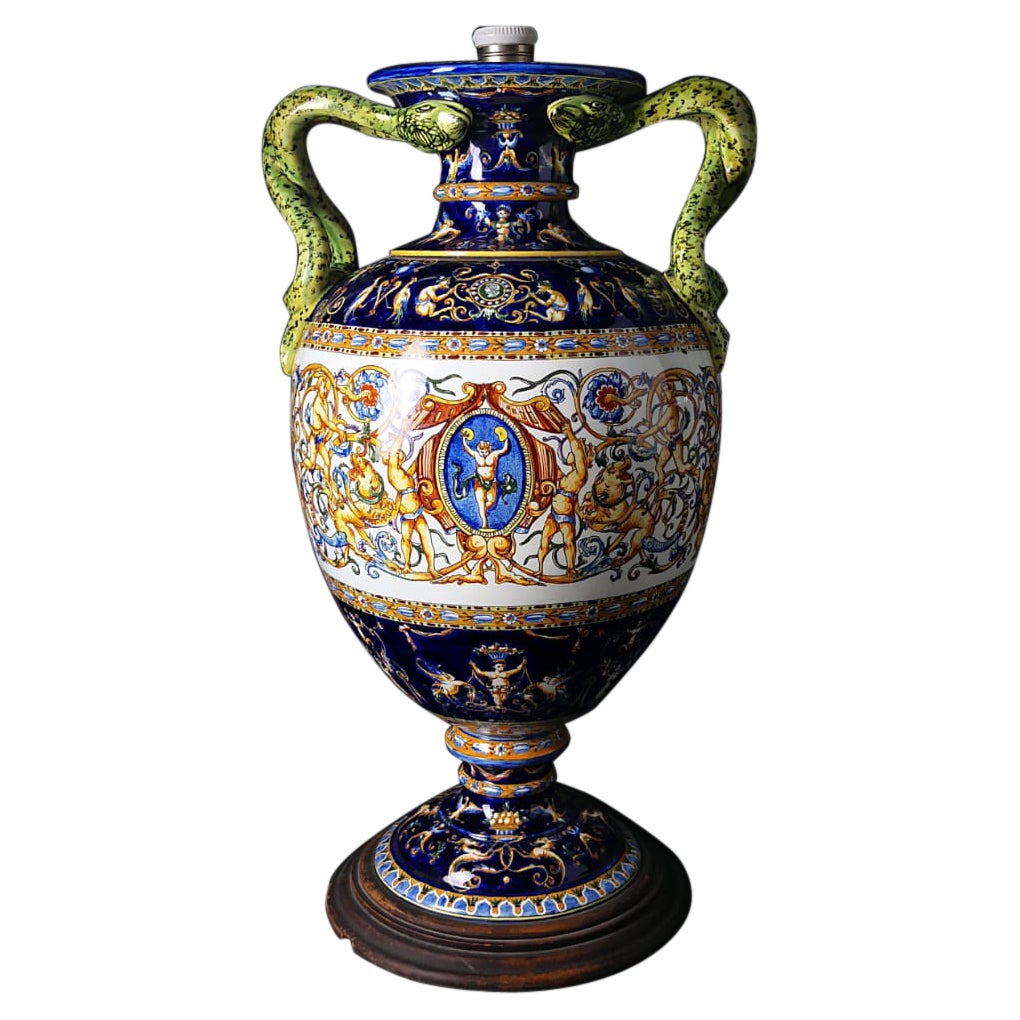
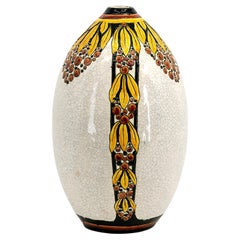
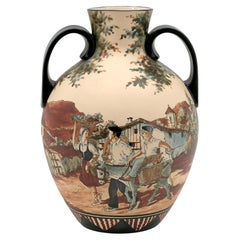
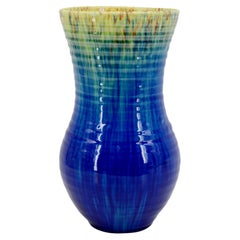
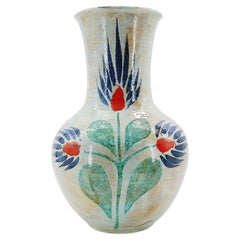
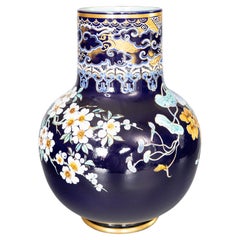
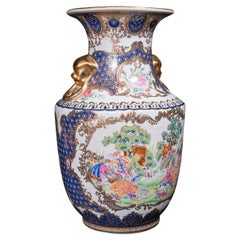
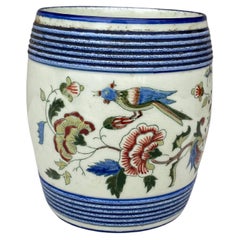
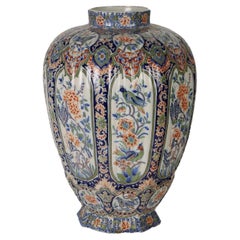
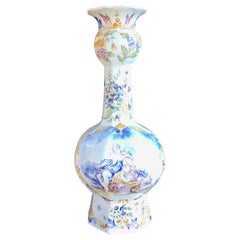
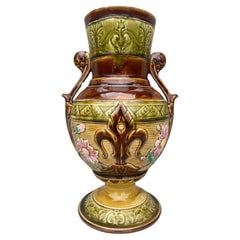
Tall Baluster Ceramic Vase by Faïencerie de Gien, France, 1970s – Hand-Painted Majolica
A tall and impressive baluster-form ceramic vase by the celebrated Faïencerie de Gien, France, dating from the 1970s. Hand-painted in vibrant majolica on earthenware, the piece showcases a striking, richly detailed décor—an excellent example of Gien’s decorative craftsmanship during the 20th century. A bold statement piece for collectors of French ceramics, majolica, and Gien Faience.
Dimensions:
• Height: 17.3" (44 cm)
• Diameter: 9.9" (25 cm)
Marks:
Stamped “Gien France.”
Condition:
Absolutely mint condition — exceptional for a piece of this scale and age.
About Faïencerie de Gien
The Faïencerie de Gien, one of France’s most storied ceramic manufacturers, was founded in 1821 by English industrialist Thomas Edme Hulm, known as Hall. After selling his family’s Montereau factory (operating since 1774), Hall acquired the former Minimes convent in Gien, where he established a new earthenware factory inspired by English production techniques. The manufactory would later become world-renowned.
In its early decades, the company experienced financial instability and changed hands several times between 1826 and 1862. In 1842, under “Guyon, de Boulen & Cie,” Gien temporarily acquired the declining Briare earthenware factory before losing control of it the following year. Renamed “Geoffroy, Guérin & Cie,” and directed by Gustave Charles Gondouin, the factory employed around five hundred workers.
A major turning point came between 1864 and 1866, when flooding of the Loire River caused heavy damage and required new investment. This led to the arrival of Jean-Félix Bapterosses, who had recently purchased the old Briare earthenware works. In 1875, the company officially adopted the name Faïencerie de Gien upon becoming a public limited company, with Bapterosses serving as its first chairman. His descendants maintained control of the manufactory until 1983.
Gien became known not only for its tableware and decorative pieces but also for its production of oil lamps and later, ceramic wall tiles. The factory famously supplied the bevelled white tiles of the Paris Métro, including those used at stations such as Porte de Clichy, after securing the Paris metropolitan market in 1906. Tile production continued until around 1980.
The faience makers of Gien also developed the “encircled enamels” technique (émaux cloisonnés), originally created in Longwy around 1870.
The manufactory reached its artistic peak between 1855 and 1900, receiving numerous awards at major international exhibitions—including those held in 1855, 1867, 1878, 1889, and 1900. Today, Gien remains one of France’s most respected names in fine ceramics, admired for its craftsmanship, color work, and historically rich decorative styles.