Vienna Secession Ceramics

VIENNA SECESSION STYLE & WIENER WERKSTÄTTE

At the turn of the 20th century, Gustav Klimt, Josef Hoffmann and several of their peers separated from the predominant Association of Austrian Artists to form a new professional union, the Vienna Secession.

The artists’ intent to break free from classical traditions in fine art evolved to encompass applied arts and interior design as well: In 1903, Hoffmann and Koloman Moser founded the Wiener Werkstätte, or "Viennese Workshop," to produce progressive furniture, ceramics, glass and textiles.

This talented collective of Austrian artists, architects and designers most famously created works in the Jugendstil style — the German branch of Western Europe's popular Art Nouveau. Jugendstil is associated with dynamic, rhythmic forms and undulating lines.

On 1stDibs, discover the sophisticated Vienna Secession furniture, art and decorative objects — ranging from watercolor paintings and prints to serveware and seating — that transformed Austria over one hundred years ago and maintain timeless appeal today.

to
1
7
1
6
6
3
1
2
2,650
920
874
613
262
238
132
115
77
60
48
32
32
15
9
5
3
2
7
1
1
1
7
4
2
1
7
7
7
1
Style: Vienna Secession
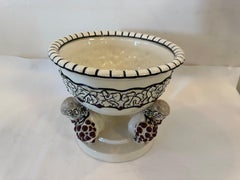
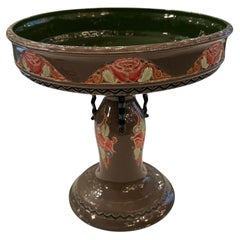
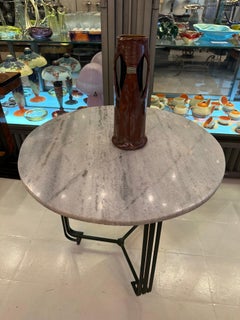
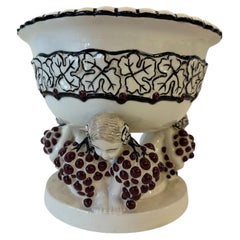
Carl Klimt, a large centrepiece, 1920, model number 4 6807, Sign Eichwald 1194 2

Carl Klimt, a large centrepiece, 1920, model number 4 6807, Sign Eichwald 1194 2

Located in Ciudad Autónoma Buenos Aires, C

Carl Klimt, a large centrepiece, 1920, model number 4 6807 ,Sign Eichwald 1194 2 Bernhard Bloch, Eichwald refers to a famous porcelain, majolica, and art pottery factory founded by t...

Category

1920s Czech Vintage Vienna Secession Ceramics

Materials

Ceramic

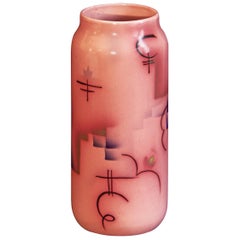
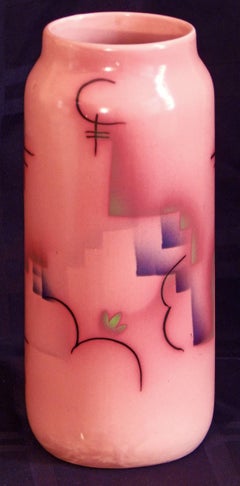
Secessionist Vase, Ruddy Pink with Wiener Werkstatte-Influenced Glyphs

Secessionist Vase, Ruddy Pink with Wiener Werkstatte-Influenced Glyphs

By Wittenberg Pottery

Located in Philadelphia, PA

Clearly showing the influences of the Vienna Secession and the Wiener Werkstatte, at a time when Vienna led the Germanic world's interpretation of Art Nouveau and Art Deco, this cyli...

Category

1920s German Vintage Vienna Secession Ceramics

Materials

Ceramic

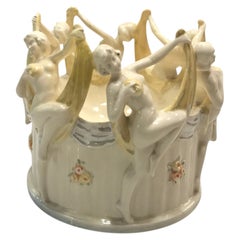
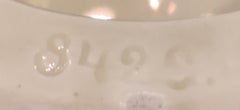
Women's ceramics, Vienna Secession, Sign 8429

Women's ceramics, Vienna Secession, Sign 8429

Located in Ciudad Autónoma Buenos Aires, C

Logistics and International Shipping We provide a comprehensive export service so that your only concern is enjoying your acquisition. • Door-to-Door Service: Pieces located in our A...

Category

Early 1900s Austrian Antique Vienna Secession Ceramics

Materials

Ceramic

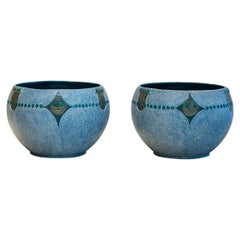
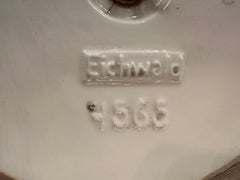
Ceramic sign: Eichwald 4565, Viennese Secession, 1880

Ceramic sign: Eichwald 4565, Viennese Secession, 1880

Located in Ciudad Autónoma Buenos Aires, C

Eichwald pottery originated in 1871 when entrepreneur Bernhard Bloch founded B. Bloch & Company in Eichwald, Bohemia (now Dubí, Czech Republic). The factory became highly regarde...

Category

1880s Czech Antique Vienna Secession Ceramics

Materials

Ceramic

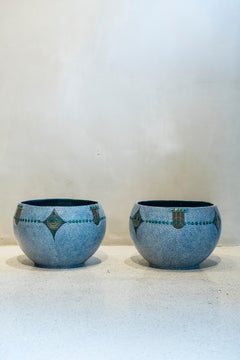
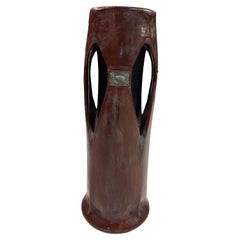
Ceramic 1910, Sign: 7104 Austria, Julius Dressler established

Ceramic 1910, Sign: 7104 Austria, Julius Dressler established

Located in Ciudad Autónoma Buenos Aires, C

The History of Julius Dressler 1. Origins and Foundation (1882 - 1888) Although many pieces bear the "Austria" mark, the factory was not located in modern-day Vienna, but rather in the Northern Bohemia region. In the 1880s (specifically between 1882 and 1888, according to firing test records), Julius Dressler founded his company in Biela (near Tetschen-Bodenbach). At that time, Bohemia belonged to the Austro-Hungarian Empire, which is why its products were legally labeled and exported as Austrian pottery ("Austria"). 2. The Golden Age: The Jugendstil (1900 - 1914) Dressler started by specializing in majolica (fine glazed earthenware) and decorative pottery. However, the factory achieved true international prestige at the beginning of the 20th century thanks to its adoption of two major avant-garde movements: • Art Nouveau (known in the Germanic region as Jugendstil). • The Vienna Secession (Secessionist ware). The factory set itself apart from the competition by experimenting with matte glazes, shades of green, blue, and brown, featuring subtle golden highlights. 3. Geopolitical Changes and Post-War Era (1918 - 1945) Following the end of World War I in 1918, the map of Europe changed completely. The Austro-Hungarian Empire dissolved, and the region of Bohemia became part of the newly created Czechoslovakia. Because of this, the town of Biela was renamed Bělá. Even though the founder passed away or ceased to be actively involved in the company, the business continued under his widow, Hulda Dressler, and later his son, Karl Dressler. • In 1920: To survive the post-war crisis, the factory joined EPIAG (Erste Porzellan-Industrie A.G.), a consortium of independent companies created to promote and export Bohemian ceramics worldwide. • The Closure: The factory continued to operate under this commercial model until the end of World War II, permanently closing its doors between 1944 and 1945. The Classic Mark: The most famous stamp consists of a tower engraved on a rock with the letters J.D.B. underneath (the initials stand for Julius Dressler, Biela). Many of them also feature the word "Austria" printed or stamped. In these museums, pieces by the designer can be seen: National Czech & Slovak Museum & Library Wiener Museum of Decorative Arts (WMODA) Herbert F. Johnson Museum of Art Regional Museum in Děčín (Oblastní muzeum v Děčíně) Museum of Decorative Arts in Prague (Uměleckoprůmyslové museum v Praze) Logistics and International Shipping We provide a comprehensive export service so that your only concern is enjoying your acquisition. • Door-to-Door Service: Pieces located in our Argentina galleries are shipped directly to your address via air freight. • Simplified Customs Management: We handle the processing of export permits and the payment of customs duties. You will receive your purchase without additional paperwork or surprise costs. • High-Security Packaging: Following FedEx international standards, each piece is protected in custom-made wooden crates, designed to withstand 1-meter impacts and ensure the integrity of the object during transit. • Note for shipments to the USA: To comply with shipping company regulations and ensure delivery at the destination, a valid tax ID (EIN, SSN, or ITIN) is required. • Domestic US Shipping: For those pieces available in our United States storage, logistics are managed through 1stdibs. Sign: 7104 Austria Julio Dressler...

Category

1910s Austrian Vintage Vienna Secession Ceramics
Materials

Majolica

Related Items
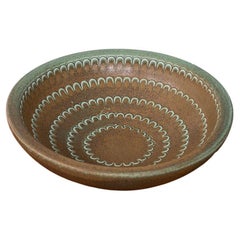
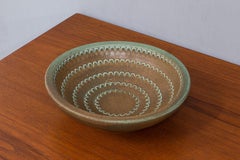
Wilhelm Kåge Green & Brown Stoneware Dish, Bowl, Gustavsberg, Sweden, 1950s

Wilhelm Kåge Green & Brown Stoneware Dish, Bowl, Gustavsberg, Sweden, 1950s

By Wilhelm Kage, Gustavsberg

Located in Stockholm, Stockholms län

Elegant dish, bowl by Wilhelm Kåge from the “KAPA” series. The design was a collaboration between Kåge and three colleagues Björn Alskog, Axel Pettersson, and Birger Arvidsson. Desig...

Category

Mid-20th Century Swedish Vienna Secession Ceramics

Materials

Stoneware

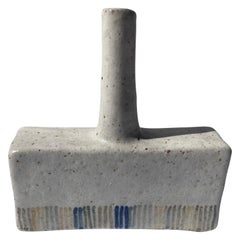
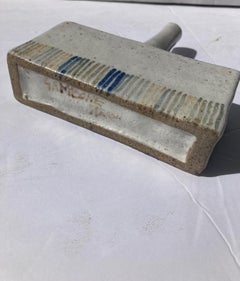
Bruno Gambone Ceramic/Pottery Bottle/ Vase Signed

Bruno Gambone Ceramic/Pottery Bottle/ Vase Signed

By Bruno Gambone

Located in Los Angeles, CA

Great sweet vase/bottle by the well known artist Bruno Gambone . signed and Italy in bottom.

Category

1960s Italian Vintage Vienna Secession Ceramics
Materials

Pottery, Ceramic

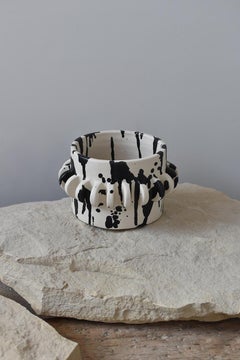
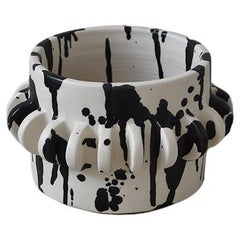
Rock Handmade Ceramic Planter - Black & White

Rock Handmade Ceramic Planter - Black & White

By OWO Ceramics

Located in Ciudad Autónoma de Buenos Aires, AR

Beautiful handmade ceramic planter, perfect for accentuating the beauty of your houseplants. Each ceramic plant pot is individually thrown and trimmed on the wheel, glazed by hand i...

Category

2010s Argentine Vienna Secession Ceramics

Materials

Ceramic, Clay, Pottery

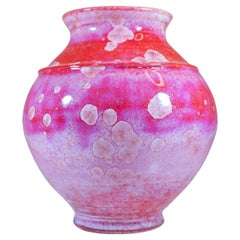
Isak Isaksson Pink Ceramic Vase Crystalline Glaze Contemporary Artist

Isak Isaksson Pink Ceramic Vase Crystalline Glaze Contemporary Artist

By Isak Isaksson

Located in Stockholm, SE

A pink vase with a lovely crystalline glaze designed by Isak Isaksson in Sweden. The vase is 11.5 cm (4.6") tall and about 10 cm (4") wide and it is in excellent condition. This is a...

Category

2010s Swedish Vienna Secession Ceramics

Materials

Ceramic, Stoneware

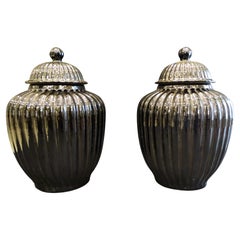
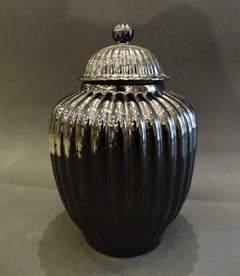
Pair of Black Ceramic Italian Vases, Bucaros, Centerpieces

Pair of Black Ceramic Italian Vases, Bucaros, Centerpieces

$2,603Sale Price / set|22% Off

H 22.05 in W 16.93 in D 16.93 in

Pair of Black Ceramic Italian Vases, Bucaros, Centerpieces

By Italian school XX ct.

Located in Valladolid, ES

Amazing pair of Italian black vases or Bucaros with lid ,in black ceramic , large in size and of great decorative strength in their shapes. The pieces are made by hand, so each piec...

Category

1970s Italian Vintage Vienna Secession Ceramics
Materials

Ceramic

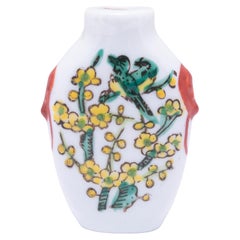
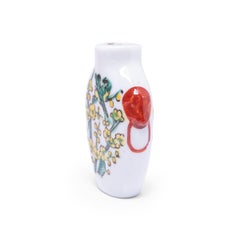
Chinese Plum Blossom Snuff Bottle, circa 1900

Chinese Plum Blossom Snuff Bottle, circa 1900

$68

H 2.25 in W 1.5 in D 0.75 in

Chinese Plum Blossom Snuff Bottle, circa 1900

Located in Chicago, IL

A mixture of finely powdered tobacco, herbs, and spices, snuff was introduced to China in the 17th century by Western diplomats. Initially reserved for ranking members of Qing-dynasty society, the practice provided an opportunity to display one's refined aesthetic through collectible snuff bottles. This decorative snuff bottle has a simple ceramic form and a colorful finish of overglaze enamels atop white glaze. The bottle has an oval shape, with flattened sides and rounded edges. The shoulders are accented with a door knocker motif and the sides are painted with birds amid plum blossom...

Category

20th Century Chinese Vienna Secession Ceramics
Materials

Ceramic, Porcelain

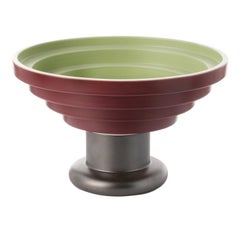
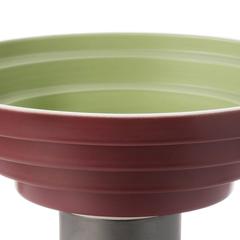
Large Green and Red Centrepiece by Ettore Sottsass

Large Green and Red Centrepiece by Ettore Sottsass

$1,085 / item

H 9.85 in Dm 14.57 in

Large Green and Red Centrepiece by Ettore Sottsass

By Bitossi, Ettore Sottsass

Located in Milan, IT

This elegant centerpiece in white clay features a base in dark grey supporting a conic body made of concentric steps that are finished in red on the outside and in vivid matte green ...

Category

2010s Italian Vienna Secession Ceramics
Materials

Ceramic

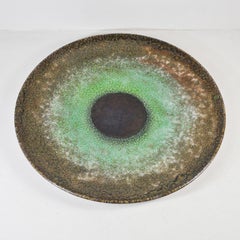
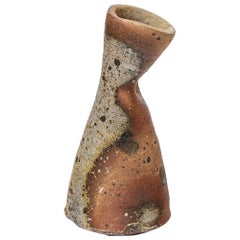
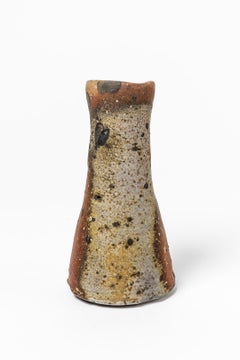
Brown and Black Stoneware Ceramic Vase Signed circa 1960 handmade Pottery

Brown and Black Stoneware Ceramic Vase Signed circa 1960 handmade Pottery

By La Borne Potters

Located in Neuilly-en- sancerre, FR

Signed at the base Original stoneware ceramic vase by French artist GB Midcentury ceramic vase design Brown and black stoneware ceramic glazes colors and effects Original...

Category

Mid-20th Century French Vienna Secession Ceramics
Materials

Ceramic

Previously Available Items
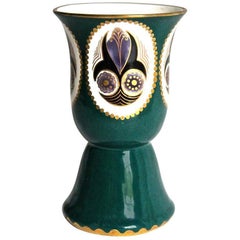
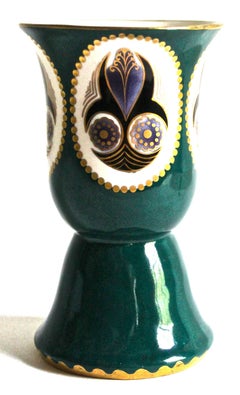
Ernst Wahliss Serapis Hand-Painted Vase

Ernst Wahliss Serapis Hand-Painted Vase

By Ernst Wahliss

Located in Sharon, CT

The deep rich coloring and fine gold details are the hallmarks of the Austrian Architect's unique works for Serapis Ernst Wahliss. Marked 9726 in gold an...

Category

Early 20th Century Austrian Vienna Secession Ceramics
Materials

Ceramic

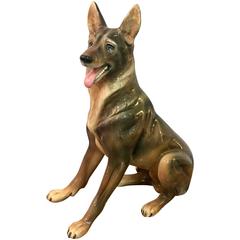
Thomasch Vienna Ceramic Dog

Thomasch Vienna Ceramic Dog

Sold

H 18.12 in W 16.93 in D 7.88 in

Thomasch Vienna Ceramic Dog

By Wilhelm Thomasch

Located in Sofia, BG

Keramos: Wiener Kunst-keramik Und Porzellanmanufaktur AG, was a Viennese art pottery ceramic and porcelain manufacture founded 1910 by several disabled ...

Category

Early 20th Century Austrian Vienna Secession Ceramics
Materials

Ceramic

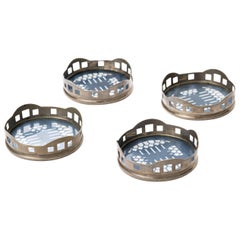
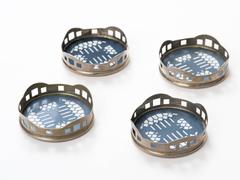
Vienna Secession Ceramic and Nickel Coaster Set

Vienna Secession Ceramic and Nickel Coaster Set

Located in New York, NY

Set of four Vienna secession nickel frame coasters with porcelain inserts. Signed illegibly, Austria, circa 1910-1920.

Category

Early 20th Century Austrian Vienna Secession Ceramics
Materials

Nickel

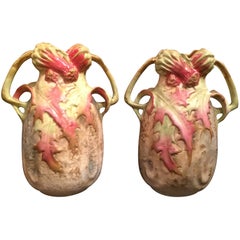
Pair of Austrian Amphora Thistle Vases

Pair of Austrian Amphora Thistle Vases

Sold

H 7.25 in W 6 in D 4.75 in

Pair of Austrian Amphora Thistle Vases

Located in Stamford, CT

Unusual pair of Amphora thistle vases. Detailed leaves in relief at the base of the vase rise upward to the middle where the stems and leaves form two st...

Category

Early 1900s Austrian Antique Vienna Secession Ceramics
Materials

Ceramic

Vienna Secession ceramics for sale on 1stDibs.
Find a broad range of unique Vienna Secession ceramics for sale on 1stDibs. Many of these items were first offered in the Early 20th Century, but contemporary artisans have continued to produce works inspired by this style. If you’re looking to add vintage ceramics created in this style to your space, the works available on 1stDibs include decorative objects, serveware, ceramics, silver and glass and other home furnishings, frequently crafted with ceramic and other materials. If you’re shopping for used Vienna Secession ceramics made in a specific country, there are Europe, and Germany pieces for sale on 1stDibs. While there are many designers and brands associated with original ceramics, popular names associated with this style include and Wittenberg Pottery. It’s true that these talented designers have at times inspired knockoffs, but our experienced specialists have partnered with only top vetted sellers to offer authentic pieces that come with a buyer protection guarantee. Prices for ceramics differ depending upon multiple factors, including designer, materials, construction methods, condition and provenance. On 1stDibs, the price for these items starts at $1,350 and tops out at $1,350 while the average work can sell for $1,350.