Want more images or videos?
Request additional images or videos from the seller
1 of 15

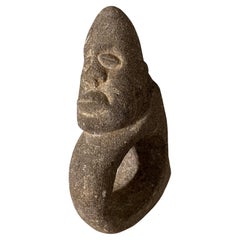
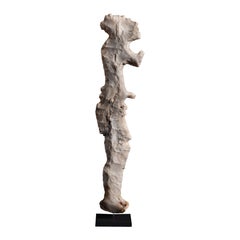
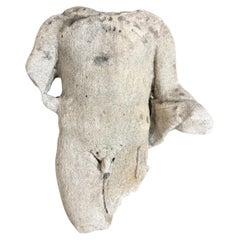
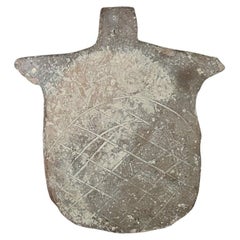
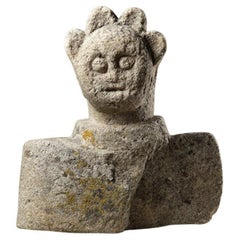
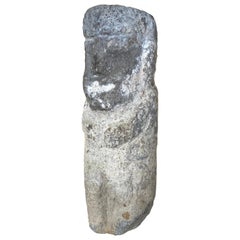
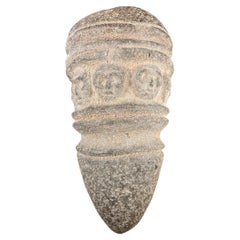
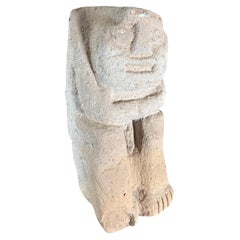
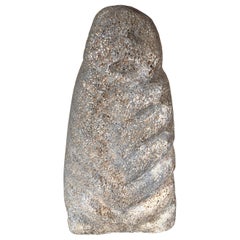
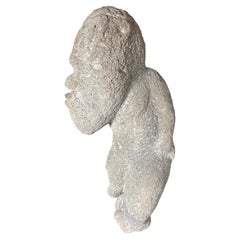
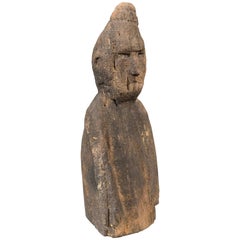
Ancient American Human Effigy Stone Star Gazer, Hohokam Culture

$1,800List Price

You May Also Like

Primitive Antique Native American Indigenous Stone Effigy Creature Sculpture

Primitive Antique Native American Indigenous Stone Effigy Creature Sculpture

Located in Studio City, CA

An interesting and rather unusual indigenous native North or Central/South American (Mesoamerican) primitive stone carved (steatite or soapstone) mythical creature figure. We are no...

Category

Early 20th Century North American Folk Art Native American Objects

Materials

Stone

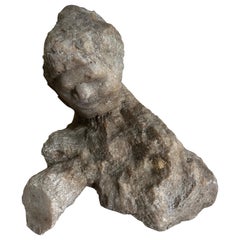
Carved Stone Statue Fragment - Modernist/Primitive

Carved Stone Statue Fragment - Modernist/Primitive

$1,410Sale Price|25% Off

H 10 in W 10 in D 12 in

Carved Stone Statue Fragment - Modernist/Primitive

Located in Los Angeles, CA

Solid piece of stone hand carved with a face and appears resting on a branch. Unique piece for coffee table, credenza or could survive a garden.

Category

Antique 19th Century Primitive Sculptures and Carvings

Materials

Marble

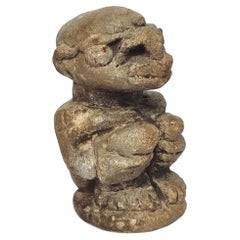
Nomoli Stone Figure, Sierra Leone, Kissi, Tribal Art

Nomoli Stone Figure, Sierra Leone, Kissi, Tribal Art

$2,853

H 6.89 in W 3.55 in D 4.73 in

Nomoli Stone Figure, Sierra Leone, Kissi, Tribal Art

Located in Bochum, NRW

A Kissi Nomoli carved stone figure, a male with his hands wrapped around his knees, on a base; from the Kissi people of Sierra Leone. Greyish brown patina, snout-like mouth, large no...

Category

Antique Late 19th Century Sierra Leonean Tribal Figurative Sculptures

Materials

Soapstone

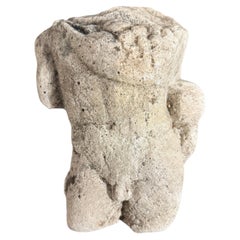
A Vintage Carved Stone Composite Figure, 20th Century

A Vintage Carved Stone Composite Figure, 20th Century

Located in ARMADALE, VIC

A Vintage Carved Stone Composite Figure, 20th Century Provenance: Private Australian Collection. Dimensions: Height: 30cm. Width: 21cm. Depth: 14cm.

Category

20th Century Australian Figurative Sculptures

Materials

Stone

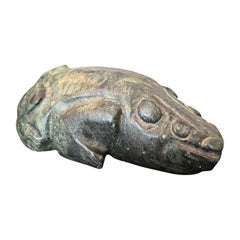
Stone Carved Anthropomorphic Sculpture From The Recuay Culture Peru 400bc-400ac

Stone Carved Anthropomorphic Sculpture From The Recuay Culture Peru 400bc-400ac

Located in Madrid, ES

ANTHROPOMORPHIC SCULPTURE CARVED IN STONE OF THE RECUAY CULTURE PERU 400BC-400AC Recuay is an archaeological culture of Ancient Peru that developed in the Sierra of the current Peruvian department of Áncash between 200 AD. C. until 600 d. C. It corresponds to the stage called Regional Developments, it has also been called the Huaylas or Santa culture. Like the other Early Intermediate cultures, little is known about this culture. The most accepted position is that it was an extension of the Chavin culture, after the influence of the "White on Red" style in the region. Regarding the political aspect of the recuay, there is a hypothesis that questions their autonomy and maintains that Recuay would be part of one of the many political units that made up the Moche state. The recuay style, characterized by its ceramics and stone sculpture, was initially described by Eduard Seler in 1893, based on ceramic specimens brought to the Ethnographic Museum in Berlin by Mariano M. Macedo. Seler named this style of pottery Recuay, based on the report that these pieces had been found in the town of Recuay. Later studies showed that this characteristic pottery was not originally from Recuay but from Copa, near Carhuaz, for which reason the name change to that of this town was proposed. Eventually the name of Huaylas was used for this culture. In 1919 Julio C. Tello explored the area and recovered lithic sculptures and Recuay-type ceramics. In the 1960s Rafael Larco Hoyle proposed changing the names of Recuay and Copa to Santa, arguing that the Recuay style had originated in the coastal regions of the Santa Valley. However, the name Recuay has persisted. Its chronology is also highly debatable. The time of its origin between 0 and 200 AD is discussed. C. and its end or collapse is commonly set to 600 d. C. probably caused by the invasion of the Huari conquerors. It encompassed almost the entire Callejón de Huaylas, a narrow valley fed by the Santa River and enclosed between two mountain ranges, the Cordillera Blanca to the west and the Cordillera Negra to the east. Its influence extended to the east to the Marañón river basin and to the west to the upper parts of the Santa, Casma and Huarmey valleys. To the north it reached the town of Pashash, in the province of Pallasca. The Copa area, Marca district, Recuay province, Ancash department seems to have been the center or main nucleus of cohesion of this culture. The name of the culture would then be justified, derived from the province of the same name. Other important settlements were those of Huilcahuaín (near the current city of Ancash), Cátac, Araucay, Tambo, Jancu, Upayacu and Pashash (near the current city of Cabana). Its main form of expression of art was through stone work (carving and masonry), inherited from its predecessor, the Chavín culture. In addition, they made sculptures in lumps that represent warriors with shields or trophy heads, with which they decorated their complex architectural constructions. They also made white clay pottery...

Category

Antique 15th Century and Earlier Figurative Sculptures
Materials

Stone

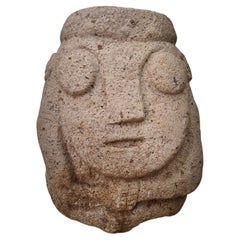
Antique Folk Art Sandstone Ritual Ring, Polished Carving, 15th Century

Antique Folk Art Sandstone Ritual Ring, Polished Carving, 15th Century

Located in Miami, FL

Archaïque polished probably ritual stone ring from Central America or Caraïbe island . Face carved and polished sandstone or granite.

Category

Antique 15th Century and Earlier Unknown Folk Art Sculptures and Carvings

Materials

Sandstone

Ancient Mayan ‘Eccentric’ Flint Depicting Stylised Man or God, c.550-950 AD

Ancient Mayan ‘Eccentric’ Flint Depicting Stylised Man or God, c.550-950 AD

Located in London, GB

A well-preserved and well-provenanced ‘eccentric’ flint, a fine example of the most sophisticated lithic art forms produced by the ancient Mayan civilisation, depicting a stylised fi...

Category

Antique 15th Century and Earlier Guatemalan Prehistoric Mounted Objects

Materials

Stone

A Vintage Stone Composite Figure, 20th Century

A Vintage Stone Composite Figure, 20th Century

$580

H 9.45 in W 8.08 in D 3.35 in

A Vintage Stone Composite Figure, 20th Century

Located in ARMADALE, VIC

A Vintage Stone Composite Figure, 20th Century Provenance: Private Australian Collection. Dimensions: Height: 24cm. Width: 20.5cm. Depth: 8.5cm. Weight: 3.6Kg.

Category

20th Century Australian Figurative Sculptures

Materials

Stone

Anatolian Ceramic Idol, Early Bronze Age circa 2700-2400 BCE

Anatolian Ceramic Idol, Early Bronze Age circa 2700-2400 BCE

Located in Vosselaar, BE

A interesting example of a kusura type bronze age idol. These are usually found in marble but this one is in ceramic. These idols represent a stylized female shape and represent fert...

Category

Antique 15th Century and Earlier Turkish Archaistic Antiquities

Materials

Ceramic

A Rare Ancient Celtic Bust of a Radiate Deity ‘Sol Invicta’

A Rare Ancient Celtic Bust of a Radiate Deity ‘Sol Invicta’

Located in London, GB

A Rare Ancient Celtic Bust of a Radiate Deity ‘Sol Invicta’ Wearing a Halo of the Rays of the Sun Limestone British 1st Century BC - 1st Century AD Size: 42cm high, 40cm wide, 20cm ...

Category

Antique 15th Century and Earlier British Antiquities

Materials

Limestone

More From This Seller

View All
Columbia River Massive  Pre Contact Carved Stone Nine Effigies Ceremonial Mortar

Columbia River Massive Pre Contact Carved Stone Nine Effigies Ceremonial Mortar

Located in South Burlington, VT

From Native America's Northwest Columbia River area comes this substantial and unique ancient hand carved basalt stone ceremonial bowl or mortar possessing nine (9) human like heads within a circular double band, Columbia River. It comes from a private Colorado collection. The stone hand carved from a large basalt...

Category

Antique 15th Century and Earlier American Native American Native America...

Materials

Stone

American Ancient Anasazi "Human Effigy" Male Stone Sculpture

American Ancient Anasazi "Human Effigy" Male Stone Sculpture

Located in South Burlington, VT

A Native American Human Effigy male statue, El Paso, Texas , sandstone, circa 1500 AD or before (1000-1400 AD) Dimensions: 11.25 inches tall and 4.5 in...

Category

Antique 15th Century and Earlier American Native American Objects

Materials

Sandstone

Chinese Ancient Hongshan Culture Stone Sculpture, 4700-2900 BC

Chinese Ancient Hongshan Culture Stone Sculpture, 4700-2900 BC

Located in South Burlington, VT

China, a fine archaic human effigy hand-carved from a granular medium to dark gray volcanic stone with six (6) "V" sections carved front. Neolithic period, Hongshan culture...

Category

Antique 15th Century and Earlier Chinese Antiquities

Materials

Stone

Important Ancient Hawaiian Aumakua Stone Sculpture with Provenance

Important Ancient Hawaiian Aumakua Stone Sculpture with Provenance

Located in South Burlington, VT

A rare and monumental Hawaiian hand carved stone "Aumakua" abstract sculpture of a male carved from Vesicular Basalt. An Aumakua is a Hawaiian ancestral spirit guardian—a family de...

Category

Antique 19th Century American Sculptures and Carvings

Materials

Stone

American "Human Effigy" Female Stone Sculpture, Tennessee, 1000 AD

American "Human Effigy" Female Stone Sculpture, Tennessee, 1000 AD

Located in South Burlington, VT

A Native American Human Effigy female statue, Holliston Mills Site, Tennessee , sandstone, circa 1000 AD Dimensions: 11.75 inches tall and 3.75 inches width 5.75 diameter All stone carvings from America's Prehistoric past are scarce. The majority of known carved stones come from the far western Mimbres, Hohokam or Casas cultures. This sculpture is unique. Quality: fine original condition with varigated patina as found. Notice the detail of the carved ear spools...

Category

Antique 15th Century and Earlier American Native American Objects

Materials

Sandstone