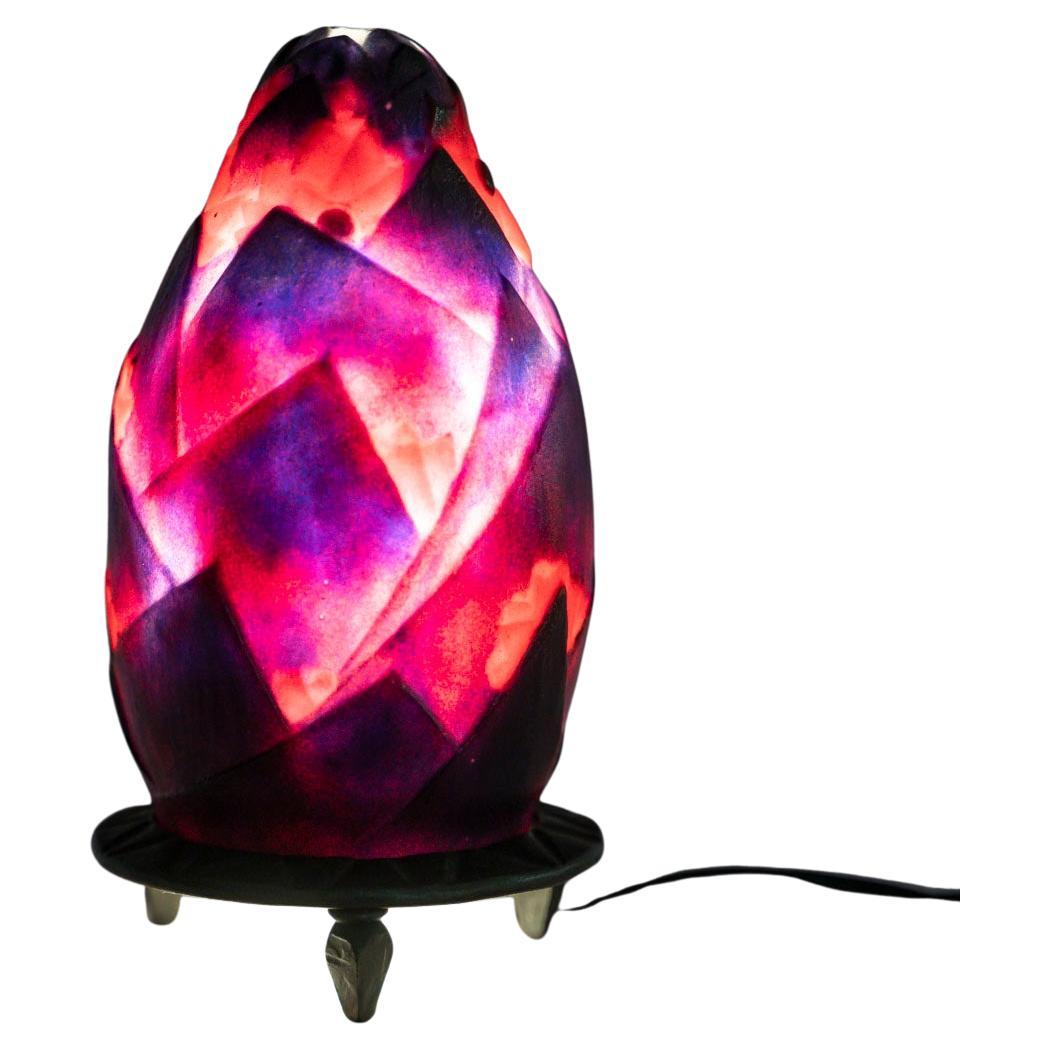
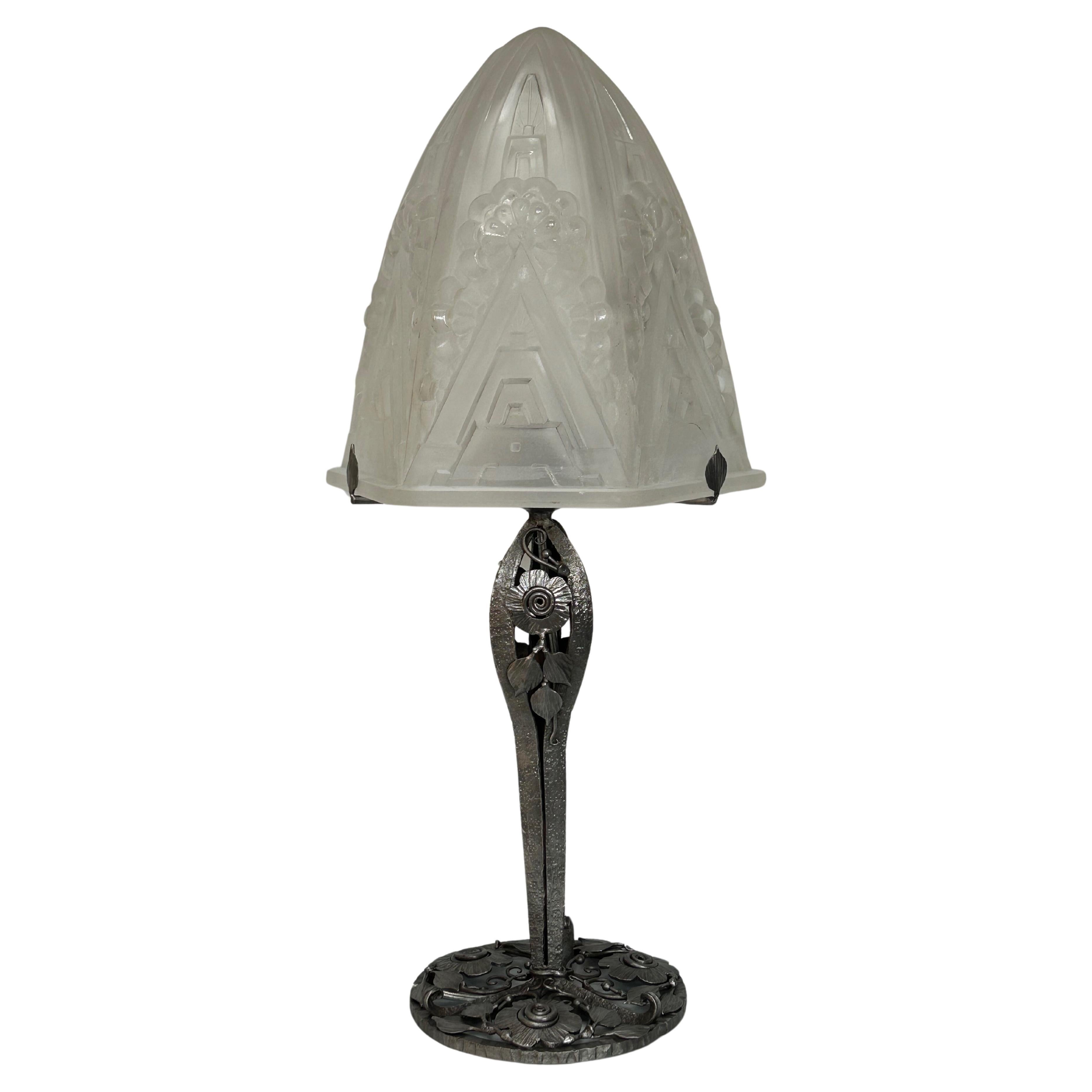
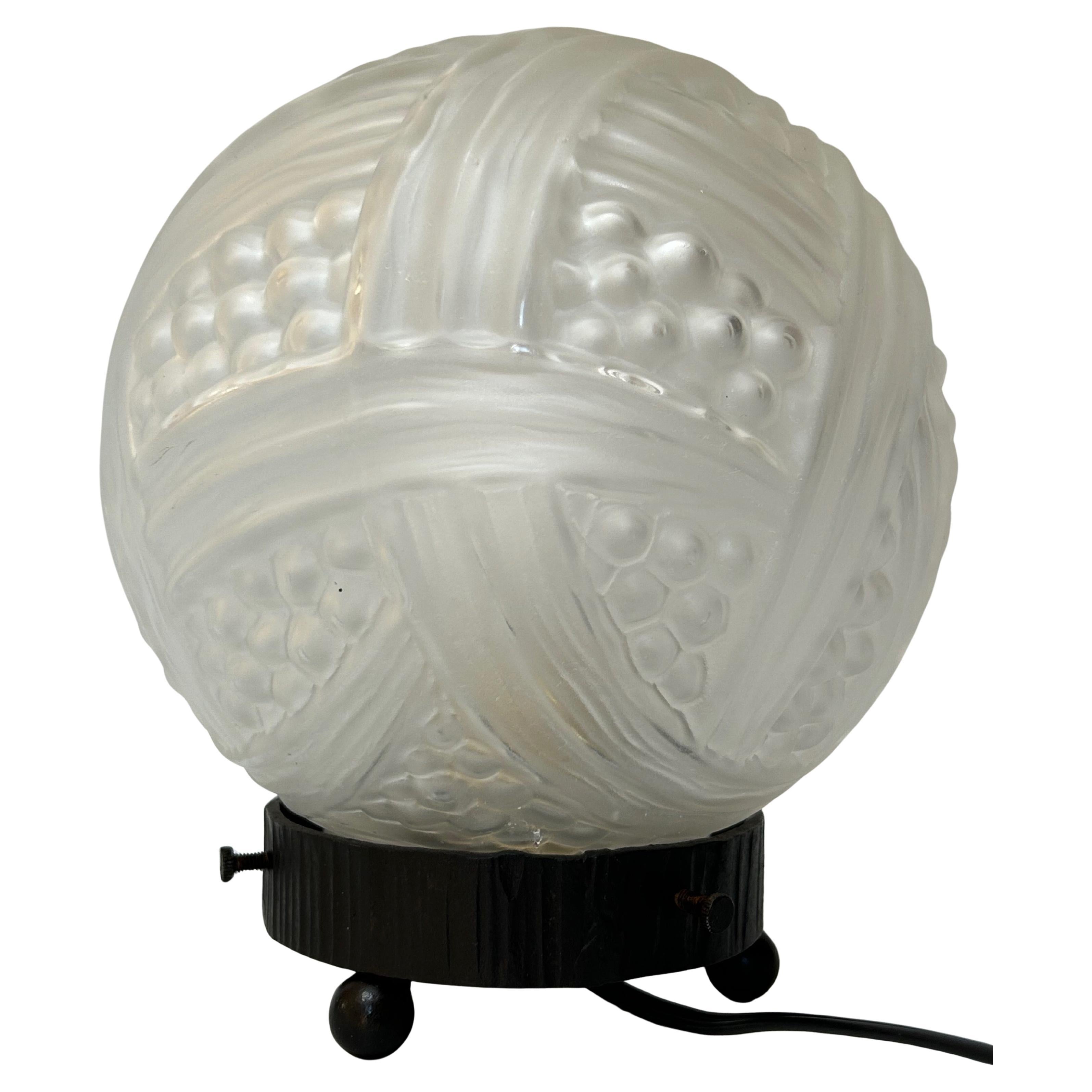
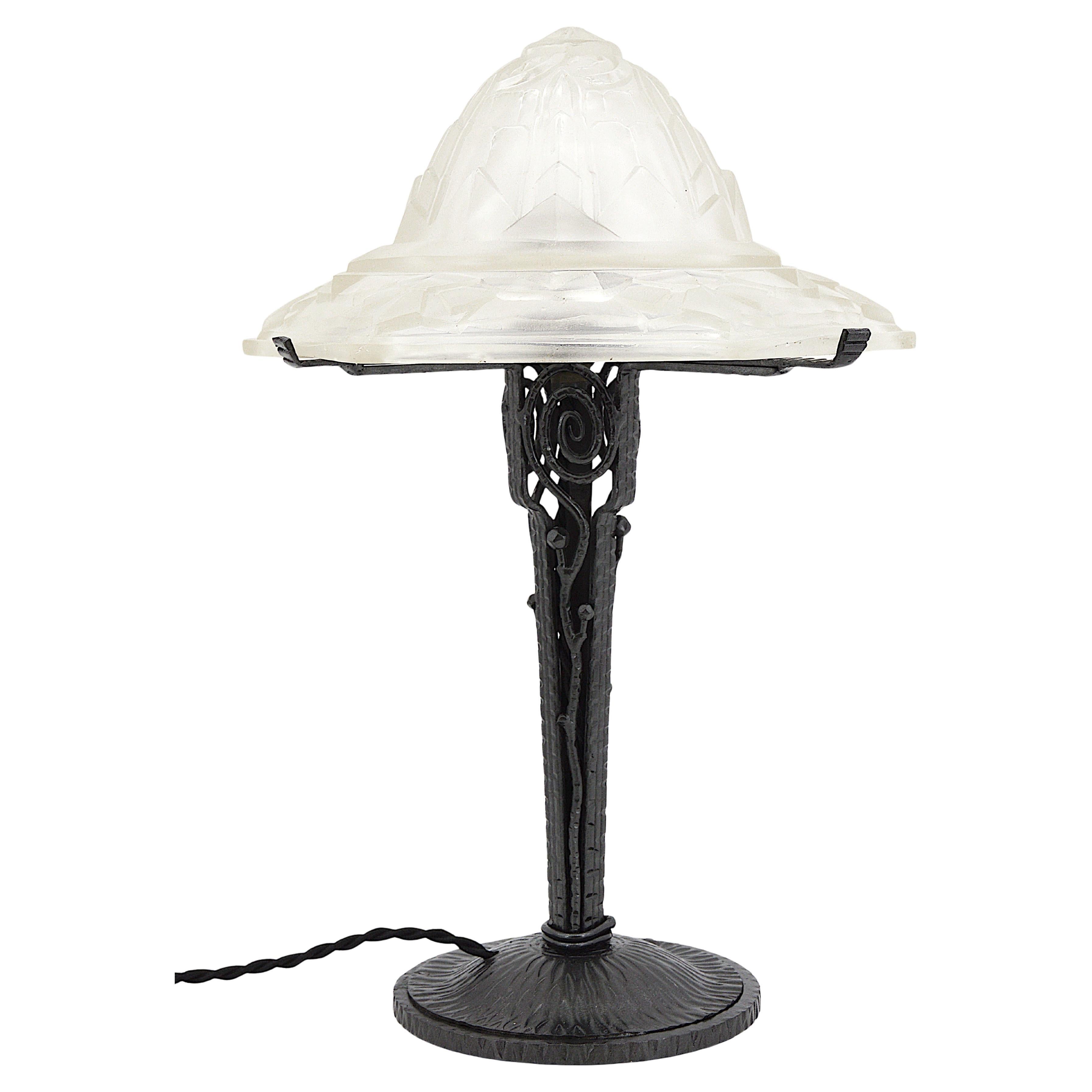
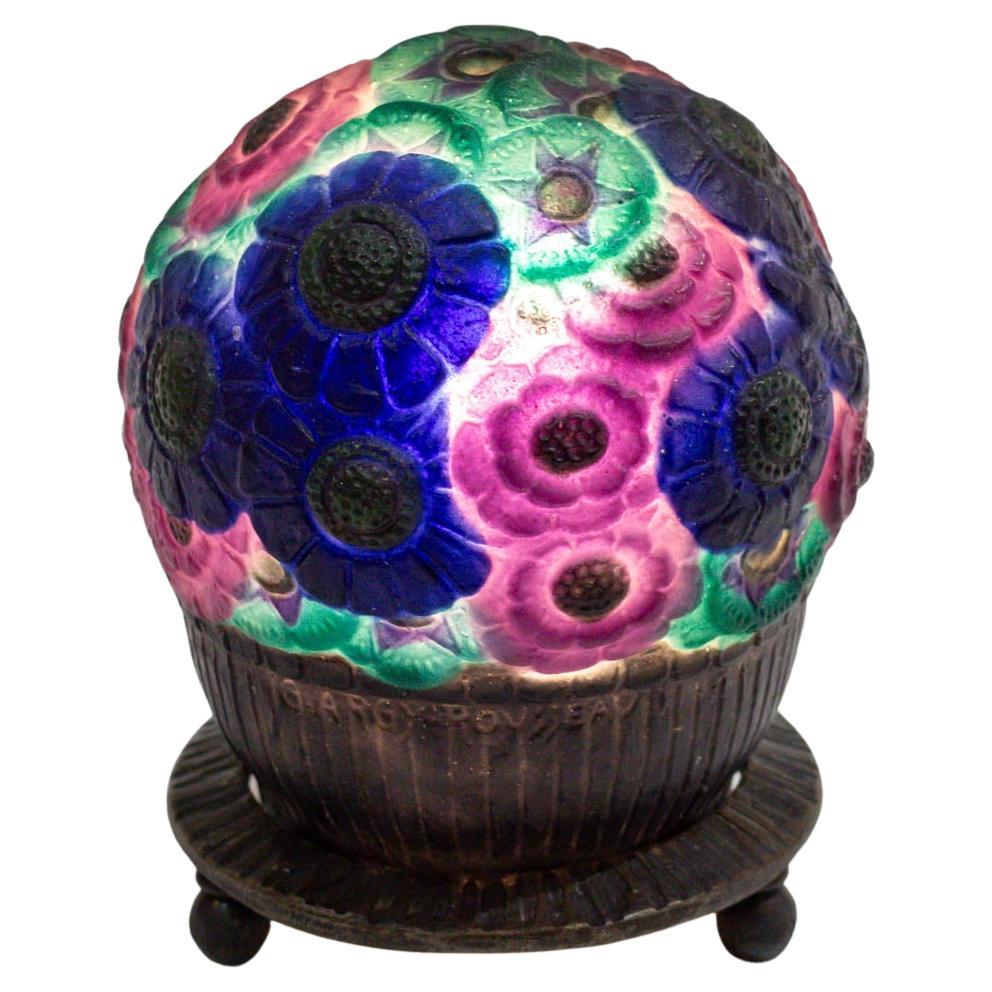
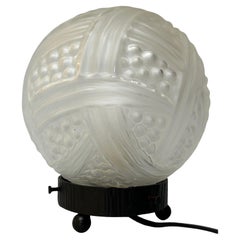
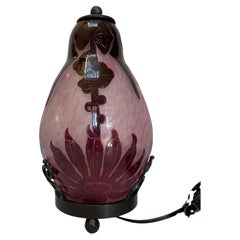
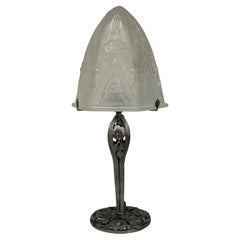
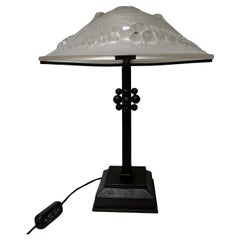
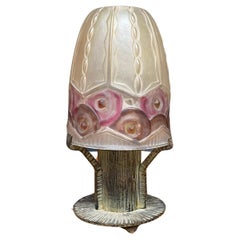
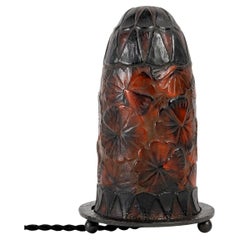
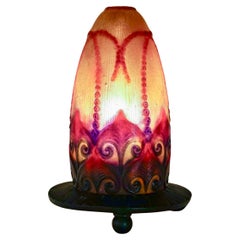
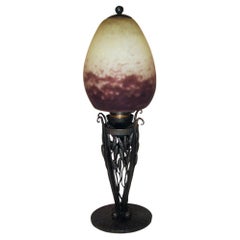
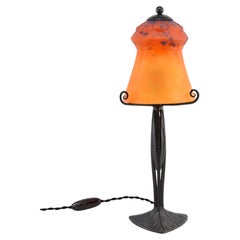
Art deco night light in glass paste model Rosaces.
Wrought iron frame cast signature G. ARGY ROUSSEAU and FRANCE Electrified, in perfect condition.
With superb color.
Hight. 18cm
Diameter: 10 cm
Weight: 600 G
Joseph Gabriel Rousseau known as Gabriel Argy-Rousseau (1885-1953) is a French sculptor, ceramist and master glassmaker who contributed to the rediscovery of glass paste as a major glassmaking art of the early 20th century. Although the glass paste technique dates back to antiquity, it fell into oblivion for a very long time. In the last quarter of the 19th century, Henri Cros and a handful of artists, often ceramists from the Art Nouveau movement, such as François Décorchemont or Georges Despret, brought it back into the spotlight. The last of these precursors is Gabriel Argy-Rousseau. He is considered the only glassmaker to have developed and used the complex process of glass paste, the other master glassmakers working with crystal paste.
Entering the Sèvres Ceramics School, he discovered glass paste in the workshop of Henri Cros. Gabriel Argy-Rousseau began producing between 1910 and 1920. His first works were influenced by the plant and animal themes of Art Nouveau. He debuted at the 1914 Salon of French Artists in Paris. Between 1921 and 1931, established on rue Simplon in Paris, he was a shareholder in the Argy-Rousseau glass paste company. With numerous collaborators, he produced small, very colorful subjects in the Art Nouveau then Art Deco style, distributed in small series: pendants, vases, lamps and night lights and, from 1928, sculptures (statuettes or bas-reliefs) in collaboration with Marcel Bouraine. Unlike his ceramist colleagues, he remained faithful to the polychrome effects and floral motifs of Art Nouveau late in life. He develops shimmering colors (ruby red, amethyst, gray, deep blue, etc.) and textures with marbled effects. He invented new processes for surface coloring of the dough, by brushing with oxide powder before second cooking at low temperature. His works are made of glass paste, the statuettes generally made of crystal paste.
The glass creations of Gabriel Argy-Rousseau remain among the most typical and representative examples of Art Deco production. Production in the workshop ceased in 1931, but Argy-Rousseau continued to create pieces in crystal paste, no longer having, due to the economic crisis, the possibility of working the very expensive process of glass paste. He occasionally exhibited glassware decorated with precious metals, notably in 1934. His last exhibition took place a year before his death in 1952. He died forgotten, but left behind an important body of work in the field of glass, now rediscovered.