Want more images or videos?
Request additional images or videos from the seller
1 of 15

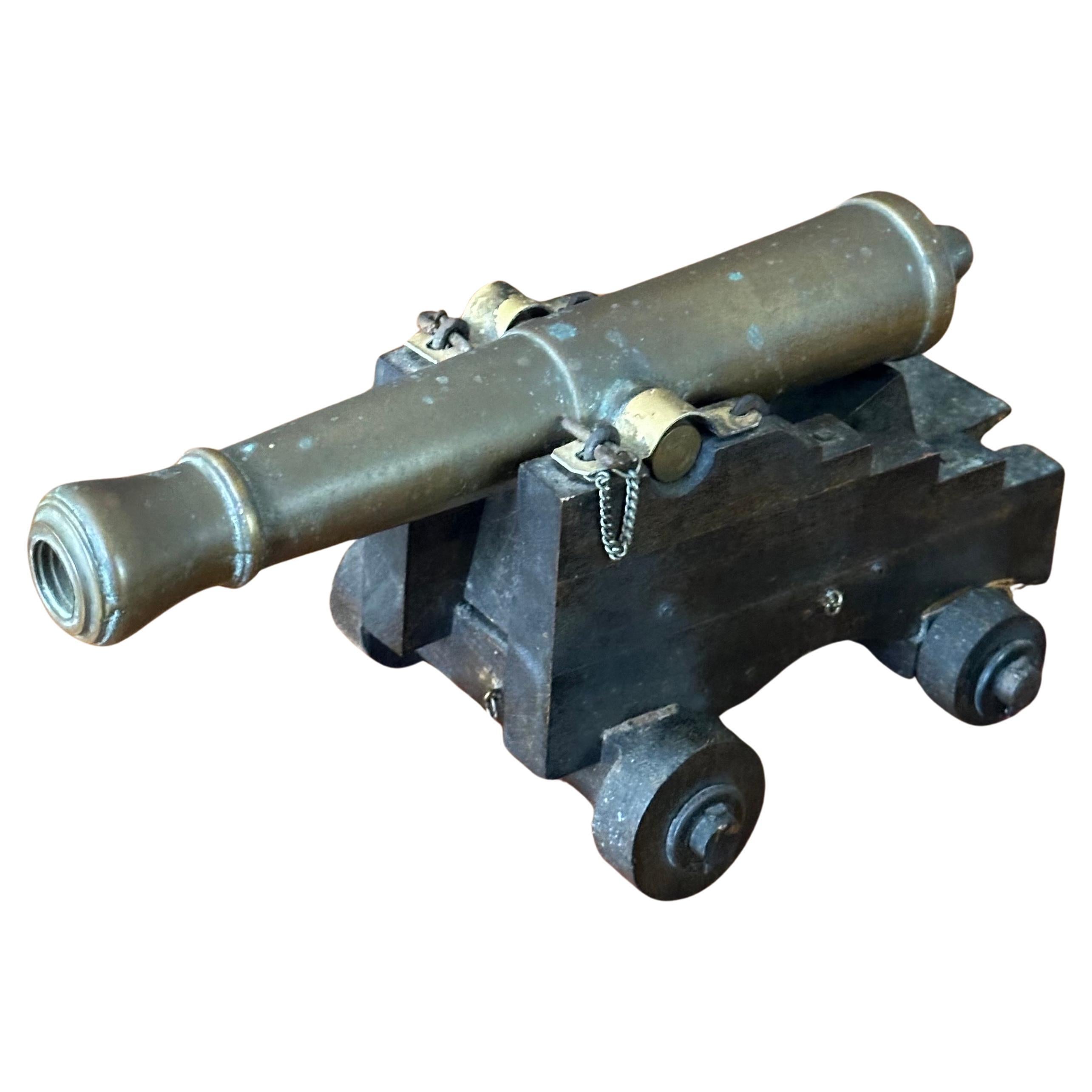
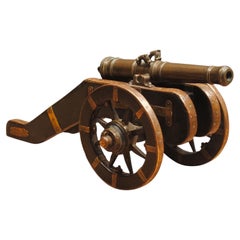
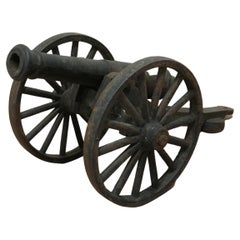
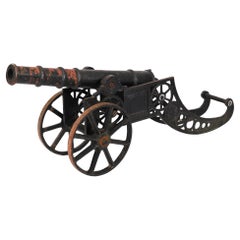
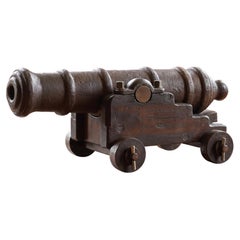
Mid-Victorian Model of a Field Cannon

$6,721.33
£4,875
€5,786.77
CA$9,302.66
A$9,335.18
CHF 5,444.39
MX$113,504.43
NOK 62,561.46
SEK 64,341.27
DKK 43,259.15

About the Item

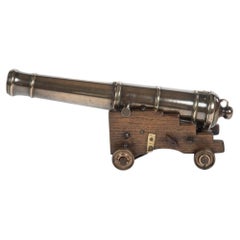
A mid-Victorian model of a field cannon, the bronze barrel set on an oak carriage with large iron-bound wheels, with traces of the original black, red and white paint. English, circa 1875.
  • Dimensions:
    Height: 24 in (60.96 cm)Diameter: 12.5 in (31.75 cm)
  • Materials and Techniques:
  • Place of Origin:
  • Period:
  • Date of Manufacture:
    circa 1875
  • Condition:
    Wear consistent with age and use.
  • Seller Location:
    Lymington, GB
  • Reference Number:
    1stDibs: LU973019133272

More From This Seller

View All
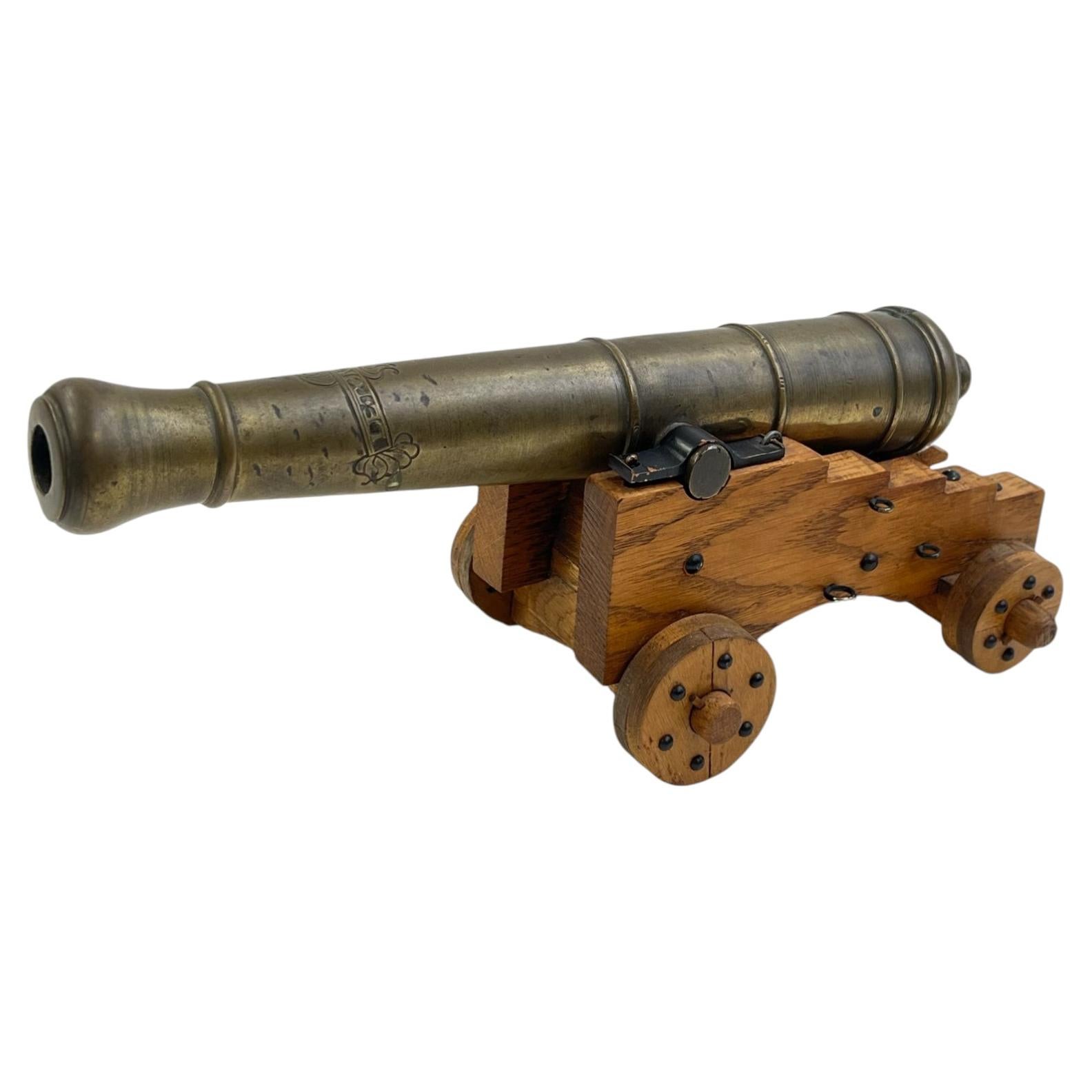
A late 19th century scale model of field cannon

A late 19th century scale model of field cannon

Located in Lymington, Hampshire

A late 19th century scale model of field cannon, the barrel with a flared muzzle on an oak carriage with twin twelve spoke steel rimmed wheels and steel m...

Category

Antique Late 19th Century European Arms, Armor and Weapons

Materials

Steel

Late 18th Century Bronze Lantaka Cannon

Late 18th Century Bronze Lantaka Cannon

Located in Lymington, Hampshire

A late 18th century bronze Lantaka cannon, the slightly tapering barrel cast with flanges and set on a hinged pin. With a modern black S-scroll Stand. D...

Category

Antique 1790s Dutch Arms, Armor and Weapons

Materials

Bronze

Model of a cannon made from bronze recovered from the the former flagship

Model of a cannon made from bronze recovered from the the former flagship

Located in Lymington, Hampshire

Model of a cannon made from bronze recovered from the the former flagship of the Royal Navy’s Western Squadron, HMS Royal George, a veteran of the Battles of Quiberon Bay (1759) and ...

Category

Antique 19th Century English Models and Miniatures

Materials

Bronze

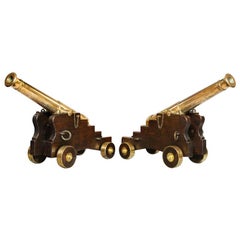
A fine bronze naval 5 stage signalling cannon on a naval dockyard elm carriage w

A fine bronze naval 5 stage signalling cannon on a naval dockyard elm carriage w

Located in Lymington, Hampshire

A fine bronze naval 5 stage signalling cannon on a naval dockyard elm carriage with bronze wheels. Old repairs to the carriage. England, Circa 1820. Small naval signalling cannons, often known as signal guns or salute guns, have a rich history dating back to the late 17th and 18th centuries, serving as a non-lethal, functional, and ceremonial tool aboard ships and on land. Unlike primary armament cannons, these smaller weapons were designed to communicate and alert. Small, fireable, decorative cannons...

Category

Antique Early 19th Century English Models and Miniatures

Materials

Bronze

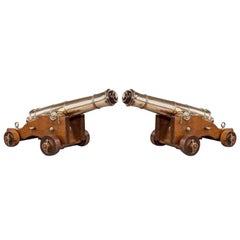
Pair of Antique English Naval Cannon

Pair of Antique English Naval Cannon

Located in Lymington, Hampshire

Pair of antique English naval cannon each with a tapering three stage barrel flanked by plain trunnions, with a knob shaped cascabel button before a shaped rectangular raised vent and ending in a 3 1/2” bore muzzle, enclosing a removable conforming wood plug, circa 1800. Stood upon a naval type bronze-mounted four wheeled wooden carriage, including its wedge shaped quoin with knob handle. The Earls of Lonsdale, Lowther Castle, Cumbria, presumably by descent to Hugh Cecil Lowther, 5th Earl of Lonsdale (1857-1944), until sold by his heir and brother, Lancelot, 6th Earl, as part of the contents of Lowther Castle, Maple & Co. Ltd./Thomas Wyatt, Tuesday 14 April 1947 and two following days, lot 558: ‘A pair of Old Gun Metal Cannons on teakwood carriages, 3ft. 6in. long’. Mrs. P.M. Adie-Shepherd, sold Christie’s, London, 29 May 1970, lot 96. Lowther Castle is a castellated mansion built by Robert Smirke between 1806 and 1814 for William Lowther, 1st Earl of Lonsdale (1757-1844). It was constructed on the foundations of the former 17th century family seat, Lowther Hall, but it was only in the early 19th century that it was afforded the name ‘castle’ in keeping with the Europe-wide fashion for romanticism and which was promoted by influential characters such as William Beckford at Fonthill Abbey, Wiltshire in England and by the writer Sir Walter Scott at Abbotsford, Roxburghshire, Scotland. While it’s not known when these naval cannon were acquired for Lowther they would have been entirely fitting in the castle or its approaches and it’s likely that they were in place soon after the castle was completed, or perhaps acquired later by the 5th Earl. A tantalising possibility is that the cannon were originally aboard the East Indiaman Lowther Castle which was active in the early 19th century. HUGH CECIL LONSDALE, 5TH EARL OF LONSDALE (1857-1944) AND THE DEMISE OF LOWTHER CASTLE In 1882 at the age of 25 Hugh Lonsdale (1857-1944) unexpectedly inherited the earldom and with it the extensive Lonsdale estate, including tens of thousands of acres of Cumberland and Westmorland and coalfields at Whitehaven. However, despite his spectacular inherited wealth – he was suddenly one of the wealthiest men in England, over the course of his lifetime he managed to decimate the family fortune. He led a full and colourful life, one of adventure and luxury. An early intrepid escapade took place in July 1888 when, as part of an expedition called the Scotch Naturalist Society, he set embarked on horse sleigh...

Category

Antique Early 1800s English Arms, Armor and Weapons
Materials

Bronze

You May Also Like

Early 20th Century English Model of a Starting Cannon

Early 20th Century English Model of a Starting Cannon

Located in London, GB

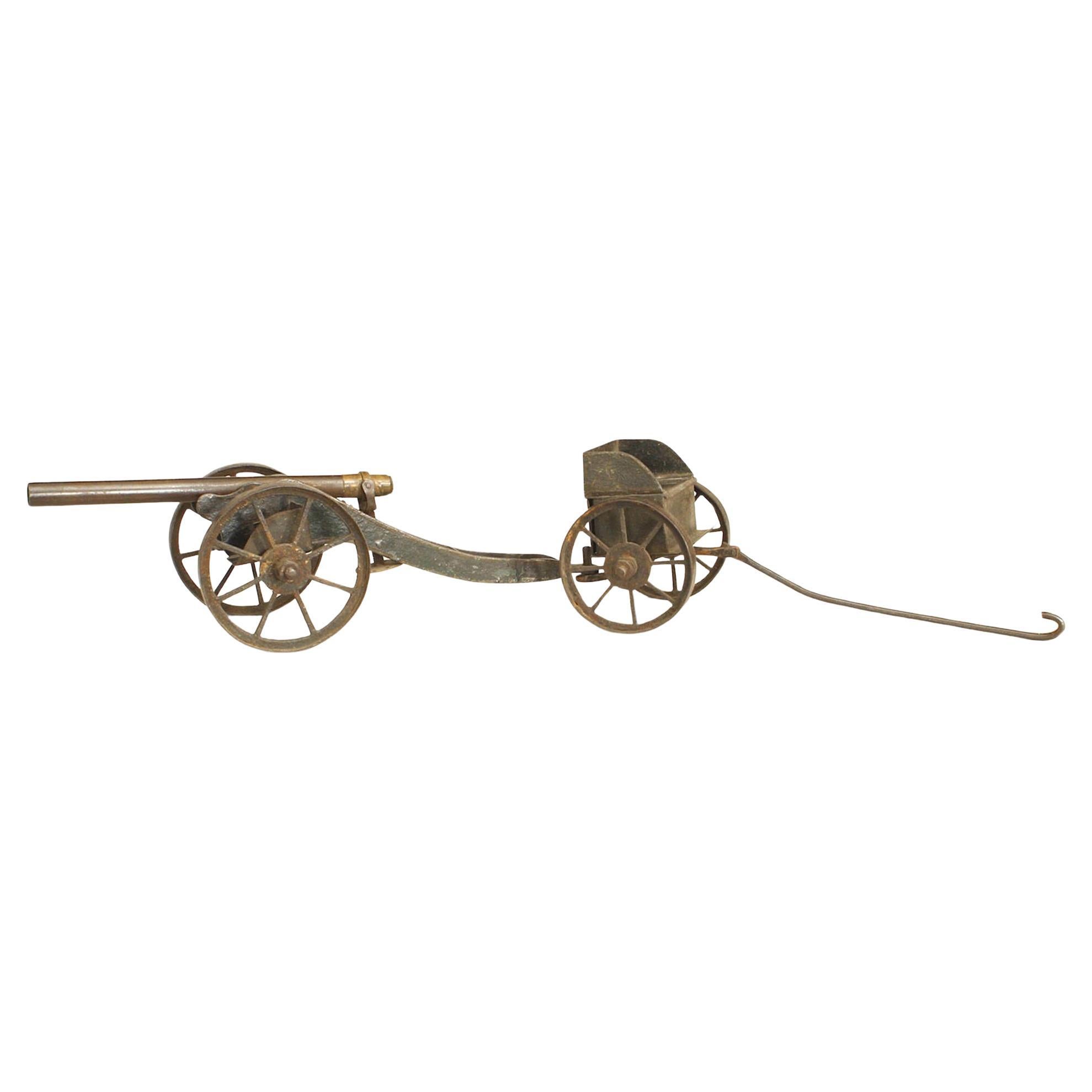
This well-proportioned to scale and detailed cast iron model of an English starting cannon features movable parts including the wheels and cannon barrel. It includes excellent detail...

Category

Early 20th Century English Models and Miniatures

Materials

Iron

A Fine Model of a 19th C. British 24-Pounder Muzzle-Loading Smoothbore Cannon

A Fine Model of a 19th C. British 24-Pounder Muzzle-Loading Smoothbore Cannon

Located in Ottawa, Ontario

A finely cast model of an early 19th century British 24-pounder smoothbore muzzle-loading artillery cannon, together with its garrison style carriage. Both cast in heavy gauge 'bell...

Category

Early 20th Century British Victorian Arms, Armor and Weapons

Materials

Bronze

An 18th Century Model Field Cannon With Bronze Barrel

An 18th Century Model Field Cannon With Bronze Barrel

Located in Lincolnshire, GB

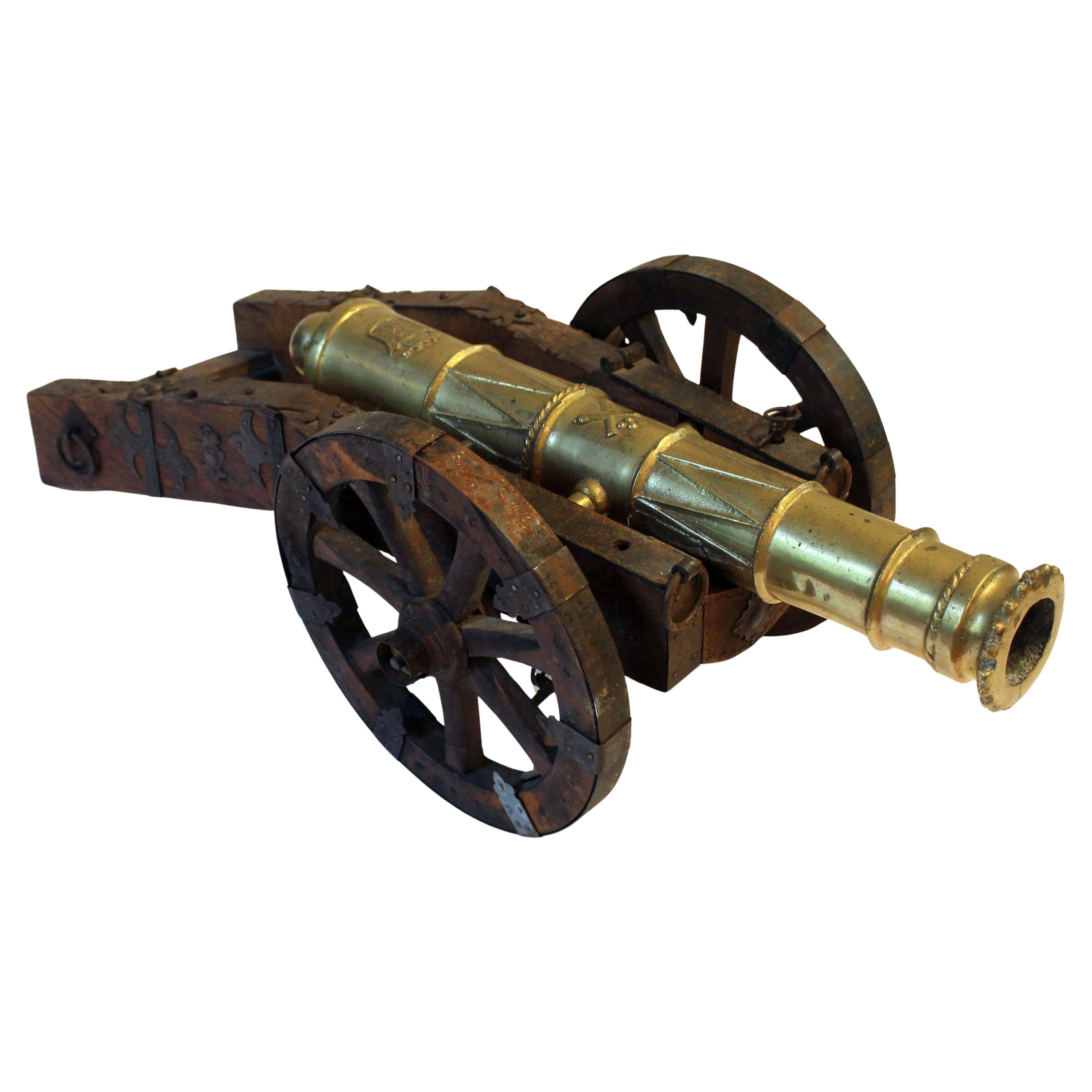
An 18th century bronze model of a field cannon, mounted on a brass bound oak carriage The cannon with dolphin handles and good patiation. Possibly originally used as a starter cannon

Category

Antique 18th Century European Arms, Armor and Weapons

Materials

Brass, Bronze

19th Century Model Field Gun on Carriage, Cast Iron Porch Cannon

19th Century Model Field Gun on Carriage, Cast Iron Porch Cannon

Located in Godshill, Isle of Wight

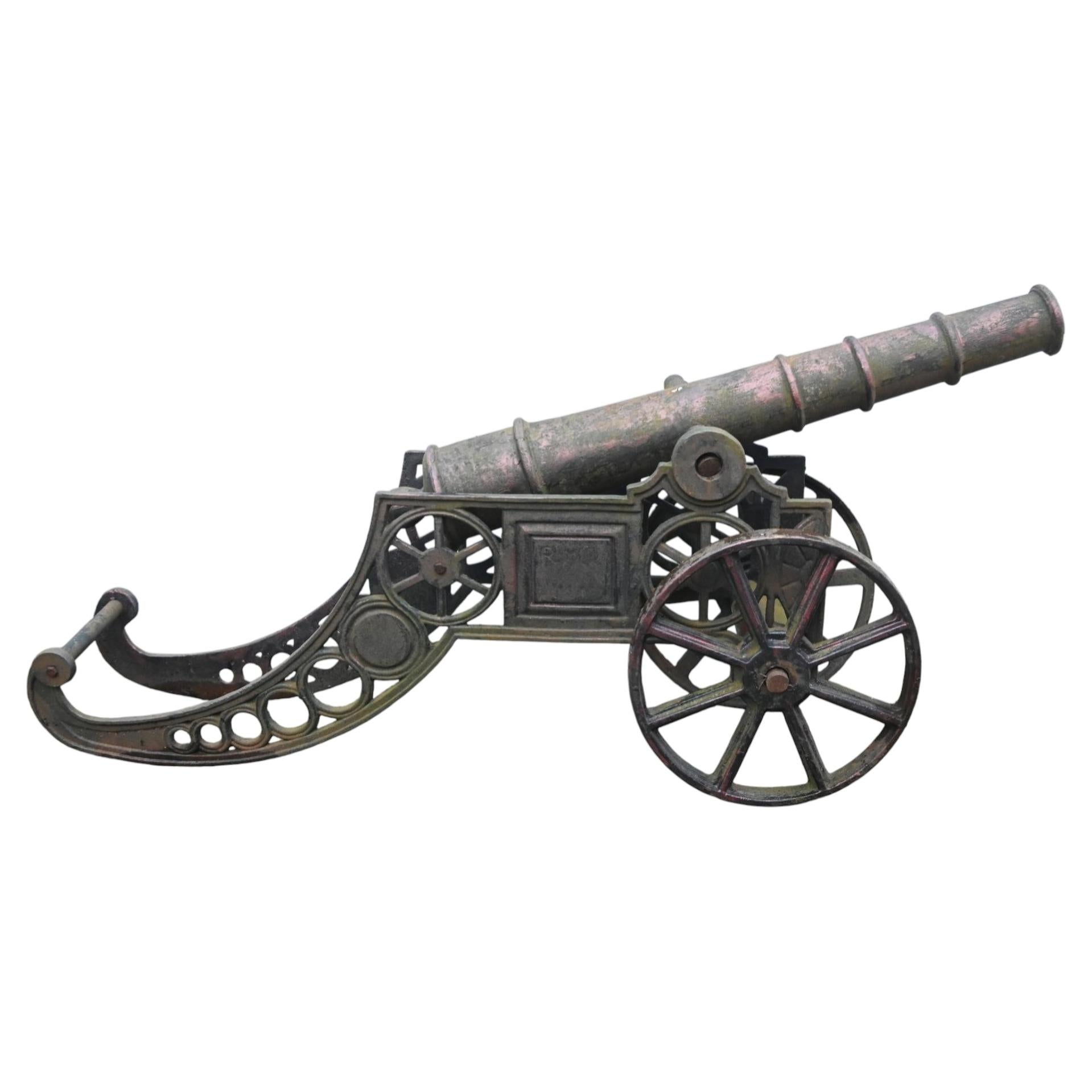
19th century Model Field gun on carriage, cast iron porch cannon A good and well made piece, the field gun is made in good detail, this piece has spent m...

Category

Antique Mid-19th Century British Colonial Arms, Armor and Weapons

Materials

Iron

Antique Decorative Cast Iron Cannon Early 20th Century

Antique Decorative Cast Iron Cannon Early 20th Century

Located in London, GB

This is a superb antique decorative cast iron signal cannon mounted on a two-wheeled carriage, and dating from Circa 1920. This well-proportioned and detailed cast iron model of an ...

Category

Early 20th Century Models and Miniatures

Materials

Iron

19th-Century Cast-Iron Signal Cannon On Oak Carriage

19th-Century Cast-Iron Signal Cannon On Oak Carriage

Located in Cheshire, GB

Description A decorative 19th-century cast-iron signal cannon mounted upon a strongly constructed oak carriage. The substantial barrel features moulded bands, a flared muzzle and rou...

Category

Antique 1870s British Arms, Armor and Weapons
Materials

Cast Iron