Want more images or videos?
Request additional images or videos from the seller
1 of 6

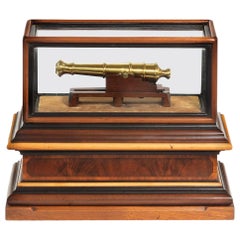
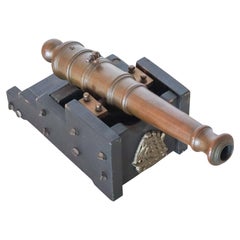
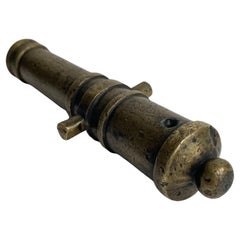
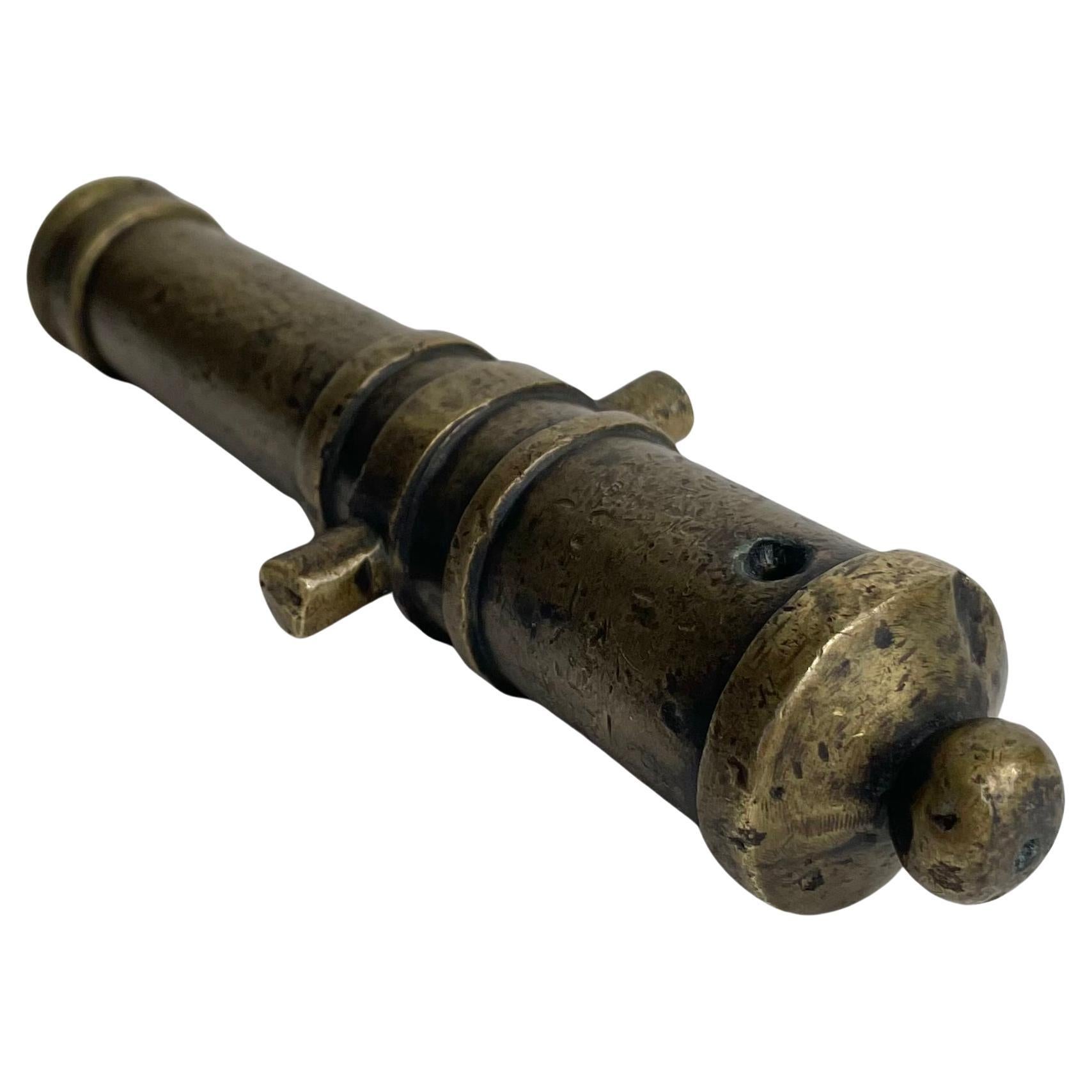
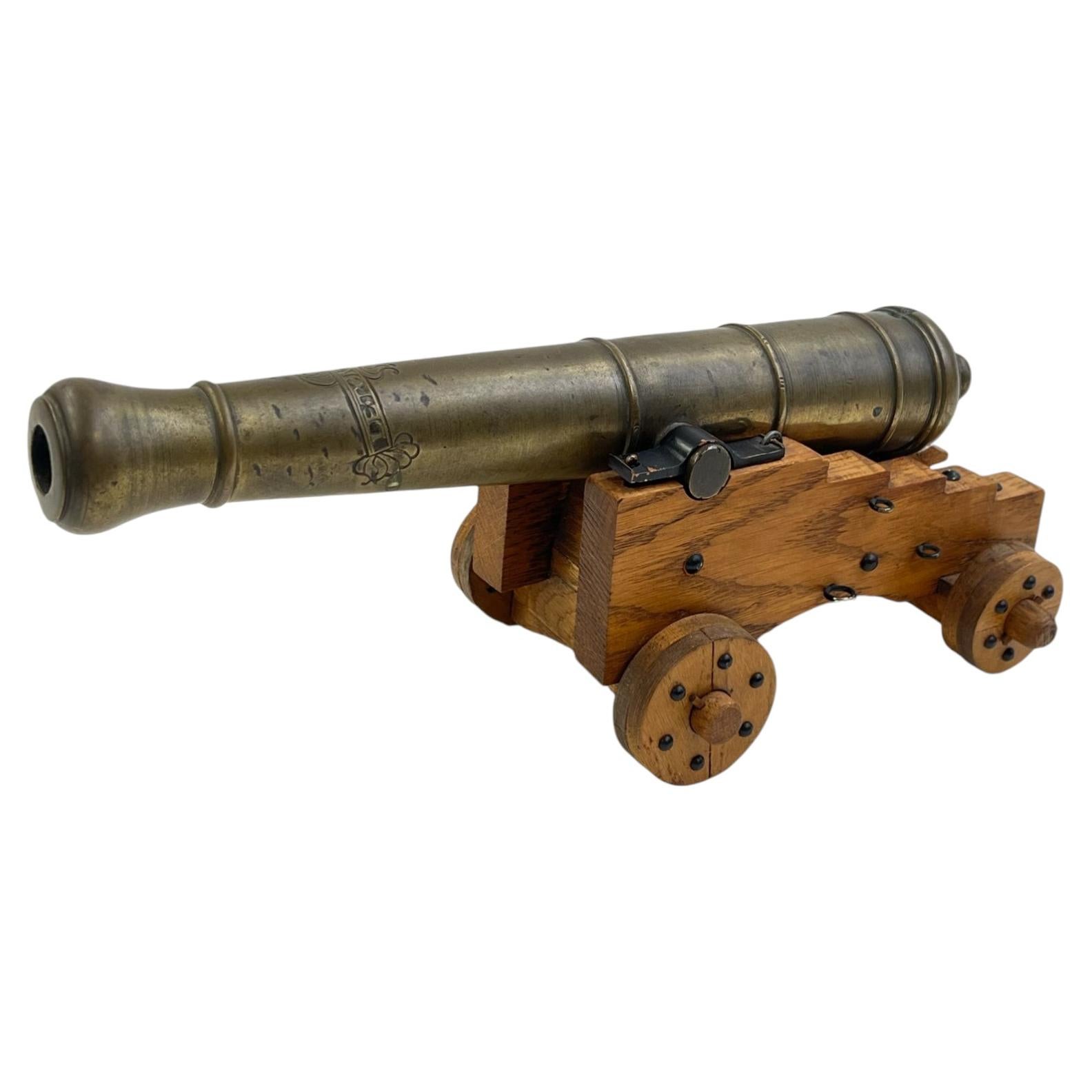
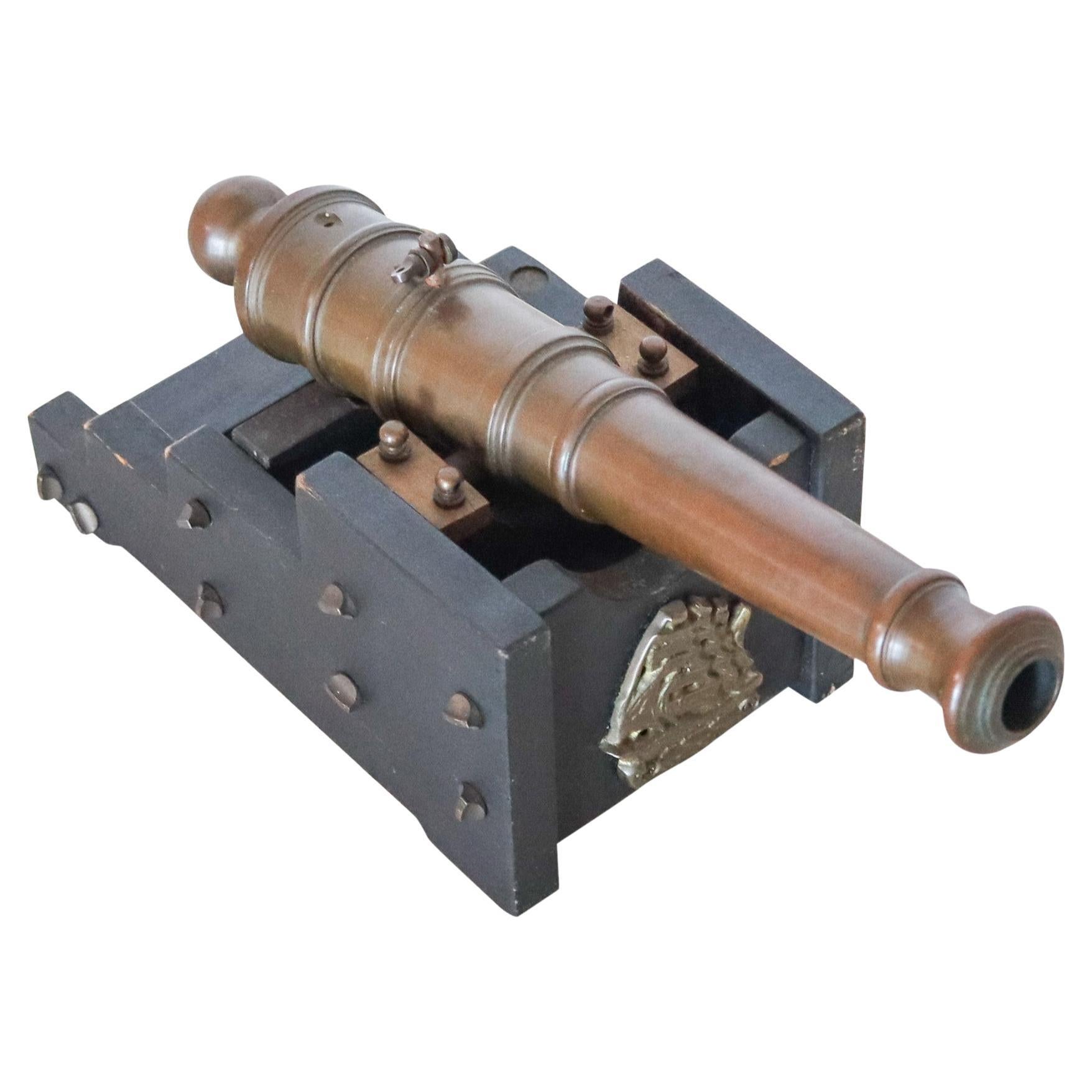
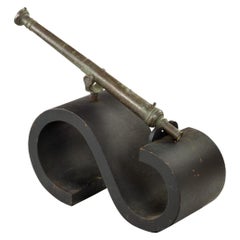
Model of a cannon made from bronze recovered from the the former flagship

$2,585.13
£1,875
€2,225.68
CA$3,577.94
A$3,590.45
CHF 2,094
MX$43,655.55
NOK 24,062.10
SEK 24,746.64
DKK 16,638.13

About the Item

Model of a cannon made from bronze recovered from the the former flagship of the Royal Navy’s Western Squadron, HMS Royal George, a veteran of the Battles of Quiberon Bay (1759) and the Moonlight Battle (1779). The barrel inscribed ‘Relic of the / ROYAL GEORGE, / Sunk 1782. / Raised 1840.’ Set upon a contemporary Perspex stand A brief and tragic history with frightful consequences. At 9am on 29 August 1782 the triple decker 100-gun HMS The Royal George was provisioning at Spithead. She was the flagship to a fleet of some 50 warships and 300 merchantmen and under orders to relieve the long besieged British garrison at Gibraltar. Aboard The Royal George were the highly regarded fleet commander and tactician Rear Admiral Richard Kempenfeldt and his first captain, Captain Martin Waghorn. Below decks the ship was overcrowded with crew members, hordes of prostitutes, wives of seamen and their children, craftsmen from Portsmouth dockyard, tourists and traders of many types, in all well over a thousand souls. A minor repair to a water cock below the water line was needed. The method ordered by Waghorn was to move the cannon from one side of the ship to the other, causing the ship to heel and allow access to the faulty water cock. The lower gun ports, normally closed when a ship was being heeled, on Waghorn’s orders remained open. This was to allow supplies to be loaded through them, rather than having to be hauled up to the deck. A cutter arrived alongside and began unloading rum through the gun ports, which were only one foot above the water. The ship’s carpenter, seeing the danger, tried to warn the officer of the watch, Lieutenant Holingbery, but was disregarded. The weight of the rum soon began to take the gunsills below the water line, and at 9.18am the ship began to capsize. Frantic efforts were made to right the ship by returning the guns to their proper positions, but the slope of the deck was too great. Only 255 of the 1200 on board survived, with many of the dead being trapped below decks and others being later ghoulishly displayed in the rigging at the change of tide. Admiral Kempenfeldt and the carpenter drowned; Captain Waghorn survived, to be exonerated at court-martial and retired on half-pay; Lieutenant Holingbery survived and was later promoted to captain.
  • Dimensions:
    Height: 3.5 in (8.89 cm)Width: 8 in (20.32 cm)Depth: 2.25 in (5.72 cm)
  • Materials and Techniques:
  • Place of Origin:
  • Period:
  • Date of Manufacture:
    19th Century
  • Condition:
    Wear consistent with age and use.
  • Seller Location:
    Lymington, GB
  • Reference Number:
    1stDibs: LU973050073322

More From This Seller

View All
A fine bronze naval 5 stage signalling cannon on a naval dockyard elm carriage w

A fine bronze naval 5 stage signalling cannon on a naval dockyard elm carriage w

Located in Lymington, Hampshire

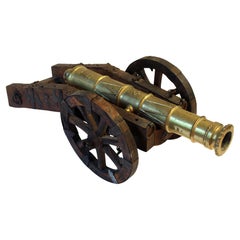
A fine bronze naval 5 stage signalling cannon on a naval dockyard elm carriage with bronze wheels. Old repairs to the carriage. England, Circa 1820. Small naval signalling cannons, often known as signal guns or salute guns, have a rich history dating back to the late 17th and 18th centuries, serving as a non-lethal, functional, and ceremonial tool aboard ships and on land. Unlike primary armament cannons, these smaller weapons were designed to communicate and alert. Small, fireable, decorative cannons...

Category

Antique Early 19th Century English Models and Miniatures

Materials

Bronze
Late 18th Century Bronze Lantaka Cannon

Late 18th Century Bronze Lantaka Cannon

Located in Lymington, Hampshire

A late 18th century bronze Lantaka cannon, the slightly tapering barrel cast with flanges and set on a hinged pin. With a modern black S-scroll Stand. D...

Category

Antique 1790s Dutch Arms, Armor and Weapons

Materials

Bronze

Mid-Victorian Model of a Field Cannon

Mid-Victorian Model of a Field Cannon

Located in Lymington, Hampshire

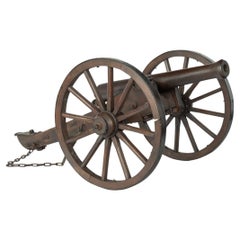
A mid-Victorian model of a field cannon, the bronze barrel set on an oak carriage with large iron-bound wheels, with traces of the original black, red an...

Category

Antique 1870s English Arms, Armor and Weapons

Materials

Bronze

Miniature Brass Cannon in a Presentation Case

Miniature Brass Cannon in a Presentation Case

Located in Lymington, Hampshire

A miniature brass cannon in a presentation case, the 5-stage cannon and carriage in a rectangular, glazed presentation case, raised upon tiers of reeded, ...

Category

Vintage 1910s British Historical Memorabilia

Materials

Brass

A late 19th century scale model of field cannon

A late 19th century scale model of field cannon

Located in Lymington, Hampshire

A late 19th century scale model of field cannon, the barrel with a flared muzzle on an oak carriage with twin twelve spoke steel rimmed wheels and steel m...

Category

Antique Late 19th Century European Arms, Armor and Weapons

Materials

Steel

A pair of ships’ Bronze Cannon from the S. V. Jura 1875

A pair of ships’ Bronze Cannon from the S. V. Jura 1875

Located in Lymington, Hampshire

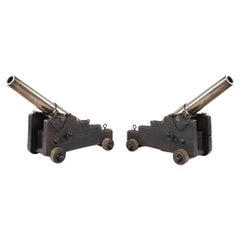
A pair of ships’ Bronze Cannon from the S. V. Jura, 1875, Built by Charles Connell & Co, Glasgow, for Sandbach, Tinne & Co. of Liverpool. These fine four pounder cannon, on their ori...

Category

Antique Late 19th Century English Nautical Objects

Materials

Bronze

You May Also Like

Early 20th Century English Bronze Cannon Model

Early 20th Century English Bronze Cannon Model

Located in Chapel Hill, NC

Early 20th century bronze cannon model, English. A decorative piece in an iron & wood (elm & fruitwood) carriage with possibly the insignia of The Duchy of Brunswick on the cannon. Acquired in the mid-20th century in a Madrid antiques...

Category

Early 20th Century English Edwardian Models and Miniatures

Materials

Bronze, Iron

SIGNAL CANNON 1850 Coastal Fortress Battery Cannon In Bronze & Wood

SIGNAL CANNON 1850 Coastal Fortress Battery Cannon In Bronze & Wood

Located in Miami, FL

A 19th century presentation desk signal cannon. This is a superb medium scale model of a fortress battery cannon made in the 19th century, circa 1850. The antique presentation signa...

Category

Antique 1850s English Grand Tour Arms, Armor and Weapons

Materials

Bronze

Paperweight in bronze from the late 18th Century in the shape of a cannon barrel

Paperweight in bronze from the late 18th Century in the shape of a cannon barrel

Located in Knivsta, SE

Paperweight in bronze from the late 18th Century in the shape of a cannon barrel. Beautiful patina. Wear consistent with age and use

Category

Antique Late 18th Century European Paperweights

Materials

Bronze

Early 20th Century English Model of a Starting Cannon

Early 20th Century English Model of a Starting Cannon

Located in London, GB

This well-proportioned to scale and detailed cast iron model of an English starting cannon features movable parts including the wheels and cannon barrel. It includes excellent detail...

Category

Early 20th Century English Models and Miniatures

Materials

Iron

A Small French Bronze Signal Cannon Inscribed Le Tonnant, 18Th - 19Th Century

A Small French Bronze Signal Cannon Inscribed Le Tonnant, 18Th - 19Th Century

Located in London, GB

Featuring a tapered design with multiple reinforced rings including astragals and fillets. It terminates in a rounded cascabel at the breech and a flared muzzle. The upper surface of...

Category

Antique 18th Century French Other Arms, Armor and Weapons

Materials

Bronze

Vintage Wood and Bronze Cannon Model

Vintage Wood and Bronze Cannon Model

Located in San Diego, CA

A very well made vintage wood and bronze cannon model, circa 1970s. The piece is in good condition with nice detailing and measures 4.5"W x 8.5"D x 3.5"H. #3810

Category

Mid-20th Century American Models and Miniatures

Materials

Metal