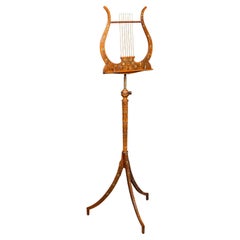
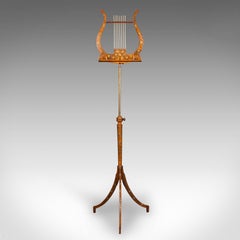
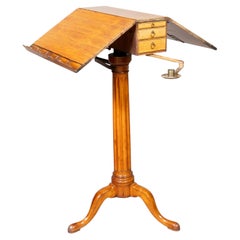
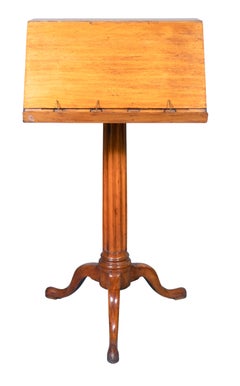
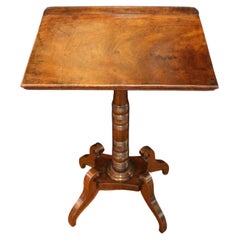
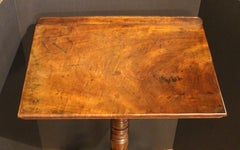
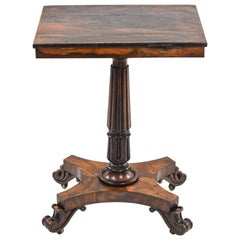
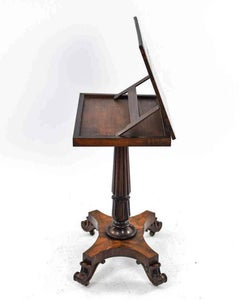
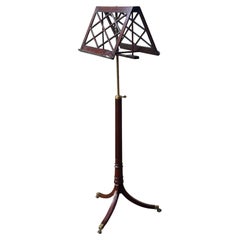
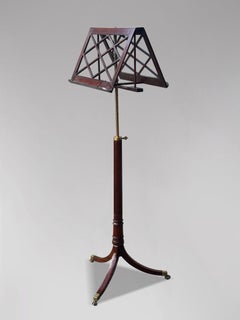
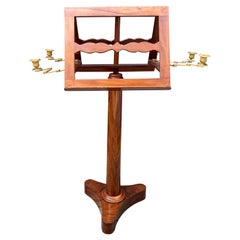
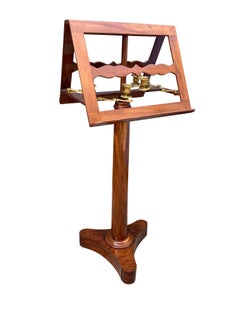
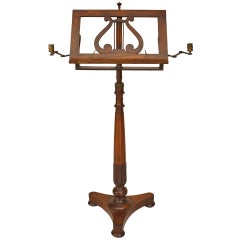
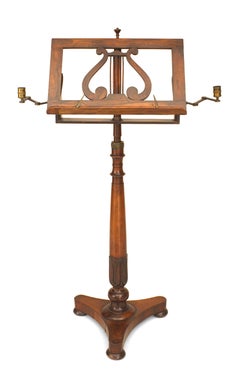
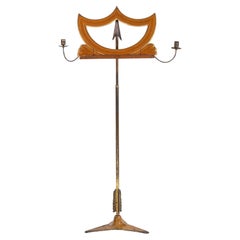
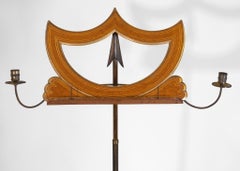
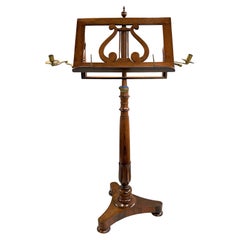
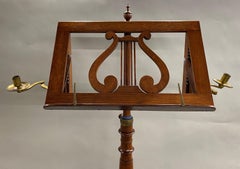
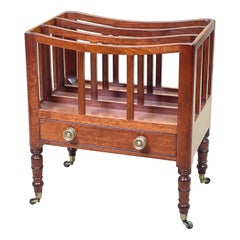
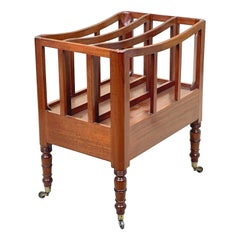
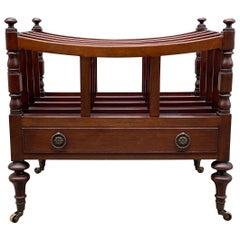
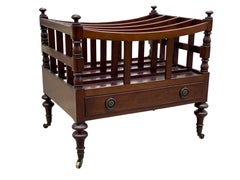
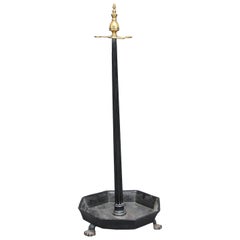
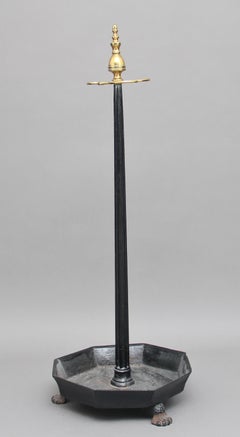
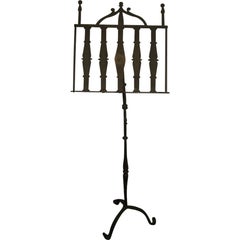
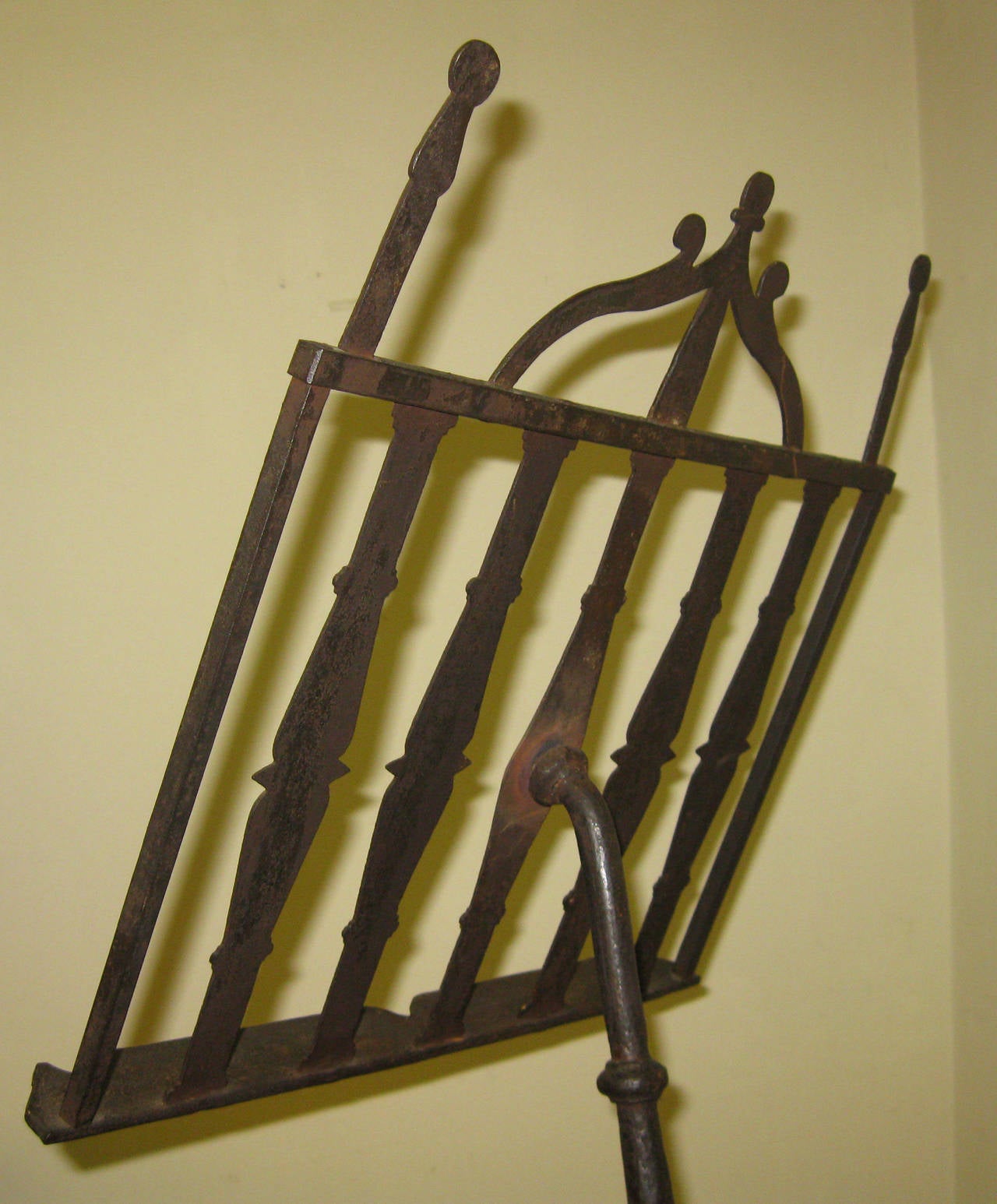
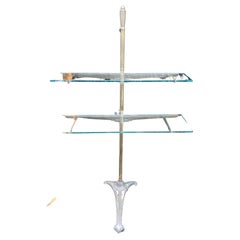
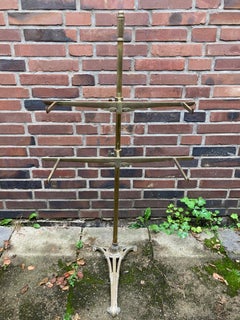
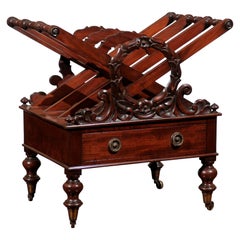
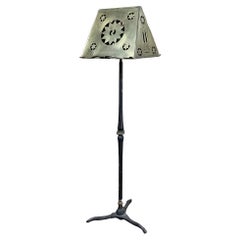
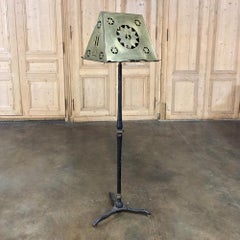
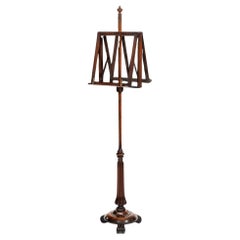
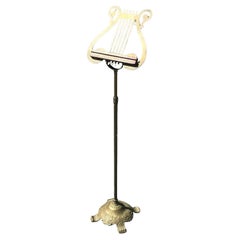
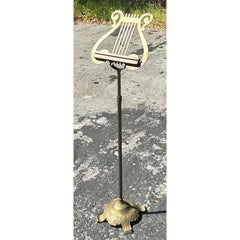
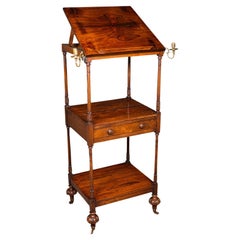
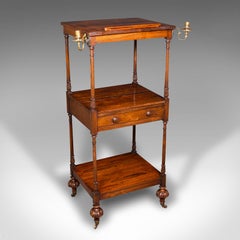
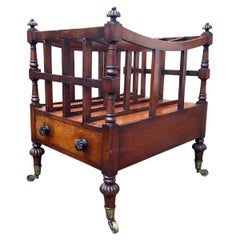
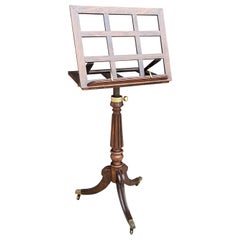
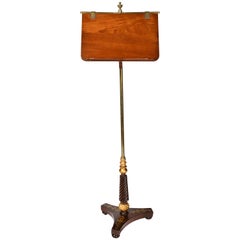
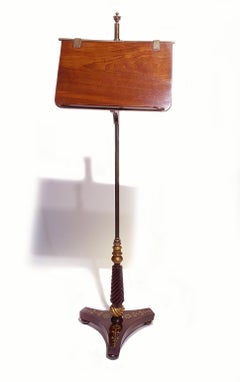
Music stand or lectern in brass and inlaid mahogany wood
England, circa 1830
It measures 55.5" high x 18.22 x 12.79 (141 x 46.3 x 32.5 cm)
It weighs 9.7 lb (4.4 kg)
State of conservation: good, except for a tin weld on the joint fixing the mahogany board to the brass bar.
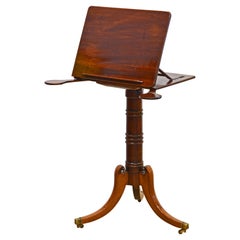
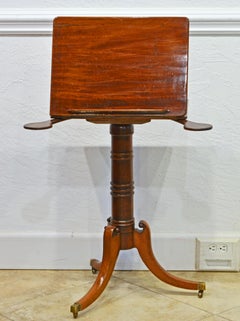
This is a piece of functional furniture, designed to support a musical score for instruments such as the violin, viola or other wind instruments. The task of holding the score is entrusted to an inclined mahogany wood surface, while the supporting structure confers grace and character: here practical function and aesthetic beauty are perfectly combined.
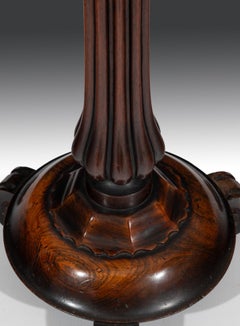
The foundation of the stand, resting on onion-shaped turned feet, is a flat tripod base decorated with floral brass inlays. This in turn supports a truncated conical element of turned and partially gilded wood into which a brass rod with a shaped tip has been inserted. By sliding the wooden board up and down, it is possible to adjust the height of the musical score.
The lectern, like many pieces of ancient furniture, was created with a functional purpose: the intention of providing support to an open book or musical score. Moving away from this ancient liturgical purpose, the function and appearance of these pieces of furniture evolved through time: first, in the ???e??? (logheion, pulpit or tribune, the place from which it is read) and then, through the medieval legivum, it was gradually transformed into the support located in the center of the choir on which missals and sheet music rested. The support tool as we know it today derives from this, in all its shapes and material variations: fixed or portable, for the floor or table, from the oldest stone to metal or wooden versions. Over time the lectern has therefore adapted to fit the most varied uses, appearing in countless artistic and literary images, as well as, inevitably, a decorative accessory.
Its practical modern use, which links it inextricably to the history of literature and music, has allowed cabinet makers and designers to imagine and to create multiple variations of it.
In this case, even if different in form, the use of mahogany and brass finds technical structural confirmation in other contemporary works, such as the lyre-shaped music lectern of the Turin Museum of Palazzo Madama. This is associated with a wooden tripod equipped with an adjustable wooden screw, brass clips and connecting pin (Museo Civico d'Arte Antica di Torino. Acquisti e doni 1971-2001, p. 187 scheda n. 712).
And it is similar to a very ingenious portable lectern...
Category
1820s English Antique Regency Music Stands