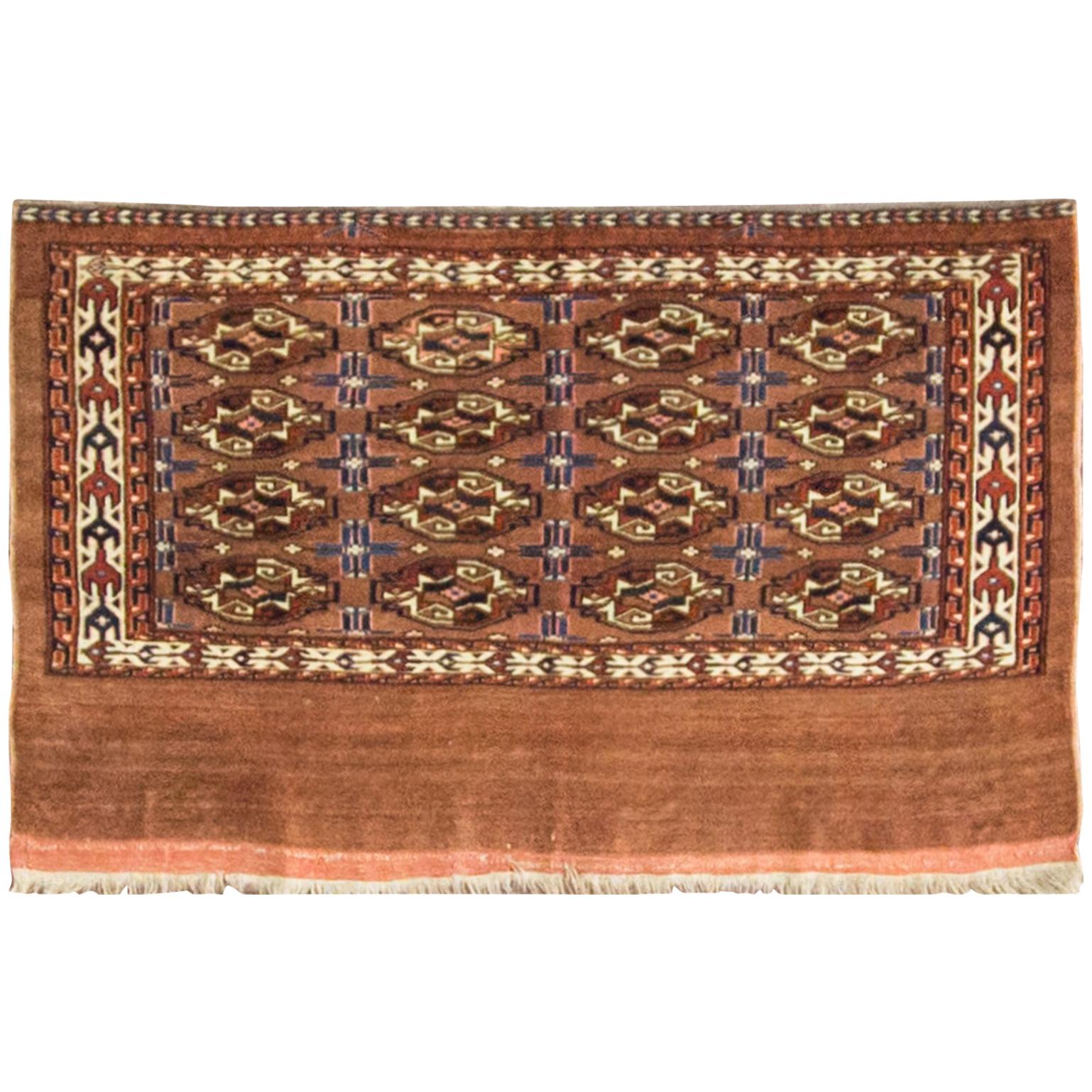
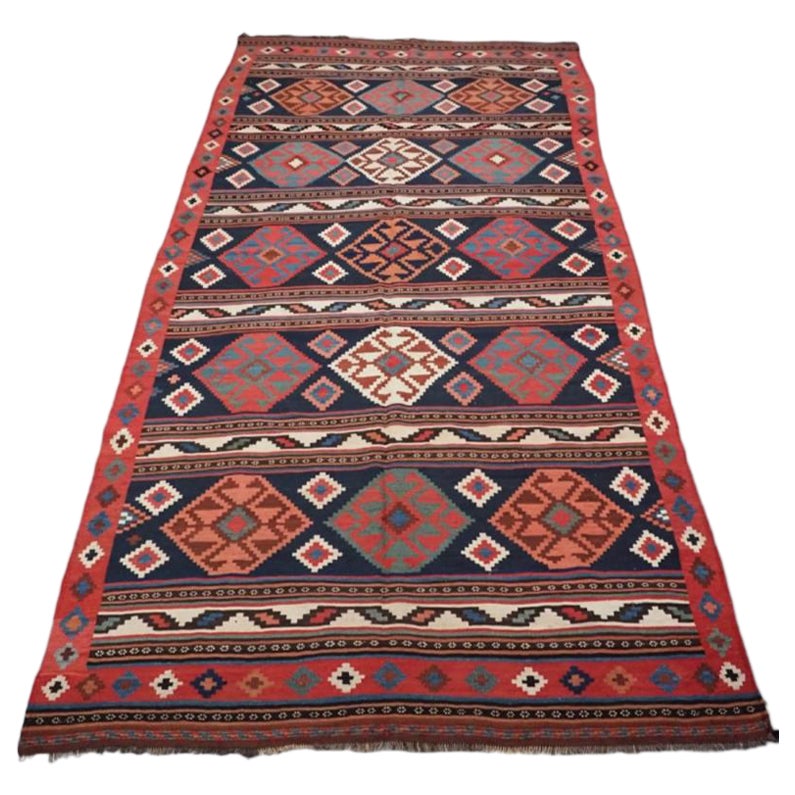
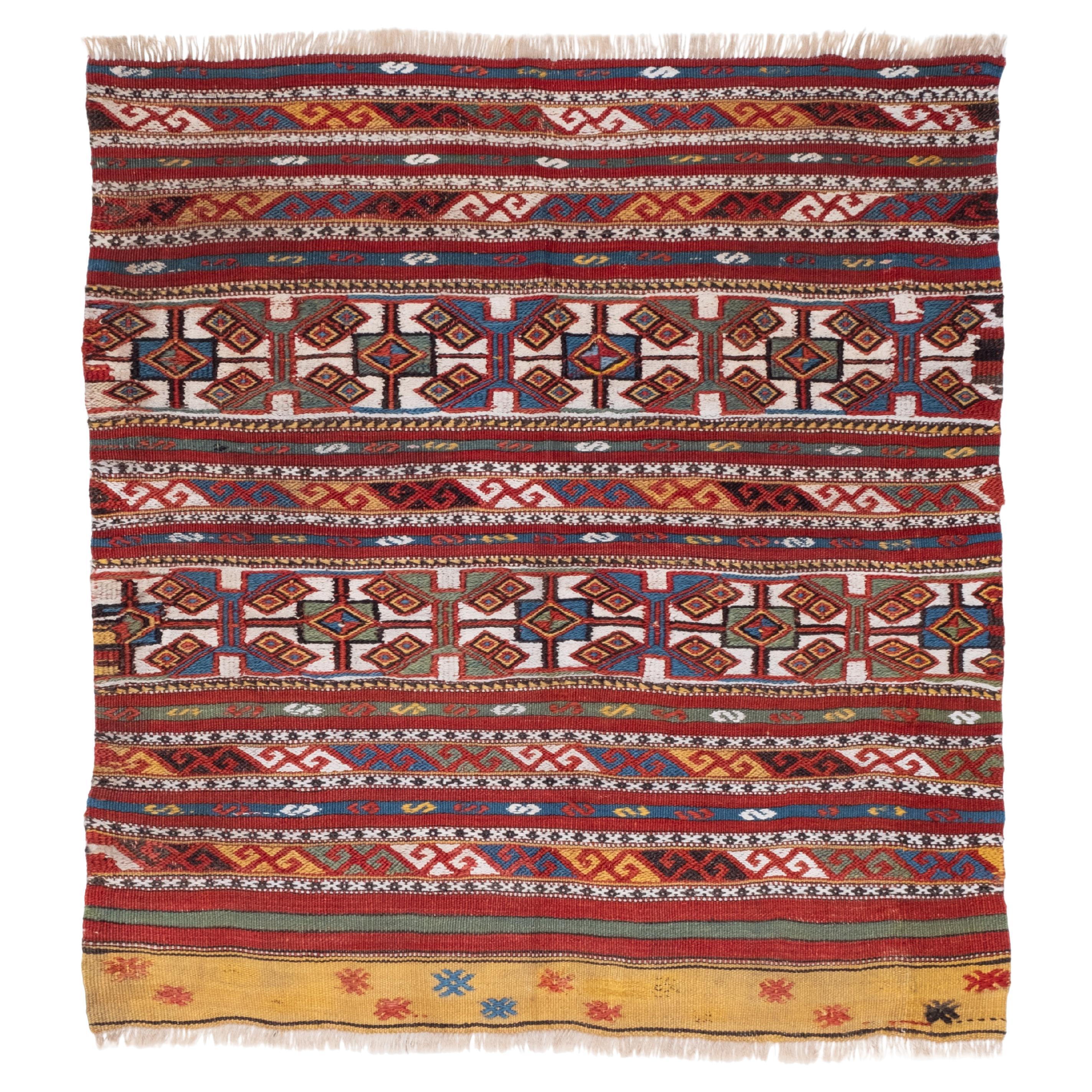
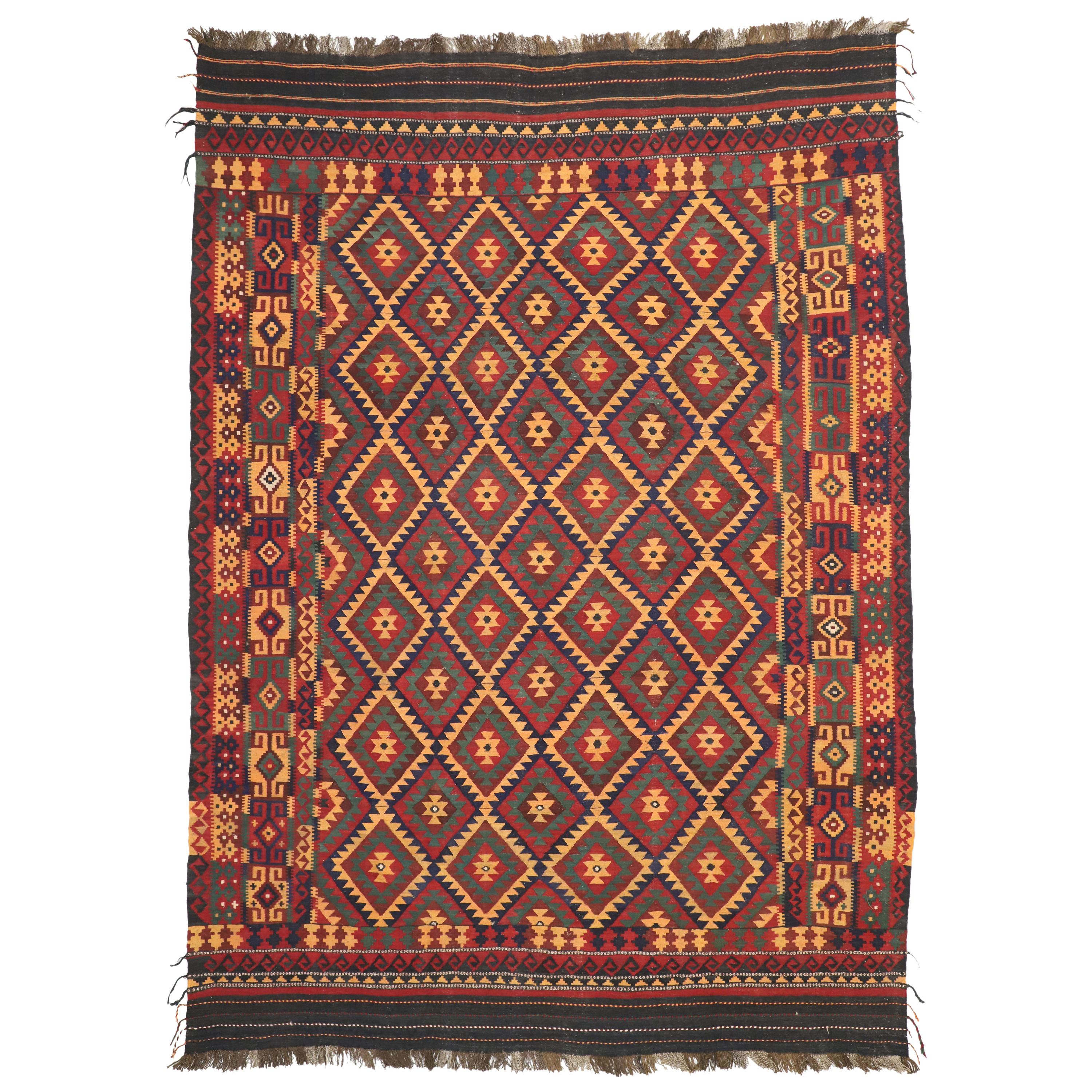
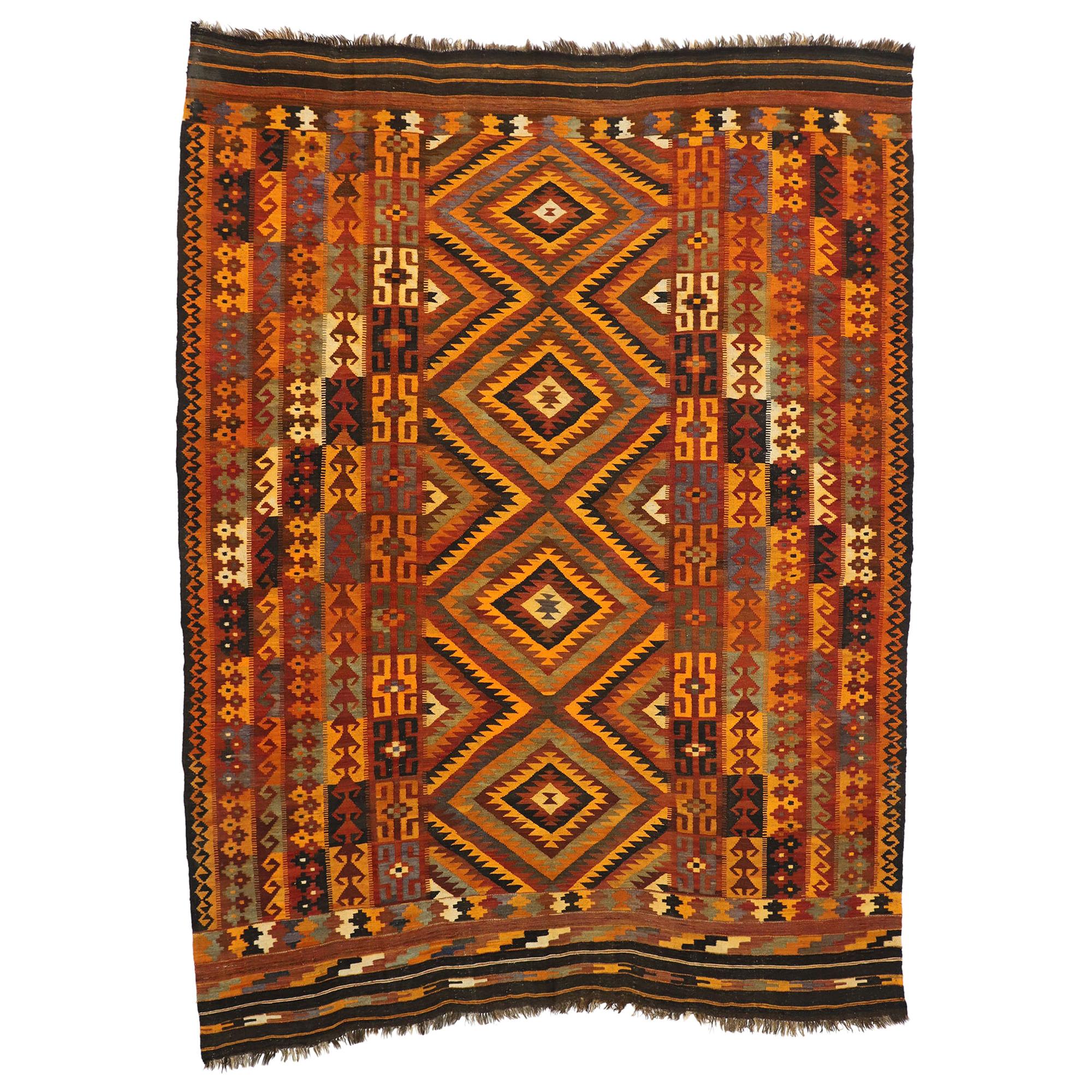
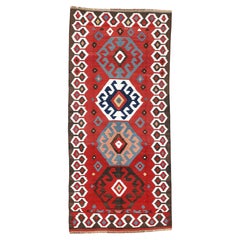
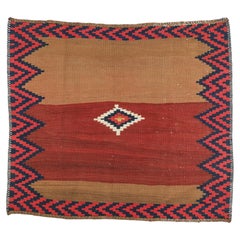
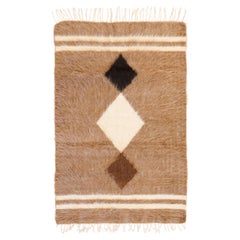
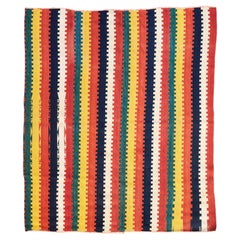
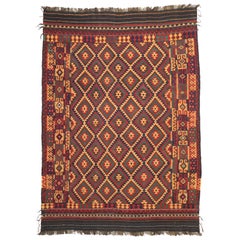
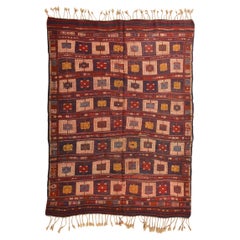
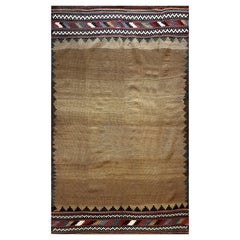
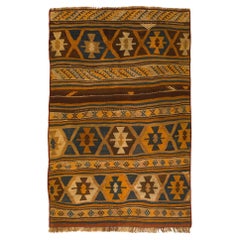
Antique Kurdish Rukorsi, Circa 1920, 4'1" x 5'2", Camel Field with Polychrome Tribal Motifs
Origin: Kurdish, likely western Asia
Circa: 1920
Type: Rukorsi (decorative textile cover), tribal tribal flatweave, decorative accent rug or statement piece wall-hanging
Materials: Wool, naturally dyed motifs and undyed field and border, hand-spun and hand-woven
Dimensions: 4'1" x 5'2" (125 x 158 cm, or 49 x 62 inches)
Condition: Excellent — small areas of high-fidelity re-weaving to the field
An antqiue rukorsi, circa 1920, measuring 4’1” x 5’2” (125 x 158 cm, or 49 by 62 inches) and dominated by an open-field design in warm, camel-brown wool, with black and brown borders and floating motifs in green, red, and terracotta orange, and ivory. The rug is likely of Kurdish origin and is a highly decorative tribal weaving suited to floor use, as a wall-hanging with abstract graphic quality, as a table runner, or for the traditional haft-seen.
A rukorsi, a it serves as a decorative cover that is the centerpiece of social life in a rural home, similar to the more familiar sofreh. In a nomadic society organized around seasonal migrations, rugs—portable things that can be folded, rolled, and packed—play an outsized role that supplants conventional hard-frame furniture.
It is, therefore, a functional textile. Nomadic households relied on the heat of a small, portable brazier to keep winter’s chill at bay. Families gathered round this hearth to eat, drink, smoke, play cards, sleep, and mark the passage of Yalda. Large blankets draped over top trapped the low, steady heat of the coals, warming those seated around it. The rukorsi was the finishing touch. It added another layer of insulation and beautified the focal point of domestic life.
Condition and Use
The rug is in excellent condition, with small areas of high-fidelity re-weaving to the field. Its nearly square format makes it equally suited for use as a small accent rug, a wall-hanging, or its spread beneath the haft-seen table at Nowruz. Small rugs spread out and used for dining, are eccentric and personal household artifacts that served as the focal points of mealtime gatherings. They are often colorful and pictorial in design. Their modest size makes them excellent area rugs, particularly in kitchens and dining areas.