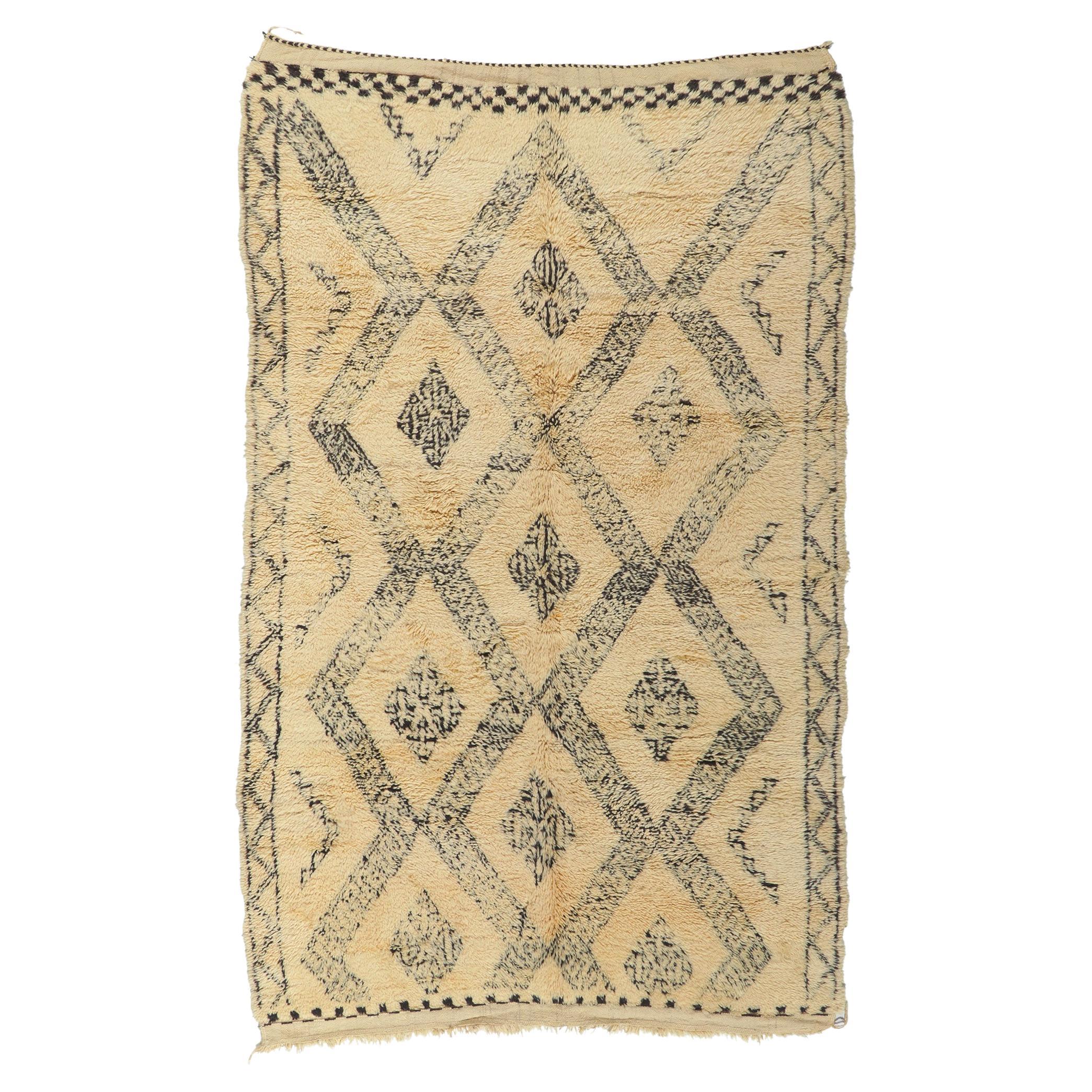
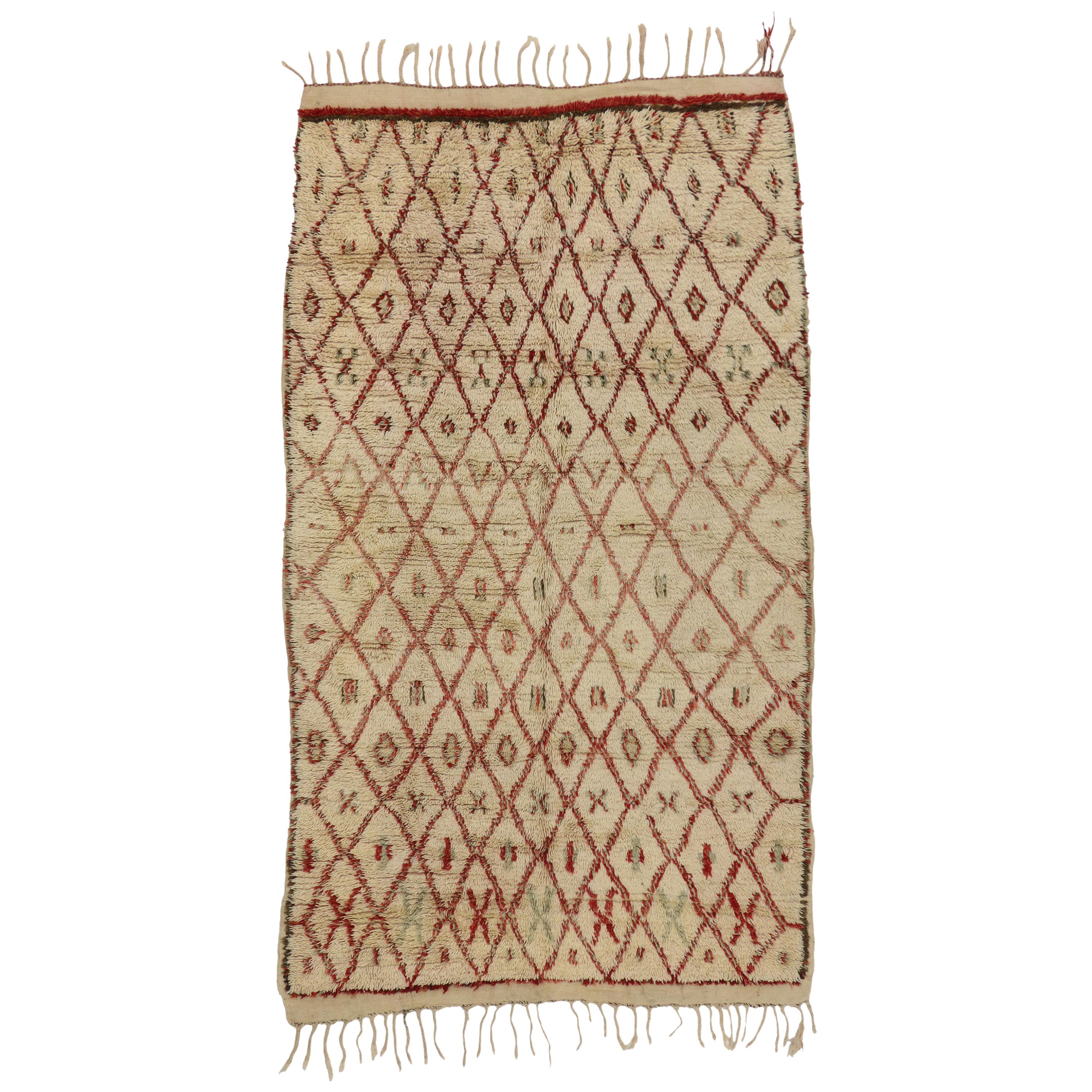
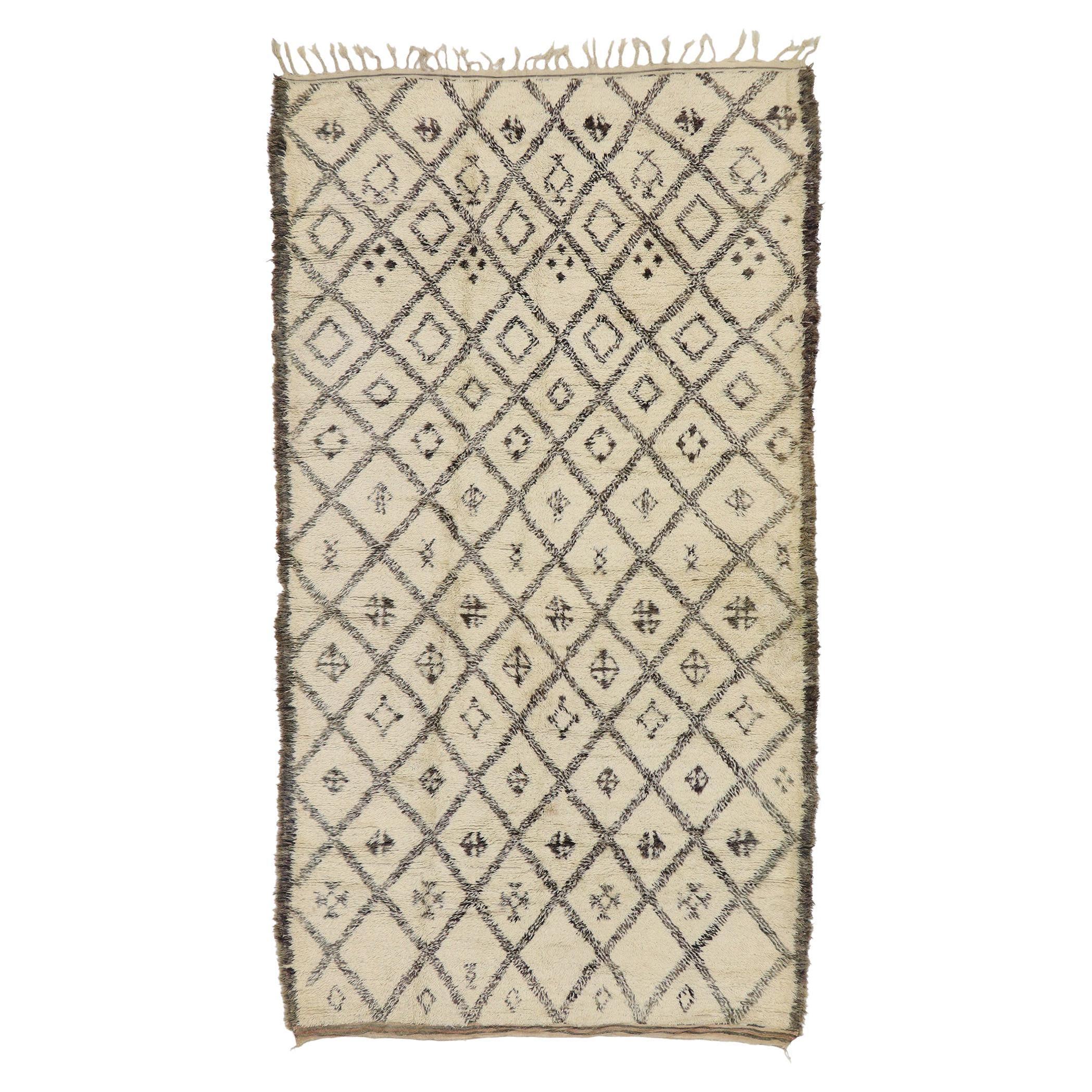
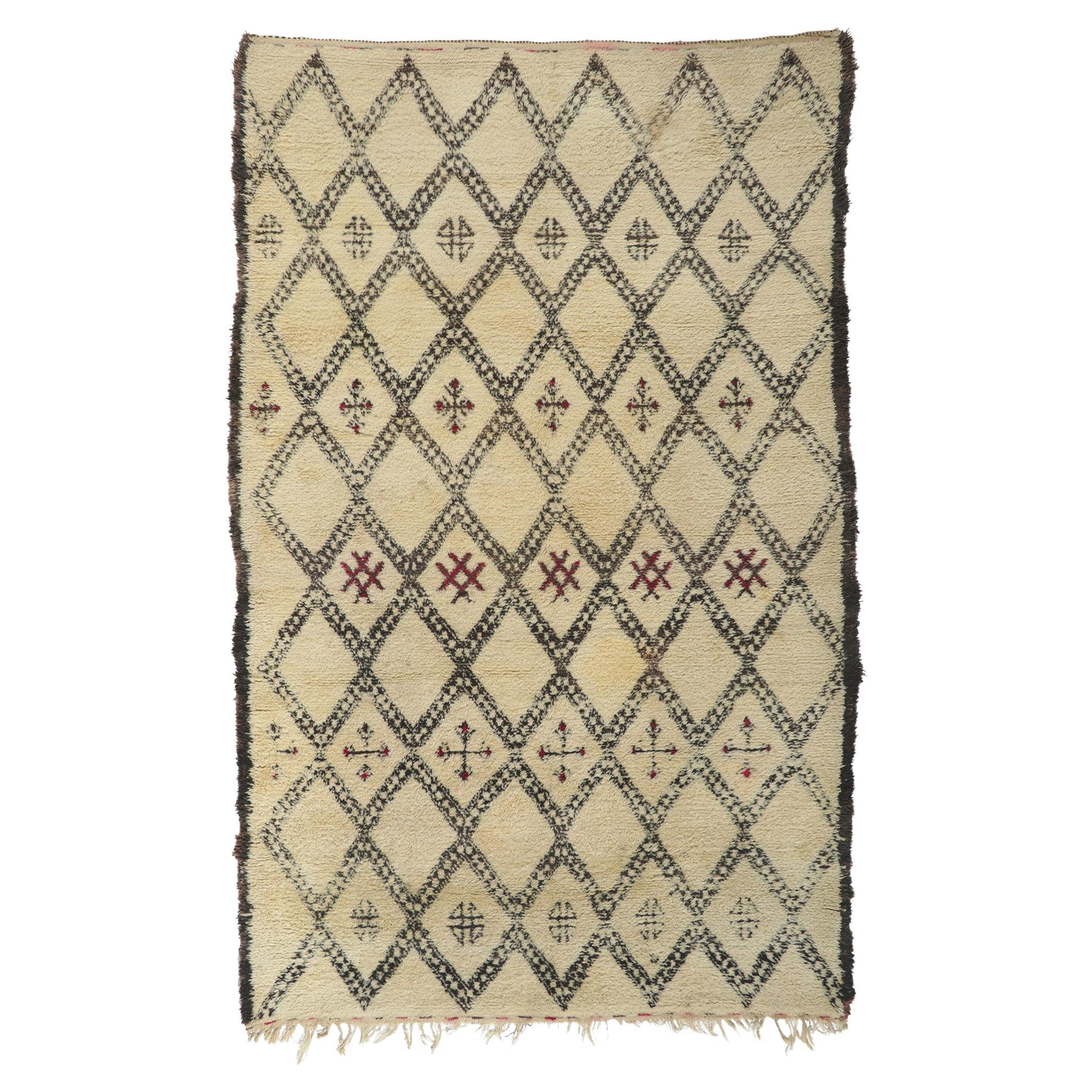
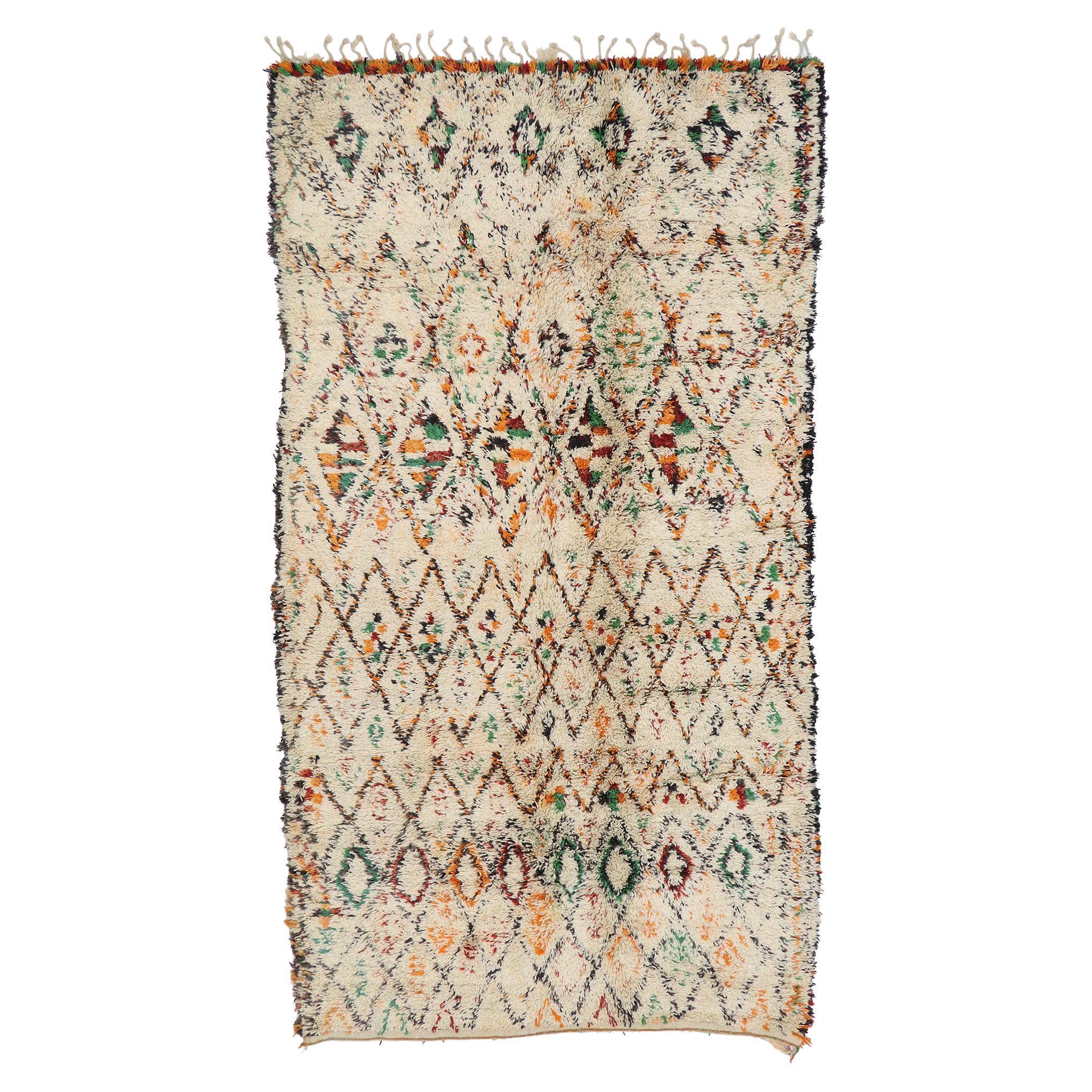
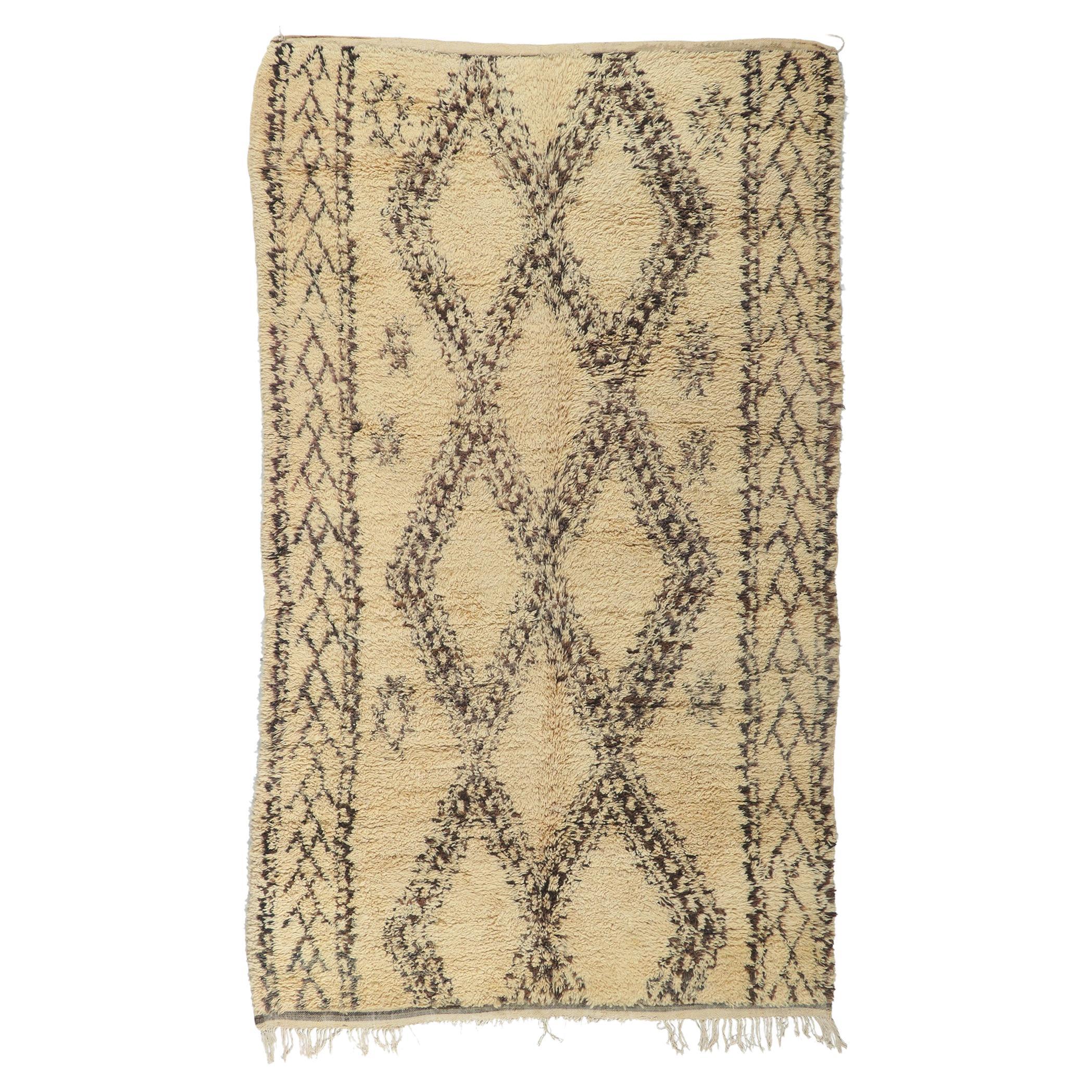
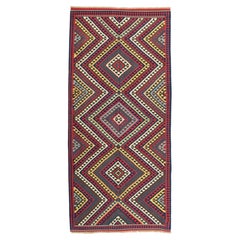
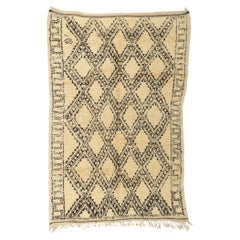
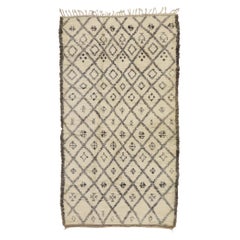
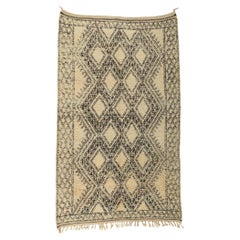
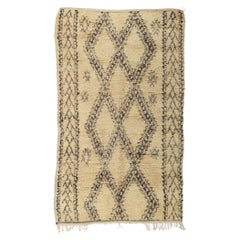
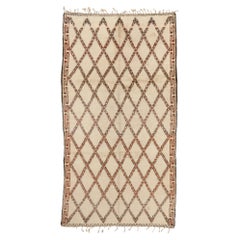
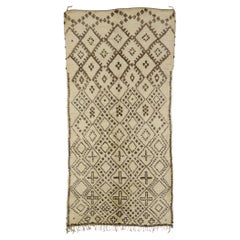
Vintage Beni Ourain Berber Carpet, Middle Atlas Morocco, 6'4" x 12'10", Ivory Wool Lozenge Lattice, Softly Faded Colors, Muted Palette
Origin: Beni Ourain Tribe, Middle Atlas Mountains, Morocco
Circa: Mid-20th century
Type: Pile rug, hand-knotted, Berber knot, allover lozenge lattice
Materials: Wool, predominantly undyed and naturally colored, with muted accents in camel, aubergine, plum, and blue
Dimensions: 6'4" x 12'10" (193 x 391 cm, or 76 x 154 inches)
Condition: Good antique condition — pile low and uneven in places; minor fringe loss; colors gracefully muted; structurally sound throughout
A vintage Moroccan Beni Ourain rug from the Middle Atlas Mountains, measuring 6’4” x 12’10” (193 × 391 cm). Hand-knotted by Berber tribal weavers, this long village carpet features an allover lattice design of lozenges and geometric symbols woven across a field of predominantly undyed, lustrous ivory wool. Its spacious scale, restrained palette, and texture exemplify the minimalism and decorative utility for which Beni Ourain carpets are known.
The palette is composed primarily of natural undyed wool in shades of ivory, with decorative motifs in faint camel, aubergine, and blue as well as faded plum. The more vibrant colors have softened over time through age and light exposure.
The composition shows a free hand, with loosely arranged diamond motifs placed across the field. Delicate graphic motifs appear intermittently. Along the sides, narrow patterned guard borders—an unusual element of a Beni Ourain village weaving—frame the rug vertically, while braided kilim ends complete the composition with a distinctly handmade character.
Construction and Materials
The rug is hand-knotted in high-quality wool with a remarkably smooth and lustrous surface. The knotting itself is large, coarse, and highly tactile, employing the distinctive Berber knot associated exclusively with North African weaving traditions. In this structure, individual knots span multiple warps, creating a thick and pliable textile intended for warmth and practical domestic use.
Unlike urban workshop carpets woven for formal display, Beni Ourain rugs were created primarily as bedding and floor coverings for use in the cold mountain climate of the Middle Atlas. Their thick pile provides insulation, while the use of multiple wefts between rows of knots preserves softness and flexibility. The resulting textiles possess a tactile quality.
Ethnographic Context
This rug was woven by the Beni Ourain, a confederation of Berber tribes inhabiting the mountainous regions surrounding Fez in Morocco’s Middle Atlas range. Their carpets became internationally recognized during the 20th century for their abstract geometry, restrained palettes, and emphasis on natural wool. Originally created for domestic use rather than export, these rugs reflect local aesthetic traditions shaped by utility, climate, and inherited tribal symbolism.
Condition and Use
The rug is in good antique condition with wear consistent with age and use. The pile is low and uneven in places, and there is minor loss to portions of the fringe. Fading from light exposure has softened some of the original purple and blue accents, contributing to the rug’s muted and atmospheric palette. Structurally, the rug remains sound and suitable for use.
Its substantial size and soft, insulating pile make it well suited for living rooms, bedrooms, or other low- to medium-traffic interiors. A rug pad is recommended to provide additional stability and preserve the weave over time.