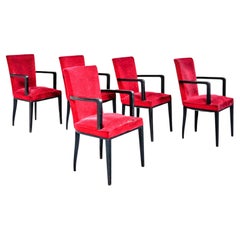
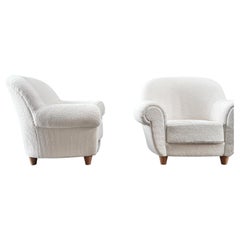
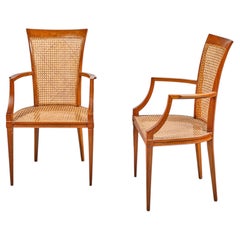
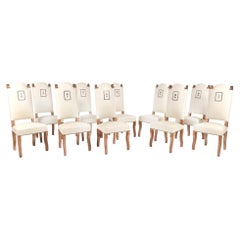
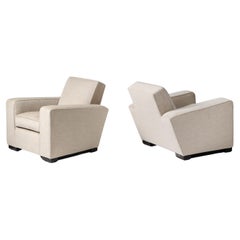
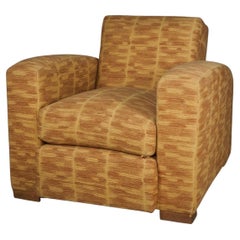
Jacques Adnet, Attributed to (1900–1984)
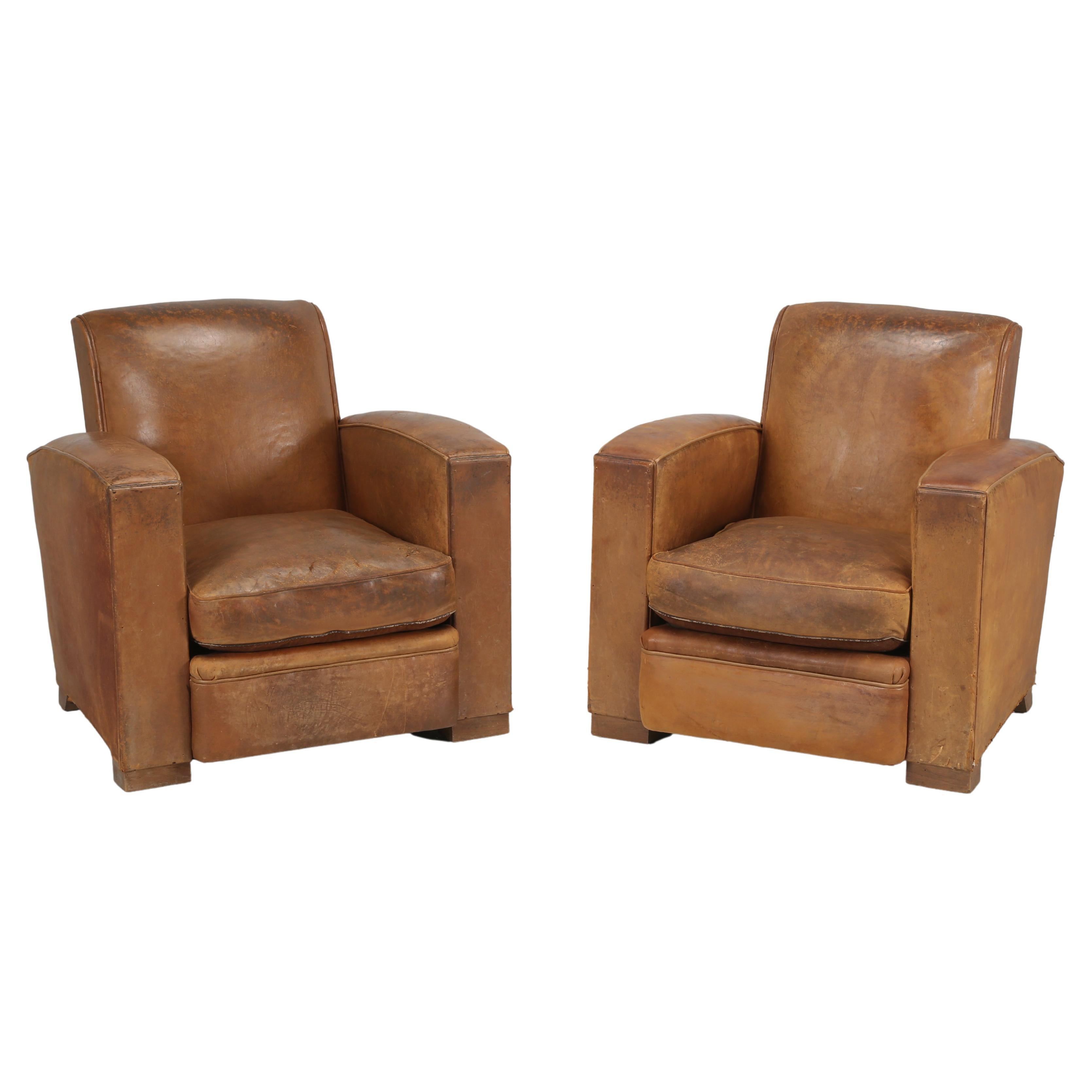
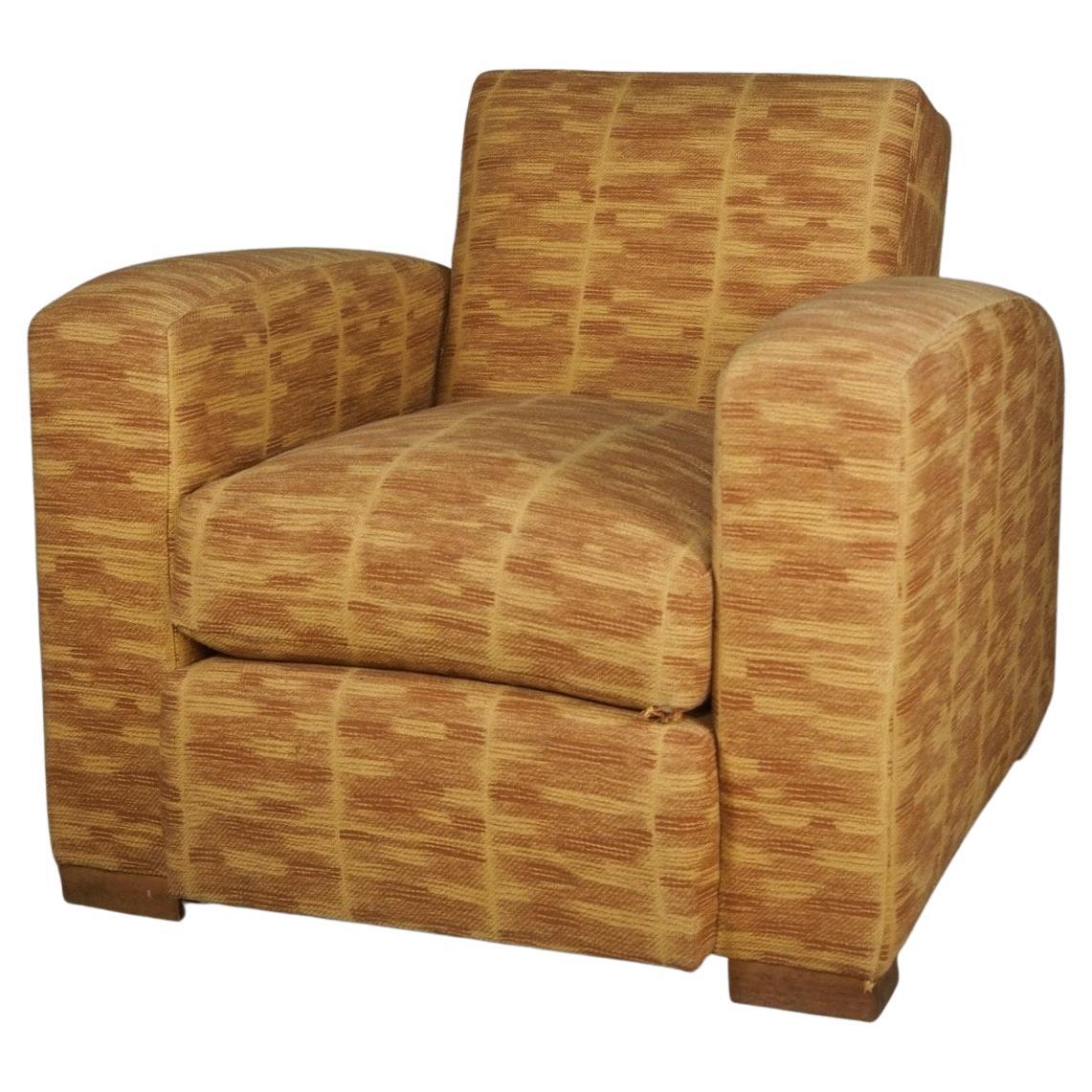
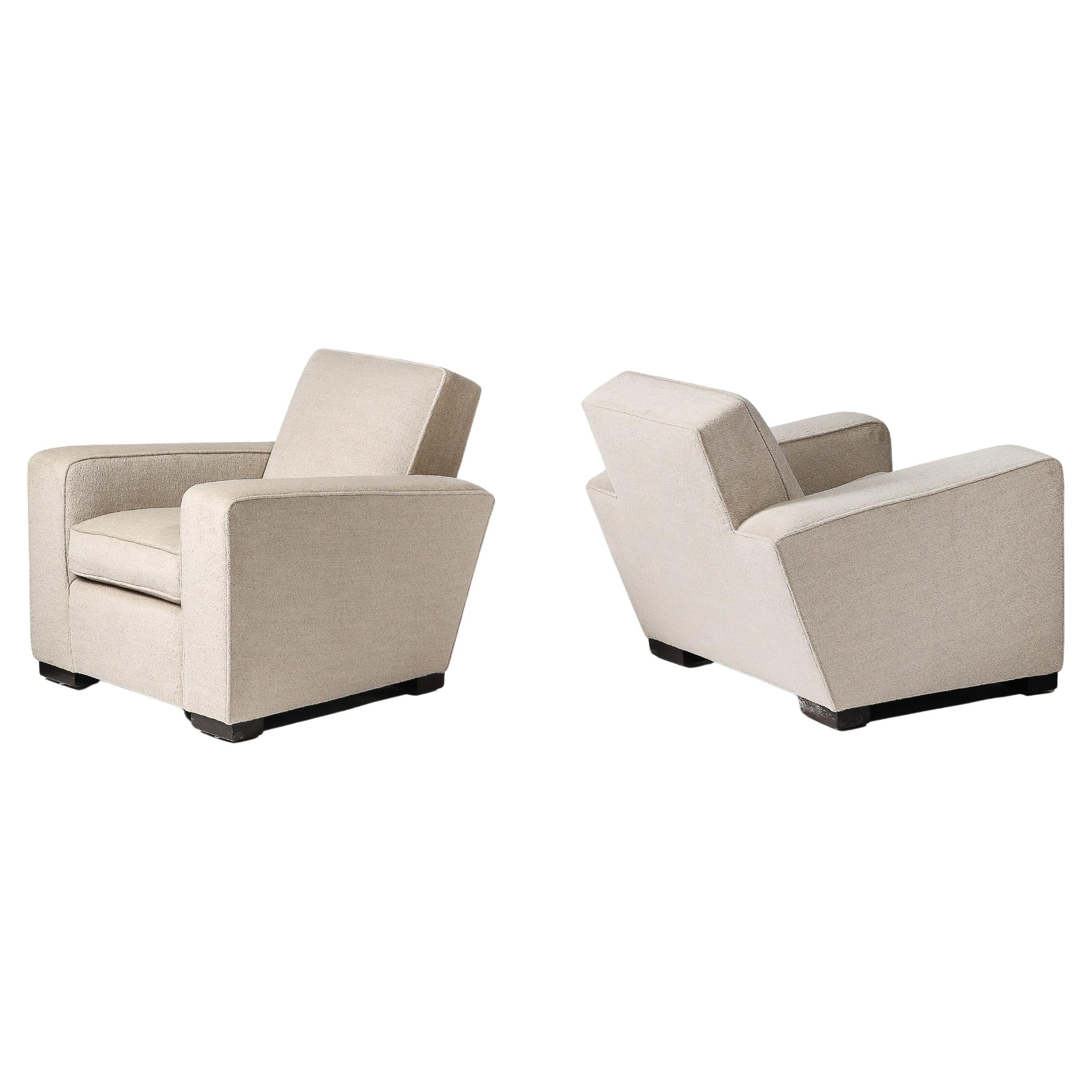
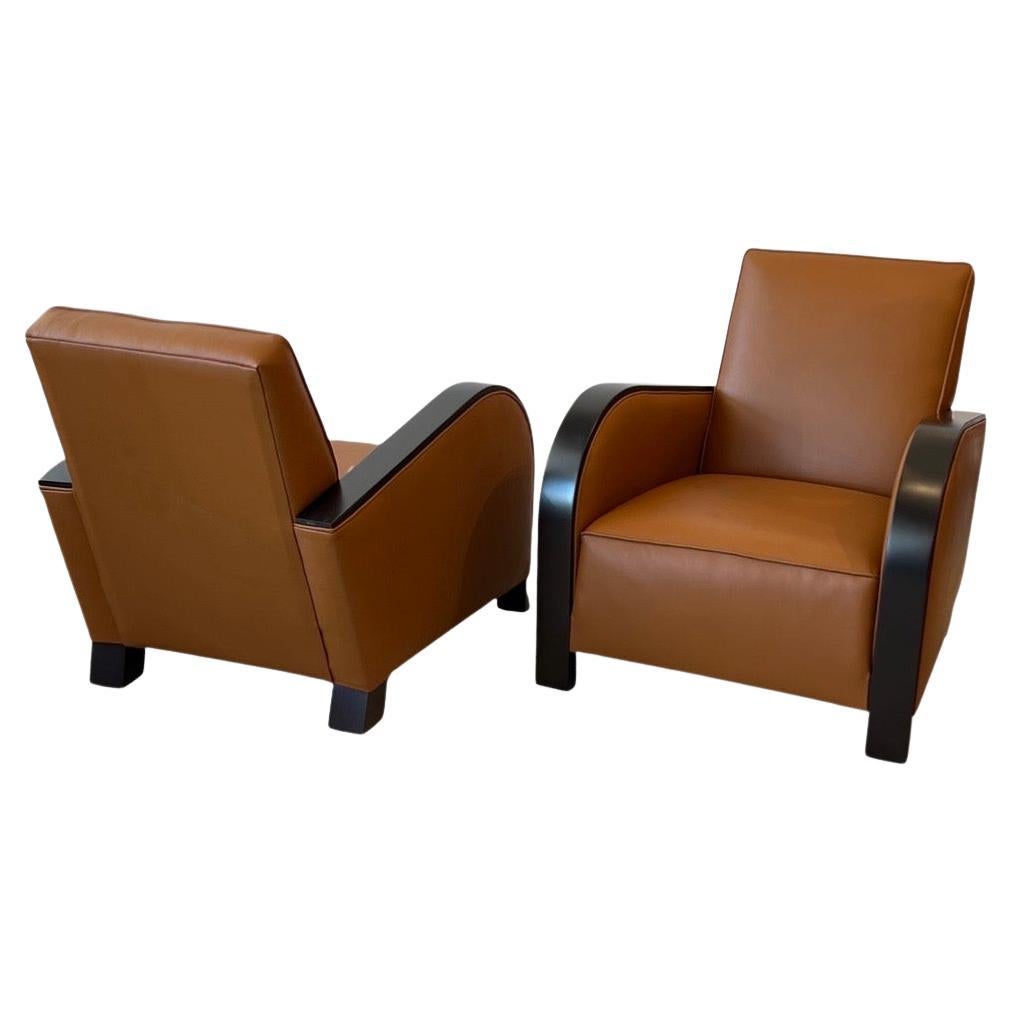
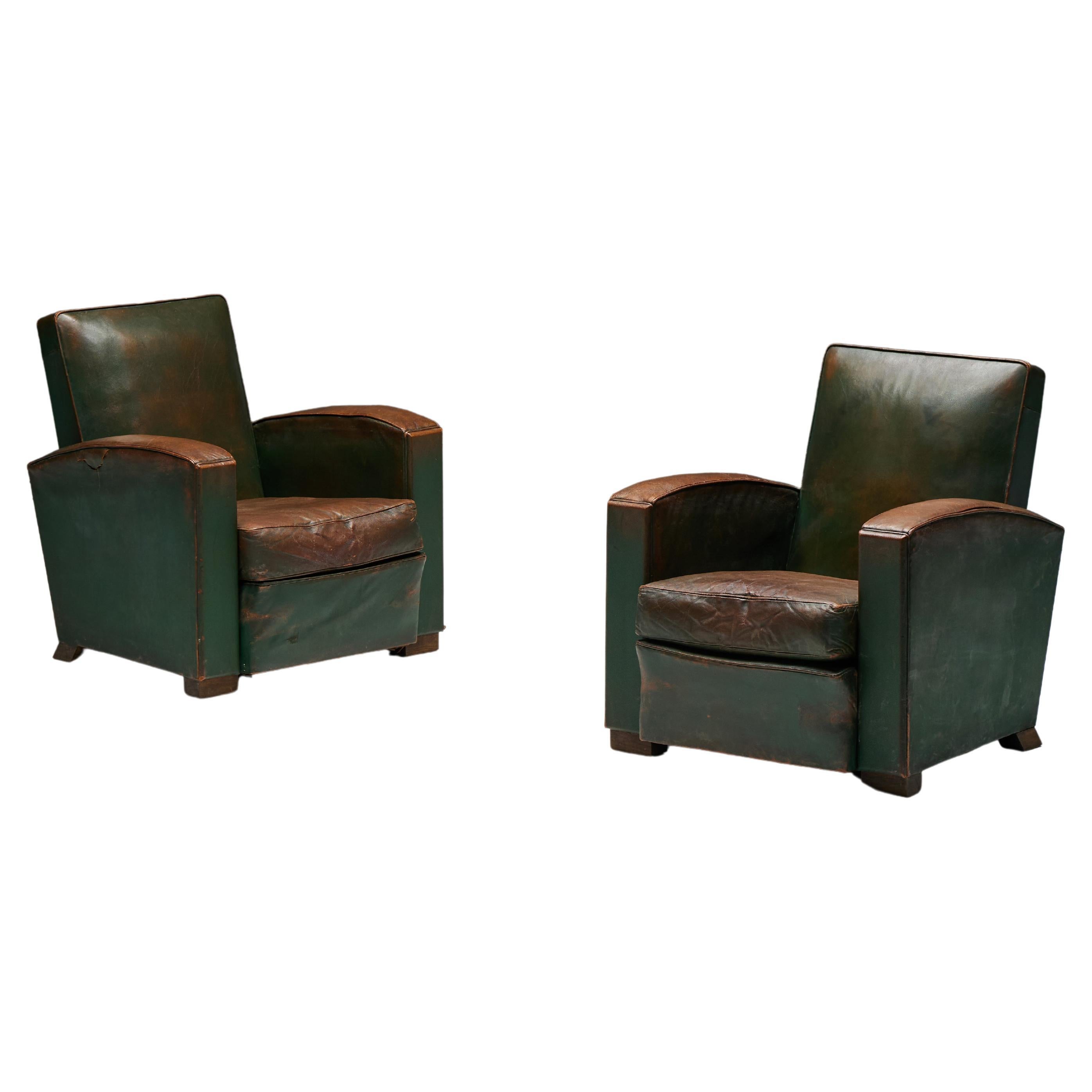
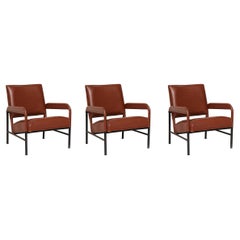
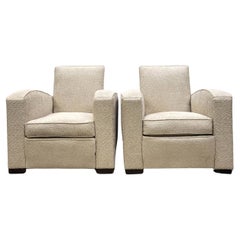
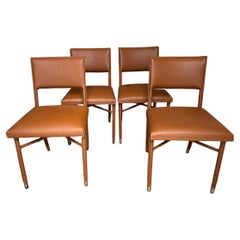
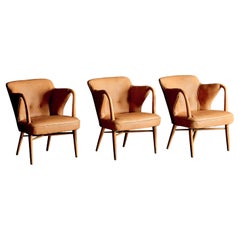
Set of three club chairs with reclining backs and solid armrests, fully upholstered in brown leather
Circa 1940
H. 95 cm – W. 95 cm – D. 80 cm
(Wear, losses, stains)
Biographical Information
Jacques Adnet was born in 1900 in Châtillon-Coligny, France.
On the advice of one of his teachers, he applied to the École des Arts Décoratifs in 1916, where he and his twin brother, Jean, were accepted with flying colors. His teachers included Aubert for decoration and Genuys for architecture; the former's teaching would have a significant impact on Jacques Adnet's future work. Not wanting to limit himself to theory, he took a job with decorators Tony Selmersheim and Maurice Dufrène after graduating, where he learned the art and technique of furniture making. He followed Dufrène when he was appointed director of "La Maîtrise" at Galeries Lafayette in 1922.
At the 1925 International Exhibition of Modern Decorative and Industrial Arts, Jacques Adnet and his brother exhibited ceramics at the "La Maîtrise" stand. They received numerous awards, including a gold medal in the furniture category and a silver medal in the ceramics category. In 1927, Jacques Adnet won the Blumenthal Prize. In 1928, Jacques Adnet became the director of the prestigious Compagnie des Arts Français, whose motto was "Evolution within Tradition." The 28-year-old decorator wanted to give the company a different direction. Even the logo, created in 1919, was redesigned in a completely modernist style; the tone was set.
As a man of his time, Jacques Adnet sought to establish links between decoration and new inventions such as photography, cinema, electricity, the automobile, and the airplane. He assembled a remarkable team of painters within his company, including Lurçat, Chagall, Dufy, and Léger; decorators such as Charlotte Perriand, Francis Jourdain, and René Gabriel; as well as glassmakers, metalworkers, jewelers, ceramists, ironworkers, and sculptors, including Goupy, Daurat, Bouquet, Lenoble, Poillerat, Yencesse, and the Giacometti brothers—whose decorative art he published after the death of Jean-Michel Frank.
Jacques Adnet's style is characterized by its successful marriage of modern aesthetics and traditional craftsmanship. His preferred materials were chrome-plated or nickel-plated metal, mirrored glass, Saint-Gobain glass slabs, Baccarat crystal, parchment, black lacquered wood, and opaline glass.
Jacques Adnet was one of the first to use glass and metal in the manufacture of objects, lighting fixtures, furniture, and in architecture, notably in collaboration with architect René Coulon, who designed the Saint-Gobain pavilion for the 1937 International Exposition of Arts and Technology.
Following his modernist creations of the 1930s and his sumptuous furniture in exotic woods or lacquer of the 1940s, Jacques Adnet created furniture, lighting fixtures, and objects in metal covered with leather or imitation leather in the 1950s.
For several decades, he designed furniture ensembles for private clients, for luxury hotels on the French Riviera, and for the ocean liner Ferdinand de Lesseps in 1952; he also decorated Vincent Auriol's study and private apartments at the Château de Rambouillet and the Élysée Palace. His most famous clients included the billionaire Frank Jay Gould, the actress Alice Cocéa, the director Marcel Carné, and the writer Georges Simenon. Rather than figures from the worlds of fashion or entertainment, he often counted among his clients intellectuals who wished to remain discreet, which suited him perfectly.
In 1959, he closed the Compagnie des Arts Français and became the director of the École nationale supérieure des Arts Décoratifs, a position he held until 1970. After retiring, he devoted himself to his other passions: poetry and gardening. He died in Paris in 1984.