Want more images or videos?
Request additional images or videos from the seller
1 of 17

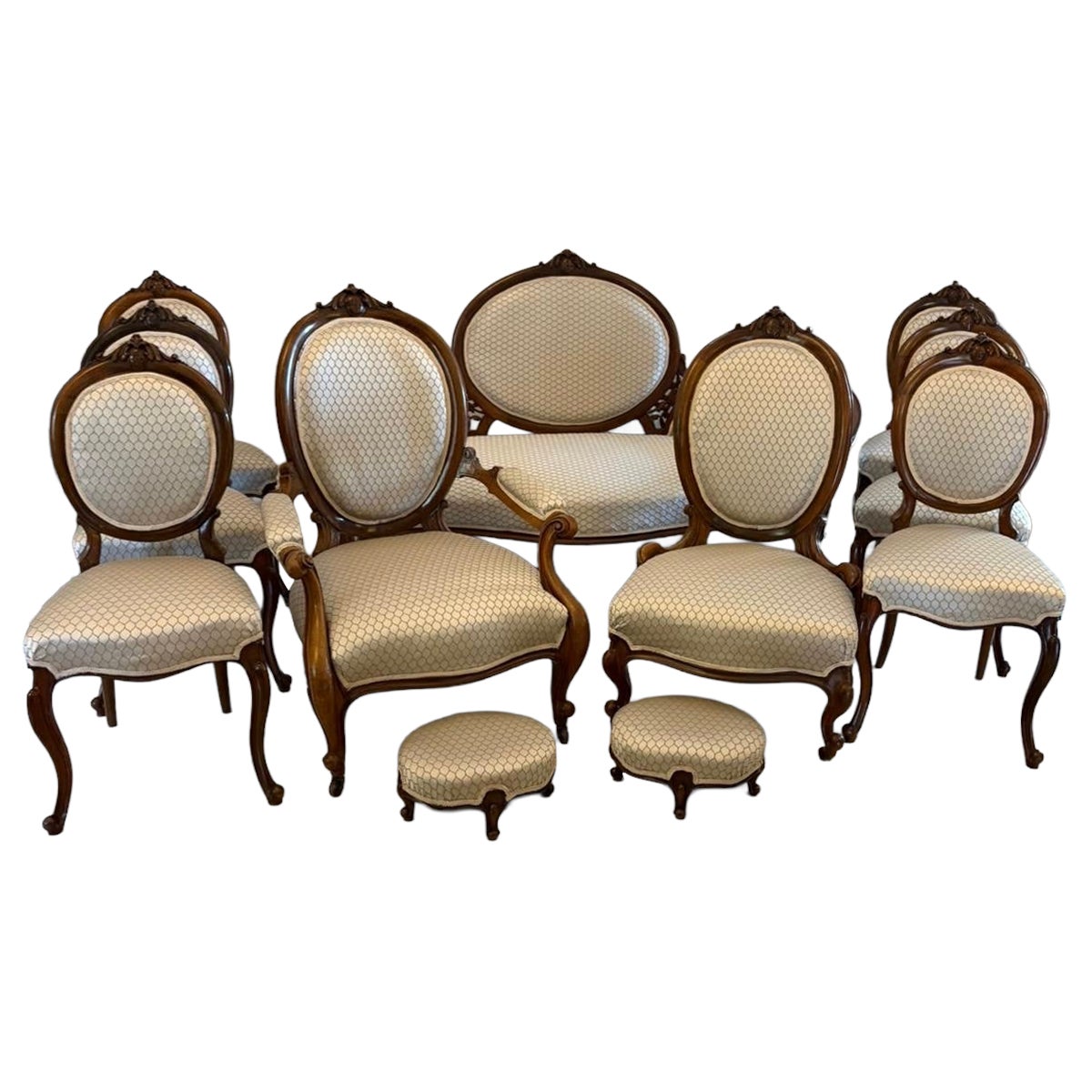
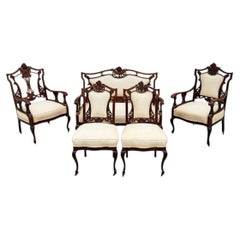
19th-C. Italian Neo-Renaissance Carved Walnut 5-Piece Salon Suite, ca. 1870

$6,650
£5,011.45
€5,855.23VAT Included
CA$9,436.85
A$9,464.21
CHF 5,490.55
MX$115,545.69
NOK 63,596.05
SEK 65,086.28
DKK 43,773.41

About the Item

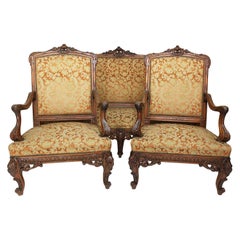
An exceptional and highly decorative five-piece salon suite, masterfully crafted in Italy around 1870 during the Neo-Renaissance revival period. Made from finely grained, solid walnut, this exquisite set showcases the pinnacle of 19th-century Italian wood carving, featuring rich, deeply sculpted mythological and classical motifs. This comprehensive and rare suite comprises a grand three-seater settee (sofa), a matching two-seater sofa (loveseat), two corner armchairs (conversational/corner chairs), and a beautifully coordinated tea or side table. Design & Iconography: Every piece in this set is a testament to virtuoso craftsmanship. The Seating Elements: Feature undulating, wrap-around crest rails supported by elegant turned spindle balusters. The central backrests of the sofas are crowned with a magnificent hand-carved cartouche depicting a classical female masqueron flanked by winged mythical creatures (griffins/chimeras). The splats are intricately pierced and carved with scrolling acanthus leaves, stylized scallop shells, and fierce lion-mask medallions. The Table: The accompanying table features a rectangular top adorned with superb, crisp incised/engraved foliate scrollwork and a central rosette. It rests on a heavily carved apron with lion masks, supported by four turned legs connected by an X-form stretcher with a central carved finial. Support: All seating elements and the table feature elegant turned and tapered legs ending in peg feet, ensuring stability while maintaining a refined silhouette. Condition & Upholstery: The suite retains its beautiful, rich original patina with a warm honey-walnut tone. The seats are traditionally upholstered in a luxurious, understated damask/jacquard fabric with muted blue, gold, and beige tones featuring classical floral motifs, which perfectly complements the timber. The upholstery remains in very good antique condition with comfortable support. Dimensions: Three-Seater Settee (Sofa): Height: 90 cm (35.4 in) Width: 149 cm (58.7 in) Depth: 67 cm (26.4 in) Two-Seater Loveseat: Height: 80 cm (31.5 in) Width: 108 cm (42.5 in) Depth: 95 cm (37.4 in) Corner Chairs (Each): Height: 80 cm (31.5 in) Width: 60 cm (23.6 in) Depth: 60 cm (23.6 in) Table: Height: 77 cm (30.3 in) Width: 90 cm (35.4 in) Depth: 58 cm (22.8 in)
  • Dimensions:
    Height: 35.4 in (89.92 cm)Width: 58.7 in (149.1 cm)Depth: 26.4 in (67.06 cm)Seat Height: 15.748 in (40 cm)
  • Style:
    Victorian (In the Style Of)
  • Materials and Techniques:
  • Place of Origin:
  • Period:
  • Date of Manufacture:
    1870
  • Condition:
    Wear consistent with age and use. Minor losses.
  • Seller Location:
    SEDLEC-PRČICE, CZ
  • Reference Number:
    1stDibs: LU10963250371082

More From This Seller

View All
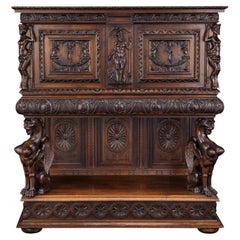
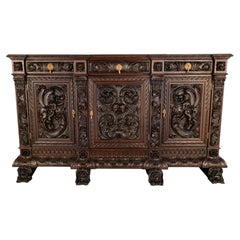
19th-Century French Henri II Renaissance Revival Carved Walnut Buffet

19th-Century French Henri II Renaissance Revival Carved Walnut Buffet

Located in SEDLEC-PRČICE, CZ

This 19th-century French Henri II Renaissance Revival carved walnut buffet is an exceptional statement piece featuring masterfully sculpted mythological figures and chimera supports....

Category

Antique 1890s French Renaissance Cabinets

Materials

Walnut

Monumental Italian Neo-Renaissance Carved Walnut Secretary Commode

Monumental Italian Neo-Renaissance Carved Walnut Secretary Commode

Located in SEDLEC-PRČICE, CZ

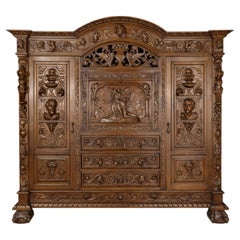
An exceptional Italian Neo-Renaissance carved walnut secretary commode, dating to circa 1880, features a monumental hand-carved facade with biblical reliefs. This rare Italian Neo-Renaissance carved walnut secretary commode represents the absolute pinnacle of late nineteenth-century Italian historicist cabinetmaking. To someone who has not seen this piece in person, it can be described as an architectural masterpiece that commands the room. It is a substantial three-door case piece that harmoniously combines a deep chest of drawers with an integrated drop-front writing desk. The entire front surface is covered in rich, multi-layered high-relief carvings, displaying incredible depth, dramatic texture, and a warm, lustrous original patina. What makes this Italian Neo-Renaissance carved walnut secretary commode truly special and worth its premium price is the museum-quality artistry of its execution. Every element is carved from solid walnut wood rather than being applied. The central drop-front panel features a breathtaking, highly detailed biblical scene depicting Jacob wrestling the Angel, framed by classical Corinthian columns. Above this scene, an intricate openwork pierced carving shows a classical urn overflowing with fruit, flanked by winged mythical chimeras. The piece is further elevated by classical Roman-style bust portraits, angelic putti, fierce satyr masks, and full-length corner stiles featuring caryatid figures. The entire structure stands securely on magnificent, heavily carved lion paw feet, symbolizing strength and nobility. For a potential buyer, several practical details are highly useful to know. This multi-functional piece offers exceptional utility, featuring three wide, deep drawers in the lower commode section, a fully fitted secretary interior with three additional small drawers, and two separate side compartments with sturdy wooden shelves for ample storage. The drawers and doors operate smoothly, and the piece retains its original, beautifully patinated brass handles and hanging pulls. Regarding installation and maintenance, this heavy, solid walnut cabinet should be placed on a level floor, and it is recommended to clean it solely by dusting with a soft, dry cloth and occasionally applying high-quality clear beeswax to preserve the historic finish. While the specific master cabinetmaker or workshop signature is not present, this item fits perfectly into the grand tradition of Northern Italian Renaissance Revival craftsmanship of the late nineteenth century. During this period, prominent workshops in Florence and Milan competed to create palatial furniture...

Category

Antique 1880s Italian Renaissance Commodes and Chests of Drawers

Materials

Walnut

18th-Century Dutch Marquetry Bureau Bookcase / Cabinet, circa 1780

18th-Century Dutch Marquetry Bureau Bookcase / Cabinet, circa 1780

Located in SEDLEC-PRČICE, CZ

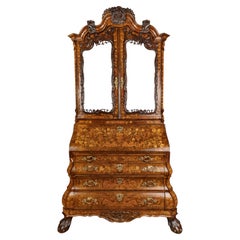
An exceptional Dutch rococo burr walnut marquetry bureau bookcase cabinet dating to circa 1780. This monumental eighteenth-century Dutch rococo burr walnut marquetry bureau bookcase ...

Category

Antique 1780s Dutch Rococo Cabinets

Materials

Bronze

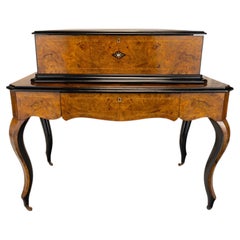
1880s Burr Walnut Musical Box Table  5 Cylinders, 40 Tunes & 6 Bells

1880s Burr Walnut Musical Box Table 5 Cylinders, 40 Tunes & 6 Bells

Located in SEDLEC-PRČICE, CZ

An exceptional late 19th-century mechanical musical automaton table in premium burr walnut. Features a fully functional, flawless cylinder movement accompanied by six brass bells. Co...

Category

Antique 1880s English Napoleon III Industrial and Work Tables

Materials

Steel

Restored 19th C. Neo-Renaissance Carved Oak Credenza (Matching Cabinet)

Restored 19th C. Neo-Renaissance Carved Oak Credenza (Matching Cabinet)

Located in SEDLEC-PRČICE, CZ

This restored nineteenth century Neo-Renaissance carved chestnut credenza is an extraordinary piece of European case furniture that features remarkably deep hand-carved high relief s...

Category

Antique Late 19th Century French Renaissance Credenzas

Materials

Bronze

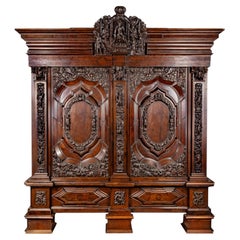
Exceptional Museum-Quality Danzig Baroque Carved Walnut "Schapp" Armoire

Exceptional Museum-Quality Danzig Baroque Carved Walnut "Schapp" Armoire

Located in SEDLEC-PRČICE, CZ

Exceptional museum-quality Danzig Baroque carved walnut Schapp armoire from circa 1680. This magnificent double-door hall wardrobe represents the absolute pinnacle of seventeenth-c...

Category

Antique 1680s Polish Baroque Wardrobes and Armoires

Materials

Walnut

You May Also Like

Fine French 19th Century Louis XV Style Carved Walnut Three-Piece Salon Suite

Fine French 19th Century Louis XV Style Carved Walnut Three-Piece Salon Suite

Located in Los Angeles, CA

A fine and large French 19th century Louis XV style carved walnut three-piece salon suite. The high back intricately carved frames with floral and wreath design, comprising of a thre...

Category

Antique Late 19th Century French Louis XV Living Room Sets

Materials

Fabric, Walnut

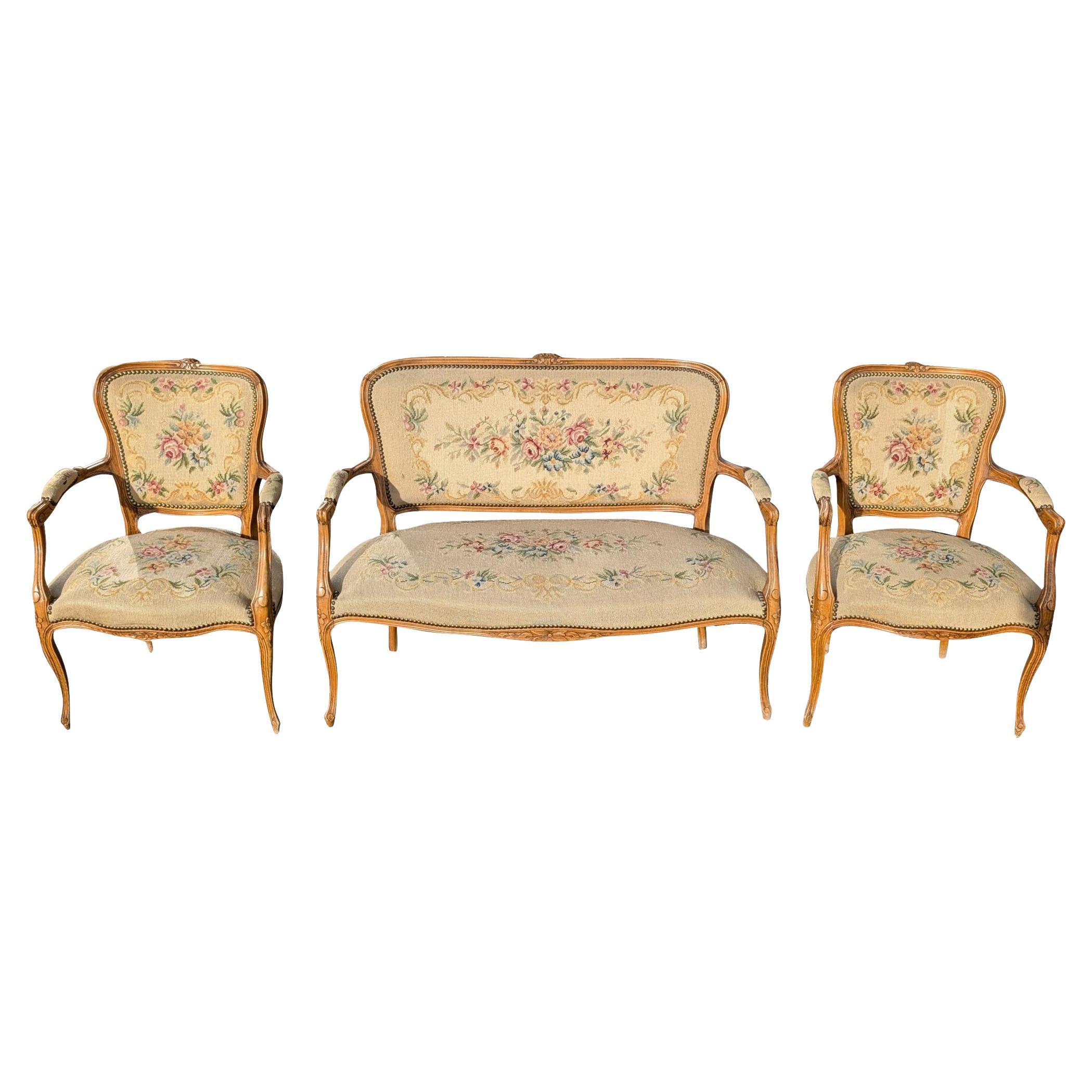
Fine antique Victorian French carved walnut three piece suite

Fine antique Victorian French carved walnut three piece suite

Located in Ipswich, GB

Fine antique Victorian French carved walnut three piece suite, consisting of a settee and a pair of armchairs, having quality carved solid walnut shaped backs with open arms, upholst...

Category

Antique Early 19th Century French Early Victorian Furniture

Materials

Walnut

An Anglo-Dutch 19th Century Walnut Carved 5 Piece Parlor Set, After Daniel Marot

An Anglo-Dutch 19th Century Walnut Carved 5 Piece Parlor Set, After Daniel Marot

Located in Los Angeles, CA

A Fine Anglo-Dutch 19th Century Baroque Style Ornately Carved Walnut Five Piece Parlor - Salon Suite, After Daniel Marot (French-Dutch, 1661–1752); comprising of a settee, two armchairs and two side chairs. The intricately pierced high-backs carved frames with scrolled and floral designs, curved armrests and cabriolet conjoined legs. Circa: 1890. Measures: Settee height: 54 3/4 inches (139.1 cm) Settee width: 70 3/4 inches (179.7 cm) Settee depth: 24 inches (61 cm) Armchairs Height: 52 inches (132.1 cm) Armchairs Width: 28 inches (71.1 cm) Armchairs Depth: 21 1/2 inches (54.6 cm) Side chairs Height: 50 inches (127 cm) Side chairs Width: 21 1/2 inches (54.6 cm) Side chairs Depth: 20 1/2 inches (52.1 cm) Seat height: 20 3/8 inches (51.8 cm). Daniel Marot or Daniel Marot the Elder (1661–1752) was a French-born Dutch architect, furniture designer and engraver at the forefront of the classicizing Late Baroque Louis XIV style. He worked for a long time in England and the Dutch Republic, where he was naturalised in 1709. Born in Paris, he was a pupil of Jean Le Pautre and the son of Jean Marot, who was also an architect and engraver. Marot was working independently as an engraver from an early age, making engravings of designs by Jean Bérain, one of Louis XIV's official designers at the Manufacture des Gobelins, where far more than tapestry was being produced. The family were Huguenots and were part of the wave of émigrés who left France in the year of the Edict of Fontainebleau and Revocation of the Edict of Nantes (1685) to settle in Holland. Daniel Marot brought the fully developed court style of Louis XIV to Holland, and later to London. In the end, the English style which is loosely called "William and Mary" owed much to his manner. In the Dutch Republic, Marot was employed by the Stadthouder, who later became William III of England; in particular, he is associated with designing interiors in the palace of Het Loo, from 1684 on. Though his name cannot be attached to any English building (and he does not have an entry in Howard Colvin's exhaustive Dictionary of British Architects) we know from his own engraving that he designed the great hall of audience for the States-General at the Hague. He also decorated many Dutch country-houses, introducing the “salon” and popularizing ornamented ceilings in The United Provinces/ Netherlands. State bed, designed by Daniel Marot, engraving, ca 1702 In 1694, he traveled with William to London, where he was appointed one of his architects and Master of Works. In England his activities appear to have been concentrated at Hampton Court Palace, where he designed the garden parterres, which were swept away in the following generation and have been restored at the end of the 20th century. His designs for the Great Fountain Garden survive. Much of the furniture, especially the mirrors, guéridons and state beds, in the new State Rooms readied for William at Hampton Court bears unmistakable traces of his authorship; the tall and monumental embroidered state beds, with their plumes of ostrich feathers, their elaborate valances and cantonnieres agree very closely with his later published designs. After William's death Marot returned to Holland where he lived at the Noordeinde 164 in The Hague from 1720 until his death in 1752. The house with his salon, kitchen, hallway and possibly some of his ceilings still exists. We owe much of our knowledge of his work to the folio volume of his furniture designs published at Amsterdam in 1712. Not surprisingly the designs show strong French and Dutch influences; what reads as their "English" look is more probably the result of Marot's court style on other London designers. Marot was a nephew of Pierre Gole...

Category

Antique Late 19th Century Dutch Baroque Revival Living Room Sets
Materials

Walnut

Exhibition Quality Antique Victorian Carved  Walnut 9 Piece Suite

Exhibition Quality Antique Victorian Carved Walnut 9 Piece Suite

Located in Suffolk, GB

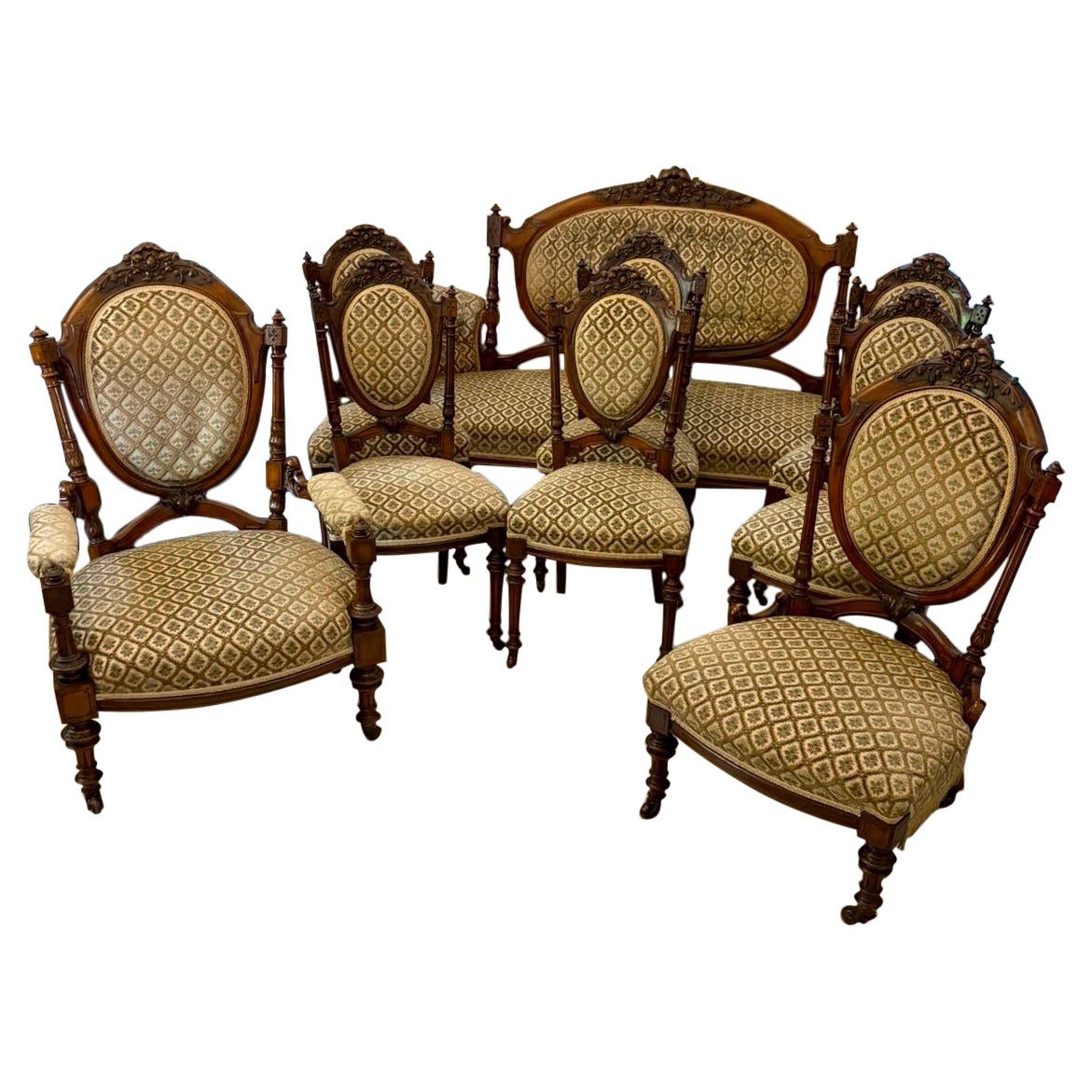
Exhibition quality antique Victorian carved walnut 9 piece suite consisting of a large settee, ladies and gentlemens chair and 6 side/dining chairs in exhibition quality carved soli...

Category

Antique 19th Century English Victorian Living Room Sets

Materials

Walnut

Antique Victorian Carved Walnut 11 Piece Salon/Drawing Room Suite

Antique Victorian Carved Walnut 11 Piece Salon/Drawing Room Suite

Located in Suffolk, GB

A superb antique Victorian carved walnut salon suite of elegant form and excellent quality dating to the mid 19th century. This is a complete and beautifully matched drawing room sui...

Category

Antique 19th Century English Victorian Living Room Sets

Materials

Walnut

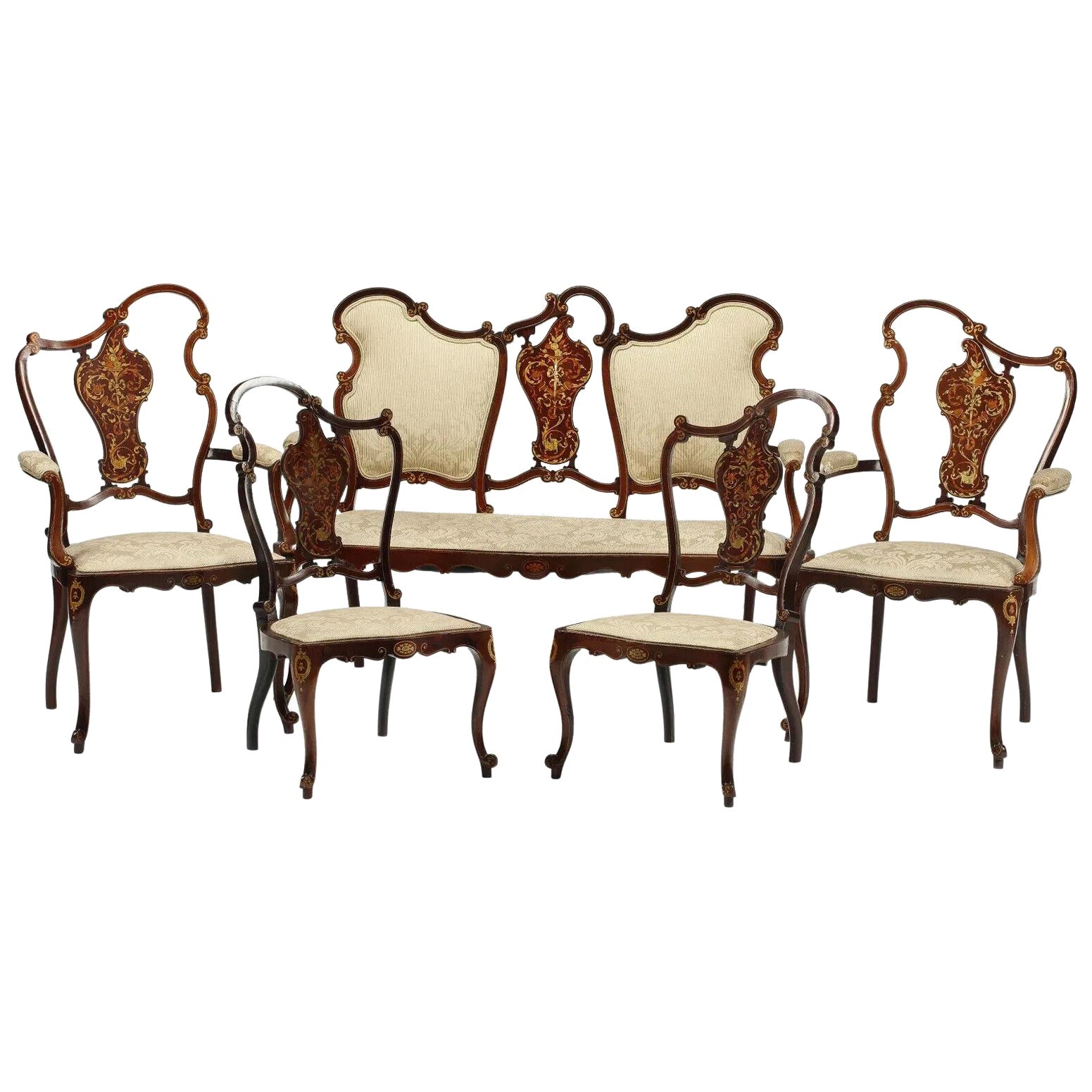
Antique Victorian Carved Mahogany Inlaid Parlor Set Sofa and 4 Chairs - 5 Pcs

Antique Victorian Carved Mahogany Inlaid Parlor Set Sofa and 4 Chairs - 5 Pcs

Located in Philadelphia, PA

Please message us with your zip code to request a more reasonable domestic U.S. shipping quote. Antique Victorian Carved Mahogany Inlaid Parlor Sofa Set - 5 Pcs. Set includes (1) Lo...

Category

Antique Late 19th Century Victorian Living Room Sets

Materials

Mahogany