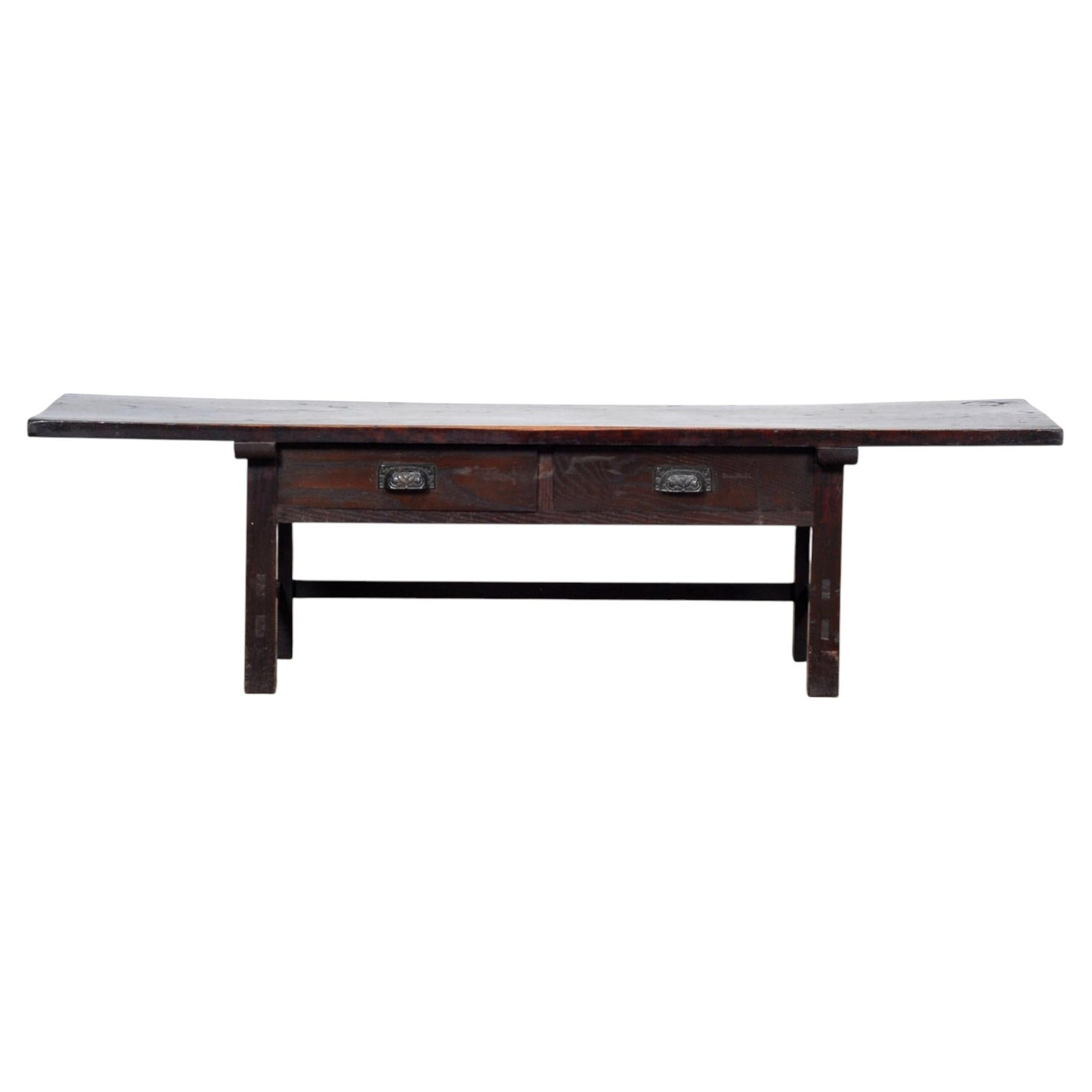
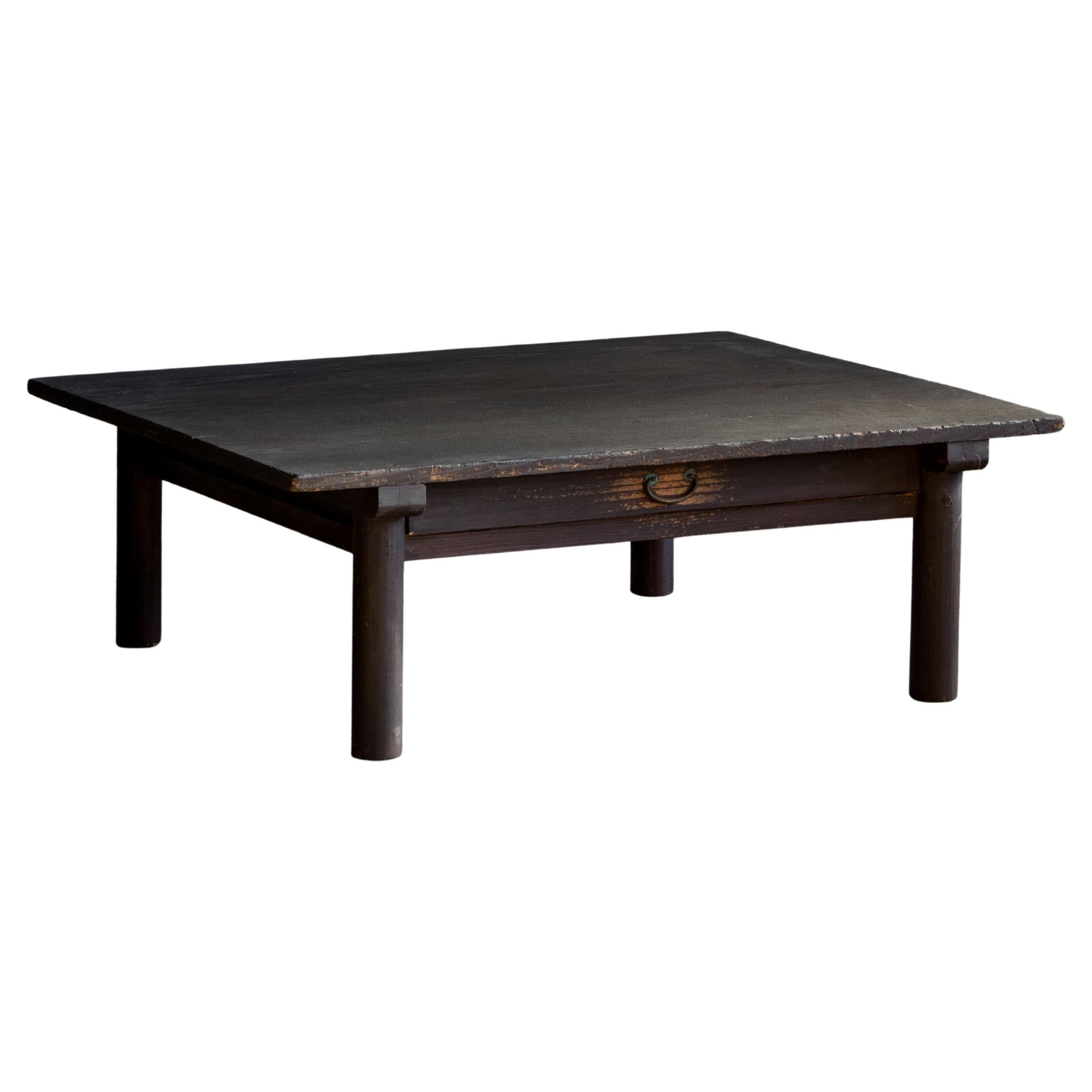
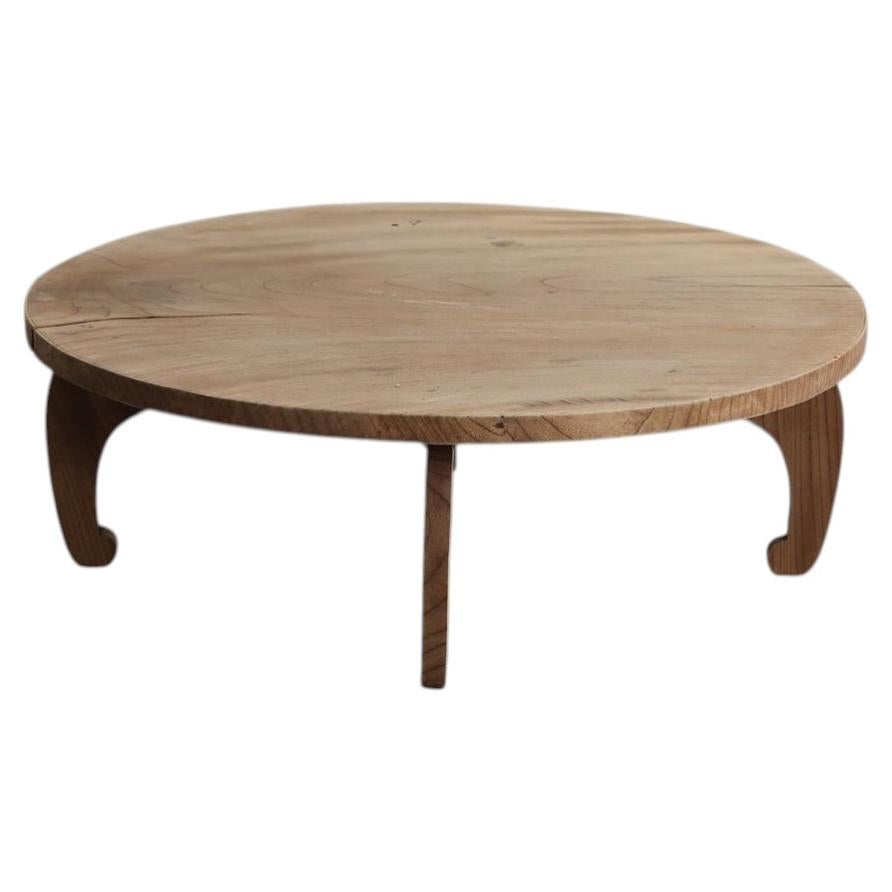
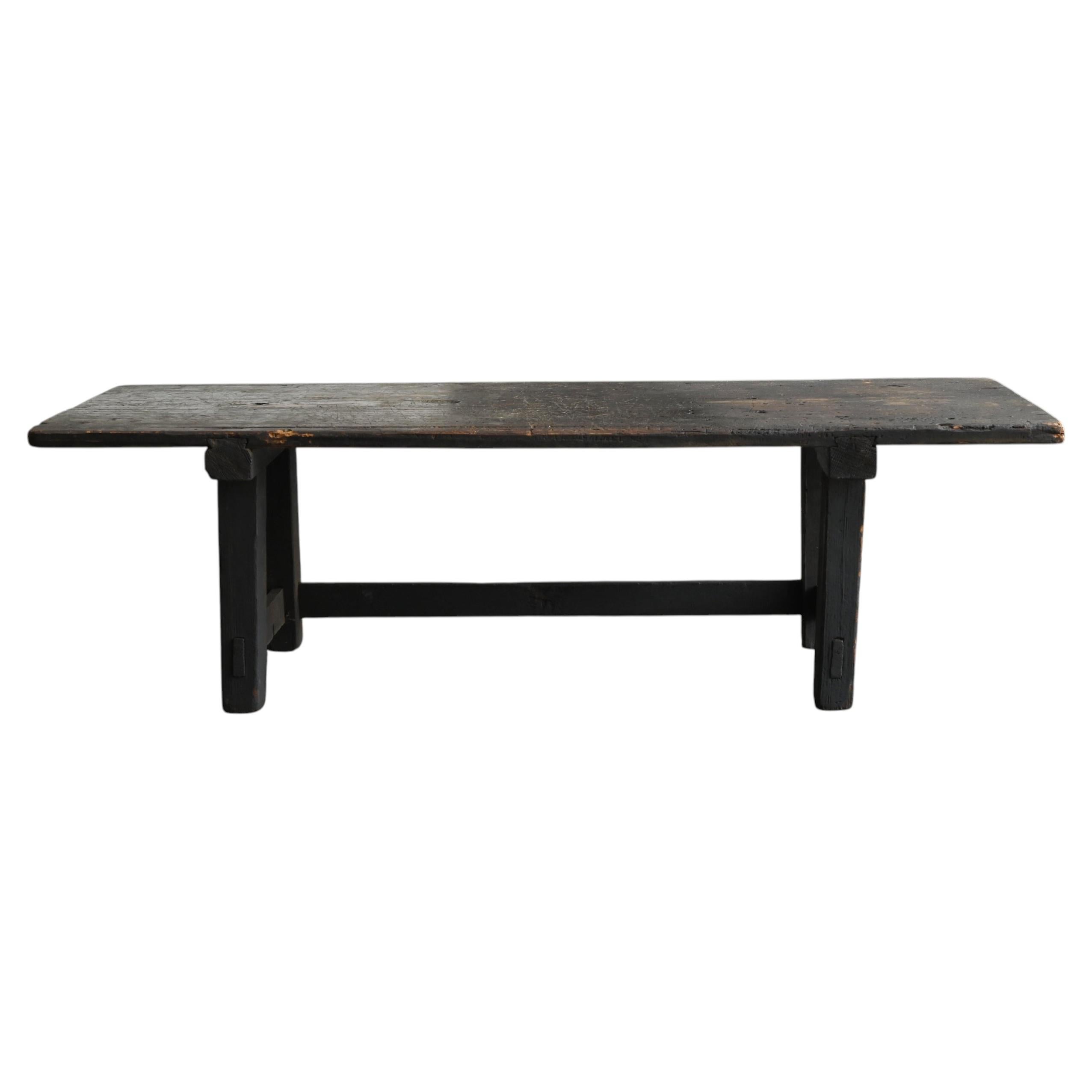
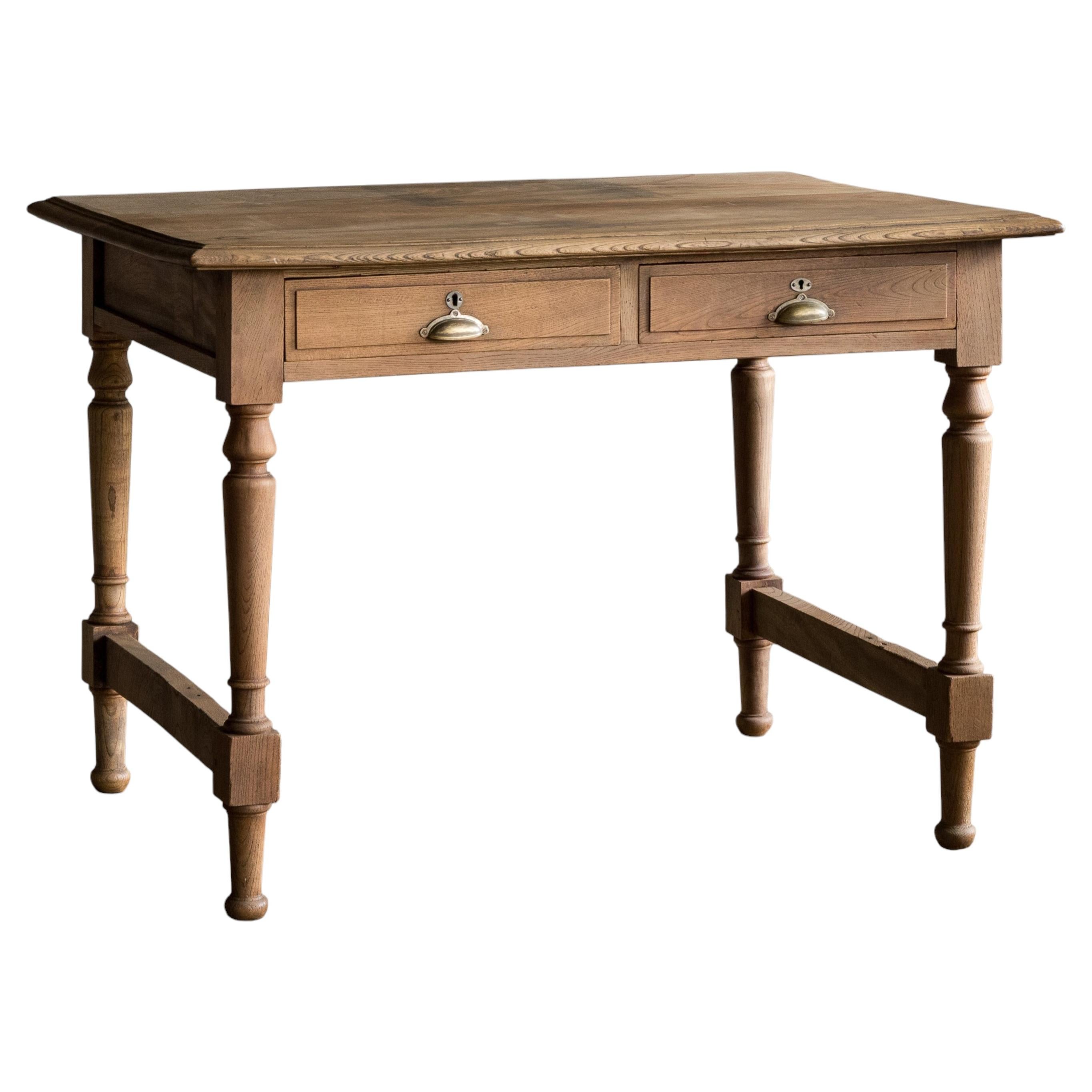
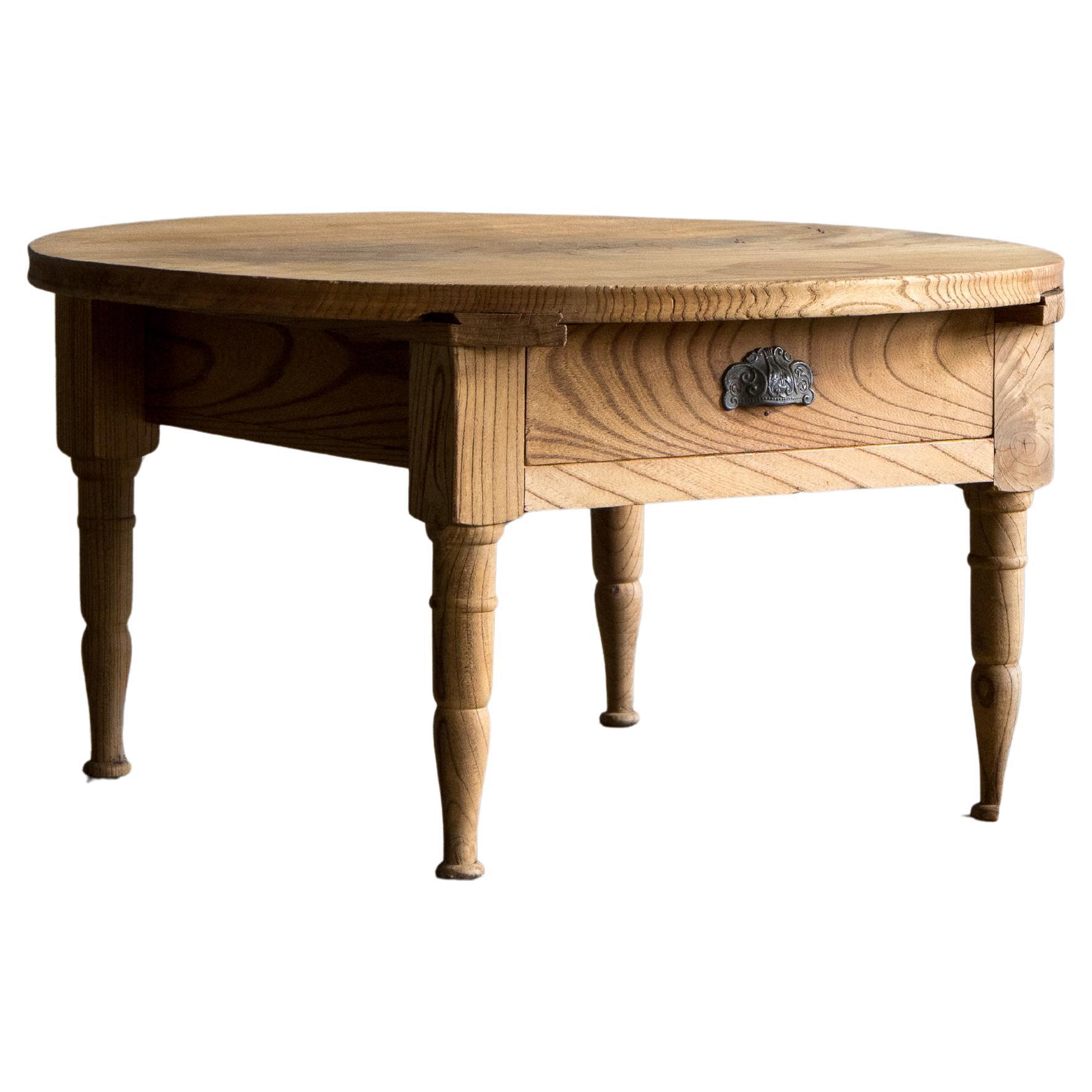
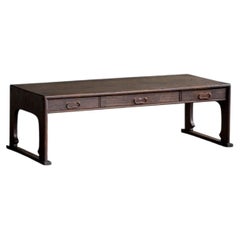
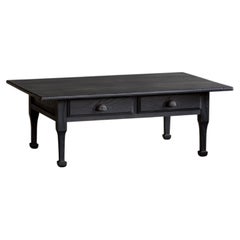
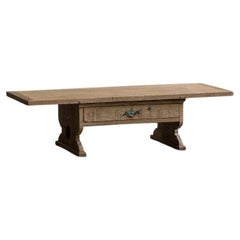
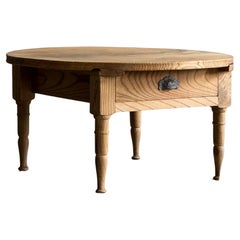
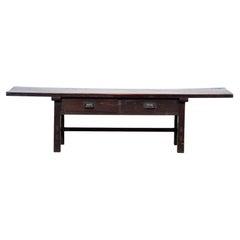
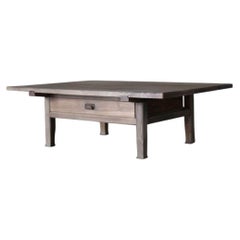
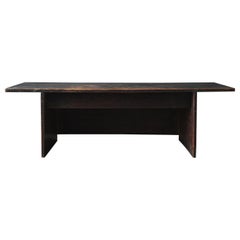
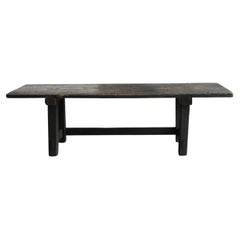
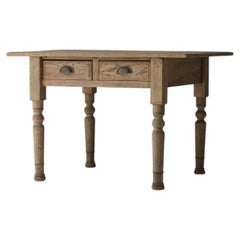
This Japanese antique low writing table was crafted during the Taisho Era, circa 1920.
Known in Japan as a fuzukue, this style of low writing table was traditionally used while seated on tatami flooring. Before desks and chairs became common in Japanese homes, it provided a place for reading, writing, and quiet study. During the late Edo, Meiji, and Taisho periods, these activities were regarded not only as practical necessities but also as cultivated pursuits, and the fuzukue became an important part of everyday intellectual life. As a result, many examples were made with carefully considered proportions and refined details that extended beyond simple utility.
Crafted primarily from chestnut wood, the table celebrates the natural beauty of the material through its expressive grain and warm, mellow patina. The well-proportioned tabletop provides practical space for writing and everyday use while allowing the beauty of the wood to remain the central focus. Compared to many surviving examples from the Taisho Era, this piece has been particularly well preserved, with relatively light wear that allows the rich character of the chestnut wood to be fully appreciated.
One of the defining features of this piece is its elegantly turned legs. During the late Meiji and Taisho periods, before furniture production became increasingly standardized, turned legs were crafted in a remarkable variety of profiles and proportions by skilled craftsmen. This example features particularly slender, graceful legs that lend the piece a refined and expressive character, creating a beautifully balanced overall form. In later decades, many examples adopted simpler forms as efficiency became a greater priority in production, making earlier pieces like this especially admired for their individuality and craftsmanship.
Two drawers beneath the tabletop provide practical storage for writing implements, documents, or other everyday belongings. Their simple construction blends naturally into the overall design, preserving the quiet character of the piece.
Although originally intended for use while seated on the floor, this fuzukue adapts naturally to contemporary interiors. It can serve as a low writing table, coffee table, display table, or occasional table, bringing the quiet beauty of a traditional Japanese fuzukue into contemporary living. Whether placed in a modern home or a more traditional setting, it offers a quiet presence shaped by age, craftsmanship, and the enduring beauty of wabi-sabi.
Condition Notes:
- Structure is sound and stable with no structural issues
- Drawers operate smoothly
- Surface shows relatively light age-related wear including minor scratches, small dents, and wear to the original finish
- Minor stains and small marks are present from years of use
- Cleaned and disinfected with a non-toxic solution
As an authentic Taisho-period piece (1912–1926), this table shows natural signs of age acquired through decades of use. Compared to many surviving examples of the period, it remains in particularly well-preserved condition, with relatively light wear that highlights the natural beauty and mellow patina of the chestnut wood. Please review all photos carefully, and feel free to contact us with any questions before purchasing.
Interior Dimensions:
W: 11.0" × D: 15.7" × H: 2.6"
(28.0 × 40.0 × 6.5 cm)
Weight: 18.7 lbs (8.5 kg)
Shipping Information:
We ship from Japan. I will provide my own shipping quote. Please ask.
Import duties, taxes, and customs fees are the responsibility of the buyer.
Approach to Selection and Restoration:
Each piece is individually selected through our own eye, then restored to reveal its most compelling state. Movement, stability, and surface are considered as one—shaped through practice to be lived with naturally, honoring the wood’s natural patina while avoiding environmentally harsh chemical strippers or forceful abrasion.