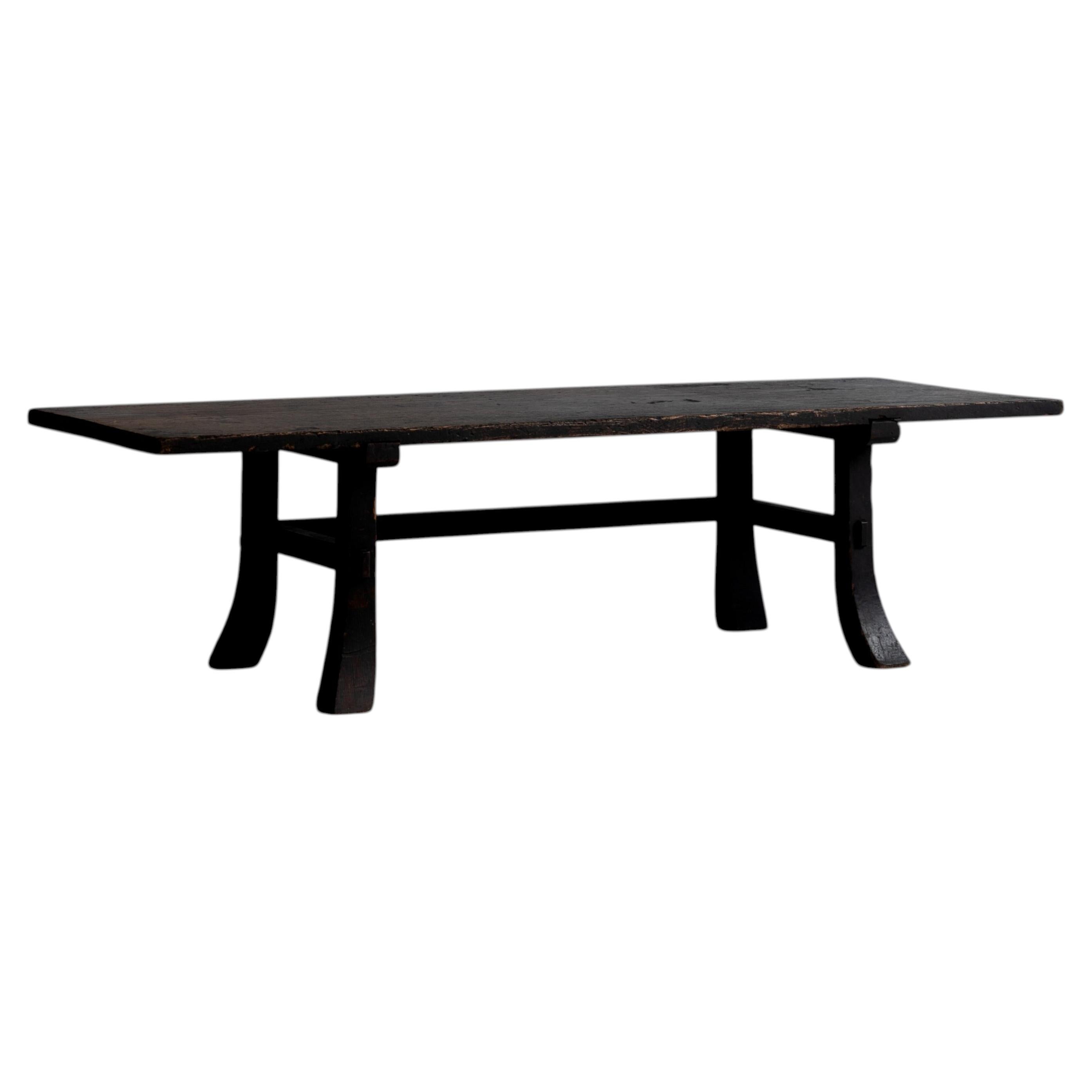
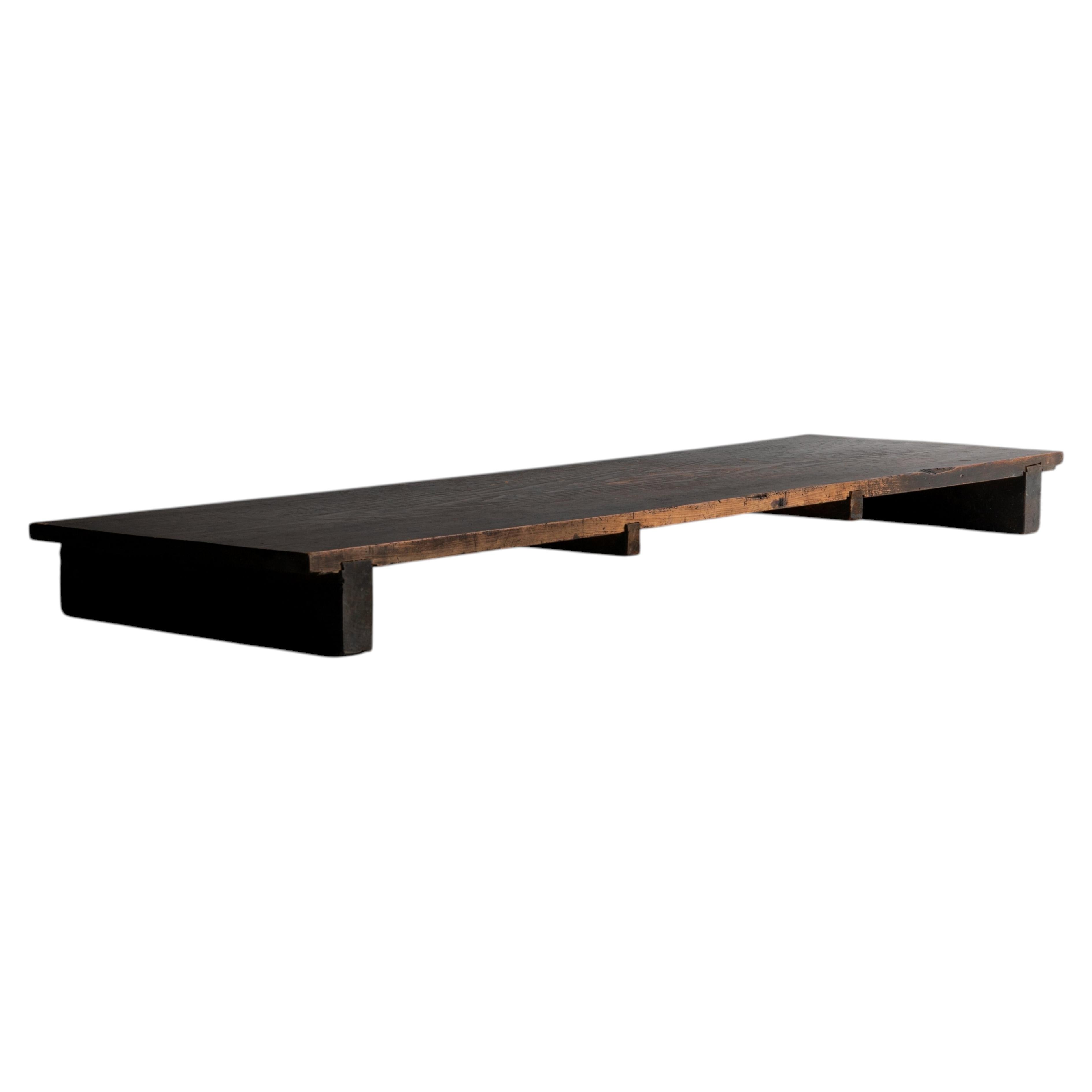
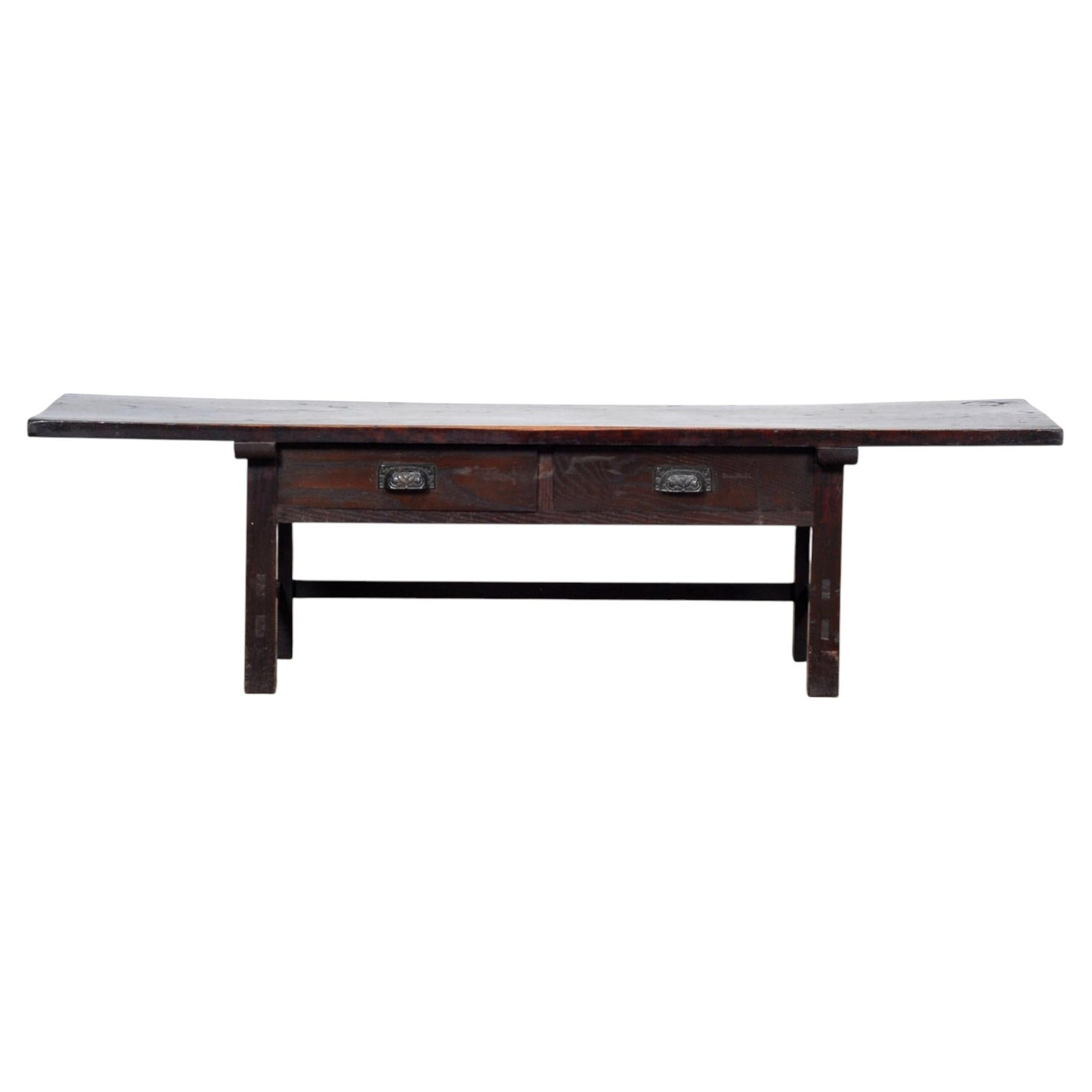
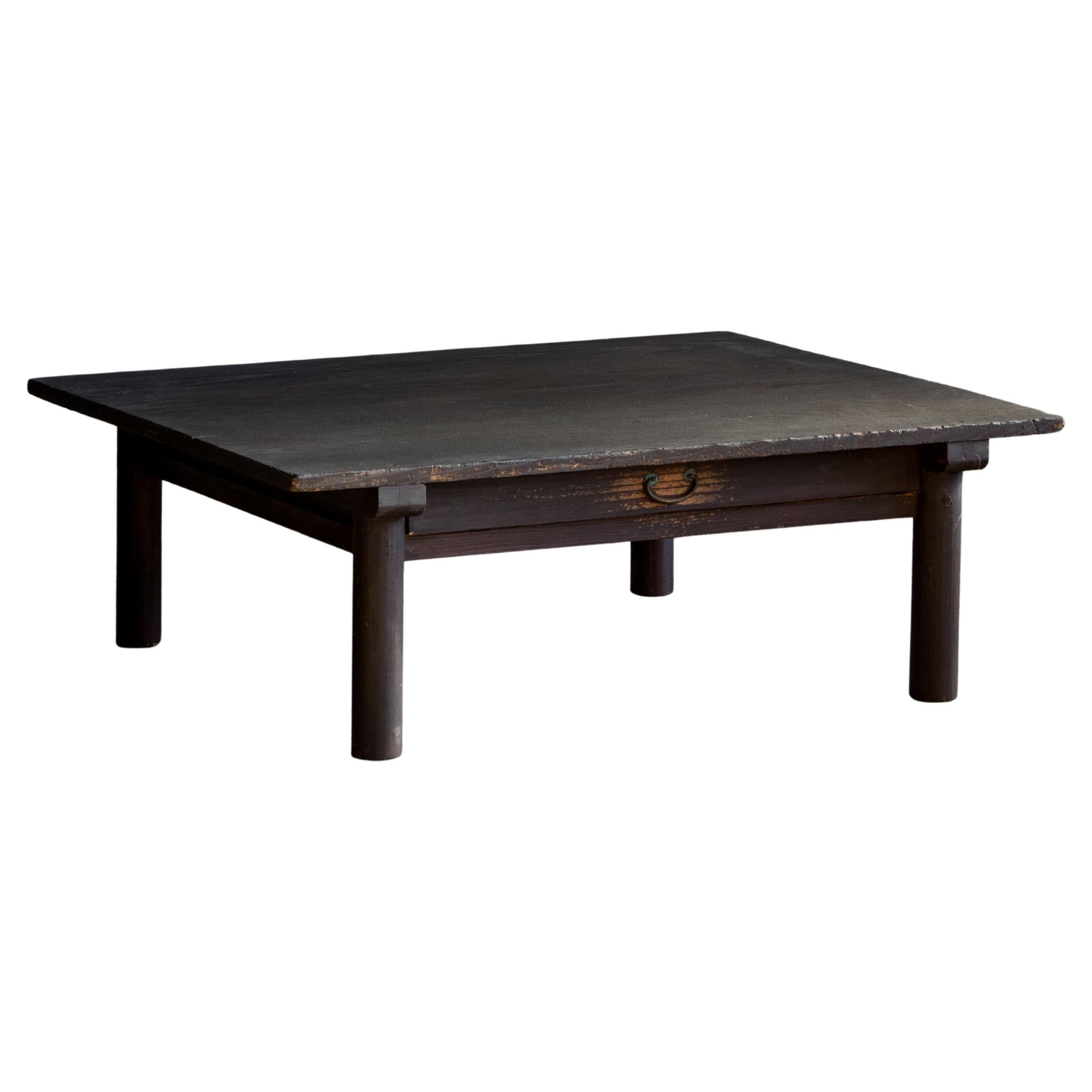
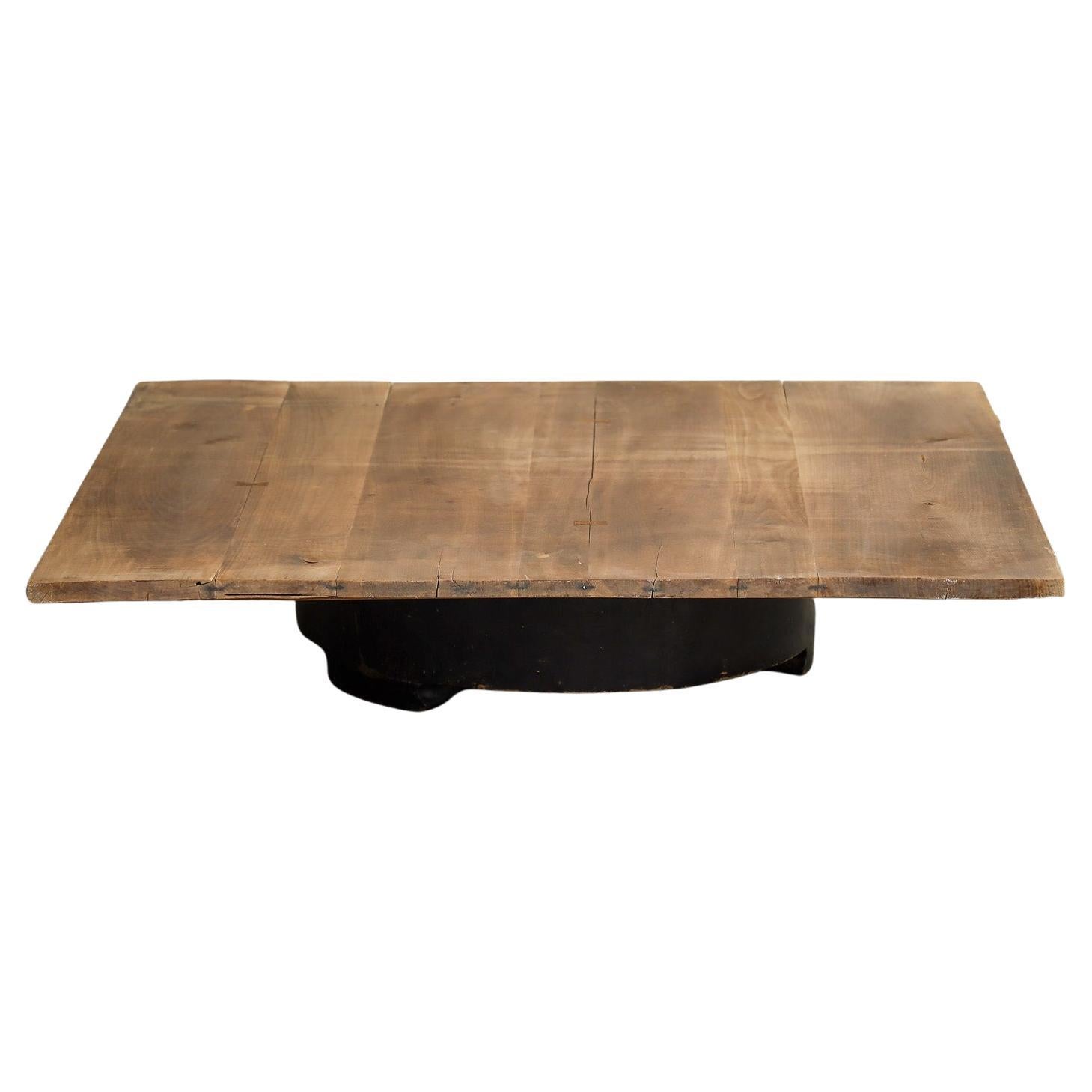
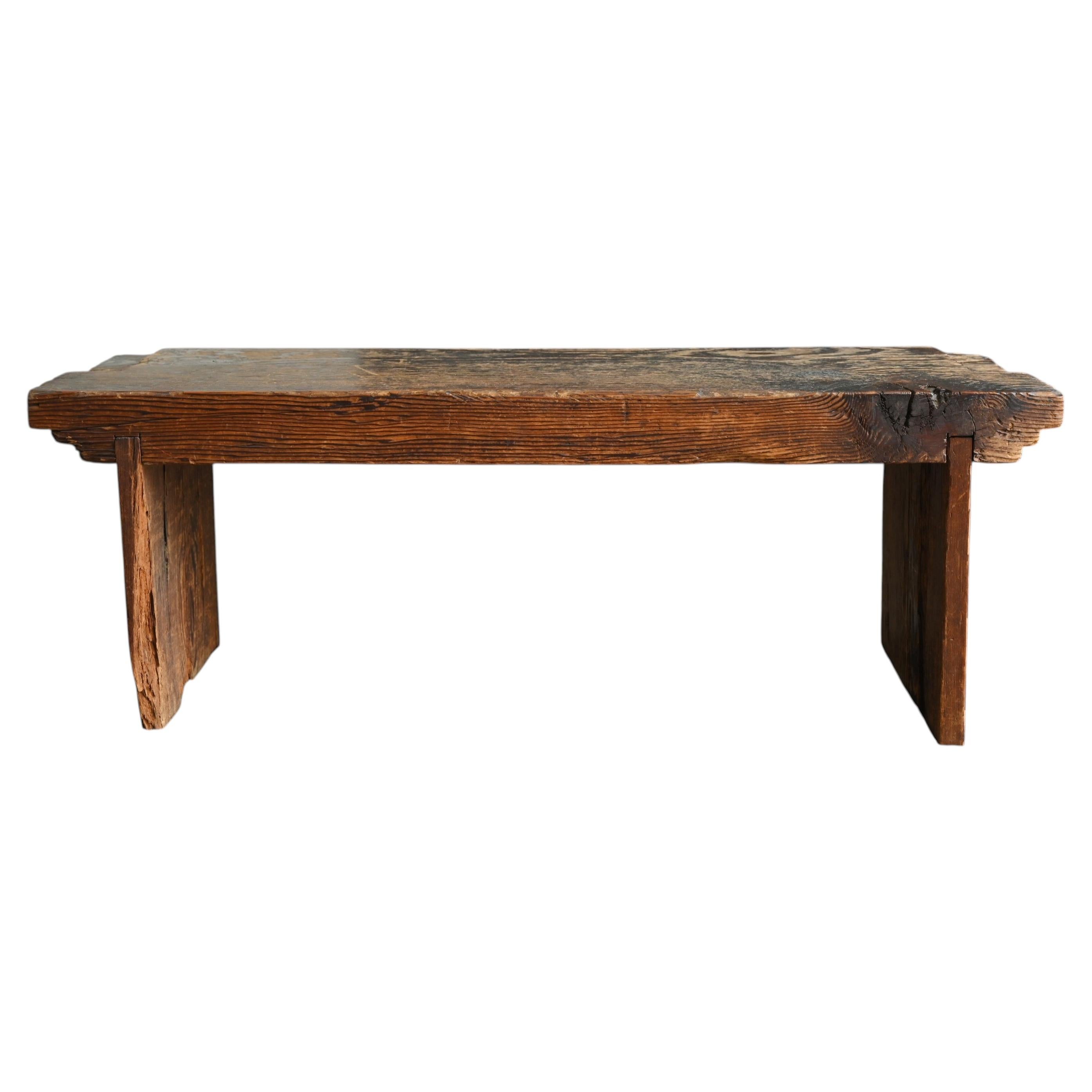
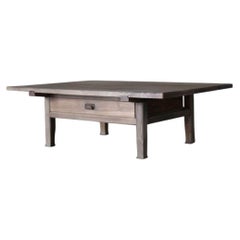
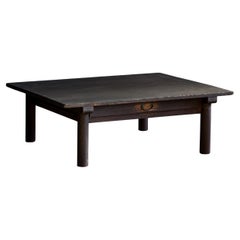
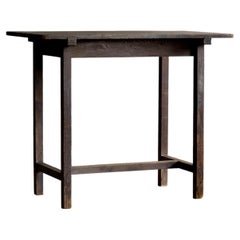
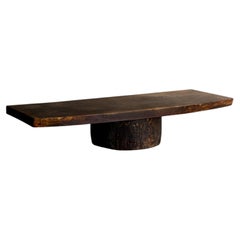
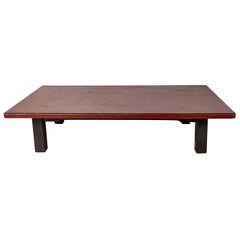
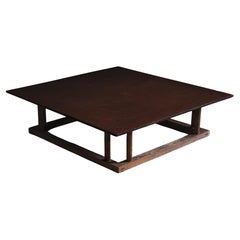
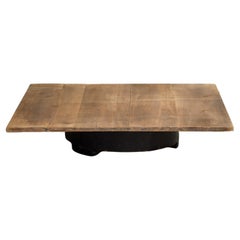
This is a wooden fuzukue (low writing desk) made in Meiji 3 (1870).
A fuzukue is a traditional low writing desk that has long been used in Japan. Rather than being used with chairs, it was designed for a lifestyle in which people sat directly on tatami mats. It was used for reading, writing, and study—serving as a tool for engaging with knowledge in quiet spaces such as temple schools (terakoya) or rooms within private homes. For this reason, it is low in height, modest in decoration, and possesses a dignified simplicity.
On the underside of this piece, there is an ink inscription written with a brush, recording both the date and the place of use. From what can be read, it was likely made in December of Meiji 3 (1870) and used in the area of Nanjo District, Fukui Prefecture.
Fukui Prefecture is located in the central part of Japan’s main island (Honshu), along the Sea of Japan coast. It forms part of the Hokuriku region and lies north of Shiga Prefecture. While it is not uncommon to find dates or locations written on the underside of furniture, it is rare for such information to remain this clearly preserved. This inscription provides an important clue in understanding the historical background of the piece.
The material is believed to be either Japanese cedar (sugi) or pine. Over more than 150 years, the wood surface has developed a deep, calm coloration, and the natural luster and patina created by age spread beautifully across the entire piece.
Particularly noteworthy is its delicate construction. The boards used measure only approximately 13 mm in thickness. Despite this, the structure is remarkably solid and maintains sufficient strength. The legs are joined to the top using a traditional sliding dovetail joint known as arimizo, demonstrating careful craftsmanship even when working with such thin boards.
The condition is good, with no losses and no significant warping. It remains fully functional for use today. It may be used not only as a low table, but also as a display platform.
Antique fuzukue with such refined and dignified presence are becoming increasingly difficult to obtain. With its preserved historical inscription, structural beauty, and quiet yet powerful presence, this is a highly recommended piece.
Size
W 90.6 cm
D 30.3 cm
H 28.4 cm
Weight 4.4 kg
Item No. TA132
[Our Social Role]
--------------------------------------------------------------------------------------------------------
We are a specialized team dealing in antiques and vintage items, comprised of stores based on three distinct brands. While focusing on Japanese items, we also offer a carefully curated selection of attractive goods from around the world—each evoking the culture and history of its country of origin.
Unlike the traditional Japanese antique furniture and art that have been appreciated overseas until now, we shine a light on the tools and furniture that were used for many years in ordinary Japanese homes and farmhouses. These objects have gained a unique charm over time, their beauty deepened by the history accumulated through daily life. In today’s world, however, many of these precious items are discarded during home demolitions. We are committed to reassessing their value and passing them on to future generations.
Drawing from our extensive experience—having seen tens of thousands of items through direct purchases, markets, and auction houses—we carefully select and present only the most captivating pieces. This is something made possible only through the years of knowledge and expertise we have cultivated.
Rather than focusing on the widely known facets of Japanese art and culture, we highlight the subtle beauty born from the everyday life of common people. It is this rediscovered beauty, steeped in history, that we strive to share with the world.