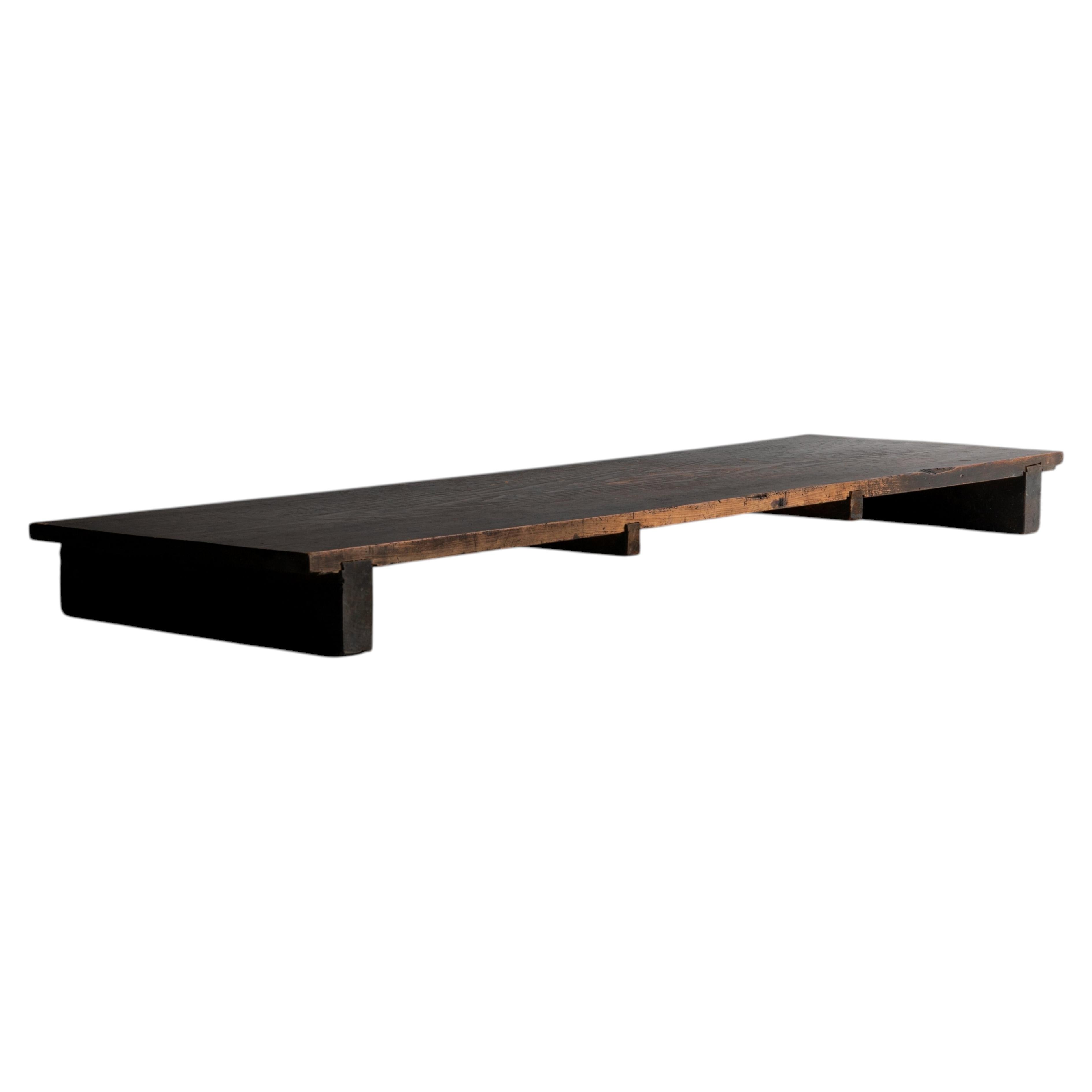
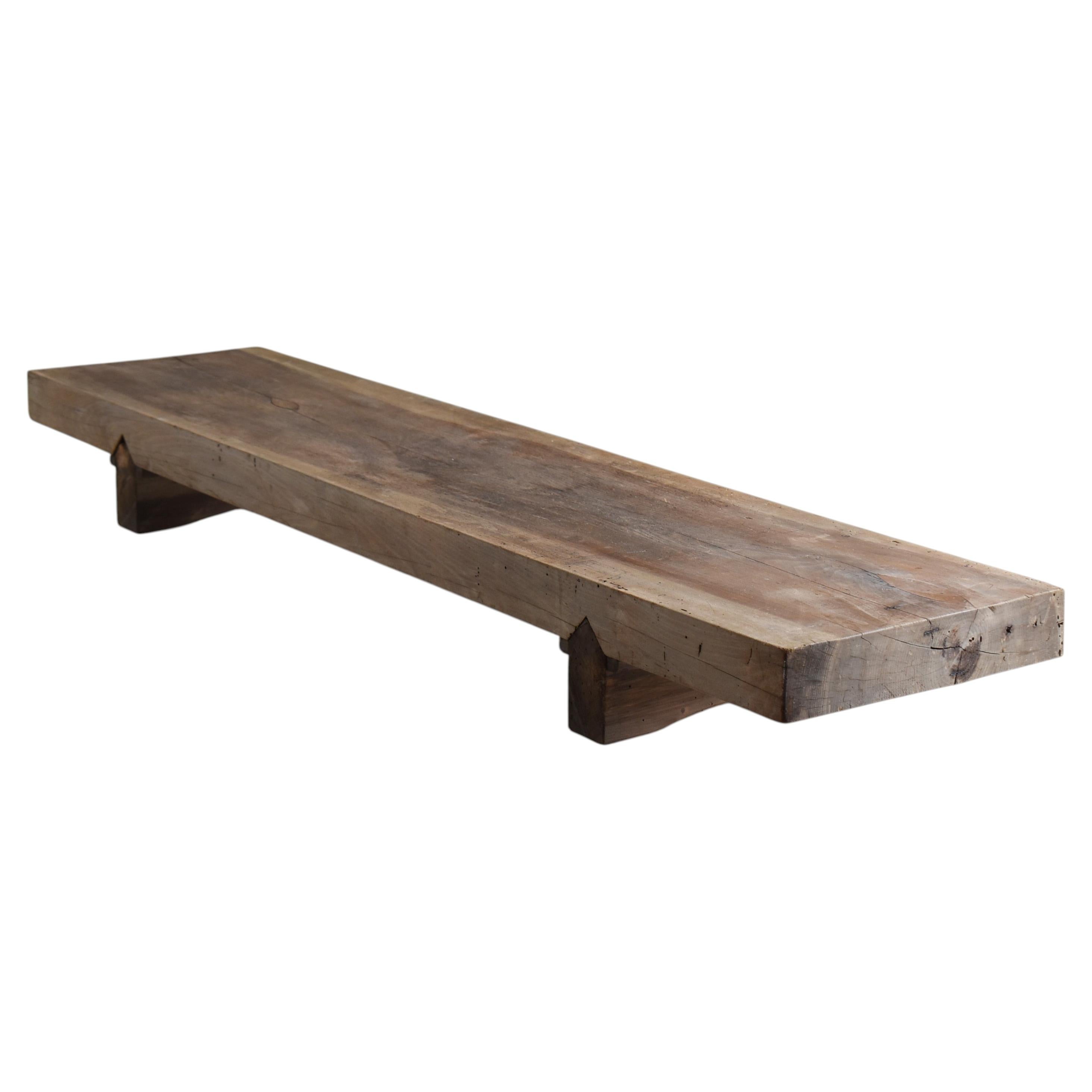
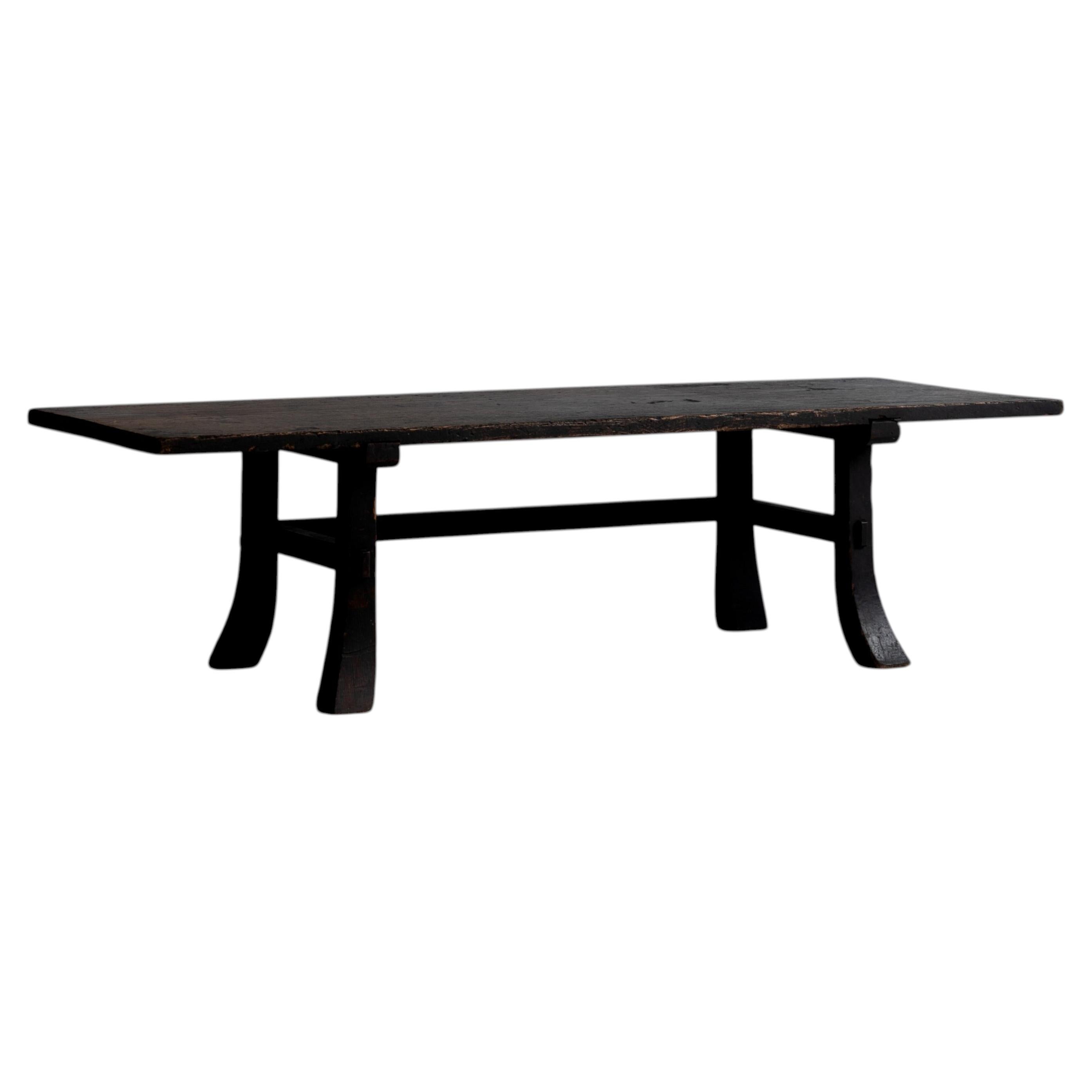
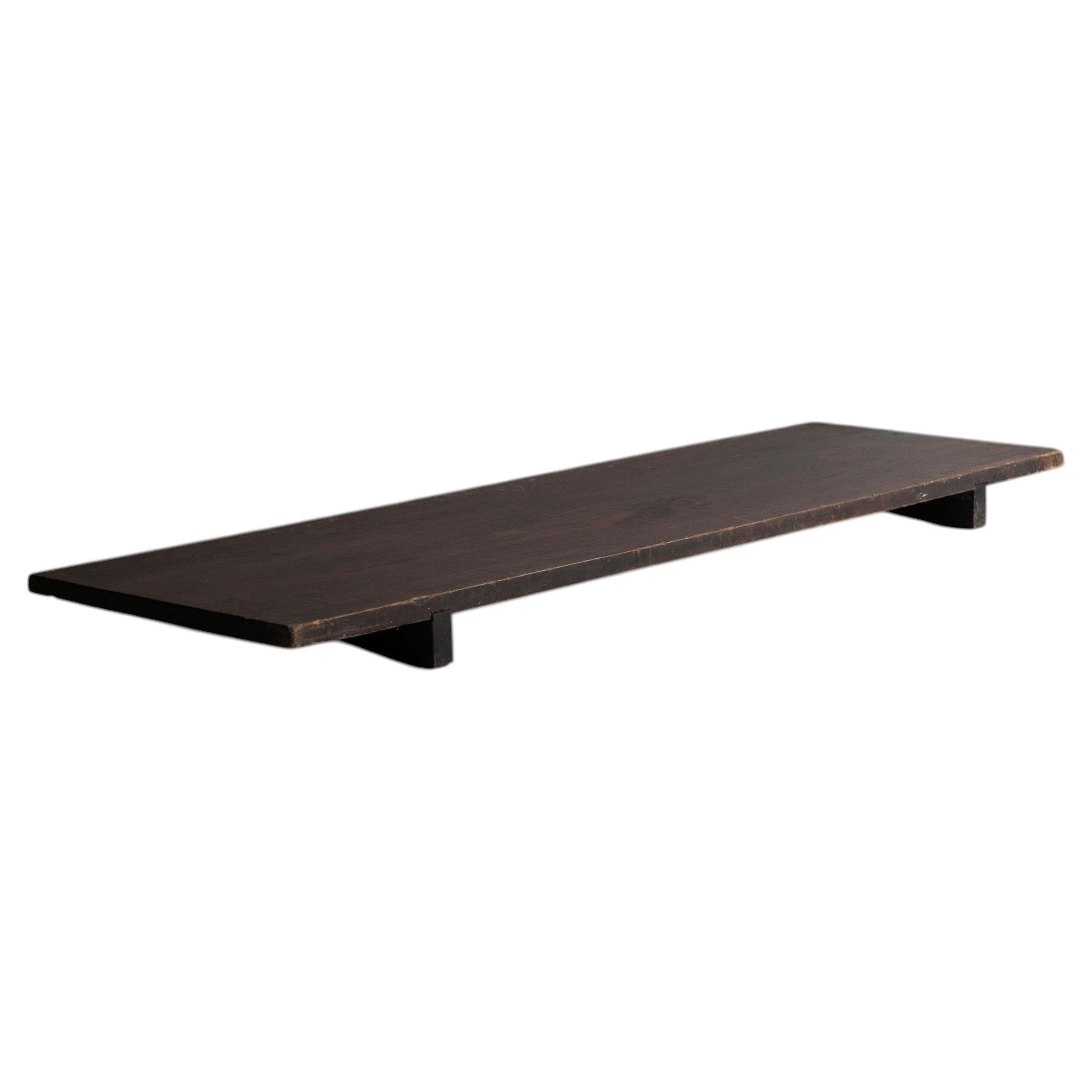
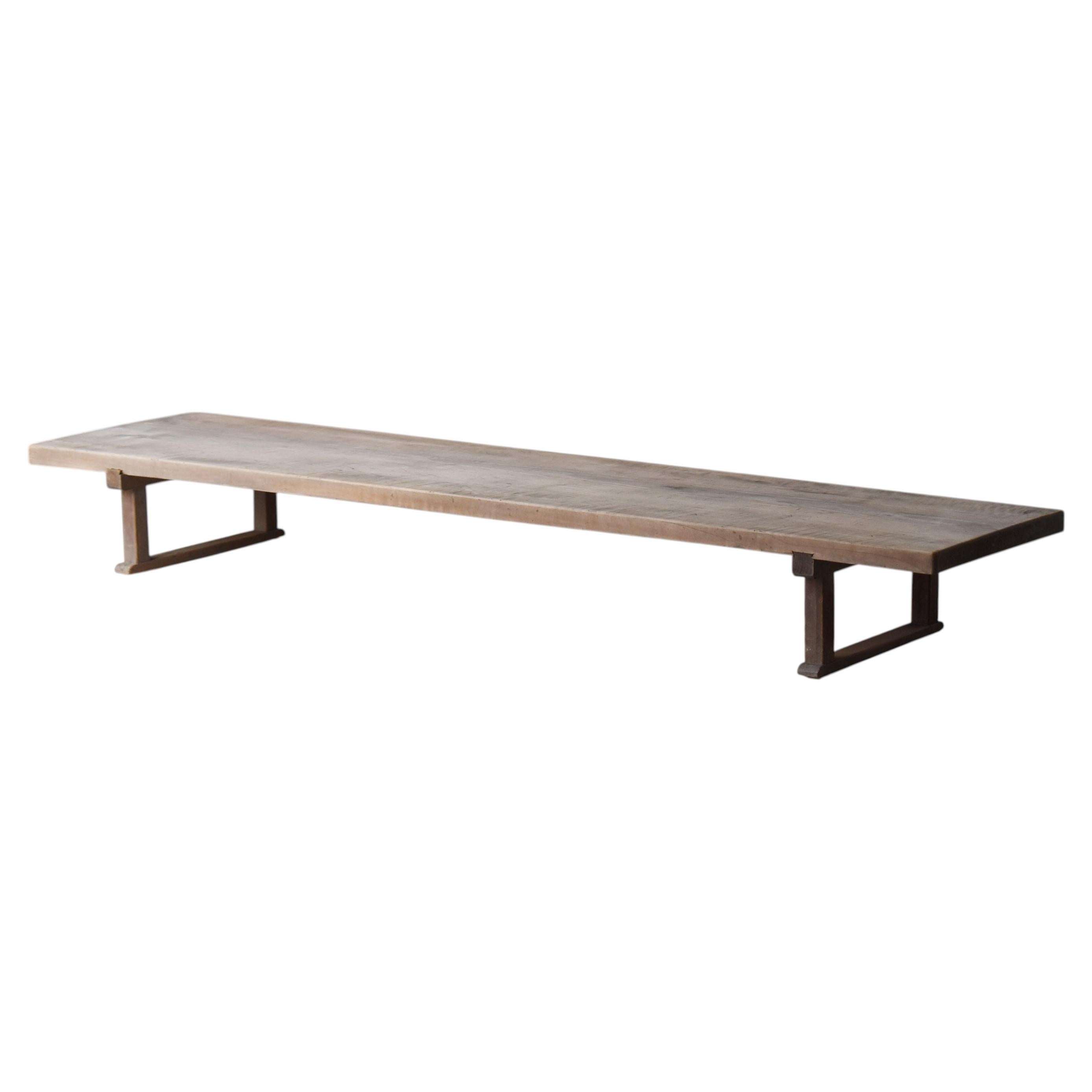
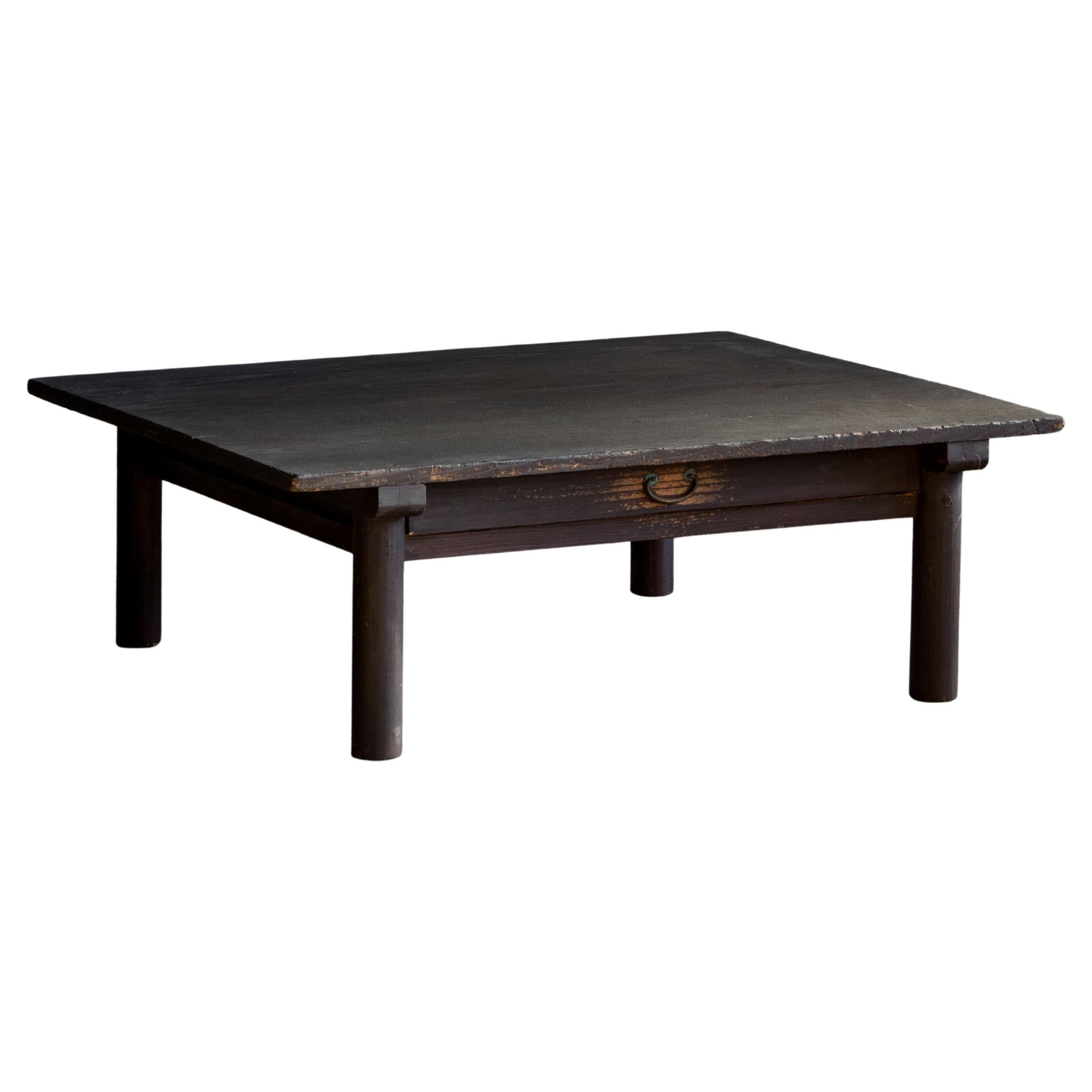
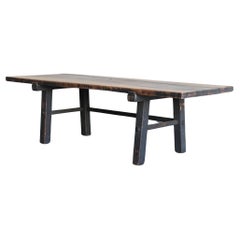
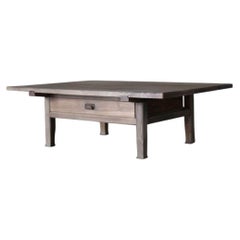
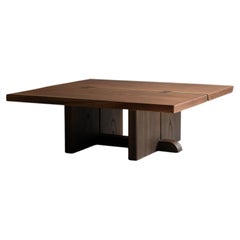
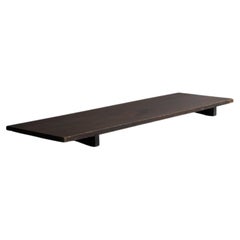
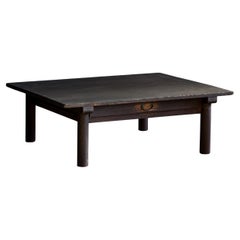
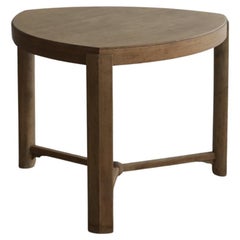
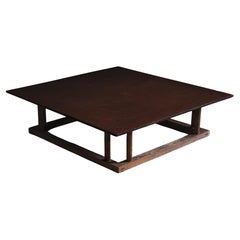
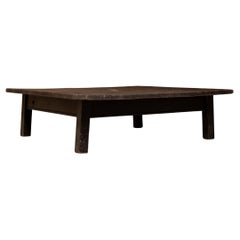
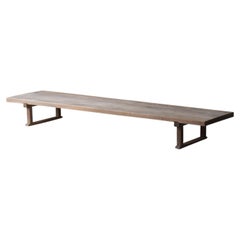
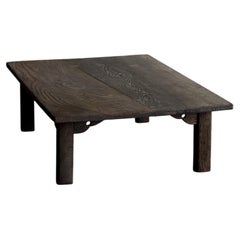
This Japanese low table was crafted during the Meiji to Taisho period (1868–1920), a time when traditional Japanese craftsmanship remained deeply connected to everyday life and the natural environment. The tabletop is made from tochi (Japanese horse chestnut), a wood admired for its soft organic grain and warm presence, while the base and legs are constructed from keyaki (Japanese zelkova), a material long valued in Japan for its strength, density, and refined character.
Originally, pieces such as this were used within Japan’s floor based living culture, supporting daily activities including dining, work, tea gatherings, and communal interaction. Its low proportions reflect a uniquely Japanese spatial sensibility centered around sitting close to the ground and maintaining a quiet intimacy between the body, object, and surrounding space.
Over many decades of use, the surface has developed a deeply nuanced patina. Subtle tonal variations, softened corners, traces of pressure, and areas of natural wear quietly record the passage of time and human interaction. The grain of the tochi wood flows across the tabletop with an almost painterly quality, resembling an abstract landscape shaped jointly by nature and long years of use. The darker keyaki base beneath creates a calm structural contrast, grounding the piece with architectural stability and restraint.
The construction is remarkably minimal, composed only of essential elements without unnecessary ornamentation. This simplicity embodies the Japanese philosophy of functional beauty, where utility and aesthetics are inseparable. Though originally a practical object, the piece now possesses a sculptural presence that transcends furniture alone. It exists somewhere between folk craft, minimalist sculpture, and wabi sabi philosophy.
When placed within a space, the work introduces stillness and quiet tension through its proportions, material contrast, and low horizontal form. It is not decorative in an excessive sense, but instead invites contemplation and spatial awareness through its subtle presence.
Embedded within this table is the Japanese aesthetic of wabi sabi, an appreciation of impermanence, irregularity, and the beauty created through age and use. In an era dominated by mass production and disposable objects, works such as this stand as quiet reminders of durability, thoughtful making, and the intimate relationship between people and the materials they live alongside.
Meiji to Taisho period, 1868–1920
Tochi (Japanese horse chestnut),
Keyaki (Japanese zelkova)
W 970 × D 750 × H 300 mm
※Notice
Please note that shipping rates displayed on 1stDibs may vary depending on the destination and shipping conditions, and in some cases may appear higher than the actual shipping cost.
For this reason, we are also happy to review shipping options separately and provide the most suitable shipping quotation possible.
If you are interested in this piece, please feel free to contact us anytime for a customized shipping quote.