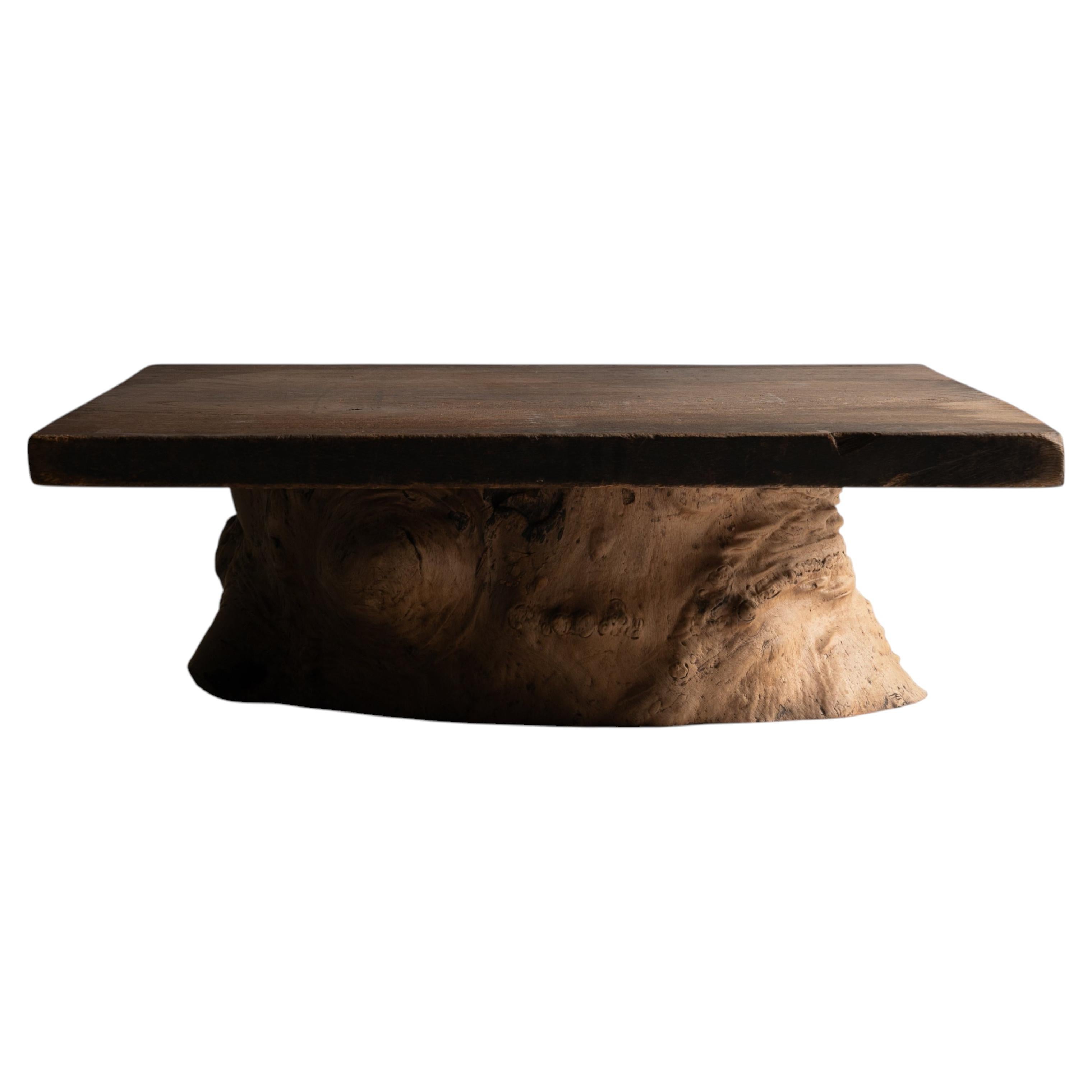
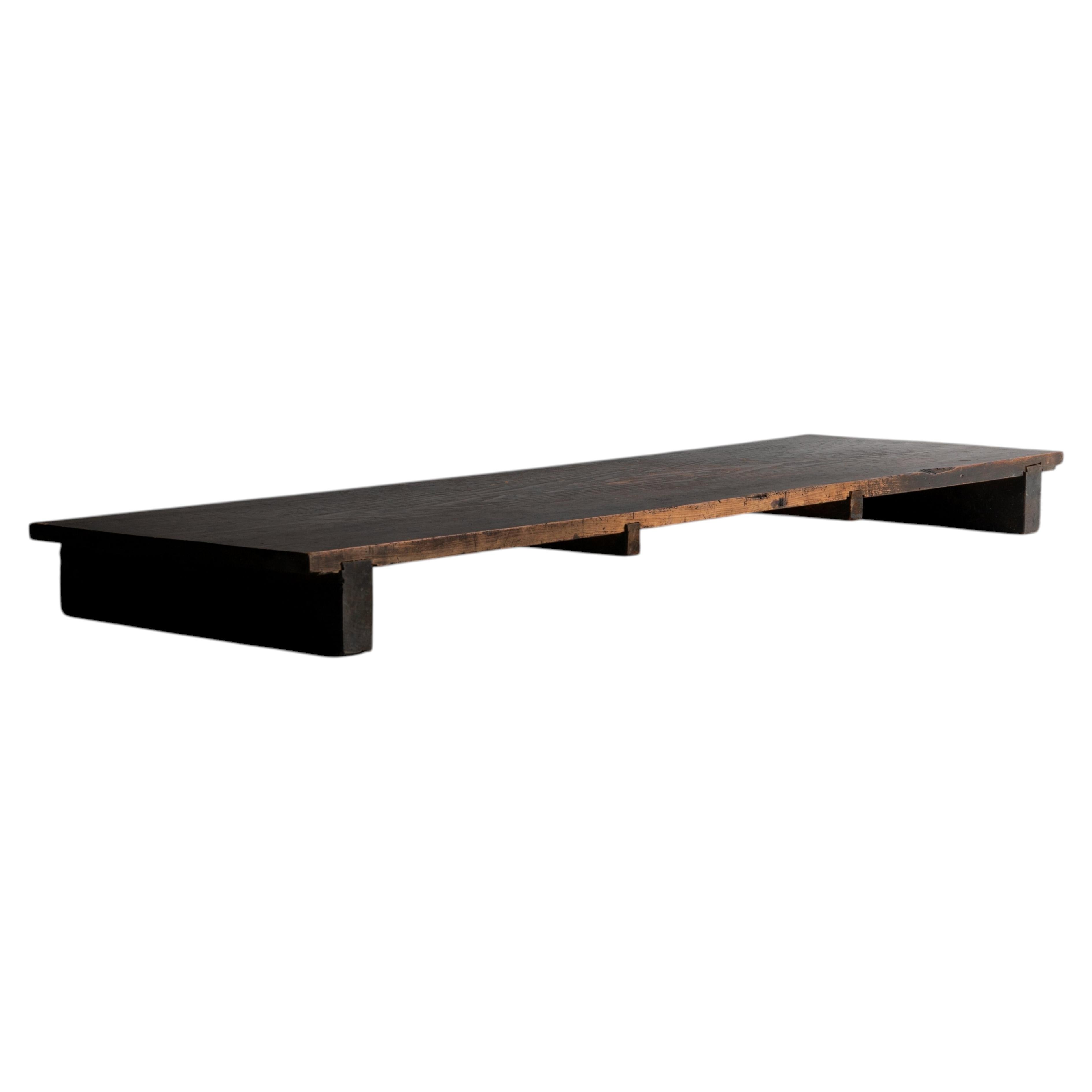
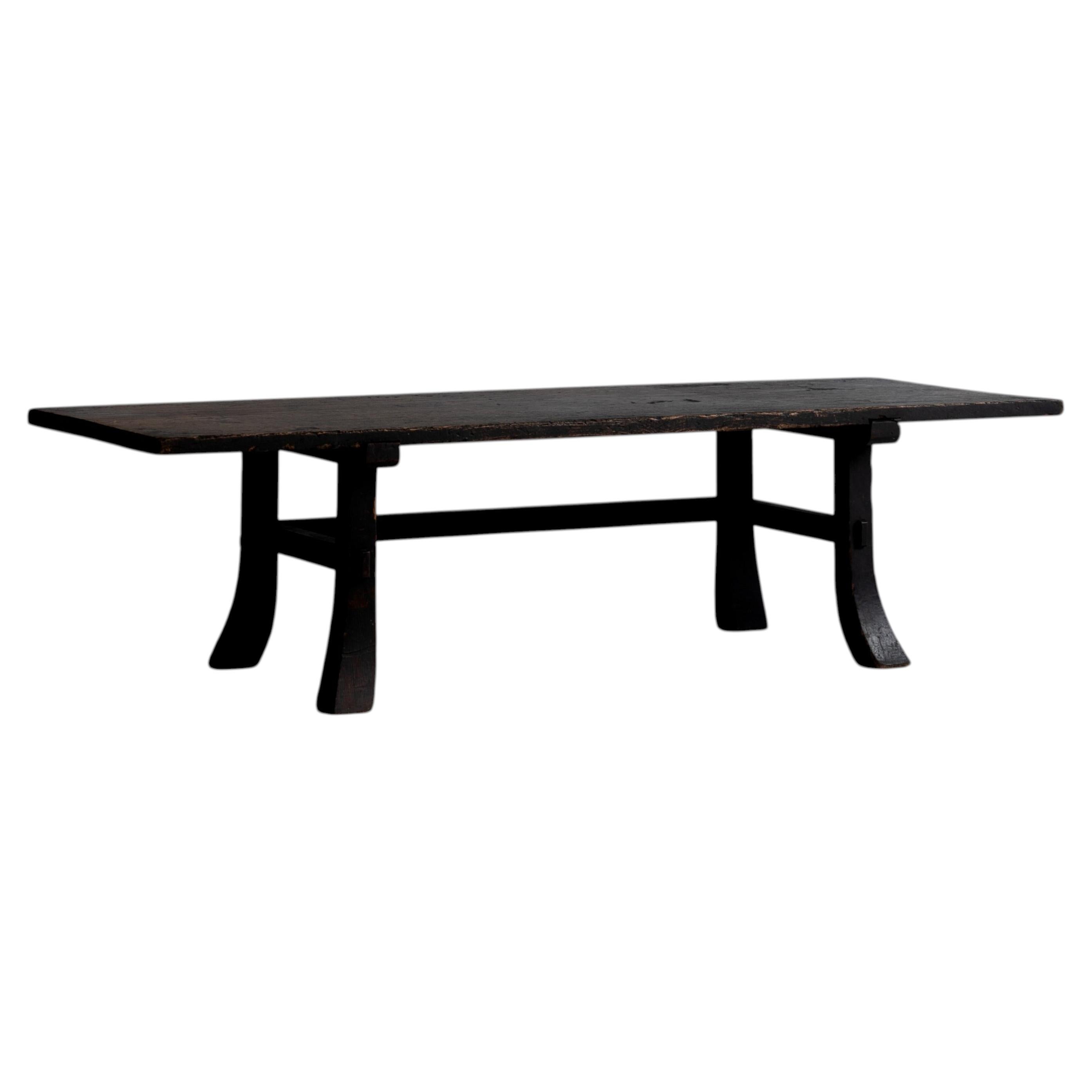
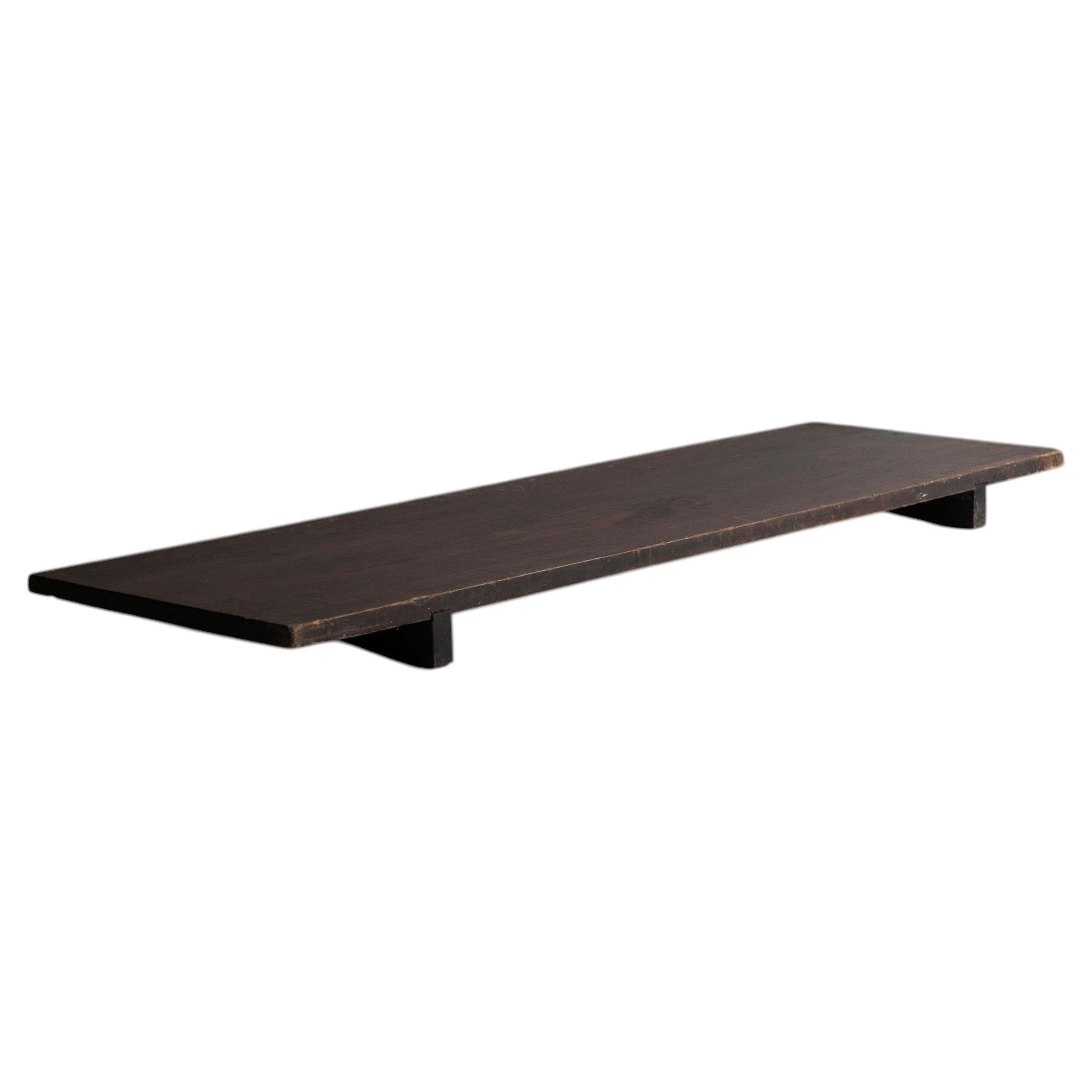
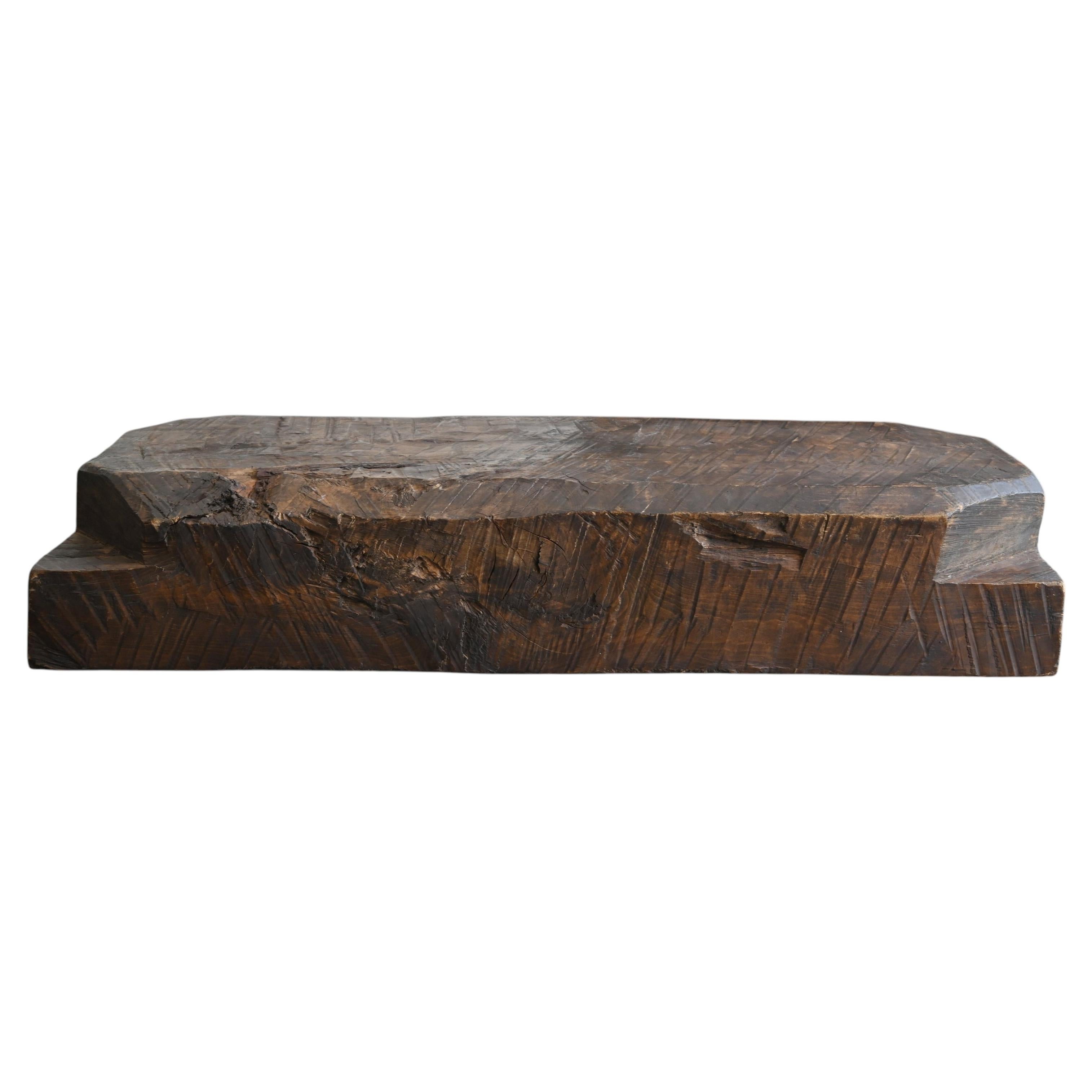
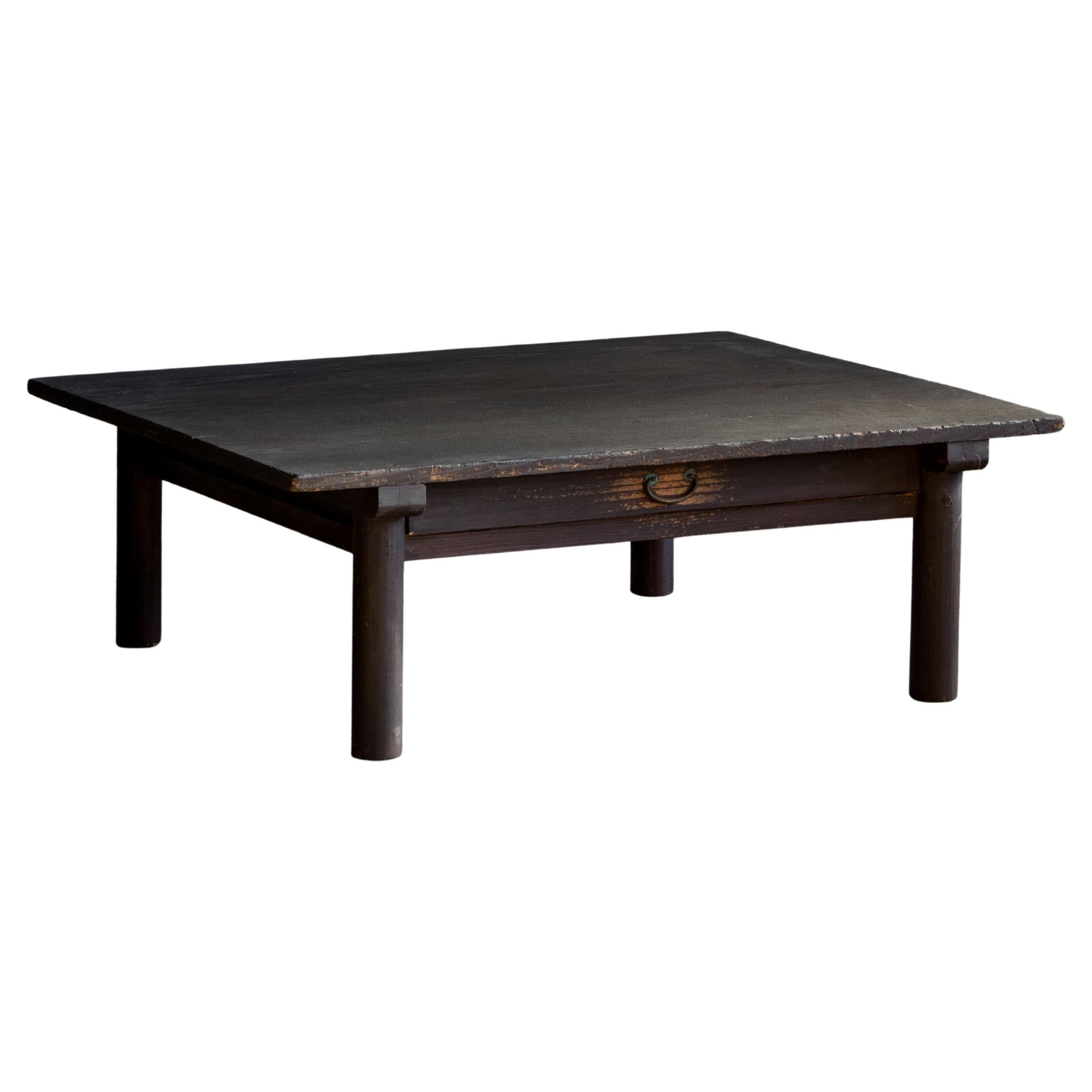
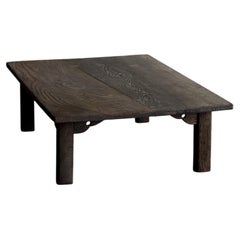
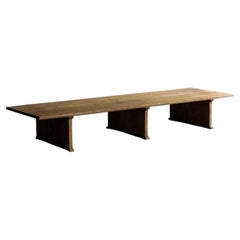
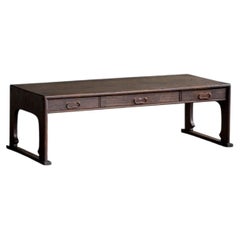
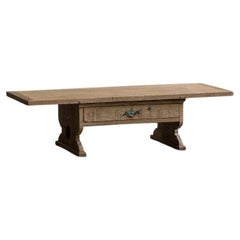
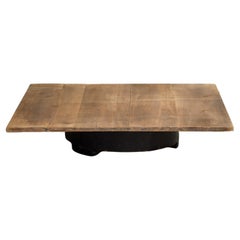
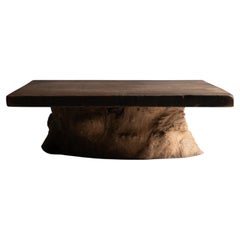
This Japanese antique low table is defined by the remarkable presence of its massive 7 cm (2.8 in.) thick solid wood top and sculptural wooden base. Powerful yet restrained, it celebrates the enduring beauty of aged timber through its generous proportions, rich patina, and organic form.
Crafted from a massive slab of tochi (Japanese horse chestnut), the solid wood tabletop has matured over more than a century into a rich blend of deep brown and nearly black tones. Rather than relying on dramatic grain or elaborate ornament, its beauty lies in its quiet surface, subtle irregularities, and the remarkable depth that only time can create. Measuring a full 7 cm (2.8 in.) thick, the slab possesses an unmistakable sense of permanence, giving the table exceptional visual weight and presence.
Crafted from sugi (Japanese cedar), the rounded wooden base is distinguished by an irregular, richly textured surface where the grain rises naturally in relief. As light moves across the surface, its ridges and valleys reveal ever-changing expressions, giving the wood remarkable depth and an organic strength. The dialogue between these two forms—one calm and expansive, the other richly textured and sculptural—creates a composition that feels both primitive and refined.
The solid wood tabletop weighs approximately 56 kg (123 lbs), providing excellent stability for everyday use such as serving coffee or displaying ceramics, books, and art objects. The tabletop simply rests on the base without permanent fasteners.
As with any freestanding tabletop, concentrated downward force of approximately 10–15 kg (22–33 lbs) applied near either end may cause the opposite side to lift due to leverage. The circular form of the base makes it possible to discreetly secure the tabletop from the inside with screws or bolts if desired. We intentionally chose not to do so, preferring to preserve the antique wood without introducing new holes or permanent alterations. Should a buyer prefer the tabletop to be permanently fixed, we would be happy to discuss carrying out that modification before shipment. Even in that case, the tabletop and base would still be shipped separately for safe transportation.
Whether used as a coffee table, a display platform, or the focal point of a room, this piece possesses the presence of a sculptural object. Its exceptional scale, deeply aged character, and organic form naturally draw the eye, while its quiet simplicity allows the beauty of the wood itself to remain the focus.
More than a functional table, this piece expresses the quiet power of natural materials shaped by time. The depth of its color, the honesty of its form, and the dignity acquired through more than a century of age embody the enduring spirit of Japanese wabi-sabi.
Condition Notes
Structure is sound and stable
The tabletop is not fixed to the base and simply rests on top
If a permanent connection is preferred, the tabletop can be secured to the base from underneath after installation
Applying approximately 22–33 lbs (10–15 kg) of downward force near either end may cause the opposite side of the tabletop to lift due to leverage
Surface shows age-related wear including scratches, stains, dents, and natural checking
The hollowed wooden base shows age-related cracks, chips, and wear consistent with its age
Cleaned gently with water only
As a piece dating from the Late Meiji to Taisho period, this table shows natural signs of age acquired through more than a century of use. Surface wear, scratches, dents, natural checking, and the rich patina of the wood reflect the passage of time and contribute to its distinctive character. Please review all photos carefully, and feel free to contact us with any questions before purchasing.
Top Thickness:
2.8 in. (7.0 cm)
Weight:
Overall: 123.5 lbs (56.0 kg)
Tabletop: 98.5 lbs (44.7 kg)
Base: 24.9 lbs (11.3 kg)
Shipping Information:
We ship from Japan. I will provide my own shipping quote. Please ask.
Import duties, taxes, and customs fees are the responsibility of the buyer.
Approach to Selection and Restoration:
Each piece is individually selected through our own eye, then restored to reveal its most compelling state. Movement, stability, and surface are considered as one—shaped through practice to be lived with naturally, honoring the wood’s natural patina while avoiding environmentally harsh chemical strippers or forceful abrasion.