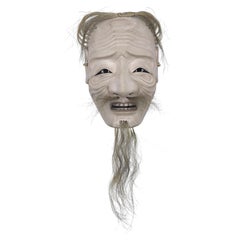
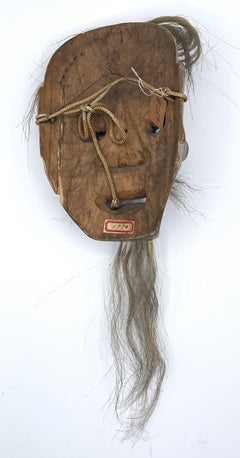
Japanese Edo Period Ko-jo Mask of an Old Man, ca. 1820
Japanese Edo Period Ko-jo Mask of an Old Man, ca. 1820
Edo Period (1603-1868)
DIMENSIONS:
Length: 15” (with beard)
Length: 8” (without beard)
Height: 4”
Width: 5.5”
ABOUT
A Japanese Edo Period (1603-1868) Ko-jo Mask of an Old Man refers to a traditional theatrical or ceremonial mask crafted during Japan’s Edo period (1603–1868). Here's a breakdown of what this object typically represents and why it's significant:
The term "Ko-jo" (or Kojo) roughly translates to "old man" or "aged person" in Japanese. A Ko-jo mask often portrays the face of an elderly man, typically with exaggerated age features: deep wrinkles, sagging skin, a long nose, bushy eyebrows, and sometimes a beard. These masks are usually used in Noh, Kyogen, or folk performances, and occasionally in Shinto rituals.
In Noh theater, masks are used to express character types, moods, and spiritual roles. The Ko-jo mask might represent a wise elder, a spirit of age and wisdom, or even a deity.
In Kyogen, which is the comedic counterpart to Noh, old-man masks are used more playfully, often satirizing elderly characters in lighthearted scenes.
The Ko-jo mask may also symbolize ancestral reverence or longevity, tying it to folk beliefs and ritual performances.
Edo period masks...
Category
1820s Japonisme Antique Japanese Decorative Art