Acrylic Wall Decorations

to
438
1,472
693
1,051
761
450
Height
to
Width
to
684
322
110
67
19
13
10
9
3
2
2
2
2
1
1
19
25
1,007
1,211
23
264
550
1
1
8
2
5
31
85
168
116
77
7,504
38,041
16,786
15,479
9,790
1,014
927
793
191
156
2,262
1,944
2,218
99
77
66
39
36
Material: Acrylic
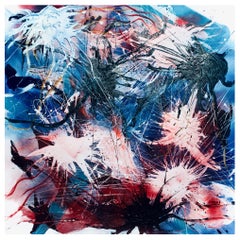
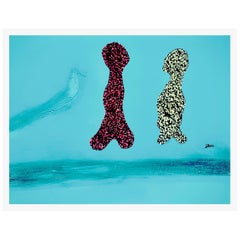
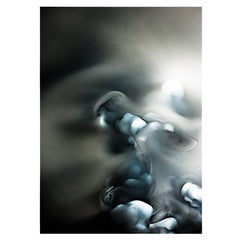
Daniele Albright, "Smoke and Mirrors 2", Art, 2014

Daniele Albright, "Smoke and Mirrors 2", Art, 2014

By Daniele Albright

Located in Los Angeles, CA

Interested in collapsing the contradictions between form and formlessness, Daniele Albright's work focuses on the immaterial as the indeterminate and shifting space between perceptio...

Category

21st Century and Contemporary American Acrylic Wall Decorations

Materials

Other, Aluminum

My House Is Your House, Hand-Painted Acrylic on Canvas, 2018

My House Is Your House, Hand-Painted Acrylic on Canvas, 2018

Located in PARIS, FR

Rita Alaoui seeks to explore and rethink our relationship with the wild world and to imagine connections with the extraordinary. Fascinated by the power of nature and concerned about...

Category

2010s French Other Acrylic Wall Decorations

Materials

Canvas, Acrylic

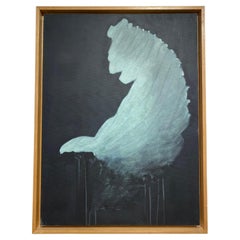
Mixed Media Painting by Steven Colucci- My eyes on you

Mixed Media Painting by Steven Colucci- My eyes on you

By Andrzej Galek

Located in New York City, NY

Steven Colucci’s iconoclastic approach to performance and the visual arts have not only long blurred the boundaries between these disciplines, but have challenged its most basic assumptions. The title of this show references a most rudimentary dance move --the plié --and our assumptions of what to expect in relation to this. Also the suggestion that we can simply press a button and a preconceived outcome will be courteously delivered --a form of prefabricated belief in itself. Steven Colucci’s artwork turns such basic assumptions on their heads. Finding early inspiration in the New York school of abstract expressionists such as Jackson Pollock with his action painting, and then further by his professor --a then young Vito Acconci while studying at the School of Visual Arts, Steven Colucci went from exploring the raw existentialist experimentation of New York’s early painting and performance scenes, to investigating the other end of the spectrum --the rigorously measured and controlled disciplines of pantomime and ballet; studying in Paris under the tutelage of world-famous Marcelle Marceau, and engaging with the concepts of dramatic movement pioneer and intellectual Etienne Decroux. Colucci has explained the difference between the extremes of pantomime and dance as being that pantomime forces movement via an internal capacity --movement directed inward to the core of one’s self --a source requiring extreme mental and physical control. Dance by contrast is an external expression; likewise requiring great precision, although instead an extension of self or sentiment that projects outwardly. While such historical ‘movement’ disciplines serve as foundation blocks for Steven’s artistic explorations, it is the realm in between that he is best known for his contributions --an experimental movement and performance art that simultaneously honors, yet defiantly refutes tradition; rejecting a compartmentalization regarding art and movement, yet incorporating its elements into his own brand of experimental pastiche. Colucci’s performance works manifest as eerily candy-coated and familiar, yet incorporate unexpected jags of the uncanny throughout, exploiting a sort of coulrophobia in the viewer; an exploration of a cumulative artifice that binds human nature against its darker tendencies; highlighting traditions of artifice itself - the fabricated systemologies that necessitate compartmentalization in the first place. It is evident in Steven Colucci’s paintings that he has established a uniquely distinctive pictorial vocabulary; a strong allusion to --or moreso an extension of --his performance works. Colucci’s paintings depict a sort of kinetic spectrum, or as he refers to them “a technical expression of physicality and movement”. Whereas the French performance and visual artist Yves Klein used the human body as a “paint brush” to demarcate his paintings and thereby signify a residue of performance, Colucci’s utilization of nonsensical numbers and number sequences taken from dance scores, as well as heat- induced image abstraction depicting traces of movement likewise inform his vocabulary. In the strand of the choreographed, yet incorporating moments of chance, Colucci’s paintings represent an over arching structure; a rhythm of being and state, yet detail erratic moments --moments that denote a certain frailty --the edge of human stamina. Colucci’s paintings dually represent a form of gestural abstraction --and also the reverse of this --a unique anthropomorphization of varying states of movement – that sometimes present as a temperature induced color field, at others are juxtapositions of movement and depictions of physical gestural images themselves. Colucci’s use of vernacular and found materials such as cardboard evoke his mastery of set design, and also reference a sort of collective experience of urbanity and the ephemeral. Such contradictions seem to permeate not only Steven Colucci’s artwork, but also are reflected in his person – one who grew up in New York’s Bronx during a zeitgeist moment in visual and performing arts in the 1960s – one who shifts with ease from happenings and experiments in New York City, to his meticulously choreographed megaproductions at Lincoln Center or starring in the Paris ballet...

Category

2010s Acrylic Wall Decorations
Materials

Acrylic

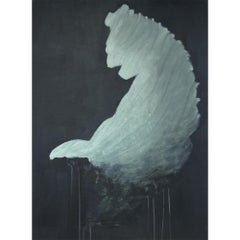
Mixed Media Painting by Steven Colucci

Mixed Media Painting by Steven Colucci

By Jackson Pollock

Located in New York City, NY

Steven Colucci’s iconoclastic approach to performance and the visual arts have not only long blurred the boundaries between these disciplines, but have challenged its most basic assumptions. The title of this show references a most rudimentary dance move --the plié --and our assumptions of what to expect in relation to this. Also the suggestion that we can simply press a button and a preconceived outcome will be courteously delivered --a form of prefabricated belief in itself. Steven Colucci’s artwork turns such basic assumptions on their heads. Finding early inspiration in the New York school of abstract expressionists such as Jackson Pollock with his action painting, and then further by his professor --a then young Vito Acconci while studying at the School of Visual Arts, Steven Colucci went from exploring the raw existentialist experimentation of New York’s early painting and performance scenes, to investigating the other end of the spectrum --the rigorously measured and controlled disciplines of pantomime and ballet; studying in Paris under the tutelage of world-famous Marcelle Marceau, and engaging with the concepts of dramatic movement pioneer and intellectual Etienne Decroux. Colucci has explained the difference between the extremes of pantomime and dance as being that pantomime forces movement via an internal capacity --movement directed inward to the core of one’s self --a source requiring extreme mental and physical control. Dance by contrast is an external expression; likewise requiring great precision, although instead an extension of self or sentiment that projects outwardly. While such historical ‘movement’ disciplines serve as foundation blocks for Steven’s artistic explorations, it is the realm in between that he is best known for his contributions --an experimental movement and performance art that simultaneously honors, yet defiantly refutes tradition; rejecting a compartmentalization regarding art and movement, yet incorporating its elements into his own brand of experimental pastiche. Colucci’s performance works manifest as eerily candy-coated and familiar, yet incorporate unexpected jags of the uncanny throughout, exploiting a sort of coulrophobia in the viewer; an exploration of a cumulative artifice that binds human nature against its darker tendencies; highlighting traditions of artifice itself - the fabricated systemologies that necessitate compartmentalization in the first place. It is evident in Steven Colucci’s paintings that he has established a uniquely distinctive pictorial vocabulary; a strong allusion to --or moreso an extension of --his performance works. Colucci’s paintings depict a sort of kinetic spectrum, or as he refers to them “a technical expression of physicality and movement”. Whereas the French performance and visual artist Yves Klein used the human body as a “paint brush” to demarcate his paintings and thereby signify a residue of performance, Colucci’s utilization of nonsensical numbers and number sequences taken from dance scores, as well as heat- induced image abstraction depicting traces of movement likewise inform his vocabulary. In the strand of the choreographed, yet incorporating moments of chance, Colucci’s paintings represent an over arching structure; a rhythm of being and state, yet detail erratic moments --moments that denote a certain frailty --the edge of human stamina. Colucci’s paintings dually represent a form of gestural abstraction --and also the reverse of this --a unique anthropomorphization of varying states of movement – that sometimes present as a temperature induced color field, at others are juxtapositions of movement and depictions of physical gestural images themselves. Colucci’s use of vernacular and found materials such as cardboard evoke his mastery of set design, and also reference a sort of collective experience of urbanity and the ephemeral. Such contradictions seem to permeate not only Steven Colucci’s artwork, but also are reflected in his person – one who grew up in New York’s Bronx during a zeitgeist moment in visual and performing arts in the 1960s – one who shifts with ease from happenings and experiments in New York City, to his meticulously choreographed megaproductions at Lincoln Center or starring in the Paris ballet...

Category

2010s Acrylic Wall Decorations
Materials

Acrylic

Mixed Media Painting by Steven Colucci- Two Men

Mixed Media Painting by Steven Colucci- Two Men

By Jeff Koons

Located in New York City, NY

Steven Colucci’s iconoclastic approach to performance and the visual arts have not only long blurred the boundaries between these disciplines, but have challenged its most basic assumptions. The title of this show references a most rudimentary dance move --the plié --and our assumptions of what to expect in relation to this. Also the suggestion that we can simply press a button and a preconceived outcome will be courteously delivered --a form of prefabricated belief in itself. Steven Colucci’s artwork turns such basic assumptions on their heads. Finding early inspiration in the New York school of abstract expressionists such as Jackson Pollock with his action painting, and then further by his professor --a then young Vito Acconci while studying at the School of Visual Arts, Steven Colucci went from exploring the raw existentialist experimentation of New York’s early painting and performance scenes, to investigating the other end of the spectrum --the rigorously measured and controlled disciplines of pantomime and ballet; studying in Paris under the tutelage of world-famous Marcelle Marceau, and engaging with the concepts of dramatic movement pioneer and intellectual Etienne Decroux. Colucci has explained the difference between the extremes of pantomime and dance as being that pantomime forces movement via an internal capacity --movement directed inward to the core of one’s self --a source requiring extreme mental and physical control. Dance by contrast is an external expression; likewise requiring great precision, although instead an extension of self or sentiment that projects outwardly. While such historical ‘movement’ disciplines serve as foundation blocks for Steven’s artistic explorations, it is the realm in between that he is best known for his contributions --an experimental movement and performance art that simultaneously honors, yet defiantly refutes tradition; rejecting a compartmentalization regarding art and movement, yet incorporating its elements into his own brand of experimental pastiche. Colucci’s performance works manifest as eerily candy-coated and familiar, yet incorporate unexpected jags of the uncanny throughout, exploiting a sort of coulrophobia in the viewer; an exploration of a cumulative artifice that binds human nature against its darker tendencies; highlighting traditions of artifice itself - the fabricated systemologies that necessitate compartmentalization in the first place. It is evident in Steven Colucci’s paintings that he has established a uniquely distinctive pictorial vocabulary; a strong allusion to --or moreso an extension of --his performance works. Colucci’s paintings depict a sort of kinetic spectrum, or as he refers to them “a technical expression of physicality and movement”. Whereas the French performance and visual artist Yves Klein used the human body as a “paint brush” to demarcate his paintings and thereby signify a residue of performance, Colucci’s utilization of nonsensical numbers and number sequences taken from dance scores, as well as heat- induced image abstraction depicting traces of movement likewise inform his vocabulary. In the strand of the choreographed, yet incorporating moments of chance, Colucci’s paintings represent an over arching structure; a rhythm of being and state, yet detail erratic moments --moments that denote a certain frailty --the edge of human stamina. Colucci’s paintings dually represent a form of gestural abstraction --and also the reverse of this --a unique anthropomorphization of varying states of movement – that sometimes present as a temperature induced color field, at others are juxtapositions of movement and depictions of physical gestural images themselves. Colucci’s use of vernacular and found materials such as cardboard evoke his mastery of set design, and also reference a sort of collective experience of urbanity and the ephemeral. Such contradictions seem to permeate not only Steven Colucci’s artwork, but also are reflected in his person – one who grew up in New York’s Bronx during a zeitgeist moment in visual and performing arts in the 1960s – one who shifts with ease from happenings and experiments in New York City, to his meticulously choreographed megaproductions at Lincoln Center or starring in the Paris ballet...

Category

2010s Acrylic Wall Decorations
Materials

Acrylic

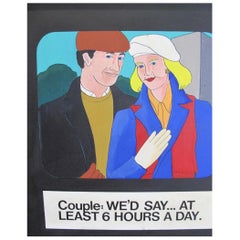
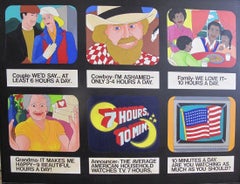
Erika Rothenberg Acrylic on canvas "7 Hours, 10 Minutes, a Day"

Erika Rothenberg Acrylic on canvas "7 Hours, 10 Minutes, a Day"

By Erika Rothenberg

Located in West Palm Beach, FL

Erika Rothenberg (B. 1950) "7 Hours, 10 Minutes, a Day" Signed, titled and dated 'Erica Rothenberg 1987 7 hours, 10 minutes a day' (on the reverse) Acrylic on canvas: 50 x 66 i...

Category

1980s Vintage Acrylic Wall Decorations
Materials

Acrylic

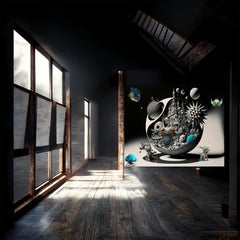
"Fantastical Realms: a Nondual Landscape"

"Fantastical Realms: a Nondual Landscape"

By John Brevard

Located in Coral Gables, FL

"Fantastical Realms: A Nondual Landscape" is a breathtaking painting that captures the wonder and magic of a world beyond the boundaries of reality. The scene is bathed in a soft, ethereal light, giving everything an otherworldly glow. At the center of the canvas, a group of fantastical creatures roam freely amongst towering, twisted trees...

Category

2010s Spanish Space Age Acrylic Wall Decorations

Materials

Canvas, Acrylic

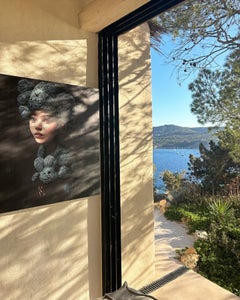
Ethereal Journey
Ethereal Journey

Ethereal Journey

Located in Coral Gables, FL

In this John Brevard painting, we see strange and surreal creatures that seems to inhabit a multidimensional world. The overall theme of the painting ...

Category

2010s Spanish Acrylic Wall Decorations
Materials

Canvas, Acrylic

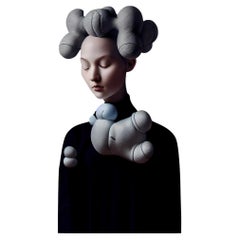
The Cosmic Explorer – Surreal Acrylic Painting

The Cosmic Explorer – Surreal Acrylic Painting

By John Brevard

Located in Coral Gables, FL

Step into a surreal, multidimensional world with this captivating painting. Featuring a female ethereal figure with a glowing aura, this artwork symbolizes the transcendence beyond m...

Category

2010s Spanish Space Age Acrylic Wall Decorations
Materials

Cane, Acrylic

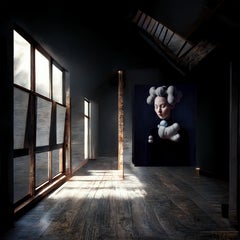
Boundaries of Reality

Boundaries of Reality

By John Brevard

Located in Coral Gables, FL

In this painting, the viewer is transported to a world where the past and future collide. At the center of the painting, we see a female medieval character, dressed in ornate armor a...

Category

2010s Spanish Space Age Acrylic Wall Decorations
Materials

Canvas, Acrylic

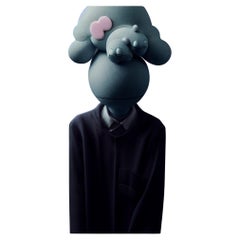
The Multidimensional Mind

The Multidimensional Mind

By John Brevard

Located in Coral Gables, FL

In this painting by John Brevard, the theme of the work is nonduality, illustrating the concept that all things are interconnected and inseparable. At the center of the painting, th...

Category

2010s Spanish Space Age Acrylic Wall Decorations
Materials

Canvas, Acrylic

Michelle Nussbaumer Acrylic and Oil Still Life Set of 4

Michelle Nussbaumer Acrylic and Oil Still Life Set of 4

Located in Dallas, TX

Set of 4 Original by Michelle Nussbaumer

Category

21st Century and Contemporary American Acrylic Wall Decorations

Materials

Acrylic

László Ottó (1966): ORIGO METRUM FLUX [20220716]

László Ottó (1966): ORIGO METRUM FLUX [20220716]

Located in Nagykovácsi, Central Hungary

László Ottó (born October 30, 1966, in Pécs) is a Hungarian painter, recognized as a prominent figure in Hungarian geometric painting and respected in both international concrete-constructive art and Hungarian sacred geometry painting...

Category

2010s Hungarian Modern Acrylic Wall Decorations
Materials

Canvas, Acrylic

Read More

Punk Rock and Rebellion Animate London’s Hit Yoshitomo Nara Show

The exhibition includes his portraits of wide-eyed kids with mayhem on their minds, as well as some of the artist’s personal belongings.

Whether Painted or Papered, Muraled Walls Make Bold Statements in the Home

The ancient practice of covering walls in artistic scenery is back.

In Francks Deceus’s ‘Mumbo Jumbo #5,’ the Black Experience Is . . . Complicated

Despite the obstacles, the piece’s protagonist navigates the chaos without losing his humanity.

12 Floral-Accented Rooms with a Handmade, Folkloric Feel

Who needs a flower garden? Just use your imagination — and some beautifully patterned wallpaper or fabric — to bring the outdoors in.

This Wolf Kahn Pastel Is the Epitome of Beauty at Its Most Essential

A longtime admirer of Kahn’s work, 1stDibs editorial director Anthony Barzilay Freund explores why it’s relevant now more than ever.

Why Jules Chéret Was the King of the Modern Poster

The streets of fin-de-siècle Paris were set aglow with colorful poster ads, thanks to the printing techniques invented by Jules Chéret. Now, the Milwaukee Art Museum is celebrating this undersung talent in America's first solo show dedicated his exuberant works.

Anna Condo’s Multifaceted Career Spans Film, Photography and NFTs

From her historic Manhattan townhouse, the talented creator and curator of 1stDibs' latest NFT exhibition tells us about the art in her home and how she got involved with cryptoart.

How Keith Rivers Went from NFL Linebacker to Blue-Chip Art Aficionado

The former football player is as serious about becoming a great contemporary-art patron as he once was about making tackles. Here, Rivers tells us how he got the collecting bug and how his tastes have evolved over the years.