17th century, Emilian school
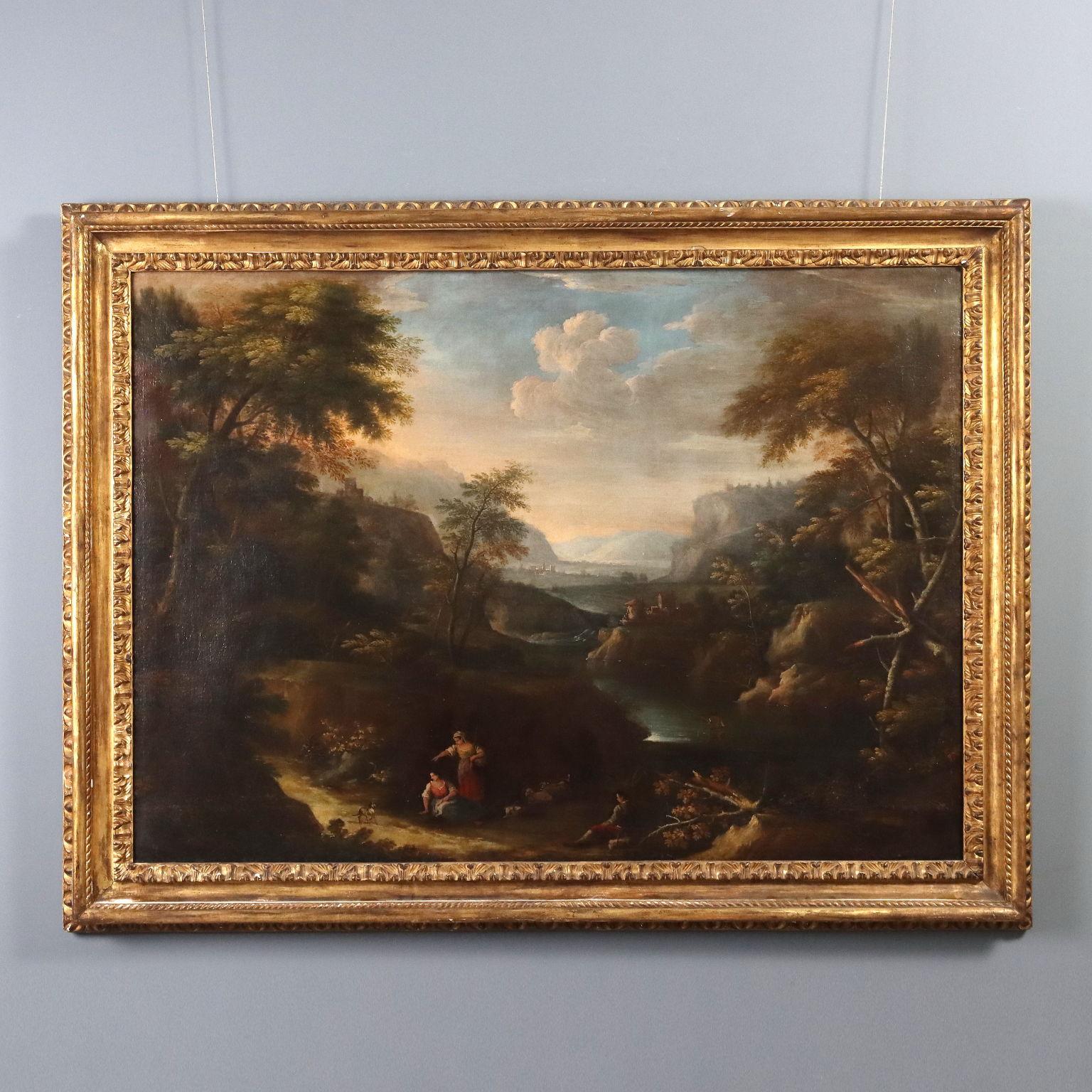
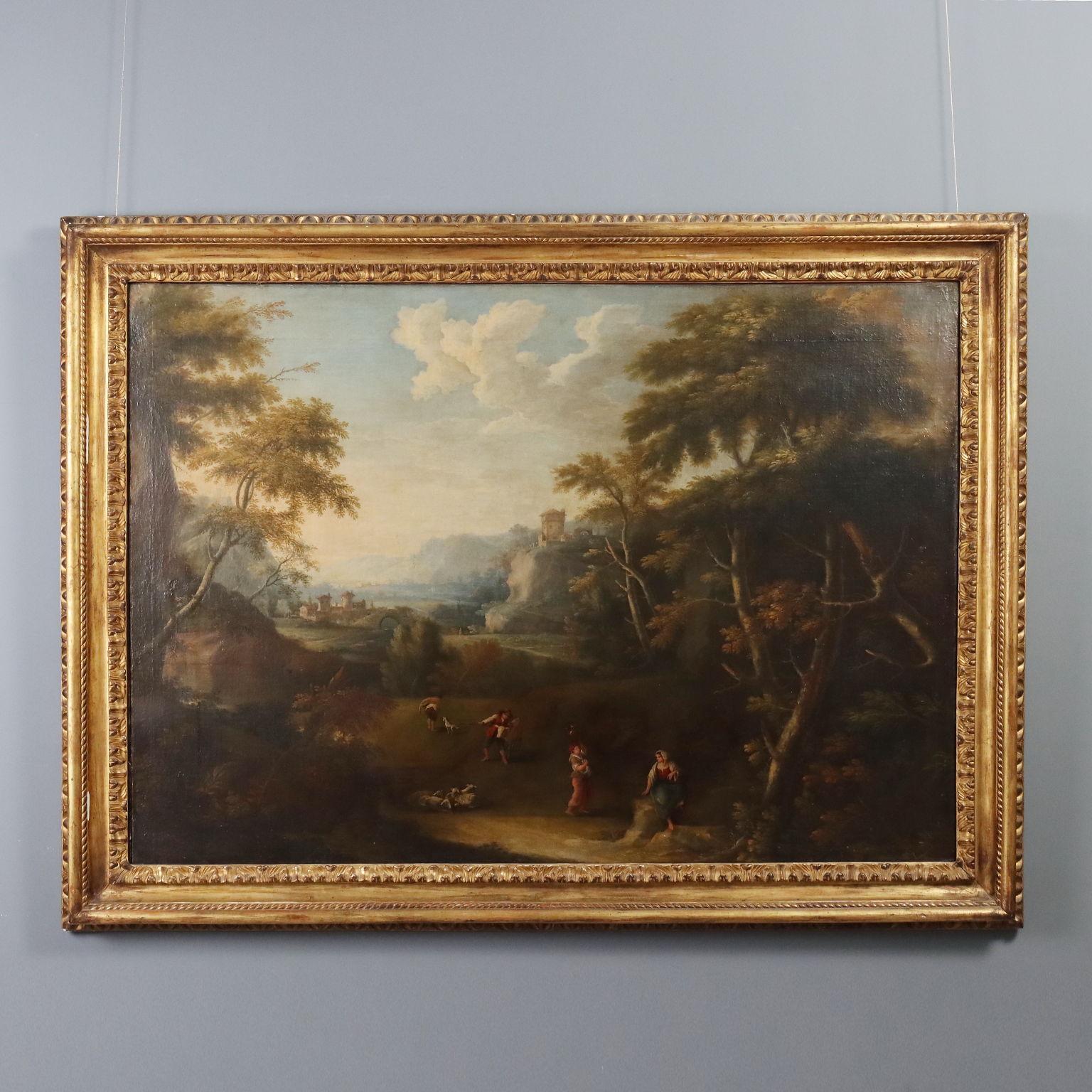
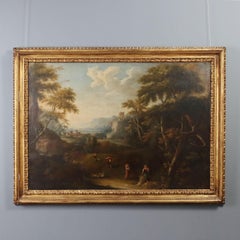
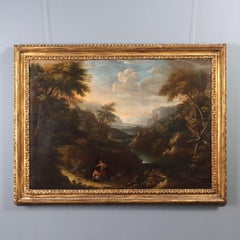
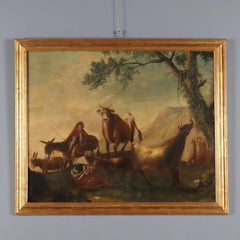
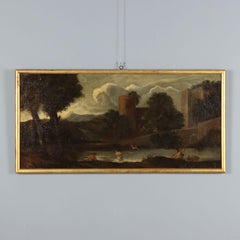
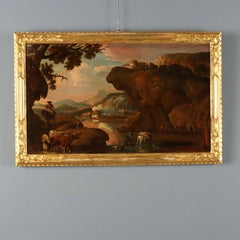
Rural landscape with gallant scenes
Oil on canvas, 37 x 47.5 cm
Framed, 61 x 50.5 cm
The bucolic amenity of the present is reflected within the joyous gallant scenes that dot its surface. The locus amoenus described reasons on the more traditional inflection of Arcadia, which in literary transfiguration was the scene par excellence of the most carefree and out-of-the-world pastoral life; the painting is thus anticipatory of what was professed by the actual poetic Academy of Arcadia that was established in Rome in 1690, but it bears enthusiastic witness to its feverish invitations for its reception, then widespread in the most avant-garde cultural salons throughout Italy. Theocritus first and Virgil later had awakened with Idylls and Eclogues that capacity typical of the natural world to allow an escape from reality; the contemplation of the perfect natural fruits that followed would evoke in the spirits of men dreamy returns to origins. The bucolic landscape was able to positively cadence material life, and was the concretization of a place free of incivility and imbruity, where only dreams, sylvan music and homage to fruitful nature were allowed.
In the present painting, widespread figures of shepherd children trace the same intent to the sublimation of earthly life, reunited in pairs, while children modeled after ancient cherub-lovers brighten the field with flowers and petals. The games of these and the sweet affections of the other characters are rendered through liquid, vibrant brushstrokes, darting with a white light that opposes the dark shadows of the undergrowth. In the distance, the sky is tapered through a flat, silvery brushstroke, while the vertical development of promoters with architecture helps to introject a bright beam of light within the grassy clearing. The foliage and turf of the landscape piece are rendered through a digital brushstroke, betraying the Italian brand of the present, simultaneously influenced by the seventeenth-century European influences then channeling into the capital. The evocative culture of the Urbe attracted multiple artists from the city of Bologna, from northern Italy but also from territories beyond the Alpine belt, such as Claude Lorrain and Nicolas Poussin. The art-historical legacy of Italian pastoral scenes was thus able to replenish itself with the more functional formalisms and particular veits from elsewhere, such as the expressive flickering of the present, similar to the coeval French lexicon.
The typological restitution from pastoral idyll, in accordance with the intrinsic stylistic qualities of the work, allows us to specify the solid belonging of the present to the Italian hand, similarly to what was then emerging in painting within the Emilian school. Recall in this regard the latent influences of two decisive foreign landscape painters who transited the Emilian belt, such as Claude Lorrain (1600-1682) and Nicolas Poussin (1594-1665); before them, Giovanni Battista Viola (1576-1622), also engaged on Roman soil, sowed a figurative handbook for later landscape painters; likewise, the celebrated Domenichino (Domenico Zampieri, said, 1581-1641) made sweeping panoramas, dotted with a frayed and stringy nature, with handfuls of figurines scattered to color its nooks and crannies, an exemplary constant of Emilian landscape painting, as is equally the case in the present.