Video Loading
Want more images or videos?
Request additional images or videos from the seller
1 of 20

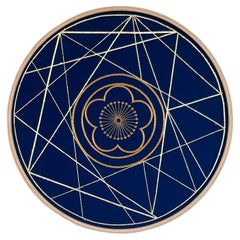
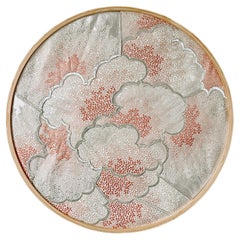
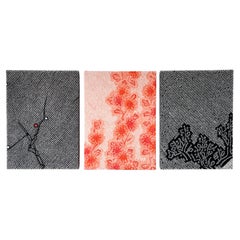
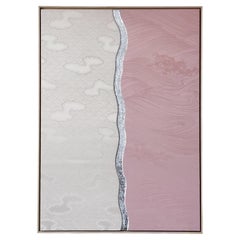
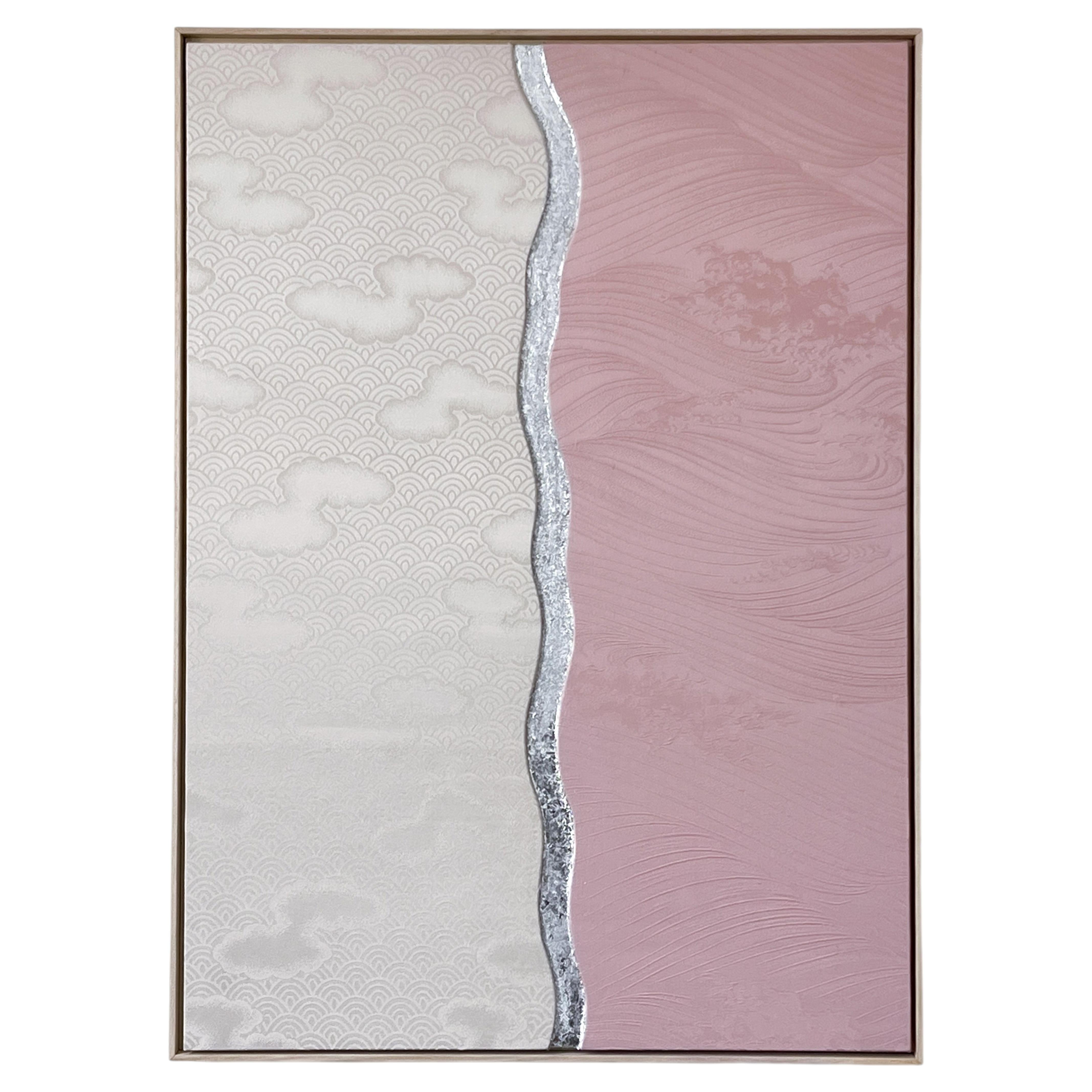
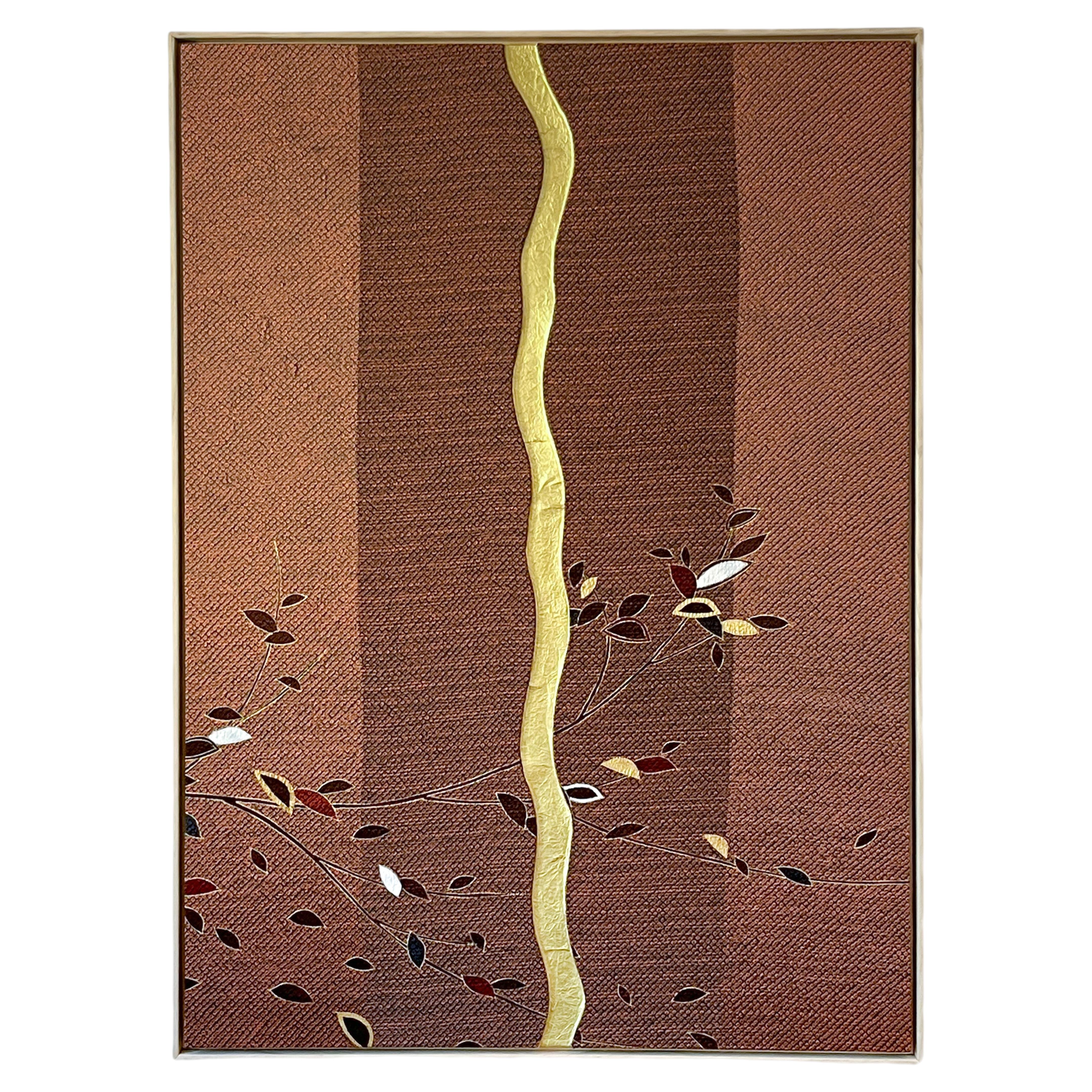
Antique kimono textile art " Plum Blossom Night ~ Resilience ~ " by ikasu Japan

$3,000
£2,266.22
€2,642.51
CA$4,258.20
A$4,285.38
CHF 2,487.22
MX$52,040.12
NOK 28,570.17
SEK 29,489.91
DKK 19,753.52

About the Item

Certified Kimono Meister work / Certificate of Authenticity included. One-of-a-kind Japanese textile art made from vintage obi fabrics. Sustainable artwork for modern interiors, collectors, boutique hotels, and lovers of Japanese aesthetics. [Size] 73cm x 53cm x 5cm [Materials] silk (outside-layer) , wooden frame (under-layer), silver leafing [Story behind the work] This artwork uses antique fabric from Taisho era (early 1920ies) kimono and paulownia wood taken from antique kiritansu - chest-of-drawers used initially to keep kimonos. It is elegantly framed with paulownia wood, a tree closely connected to kimono culture, and is filled with storytelling and sense of luxury. I used two pieces of kimono that could no longer be used as clothing and silver leaf to create the ultimate upcycled piece. The central line is inspired by traditional philisophy of kintsugi - appreciation of imperfection and antique. [Period / Story] The kimono used in this piece was originally crafted during Taisho period (1920ies). [Explanation and meaning of pattern and colors] In Japanese culture, the plum blossom, or ume (梅), holds significant symbolic value. If we explore the idea of plum blossoms blooming at night, it might evoke a sense of quiet elegance and resilience. Nighttime blooming symbolizes beauty and grace emerging in challenging circumstances, as plum is one of the first flowers to bloom in severe winter. It might also suggest an appreciation for the subtle, understated beauty that isn’t always visible or recognized at first glance. This is also a metaphor for unused kimono - a material for this artwork, a beautiful piece that has been kept without using for a century till now when I gave it a second life as an artwork. In this work, I empathized the “night” theme with ginpaku銀箔 - a traditional way of silver leafing originally used in pottery. Silver leaf is often used in traditional Japanese art and crafts, including painting, calligraphy, and the decoration of items like screens and ceramics, to add a luxurious and elegant touch. It is similar to gold leaf (kinpaku 金箔) but made from silver. I used ginpaku to depict stars in the sky, moonlight reflected in flowers center, and moonlight around (inside borders of the frame). [Characteristics of the fabric ] The work uses antique materials and modern techniques and color combinations to create a valuable piece of history that fits perfectly in modern spaces. [About the frame] This artwork frame is crafted from paulownia wood, a uniquely Japanese material closely tied to the world of kimonos, and it serves to convey the refined beauty of Japanese nature. Paulownia wood is known as the lightest wood in Japan, prased for its natural luster, resistance to moisture, and resilience against cracking. Since ancient times, it has been used in crafting furniture, chests, and musical instruments. Paulownia wood is closely linked to kimono culture. During the Edo period, it became customary to store cherished kimonos in paulownia chests, which offered fire resistance and protection from moisture and insects. Traditionally, when a daughter was born, a paulownia tree would be planted. Upon her marriage, the tree would be cut down, and the wood would be used to craft a chest for her as a wedding gift. Following the Ansei Earthquake during the late Edo period in 1855, paulownia chests gained popularity due to their ability to withstand fires and even float in water, thereby safeguarding their contents during floods. [Precaution] All the works are made from real kimonos, antiques and vintages. For this reason, the fabric may have traces of long-term use and minor fabric damages.
  • Creator:
    Lena Okamoto (Artist),Kimono ikasu (Artist)
  • Dimensions:
    Height: 28.75 in (73 cm)Width: 20.87 in (53 cm)Depth: 1.97 in (5 cm)
  • Style:
    Japonisme (In the Style Of)
  • Materials and Techniques:
    Fabric,Reclaimed Wood,Silk,Silver Leaf,String,Textile,Thread,Wood,Yarn,Dyed,Embroidered,Gilt,Hand-Crafted,Hand-Painted,Hand-Woven,Needlework,Other,Patchwork,Woodwork,Woven
  • Place of Origin:
  • Period:
  • Date of Manufacture:
    2024
  • Condition:
    All the works are made from real kimonos, antiques and vintages. For this reason, the fabric may have traces of long-term use and minor fabric damages. In case there are any scratches or stains, we always add a photo of the area on the item page.
  • Seller Location:
    Setagaya City, JP
  • Reference Number:
    1stDibs: LU10079243793442

More From This Seller

View All
Vintage obi textile art " Camellia ~ Serendipity ~" by ikasu Blue Japan

Vintage obi textile art " Camellia ~ Serendipity ~" by ikasu Blue Japan

By Lena Okamoto, Kimono ikasu

Located in Setagaya City, JP

Certified Kimono Meister work / Certificate of Authenticity included. One-of-a-kind Japanese textile art made from vintage obi fabrics. Sustainable artwork for modern interiors, collectors, boutique hotels, and lovers of Japanese aesthetics. [Story behind the work] This work is inspired by traditional Japanese nature motifs symbolism, and is framed in paulownia wood originally used for a kimono chest-of-drawers. It is elegantly framed with paulownia wood originally used for kimono chest-of-drawers, and is filled with storytelling and sense of luxury. In this artwork, the aim was to capture the the auspicious symbol of camellia used in antique kimono. Traditional Japanese culture, represented by the kimono, and wood, an integral element of Japanese craftsmanship, were used to bring this vision to life. I used pieces of kimono that could no longer be used as clothing and kiritansu chest-of-drawers that would normally be discarded to create the ultimate upcycled piece. [Explanation and meaning of pattern and colors] This delicate piece features hand-drawn camellia motifs flowing gracefully on a softly brightened grayish background. Camellias, native to Japan, bloom from winter to early spring. As an evergreen tree with green leaves throughout the year, it symbolizes the anticipation of spring and is considered an auspicious plant. Due to its seasonal significance and auspicious meanings, camellias have been used as motifs symbolizing good fortune. Additionally, they were highly valued for their use in oil, cosmetics, and medicine, representing nobility. Believed to possess the power to ward off misfortune, camellias also carry the meaning of "protection from calamity" and have strong ties to traditional ceremonies. In this artwork, camellias are delicately depicted alongside flowing branches, subtly representing good fortune with their pale pink and white hues. "Sora-iro nezumi 空色鼠" refers to a light grayish color with a hint of blue, reminiscent of the slightly brightened sky on a lightly cloudy day. Popular during the late Edo period (19th cent.), it elegantly captures the slightly brighter sky pattern seen on lightly overcast days. Notably, the term "nezumi-iro" (mouse gray), popular during the late Edo period, was paired with brown tones, collectively known as "Forty-eight Teas and a Hundred Mice 四十八茶百鼠." Colors within the "nezumi" (gray) spectrum, particularly "sora-iro nezumi," were favored by young people for their cool and sophisticated appeal. [Characteristics of the fabric] The fabric features intricately woven patterns that reveal subtle gradations through dyeing, creating a grid pattern that transforms depending on the light conditions. Originally, this fabric was part of a formal kimono known as a "hōmongi 訪問着," featuring motifs along the hem, shoulders, and sleeves. These motifs have been carefully selected and combined to create a unified piece of artwork. [About the frame] Kiritansu - chest-of-drawers for kimono, is traditionally made from paulownia wood, a uniquely Japanese material closely tied to the world of kimonos. Paulownia wood is known as the lightest wood in Japan, prased for its natural luster, resistance to moisture, and resilience against cracking. Since ancient times, it has been used in crafting furniture, chests, and musical instruments. During the Edo period, it became customary to store cherished kimonos in paulownia chests...

Category

Vintage 1960s Japanese Japonisme Paintings and Screens

Materials

Gold Leaf, Silver Leaf

Late 19th Century kimono textile art "Plum Blossom ~Resilience~" by ikasu Japan

Late 19th Century kimono textile art "Plum Blossom ~Resilience~" by ikasu Japan

By Lena Okamoto, Kimono ikasu

Located in Setagaya City, JP

Certified Kimono Meister work / Certificate of Authenticity included. One-of-a-kind Japanese textile art made from vintage kimono fabrics. Sustainable artwork for modern interiors, ...

Category

Antique Late 19th Century Japanese Arts and Crafts Decorative Art

Materials

Gold Leaf

Early 20th Century kimono textile art "Sakura ~Ephemerality~" by ikasu Japan

Early 20th Century kimono textile art "Sakura ~Ephemerality~" by ikasu Japan

By Kimono ikasu, Lena Okamoto

Located in Setagaya City, JP

Certified Kimono Meister work / Certificate of Authenticity included. One-of-a-kind Japanese textile art made from vintage kimono fabrics. Sustainable artwork for modern interiors, ...

Category

Vintage 1950s Japanese Japonisme Paintings

Materials

Silk, Wood, Fabric, Textile, String, Thread, Yarn

Vintage kimono textile art " Flowers ~ Life Circle ~" by ikasu Pink Black Japan

Vintage kimono textile art " Flowers ~ Life Circle ~" by ikasu Pink Black Japan

By Kimono ikasu, Lena Okamoto

Located in Setagaya City, JP

Certified Kimono Meister work / Certificate of Authenticity included. One-of-a-kind Japanese textile art made from vintage kimono fabrics. Sustainable artwork for modern interiors, ...

Category

Vintage 1970s Japanese Japonisme Paintings and Screens

Materials

Canvas, Silk, Fabric, Textile, String, Thread, Yarn

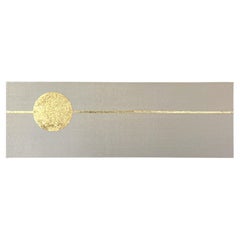
Vintage kimono textile art "Snow in Moonlight ~Kintsugi~" by ikasu Japan

Vintage kimono textile art "Snow in Moonlight ~Kintsugi~" by ikasu Japan

By Lena Okamoto, Kimono ikasu

Located in Setagaya City, JP

Certified Kimono Meister work / Certificate of Authenticity included. One-of-a-kind Japanese textile art made from vintage kimono fabrics. Sustainable artwork for modern interiors, ...

Category

Mid-20th Century Japanese Japonisme Paintings

Materials

Gold Leaf

You May Also Like

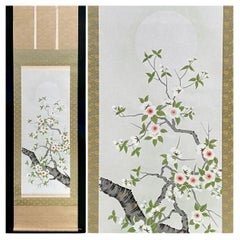
Lovely Japanese 20th c Scroll Cherry Blossoms in the Moon

Lovely Japanese 20th c Scroll Cherry Blossoms in the Moon

Located in Amsterdam, Noord Holland

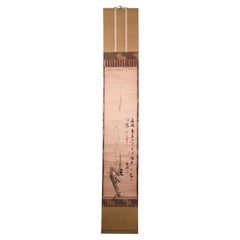
This work carefully and delicately depicts a river landscape ■Silk book, handwritten ■Condition   Lovely Condition ■Dimensions Axis size: 1845mm (height) x 530mm (width) Paper size...

Category

20th Century Paintings

Materials

Silk

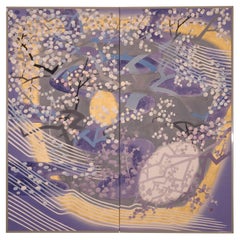
Japanese Two Panel Screen: Yozakura (Cherry Blossom Viewing at Night)

Japanese Two Panel Screen: Yozakura (Cherry Blossom Viewing at Night)

Located in Hudson, NY

Unusual subject matter of cherry blossoms in the moonlight on dyed silk and applied gold in a grey lacquer trim. Signature and seal read: Adachi Masakazu. ...

Category

20th Century Japanese Paintings and Screens

Materials

Gold

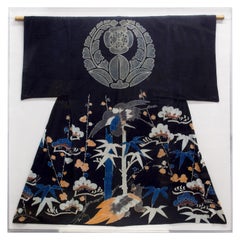
Framed Japanese Festival Kimono with Tsutshugaki Dye

Framed Japanese Festival Kimono with Tsutshugaki Dye

Located in Atlanta, GA

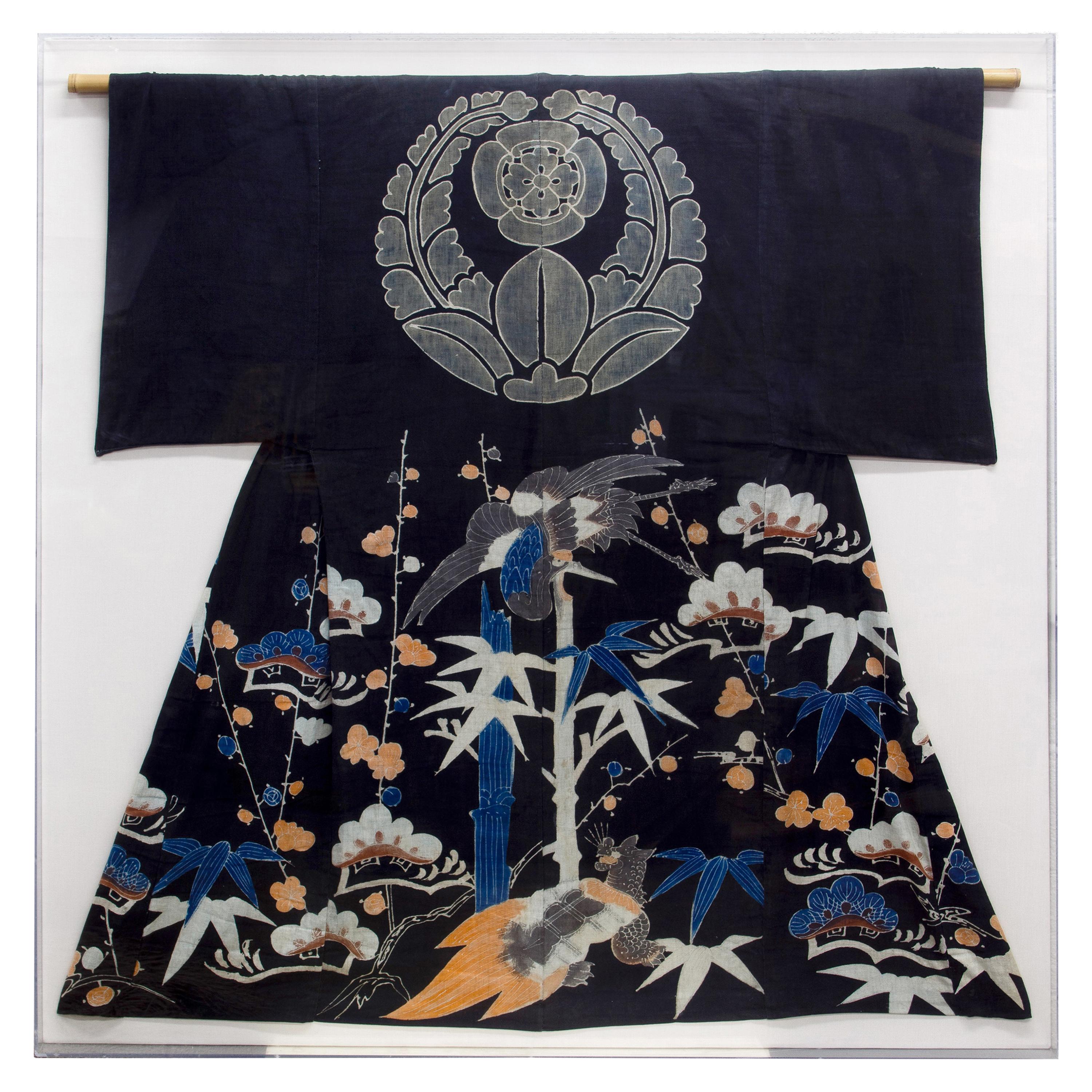
A Japanese festival kimono expertly mounted and displayed in a large acrylic shadow box. This impressive ceremonial garment circa late 19th-early 20th century was made from a thick l...

Category

Early 20th Century Japanese Japonisme Textiles

Materials

Textile, Acrylic

Japanese Screen Pair. Red and White Plum Blossoms on Silver Leaf.

Japanese Screen Pair. Red and White Plum Blossoms on Silver Leaf.

Located in Kyoto, JP

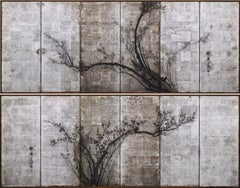
Okada Yosai (1785–1864) Red and White Plum Blossoms Pair of six-panel Japanese screens. Ink and silver leaf on paper. Dimensions (Each Screen): H. 105.5 cm x W. 270 cm (41.5” x 10...

Category

Antique Mid-19th Century Japanese Edo Paintings and Screens

Materials

Silver Leaf

Japanese Two Panel Screen: Antique Kimono Fabric Mounted on Screen

Japanese Two Panel Screen: Antique Kimono Fabric Mounted on Screen

Located in Hudson, NY

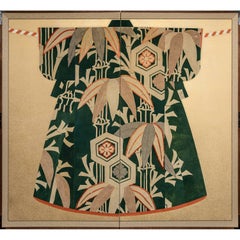
Japanese Two Panel Screen: Late Nineteenth Century Kimono Fabric Mounted on Early Twentieth Century Screen. In the Heian period (eighth century to the twelfth century), noblemen wou...

Category

Early 20th Century Japanese Meiji Paintings and Screens

Materials

Silk, Wood, Paper