Yarn Paintings

to
17
Height
to
Width
to
1
17
3
11
3
2
2
3
1
1
1,265
9,597
8,930
8,562
6,959
17
17
17
17
17
17
17
16
Material: Yarn
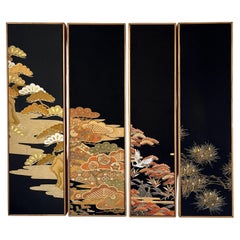
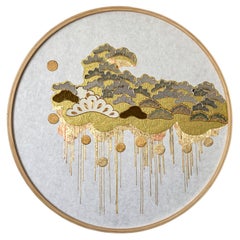
Vintage obi textile art " Pines Through Seasons " by ikasu Black Beige Japan

Vintage obi textile art " Pines Through Seasons " by ikasu Black Beige Japan

By Lena Okamoto, Kimono ikasu

Located in Setagaya City, JP

Certified Kimono Meister work / Certificate of Authenticity included. One-of-a-kind Japanese textile art made from vintage kimono fabrics. Sustainable artwork for modern interiors, ...

Category

1950s Japanese Japonisme Vintage Yarn Paintings

Materials

Reclaimed Wood, Yarn, Thread, String, Textile, Fabric, Silk, Wood

Antique kimono textile art " Kobachi ~Coral Collection~ II" by ikasu Japan

Antique kimono textile art " Kobachi ~Coral Collection~ II" by ikasu Japan

By Lena Okamoto, Kimono ikasu

Located in Setagaya City, JP

Certified Kimono Meister work / Certificate of Authenticity included. One-of-a-kind Japanese textile art made from vintage kimono fabrics. Sustainable artwork for modern interiors, ...

Category

Mid-20th Century Japanese Japonisme Yarn Paintings

Materials

Silk, Wood, Fabric, Textile, String, Thread, Yarn, Reclaimed Wood

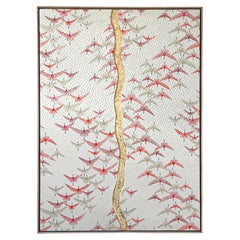
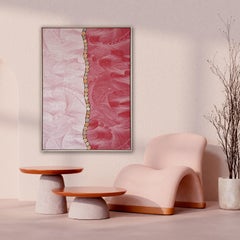
Vintage kimono textile art " Cranes ~ Kintsugi ~ II" White Red Gold Japan

Vintage kimono textile art " Cranes ~ Kintsugi ~ II" White Red Gold Japan

By Kimono ikasu

Located in Setagaya City, JP

Certified Kimono Meister work / Certificate of Authenticity included. One-of-a-kind Japanese textile art made from vintage obi fabrics. Sustainable artwork for modern interiors, collectors, boutique hotels, and lovers of Japanese aesthetics. [Size] 73 x 53 x 5 cm [Materials] Silk for the outside layer, wooden frame for the under layer, and gold leaf [Story behind the work] This is the second version of "Cranes: Kintsugi," created from the same kimono using a different section of the textile. Each artwork is handmade, and no two pieces are identical. The frame for this work is made of paulownia wood taken from antique Kiritansu, which are traditional chests of drawers for kimonos. I use antique kiritansu that can no longer be used as furniture to create the basis and frames for my works. It adds an even more authentic atmosphere of the traditional wabi-sabi spirit. Can you feel it? The piece uses the concept of kintsugi. It unites the pieces of antique kimono back together with golden leaf to give it a second wind as an artwork. [Period and Story] The kimono used in this piece was originally crafted during the late Showa period, around the 1960s to 1980s. [Explanation and meaning of pattern and colors] The Japanese saying goes, "A crane lives a thousand years, a tortoise lives ten thousand years," making cranes a symbol of longevity. Cranes are also known for staying with the same partner for their entire lives, which is why they are often used at weddings and other celebrations to symbolize marital bliss and the desire for harmony between husband and wife. On this particular piece, cranes are flying through snow woven on the fabric, as if they are overcoming all disasters to get to their beloved ones. The color scarlet, or deeply dyed red, used for most of the cranes here, has long been associated with the meaning of warding off evil. It is believed to possess the power to repel malevolent forces and invite good fortune. During the Heian period, from 794 to 1185, scarlet was reserved for sacred buildings and ceremonial objects that held great significance. Ordinary people were prohibited from wearing scarlet red kimonos, which made it a highly special color. [Characteristics of the fabric] Cranes, going up and down, are generously decorated by kimpaku here. Kimpaku refers to gold leaf or foil in Japanese. Gold leaf is a traditional material used in various aspects of Japanese culture, including art, crafts, and even in culinary applications. In traditional Japanese art, gold leaf is often applied to religious objects, sculptures, paintings, and lacquerware to create a luxurious and decorative effect. The use of gold leaf in art dates back centuries and is associated with a sense of wealth, prestige, and the divine. Traditional kimpaku technique is used here to make an accent decoration in the middle. [About the frame] This artwork frame is crafted from paulownia wood, a uniquely Japanese material closely tied to the world of kimonos, and it serves to convey the refined beauty of Japanese nature. Paulownia wood is known as the lightest wood in Japan, praised for its natural luster, resistance to moisture, and resilience against cracking. Since ancient times, it has been used in crafting furniture, chests, and musical instruments. Paulownia wood is closely linked to kimono culture. During the Edo period, it became customary to store cherished kimonos in paulownia chests...

Category

Late 20th Century Japanese Japonisme Yarn Paintings

Materials

Gold Leaf, Silver Leaf
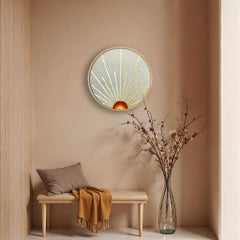
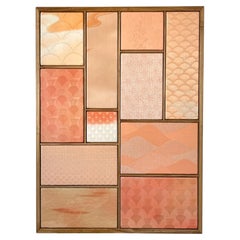
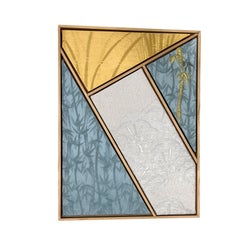
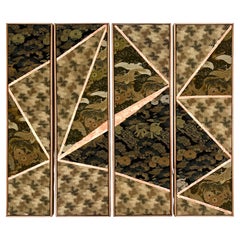
Antique kimono textile art "Geometry ~Colors of Desert~ II" by ikasu Japan

Antique kimono textile art "Geometry ~Colors of Desert~ II" by ikasu Japan

By Lena Okamoto, Kimono ikasu

Located in Setagaya City, JP

Certified Kimono Meister work / Certificate of Authenticity included. One-of-a-kind Japanese textile art made from vintage kimono fabrics. Sustainable artwork for modern interiors, ...

Category

Mid-20th Century Japanese Japonisme Yarn Paintings

Materials

Fabric, Textile, Silk, String, Thread, Yarn, Wood

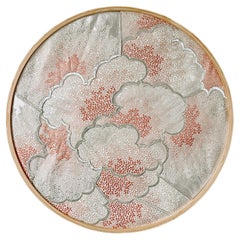
Early 20th Century kimono textile art "Sakura ~Ephemerality~" by ikasu Japan

Early 20th Century kimono textile art "Sakura ~Ephemerality~" by ikasu Japan

By Lena Okamoto, Kimono ikasu

Located in Setagaya City, JP

Certified Kimono Meister work / Certificate of Authenticity included. One-of-a-kind Japanese textile art made from vintage kimono fabrics. Sustainable artwork for modern interiors, ...

Category

1950s Japanese Japonisme Vintage Yarn Paintings

Materials

Silk, Wood, Fabric, Textile, String, Thread, Yarn

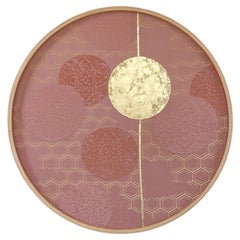
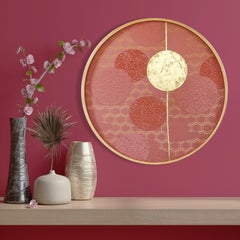
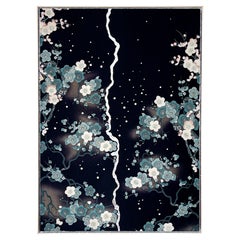
Vintage kimono textile art "Snow in Moonlight ~Kintsugi~" by ikasu Japan

Vintage kimono textile art "Snow in Moonlight ~Kintsugi~" by ikasu Japan

By Kimono ikasu, Lena Okamoto

Located in Setagaya City, JP

Certified Kimono Meister work / Certificate of Authenticity included. One-of-a-kind Japanese textile art made from vintage kimono fabrics. Sustainable artwork for modern interiors, ...

Category

Mid-20th Century Japanese Japonisme Yarn Paintings

Materials

Gold Leaf

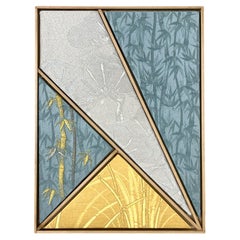
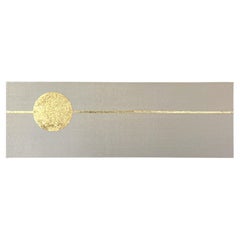
Antique kimono textile art "Geometry ~Kintsugi~" by ikasu Japan

Antique kimono textile art "Geometry ~Kintsugi~" by ikasu Japan

By Kimono ikasu, Lena Okamoto

Located in Setagaya City, JP

Certified Kimono Meister work / Certificate of Authenticity included. One-of-a-kind Japanese textile art made from vintage kimono fabrics. Sustainable artwork for modern interiors, ...

Category

Mid-20th Century Japanese Japonisme Yarn Paintings

Materials

Gold Leaf

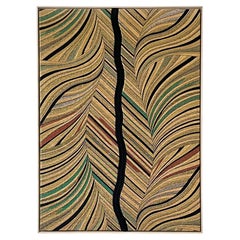
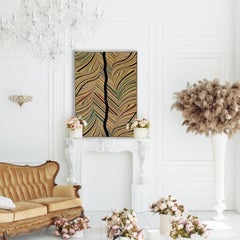
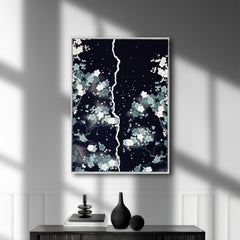
Vintage obi textile art " Broken Vase ~ kintsugi ~" by ikasu Black Gold Japan

Vintage obi textile art " Broken Vase ~ kintsugi ~" by ikasu Black Gold Japan

By Kimono ikasu, Lena Okamoto

Located in Setagaya City, JP

Certified Kimono Meister work / Certificate of Authenticity included. One-of-a-kind Japanese textile art made from vintage obi fabrics. Sustainable artwork for modern interiors, collectors, boutique hotels, and lovers of Japanese aesthetics. [Story behind the work] This work uses a vintage obi dated around 1980ies, with a feather motif, and arranges it so that it looks like a vase. Antique obi, just as it is a broken vase, is united back again with black obijime - a string used to tie up obi when it’s worn. Framed in kiritansu (antique chest) paulownia wood. It is elegantly framed with paulownia wood originally used for kimono chest-of-drawers, and is filled with storytelling and sense of luxury. I used pieces of kimono that could no longer be used as clothing and kiritansu chest-of-drawers that would normally be discarded to create the ultimate upcycled piece. [Explanation and meaning of pattern and colors] Feathers hold various meanings and symbolism in Japanese traditional culture, often reflecting themes of spirituality, symbolism, and folklore. Here are some of the meanings associated with feathers in Japanese tradition: ・Divine Protection: Feathers are often seen as symbols of divine protection and spiritual guidance. Feathers, especially those from birds, are considered to be imbued with the protective energy, offering spiritual guardianship and safeguarding against negative forces. ・Connection to the Spirit World: Feathers are sometimes associated with the spirit world and the realm of the divine. In folklore and mythology, feathers are depicted as messengers between the earthly realm and the celestial realms. ・Symbol of Beauty and Elegance: Feathers are admired for their natural beauty, grace, and elegance. In traditional Japanese arts such as Noh theater, Kabuki, and dance performances like Kagura, actors and performers often use feathered costumes or accessories to enhance their appearance and convey a sense of refinement and sophistication. ・Sign of Good Luck and Prosperity: In Japanese folklore, certain birds like cranes and pheasants are considered symbols of good fortune, longevity, and prosperity. Feathers from these birds are often depicted in art and craftwork as auspicious symbols believed to bring blessings and positive energy to the bearer. [About the frame] Kiritansu - chest-of-drawers for kimono, is traditionally made from paulownia wood, a uniquely Japanese material closely tied to the world of kimonos. Paulownia wood is known as the lightest wood in Japan, prased for its natural luster, resistance to moisture, and resilience against cracking. Since ancient times, it has been used in crafting furniture, chests, and musical instruments. During the Edo period, it became customary to store cherished kimonos in paulownia chests...

Category

1980s Japanese Japonisme Vintage Yarn Paintings

Materials

String, Composite, Reclaimed Wood, Yarn, Thread, Textile, Fabric, Wood, ...

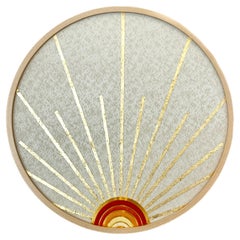
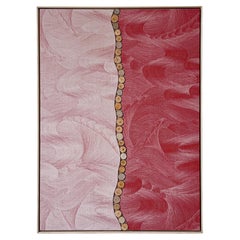
Vintage kimono textile art " Sunset Timelapse ~ Ephemerality ~" ikasu Red Japan

Vintage kimono textile art " Sunset Timelapse ~ Ephemerality ~" ikasu Red Japan

By Kimono ikasu, Lena Okamoto

Located in Setagaya City, JP

Certified Kimono Meister work / Certificate of Authenticity included. One-of-a-kind Japanese textile art made from vintage obi fabrics. Sustainable artwork for modern interiors, collectors, boutique hotels, and lovers of Japanese aesthetics. [Story behind the work] The art piece uses two sides - front and reverse - of the same kimono, to show beautiful sea surrounding Japan, in hues and in late sunset, as a timelapse. The frame for this work is made of paulownia wood taken from antique Kiritansu - chest-of-drawers for kimono. I use antique kiritansu that can’t be used as furniture anymore to create basis and frames for my works. It adds them even more authentic atmosphere of traditional wabisabi spirit. Can you feel it? [Period / Story] The kimono used in this piece was originally crafted during the late Showa period (1960-80ies). [Explanation and meaning of pattern and colors] Sea waves, depicted in two color variations here, are a symbol of transience and Impermanence in Japanese culture. The ebb and flow of the tides, the ever-changing currents, and the relentless motion of the waves serve as reminders of the fleeting nature of life. This artwork featuring the sea convey themes of impermanence, reminding viewers to cherish the present moment and appreciate the beauty of life's fleeting moments. The theme of impermanence is strengthen by two colors of the sea - the lighter in early hues and the darker when the sun is just about to set in the sea. [About the frame] This artwork frame is crafted from paulownia wood, a uniquely Japanese material closely tied to the world of kimonos, and it serves to convey the refined beauty of Japanese nature. Paulownia wood is known as the lightest wood in Japan, prased for its natural luster, resistance to moisture, and resilience against cracking. Since ancient times, it has been used in crafting furniture, chests, and musical instruments. Paulownia wood is closely linked to kimono culture. During the Edo period (17th cent.~), it became customary to store cherished kimonos in paulownia chests...

Category

1960s Japanese Japonisme Vintage Yarn Paintings

Materials

Gold Leaf, Silver Leaf
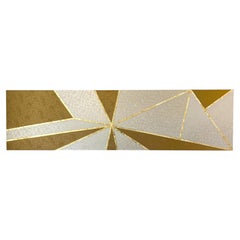
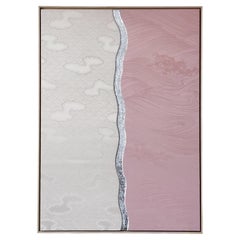
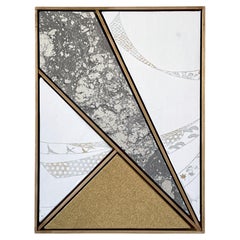
VIntage kimono textile art " Geometry ~ Marble ~" by ikasu Gold White Grey Japan

VIntage kimono textile art " Geometry ~ Marble ~" by ikasu Gold White Grey Japan

By Lena Okamoto, Kimono ikasu

Located in Setagaya City, JP

Certified Kimono Meister work / Certificate of Authenticity included. One-of-a-kind Japanese textile art made from vintage obi fabrics. Sustainable artwork for modern interiors, col...

Category

1960s Japanese Folk Art Vintage Yarn Paintings

Materials

Reclaimed Wood, Wood, Fabric, Textile, String, Thread, Yarn, Silk, Compo...

Related Items
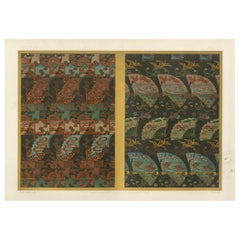
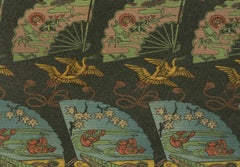
Japanese Textile Patterns in Rich Colors: Antique Lithograph, 1880s

Japanese Textile Patterns in Rich Colors: Antique Lithograph, 1880s

Located in Langweer, NL

Title: Japanese Textile Patterns in Rich Colors: Antique Lithograph, 1880s This remarkable lithograph from the 1880s features two vibrant examples of traditional Japanese textile pa...

Category

1880s Antique Yarn Paintings

Materials

Paper

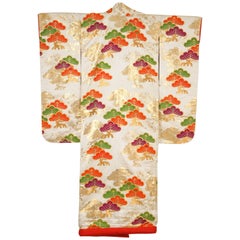
Vintage Kimono Silk Brocade Japanese Ceremonial 1970

Vintage Kimono Silk Brocade Japanese Ceremonial 1970

Located in Moreno Valley, CA

A vintage Mid-Century ivory color silk brocade collectable Japanese ceremonial kimono. One of a kind. Fabulous museum quality ceremonial kimono in pure silk with intricate detailed h...

Category

20th Century Japanese Japonisme Yarn Paintings

Materials

Silk

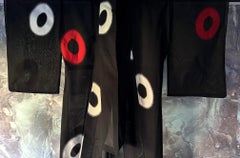
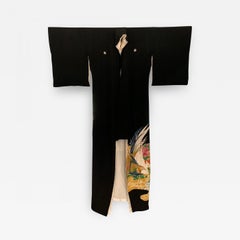
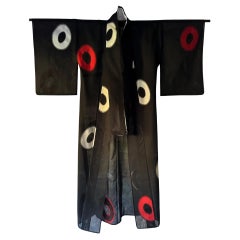
Vintage Japanese Gauze Kimono with Embroidery Modern Design

Vintage Japanese Gauze Kimono with Embroidery Modern Design

Located in Atlanta, GA

A Japanese formal Kimono made with a very fine black linen gauze augmented with applied modern circle pattern. The garment was hand-stitched and dated to circa 1930-50s. The black ga...

Category

Mid-20th Century Japanese Japonisme Yarn Paintings

Materials

Silk, Linen

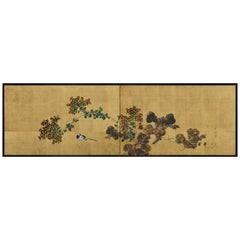
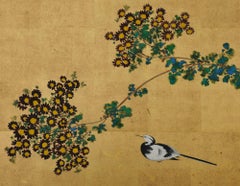
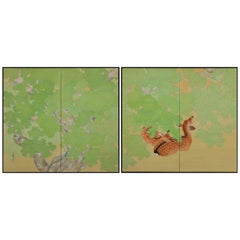
Japanese Screen, Early 20th Century Wagtail & Chrysanthemum by Ishizaki Koyo

Japanese Screen, Early 20th Century Wagtail & Chrysanthemum by Ishizaki Koyo

Located in Kyoto, JP

Ishizaki Koyo (1884-1947) Wagtail & Chrysanthemum Early 20th century Folding screen in two-panels. Ink, pigments and gofun on gold leaf. Sign: Koyo Seal: Koyo This ...

Category

Early 20th Century Japanese Taisho Yarn Paintings

Materials

Gold Leaf
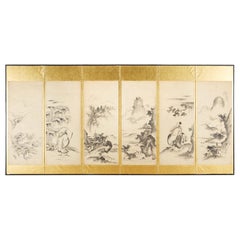
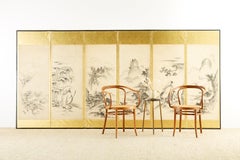
Japanese Edo Six-Panel Haboku Landscapes of Seasons

Japanese Edo Six-Panel Haboku Landscapes of Seasons

Located in Rio Vista, CA

19th century Japanese Edo period six-panel screen painted in Haboku (splashed ink) style. Depicts Four Seasons landscape scenes with two portraits of Chinese sages. One sage is trave...

Category

19th Century Japanese Edo Antique Yarn Paintings

Materials

Gold Leaf
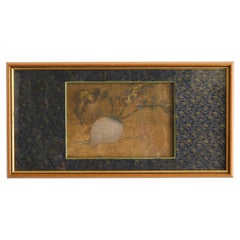
Antique Japanese turnip painting fragment / Pre-Edo / Wabi-sabi framed art

Antique Japanese turnip painting fragment / Pre-Edo / Wabi-sabi framed art

Located in Sammu-shi, Chiba

This piece is a fragment of an old Japanese painting, cut out and mounted in a frame. It is thought to have originally been part of a folding screen or hanging scroll, and depicts a ...
Category

19th Century Japanese Edo Antique Yarn Paintings

Materials

Wood, Paper

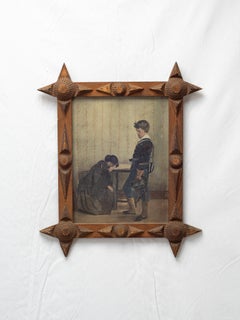
Early American Late 19th Early 20th Century Folk Art Painting in Tramp Art Frame

Early American Late 19th Early 20th Century Folk Art Painting in Tramp Art Frame

Located in Fort Collins, CO

Exceptional and never before seen Early American folk art oil painting. The scene appears to depict a man telling a woman bad news, presumably of her husband's passing. The subject p...

Category

Early 20th Century American Folk Art Yarn Paintings

Materials

Wood, Paint

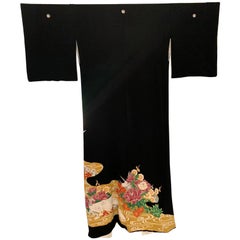
Vintage Japanese Formal Black Silk Kimono

Vintage Japanese Formal Black Silk Kimono

$1,600

H 64 in W 52 in D 0.2 in

Vintage Japanese Formal Black Silk Kimono

Located in Atlanta, GA

A vintage Japanese silk Kuro Tomesode Kimono, circa 1960s-1980s. Kuro Tomesode is a dress for married woman for the most formal occasions, equivalent of the evening gowns in the west. It is overall black, decorated only with patterns of bright colors on the bottom. This kimono has three Mon family crests on the front and back shoulder. It is lined with white silk in its interior. On the front, it features exposed white stitches around neck and breast, a very subtle and elegant touch. The bottom part of the kimono is decorated with lavish woven design with embroidery accents that depicts a group of pheasants among peonies and other blossoms along a flowing stream. Great contrast in the colors and attention to details. An very elegant textile for wall...

Category

Mid-20th Century Japanese Japonisme Yarn Paintings

Materials

Silk

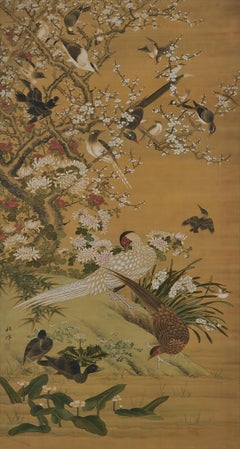
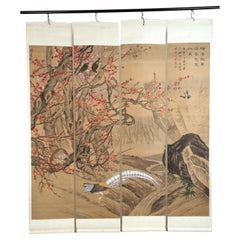
Antique Japanese Silk Hanging Scrolls C.1920

Antique Japanese Silk Hanging Scrolls C.1920

$6,066Sale Price / set|20% Off

H 83.27 in W 70.08 in D 0.04 in

Antique Japanese Silk Hanging Scrolls C.1920

Located in London, GB

A stunning set of four Japanese silk mounted vertical hanging scrolls. Dating from C.1920 Taisho Period. The watercolour and ink on silk depicts a larg...

Category

1920s Japanese Japonisme Vintage Yarn Paintings

Materials

Silk

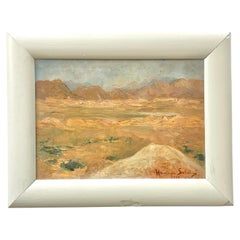
Antique early 20th century landscape oil painting of desert landscape

Antique early 20th century landscape oil painting of desert landscape

Located in Ebberup, DK

This is an original antique oil on cardboard impressionist painting from 1903. The motive is a desert landscape with mountains in the background kept in warm and intriguing colours. ...

Category

Early 20th Century Danish Art Deco Yarn Paintings

Materials

Paint