Master of the Ligurian Academy (active in Genoa in the first half of the 17th century)
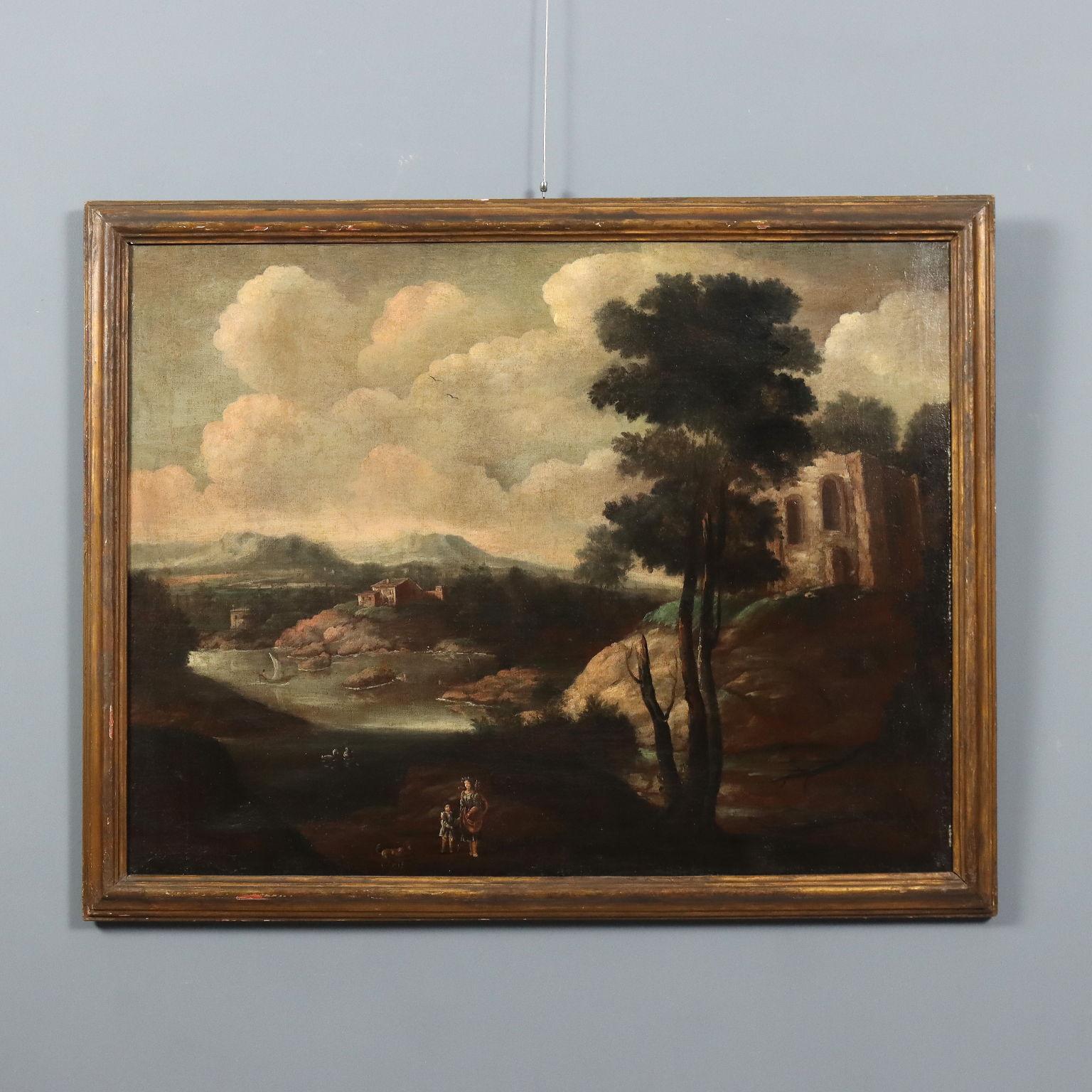
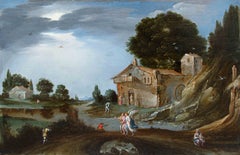
Rural Landscape with Figures
Oil on canvas, 76.5 x 114.3 cm
With frame, 92 x 127 cm
Oral presentation by Camillo Manzitti
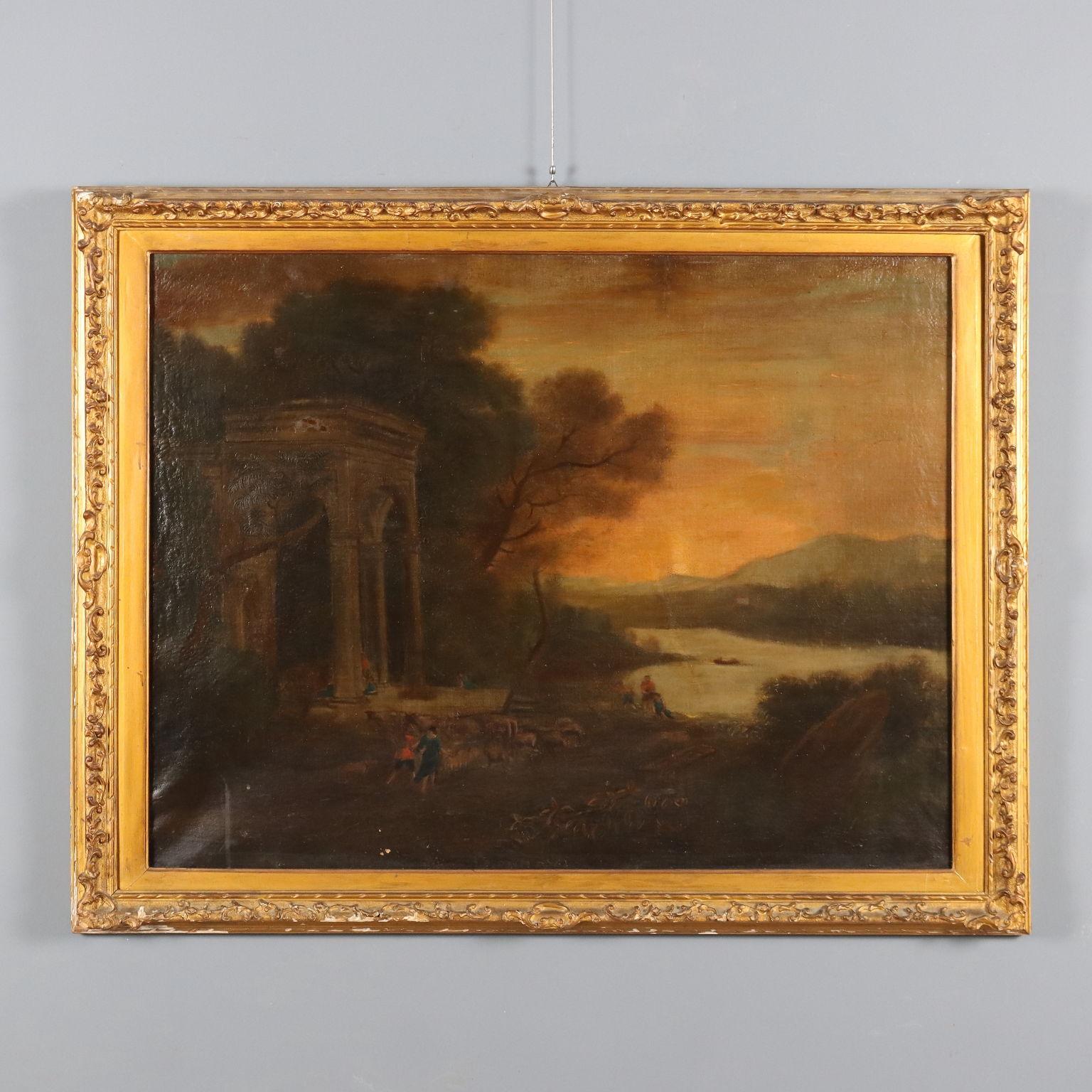
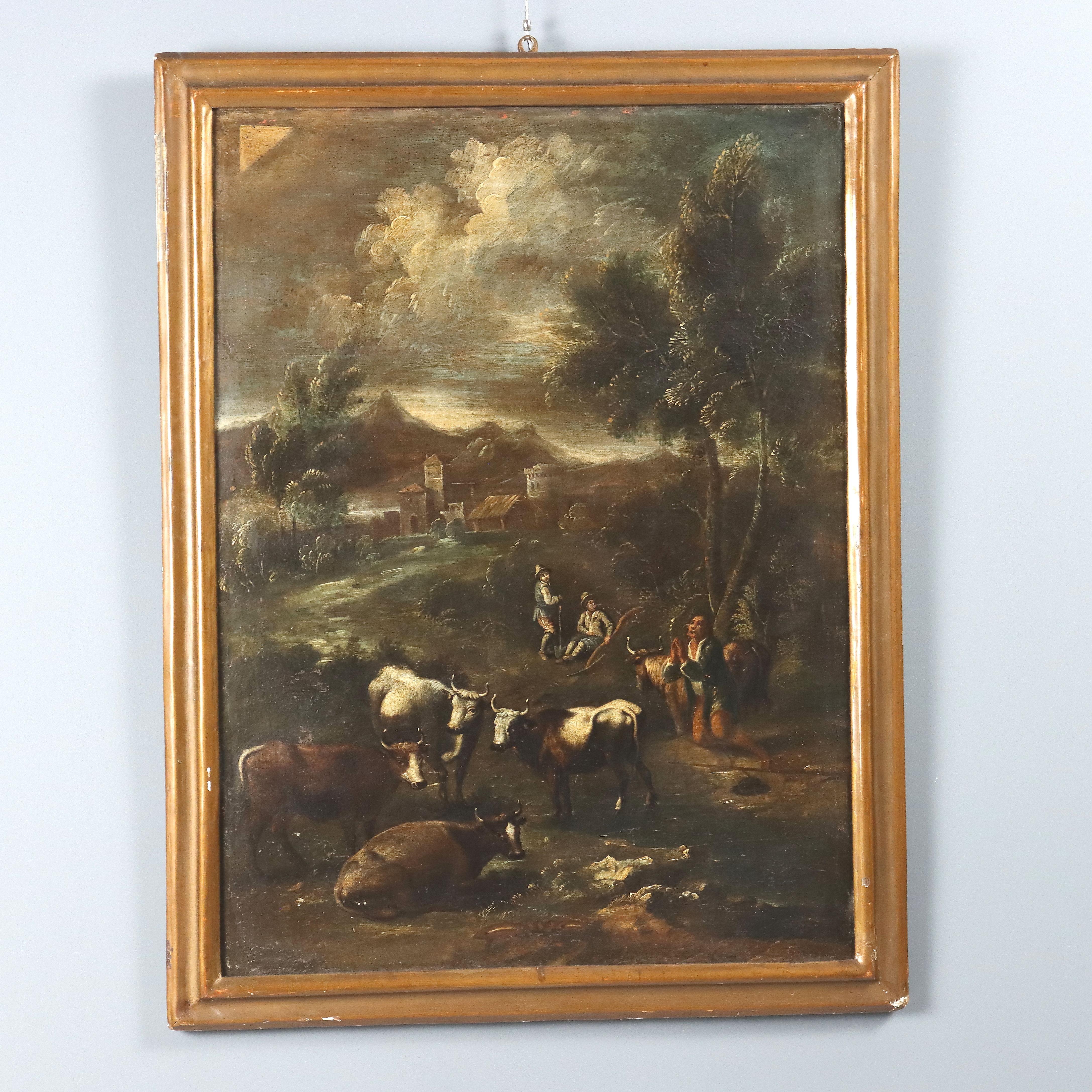
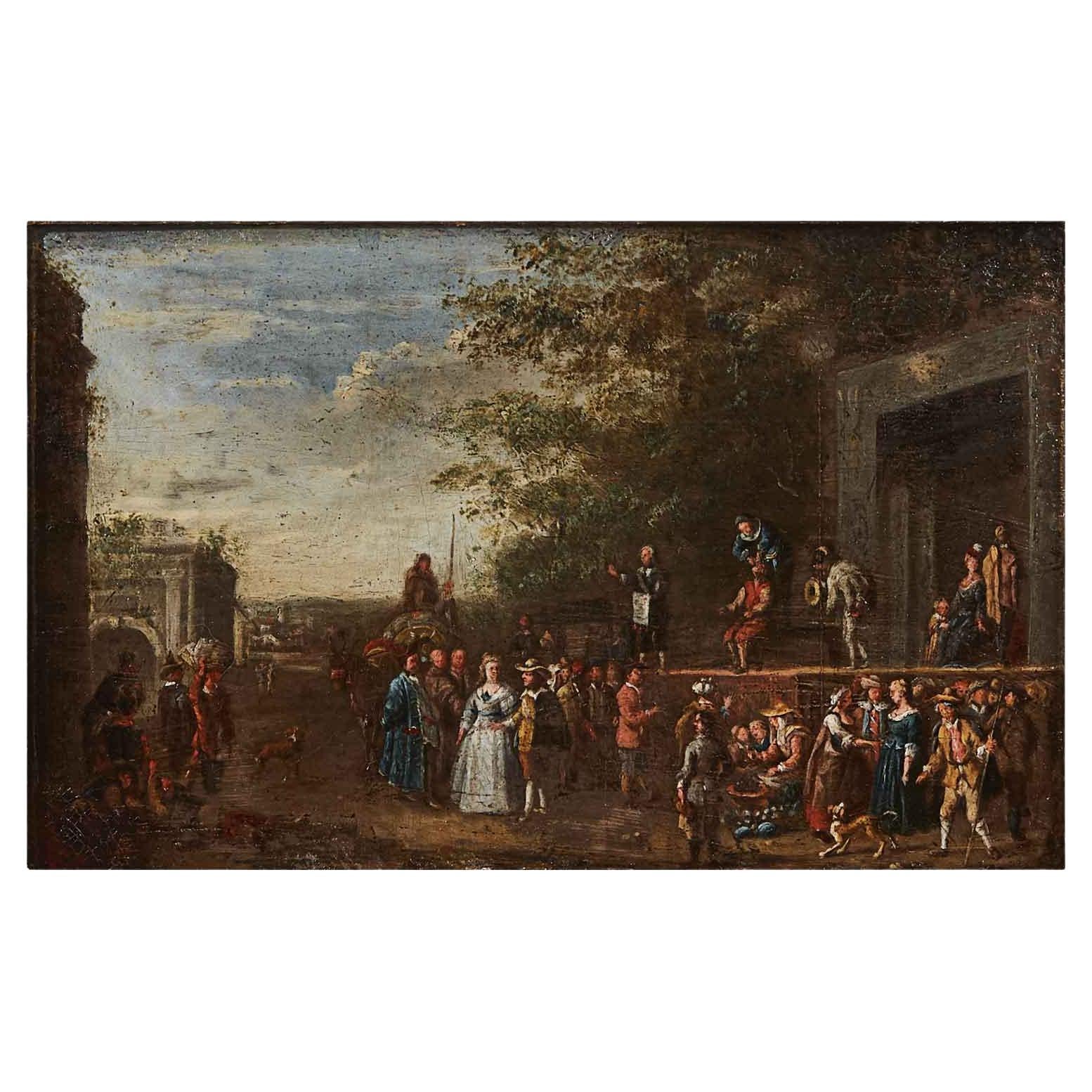
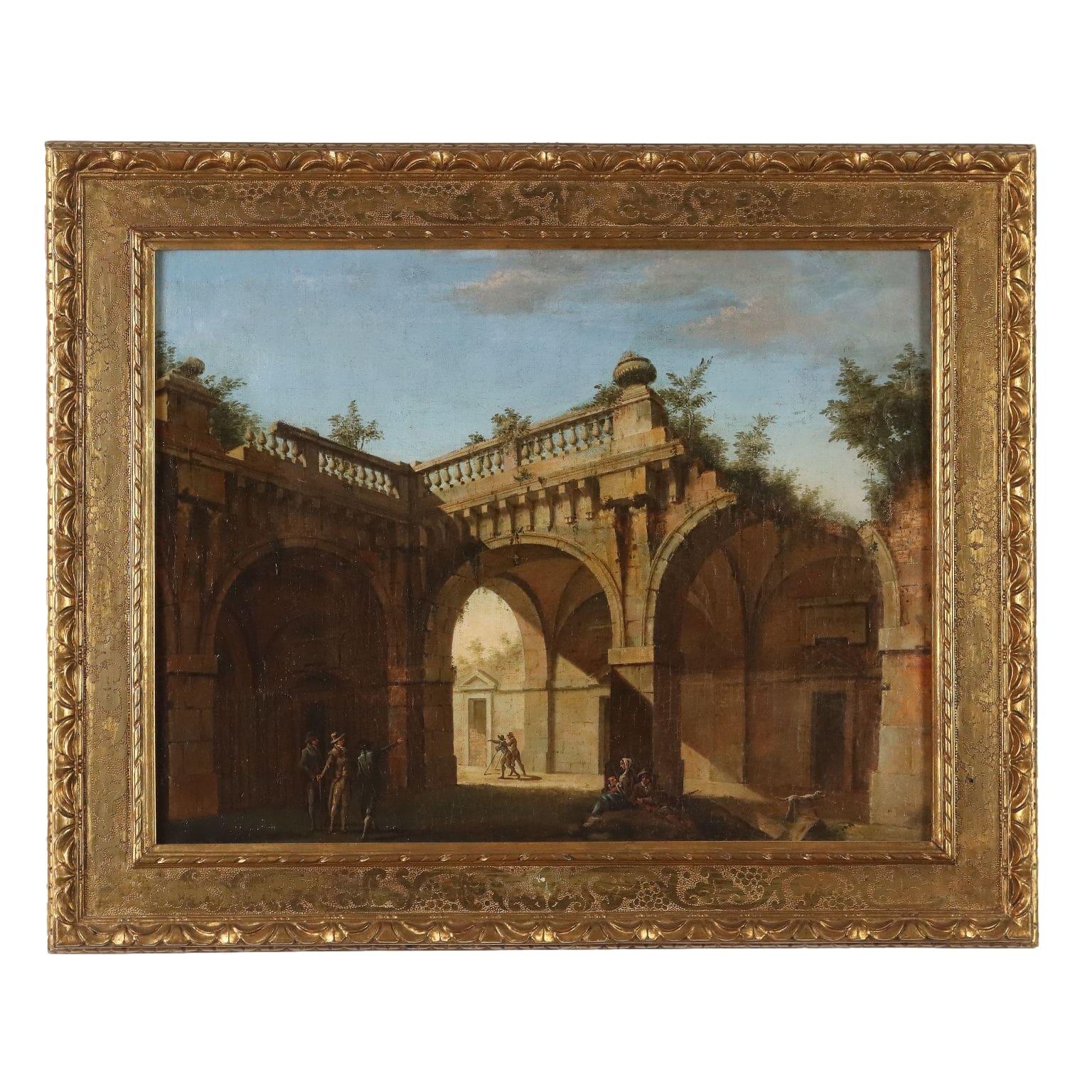
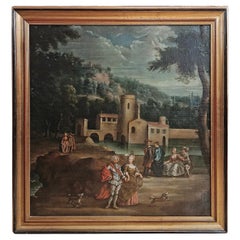
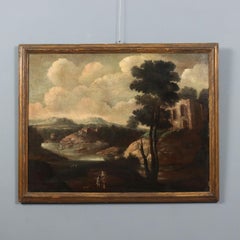
The painting depicts a lively rural scene set in an open landscape: in the background lies a stretch of lake, flanked by trees and a ruined tower. In the background stands a rural house with simple, solid lines, featuring an arched doorway, laundry hanging out to dry, and figures peering out from the doorway—immediately conveying the everyday reality of peasant life. The narrative heart of the painting, however, lies in the foreground, which is brought to life by a group of figures in colorful costumes—red, yellow, and green—arranged in a group dance that suggests the celebration of a festival, perhaps a wedding or a seasonal holiday. Some figures are holding hands, while others are watching the scene; a shepherd with a staff frames the composition on the right, while in the background other figures are moving toward the lake, lending depth and a sense of expansiveness to the whole scene.
The Master of the Ligustic Academy is an artist who remains anonymous, whose identity has been gradually pieced together by the scholar Camillo Manzitti. The starting point for the reconstruction was a winter landscape from the collections of the Accademia Ligustica di Belle Arti in Genoa, around which a corpus of about ten works was gradually assembled; these works share a similar painterly approach, a distinct chromatic quality, and a style that reveals a close affinity with the styles of Cornelis de Wael and Jan Wildens. The critical analysis is still ongoing, and the artist remains elusive, but stylistic comparisons allow us to place him or her with reasonable certainty within the circle of the vibrant Flemish community active in Genoa during the first half of the 17th century.
That community centered around the workshop of the brothers Cornelis and Luca de Wael, who had come to Rome and then settled in Genoa around 1619. Their home became a veritable logistics hub for Flemish artists traveling to the Italian peninsula: even Antoon van Dyck stayed there in 1621. Gofredo (Godfried) Wals, a key figure in early 17th-century landscape painting, became part of this same network of connections; his works exerted an extraordinary influence on Claude Lorrain, Agostino Tassi, and Filippo Napoletano. Jan Wildens, who certainly stayed in Rome and Genoa between 1613 and 1618, also made a decisive contribution to the development of the local landscape style. His painting *Landscape with a Rest on the Flight into Egypt* (private collection) exemplifies the fusion of Nordic landscape painting and Southern sensibility that characterizes the entire body of work from this artistic circle.
It is, therefore, at this fertile crossroads that the personality of the Master of the Ligustic Academy comes to fruition. The similarities with de Wael are particularly striking: *The Distribution of Soup to the Poor* (Palazzo Rosso, Genoa), but above all *The Battle in the Village* and *The Seven Works of Mercy: Giving Shelter to Pilgrims*—both in private collections—display the same compositional solution of the house in the background and the same taste for figures engaged in everyday or festive activities. This comparison reinforces the hypothesis that the artist who painted this work trained in de Wael’s workshop, absorbing his models and reinterpreting them with a personal style recognizable in the softness of the brushwork and the luminous color scheme of the landscape.