Want more images or videos?
Request additional images or videos from the seller
1 of 5

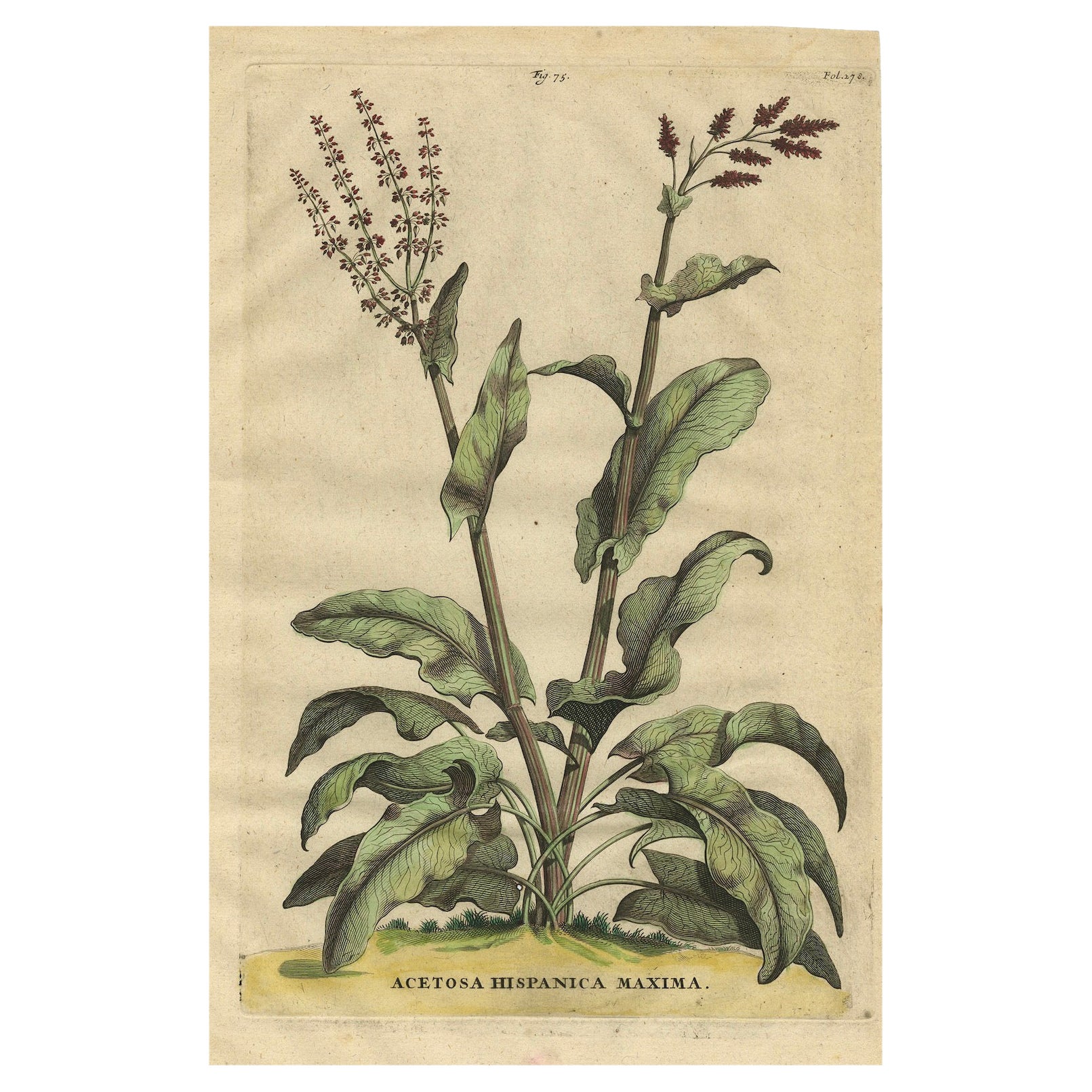
Acetosa Hispanica Maxima, Munting, 1696

$165.21
$206.5220% Off
£122.09
£152.6120% Off
€140VAT Included
€17520% Off
CA$229.26
CA$286.5720% Off
A$233.42
A$291.7720% Off
CHF 134.43
CHF 168.0320% Off
MX$2,812.49
MX$3,515.6220% Off
NOK 1,560.03
NOK 1,950.0420% Off
SEK 1,573.98
SEK 1,967.4720% Off
DKK 1,067.37
DKK 1,334.2120% Off

About the Item

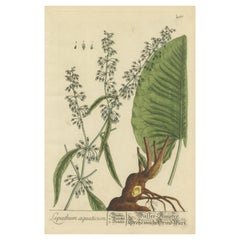
Antique print, titled: 'Acetosa Hispanica Maxima' - This original old antique print shows the Acetosa, Plantago species. This plate originates from: ''Naauwkeurige Beschryving der Aardgewassen, Waar in de veelerley Aart en bijzondere Eigenschappen der Boomen, Heesters, Kruyden, Bloemen, Met haare Vrugten, Zaden, Wortelen en Bollen, Neevens derzelver waare Voort-Teeling, gelukkige Aanwinning, en heylzaame Genees-Krachten, Na een veel-jarige Oeffening en eigen Ondervinding, In drei onderscheide Boeken, naauwkeuriglijk beschreeven worden; Door den Heer...', by A. Munting, published by Pieter vander Aa and Francois Halma Utrecht and Leiden, 1696. This work enjoyed particular success, at least in part due to the novelty of the plates, which in a radical departure from the iconography of the traditional florilegium, presented its plant species against a charming series of landscape backgrounds The illustrations are remarkable for their elegance and originality. Artists and Engravers: Made by an anonymous engraver after 'Abraham Munting'. Technic: Copperplate engraving / etching with hand colouring. on A verge type of hand-laid paper. paper. Condition: Good, given age. A few tiny spots. Narrow right margin. General age-related toning and/or occasional minor defects from handling. Please study scan carefully. Date: 1696 Overall size: 9.8 x 15.9 inch Image size: 8.3 x 12.4 inch We also offer thousands of antique prints covering fields of interest as diverse as architecture, natural history, religion, ethnology and many more. Antique prints have long been appreciated for both their aesthetic and investment value. They were the product of engraved, etched or lithographed plates. These plates were handmade out of wood or metal, which required an incredible level of skill, patience and craftsmanship. Whether you have a house with Victorian furniture or more contemporary decor an old engraving can enhance your living space.
  • Dimensions:
    Height: 15.9 in (40.39 cm)Width: 9.8 in (24.9 cm)Depth: 0.02 in (0.51 mm)
  • Materials and Techniques:
  • Period:
  • Date of Manufacture:
    1696
  • Condition:
  • Seller Location:
    Langweer, NL
  • Reference Number:
    Seller: PCT-618071stDibs: LU3054325634462

More From This Seller

View All
Botanical Illustration of Large Spanish Sorrel (Acetosa Hispanica Maxima), 1696

Botanical Illustration of Large Spanish Sorrel (Acetosa Hispanica Maxima), 1696

Located in Langweer, NL

This antique print, titled "Acetosa Hispanica Maxima," depicts the Acetosa plant, commonly known as Sorrel. It belongs to the Plantago or Rumex genus, known for their edible leaves w...

Category

Antique 1690s Prints

Materials

Paper

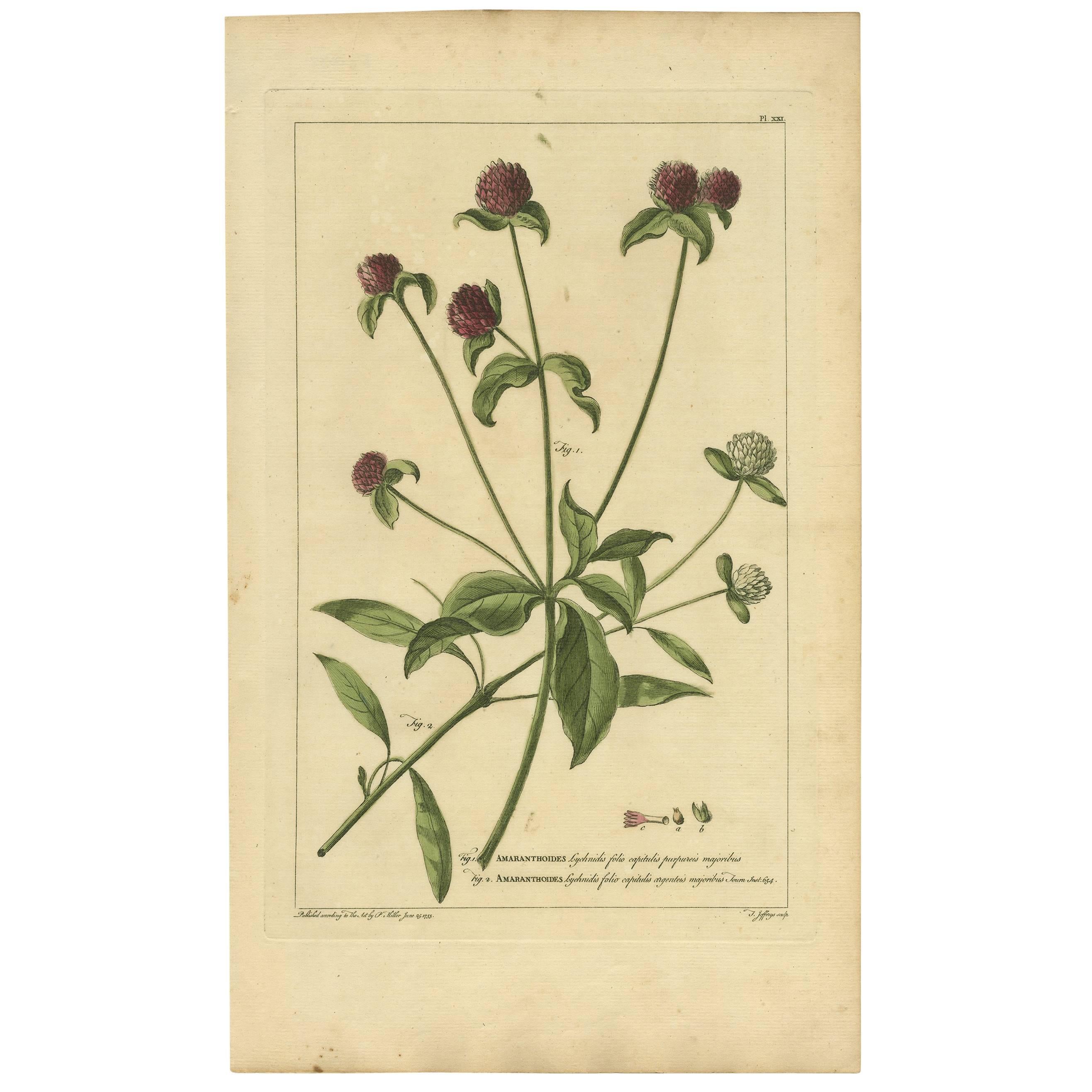
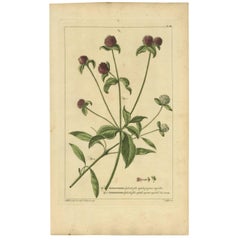
Antique Flower Print 'Amaranthoides' , 1755

Antique Flower Print 'Amaranthoides' , 1755

Located in Langweer, NL

Plate XXI 'Amaranthoides', originates from 'Figures of the most beautiful, useful and uncommon plants described in the Gardener's Dictionary (..)' by P. Miller. Philip Miller was the principal horticulturalist in England in the mid-18th century.  As the curator of the Chelsea Physic Garden and an active member of the Society of Gardeners, he had the opportunity to interact with important naturalists as well as some of the best botanical artists of the period including Georg Ehret and Robert Furber...

Category

Antique Mid-18th Century English Prints

Materials

Paper

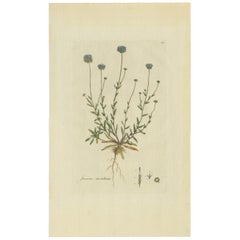
Antique Botany Print of the Jasione Montana by Curtis, circa 1777

Antique Botany Print of the Jasione Montana by Curtis, circa 1777

Located in Langweer, NL

Antique botany print titled 'Jasione Montana'. Hand colored engraving of the jasione montana, a low-growing plant in the family Campanulaceae found in rocky places and upland regions...

Category

Antique Late 18th Century Prints

Materials

Paper

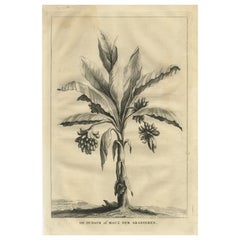
Print of The Dudaim or Mauz of the Arabs, Species of the Genus Mandrate, 1725

Print of The Dudaim or Mauz of the Arabs, Species of the Genus Mandrate, 1725

Located in Langweer, NL

Antique print, titled: 'De Dudaim of Mauz der Arabieren' - This original old antique print shows the Dudaim or Mauz of the Arabs. Mandragora officinarum is a species of the plant...

Category

Antique 1720s French Prints

Materials

Paper

Antique Botanical Print of Rumex Aquaticus

Antique Botanical Print of Rumex Aquaticus

Located in Langweer, NL

Antique print titled 'Lapathum aquaticum'. Botanical print of rumex aquaticus, a flowering plant in the knotweed family. Published by or after Elisabeth Blackwell, circa 1750.

Category

Antique Mid-18th Century Prints

Materials

Paper

You May Also Like

Early 19th Century Botanical Engraving by John Curtis

Early 19th Century Botanical Engraving by John Curtis

Located in Seaford, GB

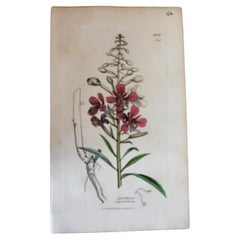
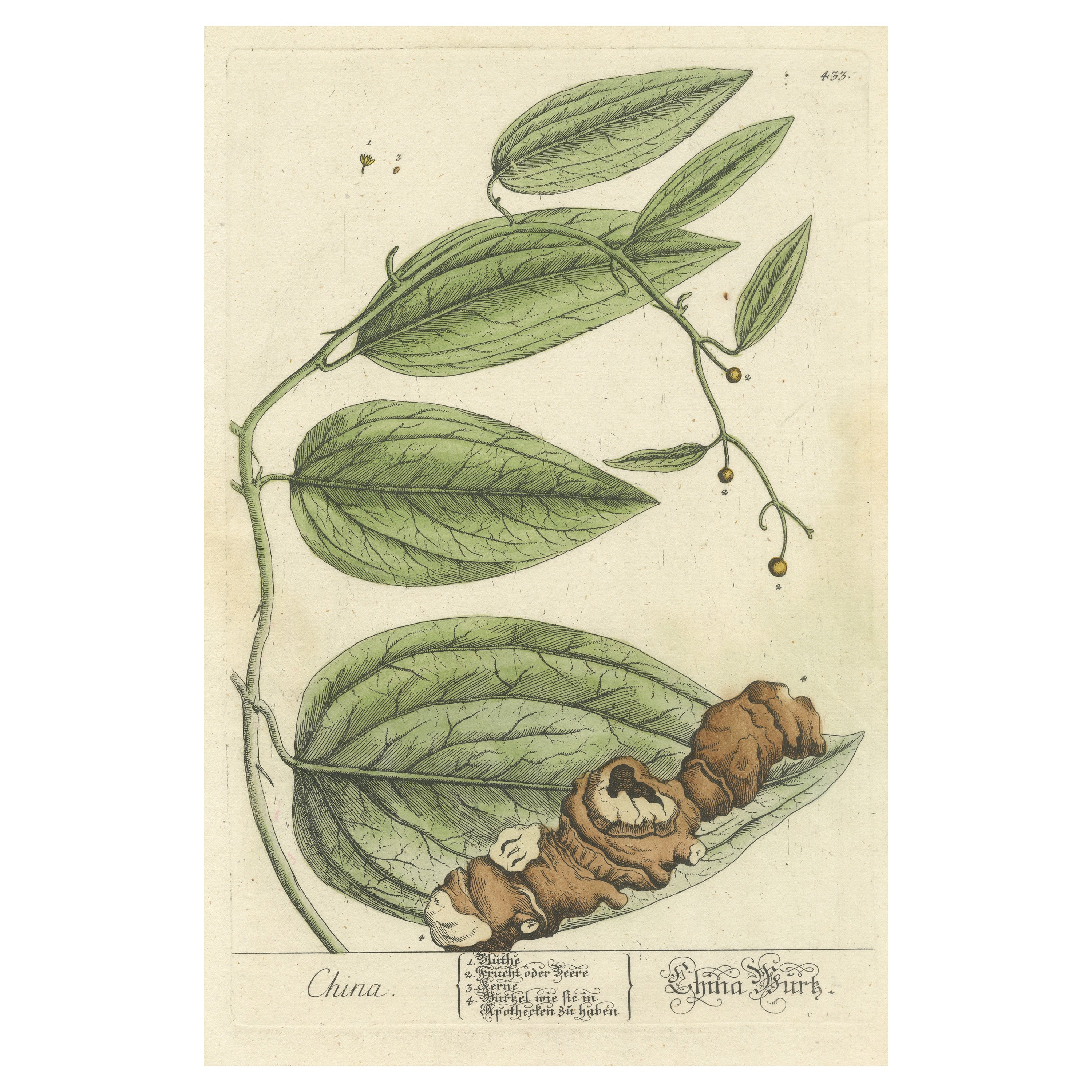
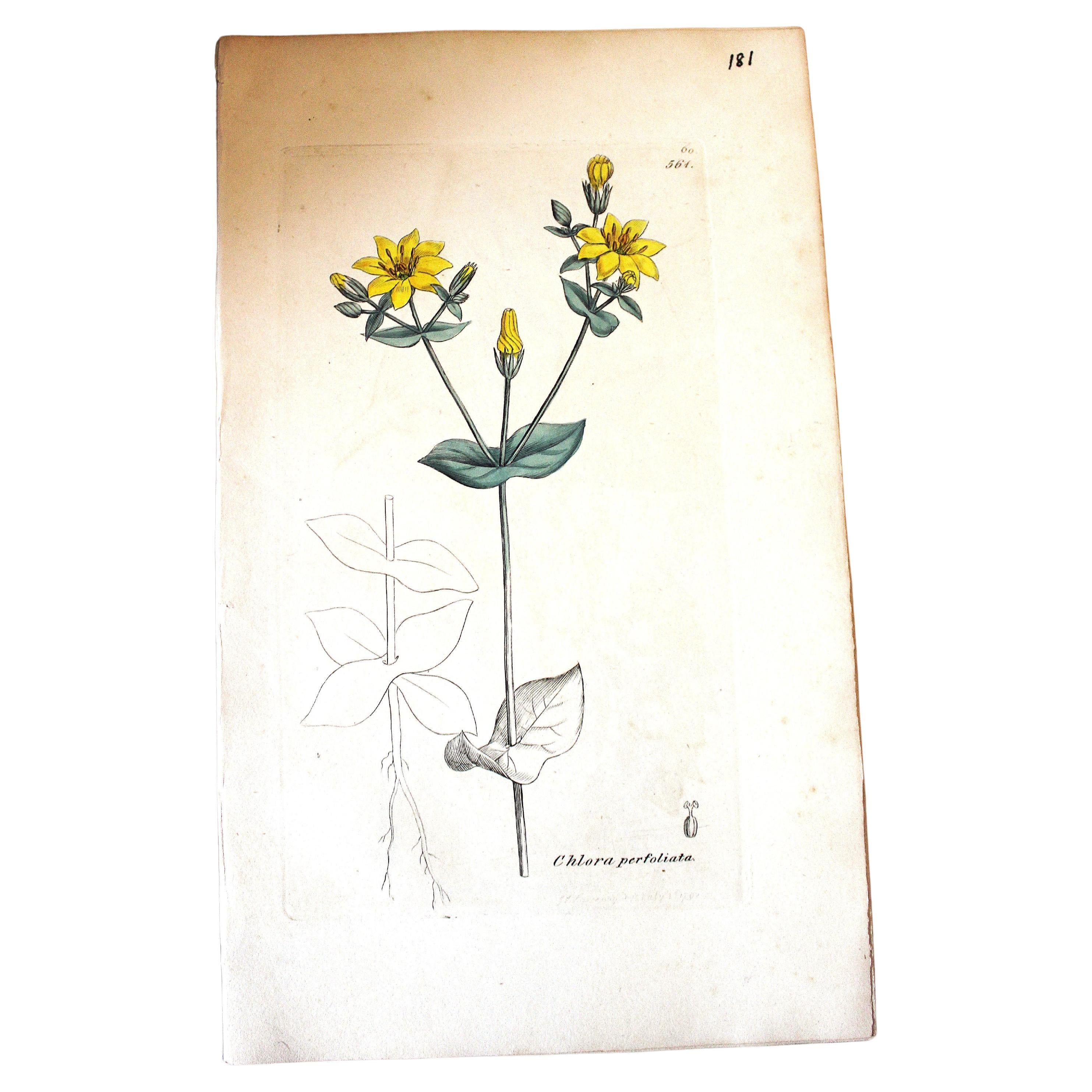
Early 19th Century Botanical Engraving by John Curtis – Hand Coloured Natural History Plate An original early 19th-century hand-coloured botanical engraving from the celebrated natural history publications of John Curtis (1791–1862), one of Britain’s most respected botanical and entomological illustrators. This beautifully detailed plate illustrates a flowering plant in scientific profile, showing bloom structure, leaves, buds, and root system with precision typical of early Victorian natural history illustration. Curtis’s work bridges science and art — created for study, yet prized today for its elegance and balance. These engravings formed part of the golden age of British botanical publishing, when artists collaborated with engravers and colourists to produce plates that were both accurate and visually refined. Each impression was printed from an engraved plate and then carefully coloured by hand, meaning no two examples are ever exactly identical. The composition has the clarity collectors seek: • Central botanical specimen • Naturalistic colour palette • Fine line engraving • Period scientific titling This makes it ideal as a single framed piece or as part of a gallery wall of antique botanical studies. About John Curtis John Curtis was a leading figure in British natural history illustration. He is best known for British Entomology and botanical works that combined taxonomic accuracy with graceful composition. His engravings are held in major museum collections and remain highly collectible in the decorative arts market. Period Early 19th century, circa 1820–1840. Technique Copperplate engraving with original hand colouring on laid paper. Condition Good antique condition consistent with age. Light toning and minor handling marks may be present, as expected with early 19th-century works on paper. Please see the images. Why Collect Curtis Botanical Prints...

Category

Antique Early 19th Century British George III Prints
Materials

Paper

Early 19th Century Botanical Engraving by John Curtis

Early 19th Century Botanical Engraving by John Curtis

Located in Seaford, GB

Early 19th Century Botanical Engraving by John Curtis – Hand Coloured Natural History Plate An original early 19th-century hand-coloured botanical engraving from the celebrated natural history publications of John Curtis (1791–1862), one of Britain’s most respected botanical and entomological illustrators. This beautifully detailed plate illustrates a flowering plant in scientific profile, showing bloom structure, leaves, buds, and root system with precision typical of early Victorian natural history illustration. Curtis’s work bridges science and art — created for study, yet prized today for its elegance and balance. These engravings formed part of the golden age of British botanical publishing, when artists collaborated with engravers and colourists to produce plates that were both accurate and visually refined. Each impression was printed from an engraved plate and then carefully coloured by hand, meaning no two examples are ever exactly identical. The composition has the clarity collectors seek: • Central botanical specimen • Naturalistic colour palette • Fine line engraving • Period scientific titling This makes it ideal as a single framed piece or as part of a gallery wall of antique botanical studies. About John Curtis John Curtis was a leading figure in British natural history illustration. He is best known for British Entomology and botanical works that combined taxonomic accuracy with graceful composition. His engravings are held in major museum collections and remain highly collectable in the decorative arts market. Period Early 19th century, circa 1820–1840. Technique Copperplate engraving with original hand colouring on laid paper. Condition Good antique condition consistent with age. Light toning and minor handling marks may be present, as expected with early 19th-century works on paper. Please see the images. Why Collect Curtis Botanical Prints...

Category

Antique Early 19th Century British George III Prints
Materials

Paper

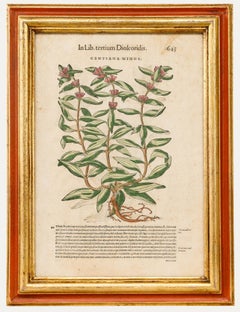
16th Century Engraving - Gentiana

16th Century Engraving - Gentiana

Located in Corsham, GB

A delicate 16th century, hand-coloured botanical print depicting Gentiana Minor. Unsigned. Beautifully presented in a distressed gilt frame. On laid. Image size: 34 x 23cm.

Category

16th Century Still-life Prints

Materials

Engraving

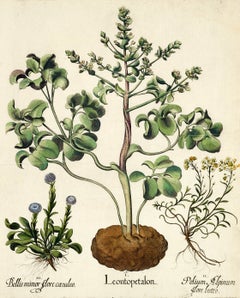
Basilius Besler Botanical Engraving, Hortus Eystettensis, Early 17th Century

Basilius Besler Botanical Engraving, Hortus Eystettensis, Early 17th Century

By Basilius Besler

Located in Stockholm, SE

An original hand-colored botanical engraving from Basilius Besler’s Hortus Eystettensis, published in Nuremberg in 1613. Executed at the transition between Renaissance naturalism and...

Category

Antique 17th Century German Baroque Decorative Art

Materials

Paper

Early 19th Century Botanical Engraving by John Curtis – Hand Coloured

Early 19th Century Botanical Engraving by John Curtis – Hand Coloured

Located in Seaford, GB

Early 19th Century Botanical Engraving by John Curtis – Hand Coloured Natural History Plate An original early 19th-century hand-coloured botanical engraving from the celebrated natural history publications of John Curtis (1791–1862), one of Britain’s most respected botanical and entomological illustrators. This beautifully detailed plate illustrates a flowering plant in scientific profile, showing bloom structure, leaves, buds, and root system with precision typical of early Victorian natural history illustration. Curtis’s work bridges science and art — created for study, yet prized today for its elegance and balance. These engravings formed part of the golden age of British botanical publishing, when artists collaborated with engravers and colourists to produce plates that were both accurate and visually refined. Each impression was printed from an engraved plate and then carefully coloured by hand, meaning no two examples are ever exactly identical. The composition has the clarity collectors seek: • Central botanical specimen • Naturalistic colour palette • Fine line engraving • Period scientific titling This makes it ideal as a single framed piece or as part of a gallery wall of antique botanical studies. About John Curtis John Curtis was a leading figure in British natural history illustration. He is best known for British Entomology and botanical works that combined taxonomic accuracy with graceful composition. His engravings are held in major museum collections and remain highly collectable in the decorative arts market. Period Early 19th century, circa 1820–1840. Technique Copperplate engraving with original hand colouring on laid paper. Condition Good antique condition consistent with age. Light toning and minor handling marks may be present, as expected with early 19th-century works on paper. Please see the images. Why Collect Curtis Botanical Prints...

Category

Antique Early 19th Century George III Prints

Materials

Paper