Want more images or videos?
Request additional images or videos from the seller
1 of 7

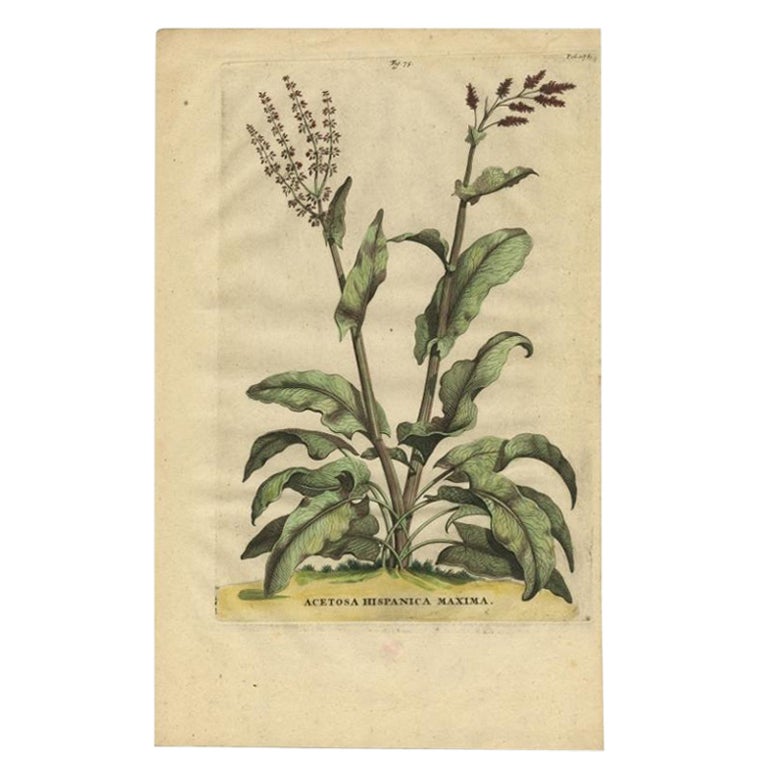
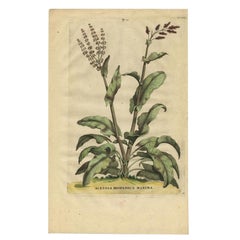
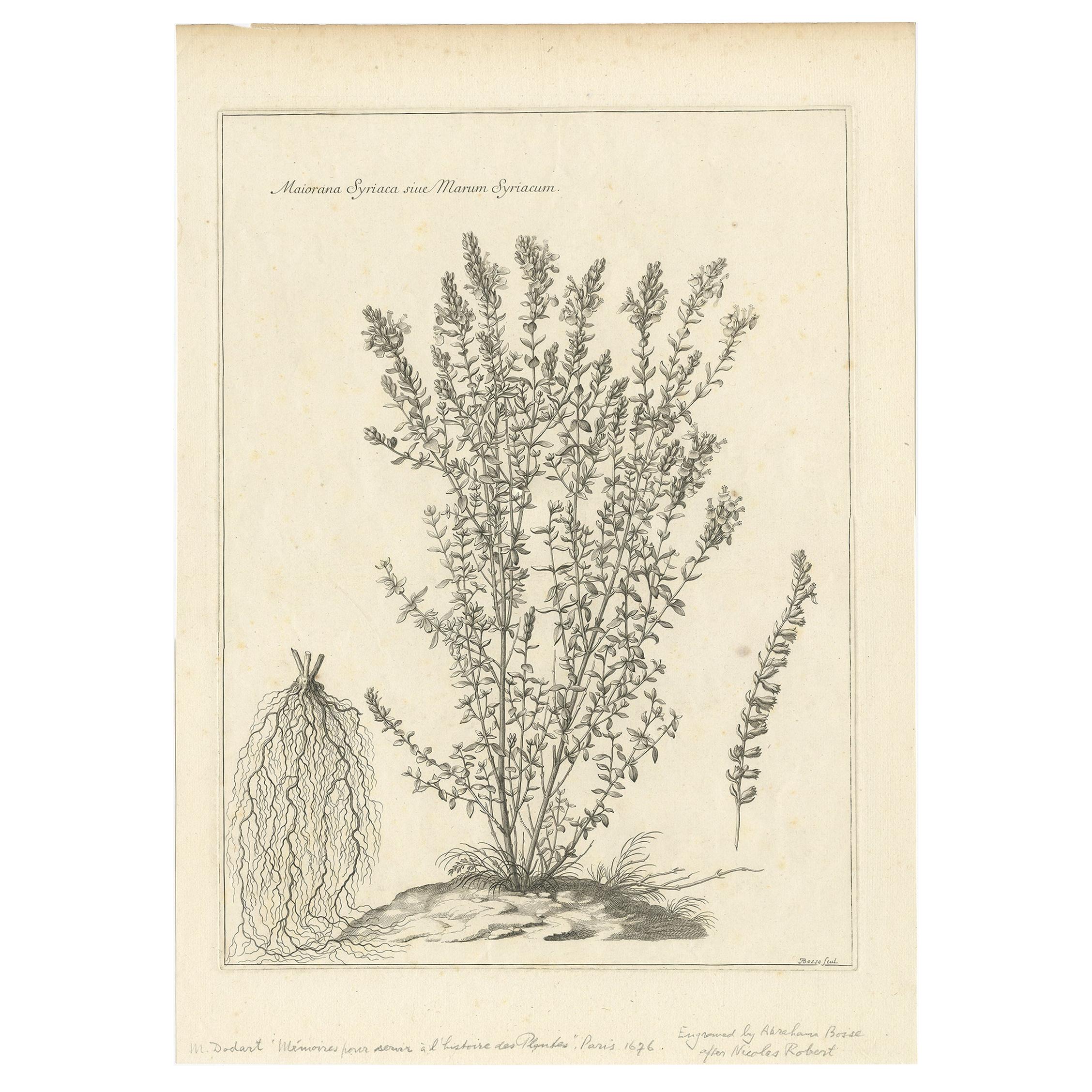
Botanical Illustration of Large Spanish Sorrel (Acetosa Hispanica Maxima), 1696

$320.98
$400.0520% Off
£237.20
£296.2220% Off
€272VAT Included
€34020% Off
CA$445.41
CA$557.2120% Off
A$453.50
A$566.8920% Off
CHF 261.17
CHF 324.8820% Off
MX$5,464.27
MX$6,825.6920% Off
NOK 3,030.92
NOK 3,797.2920% Off
SEK 3,058.02
SEK 3,813.9620% Off
DKK 2,073.75
DKK 2,592.6420% Off

About the Item

This antique print, titled "Acetosa Hispanica Maxima," depicts the Acetosa plant, commonly known as Sorrel. It belongs to the Plantago or Rumex genus, known for their edible leaves with a sour taste due to oxalic acid. Historically, sorrel has been used both for culinary and medicinal purposes, including as an herb to treat inflammation and digestive issues. The plant thrives in temperate regions across Europe, including the Iberian Peninsula, where this particular species, Acetosa Hispanica Maxima, was likely found. It is known for growing in moist, nutrient-rich soils. The maker Abraham Munting (1626–1683) was a Dutch botanist who contributed significantly to plant taxonomy and botanical gardens. His posthumously published work gained popularity for its unique artistic style, blending scientific illustrations with creative depictions.
  • Dimensions:
    Height: 15.83 in (40.2 cm)Width: 9.85 in (25 cm)Depth: 0 in (0.02 mm)
  • Materials and Techniques:
    Paper,Engraved
  • Period:
    1690-1699
  • Date of Manufacture:
    1696
  • Condition:
    Good, given age. A few tiny spots. Narrow right margin. General age-related toning and/or occasional minor defects from handling. Please study scan carefully.
  • Seller Location:
    Langweer, NL
  • Reference Number:
    Seller: PCT-618071stDibs: LU3054341503802

More From This Seller

View All
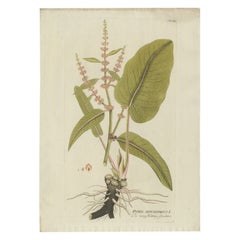
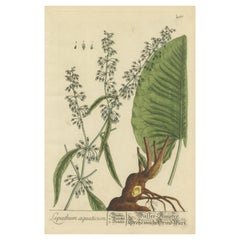
Antique Botanical Print of Rumex Aquaticus

Antique Botanical Print of Rumex Aquaticus

Located in Langweer, NL

Antique print titled 'Lapathum aquaticum'. Botanical print of rumex aquaticus, a flowering plant in the knotweed family. Published by or after Elisabeth Blackwell, circa 1750.

Category

Antique Mid-18th Century Prints

Materials

Paper

Acetosa Hispanica Maxima, Munting, 1696

Acetosa Hispanica Maxima, Munting, 1696

Located in Langweer, NL

Antique print, titled: 'Acetosa Hispanica Maxima' - This original old antique print shows the Acetosa, Plantago species. This plate originates from: ''Naauwkeurige Beschryving der...

Category

Antique 17th Century Prints

Materials

Paper

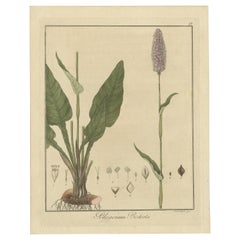
Detailed Engraved Botanical Study of Persicaria Bistorta or Common Bistort, 1822

Detailed Engraved Botanical Study of Persicaria Bistorta or Common Bistort, 1822

Located in Langweer, NL

Title: "Detailed Botanical Study of Persicaria bistorta (Common Bistort)" Description: This hand-colored copperplate engraving, created by F. Guimpel, illustrates the Persicaria bi...

Category

Antique 1820s German Prints

Materials

Paper

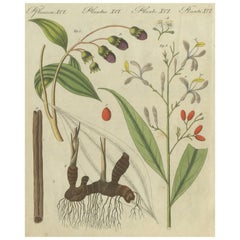
Exquisite Hand-Colored Botanical Engraving with Medicinal Plants, 1805

Exquisite Hand-Colored Botanical Engraving with Medicinal Plants, 1805

Located in Langweer, NL

Title: Hand-Colored Botanical Plate from Bertuch's "Bilderbuch für Kinder" (1805) Description: This vibrant hand-colored copperplate engraving is part of Friedrich Johann Bertuch...

Category

Antique Early 1800s Prints

Materials

Paper

Floral Elegance of the Americas: A Botanical Print of a Spigelia Species, c.1821

Floral Elegance of the Americas: A Botanical Print of a Spigelia Species, c.1821

Located in Langweer, NL

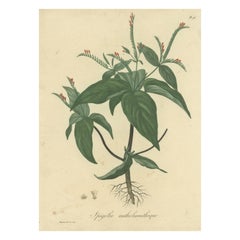
Antique botanical print titled 'Spigelia Anthelminthique'. This print shows the a Spigelia species, pinkroot is a common name for plants in this genus. Spigelia is a genus of floweri...

Category

Antique Mid-19th Century French Prints

Materials

Paper

You May Also Like

Early 19th Century Botanical Engraving by John Curtis

Early 19th Century Botanical Engraving by John Curtis

Located in Seaford, GB

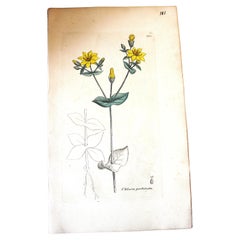
Early 19th Century Botanical Engraving by John Curtis – Hand Coloured Natural History Plate An original early 19th-century hand-coloured botanical engraving from the celebrated natural history publications of John Curtis (1791–1862), one of Britain’s most respected botanical and entomological illustrators. This beautifully detailed plate illustrates a flowering plant in scientific profile, showing bloom structure, leaves, buds, and root system with precision typical of early Victorian natural history illustration. Curtis’s work bridges science and art — created for study, yet prized today for its elegance and balance. These engravings formed part of the golden age of British botanical publishing, when artists collaborated with engravers and colourists to produce plates that were both accurate and visually refined. Each impression was printed from an engraved plate and then carefully coloured by hand, meaning no two examples are ever exactly identical. The composition has the clarity collectors seek: • Central botanical specimen • Naturalistic colour palette • Fine line engraving • Period scientific titling This makes it ideal as a single framed piece or as part of a gallery wall of antique botanical studies. About John Curtis John Curtis was a leading figure in British natural history illustration. He is best known for British Entomology and botanical works that combined taxonomic accuracy with graceful composition. His engravings are held in major museum collections and remain highly collectible in the decorative arts market. Period Early 19th century, circa 1820–1840. Technique Copperplate engraving with original hand colouring on laid paper. Condition Good antique condition consistent with age. Light toning and minor handling marks may be present, as expected with early 19th-century works on paper. Please see the images. Why Collect Curtis Botanical Prints...

Category

Antique Early 19th Century British George III Prints
Materials

Paper

19th Century Watercolor Botanical Drawing of Aloysia Citriodora

19th Century Watercolor Botanical Drawing of Aloysia Citriodora

Located in Queens, NY

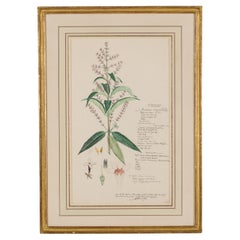
American Victorian (19th Century) watercolor, ink, and pencil botanical drawing depicting a Aloysia Citriodora plant in green tones against a beige background, matted in a beveled pa...

Category

Antique 19th Century American Victorian Paintings

Materials

Paint

Early 19th Century Botanical Engraving by John Curtis

Early 19th Century Botanical Engraving by John Curtis

Located in Seaford, GB

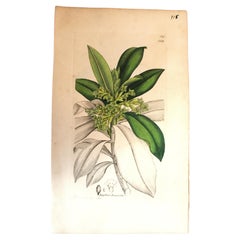
Early 19th Century Botanical Engraving by John Curtis – Hand Coloured Natural History Plate An original early 19th-century hand-coloured botanical engraving from the celebrated natural history publications of John Curtis (1791–1862), one of Britain’s most respected botanical and entomological illustrators. This beautifully detailed plate illustrates a flowering plant in scientific profile, showing bloom structure, leaves, buds, and root system with precision typical of early Victorian natural history illustration. Curtis’s work bridges science and art — created for study, yet prized today for its elegance and balance. These engravings formed part of the golden age of British botanical publishing, when artists collaborated with engravers and colourists to produce plates that were both accurate and visually refined. Each impression was printed from an engraved plate and then carefully coloured by hand, meaning no two examples are ever exactly identical. The composition has the clarity collectors seek: • Central botanical specimen • Naturalistic colour palette • Fine line engraving • Period scientific titling This makes it ideal as a single framed piece or as part of a gallery wall of antique botanical studies. About John Curtis John Curtis was a leading figure in British natural history illustration. He is best known for British Entomology and botanical works that combined taxonomic accuracy with graceful composition. His engravings are held in major museum collections and remain highly collectable in the decorative arts market. Period Early 19th century, circa 1820–1840. Technique Copperplate engraving with original hand colouring on laid paper. Condition Good antique condition consistent with age. Light toning and minor handling marks may be present, as expected with early 19th-century works on paper. Please see the images. Why Collect Curtis Botanical Prints...

Category

Antique Early 19th Century British George III Prints
Materials

Paper

Flowering Peppermint Plants: A 17th C. Besler Hand-colored Botanical Engraving

Flowering Peppermint Plants: A 17th C. Besler Hand-colored Botanical Engraving

By Basilius Besler 1

Located in Alamo, CA

This is a hand-colored copper plate engraving entitled "Pulegium Cervinum, Pseudo Pulegium Struthium, Pulegium Regium", depicting flowering Peppermint, Weld and Pennyroyal plants respectively from Basilius Besler's landmark work, Hortus Eystettensis (Garden at Eichstatt), first published in 1613 in Eichstatt, Germany near Nuremberg and later in 1640 and 1713. This beautiful colorful engraving is printed on thin laid chain-linked paper. There are subtle creases in the right upper corner, very common with Besler's relating to the drying of the paper during its production. The right margin is thinner than the others. The print is otherwise in excellent condition with striking hand-coloring. Basilius Besler (1561–1629) was an apothecary and botanist. He was curator of the Willibaldsburg Castle garden of Johann Konrad von Gemmingen, prince bishop...

Category

1640s Academic Still-life Prints

Materials

Engraving

Early 19th Century Botanical Engraving by John Curtis – Hand Coloured

Early 19th Century Botanical Engraving by John Curtis – Hand Coloured

Located in Seaford, GB

Early 19th Century Botanical Engraving by John Curtis – Hand Coloured Natural History Plate An original early 19th-century hand-coloured botanical engraving from the celebrated natural history publications of John Curtis (1791–1862), one of Britain’s most respected botanical and entomological illustrators. This beautifully detailed plate illustrates a flowering plant in scientific profile, showing bloom structure, leaves, buds, and root system with precision typical of early Victorian natural history illustration. Curtis’s work bridges science and art — created for study, yet prized today for its elegance and balance. These engravings formed part of the golden age of British botanical publishing, when artists collaborated with engravers and colourists to produce plates that were both accurate and visually refined. Each impression was printed from an engraved plate and then carefully coloured by hand, meaning no two examples are ever exactly identical. The composition has the clarity collectors seek: • Central botanical specimen • Naturalistic colour palette • Fine line engraving • Period scientific titling This makes it ideal as a single framed piece or as part of a gallery wall of antique botanical studies. About John Curtis John Curtis was a leading figure in British natural history illustration. He is best known for British Entomology and botanical works that combined taxonomic accuracy with graceful composition. His engravings are held in major museum collections and remain highly collectable in the decorative arts market. Period Early 19th century, circa 1820–1840. Technique Copperplate engraving with original hand colouring on laid paper. Condition Good antique condition consistent with age. Light toning and minor handling marks may be present, as expected with early 19th-century works on paper. Please see the images. Why Collect Curtis Botanical Prints...

Category

Antique Early 19th Century George III Prints

Materials

Paper