Antique Arabian Execution Procession in Desert, Maximilian Egypt 1846
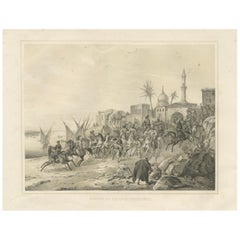
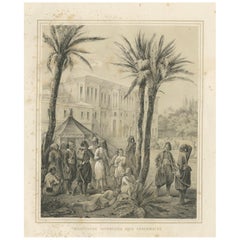
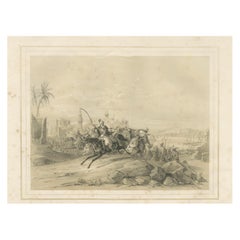
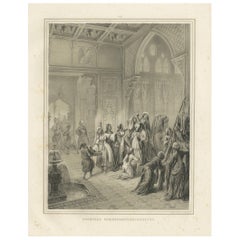
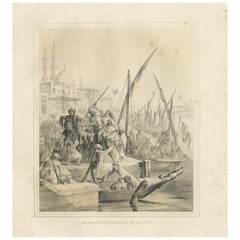
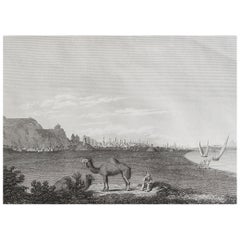
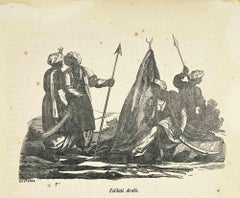
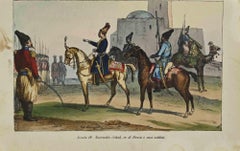
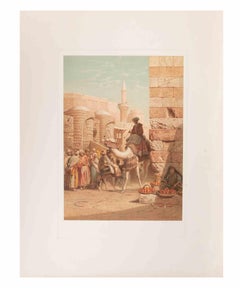
This dramatic 19th-century Orientalist engraving depicts a condemned criminal being transported through the desert on the way to execution, creating a powerful and emotionally charged scene of justice, ritual, and public authority in the Middle East. The central figure is shown bound and forced to kneel beside a collapsed camel, surrounded by armed escorts and local onlookers, while additional figures and gallows-like structures appear faintly on the horizon, reinforcing the gravity of the moment.
The composition is stark and deliberate. The condemned man occupies the emotional center of the scene, framed by mounted guards, religious figures, and armed soldiers. One authority figure gestures with commanding authority, directing both the procession and the fate of the prisoner. The surrounding figures display a wide spectrum of reactions—solemn resignation, dutiful obedience, and distant curiosity—transforming the scene into a complex study of power, submission, and public justice.
This engraving originates from the celebrated Oriental expedition of Duke Maximilian of Bavaria and was drawn directly on location by Heinrich von Mayr, with explanatory scholarly texts by Dr. Sebastian Fischer. The series remains one of the most important European visual records of Middle Eastern life, customs, and legal practices in the early 19th century. Von Mayr’s work is especially valued for its direct observational realism and narrative clarity.
Artistically, the plate excels in its controlled dramatic tension. The open desert landscape creates a vast, unforgiving stage, while the carefully grouped figures guide the viewer’s eye through the unfolding event. The fallen camel heightens the sense of physical struggle and finality, while the distant execution apparatus introduces a chilling narrative conclusion beyond the immediate foreground.
Historically, this scene offers rare visual documentation of judicial punishment practices as witnessed by European travelers during the period of Egyptian modernization under Mehmed Ali. It captures the intersection of traditional legal customs and the public theater of authority that defined much of early modern justice in the region.
Today, this engraving is highly sought after by collectors of Middle Eastern history, Orientalist genre scenes, legal history imagery, and dramatic 19th-century narrative prints. Its powerful storytelling, emotional gravity, and balanced composition also make it a striking statement piece for serious private collections, museum contexts, and historically themed interiors.
Condition report:
Good antique condition. Noticeable overall age-related toning and scattered foxing throughout the sheet, more concentrated in the margins. Small edge losses and minor tears at the lower corners, consistent with age and handling. The engraved image remains strong with excellent detail and contrast. Plate mark faintly visible.
Framing tips:
A wide cream, warm grey, or parchment-toned mat will offset the dramatic desert tonality while preserving the historical character. A dark walnut, blackened wood, or softly antiqued gilt frame will provide a museum-quality presentation. UV-protective glass is strongly recommended.
Technique: Steel engraving
Maker: Heinrich von Mayr, Germany, 1846
Keywords:
antique orientalist execution scene engraving
19th century middle east punishment print
arabian justice antique engraving
orientalist criminal procession artwork
egyptian desert procession antique print
middle eastern law and punishment scene
orientalist camel caravan engraving
arab desert crime and justice illustration
dramatic oriental genre scene 19th century
maximilian of bavaria egypt expedition
heinrich von mayr orientalist engraving
orientalist documentary travel print
antique middle east social history scene
museum quality orientalist artwork
arabian desert figure scene wall art
skull hanging