Antique Egyptian Army Recruitment at the Nile Harbor from Maximilian, 1846
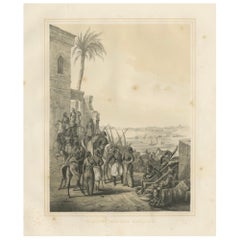
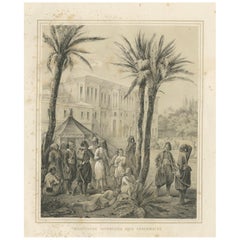
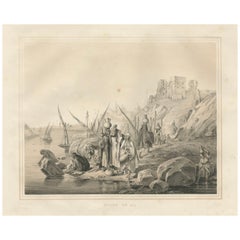
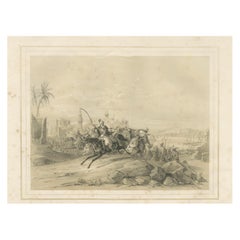
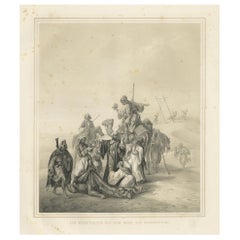
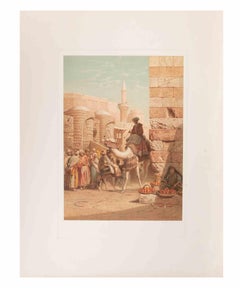
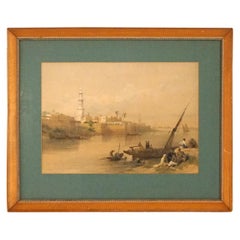
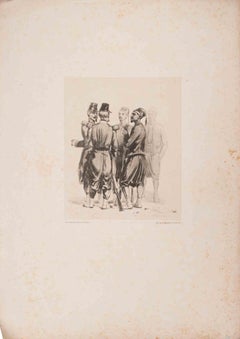
This dramatic and historically powerful 19th-century Orientalist engraving depicts the forced recruitment of Egyptian soldiers along the Nile, capturing a tense moment of military conscription during the reforms of Mehmed Ali Pasha. The scene unfolds at a crowded riverside harbor where armed officials seize young men from the local population and drive them toward waiting boats. Struggling figures, reaching family members, anxious onlookers, and pressing crowds create a vivid narrative of coercion, fear, and authority.
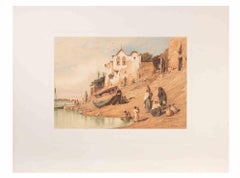
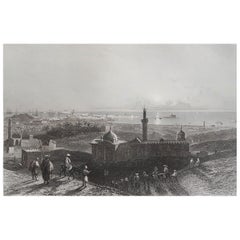
The riverside setting is richly detailed. Slender feluccas crowd the water, their masts and rigging creating vertical rhythm against the calm surface of the Nile. Across the river rise domed mosques and minarets, anchoring the scene firmly in urban Egypt. The contrast between monumental Islamic architecture and the chaos of human struggle reinforces the emotional weight of the composition.
This engraving originates from the important travel publication documenting the oriental journey of Duke Maximilian of Bavaria, with drawings executed by Heinrich von Mayr and explanatory text by Dr. Sebastian Fischer. Von Mayr’s strength lies in his ability to combine ethnographic accuracy with theatrical storytelling. Every gesture and facial expression contributes to the narrative: resistance, submission, fear, command, and resignation are all clearly voiced through posture and movement.
Historically, this scene reflects the harsh realities of modern army formation under Mehmed Ali, who introduced mass conscription as part of Egypt’s military modernization in the early 19th century. While his reforms transformed Egypt into a regional power, they came at enormous social cost. European audiences were deeply fascinated by these transformations, and images like this served both as documentation and as cautionary spectacle.
Artistically, the composition is masterfully structured. The diagonal thrust of the pushing figures draws the viewer directly into the conflict, while the horizontal sweep of the river stabilizes the drama. Light, shadow, and architectural framing guide the eye across the entire scene, resulting in a composition that is both emotionally charged and visually balanced.
Today, this engraving stands as a remarkable visual document of Ottoman-era Egyptian military history. It holds exceptional appeal for collectors of Middle Eastern history, Ottoman studies, military reforms, Orientalist art, and 19th-century travel illustration. Its narrative intensity also makes it a striking interior statement piece for libraries, academic offices, and curated historical interiors.
Condition report:
Good antique condition. Light overall age-related toning and scattered foxing visible across the sheet, slightly more pronounced in the margins. Minor edge wear and handling marks consistent with age. The engraved image remains crisp and well-defined. Plate mark faintly visible.
Framing tips:
A wide ivory, soft sand, or parchment-colored mat will enhance the architectural depth and soften tonal contrast. A dark walnut, black, or lightly aged gilt frame will give the work a strong museum presentation. UV-protective glass is strongly recommended.
Technique: Steel engraving
Maker: Heinrich von Mayr, Germany, 1846